
Outdoor cushions fail slowly, then suddenly. One season they are fine; somewhere in year three or four the sit goes flat, the color goes chalky, and a cushion you never consciously decided to neglect becomes the thing guests notice. Because the decline is gradual, most people replace too late — after a summer of sitting on dead foam — or too early, throwing away sound cores because the cover looks tired.
The factory view is that replacement decisions decompose cleanly: the cover and the core fail on different timelines, for different reasons, and each has its own cheaper intervention. Here are the eight signs, ranked roughly in the order they usually appear, and the right move for each.
Sign 1: The Sit Test Fails — Foam Doesn’t Rebound
Press down hard on the seat, hold five seconds, release. New-to-good foam rebounds within a second or two. Foam that stays dented for several seconds, or that you can feel the frame through, has hit compression set — the foam’s cells have collapsed permanently and no fluffing or rotation reverses it (the physics is in memory foam vs regular foam — density predicts when this happens: 18–24D foam dishes in 1–2 seasons, 35D+ takes 5–10 years).
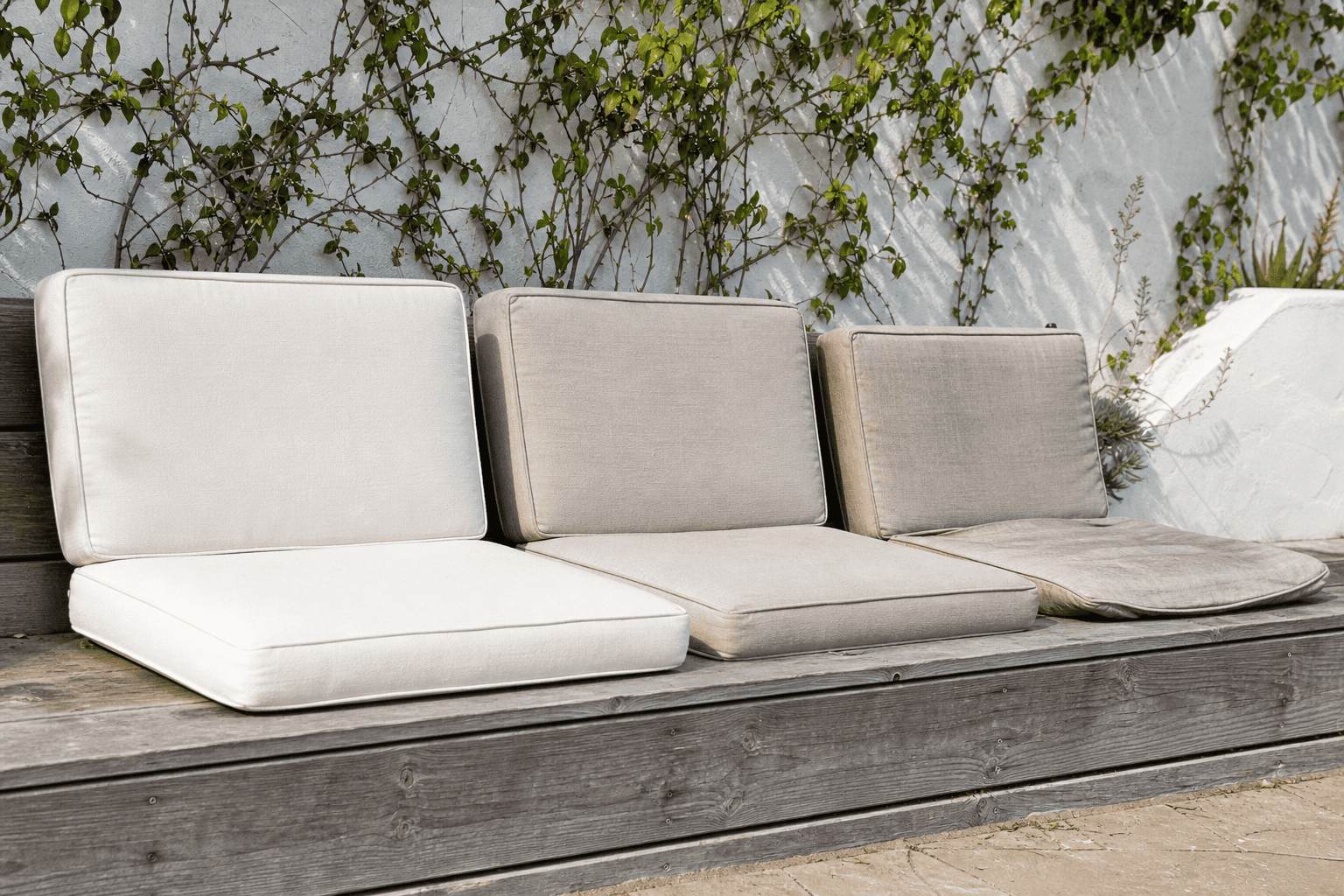
Move: this is the non-negotiable sign. Dead foam means replace the core — full replacement, or re-foam if the cover is sound (DIY re-foaming guide).
Sign 2: Permanent Body Prints
You can see exactly where everyone sits. Beyond normal minor softening, visible dishing or twin craters on a loveseat means the foam has taken a set. Rotate and flip the cushion — if the print stays on the original side after a few weeks flipped, the set is permanent.
Move: core replacement, as above. (Prevention for the next set: higher density, and quarterly rotation — extend cushion life.)
Sign 3: Fabric Chalking and Cracking
Rub the fabric firmly with a finger. A powdery residue, a lighter patch where you rubbed, or visible micro-cracks in the weave mean the fiber itself is UV-dead — the coating era ended long ago and the polymer is breaking down. This is the terminal stage of piece-dyed polyester in sun (the fabric construction background).
Move: full cover replacement at minimum — chalking fabric is weeks from tearing. If the foam is good, a cover-only order saves the core — ask for a cover-only quote.
Sign 4: Color Drift Beyond “Patina”
All outdoor fabric lightens a little. The question is whether it still reads as the color you bought. Compare a hidden area (under the flap, inside the zipper) to the exposed face: if the face is two shades lighter or has shifted hue (navy toward purple-gray, red toward pink), the fade is structural and advancing. Piece-dyed fabric at this stage fails fully within another season or two.
Move: replace the cover, and upgrade the construction this time — in real sun, to solution-dyed acrylic or olefin (best outdoor cushion fabric). Fading fabric on live foam is the textbook cover-only case.
Sign 5: Mold That Comes Back
Surface mildew on fabric cleans off (methods in how to clean outdoor cushions). Mold that returns in the same spot within weeks, smells musty after rain, or presents as staining inside the cushion — visible at seams and zipper — means the colony is in the foam. Internal mold cannot be cleaned by any home method; the spore load is in the core.
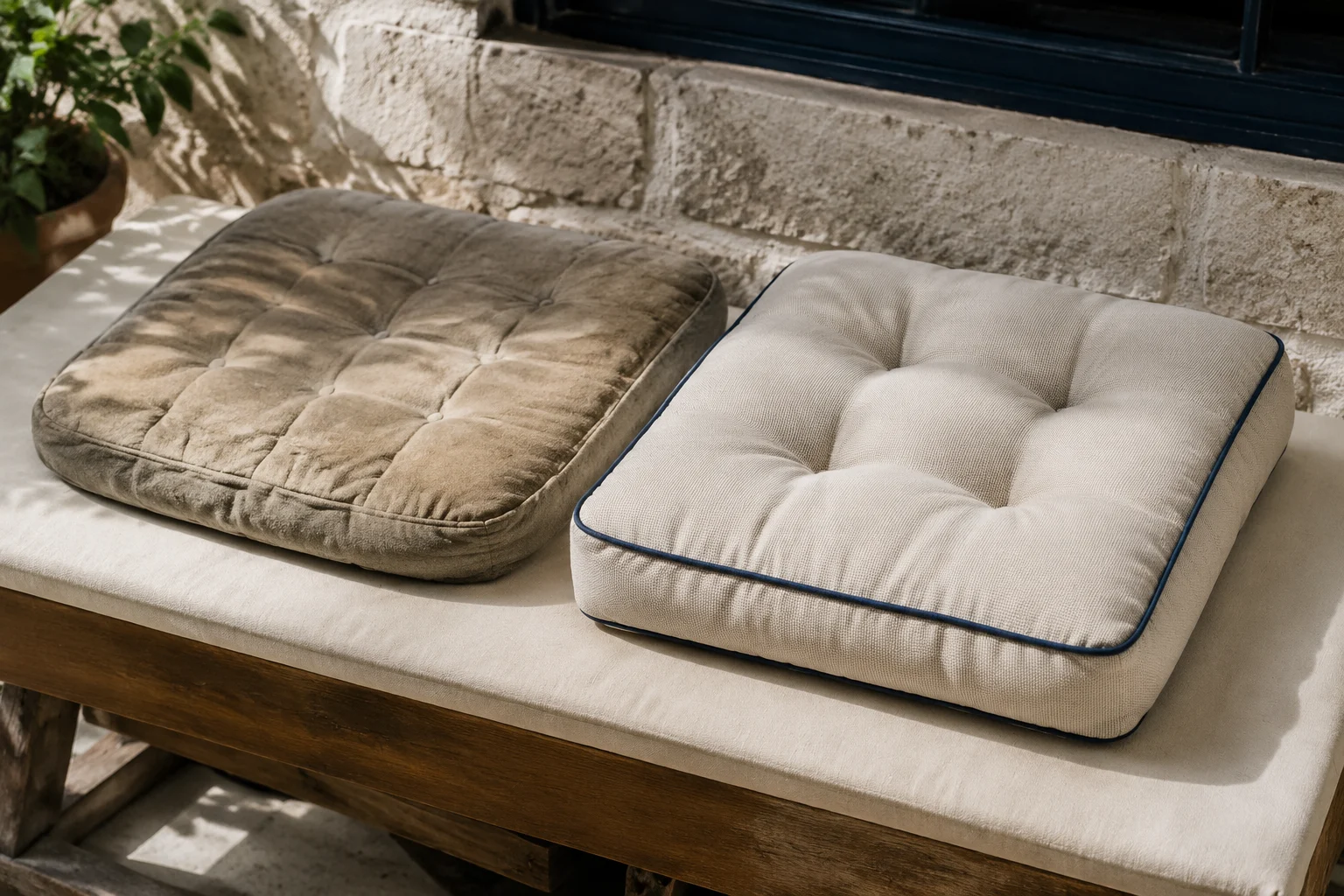
Move: full replacement, and fix the conditions that caused it — trapped moisture from sealed covers or cushions stored damp (waterproof cushions explained covers why sealed cushions mold from inside; prevention in prevent mold on cushions).
Sign 6: The Smell Test
Cushions that smell damp, musty or “sour” a day after rain have water held in the core with a bacterial film starting. A smell that survives a full sun-drying session is the nose confirming Sign 5.
Move: replacement; if the furniture stays uncovered, the next set wants a quick-dry core from a marine specialist; our own outdoor line pairs waterproof covers with high-density foam.
Sign 7: Structural Sewing Failure
Zippers that split, ties torn out (taking fabric chunks with them — surface-tacked ties do this, seam-set ties do not), split seams at stress corners, welt pulling away. Any one of these is a repairable fault in isolation; three or more across a set means the sewing (and probably the whole construction generation) is done. Also the tell for whether the original maker cut corners: see the construction checklist in the buying guide.
Move: single faults on a young cushion — repair. Multiple faults on an old set — replace, and buy seam-set ties and wipe-clean families next time.
Sign 8: The Fit Is Wrong and It Always Was
Cushions that came with the furniture or were bought as “universal” sizes that never truly fit — sliding, bagging at corners, riding above the arms. Nothing has failed; the geometry was never right. This is the quiet justification for the replacement nobody regrets, because the fix is visible every single day.
Move: measure properly (how to measure outdoor cushions) and order to fit — custom outdoor cushions, or a brand pattern if the set matches one (replacement cushions); built-to-measure sets are ordered as replacement patio cushions.
The Decision Matrix: Replace, Re-cover, or Re-foam
| Condition | Cover | Foam | Move |
| Faded/chalked, foam good | dead | good | Cover-only (ask for a quote) |
| Flat/dished, cover good | good | dead | Re-foam or full custom (foam grades) |
| Both failing / mold inside / 8+ years | dead | dead | Full replacement |
| Never fit right | — | — | Measure and replace properly |
| One fault on young cushion | — | — | Repair |
The economics: cover-only makes sense when foam is under ~5 years (ask for a cover-only quote) and passes the sit test; beyond that, a full replacement with deliberate specs (density you chose, fabric tier matched to your sun — is Sunbrella worth it?) outperforms nursing an old core. Full price benchmarks: the price guide.
A Maintenance Timeline That Delays All Eight Signs
Year-round habits that push replacement out years: monthly brush-off and spot cleaning (cleaning guide), quarterly flip-and-rotate, standing cushions on edge after soaking rain, annual fabric protectant renewal (Sunbrella care), and above all the dry-then-store winter routine (winter storage guide). Most “dead at three years” cushions were storage failures, not fabric failures.
Planning the Replacement: A Timeline That Avoids Regret
Once the audit says replace, the sequencing matters more than people expect:
- – Replace as a set, not one dying piece at a time. The math of cover-only and re-foam options applies per piece, but color-matching applies per lot — a loveseat ordered this year will not match its sofa ordered next year, even in the “same” fabric (why lots drift). When two or more pieces fail within a season of each other, order them together.
- – Time it off-season. Winter orders skip the spring production queue and land before first use — the calendar logic is in the price guide.
- – Upgrade the spec that failed, not the whole spec sheet. Dead foam → density was the problem; buy 50D+ and standard fabric is fine in shade. Chalked fabric → construction was the problem; buy solution-dyed and your old foam grade is fine if it passed the sit test. Most replacements fail one spec — replacing everything wastes the survivor.
- – Audit the furniture while you’re at it. The winter audit that checks cushions (storage guide) should also glance at the frame: straps, slings, rusting hardware. Ordering cushions for a frame with two summers left is the silent budget error.
And the question underneath every replacement decision — is this piece worth re-speccing at all? — our custom vs standard guide works through it: pattern-fit furniture, true custom, and the cover-only middle path each have a lane.
FAQs
How often should outdoor cushions be replaced?
Quality cushions (35D+ foam, solution-dyed fabric) last 5–10 years with proper storage; budget builds fail in 2–3 seasons — replacement timing is driven by the failure signs above, not the calendar.
When can I re-cover instead of replacing?
When the cover is faded or chalked but the foam passes the sit test (instant rebound, no body prints) and is under about five years old — ask for a cover-only quote at custom cushion covers.
Can moldy cushions be saved?
Surface mildew on fabric, yes — cleaned with the methods in the cleaning guide; mold established inside the foam, no — that cushion is a replacement, and the storage conditions need fixing.
What does chalky cushion fabric mean?
The fiber itself is UV-degraded and weeks-to-months from tearing — a terminal sign for the cover (upgrade to solution-dyed fabric on the replacement), while the foam may still be salvageable via cover-only.
Is firm foam the same as good foam?
No — firmness (ILD) is a comfort choice, density is durability; a hard low-density cushion still dishes within seasons, which is why density is the first spec to check on any replacement (memory foam vs regular foam).
Sofa Foam Cut to Size: How to Order Exact-Fit Foam
How to order sofa foam cut to size — measuring the core, adding the compression allowance, specifying density, thickness and shape, and the checklist to run before any foam is cut.
Cheap vs Quality Outdoor Cushions: Where the Money Actually Goes
What separates a $15 cushion from a $60 one and a $150 one — fabric construction, fill, stitching and covers — which upgrades matter, which are markup, and how to buy the quality your furniture actually needs without overpaying.
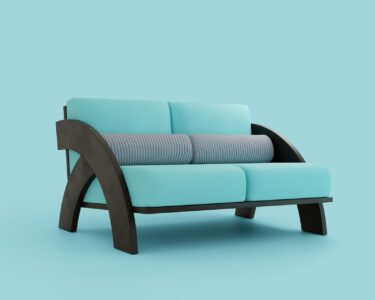
Couch Cushion Foam Inserts: Measure and Order New Cores
A foam insert replaces the flattened core inside the covers you already own. Measure seam to seam, pick 60D seats and 50D backs, and price the set in one order.
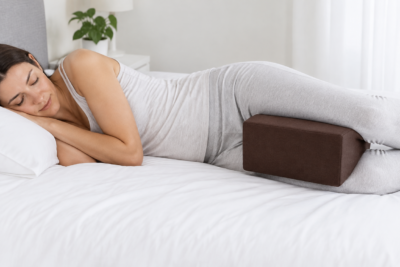
Knee Bolsters for Side Sleepers and Back Sleepers: A Firm Support Guide
A firm half-round D bolster fills the gap between the knees for side sleepers and under both knees for back sleepers. Heights, densities and lengths explained — positioning and comfort, made to order.
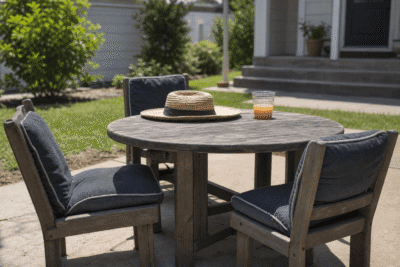
Kid-Friendly Patio Cushions: The Family-Proof Spec
Cushions that survive children — fabric families that shrug off juice and markers, construction that wipes fast, foam that handles jumping duty, attachment systems that stay put and stay safe, and the two-layer strategy that saves the good cushions.
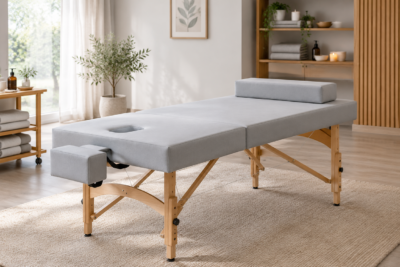
Massage Table Bolsters: Firmness, Sizing and Placement
A firm foam wedge is the positioning tool a massage table lacks. Four set sizes for ankles, knees, wrists and side-lying, solid 50D or layered builds, fabric choice included — priced 20% below custom.