Ask what fabric to order on replacement cushions and you get two answers: “Sunbrella, obviously” from people who bought it once, and “the standard fabric is half the price” from people reading the quote. Both are describing the same fact from different sides of it.
We don’t sell Sunbrella — our own line runs three fabric families (Cotton Linen, Tech Fabric, Premium Velvet) — so we have no stake in the brand fight, but we know the materials from the factory side: what actually differs in the fabrics, how they behave over years of sun and rain, and how to decide based on your climate, your furniture’s exposure, and how long you plan to keep the cushions. The short version of the verdict: Sunbrella wins on fade and longevity everywhere, and whether that is worth roughly 30–80% more per cushion depends mostly on how much direct sun your furniture gets.
For the broader fabric landscape (olefin, blended acrylics, polyesters of different grades), see best outdoor cushion fabric; the product pages are Sunbrella cushions and the outdoor fabric guide. This article is the head-to-head most buyers actually face.
What Is Sunbrella, Technically?
Sunbrella is a solution-dyed acrylic. The phrase matters more than the brand: in solution dyeing, the color pigment goes into the acrylic polymer before the fiber is extruded — the color is the fiber, all the way through. In conventional piece dyeing (how standard polyester is colored), finished fiber or fabric is dunked in dye and the color coats the outside of each filament.
Everything downstream follows from that single manufacturing difference:
- – UV hits pigment through-and-through, not a surface coat. Fade resistance in acrylic is structural, not a finish that washes or wears off.
- – Acrylic is inherently resistant to UV degradation as a polymer, where polyester chains slowly break down under sunlight (chalking, brittleness, strength loss).
- – Acrylic holds little water and dries fast, and because the fiber does not support mold growth, mildew appears only where surface dirt feeds it — and cleans off.
Sunbrella is one manufacturer of solution-dyed acrylic (the Glen Raven mill, North Carolina), and a strong one — they back upholstery fabrics with a 5-year limited warranty against fading, the strongest fade promise in the industry. But “solution-dyed acrylic” is the category to understand; other premium mills (Tempotest) build the same way. We don’t carry Sunbrella itself — our fabric menu runs Cotton Linen, Tech Fabric and the Premium Velvet family — but if you are weighing a Sunbrella purchase elsewhere, this is the physics to weigh it with.
The Five Differences That Matter
1. Fade resistance
This is the big one, and it is not subtle.
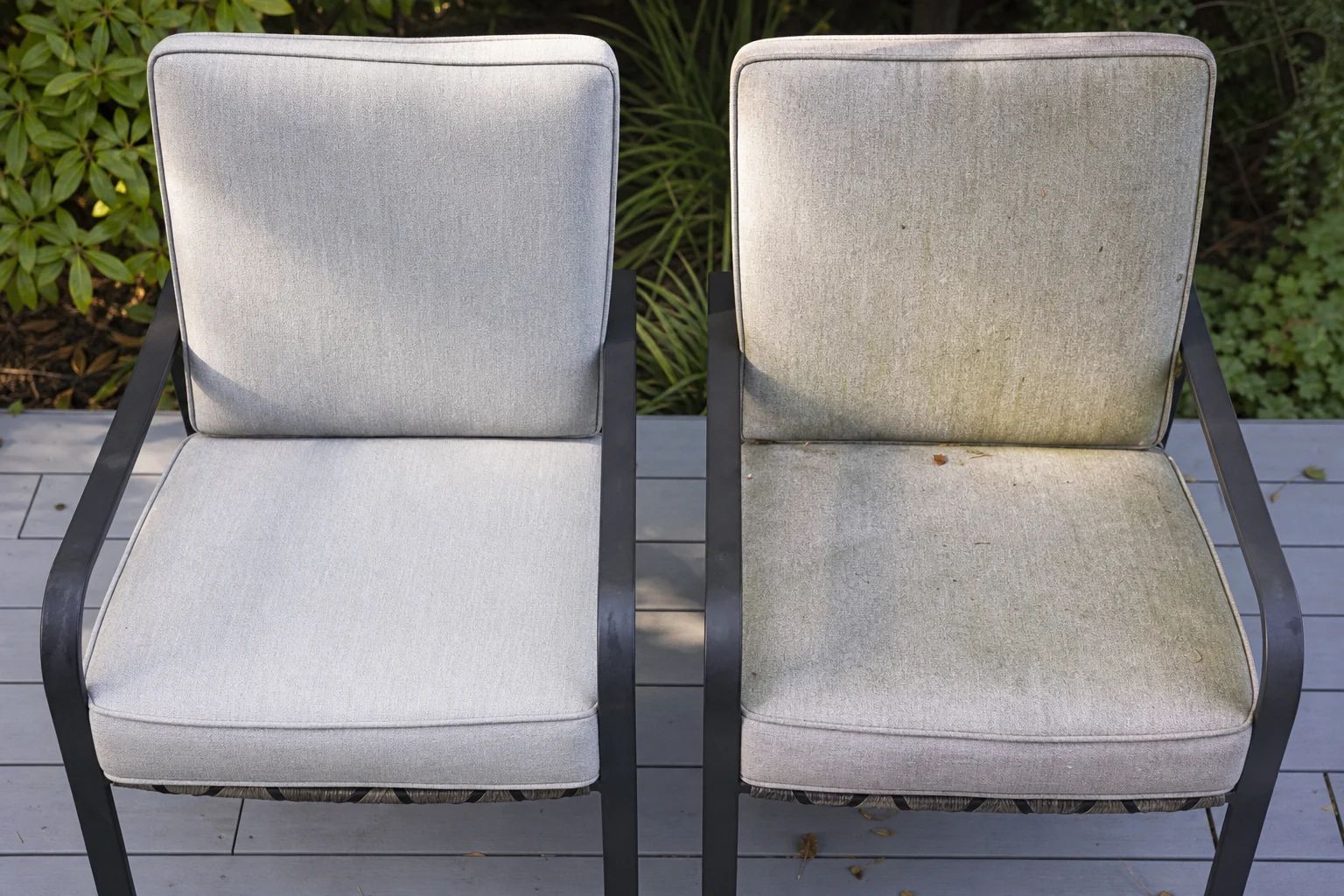
- – Standard polyester outdoors: noticeable fading in one season of strong sun; a printed or piece-dyed cushion in full Arizona or Florida exposure can look washed out in a single summer, and the fabric starts chalking (that powdery rubbed-off look) in year two or three.
- – Solution-dyed acrylic: colorfast for years — the warranty period is five years, and real-world life in moderate climates runs well past it.
The test that predicts it: tape swatch cuts of both by a south-facing window. The polyester drifts visibly within months; the solution-dyed acrylic next to it holds. Same light, same hours, different chemistry.
2. Water behavior
Neither fabric is “waterproof” — see waterproof cushions explained for what that word really means at retail — but they behave differently when wet:
- – Polyester (especially with a coating): beads water at first, but coatings wear off with abrasion and washing; once wet through, polyester holds water longer against the foam.
- – Sunbrella/acrylic: breathable while shedding water; finishes can be re-applied (the fabric supports 303-type protectant renewal), and the fiber itself does not weaken or stain from wetting.
Neither should be left out in standing water — the foam inside matters as much as the cover, a point covered in cushion filling types.
3. Mold and mildew
Mold does not eat synthetic fiber; it eats the dirt, pollen and soap film on fiber. So the mold difference between fabrics is really a drying-speed and cleaning difference:
- – Polyester that stays damp (dense weave, wet foam beneath) grows mildew in its surface film within days in shade.
- – Acrylic’s low water retention and breathability mean the surface film dries before mildew establishes — and when mildew does find a dirty spot, it cleans off with the standard bleach-safe Sunbrella cleaning method (yes, bleach-safe: solution-dyed color cannot be bleach-stripped, which makes deep cleaning possible in a way piece-dyed polyester cannot survive).
Prevention tactics for both are in how to prevent mold on outdoor cushions.
4. Hand and comfort
Honest point in polyester’s favor at the budget grades: modern outdoor polyesters are soft, and some people prefer their slightly smoother hand to acrylic’s dense, canvas-like weave. Sunbrella’s hand has improved across generations, but as a category, solution-dyed acrylic feels a touch more “upholstery canvas” and polyester a touch more “sheet cotton.” Both are entirely comfortable to sit on; this is an aesthetic preference, not a defect on either side.
5. Sewing behavior — the factory view
From the cutting floor: acrylics are stable, dimensionally consistent, and hold a seam beautifully — which is part of why premium workmanship goes with premium fabric. Cheap polyester can skew on the bias, stretch under the presser foot, and show puckering at welt seams after sun shrinkage. The fabric you choose partly determines how the sewing ages, not just the surface.
Sunbrella vs Regular Outdoor Fabric: Comparison Table
| Standard polyester | Solution-dyed acrylic (Sunbrella) | |
| Color method | Piece-dyed (coats fiber surface) | Solution-dyed (color through fiber) |
| Fade life | 1 season visible fade in full sun; chalking year 2–3 | Years of colorfastness; 5-year fade warranty |
| UV degradation of fiber | Chains break down, weakens over years | Acrylic inherently UV-resistant |
| Water behavior | Beads until coating wears; holds water when soaked | Breathable, sheds water, dries fast |
| Mold response | Grows in surface film if damp; harder to deep-clean | Cleans with bleach-safe method; resists establishment |
| Hand | Softer, sheet-like | Dense, canvas-like |
| Cleaning | Mild soap only; bleach destroys color | Bleach-safe deep cleaning possible |
| Warranty | Typically none to 1 year | 5-year limited fade warranty |
| Relative cost | Baseline | Roughly 30–80% cushion-level premium vs discount polyesters at retail |
What Does the Difference Cost in Real Money?
At retail, solution-dyed acrylic cushions typically carry a 30–80% premium over budget polyester equivalents — on a loveseat set that is commonly $100–250 of difference, which is why the tier question feels heavy at the register. For a yardage anchor: US custom shops that sell fabric by the yard currently list Outdura-class acrylics around $22, name-brand Sunbrella canvas around $42, and decor weaves up to the high $80s — that per-yard spread is what stacks into the finished-cushion premium. For scale: on our own quote sheet the fabric decision is deliberately small — every fabric runs a flat $7.43/sq ft (all 119 in the library), so the entire fabric line on a typical loveseat is about $118 — the same from Cotton Linen to Premium Velvet — with foam density and thickness the bigger levers (price guide).
The decision frame is cost per year:
- – Full sun, hot climate, cushions you expect to keep 5+ years: polyester is replaced in 2–3 seasons when it chalks and fades. Sunbrella’s premium repays itself by the second replacement cycle and keeps paying.
- – Covered porch, shade, or a 2–3 year horizon (rental, staging, furniture you plan to change): polyester’s economy wins; the fade advantage never gets exercised.
The full tier logic and per-piece price table is in the outdoor cushions price guide.
Which Should You Choose? A Decision Guide
Choose Sunbrella / solution-dyed acrylic when:
- – Cushions sit in direct sun 4+ hours a day
- – You are in a high-UV region (Southwest, Florida, high altitude)
- – You are replacing cushions on furniture you intend to keep long-term — the frame outlives cheap cushions twice over
- – Color fidelity matters (dark navy, deep green and black show fade fastest; solution-dyed is the only way these hold)
- – You want bleach-cleanable fabric near a pool (chlorine splash cleans off instead of staining)
Choose standard polyester when:
- – Cushions live under a roof or dense shade
- – The horizon is short — a season or two, a rental, a staging
- – The budget is fixed and coverage is broad (a 7-piece sectional in polyester saves enough to buy the fire pit)
- – Colors are light and forgiving (beige, gray, sand show fade later than dark saturated colors in either fabric)
Middle path: blended solution-dyed fabrics at retail capture much of acrylic’s fade behavior at a smaller premium. And covers-only orders (custom cushion covers) let you re-shell sound foam in better fabric — ask for a cover-only quote; the cheapest upgrade path that exists.
For the money side of the call, see what the difference costs in real money — warranty terms are in the comparison table above; for caring for it once you own it, Sunbrella fabric care.
Care Differences in One Paragraph Each
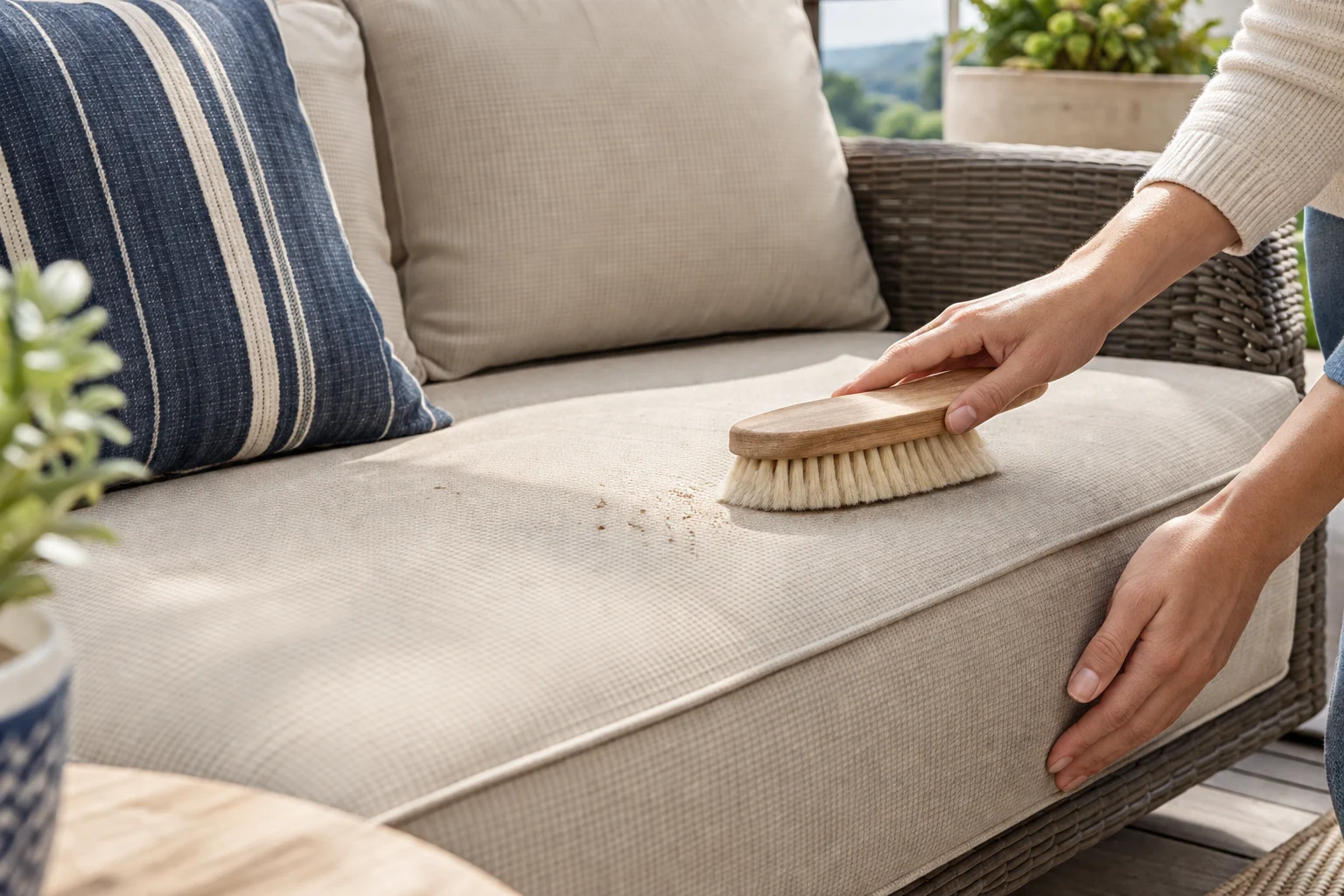
Polyester: brush dirt off promptly, spot-clean with mild soap and water, never bleach (it strips piece-dyed color instantly), store dry for winter. Expect the water-repellent coating to fade after a season of abrasion and washing. Full method: how to clean outdoor cushions.
Sunbrella: same daily regime, but for stubborn mildew or stains you can go much harder — a 1:16 bleach solution is the manufacturer-sanctioned deep clean, impossible on piece-dyed fabric. Re-treat with a fabric protectant every year or two to renew water repellency. Full method: Sunbrella fabric care.
Sunbrella vs Olefin vs Tempotest: The Same-Tier Matchup
Buyers who move past “regular vs premium” usually ask which premium to buy. The three contenders, honestly ranked on the dimensions that separate them:
| Sunbrella | Tempotest (Parà) | Olefin | |
| Fiber | Solution-dyed acrylic | Solution-dyed acrylic, slightly heavier | Solution-dyed polypropylene |
| Fade warranty | 5 years | 5 years | Varies, typically 2–3 |
| Hand | Dense, canvas-class | Slightly softer drape | Slicker, more synthetic |
| Color depth | Widest palette, deep satins | Excellent European palette | Muted range |
| Water behavior | Low absorption, breathable | Low absorption, often higher resistance out of the box | Lowest absorption of any |
| Price positioning | Premium | Premium-plus on many quotes | Mid |
How to use the table: Sunbrella and Tempotest are functionally interchangeable for nearly everyone — both are solution-dyed acrylics with 5-year fade warranties; choose between them on color match and price on the day. Olefin is the value play — it concedes palette and hand but delivers the same dye construction and the best water behavior for less money, which is why our answer to full-sun-on-a-budget is olefin, not coated polyester.
One more tier distinction worth knowing: within any mill’s line there are grades — upholstery weights, awning weights, marine grades. Cushion work uses upholstery weight (roughly 7–9 oz). If you are sourcing fabric yourself for a DIY cover project, upholstery-grade weight is the spec to match, not just the brand name.
Sunbrella vs. Outdura: How the Two Marine-Grade Fabrics Actually Differ
Outdura is the comparison the table above skips, and it earns its own answer because it is the one premium acrylic built the same way Sunbrella is: both are 100% solution-dyed acrylics milled in North Carolina (Sunbrella at the Glen Raven mill, Outdura at Sattler Corp.’s weaving mill in Hudson, NC), both made for full-exposure outdoor duty, and both bleach-cleanable for the same reason — the pigment is engineered into the fiber before it is spun, not coated onto it afterward. On fade chemistry, water behavior and mold response, the two fabrics are the same class. What actually separates them is everything around the weave:
- – Price. Outdura consistently undercuts Sunbrella at retail: at US custom shops selling by the yard, Outdura-class acrylics run around $22 against roughly $42 for name-brand Sunbrella canvas — close to half on the canvas grades.
- – Warranty posture. Sunbrella upholstery carries a 5-year limited fade warranty; Outdura answers with its 10-Year Promise on residential fabrics. Read the care conditions before treating either number as the whole story — both are limited warranties.
- – Color and distribution. Sunbrella’s palette is the widest in the class and its dealer network is everywhere; Outdura’s color range is narrower and you will more often meet it through a fabricator than on a retail shelf.
The one-line verdict: budget-sensitive full-sun projects are what Outdura exists for; when the exact colorway or local availability decides, Sunbrella’s palette depth and reach win the day. An honest limit from our bench: if matching a specific Sunbrella colorway is the job, order that mill — our 119-fabric library carries the class (solution-dyed acrylic outdoor lines alongside olefin blends), not the pattern number, so a brand-exact color match is the one thing you cannot order from us. Everything else about this decision — cut, foam, fit — runs the same custom flow in solution-dyed acrylic class replacement cushions as with any fabric we carry.
How Fabric Tier Interacts With Everything Else on the Cushion
The fabric decision does not live in isolation — four interactions worth checking before you finalize:
- – Thread and sewing: premium tiers are sewn with UV-stable polyester thread as standard; if a budget cushion quotes premium fabric, verify the thread, because ordinary thread fails years before either fabric does (construction checklist).
- – Foam pairing: the worst trade in the category is upgrading fabric while downgrading foam — a solution-dyed cover over 24D core is a beautiful jacket on a collapsing frame; spend on density first (the fill guide).
- – Re-cover economics: premium fabric extends the re-cover cycle — when the foam finally does age out at year 8–10, a cover-only reorder refreshes the piece again (ask for a cover-only quote), and quality acrylic covers hold resale value on the frame.
- – Color choice feedback loop: if you love dark saturated colors, fabric tier is decided for you — see choosing cushion colors for how shade and construction interact.
FAQs
Is Sunbrella really better than regular outdoor fabric?
Yes, in the specific dimension of fade and UV life — solution-dyed acrylic color is structural and warranty-backed for 5 years, where piece-dyed polyester visibly fades in one sunny season; in shade and short-horizon use, polyester is the rational buy.
How much more does Sunbrella cost?
At retail, typically 30–80% per cushion — commonly $100–250 more on a loveseat set; on our own quotes fabric is flat-rated ($7.43/sq ft, every family the same, all 119 fabrics), see the price guide for the full tables.
Does Sunbrella keep cushions from molding?
It resists mildew by drying fast and being bleach-cleanable, but no fabric stops mold on cushions left wet and dirty in shade — prevention tactics are here: prevent mold on cushions.
Can I get Sunbrella colors like navy and black to actually stay dark?
That is precisely what solution dyeing guarantees — dark saturated colors hold for the warranty period, the case where the premium is least optional.
Is there fabric as good as Sunbrella but cheaper?
Blended solution-dyed fabrics capture most of the fade resistance at a mid price, and Tempotest matches Sunbrella at the top; the honest framing is tiers of solution-dye quality, covered in best outdoor cushion fabric.
Is Outdura as good as Sunbrella?
On the physics — solution-dyed color, UV stability, bleach-cleanability — they are the same class of fabric, and Outdura’s 10-Year Promise out-papers Sunbrella’s 5-year fade warranty; Sunbrella keeps the edge in palette breadth and availability, so the real decision is price against color match, not quality against quality.
Whichever fabric class wins for your patio, the other half of the order is the measurements. Both routes are sewn to your exact numbers in the same workshop — start at custom Sunbrella cushions for the solution-dyed acrylic line, from $89 with every fabric one price.
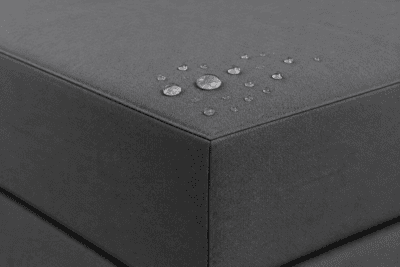
Best Outdoor Cushion Fabric: How to Choose by Climate, Exposure and Budget
A factory guide to outdoor cushion fabrics — solution-dyed acrylic, olefin, polyester grades and blends — ranked for fade, water, mold, comfort and cost per year.
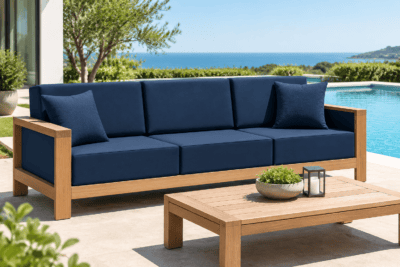
Is Sunbrella Fabric Worth It? An Honest Cost-Per-Year Analysis
Whether the Sunbrella premium pays off depends on sun exposure, horizon and color — here’s the honest math, warranty mechanics and when to skip the upgrade.
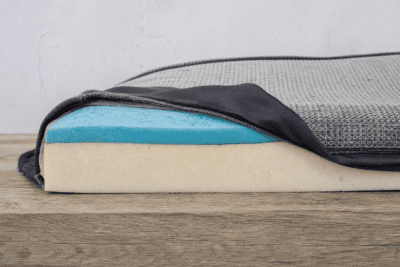
Memory Foam Topped Cushions: When Gel Layers Help (and Hurt)
Memory foam topped cushions and gel-infused layers examined — where a visco topper over HR foam genuinely helps, where it hurts, and the layer specs that separate luxury from a gimmick.
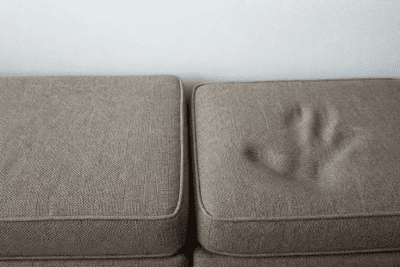
Memory Foam vs Regular Foam Cushions: What a Cushion Factory Wants You to Know
Memory foam vs high-resilience foam for seat cushions — density (35D–65D), ILD firmness, compression set and airflow explained by the people who cut foam daily.
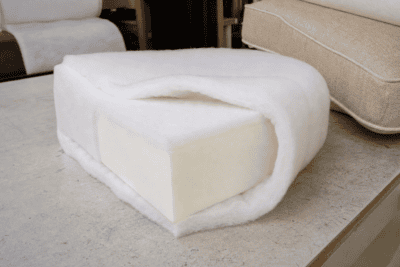
Dacron Batting: The Wrap Layer Explained (What It Does and When to Order It)
Dacron batting for cushions explained: the polyester wrap layer around foam cores, what it does for feel edges and fabric wear, thickness options, indoor and outdoor uses, and when the wrap earns its cost.
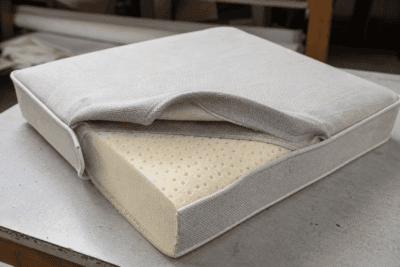
Latex Foam Cushions: Natural Rubber Seating, Honestly Assessed
Latex foam cushion guide: what natural and blended latex actually offer versus polyurethane — resilience, feel, lifespan, weight and cost — who latex seating serves, and the honest counterarguments.