About Cushion Mill
The Mill Behind Your Cushions — Made to measure, crafted to last.
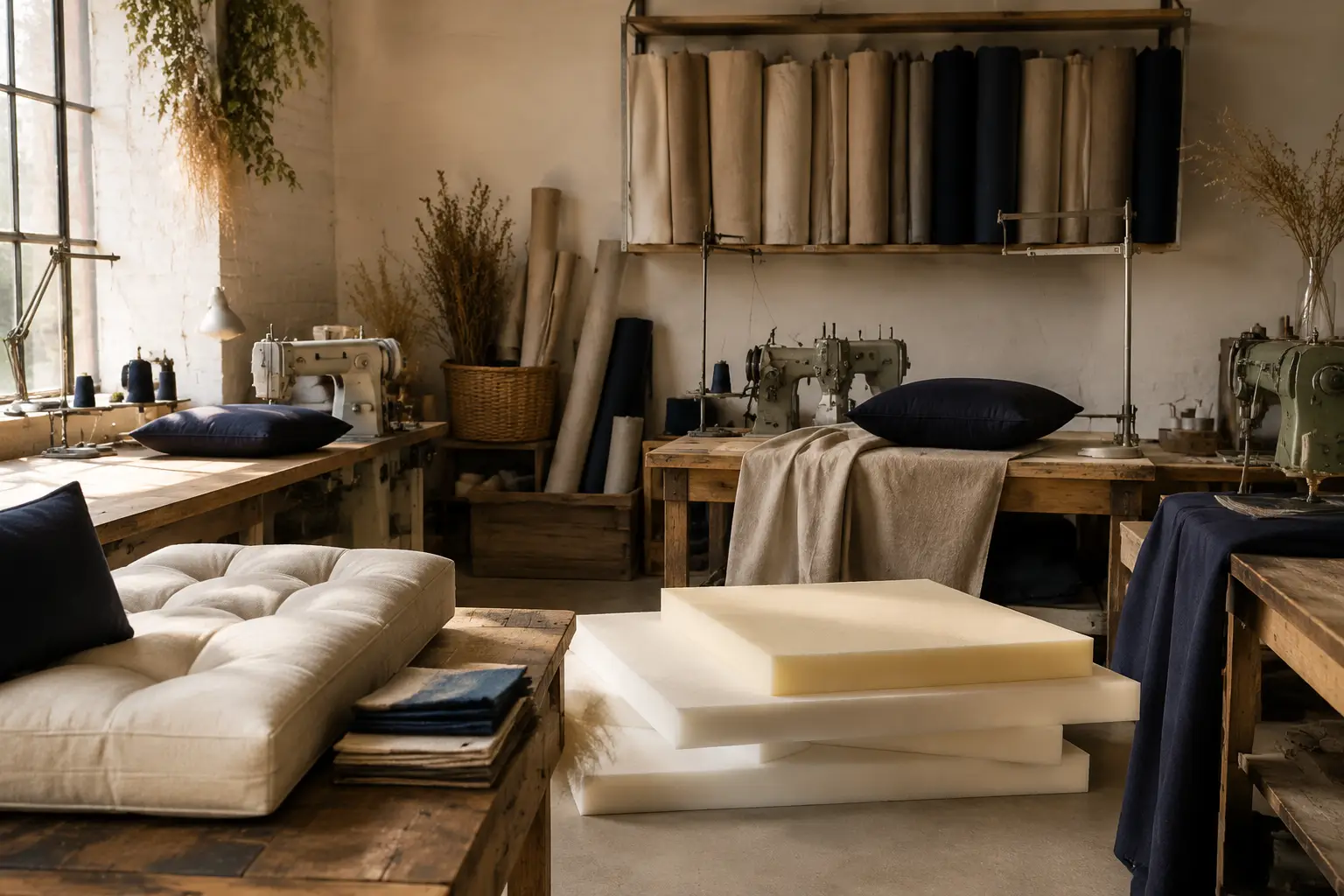
Source workshop, no middlemen
Browse them all in the configurator
Cut to your exact measurements
If we cut it wrong, remade free
Ten Years at the Cutting Table
Cushion Mill is not a brand that buys cushions and resells them. We are the mill — a cushion workshop with ten years of cutting foam, sewing covers, and shipping replacements for furniture whose original pads gave out long before the frames did.
We started as a made-to-order mill shop in one of the world’s largest furniture manufacturing belts, where cushions, covers and foam are a local trade the way wine is a trade in wine country. For a decade we have cut and sewn on our mill floor for furniture brands, patio-set makers and cover houses — which means we have measured, replicated or rebuilt cushions for more furniture series than we can count. A few years ago we started shipping direct to homeowners, and the question changed from “can you make 500 of these” to “can you make one that fits my chair.” The answer, it turns out, is the same craft.
The two halves of the business feed each other. The brand work taught us production discipline — tolerance math, dye-lot management, what fails in year two — and the direct work teaches us the questions catalogs never answer: which slat the ties should reach, why a “24 inch” cushion measures 24.41, what a banquette survives in a house with children. This site is those answers written down, which is why so much of it reads like a workshop conversation rather than a brochure.
The Measured Database
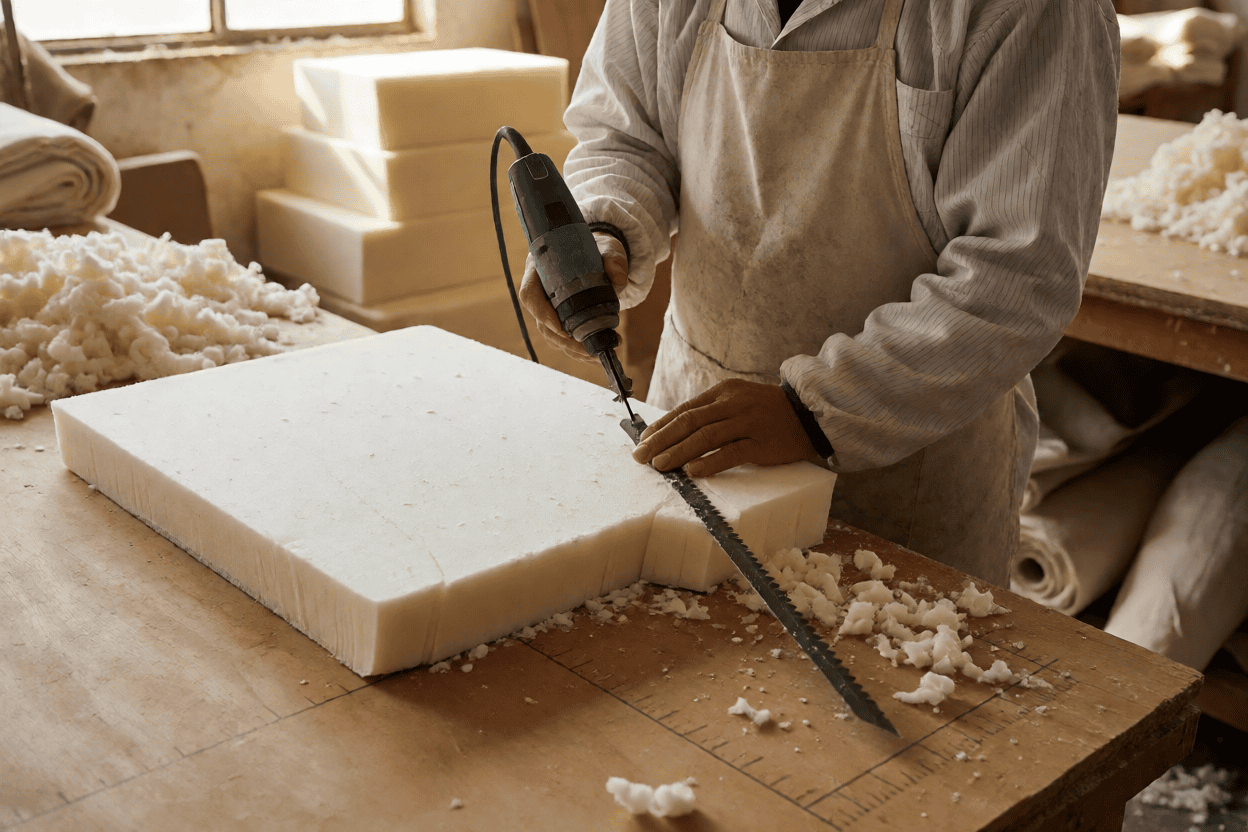
Replacing a discontinued cushion set usually means a dead end: the brand moved on, the store sells only current sets, and “universal” pads fit nothing exactly. So we did the unglamorous work — measuring and cross-checking original equipment dimensions, piece by piece, across 43 series: 24 Hampton Bay series charts + 7 Martha Stewart patio collections (195+ verified sizes) plus 12 IKEA series built from official product data (79 more measured dimensions). Every series page in our replacement library lists those dimensions openly, because an informed customer measures once and orders right. And where a brand publishes nothing trustworthy — Ashley, for instance — we say so and teach the identification route instead of publishing guesses.
How We Build a Cushion
| Step | What happens |
|---|---|
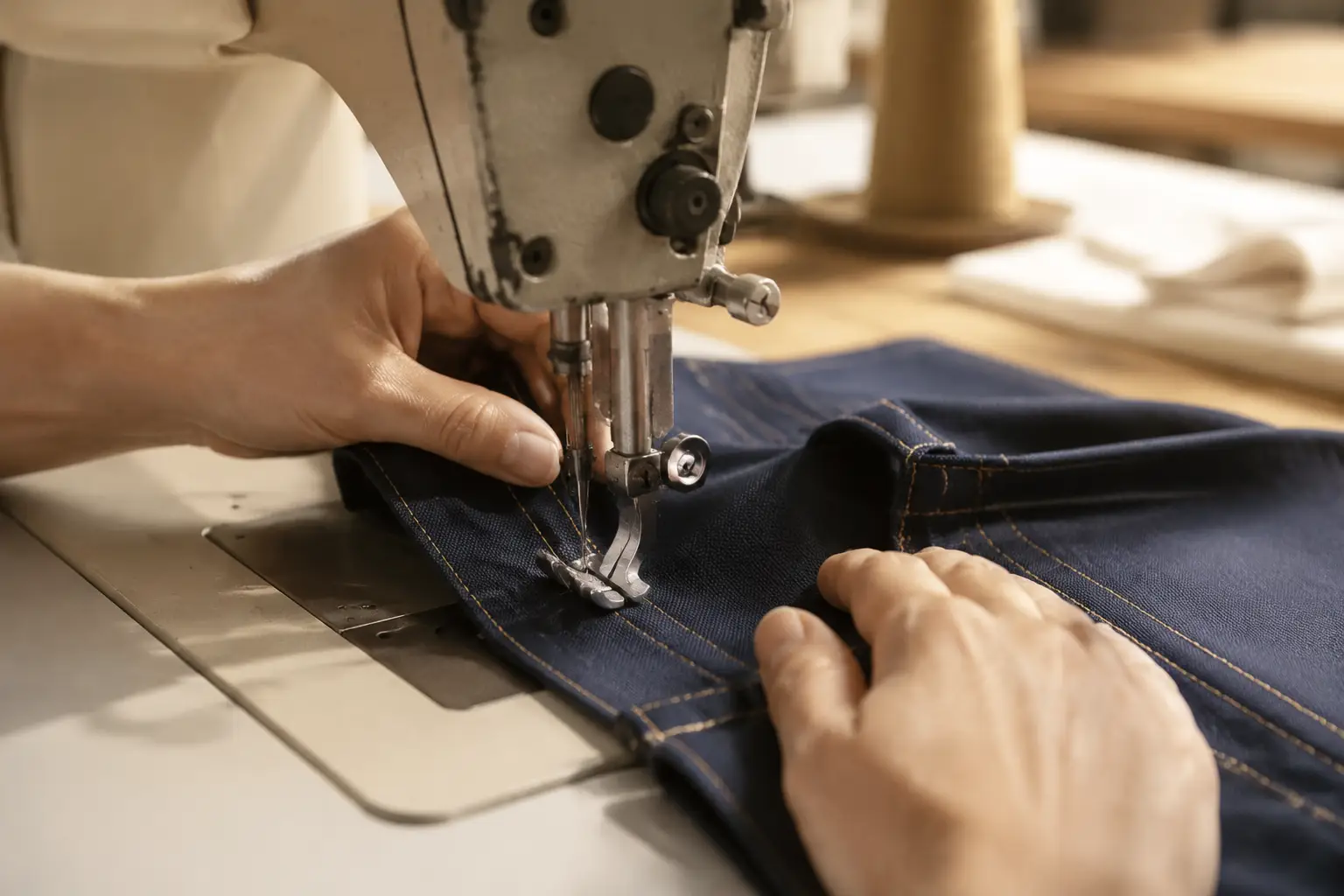
| 1. Dimension check | Your measurements are re-verified against our database and common sense. Odd numbers get a call, not a guess. |
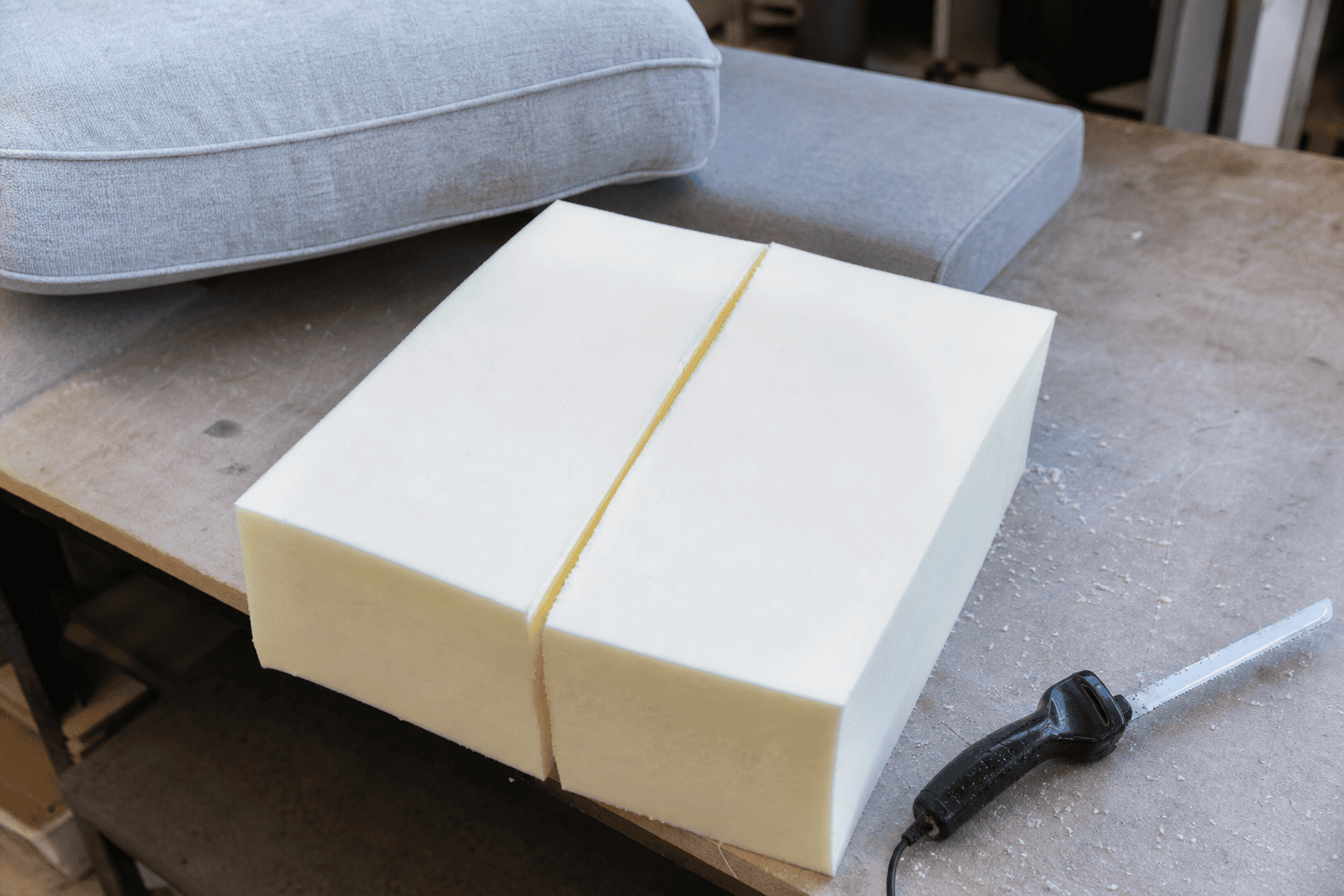
| 2. Foam cut | High-density 35–65D foam cut to size — the recovery and lifespan tier brands charge a premium for. |
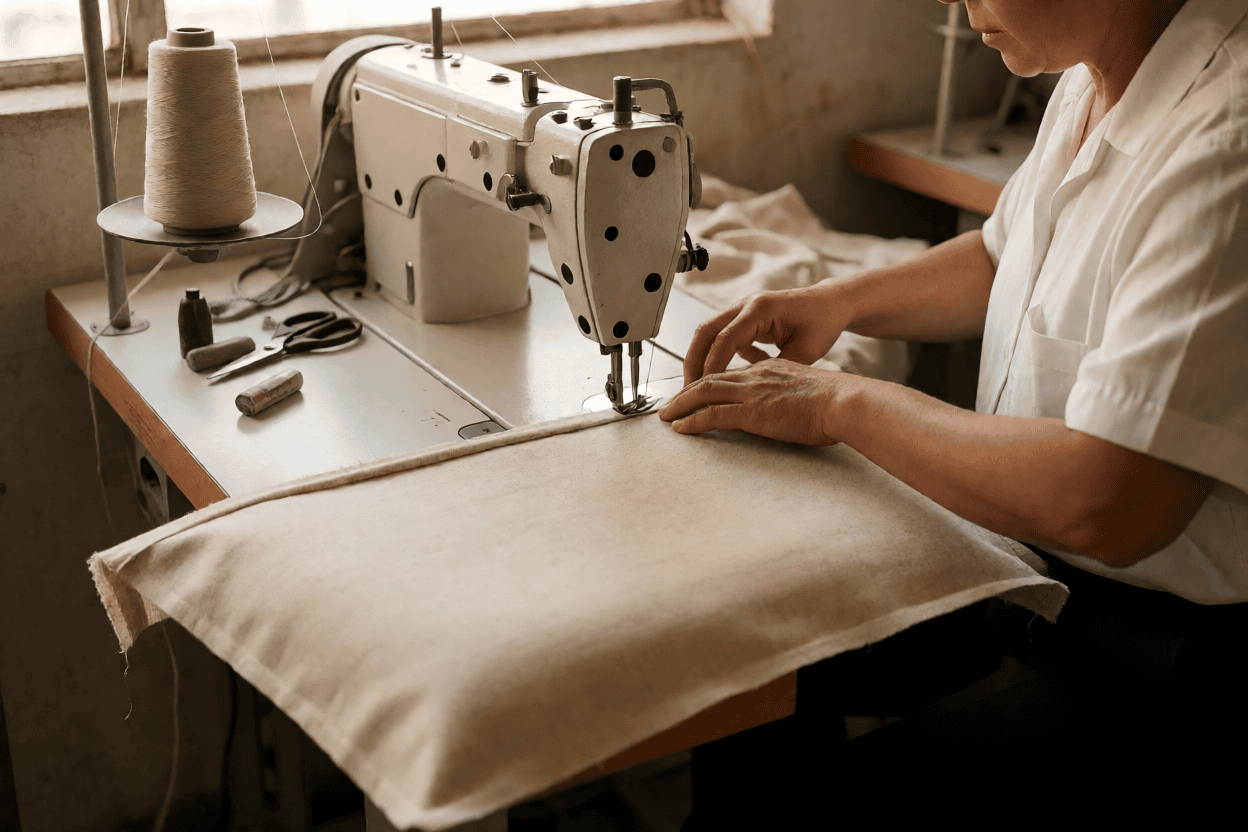
| 3. Cover sewn | Covers cut and sewn to your dimensions — never stock shells. Tufting as specified. |
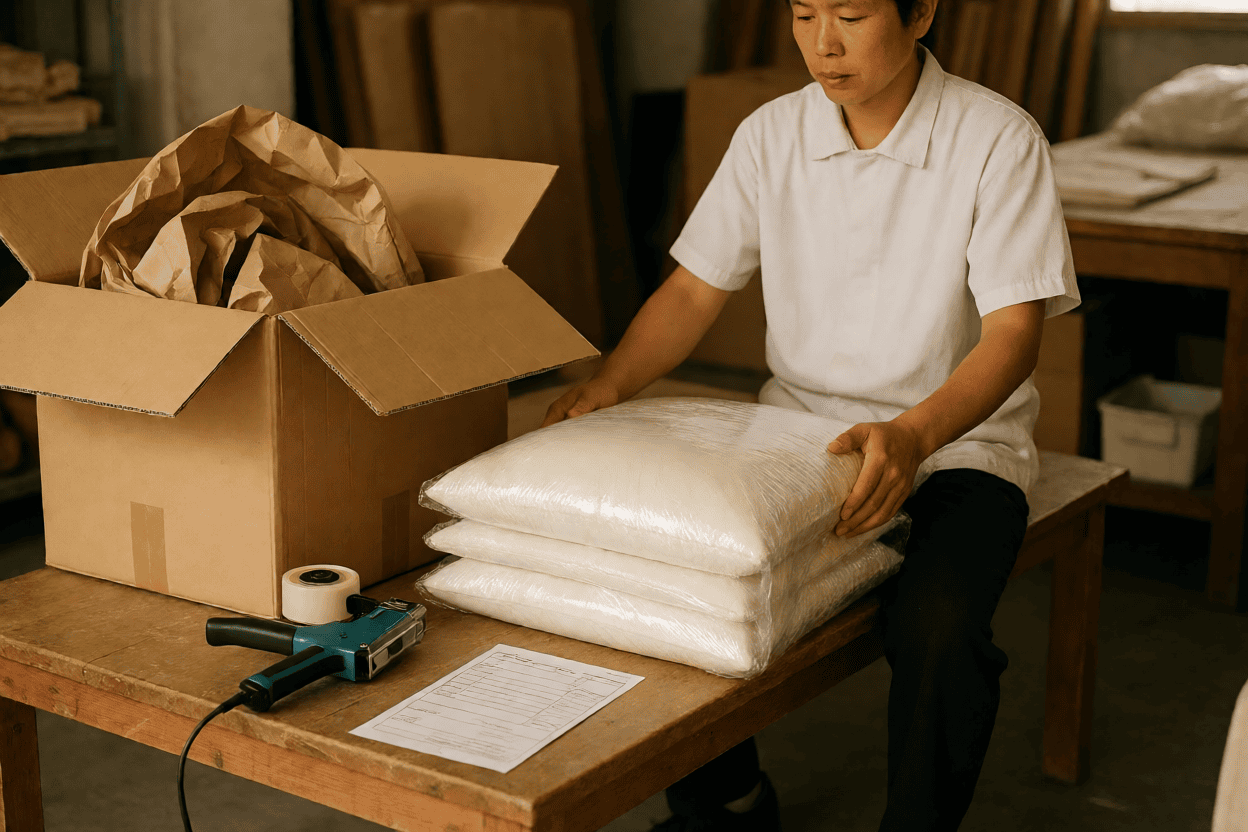
| 4. Fit & finish | Every piece is checked against your confirmed order dimensions before it ships — cut to within ½ inch, free remake if we miss. Flat-rate with tracking. |
Materials & Where They Come From
We buy like a mill, because we are one — not by the roll from a craft store, but by the production lot:
| Material | What we use | How we buy it |
|---|---|---|
| Foam | High-density 35–65D grades, the recovery tier brands upcharge for | Direct from foam mills in the same manufacturing belt as our mill — bought by the block, density-spec'd per lot |
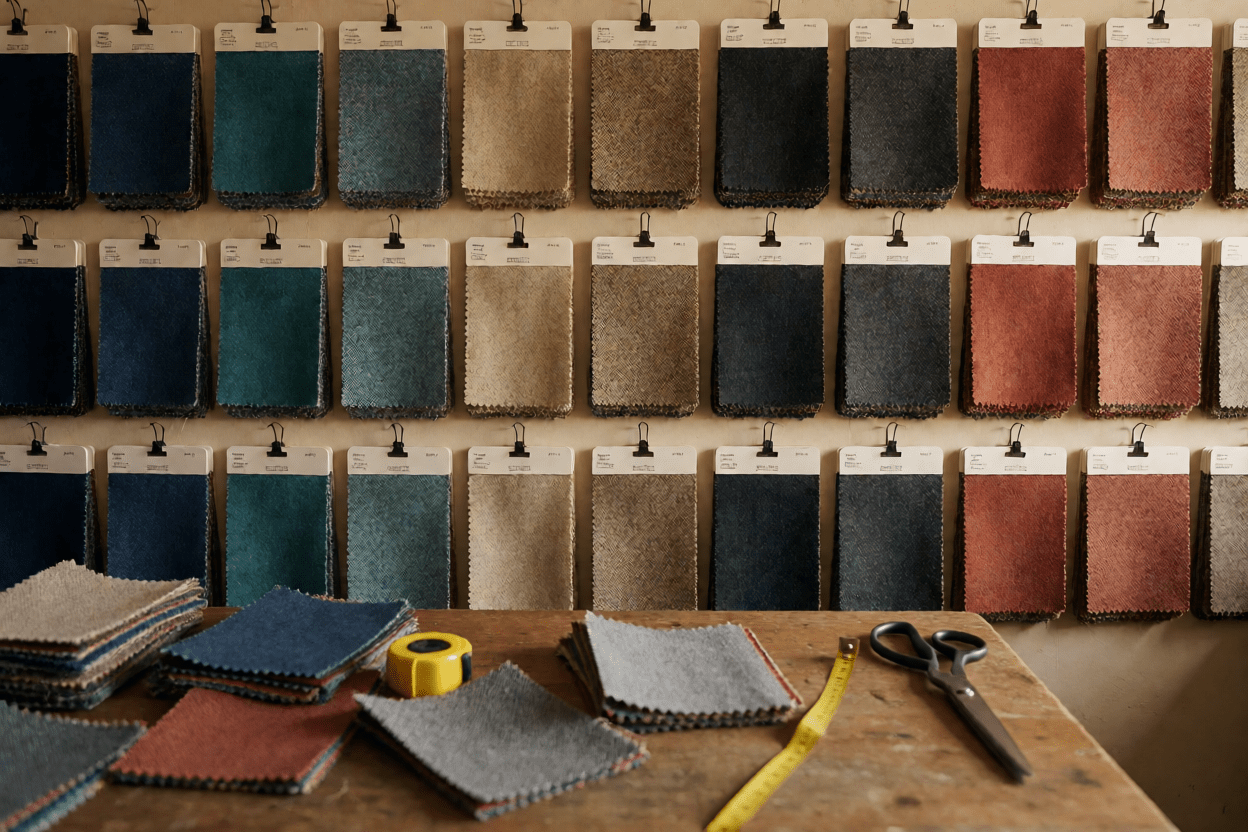
| Outdoor fabric | Solution-dyed acrylic class (bleach-cleanable, 5-year fade performance) and waterproof tech weaves | From upholstery mills on long-running supply agreements, not spot buys |
| Indoor fabric | Performance weaves, cotton linen blends, plush velvets | Same mills, same lots as our contract work — one fabric lot per set, so no dye-lot shifts |
Why this matters to you: density and dye lot are the two things that separate a cushion that lasts seasons from one that flattens by August. Buying at the source is how a high-density 35–65D build costs you a “standard foam” price here.
Why Factory-Direct Matters
Between a factory and your porch usually stand a brand, an importer, a distributor and a retailer — each taking a margin and none of them holding a tape measure. Selling direct means we can put high-density foam in a custom-cut cushion at a fair price, answer your fit questions with a decade of pattern experience, and stand behind every seam because our name is on the tag. It also means no stock piles: every cushion is made to order — 3-6 weeks delivery, crafted in 4-7 days then shipped direct from our workshop.
An honest catalog is shorter than a vague one. We make working cushions: seats, backs, benches, nooks, boat berths, church pew cushions — anything that benefits from measured foam and sewn covers, in our three fabric families — every fabric one price — on four density grades. We don’t make freestanding throw pillows as a decorative product line, we don’t make a dedicated open-boat marine core (a marine specialist is the right shop there, and saying so costs us less than it would cost you), and our covers close with zippers so they can be removed and washed. Every limit on this list exists because we would rather you order the right thing from the right maker than the almost-right thing from us.
How an Order Actually Runs
You send numbers; a person reads them. Every order is checked against our database and against common sense — a 60-inch “dining chair” gets a question, not a shrug — and the confirmation you approve lists every dimension in writing. Then the foam is cut, the cover is sewn, the piece is measured again against the order before it ships. The tolerance is published: within ½ inch of your confirmed numbers (¾ on longer runs), or the piece is remade free. It is a deliberate process — 4–7 business days of crafting, 3-6 weeks delivery all-in — and it is why the remake queue stays short.
Odd Shapes Get a Human
You don’t have to own standard furniture to order from us. One customer’s wicker chaise needed curved seat sections — a shape no dropdown can describe — so the order ran on emails and numbers until every section matched the frame. A 142-inch window bench, longer than our configurator’s own 120-inch limit, was taken on by a person instead: measured in writing, confirmed, then cut. Both fit on the first try. Odd shapes are not a favor we do customers; they are most of what a replacement workshop actually does.
Before You Order
Every dimension you send is confirmed in writing before we cut. Every cover closes with a zipper, so it can be removed and washed. If a piece lands outside the published tolerance — within ½ inch of your confirmed numbers, ¾ on longer runs — it is remade free, no forms and no argument. The details live where they should: read shipping & returns, scan the FAQ, or contact the workshop with a fit question before you measure.
Page last reviewed by the Cushion Mill workshop team, October 2026.
The Mill Behind Your Cushions
- Cushion factory for 10+ years — we cut, fill, and sew every order ourselves.
- Every dimension you send is re-checked before a single yard of fabric is cut.
- Made-to-order means any fabric, any piece, no minimum.
- Cut to ± ½ inch of your confirmed dimensions, in writing — outside tolerance, remade free.
Custom cushions from $83 — measure once, order once, sit on it for years.
Want to check a fabric first? Browse all 119 fabric options in the configurator — zoom the weave shots to judge color and texture before you order.