
Cleaning outdoor cushions divides into three regimes, and using the wrong one for your fabric is how cleanable cushions get ruined: routine care (monthly, any fabric, five minutes), deep cleaning (seasonal, method dictated by fabric construction), and stain response (clock running from the moment of spill). Do the first, and you rarely need the second; know your fabric before the third, because the strongest weapon in the arsenal — bleach — is either sanctioned or ruinous depending entirely on how the fabric was dyed.
This guide covers all three regimes for every fabric we sew with. The fabric-type background (solution-dyed vs piece-dyed) is in Sunbrella vs regular outdoor fabric — the one-paragraph version: solution-dyed means color runs through the fiber and cannot be bleach-stripped; piece-dyed means color sits on the surface and bleach destroys it. Identify which you own before you start.
Step Zero: Know What You’re Cleaning
Check the tag or the seller’s spec: solution-dyed acrylic (Sunbrella, Tempotest — bleach-safe), olefin (mostly bleach-safe at dilution, milder treatment preferred), or coated polyester (piece-dyed — mild soap only). If there is no tag and no stated construction, assume polyester and stay conservative: you can escalate a conservative clean, but you cannot undo a bleach-stripped cushion.
Regime 1: Routine Care (Monthly, All Fabrics)
What prevents 80% of deep-cleaning needs:
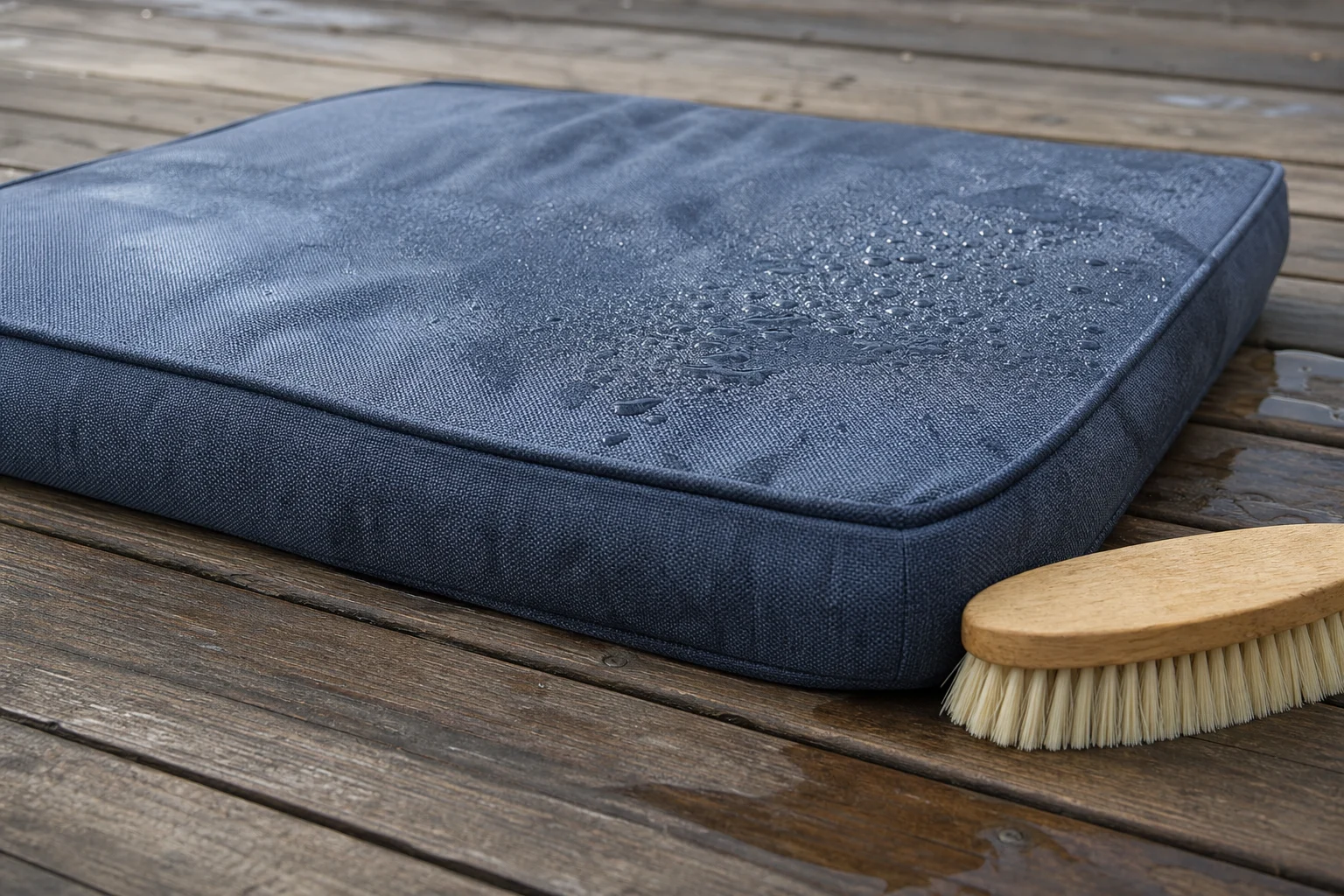
- Brush off loose dirt with a soft brush — dirt ground into weave by sitting is sandpaper plus stain.
- Rinse with the hose (plain water, no nozzle-jet into seams) or wipe with a damp cloth. Most outdoor dust and pollen leaves with water alone.
- Air-dry fully in the sun — never sit on or stack damp cushions.
- Spot-clean spills immediately (Regime 3) and flip/rotate quarterly so wear and sun distribute evenly.
Five minutes a month; it works because it never lets the film — pollen, oils, food residue — build into the layer that stains and feeds mildew. Prevention geometry (airflow, drainage, edge-standing after rain) is covered in prevent mold on cushions.
Regime 2: Deep Cleaning by Fabric Type
Solution-Dyed Acrylic (Sunbrella, Tempotest)
The full sanctioned method, per the manufacturers’ own care standards (ours matches; see also Sunbrella fabric care):
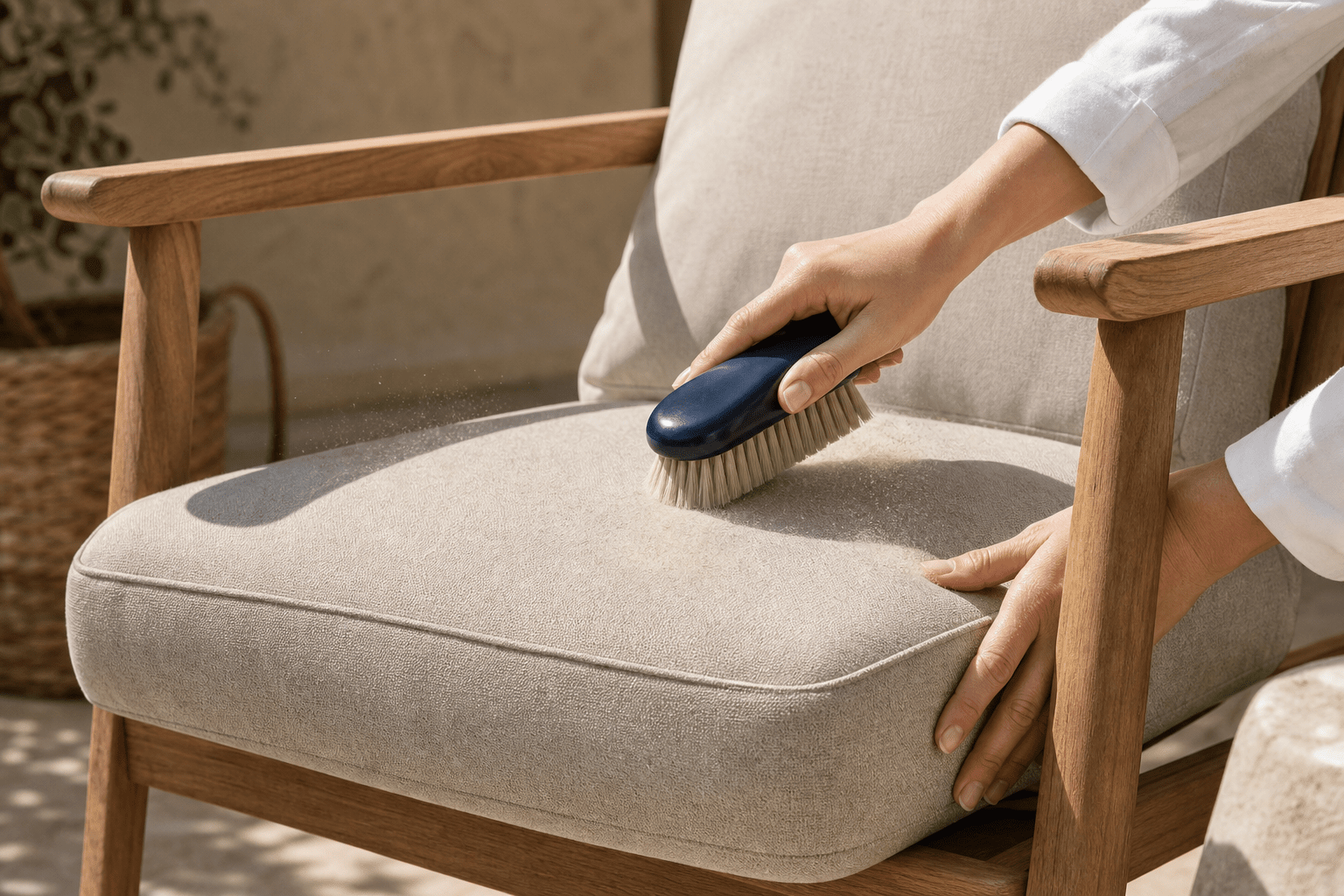
- Brush off loose dirt.
- Prepare a cleaning solution: 1/4 cup mild soap (Ivory/Woolite-class) per gallon of lukewarm water. For mildew or heavy grime, the sanctioned heavy option is 1 cup bleach + 1/4 cup soap per gallon — safe because solution-dyed color is structural.
- Soak the fabric in the solution (spray on and let sit 15 minutes), keeping bleach mix off surrounding non-acrylic surfaces and rinsing anything that splashes.
- Scrub gently with a soft brush — with the weave, not across it.
- Rinse thoroughly — all soap and bleach out, or residue becomes the next dirt magnet.
- Air-dry completely. Acrylic may show slight wrinkling when wet that vanishes as it dries.
Olefin (Polypropylene)
Similar, gentler on chemistry:
- Soap solution as above (skip bleach where you can; diluted bleach is tolerated by most olefin but degrades it faster than acrylic).
- Soft-bristle scrub, thorough rinse, full air-dry.
- Olefin’s low absorption means it rinses cleaner faster than any other fiber — a soap-only regime usually suffices.
Coated Polyester (Most Big-Box Cushions)
Conservative, because piece-dyed color and coatings are fragile:
- Mild soap and lukewarm water only — never bleach, never harsh detergents (they strip both dye and the water-repellent coating).
- Sponge or soft brush, minimal soaking, blot rather than flood.
- Rinse gently and fully; air-dry out of direct hot sun (heat accelerates coating wear).
- Re-treat afterward: cleaning abrades the repellent coating, so finish with a 303-style fabric protectant once fully dry — renewing beading is an annual-to-biannual event on coated polyesters (the re-treat method).
Removable Covers
Zip-off covers can go in the washing machine on many cushions — but check the tag first, and if you do: cold or lukewarm, gentle cycle, mild detergent, no fabric softener (it kills water repellency), zippers closed, and air-dry rather than machine-dry (heat shrinks seams and damages coatings). Washing covers is also the moment to inspect the foam — see cushion filling types for what healthy foam looks like versus dished.
Regime 3: Stain Response — The Clock Matters
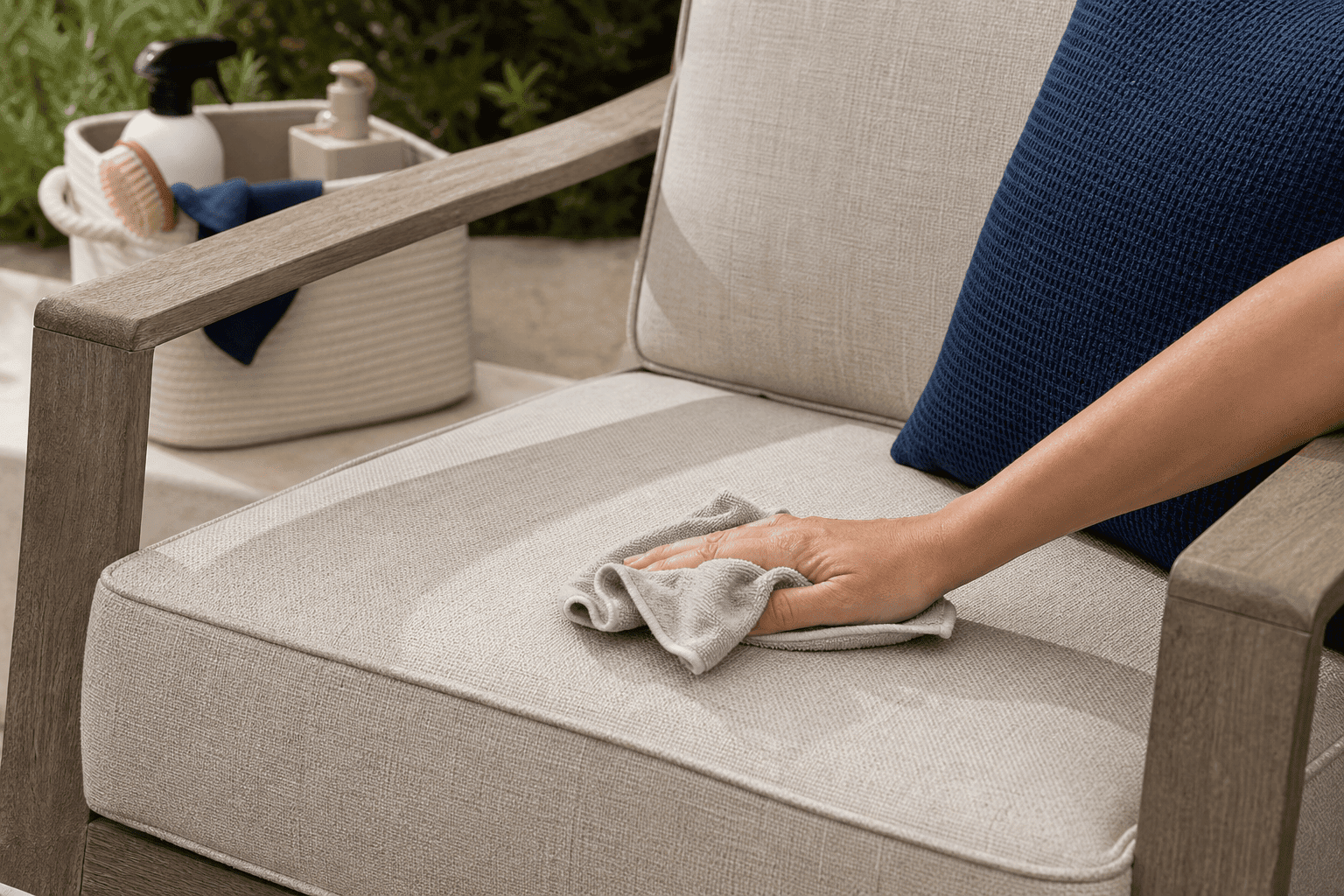
The universal first move: blot, never rub, with a clean dry cloth — rubbing drives the stain into the weave and abrades fiber. Then by stain:
| Stain | Method |
| Food/grease/sunscreen | Lift solids; blot; mild soap solution; blot again; rinse |
| Wine, coffee, juice | Blot immediately; soap solution; rinse. Bleach-safe fabrics: diluted bleach for residual color |
| Mold/mildew (surface) | Soap + 1/2 cup bleach per gallon (bleach-safe fabrics only); 15-minute dwell; scrub; rinse; dry fully in sun |
| Tree sap, tannin | Rubbing alcohol on a cloth, blotting (test corner first); soap finish |
| Bird droppings | Soften with water, lift, soap, rinse — do not dry-scrub (it grinds in) |
| Rust | Specialty rust remover (oxalic-based); bleach does nothing; test first |
| Oil on olefin | Olefin releases oils best of any fiber — soap and warm water usually complete |
On piece-dyed polyester, treat every stain conservatively and accept some shadows — the fabric’s ceiling is low. On solution-dyed acrylic, almost nothing is permanent if you act within the day. Deep-dyed fabric’s cleanability is, in our view, half the value of the premium (is Sunbrella worth it?).
The Drying Discipline (Where Cleaning Fails)
More cushions are damaged after cleaning than during it:
- Stand cushions on edge to drain and dry — both faces get airflow.
- Full sun is your ally on bleach-safe fabrics; for coated polyester, bright shade dries nearly as fast without baking the coating.
- Verify the core is dry — unzip and feel the foam before putting cushions back in service or stacking them. A damp core under a dry cover is exactly the trapped-moisture mold setup.
- Thick pieces (7″ back cushions, deep-seat cores) take a full day or two; fans shorten it.
When Cleaning Won’t Save It
Escalate to replacement when: mildew returns within weeks of proper cleaning (colony is internal — foam replacement, see when to replace cushions); fabric chalks when rubbed (fiber is UV-dead — terminal, the explanation); the cushion never stops smelling damp after two full dry cycles; or seams split during handling (sewing generation done). And note what failed so the replacement spec fixes it — internal mold means the next set wants a drainage answer (a marine-specialist reticulated core for uncovered rain climates; our line pairs waterproof fabric with high-density foam for sheltered-but-soaked duty) and breathable storage (winter storage); chalking means the next fabric tier is solution-dyed (best outdoor cushion fabric). Replacement covers and cores are orderable at custom outdoor cushions — and if the set you are rebuilding is a known patio line, the measured charts (the Hampton Bay Chateau trio, the Martha Stewart Palm Cove group) turn the reorder into picking fabric instead of guessing sizes.
Machine-Washing Deep Dive
The zip-off cover question deserves its own section because it’s where good cushions get ruined by convenience:
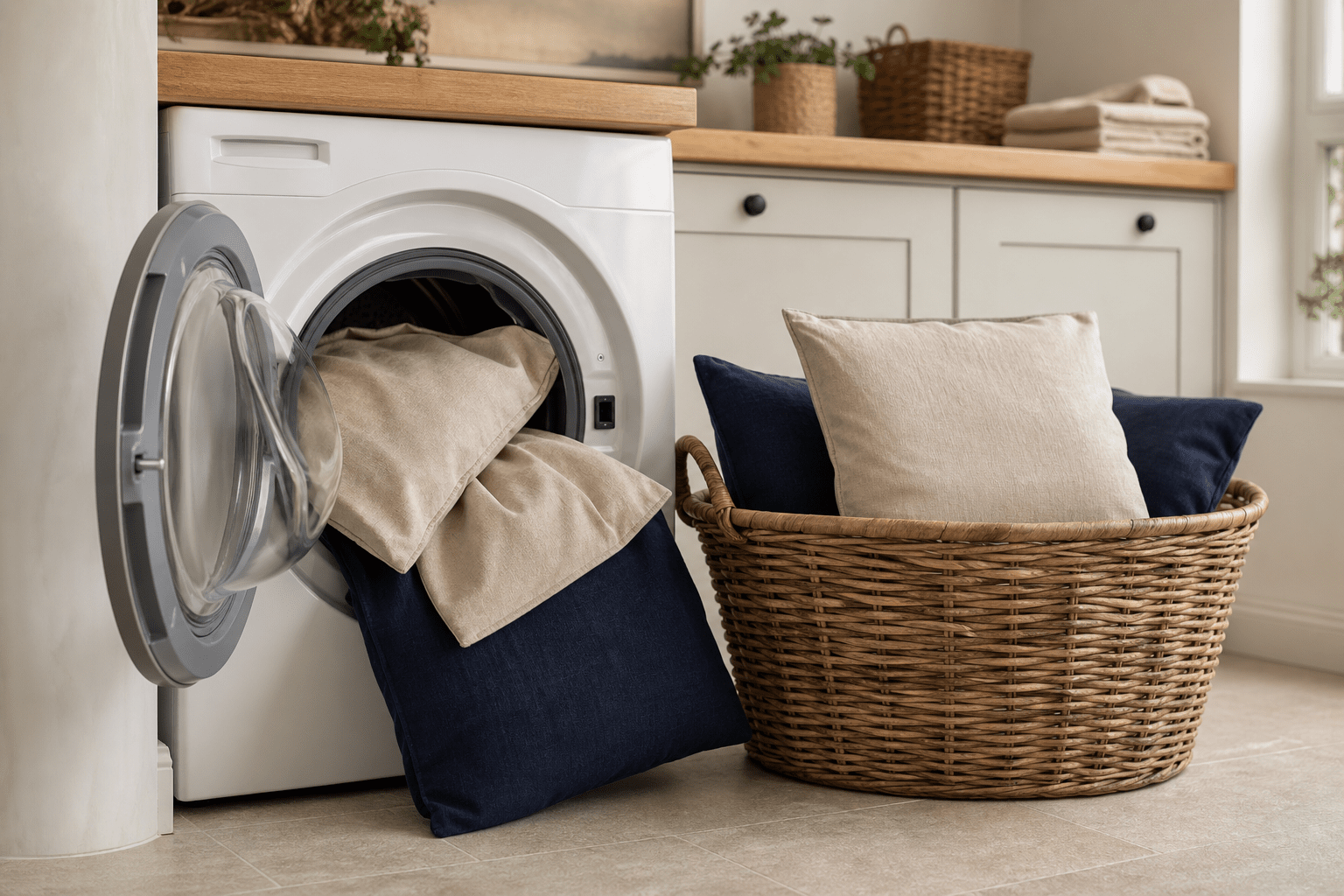
Check before any wash: the care tag outranks every guide including this one — manufacturers’ instructions vary by coating and lining. No tag? Hand-wash conservatively; you can escalate later.
If machine-washing is approved: cold or lukewarm water, gentle cycle, mild detergent (no bleach pods — precision dilution is impossible in a machine), no fabric softener (film defeats repellency), zippers closed, and covers turned inside-out to protect face fabric from drum abrasion. Small loads — two large covers max — so agitation stays gentle.
Drying: air-dry, full stop for coated polyesters (heat destroys coatings); Sunbrella-class acrylic tolerates low tumble heat per its own guidance, but air-drying costs nothing and risks nothing. Re-fit covers slightly damp on foam for the smoothest finish — the classic upholsterer’s trick.
The inspection dividend: every cover-off wash is a free core inspection — feel for firmness, look for interior staining, sniff for damp-sour (the audit). Washing is the only routine moment you see inside your own cushions.
Cleaning Tools, Ranked
A short kit list — most homes need only the top three:
- Soft-bristle brush (vegetable-bristle or dedicated upholstery brush) — the primary tool; stiffness matters more than brand
- Spray bottle for controlled solution application — flood-less cleaning saves coatings
- Clean white cloths for blotting (colored cloths transfer dye when wet with bleach solutions)
- Optional: soft-bristle detail brush for seams and piping tracks where grime concentrates
- Skip: pressure washers (drive water through seams and abrade fibers — the single most destructive “cleaning” tool), stiff wire brushes, and detergent pods
FAQs
How do you clean outdoor cushions without ruining them?
Identify fabric construction first: solution-dyed acrylic tolerates soap plus (when needed) diluted bleach; coated polyester needs mild soap only with no bleach ever — the right regime per fabric is above.
Can you use bleach on outdoor cushions?
On solution-dyed acrylic (Sunbrella-class), yes — 1 cup per gallon with soap is the sanctioned deep clean; on piece-dyed polyester, never — it strips the color permanently.
How do you get mildew off cushions?
Brush, then soap-plus-diluted-bleach on bleach-safe fabric (15-minute dwell, scrub, rinse, sun-dry); mild soap and shade-dry on polyester — and if mildew returns in weeks, it is inside the foam and cleaning is no longer the tool (when to replace).
Can cushion covers go in the washing machine?
Many zip-off covers can — cold gentle cycle, mild detergent, no softener, air-dry — but check the tag first; heat drying and softener both damage coatings and seams.
How often should outdoor cushions be cleaned?
A five-minute rinse-and-brush monthly, one deep clean per season, stains blotted on sight, and a full clean-dry before winter storage — the calendar that keeps deep cleans rare (storage guide).

Why One Rain Ruins a Patio Cushion (and How to Dry It in Time)
One rainstorm can kill a patio cushion — not by getting it wet, but by trapping water in the foam for days. The physics of why cushions stay wet for 5 days, the 72-hour mold clock, and a time-based triage for saving soaked cushions.
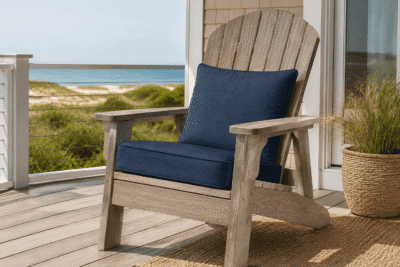
POLYWOOD Cushions: Fabric, Waterproofing, Cleaning and When to Replace
POLYWOOD frames are famous for outliving everything around them — the recycled HDPE lumber shrugs off rain, salt and sun
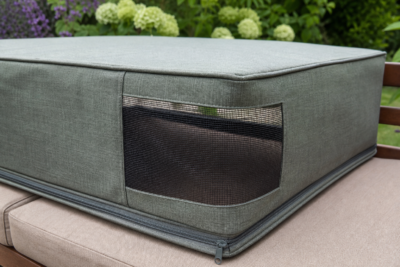
Insect-Proofing Patio Cushions: What Works on Bugs, Without Ruining Fabric
Why insects target outdoor cushions (nesting sites, food residue, moisture), the prevention stack — cleaning, storage, covers, placement — what sprays and repellents are fabric-safe, and the honest limits of keeping a patio bug-free.
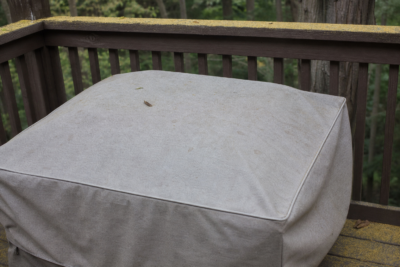
Pollen Season on the Patio: Protecting Cushions and Furniture
What pollen actually does to outdoor cushions (it’s not the color — it’s the chemistry), the spring protection playbook from covers to placement, cleaning pollen off fabric without grinding it in, and fabric choices for the perpetually dusty patio.
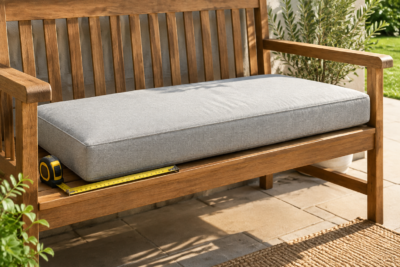
How to Clean Mold Off Outdoor Cushions (and When It’s Too Late)
How to tell salvageable mold from a dead cushion, the vinegar-and-oxygen-bleach method that works, and what to buy so it never comes back.
How to Store Outdoor Cushions for Winter: The Complete Method
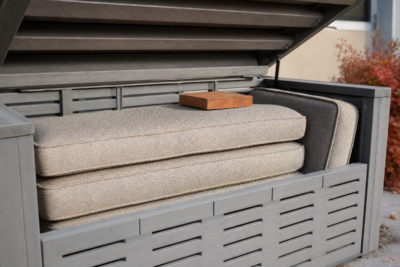
The right way to winterize outdoor cushions — deep clean, bone-dry, ventilated storage, what never to do — and which climates need indoor storage at all.