
The gap between cushions that die in two seasons and cushions that look good at year eight is mostly not money — it is about a dozen small habits applied consistently. We see both ends at the factory: the replacement orders that arrive as “premature failures” almost always trace to storage or moisture errors, and the customers who reorder the same spec after eight years all describe the same routine.
Longevity has two phases: buying the right specs once (density, fabric construction — decisions made at order time) and operating the maintenance system (habits, free, applied forever). This guide is the system, compressed into twelve habits grouped by what they protect.
Phase Zero: The Specs That Set Your Ceiling
Two decisions at purchase determine the achievable lifespan more than any habit afterward:
- Foam density — 35D+ high-resilience foam lasts 5–10 years of daily use; 18–24D foam dishes permanently within 1–2 seasons no matter how gently it is treated. Density is durability; firmness (ILD) is a comfort choice and independent of it. The full explanation is memory foam vs regular foam, and the fill menu is cushion filling types.
- Fabric construction — solution-dyed fabric (color through the fiber) holds color for the warranty period and beyond; piece-dyed fades in seasons of direct sun. Choose by exposure: best outdoor cushion fabric and the value math in is Sunbrella worth it?.
Habits below can double the life of good specs. No habit can save bad ones. (What good specs cost: the price guide.)
Protecting the Foam (Habits 1–4)
1. Rotate and flip quarterly. Foam ages where it is loaded and where it stays damp — the same spot, the same side, every time. Flipping and rotating distributes both so no single face carries the whole burden. Two minutes, four times a year, adds years.
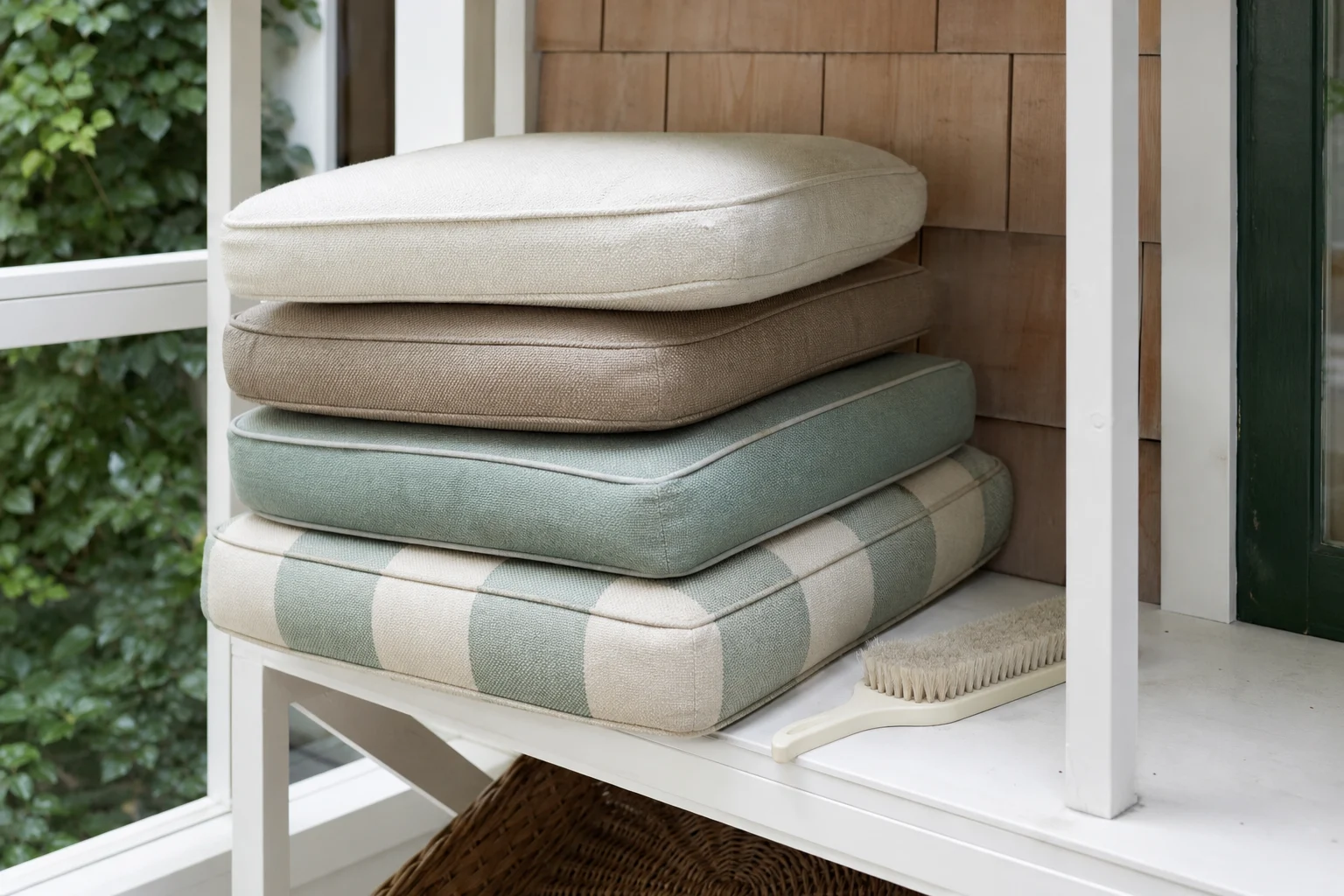
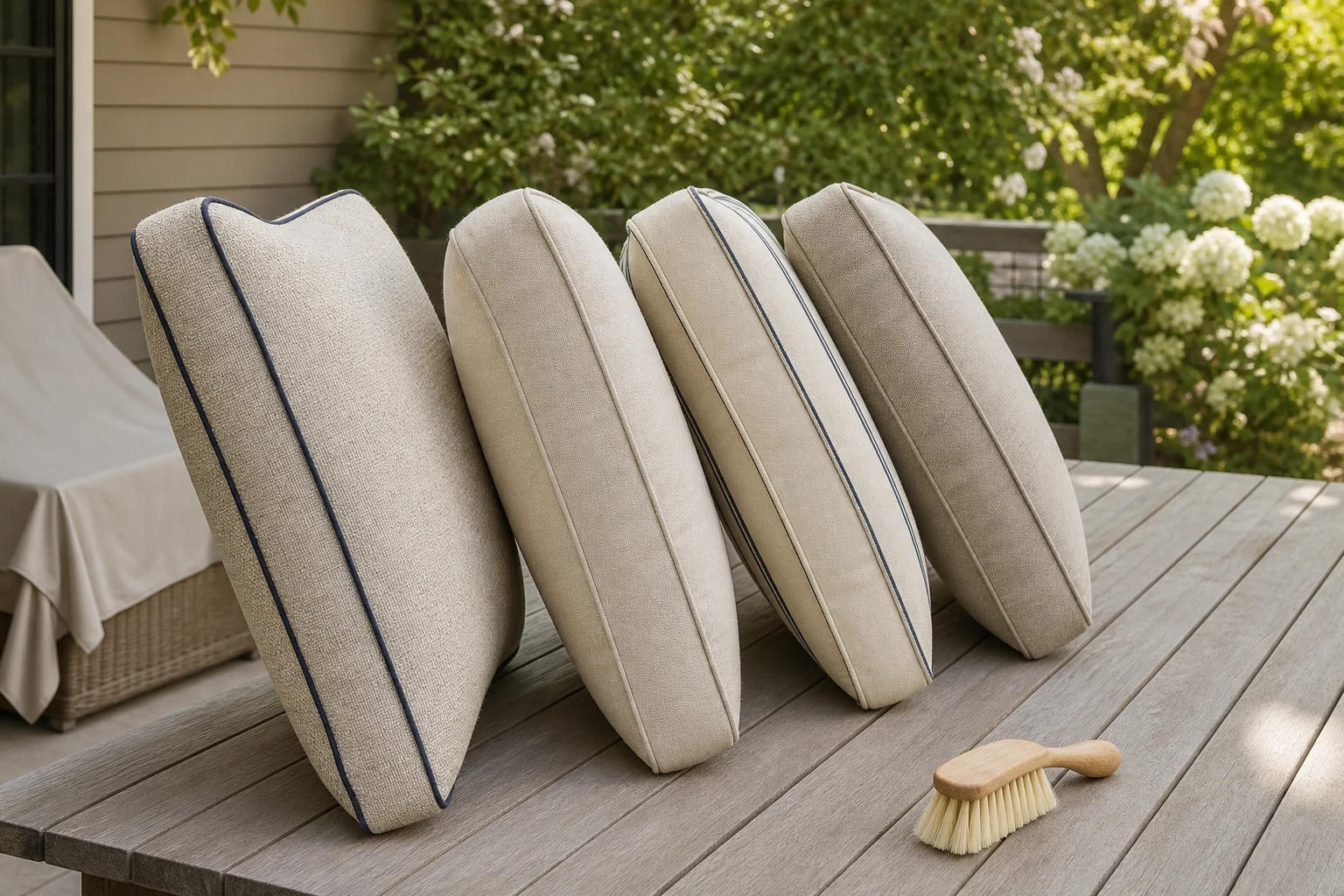
2. Stand cushions on edge after soaking rain. Flat cushions dry on top and hold water below — hours versus days of drying time is the difference between a damp core and a colonized one (mold establishes in roughly 24–72 hours of continuous damp — prevent mold).
3. Never sit on cushions wet if you can avoid it, never stack them damp. Loading wet foam drives water deeper into cells and compresses the structure it is softening. Let them dry first; it costs a few hours of patience.
4. Don’t overload beyond design. Using seat cushions as kneeling pads, step stools and trampolines for children is how cores crack and covers split at the seams. The foam is engineered for seated human weight.
Protecting the Fabric (Habits 5–8)
5. Monthly five-minute clean. Brush off soil, rinse with water, air-dry. The film of pollen, dust and oils is both a stain-in-waiting and mildew’s food supply; keeping it thin is the cheapest fabric protection there is. Full methods by fabric type: how to clean outdoor cushions.
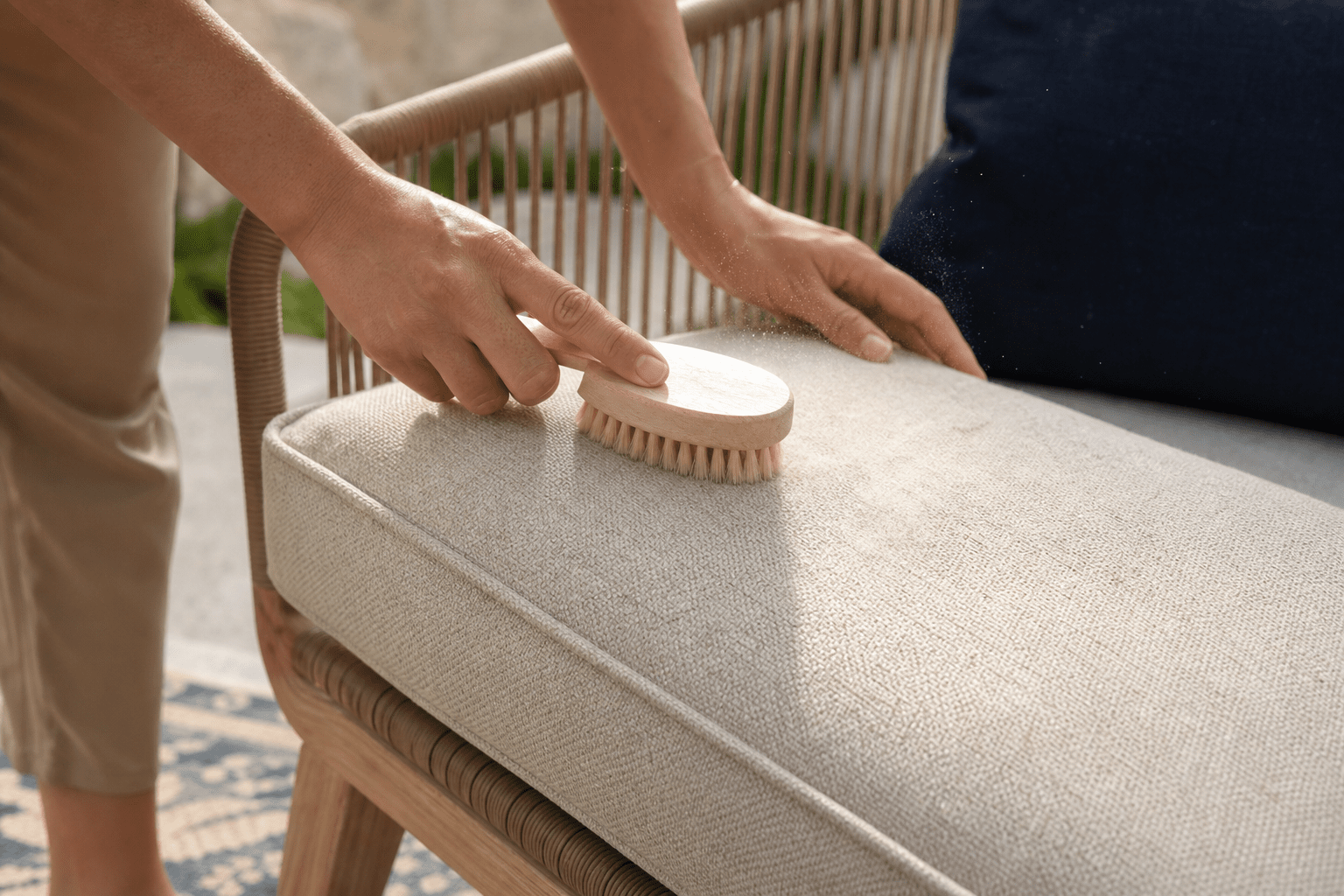
6. Blot spills within the hour. On solution-dyed fabric, essentially nothing becomes permanent if treated the same day (Sunbrella care); every fabric benefits from immediate blotting — never rubbing, which drives soil into the weave.
7. Renew water repellency annually. When rain stops beading, clean fully, dry, and apply a 303-class protectant. Renewed beading means water sheds instead of soaking — less moisture into the system entirely. Coated polyesters especially live or die by this (the method).
8. Give cushions shade hours where you can. UV works all day, every sunny day, forever. Furniture placement that gives cushions part-shade during the strongest hours measurably slows fade — the same reason we recommend light colors for full sun (choosing cushion colors). An umbrella or awning is a fabric-life device.
Protecting the Whole System (Habits 9–12)
9. The dry-winter-storage discipline. Clean → dry to the core (unzip and feel the foam — surface-dry is not dry) → breathable storage, never sealed plastic. Stored-damp is the number one killer we see, and it kills good cushions and cheap ones alike. Full walkthrough: winter storage guide.
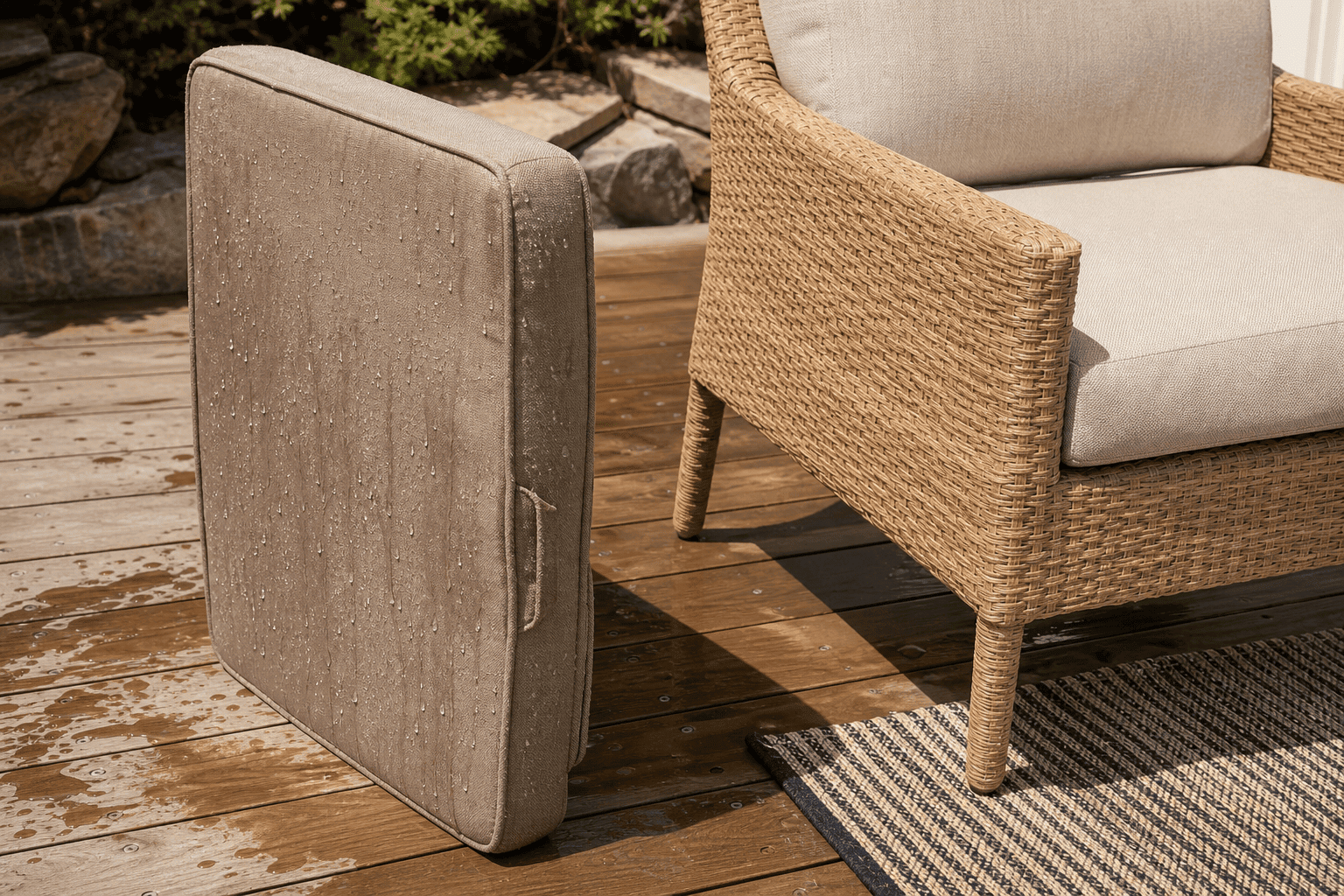
10. Mind the underside. Cushions flat on wet solid surfaces wick water from below faster than rain enters from above. On solid decks: airflow beneath, furniture glides, or edge-standing after rain. Slatted furniture self-drains — one reason wicker sets age well.
11. Run the annual audit at storage time. Each autumn: sit test (instant rebound = alive), chalk test (rub fabric — powder = UV-dead), fade comparison (hidden area vs face), smell test. Five minutes against the checklist in when to replace cushions tells you whether spring needs an order — and off-season ordering beats the spring rush queue (custom lead times run 2–6 weeks across the market — ours is made and shipped in 4-7 days: benchmarks).
12. Re-cover instead of replace when the core is sound. Fabric dies before foam on well-chosen cushions — fade and chalking at year 5–6 with a core that passes the sit test. Cover-only orders give the set a second half-life in any fabric you like (ask for a quote) (custom cushion covers); if the core died first, the mirror move is re-foaming.
What This Actually Adds Up To
The honest arithmetic from the replacement side:
| Neglected | Maintained | |
| Budget cushions (24D foam, coated polyester) | 1–2 seasons | 3–4 seasons |
| Quality cushions (50D foam, solution-dyed) | 3–5 years | 7–10 years |
The maintenance column costs roughly: five minutes a month, an afternoon each autumn, and an annual protectant application. Against a $192–$361 loveseat replacement (price guide), it is the highest-return labor in the garden.
One closing note for buyers mid-decision: specs before habits. A maintained cheap cushion still underperforms a neglected quality one, and the best-maintained cushion cannot out-clean UV-dead fiber or out-rotate collapsed foam. Buy the density and the dye construction right once, then let the twelve habits do what habits do — quietly compound.
The Annual Calendar (All Twelve Habits, Scheduled)
| Season | Habits in play |
| Spring | Air-out day, protectant renewal if skipped, flip/rotate, first monthly clean |
| Summer | Monthly cleans, spill response, edge-standing after storms, shade management |
| Fall | Quarterly rotate, deep clean, annual audit (the checklist), dry-to-core, winter storage |
| Winter | Mid-storage sniff check; off-season replacement orders skip the spring queue (timing) |
Roughly six hours a year, all twelve habits included. Against the replacement cost of a quality set — $1,500–$2,500 for a full conversation grouping at current benchmarks — it is the best-paid labor on the property.
The Two-Minute Version
If you remember nothing else: dry is life, rotation is youth, density is destiny. Keep water moving out, move the wear around, and buy cores at 35D+ — everything else in this guide is elaboration on those three sentences.
Maintenance Myths That Cost Cushions
Four beliefs we correct weekly, each doing real damage:
- “Sunbrella doesn’t need cleaning.” Fade-resistance is not soil-resistance — the pollen film that feeds mildew accumulates on premium fabric exactly as fast (cleaning methods). Premium fabric tolerates neglect; it doesn’t profit from it.
- “Cushions need covering every night.” Breathable furniture covers help in storms, but nightly wrapping traps the humidity cushions exhale overnight — the covered set often out-molds the uncovered one in humid climates (mold physics). Cover for weather, not for routine.
- “Fluffing fixes flat cushions.” Fluffing redistributes fiber fills (fill types); it cannot restore foam that has taken a compression set — the dished seat needs a new core, not attention (re-foaming).
- “More washing = longer life.” Every wash costs a little coating and seam life; the monthly light clean plus prompt stain response outperforms aggressive monthly deep-cleans (the regimes).
FAQs
How long should outdoor cushions last?
With quality specs (35D+ foam, solution-dyed fabric) and consistent care, 5–10 years; neglected quality cushions give 3–5, and budget builds fail within 2–3 seasons regardless — specs set the ceiling, habits determine how close you get.
What single habit extends cushion life the most?
Moisture discipline — edge-standing after rain, never stacking or storing damp, dry-to-the-core before winter: trapped moisture drives both mold and foam breakdown and is the top premature-failure cause we see.
Does rotating cushions really help?
Yes — flipping and rotating quarterly distributes the load and the damp-side exposure so no single face absorbs all the wear; two minutes four times a year measurably delays foam compression set.
Should I re-treat my cushions with fabric protectant?
Yes, when water stops beading — clean, dry fully, apply a 303-class protectant; renewed repellency keeps water out of the whole system and is especially life-extending for coated polyesters.
Is it better to re-cover or replace old cushions?
If the foam passes the sit test (instant rebound, no dishing), re-cover (cover-only — ask for a quote); if the core is dead, replace — no cover rescues failed foam (the decision matrix), and the replacement path for outdoor sets is custom outdoor cushions.
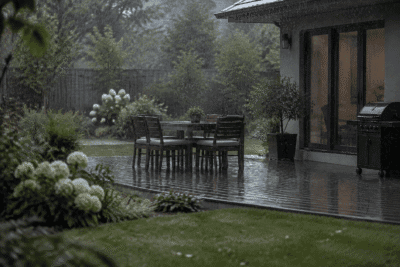
Why One Rain Ruins a Patio Cushion (and How to Dry It in Time)
One rainstorm can kill a patio cushion — not by getting it wet, but by trapping water in the foam for days. The physics of why cushions stay wet for 5 days, the 72-hour mold clock, and a time-based triage for saving soaked cushions.

POLYWOOD Cushions: Fabric, Waterproofing, Cleaning and When to Replace
POLYWOOD frames are famous for outliving everything around them — the recycled HDPE lumber shrugs off rain, salt and sun
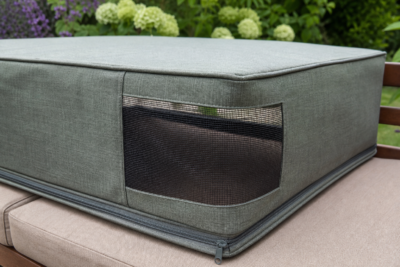
Insect-Proofing Patio Cushions: What Works on Bugs, Without Ruining Fabric
Why insects target outdoor cushions (nesting sites, food residue, moisture), the prevention stack — cleaning, storage, covers, placement — what sprays and repellents are fabric-safe, and the honest limits of keeping a patio bug-free.
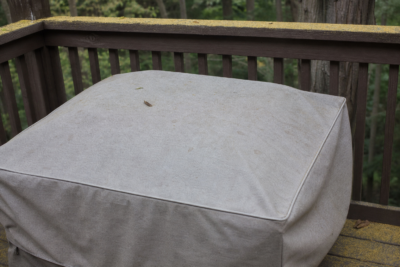
Pollen Season on the Patio: Protecting Cushions and Furniture
What pollen actually does to outdoor cushions (it’s not the color — it’s the chemistry), the spring protection playbook from covers to placement, cleaning pollen off fabric without grinding it in, and fabric choices for the perpetually dusty patio.
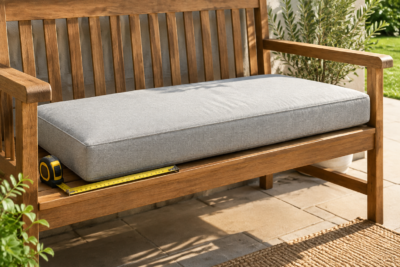
How to Clean Mold Off Outdoor Cushions (and When It’s Too Late)
How to tell salvageable mold from a dead cushion, the vinegar-and-oxygen-bleach method that works, and what to buy so it never comes back.
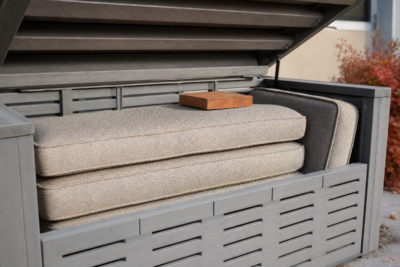
How to Store Outdoor Cushions for Winter: The Complete Method
The right way to winterize outdoor cushions — deep clean, bone-dry, ventilated storage, what never to do — and which climates need indoor storage at all.