There is no single best outdoor cushion fabric — there is a best fabric for your patio. A covered porch in Seattle and a full-sun deck in Phoenix punish fabric in completely different ways (moisture there, UV here), and the right answer for one is over-buying or under-buying for the other.
This guide ranks the fabric families you will actually meet in the market — polyester grades, olefin, solution-dyed acrylics including Sunbrella and Tempotest — against the five things that kill outdoor fabric, then matches them to climates, exposures and budgets. Our own menu is three tiers (Cotton Linen, Tech Fabric, Premium Velvet); this guide is the market context around them. It is written from the factory side: what we see come back after two seasons, and what we sew for customers who order twice.
For the head-to-head most buyers face first, see Sunbrella vs regular outdoor fabric; the product pages are Sunbrella cushions and the outdoor fabric guide. This article is the wider field.
What Actually Destroys Outdoor Fabric (Rank the Threats First)
Before picking a fabric, figure out which of these five is your furniture’s main killer — climate determines it, and the right fabric is the one strong against your threat:
- UV fade — the #1 killer in the Sun Belt and at altitude. Breaks down dye and then the fiber itself (chalking, brittleness).
- Trapped moisture — the #1 killer in shade, humid climates and under tree cover. Feeds mildew and rots thread.
- Abrasion and body wear — friction on arms and seat edges, plus the slow grind of dirt acting as sandpaper inside the weave.
- Stains — food, sunscreen, pollen, tannin from leaves; more texture and more hydrophobic finish means more stain resistance.
- Mold food — not the fabric itself but the dirt film on it; cleaning access (can you bleach it?) determines how recoverable a cushion is.
The Fabric Families, Ranked
Tier 1: Solution-dyed acrylic (Sunbrella, Tempotest) — best all-around
How it’s made: color pigment goes into the acrylic before fiber extrusion — color is the fiber, all the way through (the full explanation is in Sunbrella vs regular outdoor fabric).
Strengths: elite fade resistance (5-year warranty territory), inherently UV-stable polymer, low water retention, bleach-cleanable, sews beautifully, colors hold especially in dark saturated shades.
Weaknesses: highest cost — typically 30–80% above budget polyester at retail; the dense canvas-like hand is not to everyone’s taste.
Best for: full sun, hot climates, dark colors, long ownership horizons, poolside (chlorine-tolerant cleaning).
Tier 2: Olefin (polypropylene) — best value in sustained exposure
How it’s made: polypropylene fibers, solution-dyed in most outdoor grades — so it shares the through-and-through color logic of tier 1 at lower cost.
Strengths: excellent fade resistance for the price, very low water absorption (polypropylene literally wicks rather than soaks), strong stain resistance, cheap per yard. Pound-for-pound the best value in continuous outdoor exposure.
Weaknesses: hand is slicker and more plastic than acrylic; can pill under heavy abrasion over years; color palette skews to muted tones in many mills.
Best for: budget-conscious full-sun installs, pool furniture, commercial/multi-family settings, anything where cushions live outside all season.
Tier 3: Performance polyesters and blends — best for covered use
How they’re made: conventional polyester, piece-dyed, usually with a water-repellent coating (the “CushionGuard”-style treatments on big-box cushions are this category).
Strengths: softest hand, huge color and print range (brights and patterns are mostly this category), lowest cost, and perfectly adequate under a roof.
Weaknesses: coating wears off with abrasion and washing; piece-dyed color fades in direct sun within a season or two; cannot be bleached, so mildew stains can be permanent.
Best for: covered porches, screened rooms, shade, short horizons, and light colors in partial sun.
Specialty: coated and “waterproof” fabrics
Vinyl-backed and laminated fabrics market themselves on water. Reality: they trap moisture inside the cushion against the foam, which is worse than rain passing through a breathable cover and drying. The honest physics is in waterproof cushions explained — breathability beats sealing for anything that must dry. Use coated fabrics only on cushions you take inside after use (dock cushions, camping pads), not on patio seating that lives out.
The Comparison Table
| Polyester (coated) | Olefin | Solution-dyed acrylic | |
| Fade life (full sun) | 1–2 seasons | Years | Years + 5-yr warranty |
| Water absorption | Wets through, holds | Lowest | Low |
| Drying speed | Slow | Fast | Fast |
| Bleach-cleanable | No | Mild only | Yes |
| Hand | Softest | Slick | Dense canvas |
| Color range | Largest, bright prints | Muted | Wide, deep satins |
| Relative cost | Baseline (cheapest) | Mid | Highest — typically 30–80% above coated polyester |
The cost column reflects market pricing. On our own quotes fabric runs a flat $7.43/sq ft of top area — every fabric in the 119-weave library, Cotton Linen to Premium Velvet alike — no spread at all, with foam spec the bigger lever; mechanics explained in the outdoor cushions price guide.
Match Your Fabric to Your Situation
Full sun, 6+ hours (Southwest, Florida, high altitude): solution-dyed acrylic or olefin. Polyester is a guaranteed re-buy in 18 months. Between the two: acrylic if colors are dark or the horizon is 5+ years, olefin if the budget is firm.
Covered porch / screened room: performance polyester is genuinely fine — you are paying for softness and print choice, not wasting money. Upgrade only if you see mildew (moisture, not sun, is your threat — see prevent mold on cushions).
Humid shade / under trees: breathability and drying speed outrank fade specs. Acrylic or olefin (low absorption), light colors that show mildew early, and a cleaning routine from how to clean outdoor cushions.
Poolside: acrylic — chlorine splash must be bleach-cleanable, and slick wet skin abrades arm fabric hard.
Dining vs deep seating: dining cushions take more friction (sliding on and off) — abrasion-resistant weaves matter more; deep seating takes longer sun-soaked sits — fade and comfort matter more.
Dark colors anywhere in sun: solution-dyed only. Navy, black and deep green fade fastest and show it hardest; there is no piece-dyed dark fabric that survives a sunny patio respectably.
How the Fabric Choice Interacts with Everything Else
Fabric is one decision in a system:
- – Foam: the best fabric over cheap foam still feels bad and holds water — open-cell quick-dry foam (Retain/FoamSource-style) pairs with breathable covers; filling options compared in cushion filling types.
- – Construction: ties, welt, zippers and thread all live as long as the fabric does — UV-rated thread is not marketing; ordinary thread rots in sun years before acrylic fabric gives out.
- – Maintenance: the fabric sets your cleaning ceiling (bleach-safe or not) and your winter storage obligations — winter storage guide.
Our menu runs Cotton Linen, Tech Fabric and Premium Velvet, all orderable on any shape via the custom cushions builder; ready patterns for Hampton Bay sets (Spring Haven, Santa Rosa, Edington) are built on the same fabric menu — and any other line, discontinued or not, goes through the builder the same way.
How to Judge Fabric Quality When You Can’t Test It
Fabric shopping is full of claims and short on specs. Five verifiable signals separate quality outdoor fabric from marketing, usable on any product page or in any store:
- The dye method, stated. “Solution-dyed” is a construction claim any quality mill states proudly; its absence means piece-dyed, whatever the euphemism (“vibrant color technology” is piece dyeing).
- Weight and warranty, in numbers. Outdoor-grade runs roughly 7–9 oz upholstery weight; fade warranties run 2–3 years on olefin and 5 years on top acrylics. No numbers, no claim.
- The rub count. Martindale or Wyzenbeek abrasion ratings (look for 15,000+ double rubs for residential outdoor, 30,000+ for heavy use) — the one spec that predicts the arm-edge wear pattern.
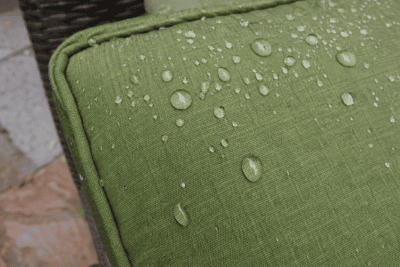
- Water behavior, demonstrated. On a swatch, a drop should bead and roll, not wet in. Ask for a swatch — reputable sellers send them free or for a few dollars, often credited back when you order (how to use swatches).
- Care ceiling, disclosed. “Clean with mild soap” describes every fabric; “bleach-cleanable” or “bleach-safe” is a construction fact only solution-dyed fabric can claim — the single most useful filter in the market.
Fabric Mistakes That Age Cushions Prematurely
From the replacement orders we see, four fabric-adjacent mistakes compound faster than the fabric’s own grade:
- – Buying dark piece-dyed fabric for full sun — the fade is structural and visible within a season; no maintenance routine fixes construction (choosing cushion colors).
- – Assuming the cover fabric handles water alone — the core matters as much as the face; a quick-dry core under breathable fabric survives rain that would kill a sealed build (waterproof cushions explained).
- – Skipping protectant renewal — repellent finishes are consumables; a fabric that soaked when it should have beaded ages two grades faster (the renewal method).
- – Storing on the assumption that premium fabric winters outdoors — solution-dyed acrylic tolerates neglect better, but the foam underneath does not; storage discipline applies to every tier (winter storage guide).
FAQs
What is the best fabric for outdoor cushions in full sun?
Solution-dyed acrylic (Sunbrella, Tempotest) first, olefin a strong value second — both dye the fiber through, which is the only construction that resists UV fade structurally.
What is the most fade-resistant budget fabric?
Olefin — solution-dyed polypropylene delivers most of acrylic’s fade life at a clearly lower price, with the tradeoffs of a slicker hand and narrower color range.
Is polyester okay for outdoor cushions?
On a covered porch or in shade, yes — coated outdoor-grade polyester is soft, cheap and fine; in direct sun it fades within a season or two and cannot be saved once it chalks.
Does a higher fabric tier change the price much?
At retail it can — solution-dyed acrylic typically runs 30–80% above budget polyester; on our own quotes fabric is flat at $7.43/sq ft (about $118 total on a typical loveseat, the same in every family), with foam spec the bigger lever; full tables in the price guide.
Which fabric is easiest to keep clean?
Solution-dyed acrylic — it tolerates the bleach-based deep clean that kills embedded mildew, where piece-dyed polyester is permanently stained by the same treatment; methods in Sunbrella fabric care.
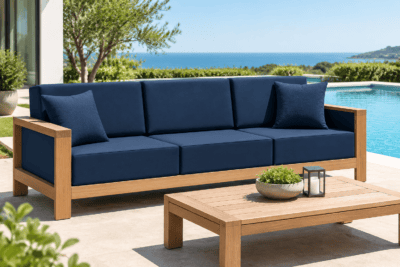
Is Sunbrella Fabric Worth It? An Honest Cost-Per-Year Analysis
Whether the Sunbrella premium pays off depends on sun exposure, horizon and color — here’s the honest math, warranty mechanics and when to skip the upgrade.
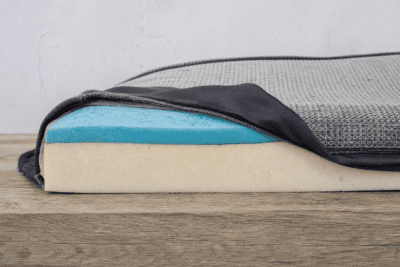
Memory Foam Topped Cushions: When Gel Layers Help (and Hurt)
Memory foam topped cushions and gel-infused layers examined — where a visco topper over HR foam genuinely helps, where it hurts, and the layer specs that separate luxury from a gimmick.
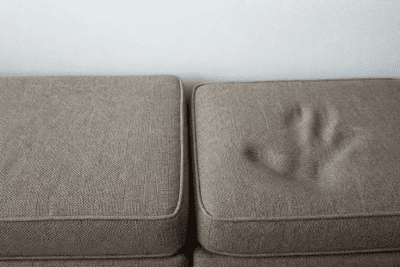
Memory Foam vs Regular Foam Cushions: What a Cushion Factory Wants You to Know
Memory foam vs high-resilience foam for seat cushions — density (35D–65D), ILD firmness, compression set and airflow explained by the people who cut foam daily.
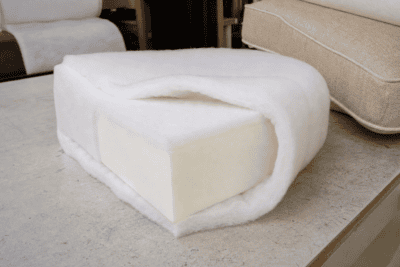
Dacron Batting: The Wrap Layer Explained (What It Does and When to Order It)
Dacron batting for cushions explained: the polyester wrap layer around foam cores, what it does for feel edges and fabric wear, thickness options, indoor and outdoor uses, and when the wrap earns its cost.
Latex Foam Cushions: Natural Rubber Seating, Honestly Assessed
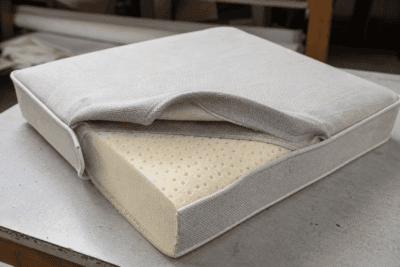
Latex foam cushion guide: what natural and blended latex actually offer versus polyurethane — resilience, feel, lifespan, weight and cost — who latex seating serves, and the honest counterarguments.
Are Waterproof Cushions Real? What Water-Resistant Actually Means
Why ‘waterproof’ outdoor cushions mostly aren’t — hydrostatic head, coated vs breathable fabrics, quick-dry foam and drainage design explained honestly.