
Here is the sentence worth the whole article: most cushions that “died over winter” were killed by being stored damp. Not by cold — foam and fabric are indifferent to freezing — but by months of trapped moisture in a dark bag or bin, which is a mildew incubator with a five-month head start on spring. Open the bin in April and find the colony established, and the winter storage routine gets blamed for what a skipped drying step caused.
The factory view is blunt because the failure is so consistent: the entire game is clean → completely dry → ventilated. Get those three right and winter storage is easy. This guide is the full method, plus which climates actually need it.
Does Your Climate Even Need Winter Storage?
Honest triage before the work:
- – Freezing-winter climates (snow, sustained sub-freezing): store. Freeze-thaw cycles work water into seams, and months of dormancy with damp cores is the classic mold setup.
- – Rainy-winter climates (Pacific Northwest-style): store, or at minimum keep cushions under covered furniture with full airflow and stand them on edge.
- – Mild/dry winters (Sun Belt): storage is optional; the real enemies are UV (which keeps working all winter at lower intensity) and dust. Many mild-climate owners simply keep using the furniture. If you do store, the same clean-dry rules apply.
- – Leaving them out anyway? At minimum: stand cushions on edge (so water sheds), stack with spacers for airflow, and expect a shorter life — roughly half, in freeze climates — as the price of convenience.
Step 1: Clean Before Storage (Dirt Is Mold Food)
Mold does not eat synthetic fabric or foam — it eats the organic film on them: pollen, food residue, body oils, soap scum. Store cushions dirty and you have winterized the food supply along with the cushions.
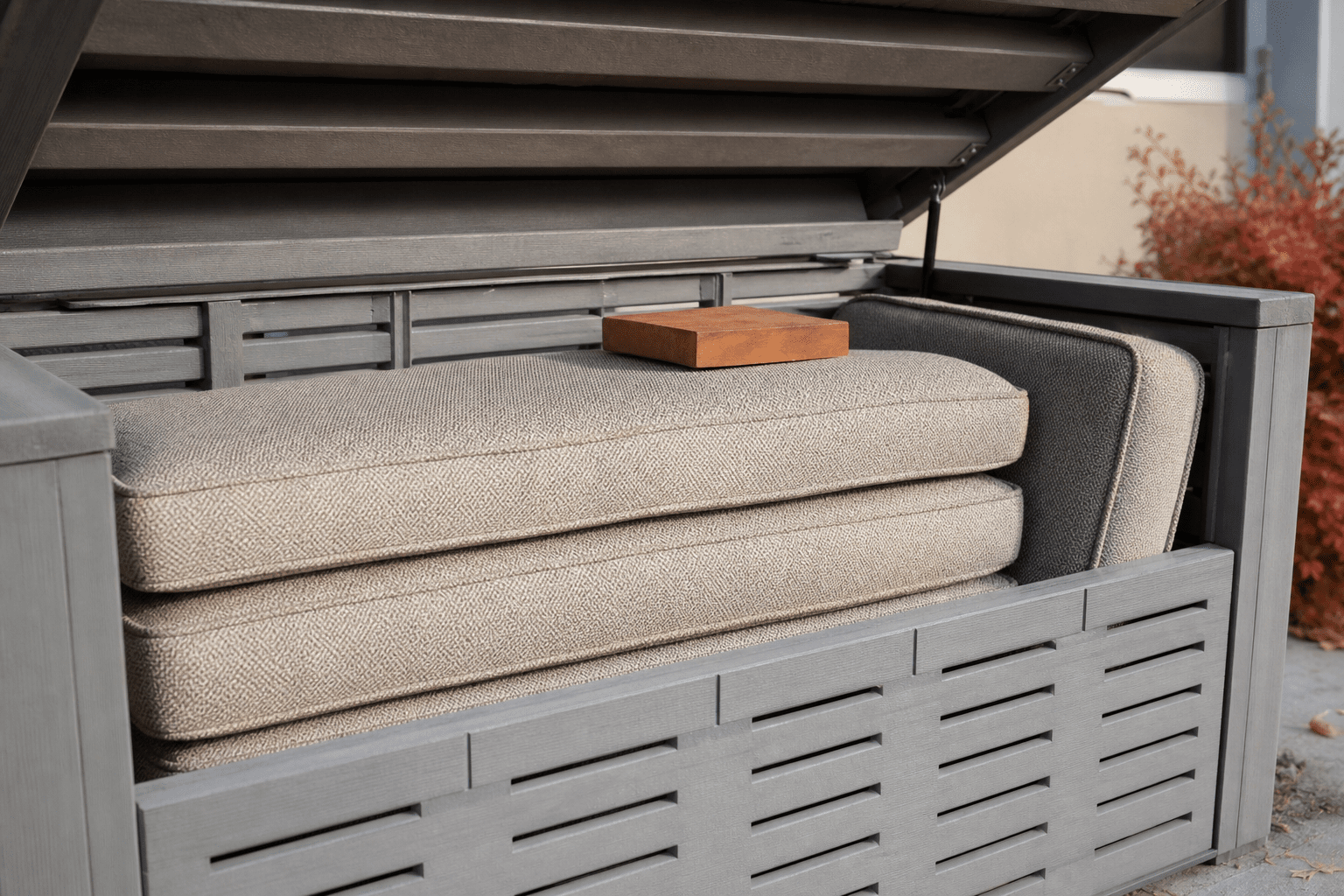
- Brush off dry debris; vacuum crevices and seams.
- Spot-clean stains per fabric type: solution-dyed acrylics tolerate the full deep clean including bleach solutions (the Sunbrella care method); piece-dyed polyester needs mild soap only, no bleach, or the color dies in the cleaning (full cleaning guide).
- Treat any mildew now, not spring — stains set over months of storage. Methods in prevent mold on cushions.
- Rinse soap fully; residue attracts dirt and feeds film.
Step 2: Dry Completely — the Step That Decides Everything
“Surface dry” is not dry. A cushion that feels dry to the hand can hold a pint of water in its core, and that pint is April’s mold problem.
- Sun-dry standing on edge, both sides, for a full dry day minimum — airflow around the cushion matters more than heat.
- Large/thick cushions (deep seating, chaise pads — the Spring Haven chaise back at 5″ thick is a classic slow-dryer): two days, or one day plus a few hours in a warm indoor room with a fan.
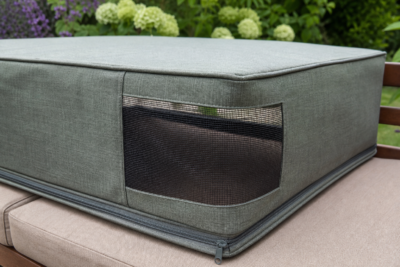
- The zipper test: open the zipper and feel the foam through the cover mesh — the surest check that the inside is dry. Cool or damp to the touch means keep drying.
- When in doubt, err long. One extra drying day costs nothing; a damp-stored cushion is a replacement.
If late-season weather won’t give you a dry day, use a covered porch plus fans, or a dehumidified room. The goal is bone-dry, not “probably fine.”
Step 3: Choose Storage That Breathes
Ranked from best to worst:
- Indoor closet / climate-stable room: ideal; cushions on a shelf, nothing else required.
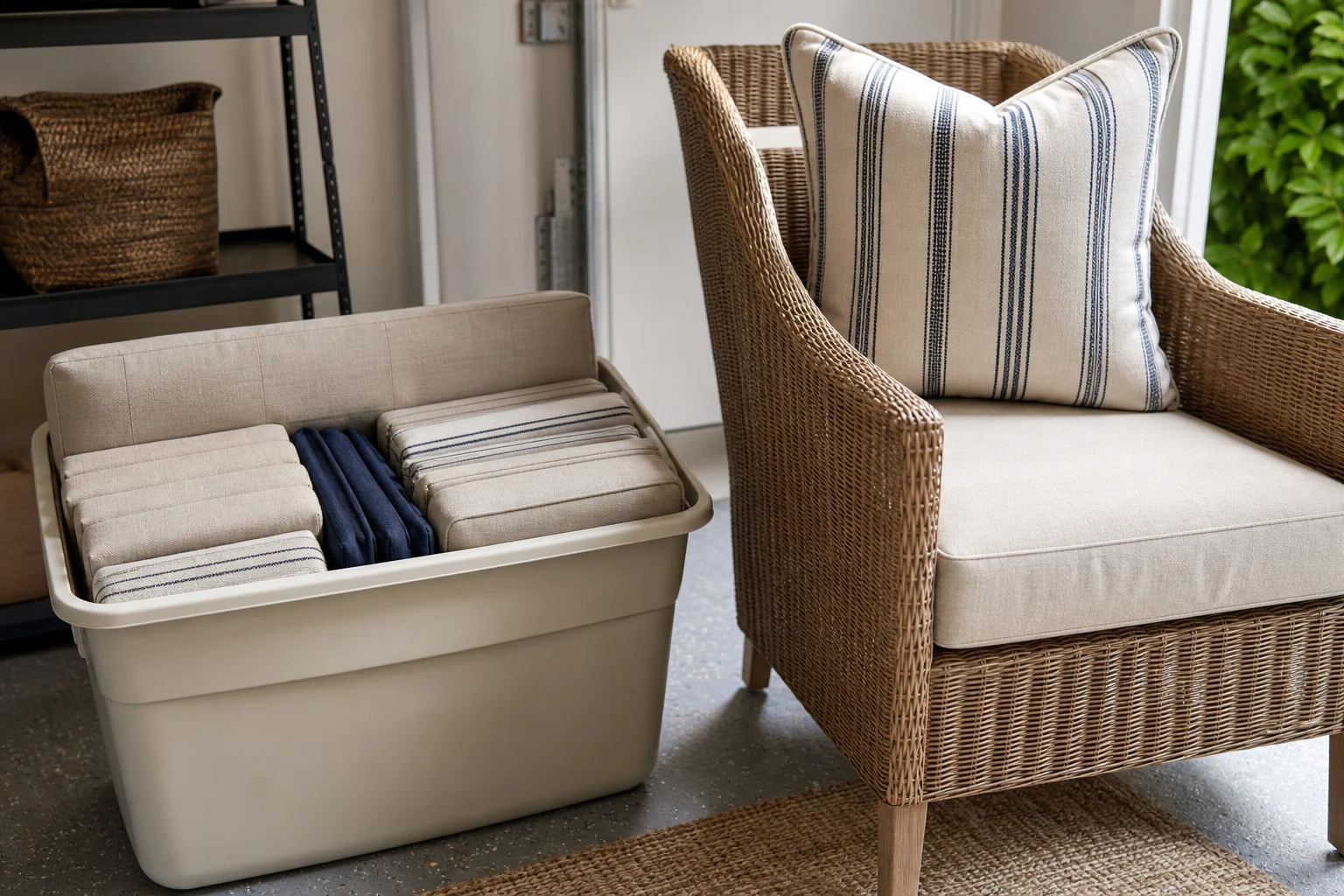
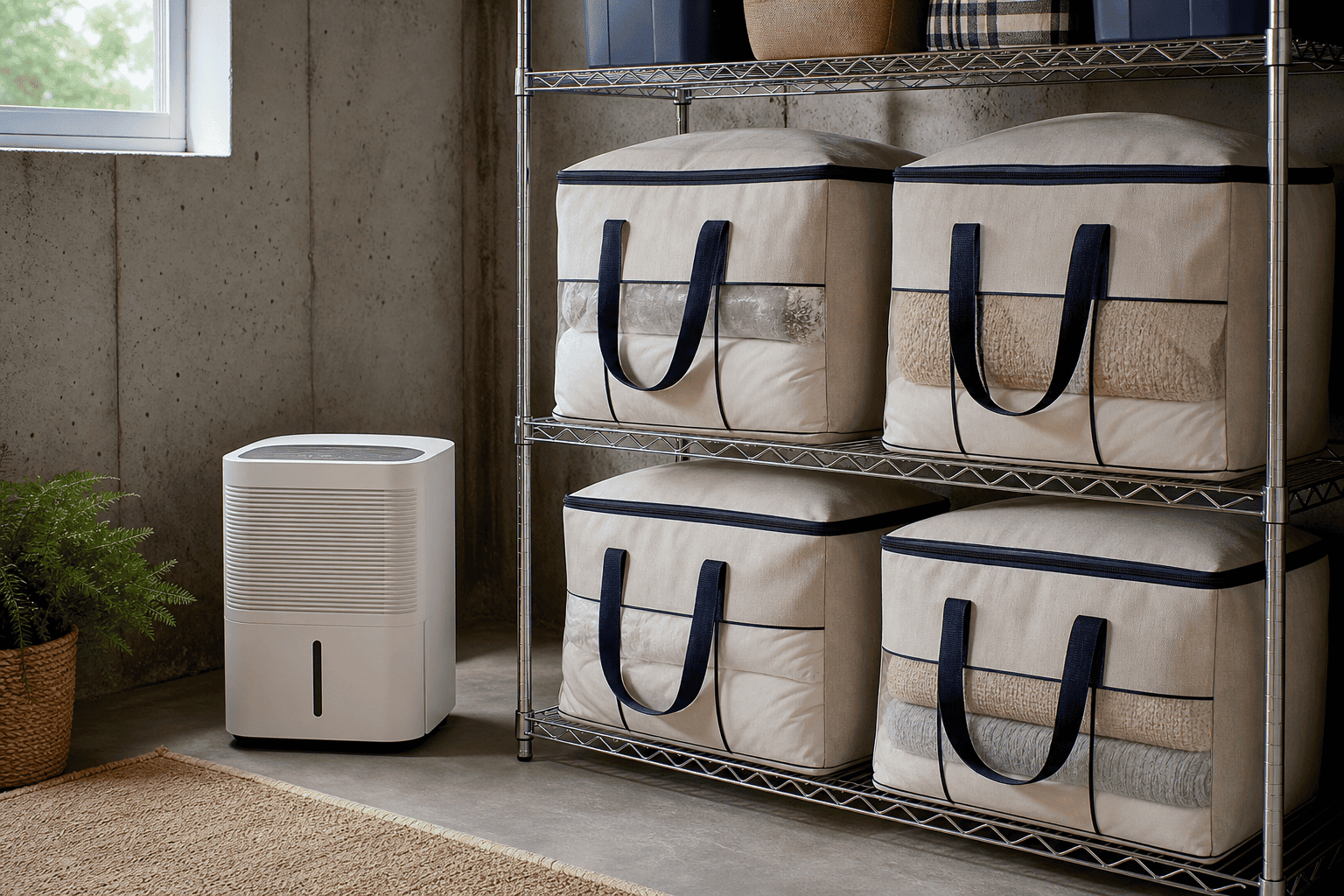
- Breathable storage bins or cotton/canvas bags: good — allows residual moisture vapor to escape.
- Garage or shed shelf, elevated, covered with a breathable cotton sheet: acceptable if the space stays dry; keep off concrete floors (they sweat moisture).
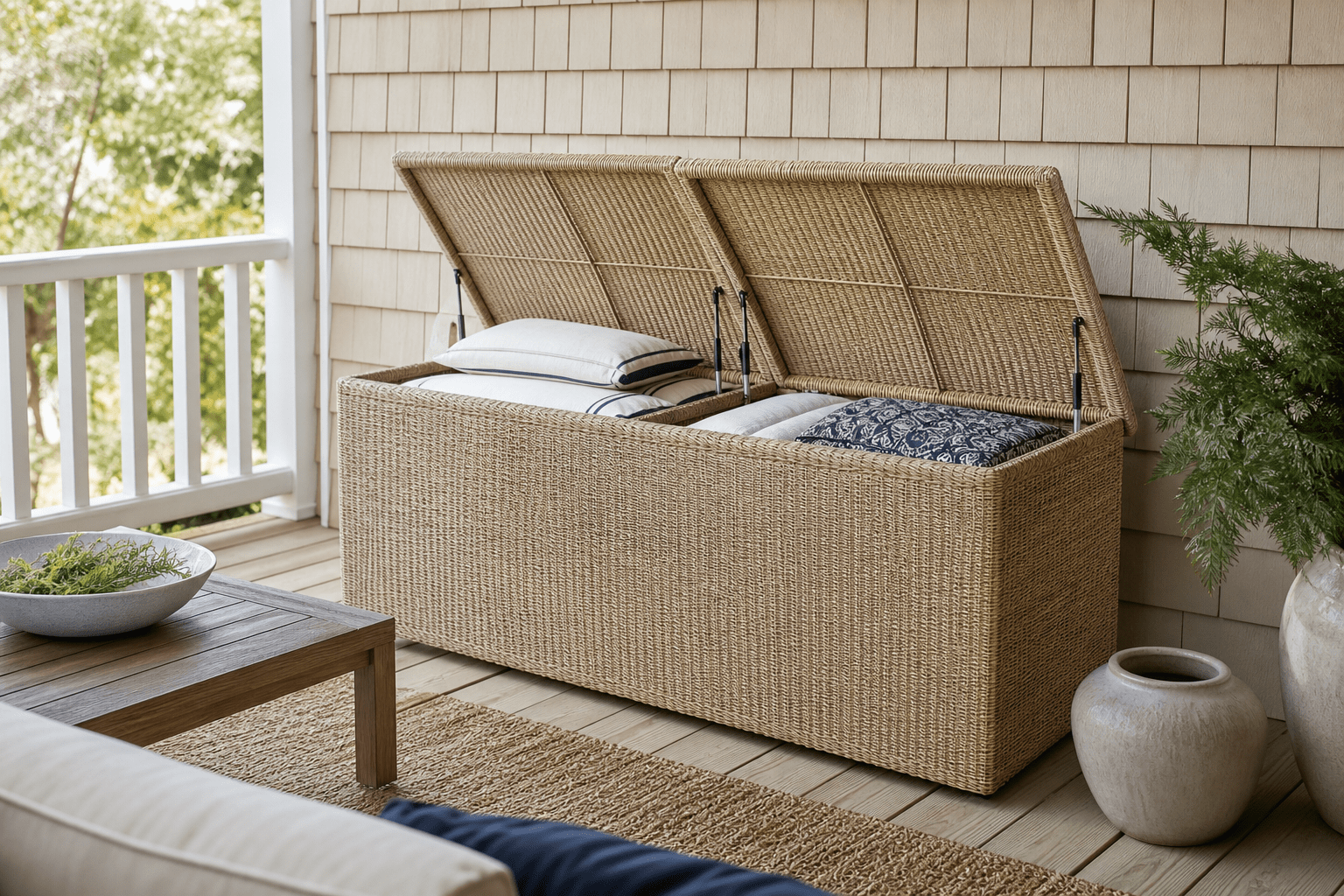
- Deck boxes: convenient, and the most common point of failure — sealed boxes trap condensation through freeze-thaw cycles. If the deck box is your only option, store cushions in cotton bags inside the box, add moisture absorber, and check once mid-winter.
- Plastic bags / shrink wrap / sealed plastic bins: the mold lottery. Plastic is for transport, never for months of storage.
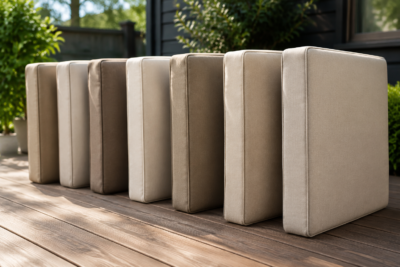
Stack cushions flat (seams not crushed) or on edge, not wedged — compression for five months sets creases into foam. A sheet between stacked pieces keeps zippers and welt from printing into the fabric below.
Step 4: Prep Details That Pay Off in Spring
- – Zippers closed (open zippers deform and let pests in — mice love a foam cavity for winter quarters; a sealed cotton bag deters them).
- – Ties tucked in so they don’t snag and tear in handling.
- – Note what needs replacement: winterizing is the natural annual audit — the sit test, the chalking test, the fade comparison, all in when to replace cushions. Ordering in the off-season beats the spring rush queue (custom lead times run 2–6 weeks across the market at best — ours is 4-7 business days: price and timeline benchmarks).
- – Photograph the set stored — cushion counts, sizes, which piece went where; reassembly in spring takes minutes instead of an archaeology project.
- – Fabric protectant renewal can be done at storage time or in spring; doing it at storage means the fabric is treated before its most vulnerable (wet, dark) period — method in Sunbrella fabric care.
The Spring Re-Entry Checklist
When the furniture comes back out: inspect for any staining or smell (early mildew cleans; established mold does not — the guide), air everything out for a day before use, reapply protectant if you skipped it in fall, and re-flip/rotate cushions so wear distributes from the start (extend cushion life).
What Winter Storage Actually Buys
The arithmetic from the repair-and-replacement side: well-stored quality cushions (35D+ foam, solution-dyed fabric — what those specs mean) run 5–10 years; the same cushions wintered damp in deck boxes and plastic bags commonly fail in 2–3. Storage discipline is the cheapest years-of-life you can buy in this category — it costs an autumn afternoon. If the audit turns up dead pieces, replacements are a measured order away at custom outdoor cushions.
Climate-Specific Playbooks
The general method flexes by region — here are the four common variants:
Snow-belt (Northeast/Midwest): full indoor storage, October to April. The freeze-thaw cycle is the enemy — water works into seams, freezes, expands stitching. Clean by late September while dry days are still available; waiting until November means fighting weather during the dry-to-the-core step, which is how damp cushions get stored.
Pacific Northwest: rain all winter, rarely hard freeze. Indoors is still best, but a dry shed or garage shelf works if the space is genuinely dry (test: does cardboard stored there stay crisp?). The critical difference: your drying window is narrow — grab the first dry week, not the last dry week.
Sun Belt (storing against dust, not frost): many owners skip storage entirely; if you do store, it’s for aesthetics or monsoon season. The same clean-dry rules apply but the timeline is relaxed. UV works all winter at reduced intensity — consider furniture covers that breathe for anything left out (fabric UV logic).
Humid South (Gulf states): the hardest case — winter is damp rather than cold, and mold risk persists in storage. Add moisture absorber packets to any enclosed storage, choose breathable cotton bags over bins even indoors, and do the mid-winter inspection without fail: one sniff test in January catches a problem while it’s still a cleaning, not a replacement (mold triage).
What About the Furniture Itself?
A five-minute companion routine that pays off next spring: clean frame surfaces of leaves and debris (trapped organic matter against straps and sling fabric winter-kills them), check and note any rusting hardware or failing slings in the same audit notes as the cushion inspection (the replacement audit), and store furniture cushions-up if stacking so moisture doesn’t pool in seat pans. Cushions and frames fail on the same timeline more often than not — one winter plan covers both.
FAQs
Can I leave outdoor cushions outside all winter?
In mild, dry climates, yes with edge-standing and airflow; in freeze or rainy climates, leaving them out roughly halves their lifespan — the failure mode is trapped moisture, not cold itself.
Should cushions be stored in plastic bags?
No — sealed plastic traps residual moisture and condensation through freeze-thaw cycles and is the leading cause of spring mold; use breathable cotton bags or bins, with plastic reserved for transport.
How dry do cushions need to be before storage?
Bone-dry to the core — verify by unzipping and feeling the foam directly; surface-dry cushions can hold a pint of hidden water that becomes spring mildew.
Is a deck box okay for winter cushion storage?
Conditionally — cushions in breathable bags inside the box, moisture absorber added, and a mid-winter check; a sealed box with bare cushions is the most common storage failure we see.
When should I winterize — and de-winterize?
Clean and store after the last real use but before sustained freezes (any dry autumn day); bring cushions back out after the last frost, airing them a full day before use.

Why One Rain Ruins a Patio Cushion (and How to Dry It in Time)
One rainstorm can kill a patio cushion — not by getting it wet, but by trapping water in the foam for days. The physics of why cushions stay wet for 5 days, the 72-hour mold clock, and a time-based triage for saving soaked cushions.

POLYWOOD Cushions: Fabric, Waterproofing, Cleaning and When to Replace
POLYWOOD frames are famous for outliving everything around them — the recycled HDPE lumber shrugs off rain, salt and sun
Insect-Proofing Patio Cushions: What Works on Bugs, Without Ruining Fabric
Why insects target outdoor cushions (nesting sites, food residue, moisture), the prevention stack — cleaning, storage, covers, placement — what sprays and repellents are fabric-safe, and the honest limits of keeping a patio bug-free.
Pollen Season on the Patio: Protecting Cushions and Furniture
What pollen actually does to outdoor cushions (it’s not the color — it’s the chemistry), the spring protection playbook from covers to placement, cleaning pollen off fabric without grinding it in, and fabric choices for the perpetually dusty patio.
How to Clean Mold Off Outdoor Cushions (and When It’s Too Late)
How to tell salvageable mold from a dead cushion, the vinegar-and-oxygen-bleach method that works, and what to buy so it never comes back.
How to Drain Waterlogged Cushions (and When Foam Is Done)
How to rescue a waterlogged outdoor cushion fast — free drain, pressing, air-drying and verifying the core — plus the honest signs that the foam is past saving.