
A couch cushion foam insert is the block of foam that lives inside the zippered cover — the part that flattens while the fabric stays perfectly fine. Buying a replacement insert means ordering foam to your measurements and sliding it into the covers you already own, and it comes down to three numbers plus one decision: the length and width of the old core (seam to seam, plus half an inch of compression allowance), the thickness (which restores seat height), the density (60D for seats that are sat on daily, 50D for backs), and whether your covers are worth keeping. If they are — no split seams, no stains, fabric you still like — an insert-only order is the cheapest legitimate route to a couch that feels new. This guide covers how to spec that order without measuring mistakes, and where inserts stop being the right answer. If the cover itself is also past saving, the custom couch cushions page rebuilds the whole cushion — foam and cover — to your measurements.
What “Foam Insert” Actually Means
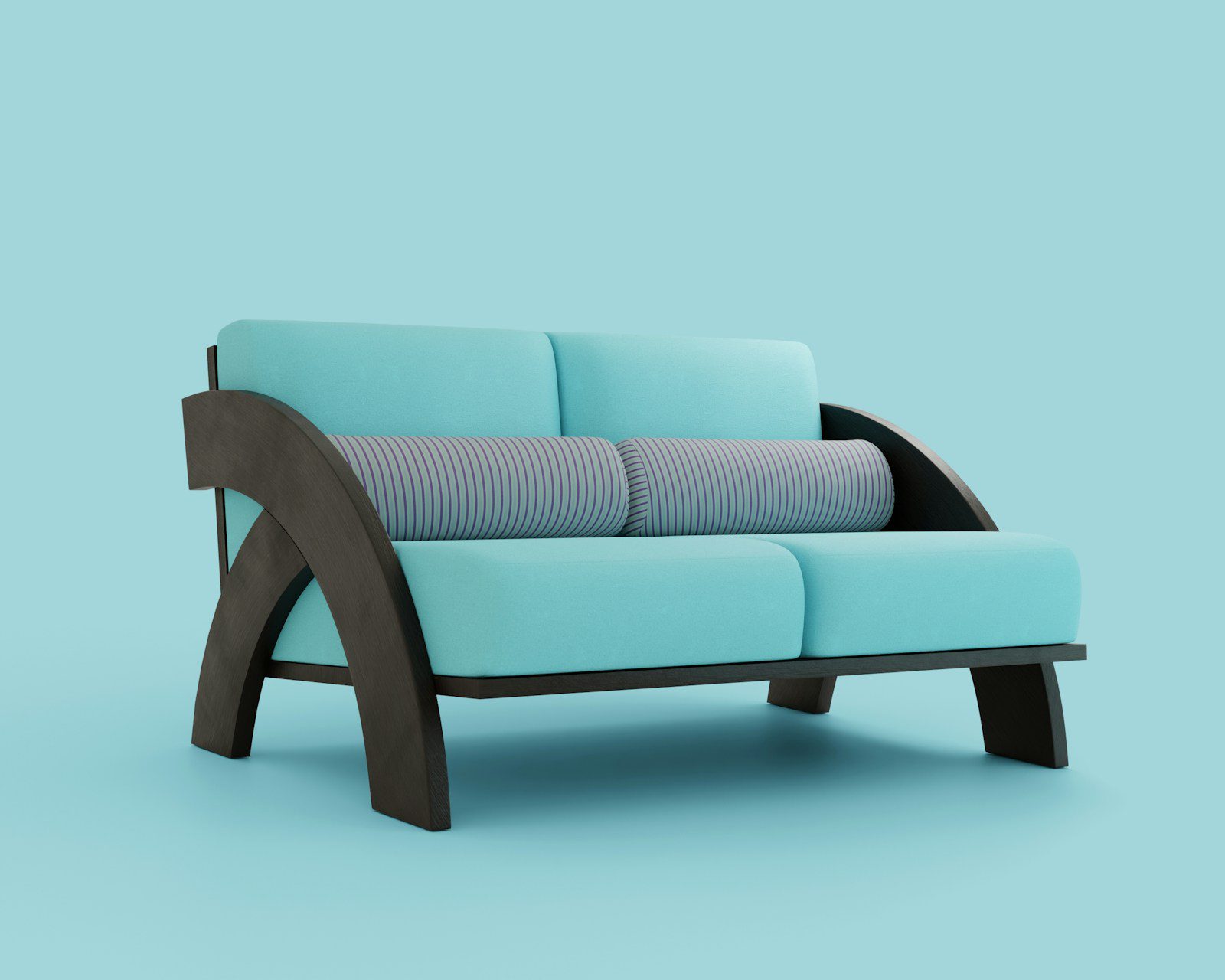
Insert, refill, replacement core — retailers use the words interchangeably, and they all mean the same thing: the inner block, ordered on its own, sized to fit inside an existing cushion cover. What the word does not tell you is what the insert is made of, and that is where couches quietly diverge. Seat inserts are almost always solid foam blocks, because seats carry weight and need push-back. Back inserts vary more — many couches ship with fiber-wrapped foam, shredded-fill, or loose blend backs, and a back that has gone shapeless may need its filling replaced rather than a solid block. If your problem cushion is a back, the material decision is covered in sofa back cushion replacement; if you are not yet sure the foam is the actual failure, the three quick tests — press, cover, frame — live at the top of the couch cushion foam replacement guide.
Measure the Old Core, Not the Gap
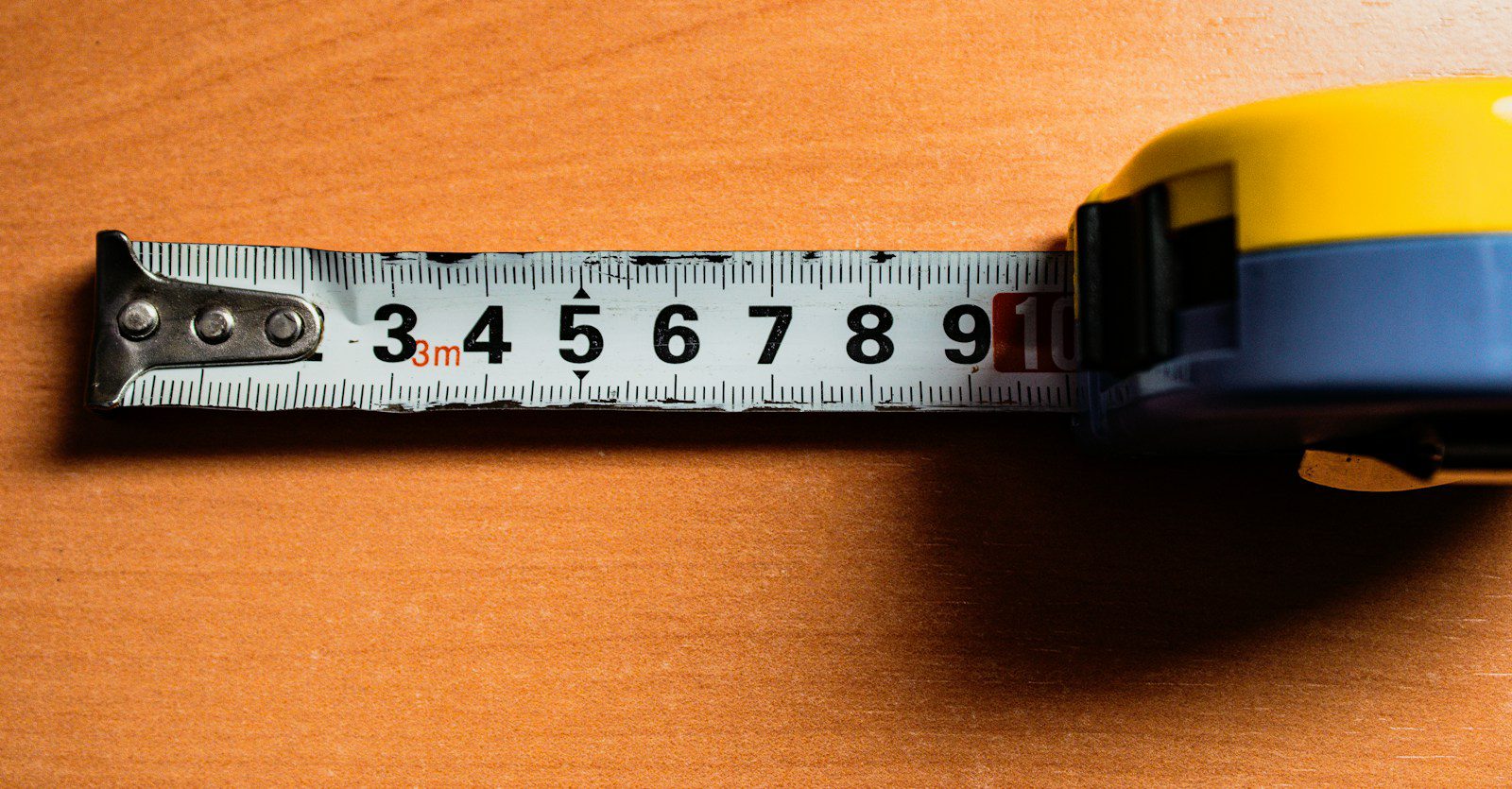
The single most common insert-ordering mistake is measuring the cover’s opening, or worse, the gap left by a flattened core. A dead core has collapsed; measuring it unpressed understates what the cover was built to hold. The reliable routine:
- Unzip and extract the old core. Measure it at its seams, not at saggy spots — the full-width technique is in how to measure couch cushions.
- Add half an inch of compression allowance to width and depth. An insert cut exactly to cover size sits loose and bags; slightly oversized foam fills the cover firmly, which is the whole point.
- Keep the thickness honest. Order the thickness the core was, not what it has sunk to — a flattened 5-inch seat measured at 3 inches comes back permanently low.
- Measure every cushion separately. Left and right seats on the same couch are routinely a half-inch apart.
Non-rectangular seats follow the same logic with their own measurements: T-cushions need the five-parameter routine in how to measure a T cushion, and rounded or notched seats have shape-specific guides. The payoff for this care is an insert that fits like the original did on day one.
Choosing Density for Seat and Back Inserts
Density is what separates an insert that lasts the decade from one that needs replacing again next year, and the grades map cleanly onto couch duty:
| Location | Recommended grade | Why |
|---|---|---|
| Seat cushions, daily couch | 60D | Carries body weight hours a day; 60D holds height and push-back for 10+ years |
| Seat cushions, guest room | 35D–50D | Light hours do not justify dense foam; 35D is the value pick |
| Back cushions | 50D | Comfort duty rather than load-bearing; 50D keeps shape without making the back hard |
| Heavy users, big frames | 65D | Maximum support per inch; the firmest sit in the range |
The default pairing we build into complete cushions — 60D seats with 50D backs — works exactly as well for insert-only orders. If you are torn between two grades, the deciding questions (who sits here, for how long, at what weight) are worked through in how to choose foam density, and the D-rating numbering system itself is decoded in foam density explained.
When an Insert Stops Being the Answer
Inserts have one hard boundary: they inherit the cover. If the fabric is worn, sun-faded, split at a seam, or you simply want a different material, a new core inside old fabric is money spent postponing the real job. The fork is straightforward — covers in good condition, foam flat: insert order. Covers tired too: a full rebuild, new core and new cover sewn together, which is the complete-cushion route compared against covers-only spending in cushion covers vs full replacement. Two adjacent decisions have their own write-ups: whether the whole couch is worth saving (replace sofa cushions vs buying a new sofa) and what the full job costs by path (sofa foam replacement cost). And if your couch is a sectional, the seat-and-back insert combinations for those pieces are covered in sectional cushion covers and inserts.
What Custom Inserts Cost
Insert pricing follows the same transparent logic as complete cushions: a flat order base shared across the set, plus a rate per square foot that scales with density and thickness. Because you supply the cover, you skip the fabric layer entirely — a 24 × 24 × 3 seat insert in 50D lands around $125 at current rates, versus about $154 for the same cushion sewn with a new cover. Ordering all seats and backs in one order matters more than people expect: the base is charged once per order, not once per cushion. The full pricing mechanics — how area, grade and shape coefficients combine — are laid out in custom cushion pricing explained, and foam-only ordering is the same route described for cut-to-size sofa foam.
Inserting the New Cores
Fresh cores arrive vacuum-compressed; give them up to 48 hours to regain full height before judging fit, and expect a snug fight when sliding them in — that resistance is the compression allowance doing its job. Fold the core in half lengthwise to start it into the cover, work the corners into the cover’s corners, and knead the seams straight from inside. The same zip-back-over-foam technique, with the old-core removal steps, is walked through in how to replace sofa cushion foam. If the sag came back within weeks rather than years, the culprit is usually a low-grade insert rather than the technique — that failure pattern is one of five myths dissected in cushion foam myths.
FAQs
What is a couch cushion foam insert?
The inner foam block sold on its own, sized to slide inside your existing cushion cover. You keep the covers and replace only the worn-out core — the cheapest route to a firm couch when the fabric is still good.
Is a foam insert the same as replacing the whole cushion?
No. An insert re-uses your covers; a full replacement is a new core and a new cover sewn together. Inserts cost less and preserve fabric you like; full replacements fix covers that are worn, stained or out of style along with the foam.
How do I measure for a couch cushion insert?
Remove the old core and measure it seam to seam for length, width and thickness, add half an inch of compression allowance to width and depth, and order the thickness the core originally was. Measure every cushion separately — matched couch seats are often a half-inch apart.
What density should a seat cushion insert be?
60D for seats used daily, 50D for back cushions, 35D for guest-room seating, 65D for heavy daily use. The 60D seat / 50D back pairing is the standard build for daily-driver couches.
Can I replace back cushion inserts the same way?
Solid-foam backs, yes — same measuring routine. But many backs are filled with fiber-wrapped foam or shredded blends, and a shapeless back may need its filling replaced rather than a solid block inserted. The back-specific decision path is in our sofa back cushion guide.
How much do custom foam inserts cost?
A flat order base is shared across the whole set, plus a per-square-foot rate by density and thickness. As a reference point, a 24 × 24 × 3 seat insert in 50D runs about $125 at current rates; orders over $158 ship free.
Will new inserts make my couch firmer?
Markedly, if the old cores were soft or low-density — same thickness, higher grade, firmer sit. If you liked the old feel, order the same grade the couch shipped with; if you want more support, step up one grade rather than adding thickness.
How long does a custom insert order take?
Production runs 4–7 days standard or 3–5 days rush, and delivery is flat-rate with tracking. Cores ship vacuum-compressed and need up to 48 hours to regain full height after unpacking.
Are couch cushion foam inserts sold per cushion?
Couch foam inserts and sofa insert cores are sold one cushion at a time — foam inserts for sofa seating and couch inserts follow per-core pricing. A foam insert for couch cushions or a foam insert for sofa cushions runs about $158 for a standard seat, cut to your seam-to-seam dimensions.
Do sofa cushion foam inserts include wrapping?
Sofa cushion foam inserts ship wrapped in batting; foam sofa cushion inserts and foam inserts for couch cushions can go bare if you keep your own covers. Foam pillow inserts for back cushions run 50D while seat cores take 60D.
What is the difference between an insert and full couch cushion padding?
Insert orders replace the core inside a cover you keep; couch cushion padding orders rebuild the whole cushion. Cushion padding, seat padding foam and padding for sofa projects all land as finished zippered cushions in 119 fabrics, sewn in 4–7 days.
Next Steps
1. Confirm the foam is the failure — the press, cover and frame tests take two minutes.
2. Pull one core and measure it seam to seam; note the grade pairing, 60D seats / 50D backs for a daily couch.
3. Order the set in one go — one base, every cushion — at custom cushions, or start from the foam product page at couch foam cushions. Nothing is cut until your numbers are confirmed.
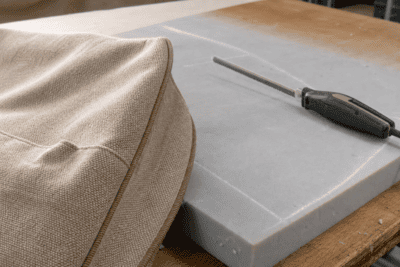
Sofa Foam Cut to Size: How to Order Exact-Fit Foam
How to order sofa foam cut to size — measuring the core, adding the compression allowance, specifying density, thickness and shape, and the checklist to run before any foam is cut.
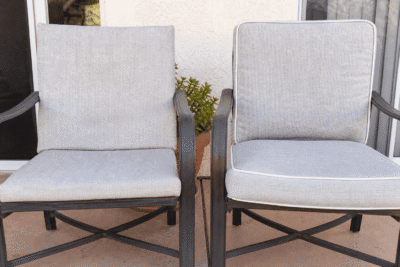
Cheap vs Quality Outdoor Cushions: Where the Money Actually Goes
What separates a $15 cushion from a $60 one and a $150 one — fabric construction, fill, stitching and covers — which upgrades matter, which are markup, and how to buy the quality your furniture actually needs without overpaying.
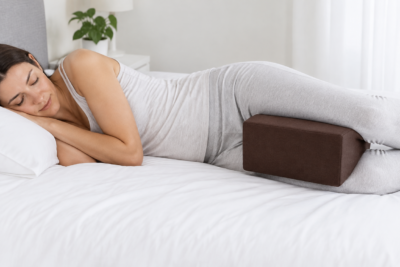
Knee Bolsters for Side Sleepers and Back Sleepers: A Firm Support Guide
A firm half-round D bolster fills the gap between the knees for side sleepers and under both knees for back sleepers. Heights, densities and lengths explained — positioning and comfort, made to order.

Kid-Friendly Patio Cushions: The Family-Proof Spec
Cushions that survive children — fabric families that shrug off juice and markers, construction that wipes fast, foam that handles jumping duty, attachment systems that stay put and stay safe, and the two-layer strategy that saves the good cushions.
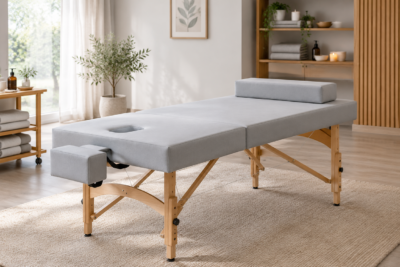
Massage Table Bolsters: Firmness, Sizing and Placement
A firm foam wedge is the positioning tool a massage table lacks. Four set sizes for ankles, knees, wrists and side-lying, solid 50D or layered builds, fabric choice included — priced 20% below custom.
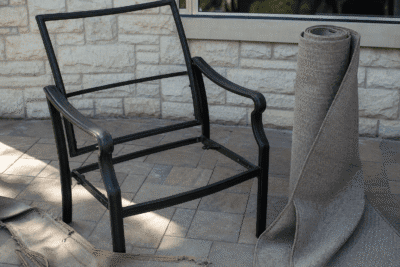
Re-Slinging Patio Chairs vs Replacing: When It’s Worth It
Sling furniture repair economics: what re-slinging is and what it costs relative to replacement, which frames deserve it, the fabric choice for slings, cushioned-conversion as the third option, and the DIY-versus-service decision.