
The word “waterproof” on a cushion label is doing a lot of work it cannot back up. A cushion is a soft bag of foam — a sponge, essentially, wearing a jacket. You can make the jacket shed rain. You cannot make a sponge waterproof without sealing it in plastic, and a sealed sponge is a new problem: it never dries, and it molds from the inside, where you cannot see it until it is too late.
This article explains what water actually does to cushions, what the retail terms honestly mean, and how to buy for wet climates the right way — which is almost never “fully waterproof.” Written from the factory side, where we see what water-damaged cushions look like when they come back.
The Three Words on Labels, Decoded
- – Waterproof — in honest usage, means sealed construction (welded vinyl, laminated seams) that blocks water under pressure. On cushions, it is mostly marketing shorthand. True waterproof cushions exist — marine vinyl dock pads — and nobody wants them on a patio chair: they are sticky, hot, and trap every drop of condensation inside.
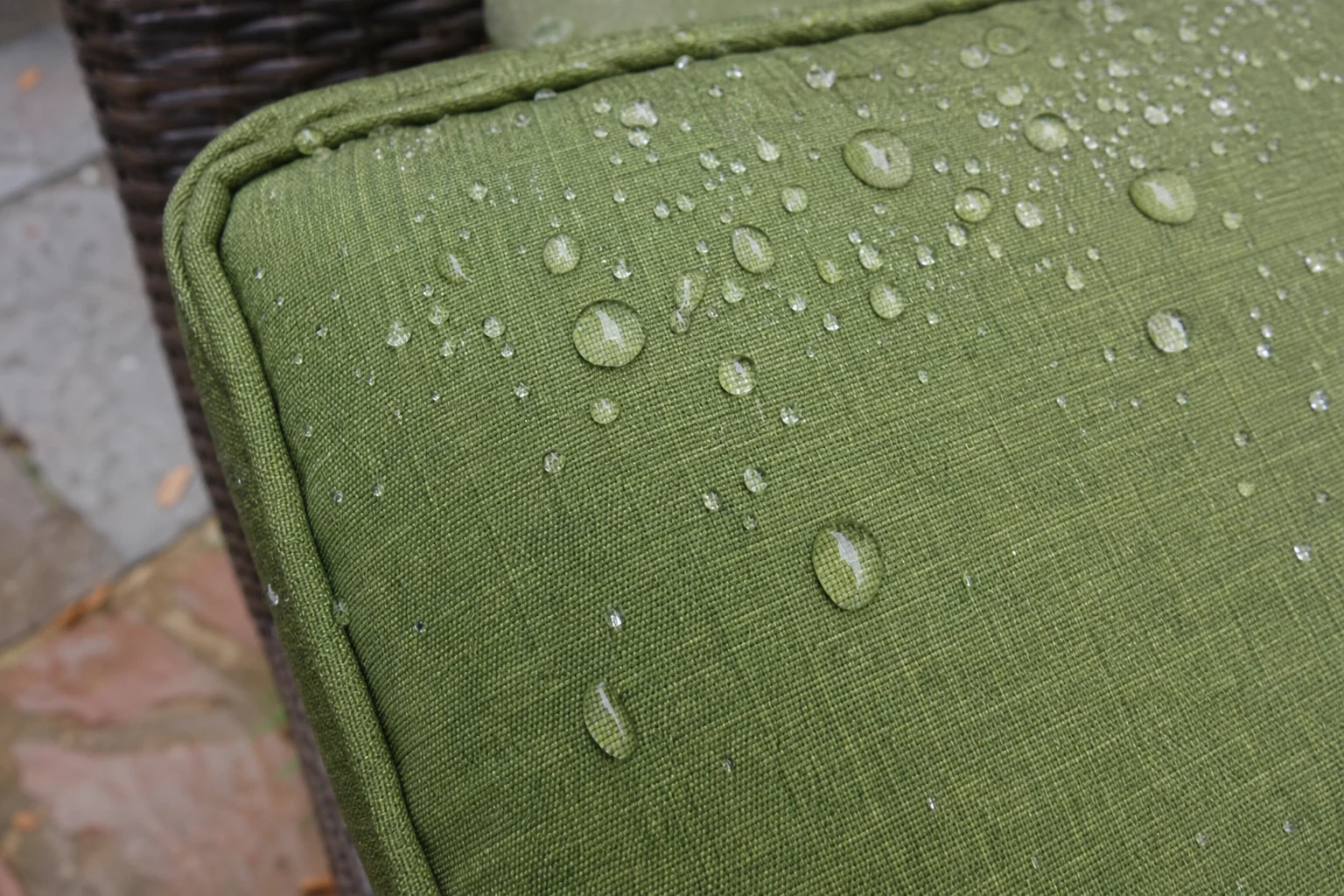
- – Water-repellent — fabric finished (typically a fluoropolymer or silicone coating) so water beads and runs off. Real and useful, but finishes wear with abrasion and washing, and repellency says nothing about what happens once water does get in — through seams, zippers, or a cushion sitting in a puddle.
- – Water-resistant — the vague middle: some beading, some absorption, no defined standard. Read it as “resists light rain briefly.”
The fabric’s role is covered in depth in best outdoor cushion fabric; the point here is the system — fabric is only the first thing water meets.
How Water Actually Gets Into Cushions
- Through the fabric face — only in sustained or driving rain. Quality solution-dyed acrylic and coated polyester shed the first minutes easily.
- Through seams and stitching — every needle hole is a tiny channel. Seam-sealed or minimal-seam designs slow this; nothing sewn is sealed.
- Through zippers — designed gaps. A cushion left zipper-up in rain takes on water regardless of fabric.
- From below — a cushion sitting on a wet deck wicks water into its underside faster than rain penetrates the top. Underside exposure is the most underrated water path.
- From the air — humid air condenses inside covers overnight. Sealed cushions trap this; breathable covers let it leave.
Path 5 is the kicker: even a cushion that rain never touches accumulates internal moisture in humid climates. Breathability is not a luxury feature — it is how that moisture escapes.
Why Sealed Cushions Fail: The Trapped-Water Problem
Here is the failure mode the “waterproof” promise never mentions. When water gets into a sealed cushion — and it will, through one of the five paths — it has no exit. The foam stays wet for days. Warm + wet + dark interior = mildew farm, and this mold is inside, feeding on the foam itself, unreachable by any cleaning method. The cushion is a loss.
The same cushion in a breathable cover gets wet through, then dries in a day of sun and moving air. The fabric darkens with water, which alarms people, then it is fine — the water left.
Marine and performance fabrics are engineered around this reality: repel what you can, breathe out what you can’t. That is why quality outdoor cushions are water-managing, not water-blocking.
What Actually Works in Wet Climates
The system that survives rain is three layers deep:
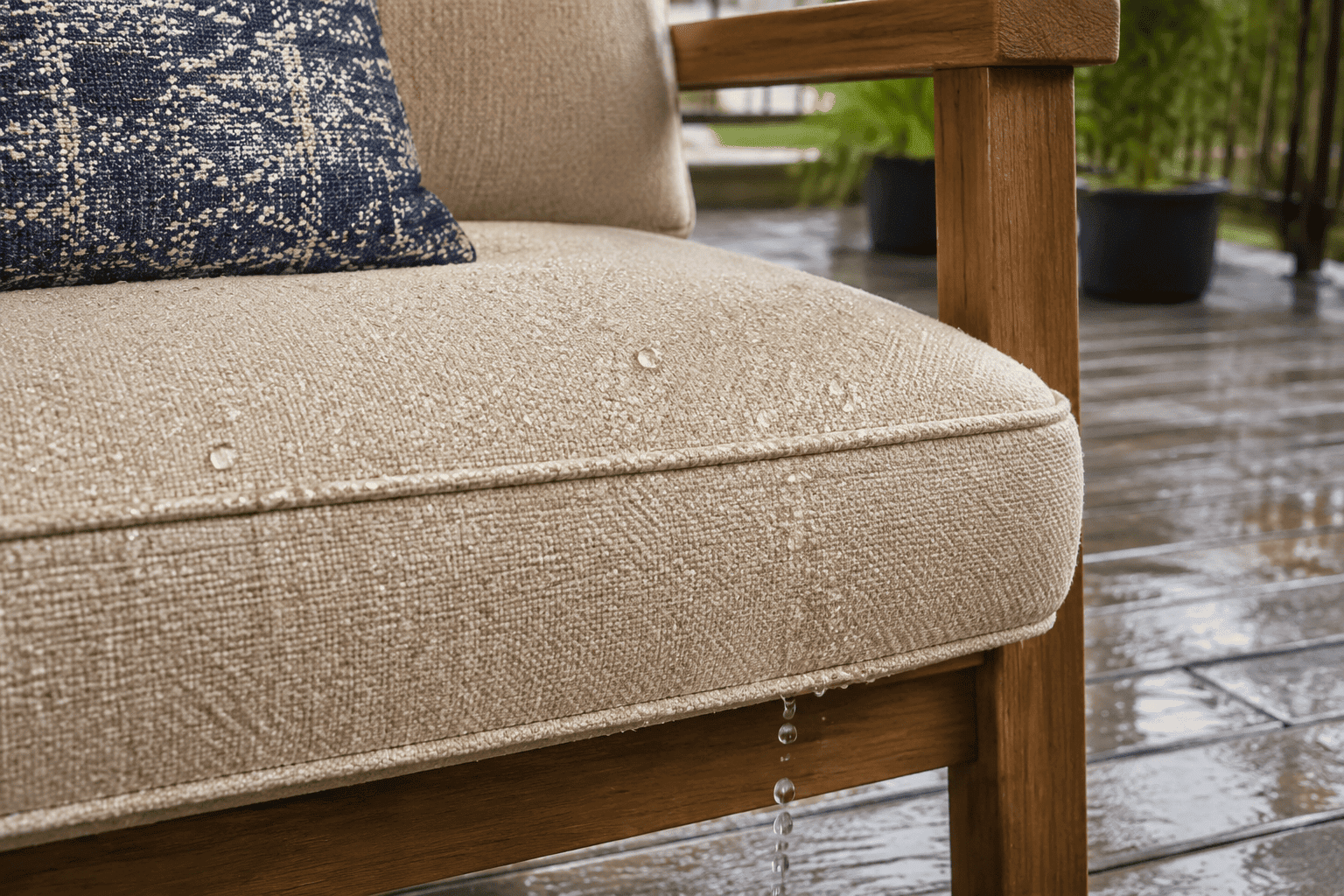
1. Fabric: solution-dyed acrylic or olefin. Repels the face-load of rain, does not stain from wetting, dries fast. Olefin absorbs the least water of the common fibers; acrylic pairs near-equal dry-down with better hand and cleanability. Comparison in best outdoor cushion fabric.
2. Foam: open-cell, quick-draining grades. Standard fine-celled foam holds water in its tiny cells; outdoor-grade foam (the reticulated/”quick-dry” family) has large open cells that let water drain and air flush through. A quick-dry core in a breathable cover can be rained on, stood on end, and dry in hours. Foam families compared in cushion filling types.
3. Construction: drainage-aware details. Mesh or grommeted undersides on some outdoor designs, zippers positioned to let moisture escape, ties that hold cushions on end for shedding. Small things, and they are the difference between a cushion that recovers from a storm and one that smells by Thursday.
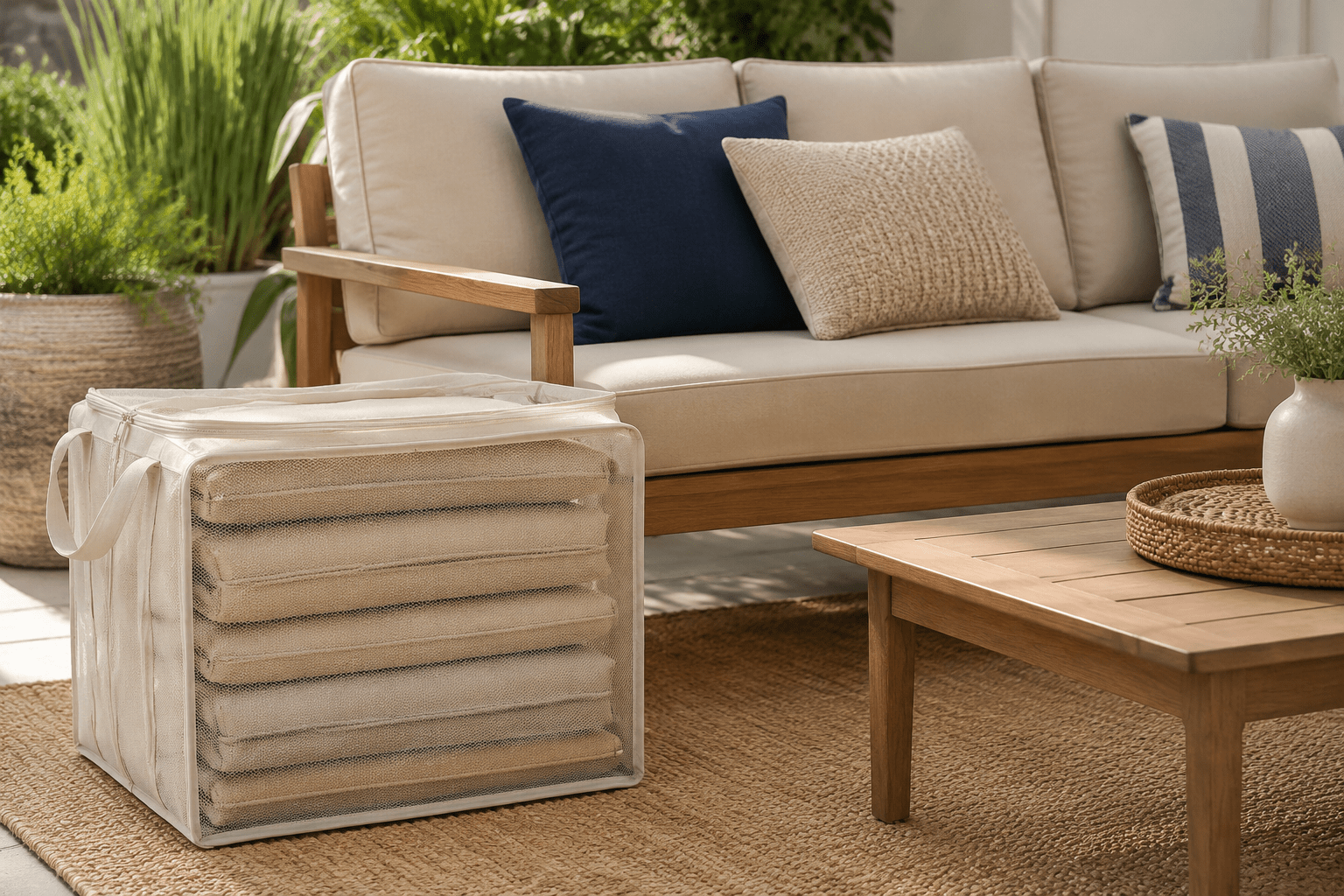
Plus behavior: cushions on slatted furniture drain; cushions on solid surfaces pool underneath — prop or hang after heavy rain, and stand them on edge. Winter matters most of all: dry-then-store is the entire game, laid out in how to store outdoor cushions for winter.
What About “Water-Repellent” Claims and Re-Treating?
Repellent finishes are real and renewable:
- – New coated fabrics bead strongly out of the box; expect the finish to abrade down over a season or two of use and washing.
- – When water stops beading (it visibly soaks in instead), re-treat: a 303-style fabric protectant, applied clean and dry, restores beading. Annual re-treatment is the norm for full-exposure cushions — method in Sunbrella fabric care.
- – Re-treating repellency does nothing for seams or foam — it is maintenance of layer 1 only.
Buying Rules of Thumb
- Distrust “waterproof” on any sewn patio cushion. It means repellent-coated, at best.
- Wet climate = breathable system, not sealed system: acrylic/olefin cover + quick-dry foam.
- Ask what’s inside. Sellers who cannot state the foam type are selling indoor foam in an outdoor cover — the most common water-failure we see in replacements.
- Zipper-side down in rain is wrong; zipper to the rear or underside-front, and store or prop in storms.
- Covers (the washable kind) help — a breathable replacement cover over a quick-dry core is the most maintainable wet-climate build; cover-only orders are quoted on request (custom cushion covers).
- Real waterproof need (dock cushions, camping pads you carry in): accept vinyl-sealed and manage it by taking it indoors — never leave sealed cushions outside.
If your current cushions have already gone moldy from trapped water, the recovery path (and when to give up) is in how to prevent and clean moldy cushions.
Water Damage Triage: What’s Recoverable
When cushions have already gotten soaked or stained, the response differs by what actually happened:
Rain-soaked, caught within a day: fully recoverable — edge-stand, sun, verify core-dry through the zipper. No cleaning needed unless visible soiling rode in with the water.
Soaked and forgotten (days): smell test first. Damp-sour that survives full drying means the bacterial/mold film is established in the foam — the mold triage applies; expect replacement if the smell persists through two dry cycles.
Standing-water immersion (flood, fallen cushion in pool): drain vertically hours, then the standard edge-stand drying over 2–3 days. Quick-dry cores usually survive; fine-celled indoor foam almost never smells right again. Either way, a full deep clean of the cover follows (methods).
Water rings and tide marks on fabric: mineral staining from slow drying — soap solution first; bleach solution on bleach-safe fabric if rings persist. Early treatment is easy; set mineral marks on piece-dyed fabric can be permanent.
The underwater lesson: every one of these scenarios traces to the system gaps above — sealed covers, fine-celled foam, flat storage. Water damage is a spec failure wearing a weather disguise; the fix is the three-layer system, not a better umbrella.
FAQs
Are outdoor cushions really waterproof?
No sewn cushion truly is — stitching, zippers and undersides let water in, and honestly waterproof (vinyl-sealed) cushions trap internal moisture and mold; the right goal is a breathable, quick-drying system.
What does water-resistant mean for cushions?
The fabric beads light rain briefly via a coating that wears down with use; it says nothing about seams, zippers or the foam inside.
How do I keep cushions dry in a rainy climate?
Solution-dyed acrylic or olefin covers over quick-dry open-cell foam, propped on edge after storms, dried fully before storage — the three-layer approach above.
Why did my ‘waterproof’ cushion mold inside?
Sealed covers block exit as well as entry; trapped condensation and rain wet the foam for days, and interior mildew grows where no cleaning reaches — breathability, not sealing, prevents it.
Can I make my existing cushions more water-resistant?
Yes — wash, fully dry, then apply a fabric protectant to renew beading (annually for full-exposure cushions); the step-by-step is in Sunbrella fabric care.
Best Outdoor Cushion Fabric: How to Choose by Climate, Exposure and Budget
A factory guide to outdoor cushion fabrics — solution-dyed acrylic, olefin, polyester grades and blends — ranked for fade, water, mold, comfort and cost per year.
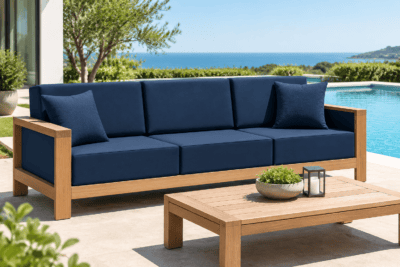
Is Sunbrella Fabric Worth It? An Honest Cost-Per-Year Analysis
Whether the Sunbrella premium pays off depends on sun exposure, horizon and color — here’s the honest math, warranty mechanics and when to skip the upgrade.
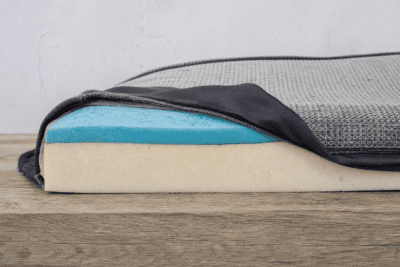
Memory Foam Topped Cushions: When Gel Layers Help (and Hurt)
Memory foam topped cushions and gel-infused layers examined — where a visco topper over HR foam genuinely helps, where it hurts, and the layer specs that separate luxury from a gimmick.
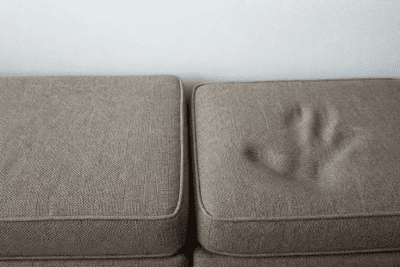
Memory Foam vs Regular Foam Cushions: What a Cushion Factory Wants You to Know
Memory foam vs high-resilience foam for seat cushions — density (35D–65D), ILD firmness, compression set and airflow explained by the people who cut foam daily.
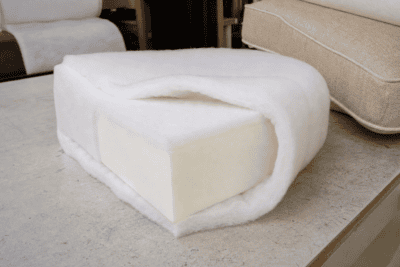
Dacron Batting: The Wrap Layer Explained (What It Does and When to Order It)
Dacron batting for cushions explained: the polyester wrap layer around foam cores, what it does for feel edges and fabric wear, thickness options, indoor and outdoor uses, and when the wrap earns its cost.
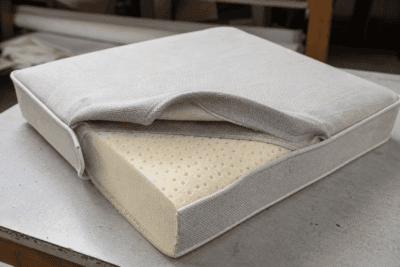
Latex Foam Cushions: Natural Rubber Seating, Honestly Assessed
Latex foam cushion guide: what natural and blended latex actually offer versus polyurethane — resilience, feel, lifespan, weight and cost — who latex seating serves, and the honest counterarguments.