
A bench cushion is only as good as three numbers: the length and depth of the seat deck it sits on, the thickness that matches how long you actually sit there, and the foam density that decides whether it still feels new in three years. Get those right and a plain rectangular pad outperforms every “universal fit” cushion on a retail shelf. Get them wrong and you get a cushion that slides, compresses, or leaves a hard edge exactly where people sit.
This guide is the hub for everything bench-related on this site: quick answers up top, then each seating scene, foam and fabric specs, a three-step measuring method, and a straight custom-versus-ready-made comparison. Every section links out to the deep-dive article for that topic, so bookmark this page and follow the branch you need.
The Quick Answer: Standard Sizes and Thickness at a Glance
Most benches fall into predictable size bands, and thickness should track seat-time: the longer somebody sits, the thicker and denser the cushion needs to be.
| Bench type | Common seat deck (W × D) | Recommended thickness | Foam spec |
| Entryway / mudroom bench | 30–40″ × 14–17″ | 2–3″ | firm, wipeable cover |
| Kitchen / dining bench | 48–72″ × 16–20″ | 3–4″ | 60D high-resilience foam |
| Piano bench | 28–32″ × 12–14″ | 1½–2″ | firm, height-critical |
| Outdoor / patio bench | 48–72″ × 18–24″ | 4–5″ | HD or dry-fast foam |
| Window bench / reading nook | 60–96″ × 18–24″ | 4–5″ | 60D, split into sections |
One caution before you buy anything: “standard” bench sizes only exist statistically. Real furniture — especially built-ins, IKEA hacks and vintage pieces — ignores the chart above. Measure first, shop second. The three-step method further down takes about five minutes with a tape measure.
Bench Cushions by Scene: What Each One Actually Needs
Entryway and Mudroom Bench Cushions
Entryway bench cushions (and their heavier-duty cousin, the mudroom bench cushion) live a short-sitting, high-abuse life: somebody pulls off wet boots, sits for ten seconds, drops a coat and leaves. That profile means you can go thinner — 2 to 3 inches is plenty — but the fabric matters more than the foam. A solution-dyed or wipeable performance fabric shrugs off rain-soaked denim and muddy paws; a delicate linen will look tired in one season. Storage benches deserve a note too: the cushion sits on a hinged lid, so keep it light and make sure the lid still closes freely at your chosen thickness. We cover the wet-coat duty spec in detail in the mudroom bench cushion guide, and our indoor custom bench cushions are cut to your exact deck whatever your entryway throws at it.
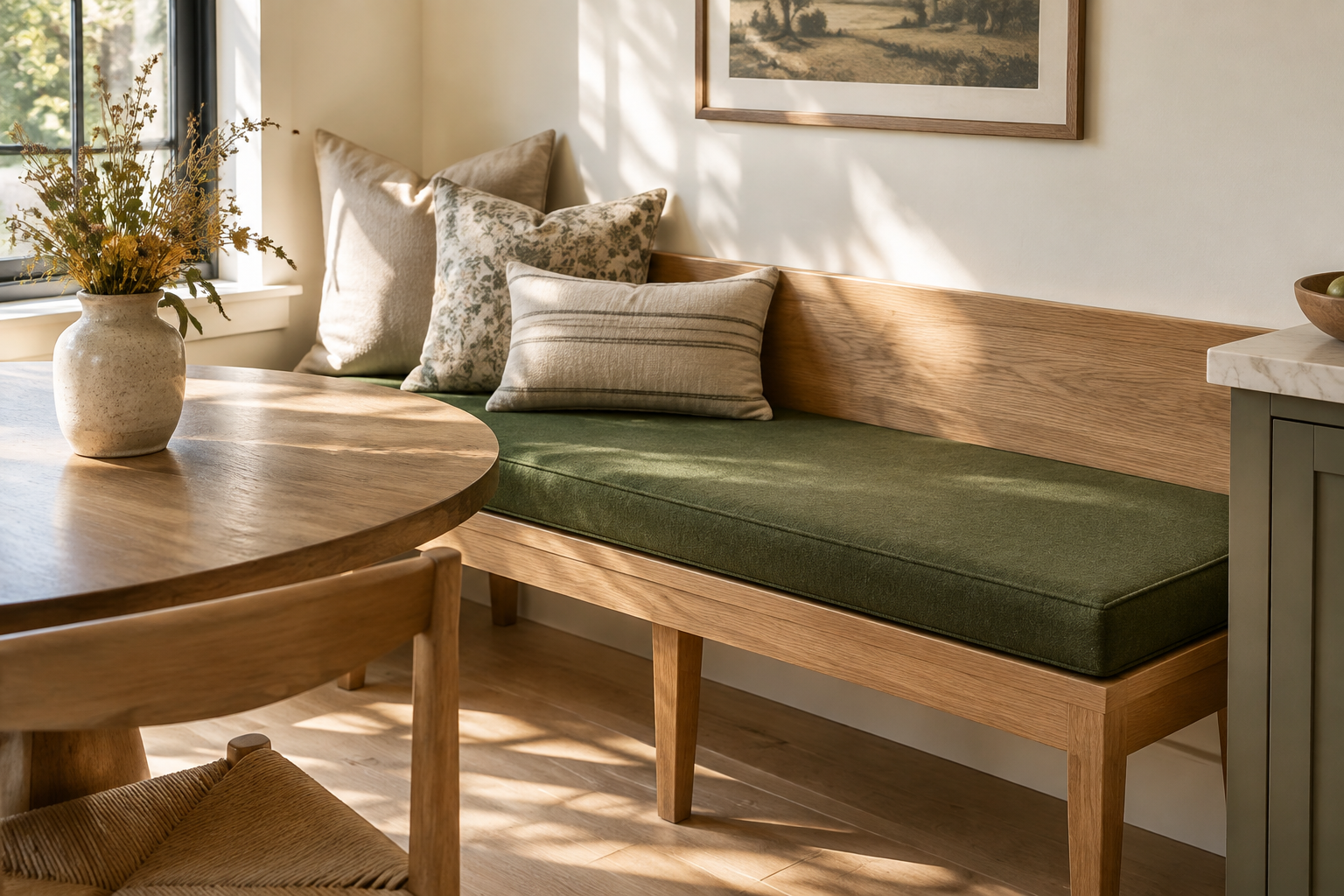
Kitchen and Dining Bench Cushions
A kitchen bench cushion is daily-driver seating: breakfast, homework, weeknight dinners. That demands a denser core than an entryway pad — we spec 60D high-resilience foam for regular dining use — and a 3 to 4 inch thickness that keeps its shape through months of daily use. Depth is the dimension people get wrong: the cushion should sit flush with the bench front, not overhang it, and if the bench tucks under a table you need enough knee clearance between cushion top and table apron. Patterned performance fabrics hide the crumbs that solid colors advertise. The full sizing logic — table height, apron clearance, daily-wear fabrics — is in our kitchen bench cushions deep dive.
Piano Bench Cushions
Piano bench cushions break the thicker-is-better rule. A pianist’s playing height is calibrated to the keyboard, so a tall cushion that feels luxurious on a dining bench will throw off hand position and pedal reach on a piano bench. The sweet spot is a firm 1½ to 2 inch pad — enough to take the edge off long practice sessions without lifting the player. Sliding matters here too, and the honest fix is fit itself: a cushion cut exactly to the bench top has no room to wander. We break down the practice-hour comfort spec, sitting heights and anti-slip physics in the piano bench cushion guide.
Outdoor and Patio Bench Cushions
Outdoor bench cushions are a different engineering problem, not just an indoor cushion in a brighter color. Water has to leave the foam, so the spec is high-density closed-cell or dry-fast foam rather than indoor urethane; UV has to leave the fabric alone, which points to solution-dyed acrylics; and 4 to 5 inches of thickness compensates for the harder frames typical of porch and garden benches. Covers should zip so you can strip and dry them after a wet week. Lengths run long — 60 to 72 inch porch gliders are common — and every extra foot multiplies the importance of getting the width right, because a heavy wet cushion that is half an inch narrow will shift every time somebody stands up. The complete buying logic, including foam choices and weather ratings, is in the outdoor bench cushions guide, and our custom outdoor bench cushions page shows the fabric and foam options for exposed installations. Running long? The extra long bench cushions guide covers 60 to 96 inch decks.
Two scenes we will not belabor here because they have their own pages: window seat and bay window cushions for built-in benches, and the L-shaped bench cushion guide for corner nooks.
Foam and Fabric: The Density Number That Predicts Longevity
Thickness is what you feel on day one; density is what you feel on day five hundred. For regular seating — kitchen benches, window benches, any bench that hosts people daily — we recommend 60D high-resilience foam as the standard spec. It costs more than the 30D filler in big-box cushions, and it is worth it: 60D holds its loft under years of compression while soft foam goes pancake-flat in a season. Light-duty pads (entryway, piano) can step down in thickness, but daily-sitting benches should not step down in density.
Outdoors, the question shifts from density to drainage: high-density closed-cell foam and dry-fast foam both shed water instead of drinking it, and each suits different budgets and climates. On the fabric side, look for solution-dyed acrylics outdoors and stain-resistant weaves indoors, and remember that darker solids show crumbs while patterns and heathers forgive. The full ratings decode — what D numbers mean, lbs versus density, and how to match foam to body weight and use — is in our cushion foam density and thickness guide, with a plain-English chooser in how to choose foam density and the outdoor trade-off in HD foam versus dry-fast foam.
How to Measure a Bench for a Cushion: Three Steps, Five Minutes
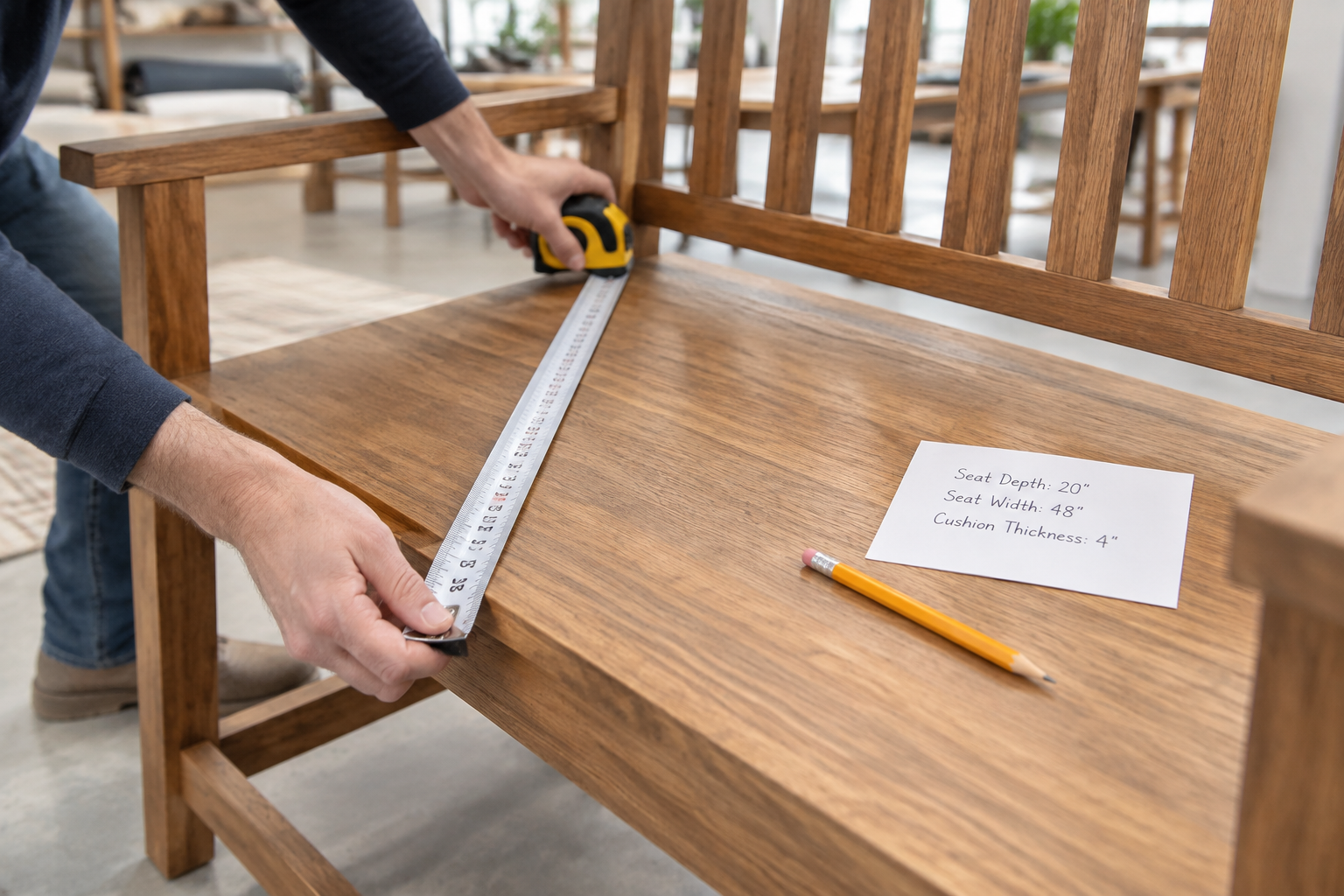
Step 1 — measure the deck, not the cushion. Take length and depth of the bare seat top, edge to edge, at the narrowest point. If the old cushion overhung the wood, that overhang was a fit mistake, not a style choice.
Step 2 — decide one piece or split. Benches longer than about 72 inches, or any bench you need to move the cushion on and off, should be split into two or more sections with the split on a sensible line. A 96-inch single cushion is an awkward two-person object; two 48s are not.
Step 3 — write down thickness, corners and notches. Pick thickness from the table above based on seat-time, note whether the corners are square or radiused (hold a coin or template to check), and sketch any notches around arms or brackets. Then measure again — the number that survives two measurements is the number that gets cut.
That is the summary. The complete method — including radius corners, notch templates and L-shaped corner benches — lives in our measuring library: start with bench cushion measurements for the bench-specific version, how to measure a rectangle cushion for the general case, and how to measure radius corners when your bench has curved edges.
Custom vs Ready-Made Bench Cushions: The Honest Comparison
| Ready-made | Custom cut | |
| Fit | Three shelf sizes (36/48/60″); gaps or overhang on everything else | Cut to your exact deck, including radii and notches |
| Foam | Whatever the factory chose, usually low density | Your spec — 60D seating, HD or dry-fast outdoor |
| Fabric | Limited seasonal colors | Full performance-fabric range |
| Lifespan | Typically flattens within 1–2 seasons of daily use | Density-rated for years of the same use |
| Lead time | Ships in days | Standard making 4–7 days, rush 3–5 days, then 3–6 weeks shipping |
The ready-made route makes sense for one situation: your bench happens to match a shelf size, nobody sits on it daily, and you want it this week. For every other case — odd decks, built-ins, daily dining, weather exposure — the custom route wins because the two things that make a cushion fail (bad fit, under-spec foam) are exactly the two things you control. Pricing is by total cushion area, so you are paying for your bench, not a rounded-up bracket; you can configure dimensions and see the live price on the custom bench cushions page before ordering. If you are curious why a measured cushion does not slide around the way shelf cushions do, that physics is explained in why custom cut cushions don’t slide.
FAQs
What are standard bench cushion sizes?
Common seat decks run 36, 48 and 60–72 inches long by 14–24 inches deep, but real benches routinely ignore those bands — built-ins and vintage pieces especially. Treat the size chart at the top of this guide as orientation, then measure your own deck before ordering anything. Our full bench cushion measurements article lists the bands and the exceptions.
How thick should a bench cushion be?
Match thickness to seat-time: 2–3 inches for entryway benches where people sit briefly, 3–4 inches for daily dining, 1½–2 inches for piano benches where playing height rules, and 4–5 inches for outdoor and window benches built for lingering.
What foam density is best for a bench cushion?
For benches people sit on daily — kitchen, dining, window seats — we specify 60D high-resilience foam as the standard. Lighter-duty pads can go thinner, but stepping down on density is what makes cushions flatten within a season or two. The reasoning and the ratings scale are in our foam density and thickness guide.
How do I stop a bench cushion from sliding?
The durable fix is fit: a cushion cut to the exact deck has no gap to travel into, which is why measured cushions stay put without hardware. For extra insurance on smooth or waxed wood, a thin rug-pad underlay between bench and cushion works well and costs a few dollars. We unpack the mechanics in why custom cut cushions don’t slide.
Can I order a bench cushion with ties?
We do not make ties, corner straps or non-slip backing — they are the first thing to fray and the last thing a precisely cut cushion needs. If you want the look or the security, after-market corner ties install in minutes on any cushion, and a rug-pad underlay handles sliding invisibly.
How much does a custom bench cushion cost?
Custom bench cushions are priced by total cushion area, so a 36-inch entryway pad costs meaningfully less than a 96-inch porch cushion. You can enter your exact dimensions and see the live price — with your fabric choice — on the custom bench cushions configuration page before you commit.
How long does a custom bench cushion take to arrive?
Standard making time is 4–7 days and rush making is 3–5 days, followed by shipping which runs 3–6 weeks depending on destination. The rush option covers the making queue only; freight time is separate.
What fabric is best for outdoor bench cushions?
Solution-dyed acrylics are the benchmark for outdoor bench cushions because the color sits in the fiber rather than on it, resisting UV fade for years. Pair them with high-density or dry-fast foam and a zippered cover you can strip and dry. The outdoor bench cushions guide walks the full fabric and foam decision.
Can an extra-long or L-shaped bench be one cushion?
Yes to both, with a caveat: decks past 72 inches are usually better split into two or more sections for handling, and L-shaped benches need a corner-accurate sketch rather than two rectangles guessed at the joint. See the extra long bench cushions and L-shaped bench cushion guides for each case.
Should a piano bench cushion be thin?
Yes — piano benches are the exception to thicker-is-better. A firm 1½ to 2 inch pad cushions long practice sessions without lifting the player out of correct hand and pedal position. The full practice-hour spec is in our piano bench cushion guide.
Types of Wicker Materials: Natural, Resin and HDPE Compared
Every wicker material family ranked — rattan core, paper fiber, bamboo, willow and reed on the natural side; PVC-resin and woven HDPE on the synthetic side — with outdoor ratings, lifespans and what each means for cushions.
How to Buy Patio Furniture Online Without Regret: The Complete Method
The online patio-furniture method that prevents the classic regrets — dimension-verification discipline, photo-evidence buying, material questions to ask, shipping and return reality, and why custom cushions solve online’s worst problem: fit.
How to Tell Indoor from Outdoor Wicker: The Identification Guide
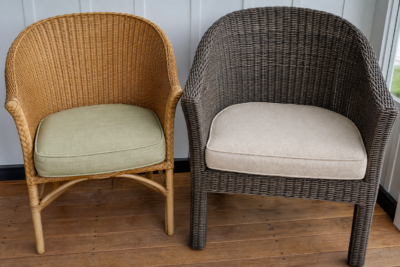
Five practical tests to classify any wicker piece — strand snap-test, frame magnet check, weave and weight inspection, tag and price decoding — and why getting this wrong is the most expensive wicker mistake there is.
Patio Furniture Sets: How to Choose Seating Sets, Dining Sets and Modules
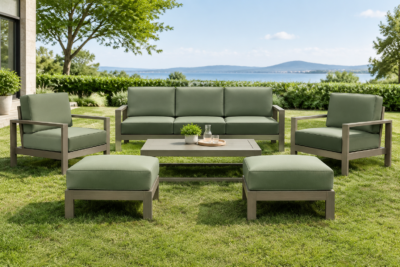
The patio-set decoder — set types by use pattern (dining, conversation, sectional, bistro), what set pricing bundles and hides, the OEM cushion problem, and the set-versus-separate decision made honestly.
Wicker vs Rattan vs Cane: What Each Word Actually Means
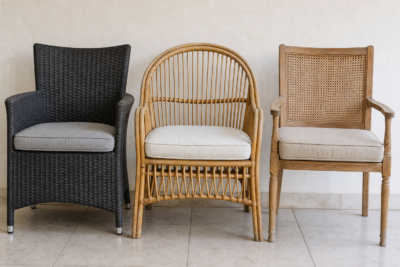
The three most-confused words in woven furniture, sorted properly — rattan is a material, wicker is a weaving method, cane is a specific weave and fiber — and what each distinction means for cushions, care and outdoor use.
Is Wicker Furniture Waterproof? The Honest Weather Answer
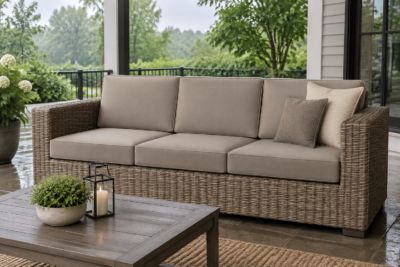
No wicker is waterproof and good wicker doesn’t need to be — how rain, humidity and sun actually affect natural and synthetic wicker, what ‘all-weather’ really means, and the protection habits that add years to either family.