
Metal patio furniture owns the middle of the outdoor market — the tubular aluminum dining sets, the cast-iron bistro chairs, the steel-frame lawn and sling chairs — and its cushions answer to the material’s three signature properties: metal is slick (pads slide), metal conducts (pads insulate), and metal lasts (the frame will outlive several sets of cushions). This guide covers the frame types, the attachment that works on metal, the heat question, and the sizing realities. The deep-dive on the classic heavy-metal case is wrought iron furniture cushions; the general category landscape is patio chair cushions.
Three Metals, Three Cushion Specs
Aluminum (tubular and cast). The modern default: light, rust-free, with slimmer frames than iron. Tubular aluminum seats are often sling-style fabric or a simple rim with the pad as the seating surface; cast aluminum runs to scrollwork patterns like iron’s. The cushion spec: standard outdoor pads, with attachment to the tube frame’s cross-members. Aluminum’s lightness cuts both ways — the furniture is easy to rearrange and so are its pads if unanchored.
Wrought and cast iron. The heavy classic: narrow seat frames, open scrollwork, paint-and-refinish longevity. The full spec — scroll-bridging thickness, rust-stain caution — is covered in wrought iron furniture cushions; the summary is 3–4 inch pads on tight frames, ties at the frame bars, and fabric chosen with fade and rust-transfer in mind.
Steel (coated and painted). The budget and mid-market frames — powder-coated dining chairs, sling chairs, folding steel. Steel rusts where coatings fail, so pad retention of moisture against the frame matters (a wet pad held against scratched steel accelerates the rust that stains the pad — the destructive loop). The spec: quick-dry fills and pads that don’t trap water against the frame.
Sizing Across the Metal Menagerie
Metal patio chairs vary more than any other category — the same patio commonly runs several metals, each with its own seat dimensions:
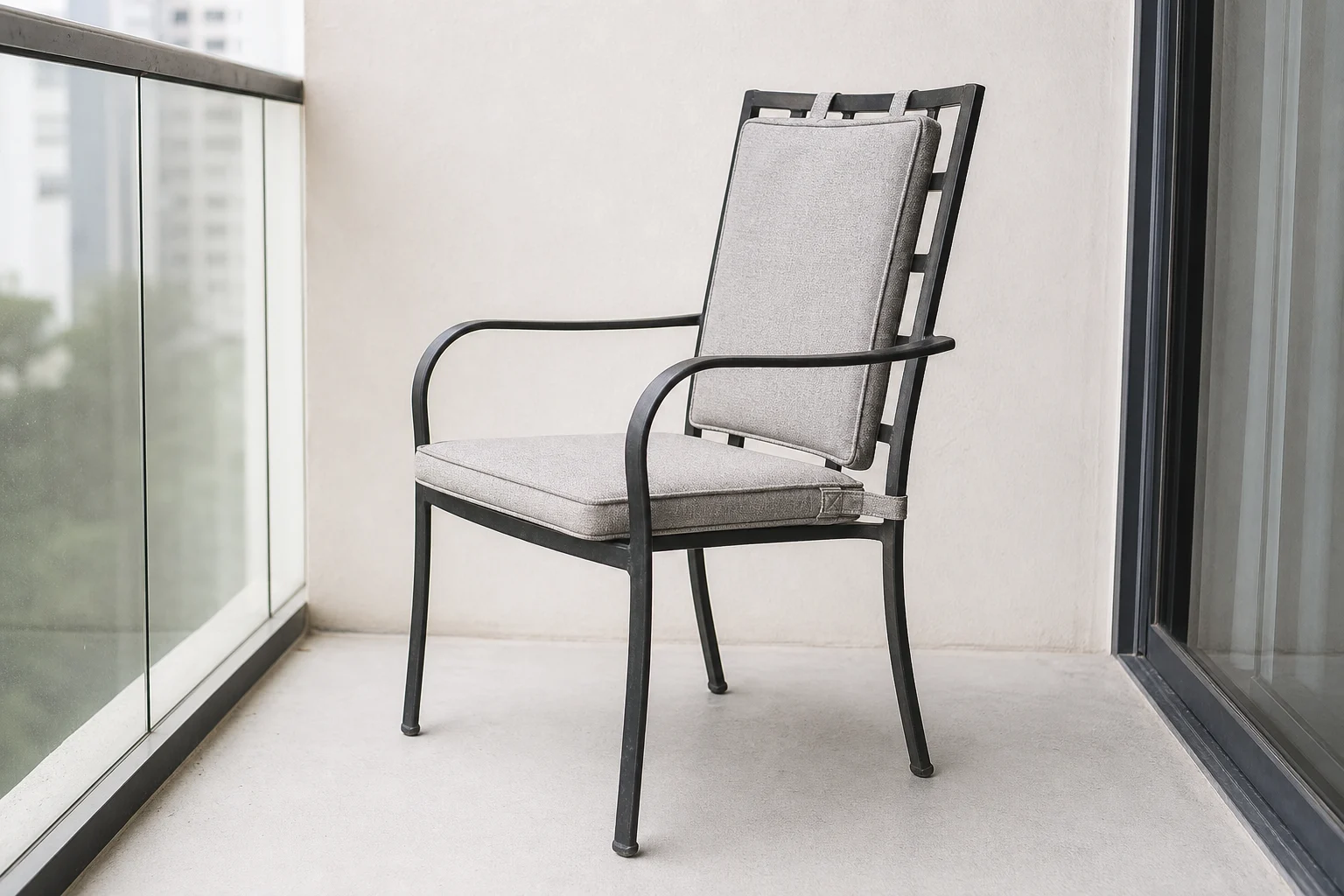
| Frame style | Typical seat | Pad notes |
| Tubular aluminum dining | 17–19″ × 16–18″ | Rim-mounted pads; ties at the tube cross-members |
| Cast aluminum / iron dining | 16–18″ square, scroll decks | Scroll-bridging: 3 inch minimum |
| Sling chairs | Full-length sling surface | Pad-over-sling or re-sling (re-slinging patio chairs for the frame-side decision) |
| Bistro sets (2–3 piece) | 15–17″ round or square | Small pads; often rounded corners |
| Steel lawn chairs | 15–17″ × 15–17″ | Light pads with tabs/straps (lawn chair cushions) |
Measure per chair, not per set: mixed-metal and mixed-era patios are the norm, and “they’re all the same” is how one wrong pad becomes four. The routine: how to measure outdoor cushions, with rounded corners and radius specs handled per how to measure radius corners — metal frames love a rounded corner.
The Sliding Problem: Attachment on Slick Frames
Painted and coated metal offer fabric zero friction — the pads walk, guaranteed. The ranking for metal frames:
- Ties at the frame’s cross-members and backrest bars. The positive anchor: ties wrapped at the actual bars (photograph yours during measuring; factory-guess positions are wrong more often than not). On daily-use chairs, two ties per contact point outlast single ones: the metal edge saws single ties over time.
- Hook-and-loop, the metal-frame specialty. Loop strips bonded or screwed to the seat rim, hook sewn to the pad — attachment that survives everything, and metal frames take the hardware better than wood or wicker. The best answer for daily-use metal dining sets; the commitment is hardware on the furniture.
- Non-slip grip backing as the base layer on smoother decks; on open scrollwork it grips less, on tube rims more.
- The full mechanics and why “just reposition it” is a daily tax: how to stop cushions from sliding.
The Heat Question: Metal in the Sun
Metal frames in full sun become radiators, and the cushion is the insulation layer between the frame and the sitter:
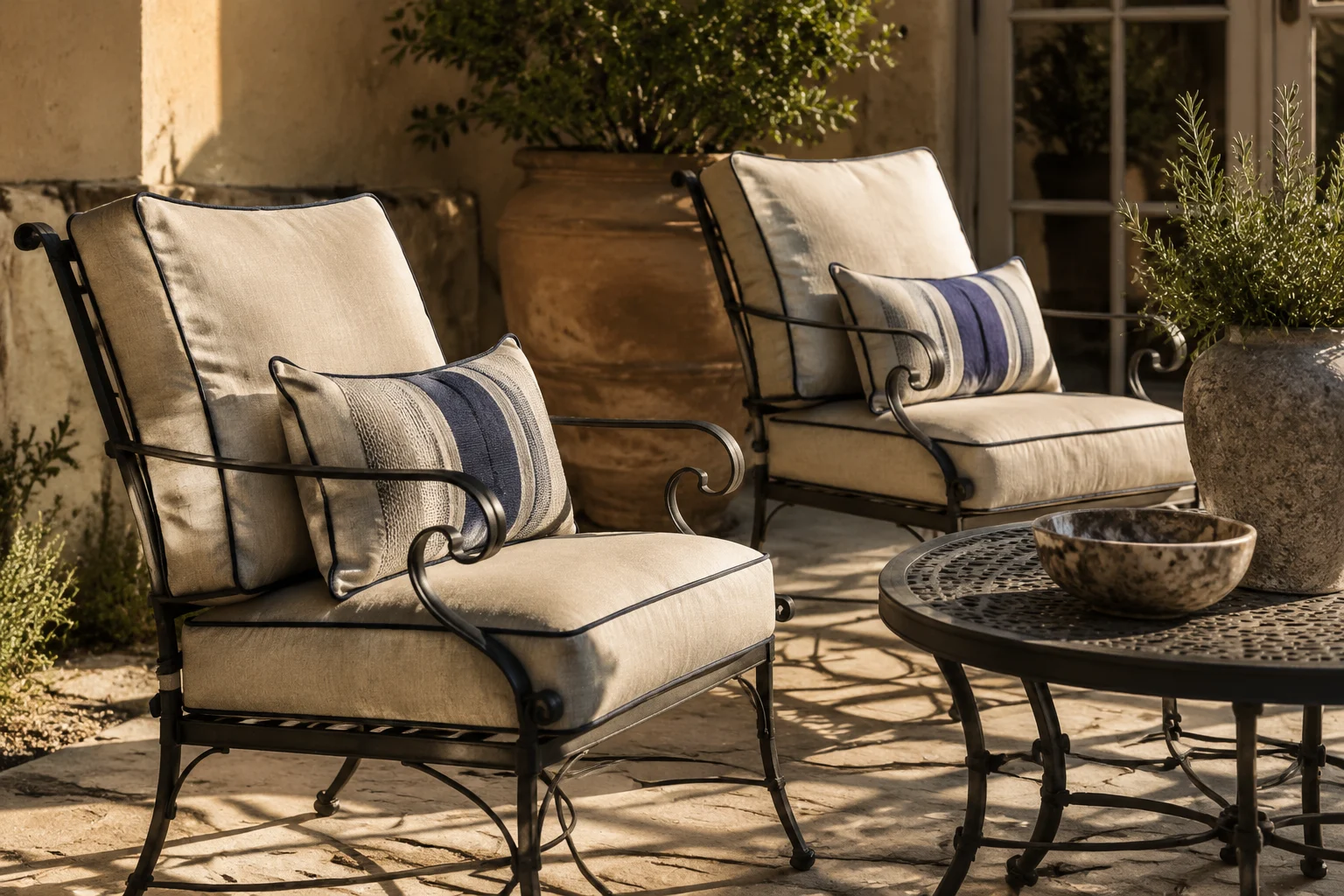
- – Thickness insulates. The 3–4 inch band on metal isn’t only comfort — it’s the standoff that keeps the frame’s heat from reaching through. Thin pads on hot metal decks conduct; the foam layer is the thermal break.
- – Fabric color, again. Dark pads on dark metal in July is the double heat sink; the color-sun-heat trade in choosing cushion colors is a comfort decision on metal furniture, not only an aesthetic one.
- – The touch-test habit. Before sitting, the back of the hand to the pad’s surface — the habitual check on metal furniture in high summer, and the reason a thick pad with an acrylic cover beats the bare-frame alternative every time (the bare-frame counter-argument is covered in no cushion outdoor furniture).
Fill and Fabric: The Outdoor Stack
Fill by exposure. Covered patios: standard 50D cores for daily dining (how to choose foam density). Open patios: quick-dry open-cell foam that drains instead of holding water against the frame — the case in quick dry foam for outdoor cushions, with the steel-rust loop noted above making it doubly correct on coated steel.
Fabric by sun. Solution-dyed acrylic for open exposure (the comparison: Sunbrella vs regular outdoor fabric; the cost logic: is Sunbrella worth it); heavy poly-blends serve covered placements on shorter clocks. Mid-tones for heat and fade (choosing cushion colors).
Cleaning and storage. The routine: how to clean outdoor cushions; the season’s end: how to store outdoor cushions for winter — pads inside, frames covered, and a coat of touch-up paint on scratched steel while the cushions are off, breaking the rust loop at its start.
The Mixed-Metal Patio: One Order, Many Frames
The realistic patio is a mixed one — the aluminum dining set, the iron bench, the steel loungers — and its cushions read as a set only if ordered as one. The custom flow takes mixed dimensions naturally: every chair measured, every pad cut to its frame, one dye lot across all fabrics in the same family. The alternative (buying pads store by store as each piece needs one) produces the drifting patio: four shades of “navy” and no two pads the same loft. The one-order discipline is the same matched-set logic as sectional cushion replacement, applied at patio scale — entry point custom outdoor cushions, pricing from a $45 make-base plus per-square-foot foam and fabric rates (corner radii captured on your sketch), 4–7 business days, dimensions confirmed before cutting.
The Sling-Chair Decision: Pad Over, Re-Sling, or Replace
Metal sling chairs — the tubular frames with taut fabric seats — deserve their own decision tree, because they fail by fabric and renew three different ways:
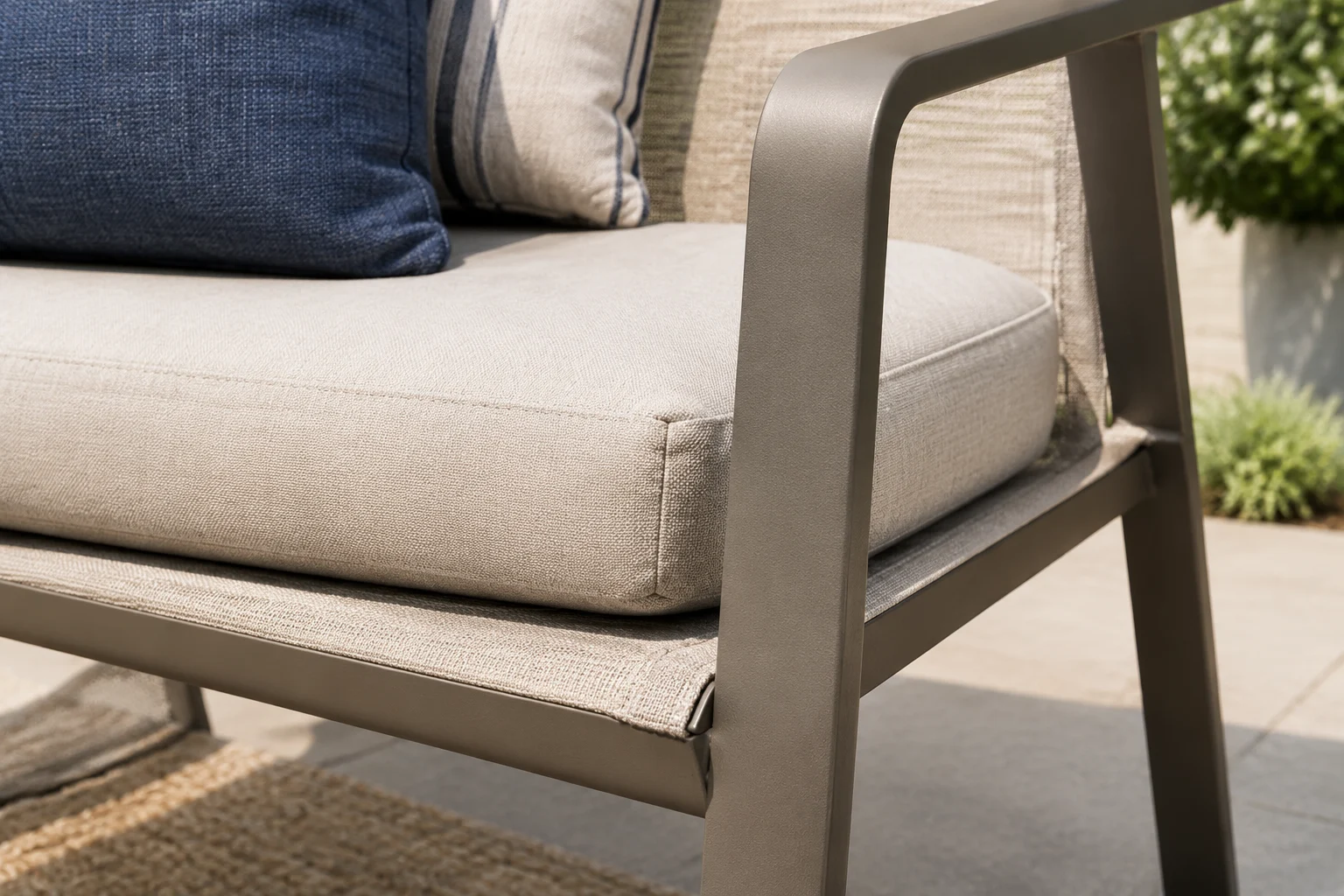
- – The pad-over route is the quick answer: a pad laid on the aging sling hides the fabric’s stretch and adds comfort, sized to the sling surface and strapped at the frame’s rails (zero gravity chair cushions covers the same geometry). It buys years, not decades — the sling underneath keeps stretching.
- – The re-sling route renews the frame properly: new fabric cut to the frame’s rectangle, re-laced or re-clamped, and the chair is itself again. The frame-side economics and method are in re-slinging patio chairs — worth it on good frames, silly on $30 ones.
- – The replace route wins when the frame itself has failed — locks that no longer hold, welds that have cracked, tubes that have bent. No pad or sling fixes a frame that won’t stay open.
The sequence that serves most households: pad-over now (this weekend’s comfort), re-sling or replace at the frame’s honest end-of-life, and buy the pad in a fabric that will move to the next generation of chairs — one more quiet argument for the durable acrylic grades, which outlast the furniture beneath them and re-deploy set after set.
FAQs
What cushions work on metal patio chairs?
Outdoor-spec pads with positive attachment — ties at the frame’s cross-members or hook-and-loop — because metal gives fabric no friction. The ranking: how to stop cushions from sliding.
How thick should pads be on metal chairs?
3–4 inches: the foam is the insulation standoff between a hot metal deck and the sitter. On scrollwork cast frames it’s also the bridge over the pattern (wrought iron furniture cushions).
Do metal patio chairs need special fabric?
They need full-sun fabric — metal furniture sits in the open by design. Solution-dyed acrylic for exposure, mid-tones for heat: Sunbrella vs regular outdoor fabric.
Why do my metal-chair cushions slide more than the wooden ones?
Painted metal is a near-zero-friction surface where wood and wicker grip. Ties or hook-and-loop solve it permanently; grip backing alone is partial.
Can I match pads across a mixed aluminum-and-iron patio?
Yes — one custom order, per-frame dimensions, one dye lot. Mixed-metal patios are the norm; the one-order discipline is the only way they read as a set.
Do steel frames rust under wet cushions?
Scratched steel can — wet pads held against failed coatings accelerate the rust that then stains the pads. Quick-dry fill and the storage routine break the loop (quick dry foam for outdoor cushions).
Next Steps
- Inventory the patio by frame type, measure each chair individually (rounded corners noted), and photograph the attachment bars before pads come off.
- Fix the duty: 50D fill by coverage, 3–4 inch thickness, waterproof acrylic in heat-aware mid-tones for open exposure, ties or hook-and-loop per frame.
- Order the whole patio in one specification at custom outdoor cushions — mixed frames, one lot, every dimension confirmed before cutting, 4–7 business days.
Patio Chair Cushions: The Complete Buying Guide (Outdoor Too)
Everything that decides a patio or outdoor chair cushion — sizes, thickness, ties, fabric tiers and where each buying route wins. Custom from $45 when grids fail.
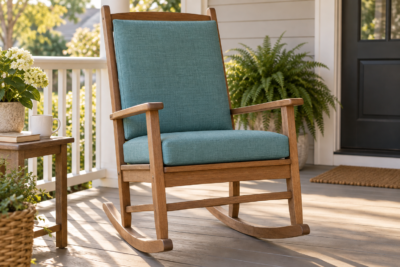
Outdoor Rocking Chair Cushions: The Weatherproof Guide to Sizes and Fabrics
An indoor rocking cushion dies fast on a porch. The sun bleaches the print in a single season, the foam
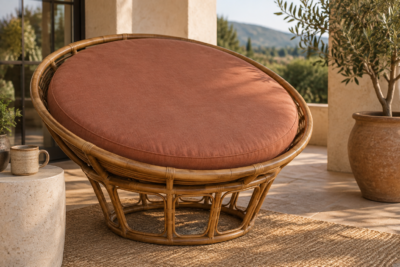
Outdoor Papasan Cushions: Weathering the Big Round
Outdoor papasan cushions fail in a known order — fabric, fill, bowl. The overhang-vs-inset diameter decision, fiber vs foam outdoors, and the honest line between a flat round and the concave original.
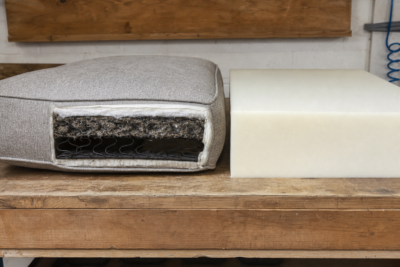
High Density Foam Couch Guide: What Density Actually Means
What high density foam actually means for a couch — the ×10 density convention, density vs firmness (ILD), the 35D–65D grades ranked by use, how each grade fails, and what density costs per square foot.
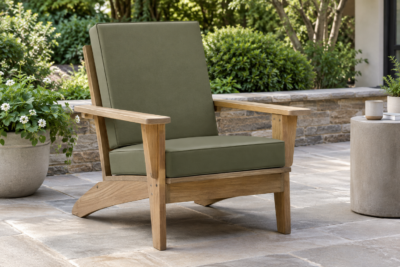
Adirondack Chair Cushions: Sizes, Selection & Replacement Guide
Adirondack cushion sizes decoded: 20×20 seats, tall-back options, tie patterns, best fabrics — plus fitting odd or vintage chairs.
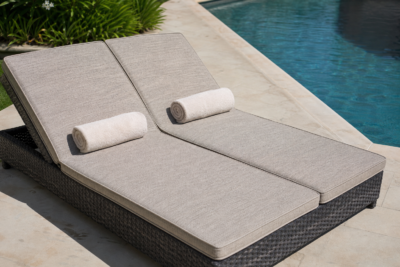
Double Chaise Lounge Cushions: Two-Position Geometry and Shared Lounging
Double chaise lounge cushion guide: back-to-back and side-by-side layouts, measuring two lounging positions in one piece or two, fill for shared daily lounging, and outdoor fabric for a full-sun centerpiece.