
The kitchen bench — one side of the table running bench, the other chairs — has become the default family kitchen layout, and for good reason: it seats more people in less space, it never runs out of “one more chair,” and it stores things underneath if it’s built that way. Its cushion carries the same duty as three kitchen chairs in one piece: meal after meal, homework hours, coffee mornings, the whole family cycling through. This guide covers the sizing, the thickness discipline that dining tables force, and the duty spec. The chair-side companion piece is kitchen chair cushions; the built-in version is banquette cushions.
Freestanding Versus Built-In: Two Specs
Kitchen benches split into two builds, and the cushion logic differs:
Freestanding benches (bought furniture): measure the seat board edge to edge — the standard bench measuring from bench cushion measurements and indoor bench cushions applies directly. The pad is furniture-scaled, ties or grip backing attach it, and the whole piece can move.
Built-in benches and nooks (carpenter-built): the banquette logic takes over — runs, corners, table geometry — covered in banquette cushions and breakfast nook cushions. This guide covers the freestanding case with the built-in notes where they matter.
Sizes and the Table That Governs Them
Freestanding kitchen benches cluster at 42–60 inches long and 14–17 inches deep — sized, like everything at a kitchen table, against the table rather than as free furniture:
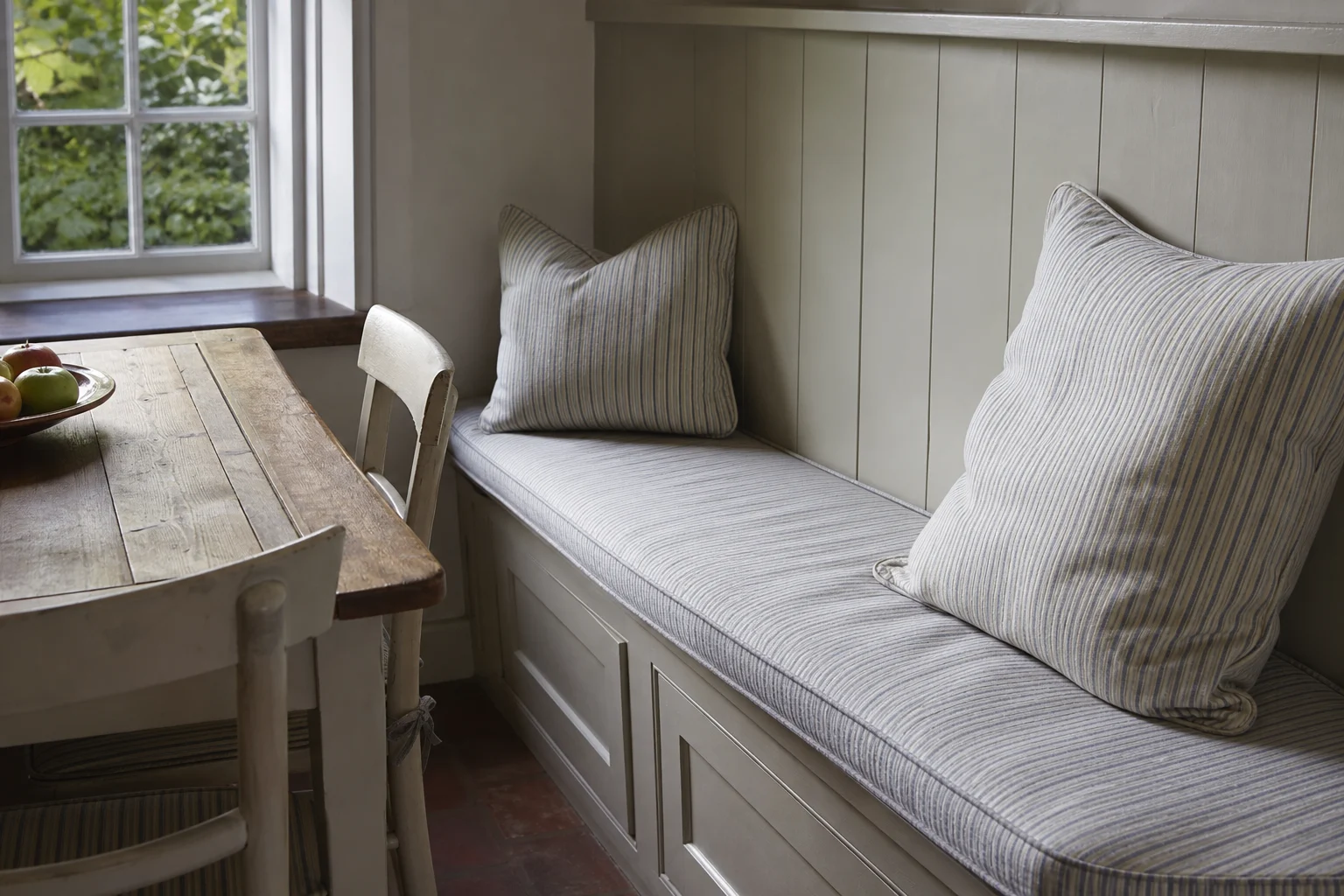
- – Depth is a table decision. The bench sits partly under the table when not in use (in most layouts) and the sitter’s knees go under the apron at meals. Measure the clear span under the table’s apron or edge, and keep cushion depth inside it; a bench pad deeper than the knee span forces the sitter to sit back and lean — the dining version of the ergonomics in kitchen chair cushions.
- – Length is a seating decision. Eighteen inches per diner, plus a little — a 48-inch bench seats two comfortably, three at a squeeze with children in the mix.
- – Thickness: 2–3 inches, capped by the table. Measure bench-top to table-underside and keep the cushion inside the sitting clearance; above 3 inches the table apron starts colliding with thighs. The elbow test (forearms level, shoulders relaxed) settles it.
Fill: Firm-Thin Dining Logic
Kitchen benches are dining seating — shorter sits than a lounge, but many of them, with the sitter getting up and down constantly:
- – A firm 50D core at 2–3 inches is the working build: it survives years of meal cycles and perching, and it keeps the sitter at table height. Density logic: how to choose foam density.
- – 35D for light-duty benches — the weekend kitchen, the secondary table.
- – Memory tops are usually unnecessary here — dining sits are short; memory layers pay off in long static sits (memory foam topped cushions covers where they do work). The exception: the kitchen bench that doubles as the homework-and-laptop station, where the sit is long.
- – Fiber-tufted pads — the quilted bench look — are decorative-grade and compress under dining duty on the fast schedule; the fill landscape is cushion filling types.
- – Long benches (48 inches-plus) want a stitch pattern. A grid or linear stitch keeps the fill from migrating to the ends — the same long-pad physics as any bench, covered in indoor bench cushions.
Fabric: The Family Table Spec
The kitchen bench meets the kitchen’s full chemistry — and unlike chairs, it’s one continuous surface where every stain lands in a row:
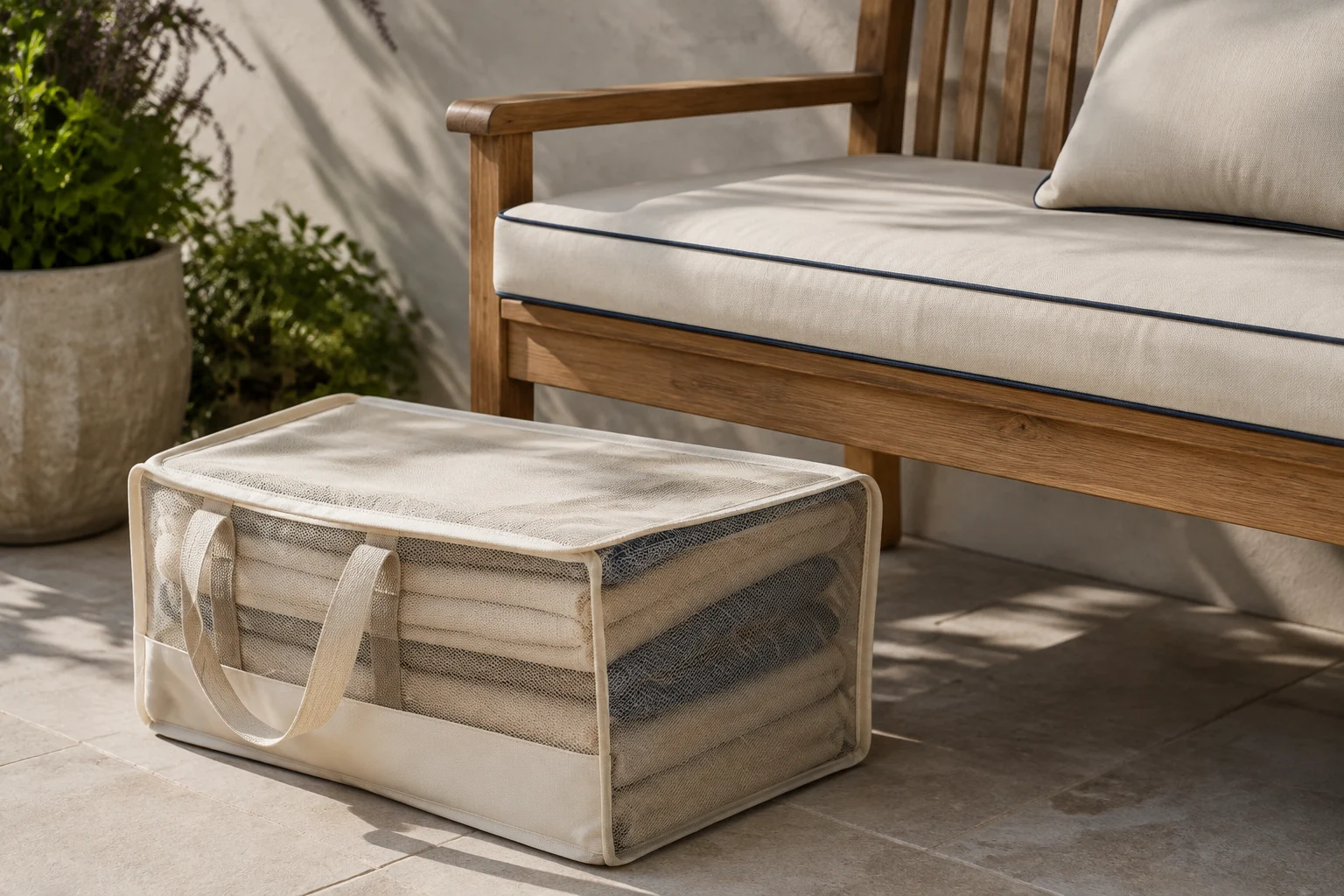
- – Tight weaves, mid-tones, patterns. The hide-the-wear logic from choosing cushion colors applies with extra force: a bench pad is a single visible surface, and a pale solid is a stain diary. The pet-and-kid fabric hierarchy is covered in dog friendly outdoor fabric, which transfers indoors.
- – Climb the duty ladder, not the fashion ladder. The fabric ladder runs a flat $7.43 per square foot (all 119 fabrics, linen-family to premium chenille); at bench scale, the durable grade upgrade is free and pays in years.
- – Spot-clean construction, serviced immediately. Meal accidents clean best at the moment: mild soap, water, done. The fabric-by-fabric routine: how to clean couch cushions.
- – For eat-in kitchens with serious sun, the fade logic (and the acrylic answer) from is Sunbrella worth it transfers indoors.
Attachment and the Sliding Bench Pad
Bench pads slide — finished wood, daily mounting and dismounting, and no back to brace against:
- Non-slip grip backing is the standard answer — invisible, finish-safe, and it holds through the daily cycle.
- Ties at the bench’s end panels or frame bars for benches that double as step stools or take heavier abuse (the kid side of the table).
- The full mechanics and ranking are in how to stop cushions from sliding.
Matching the Chairs: The Half-Bench Kitchen
The classic layout — bench one side, chairs the other — raises the matching question, and the working answer is coordinated, not identical:
- – Same fabric family, deliberately different or deliberately same. Identical pads on bench and chairs unify the set; a same-family fabric one step apart reads as intentional layering. The failure mode is the half-close match — same nominal color, different dye lot — which is why the whole kitchen’s pads, bench and chairs, belong in one order and one lot (the matched-set discipline from replacement cushion covers).
- – Thickness can differ. Chairs and bench don’t need matched pad heights — the elbow test governs each independently — but the look prefers them close.
Ordering
- Measure the seat board (edge to edge, front to back), check the under-apron clearance that caps thickness, and note the bench’s tie points.
- Set the build: 50D at 2–3 inches, stitch pattern on long runs, duty-graded fabric — grip via a cut-to-size underlay, ties after-market.
- Order at custom breakfast nook cushions for built-in nook benches, or custom indoor bench cushions for freestanding pieces — pricing from a $45 make-base plus per-square-foot foam and fabric rates, 4–7 business days, dimensions confirmed before cutting. Order bench and chair pads together for one lot.
Kids at the Bench: The Booster Half
The bench side of the table is where the children end up — it seats the most, it takes the most abuse — and the cushion spec can serve them without becoming a children’s product:
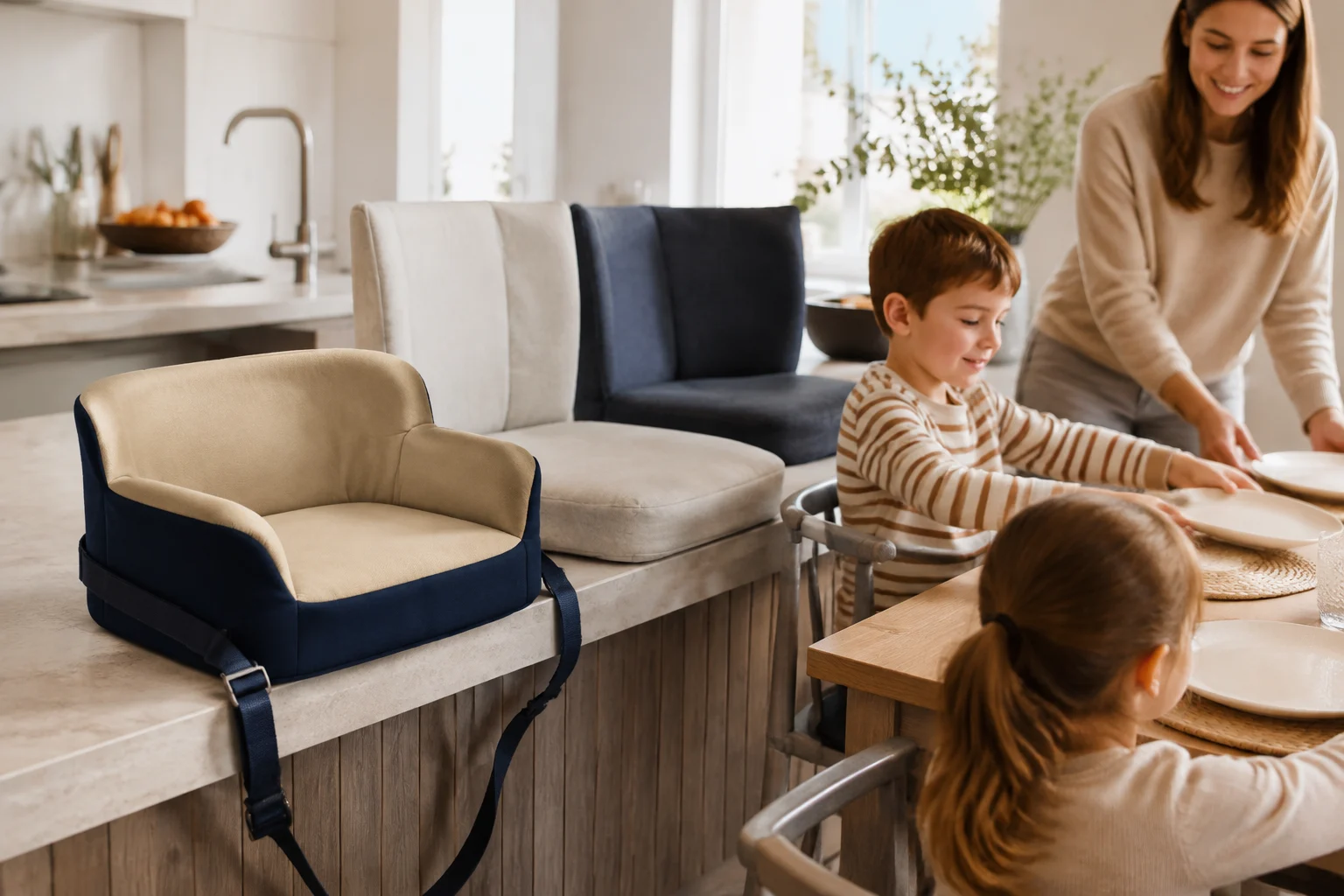
- – The per-position thickness trick. A bench is one piece, but the positions along it can be specified differently: a 3-inch build at the child’s spot and 2-inch at the adults’ closes the height gap better than any booster cushion on the market, using the same family-leveling logic as children’s chair cushions. Mixed thickness across one pad’s positions is custom-shop routine — specify it in zones.
- – The wipeable-zone reality. The child’s end of the bench takes the concentrated spills; graders handle it with fabric choice (patterns and mid-tones, the hide-the-wear logic in choosing cushion colors) or with a deliberate two-pad build — the child’s half in the outdoor-grade acrylic that shrugs juice, the adult’s half in the linen-family weave. Two pads, one bench, one dye-lot-family order.
- – The bench as stage. Children stand on benches, kneel on them, and build forts under them; the firm-core build (50D-class) survives the treatment where plush pads compress into memory of every activity. The safety logic — firm, thin, gripped — is identical to the children’s-chair spec: childrens chair cushions.
FAQs
What size cushion fits a kitchen bench?
The seat board measured edge to edge — freestanding benches cluster 42–60 inches by 14–17 deep, but every bench is measured, not assumed. Routine: bench cushion measurements.
How thick should a kitchen bench cushion be?
2–3 inches, capped by the under-table clearance — run the elbow test. Dining ergonomics, not lounge comfort, sets the number.
Should a kitchen bench cushion be firm?
Yes — a 50D-class firm core is the dining-duty build. Frequent short sits and constant mounting favor resilient fill over plush; the logic is how to choose foam density.
How do I keep a bench cushion from sliding at the table?
Non-slip grip backing standard; ties for the hard-use end. The mechanics: how to stop cushions from sliding.
Should the bench pad match the chair pads?
Coordinate deliberately — identical, or same family one step apart — and order everything in one lot. Half-close matching is the visible failure.
What fabric survives a family kitchen bench?
A tight mid-tone or patterned weave in a duty grade, spot-cleaned immediately. One continuous surface means the whole family’s meal history on display otherwise.
Next Steps
- Measure the bench board and the under-apron clearance in one session; note tie points and whether chairs will be ordered alongside.
- Set the build: 50D core at 2–3 inches, stitch pattern if long, a rug-pad underlay for grip, duty-grade fabric.
- Order bench and chair pads together at custom indoor bench cushions (or the nook page for built-ins) — one lot, dimensions confirmed before cutting, 4–7 business days.
Patio Chair Cushions: The Complete Buying Guide (Outdoor Too)
Everything that decides a patio or outdoor chair cushion — sizes, thickness, ties, fabric tiers and where each buying route wins. Custom from $45 when grids fail.
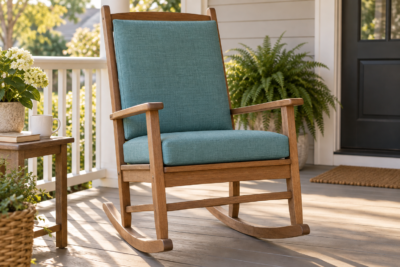
Outdoor Rocking Chair Cushions: The Weatherproof Guide to Sizes and Fabrics
An indoor rocking cushion dies fast on a porch. The sun bleaches the print in a single season, the foam
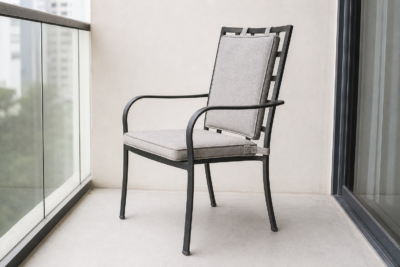
Cushions for Metal Patio Chairs: Frame Types, Grip and the Heat Question
Cushions for metal patio chairs guide: wrought iron, aluminum and steel frames and what each means for pads, sliding on slick metal, heat absorption in sun, sizing across mixed metal sets, and the outdoor duty spec.
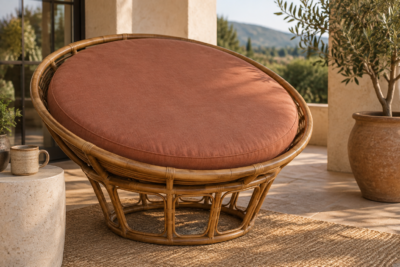
Outdoor Papasan Cushions: Weathering the Big Round
Outdoor papasan cushions fail in a known order — fabric, fill, bowl. The overhang-vs-inset diameter decision, fiber vs foam outdoors, and the honest line between a flat round and the concave original.
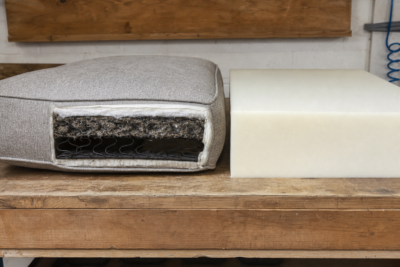
High Density Foam Couch Guide: What Density Actually Means
What high density foam actually means for a couch — the ×10 density convention, density vs firmness (ILD), the 35D–65D grades ranked by use, how each grade fails, and what density costs per square foot.
Adirondack Chair Cushions: Sizes, Selection & Replacement Guide
Adirondack cushion sizes decoded: 20×20 seats, tall-back options, tie patterns, best fabrics — plus fitting odd or vintage chairs.