
Benches are the most varied cushion we cut. In one week the cutting floor might see a 36″ entryway bench, a 48″ porch glider, a 60″ dining bench and a 78″ outdoor teak bench — same category, completely different rules. A dining chair is a dining chair everywhere; a bench is whatever its builder decided.
The measurement is simple (one rectangle, usually), but a handful of decisions around it — between-slats fit versus overhang, thickness by use, ties — are what separate a bench cushion that looks built-in from one that slides around and frays on the edges. Here is the full protocol, with real dimensions from benches we replace cushions for. For the general width/depth/thickness method, start with how to measure outdoor cushions; the scenario pages for indoor builds are custom indoor bench cushions and custom banquette cushions, and for outdoor benches custom outdoor bench cushions is the preset starting point.
Step 1: Decide the Fit Style Before You Measure
Two ways a bench cushion can sit, and they change the numbers:
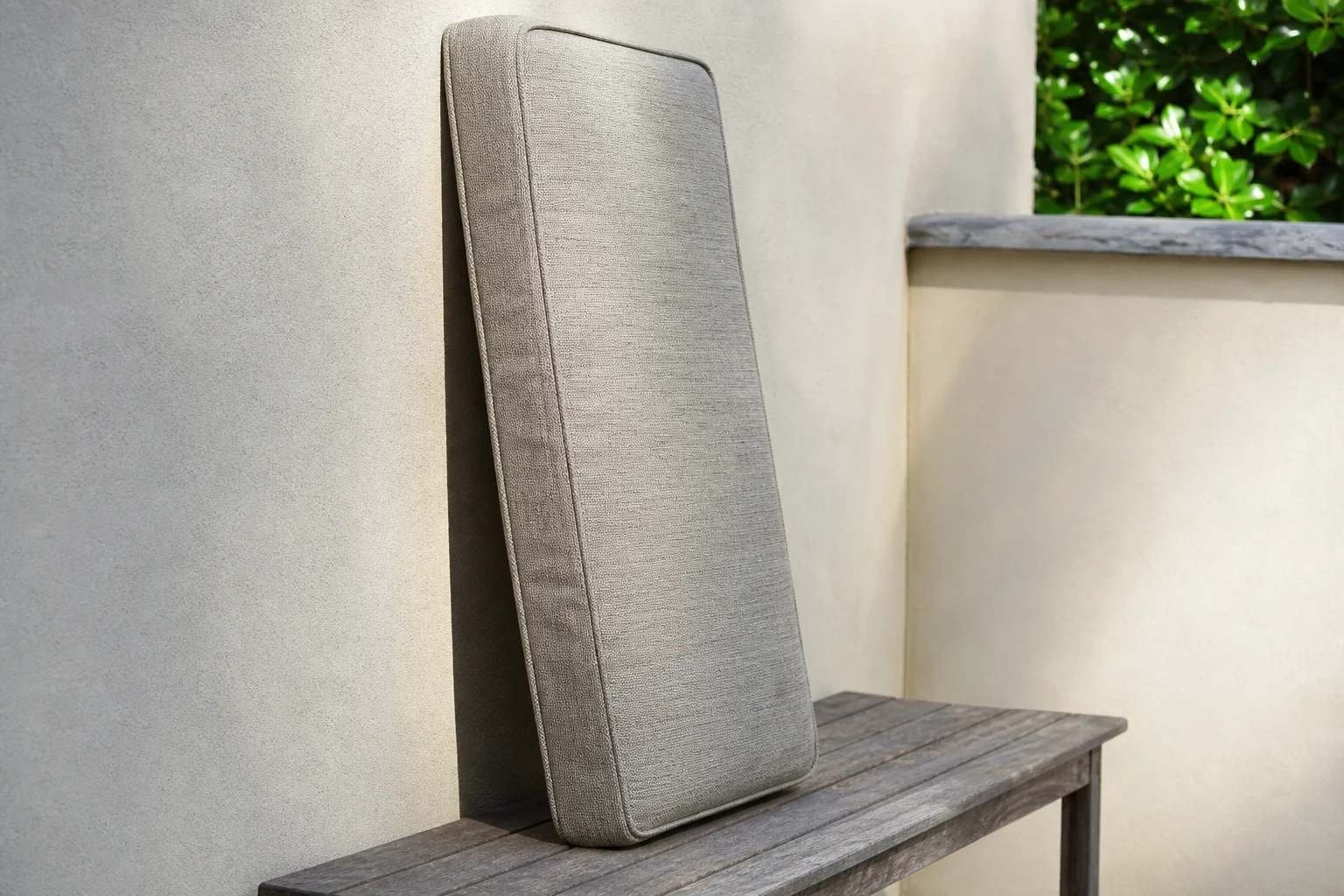
- – Inside fit — the cushion sits between the bench’s arms, end panels or slat frames. Measure the clear opening and order to it. Looks tailored, stays put.
- – Overhang fit — the cushion runs the full length of the bench top, past the arms. Measure the full deck plus the overhang you want (typically 1″–2″ past each end, or none if the bench ends are square).
Write down which one you are doing before recording numbers — our order desk sees “48 inches” far more often than “48 inches between arms” or “48 inches including overhang,” and the two orders are different cushions.
Step 2: Measure Length
- Inside fit: measure the clear opening at the front edge and again at the back. If they differ, use the smaller.
- Overhang fit: measure the full deck length, then decide the overhang and add it deliberately — do not just round the deck measurement up “for luck.”
- Long benches: measure at three points (both ends and the middle). Bench tops, especially wood and composite, bow. A cushion cut dead straight on a crowned deck rocks; if your middle reading is more than 1/4″ proud of the ends, note it — the foam can be thickness-split to compensate, or you accept a slightly firmer center sit.
Step 3: Measure Depth
Front to back, on the flat of the seat:
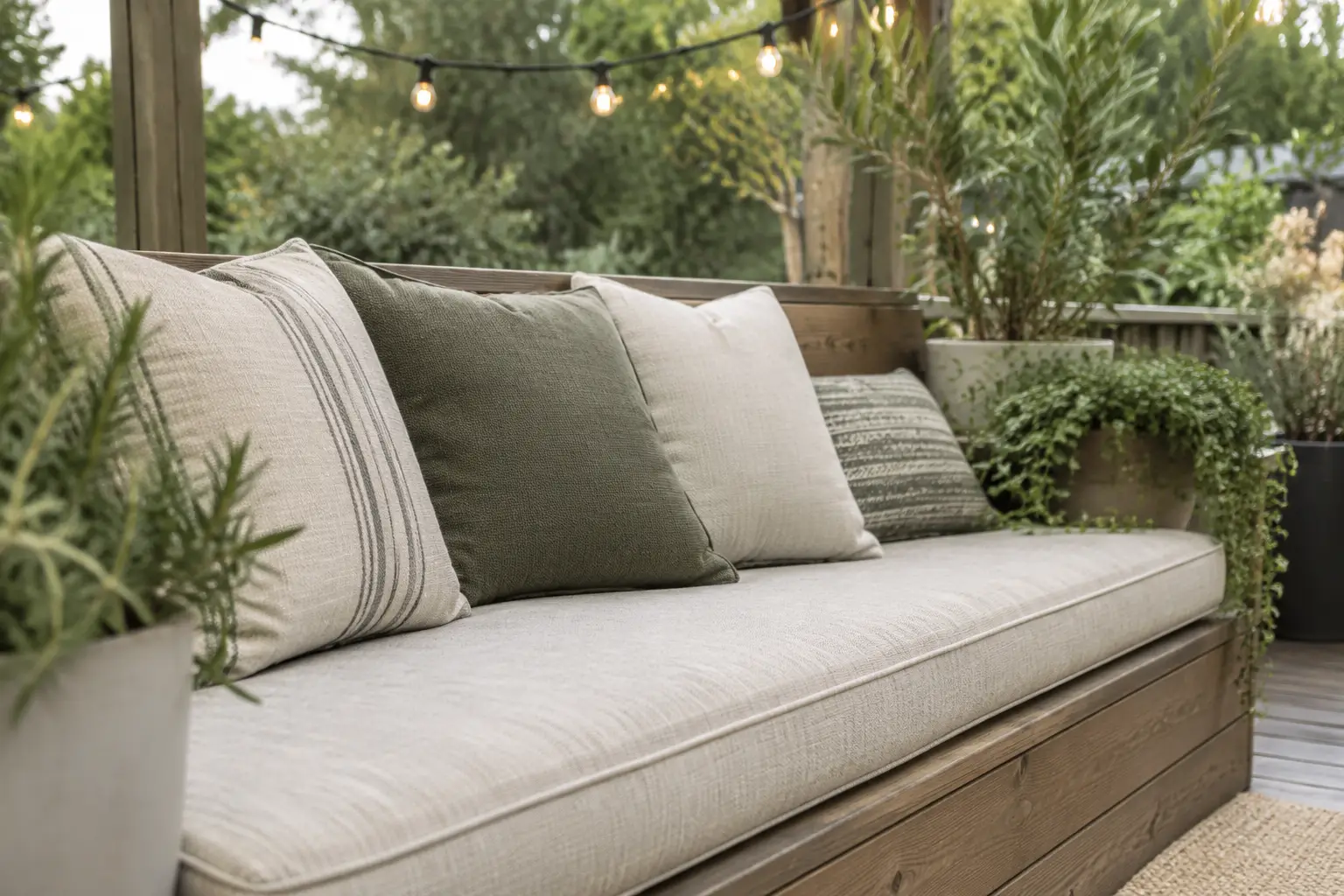
- – Do not include the backrest or any lip below the deck.
- – Standard bench depths run 14″ (entryway/window benches) to 24″ (deep outdoor dining benches). Patio gliders typically run 21″–22″.
Typical pairings we cut: a 36 × 16 entryway cushion at 3″, a 48 × 21.5 glider cushion at 5″ (the exact Edington glider bench spec — one piece, 48 × 21.5 × 5), and 60–78″ outdoor benches at 4″–5″ depending on frame.
Step 4: Choose Thickness by What the Bench Is For
Thickness is a use decision, not just a comfort dial:
| Use | Thickness | Why |
| Entryway / mudroom | 2″–3″ | Short sits; thin profile keeps shoes-and-coat routine easy |
| Dining bench | 3″–4″ | Keeps diners at table height; thin dense foam beats thick soft foam |
| Porch glider / swing | 4″–5″ | Long sits, gentle motion — mid density HR foam |
| Outdoor lounge bench | 5″–6″ | All-afternoon use; 50D+ foam or a firm base layer |
Two factory notes. First, on benches over about 60″, a single 3″ layer of standard foam will feel great for a season and then dish in the two spots people always sit. Either go 4″+ or upgrade density — the density grades are explained in memory foam vs foam cushions. Second, density options are priced live in the builder, and a bench is mostly area, so thickness is the biggest price lever you control. The custom cushions builder prices it live.
Step 5: Radius Ends and Special Shapes
- – Rounded front corners: measure the radius with the card method (slide a card into the corner; distance to first contact with the curve). Very common on wooden benches with bull-nosed edging.
- – Fully rounded ends (oval/ovalized benches): trace a template. Numbers cannot describe a curve, but paper can.
- – Bowed fronts: same — template. Bowed shapes are priced by their footprint — depth plus two-thirds of the bow height — the curved seams are a cutting detail, not a surcharge line.
- – Slat gaps: if the bench deck has open slats wider than about 1/4″, note it. We cut bench cushions with a thin firm base layer over slatted decks so the cushion does not stripes-press into the foam over time.
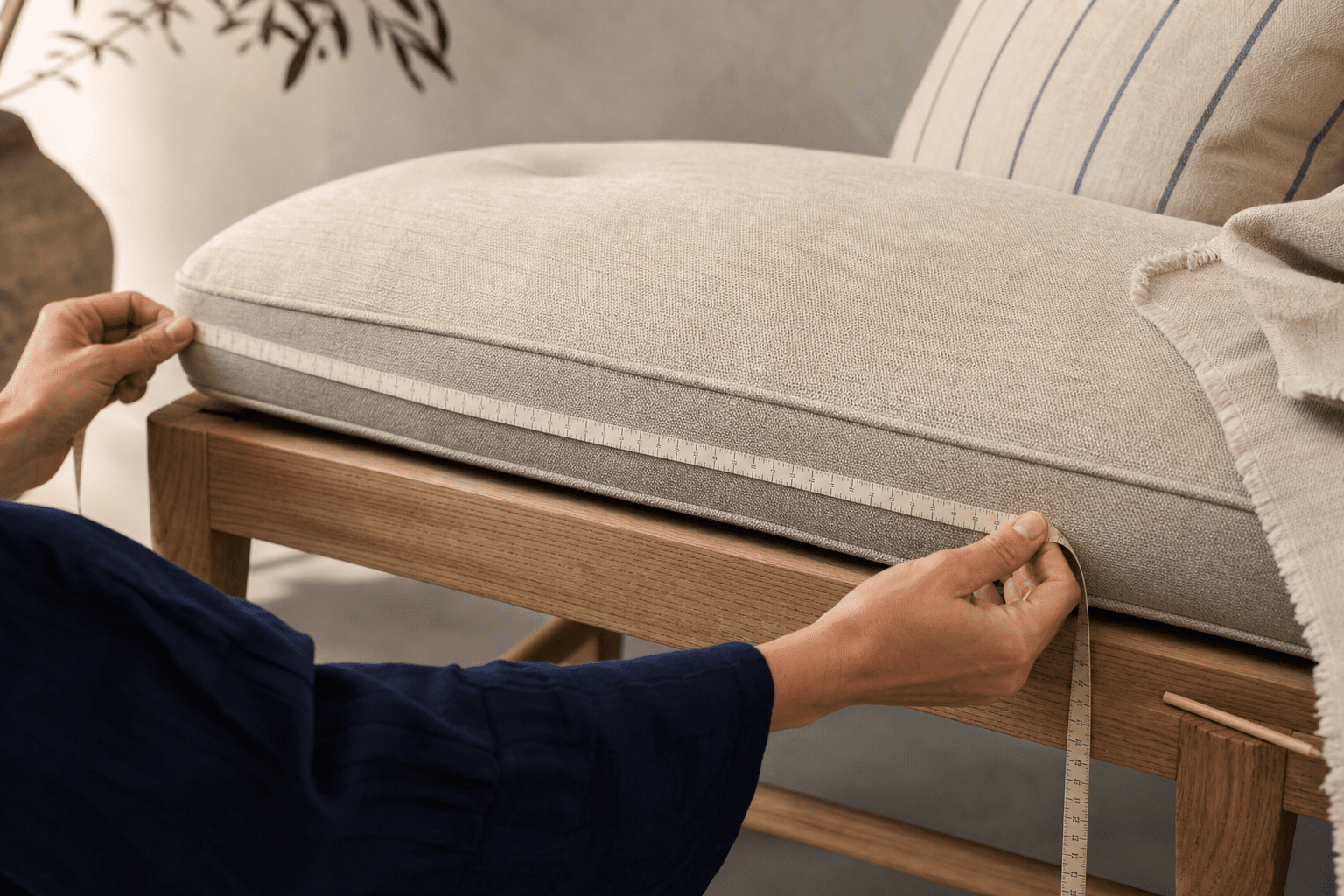
Step 6: Ties, Non-Slip and Outdoor Details
- – Ties: the market standard is a pair at each corner. On benches longer than 48″, add a mid-edge pair — two ties across five feet of bench cannot stop center lift in a breeze.
- – Non-slip underlay: the indoor alternative; most porch benches do better with after-market ties plus a cut-to-size rug pad.
- – Outdoor fabric: uncovered benches live in UV and rain; solution-dyed acrylic is the only construction we recommend for full exposure — see best outdoor cushion fabric for the comparison.
- – Drainage: cushions on slatted outdoor benches should use open-cell foam wrapped in a breathable cover so they dry; fully sealed vinyl covers trap water against the slats and rot the bench under them. More on water behavior in waterproof cushions explained.
Real Bench Dimensions from Our Pattern Library
| Bench | Length × Depth × Thickness (in) |
| Edington glider bench (Hampton Bay) | 48 × 21.5 × 5 |
| Standard entryway | 36 × 16 × 3 |
| Standard outdoor dining bench | 60 × 18 × 4 |
| Deep outdoor lounge bench | 72–78 × 22–24 × 5–6 |
The Edington pattern ships ready-to-order from the Hampton Bay Edington page if you would rather skip measuring entirely — glider cushions are one of our most-ordered stock patterns.
Bench Cushion Cheat Sheet
| Measurement | What to record | Typical range |
| Length (inside fit) | Clear opening, front + back | 36″–78″ |
| Length (overhang fit) | Deck length + deliberate overhang | — |
| Depth | Flat of the seat, front to back | 14″–24″ |
| Thickness | By use (see table above) | 2″–6″ |
| Corner radius | Front corners, card method | 1″–6″ |
| Ties | Corner pairs + mid-edge over 48″ | 2–4 pairs |
| Deck crown | Three length readings if wood/composite | Note if > 1/4″ bow |
Real-World Bench Scenarios
Three situations our order desk handles weekly, worked through:
The porch glider: usually 48″ × ~21″ inside the arms — the Edington glider spec (48 × 21.5 × 5) is the exact pattern, orderable directly from the Edington page without measuring. Five-inch foam with a plush wrap and solution-dyed fabric for all-day exposure; the glider frame takes after-market ties at all four corners.
The indoor entryway bench: 36″ × 16″ × 3″ with the 2″ corner radius recorded, and a cut-to-size rug pad instead of ties. Density still matters — the entry bench is sat on with full weight, coats in hand, dozens of times a day; 35D minimum even though it lives indoors (density logic).
The 78″ outdoor teak dining bench: no stock anything fits properly. Measure the deck, order custom at 4″ (dining height discipline), a waterproof cover over high-density foam for uncovered exposure (water logic). Priced by area at the standard rate — roughly in the chaise band (price guide).
Bench Cushion FAQ Quick-Reference Dimensions
Printable summary of every spec in this guide for the most common bench projects:
| Project | Cut size (W × D × T) | Foam | Extras |
| Entryway 36″ | 36 × 16 × 3 | 35D | Rug-pad underlay; 2″ radius noted |
| Porch glider 48″ | 48 × 21.5 × 5 (Edington pattern) | 50D + wrap | Solution-dyed fabric; after-market corner ties |
| Dining bench 60″ | 60 × 18 × 4 | 35D | Patterned fabric; after-market ties |
| Outdoor bench 72″ | 72 × 22 × 5 | 50D | Waterproof cover + high-density foam |
| Window bench 78″ | Split 2 × 39 × 22 × 5 | 50D | Template if bowed; rug-pad underlay |
FAQs
What are standard bench cushion sizes?
Common decks run 36″, 48″ and 60″–78″ long by 14″–24″ deep, but “standard” means little — always measure your own bench before ordering. The bench cushion sizes you order are cut to your measured numbers, not to this chart.
How thick should a bench cushion be?
2″–3″ for entryways, 3″–4″ for dining height, 4″–5″ for porch gliders and outdoor benches, with high-resilience foam at the lower end of each range.
Should a bench cushion overhang the bench?
Only if the design calls for it — inside-fit between arms looks tailored and stays put; overhang fit is for open-top benches, deliberately 1″–2″ per side, never accidental.
How do I keep a bench cushion from sliding?
Corner ties plus a pair at mid-edge on benches over 48″, or a separate non-slip underlay on indoor benches.
How much does a custom bench cushion cost?
By top area and fabric tier — roughly $165–$250 for a typical 48–60″ bench in standard fabric; the price guide breaks down the fabric tiers, and the builder quotes live.
From Paper Pattern to Finished Depth
Measuring day on a hallway bench: a rolled sheet of brown kraft paper and an L-shaped framing square resting on the bench top. The square keeps your width and depth lines square to the edges; the paper becomes the template the pad is cut from.

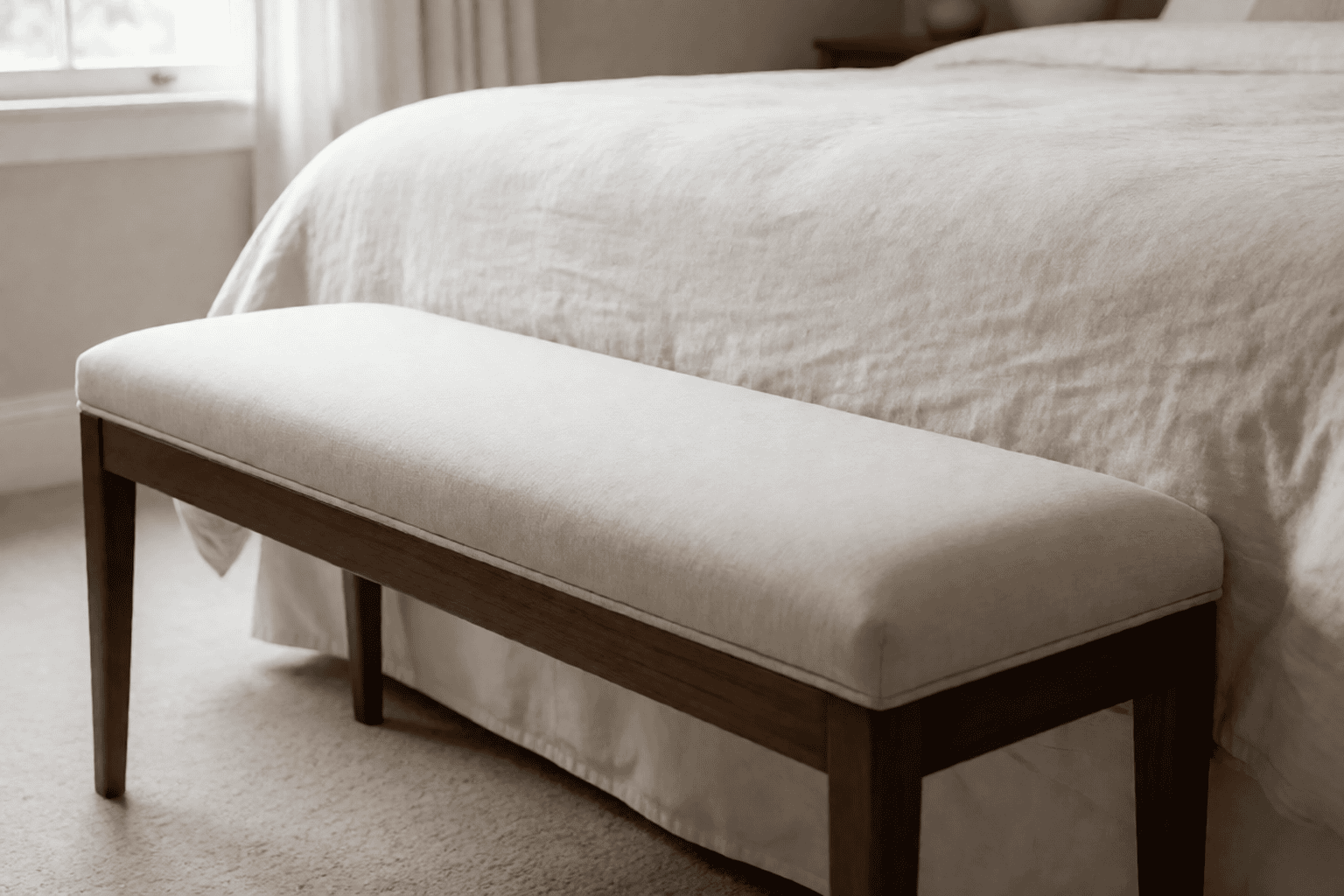
At the foot of a bed the same numbers pay off: a thick cream pad on the bench, smooth flat top, white linens behind. The bench reads as part of the bedroom instead of a hard wooden afterthought.
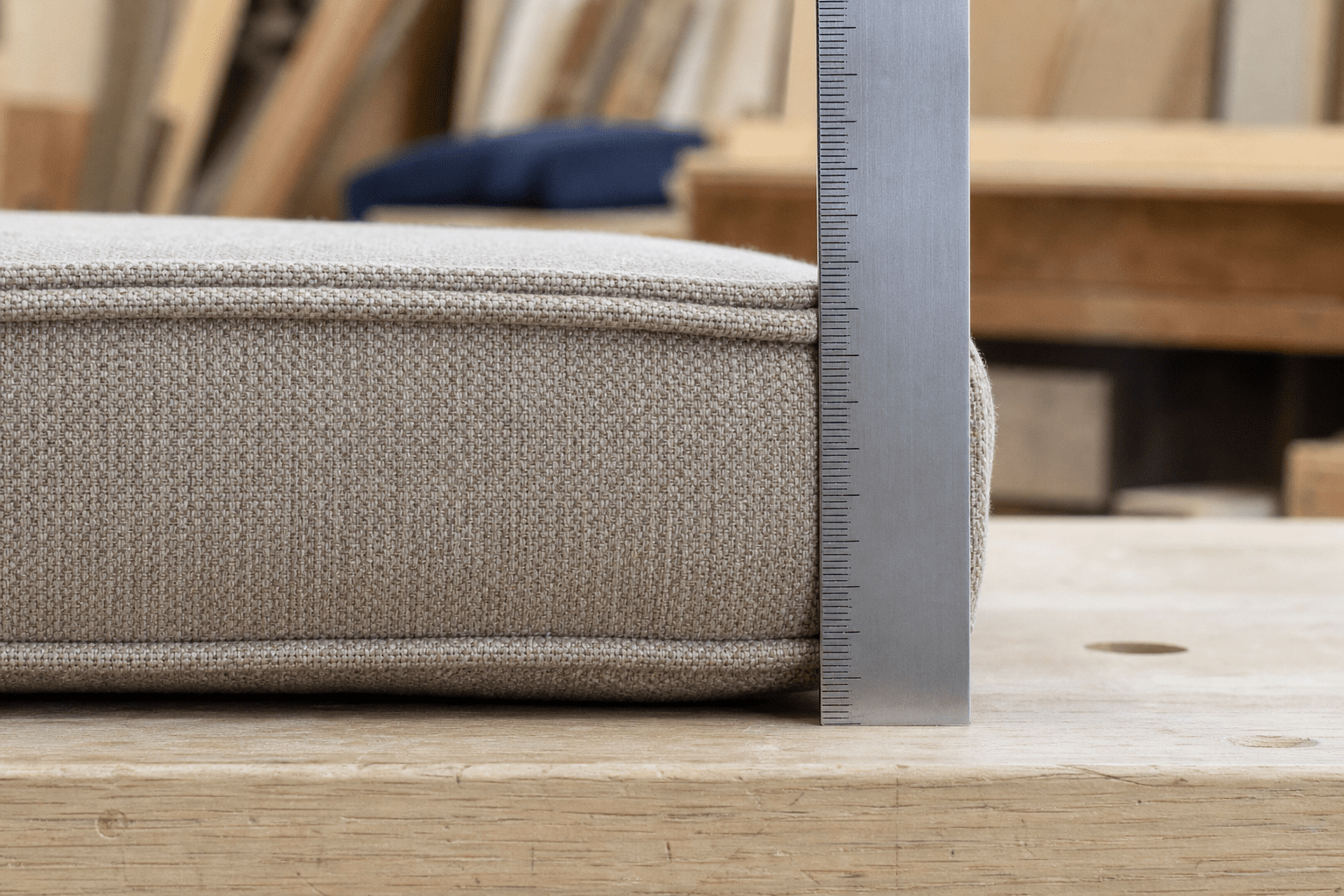
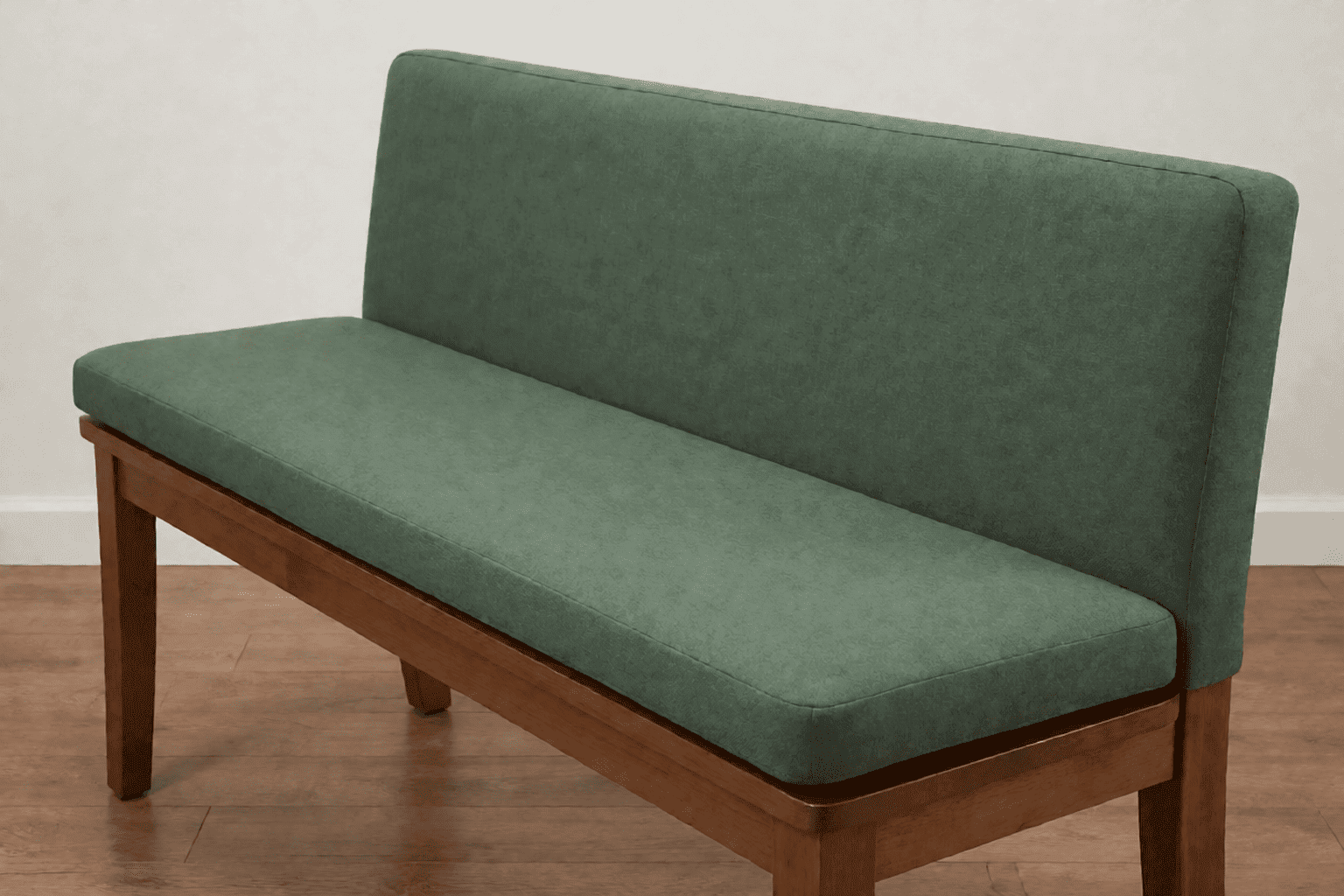
Depth is the dimension people second-guess, so look at it from the side: a sage green pad whose profile rises well above the wooden seat board. That tall side view is what several inches of loft actually looks like in the room.
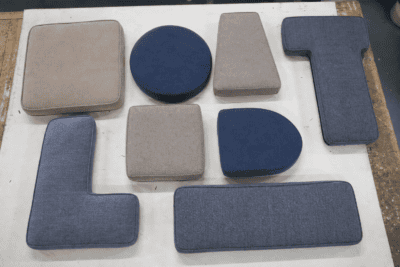
Cushion Shapes Guide: All 11 Shapes, What They Fit, and How to Measure Each One
A field guide to every cushion shape we cut — rectangle, chaise, L-shape, T-cushion, bowed, notched, round, oval, half-round and wedge — which furniture each one belongs to, how to measure it in inches, and exactly which shape to pick in our custom cushion builder.
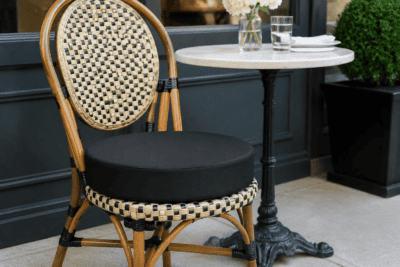
Round Outdoor Cushions: Diameter Duty on the Patio
Round outdoor cushion guide: round patio dining sets, fire-pit seating and round loungers; diameter measuring with the two-axis check, thickness bands, weather specs for circular pads, and ordering rounds.
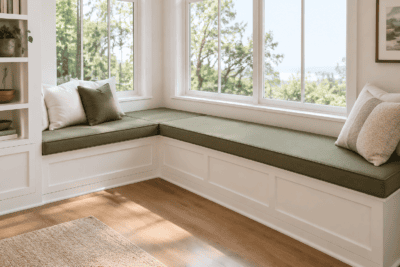
U-Shaped Cushions: Measuring the Wraparound Seat
U-shaped cushion guide: the three-arm geometry of wraparound seating, inside versus outside radius measuring, seam placement at the corners, continuous versus sectioned builds, and ordering U-runs to template.
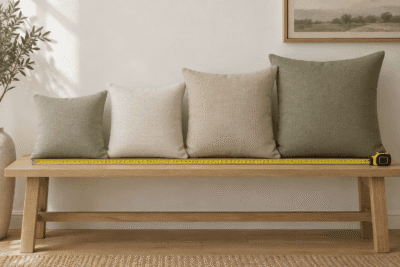
Throw Pillow Sizes: Standard Chart and How to Measure
There is no industry law, but there is a firm convention: throw pillows cluster at 16, 18, 20 and 22
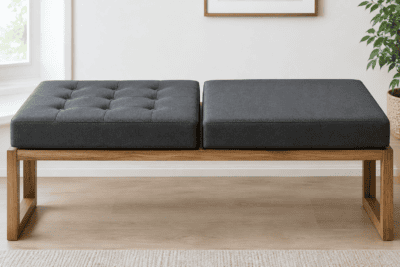
Tufted vs Unbuttoned Cushions: The Stitch Decision
Tufted versus plain cushion tops compared: what tufting and stitched patterns actually do to fill, feel and lifespan, button versus stitch construction, the market’s custom stitch styles, and when plain wins.
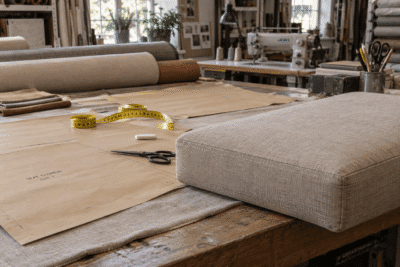
How Much Fabric Do You Need for Custom Cushions? (Yardage, Math and a Reality Check)
Two very different people ask how much fabric a cushion needs. One is sewing it herself and standing at a