
An L-shaped cushion fails differently from every other shape. A rectangle that is off by an inch looks sloppy. An L that is off by an inch is two mistakes at once — because the corner joins both arms, an error at the inside corner appears twice in the finished piece, once running down each leg. The cushion either springs the corner and opens a triangular gap, or lands short on both arms and you spend the summer looking at a wing of bare bench.
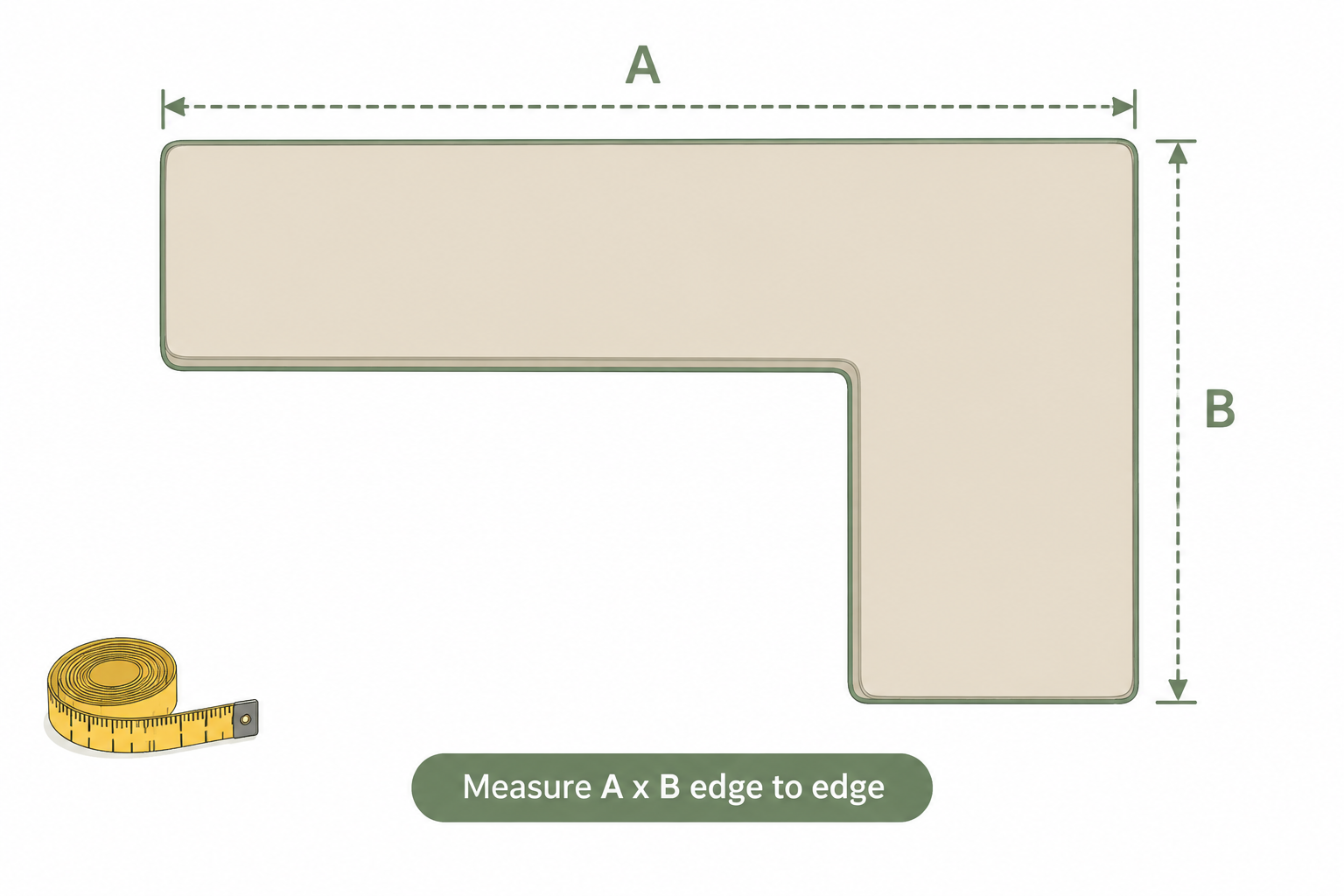
The fix is a measuring rule that sounds too simple to state and gets violated constantly: measure both arms along the outside edges — never into the inside corner. Everything below follows from that one rule.
Do You Need One L-Shaped Cushion or Two Pieces?
Before measuring, decide what you are actually ordering:
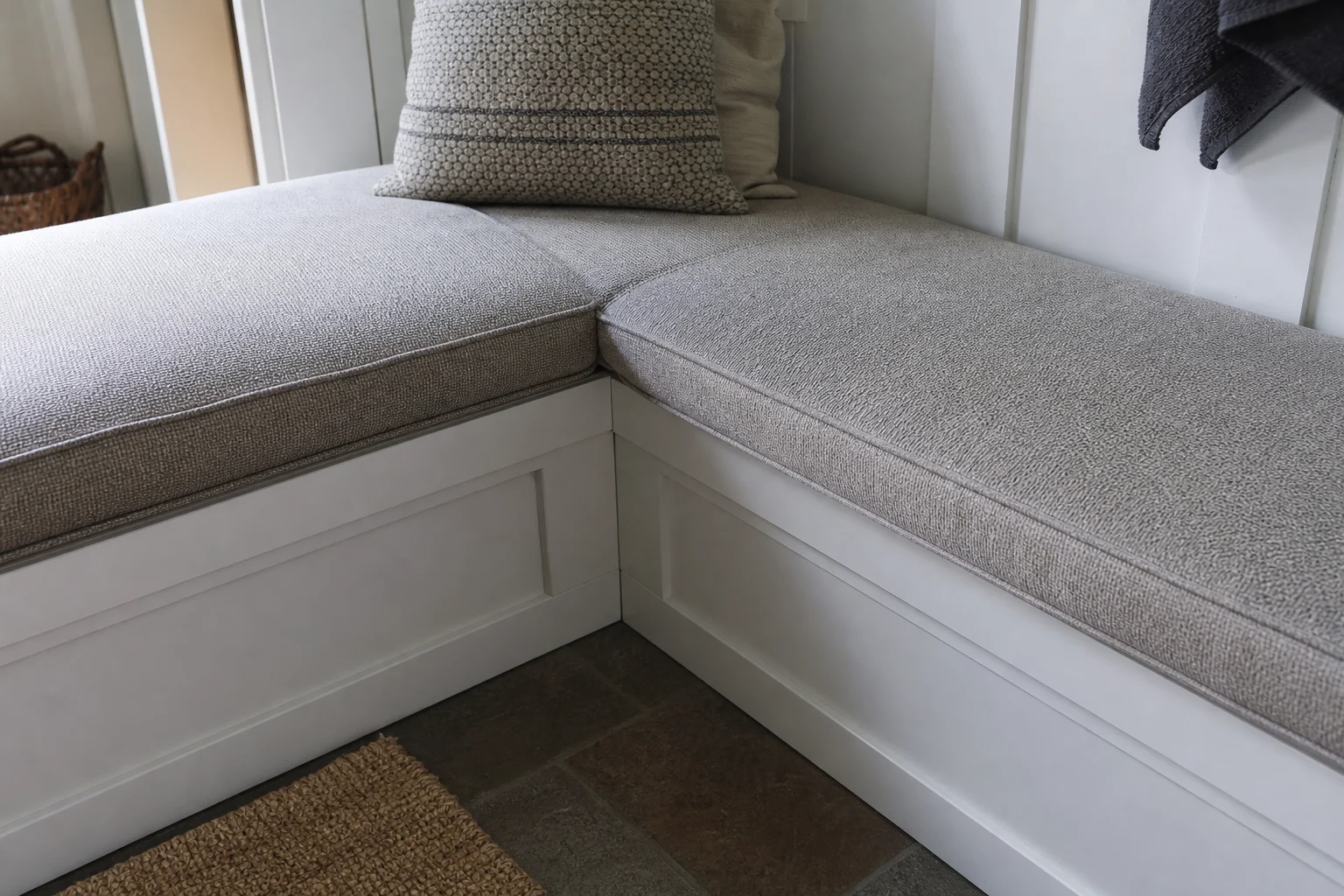
- – One-piece L: a single cushion covering the corner and both arms in one continuous piece. The look is tailored, nothing shifts, and the corner never opens. The trade-off is handling — a 72 × 30 one-piece L in 5″ foam is an armful, and it will not go in a washing machine.
- – Two-piece build: a long rectangle plus a short rectangle, with the seam usually placed so the corner piece runs under and the arm piece butts against it. Easier to flip, rotate and clean; costs the same at the sewing table; and on banquettes that double as storage lids, two pieces is the only sane layout.
Both are routine orders here. The measuring method below works for the one-piece L; for a two-piece build, take the same numbers and we will split them at the corner when the order is confirmed. Corner sectionals follow the same logic — brand sectionals are built as separate blocks (a Beverly end-middle sectional piece runs 22.5 × 25.75 × 5.5), and the more dimensions you bring us per block, the better the corner joins.
The Five Numbers an L-Shaped Order Needs
Our builder has a dedicated L-shape with five fields. Letters match the order form:
| Field | Letter | What it is | Range we cut |
| Total length (long arm) | A | Full outside length of the long arm | 16–120″ |
| Total depth | B | Full outside depth of the long arm | 6–72″ |
| Short arm width | D | Width of the short arm, measured along its outside edge | 8–112″ |
| Arm depth | E | Depth of the short arm beyond the long arm’s edge | 6–66″ |
| Thickness | C | Foam height, seam to seam | 2–8″ |
How to take each one, standing in front of the bench:
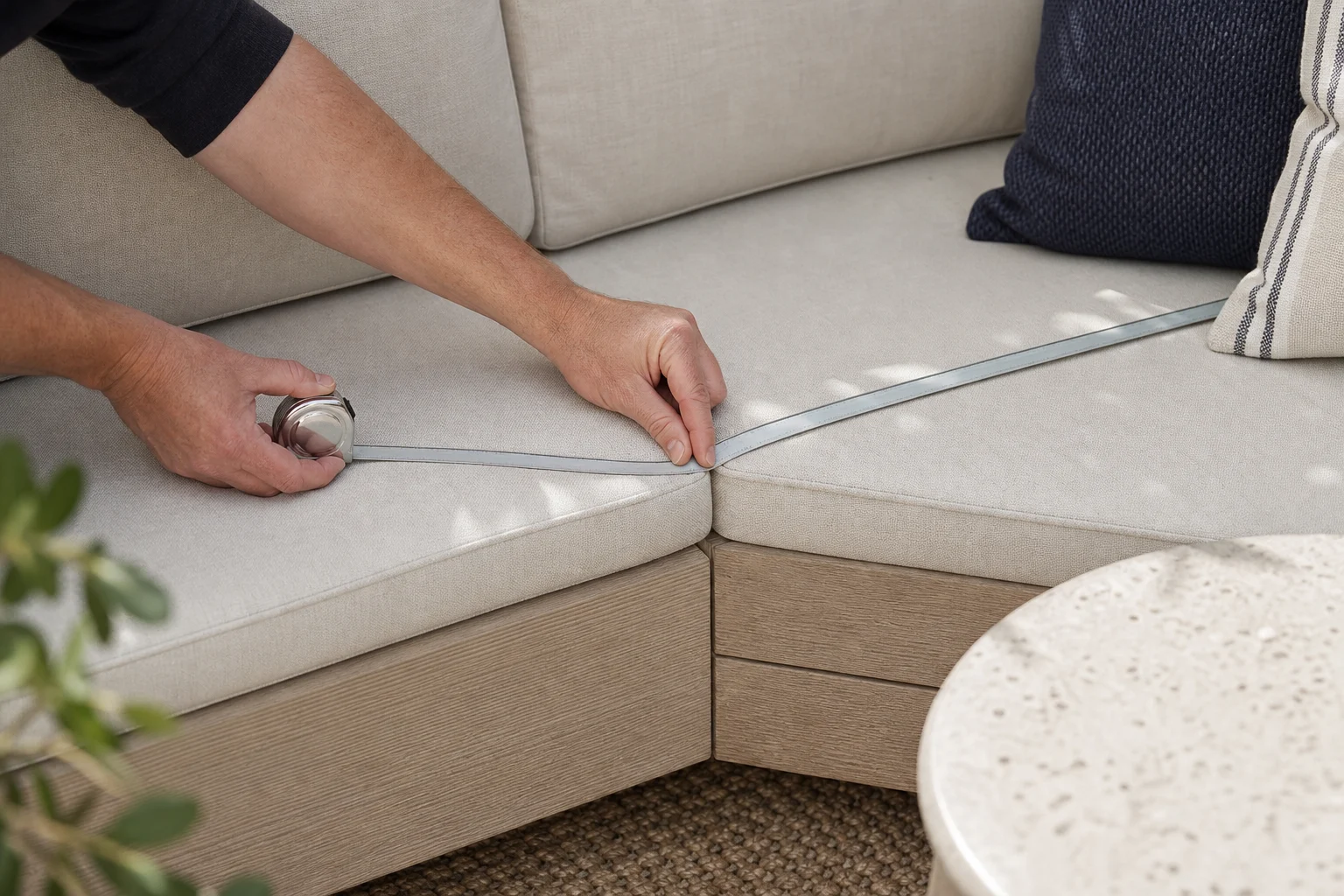
A — total length of the long arm. Walk to the long leg of the L. Measure from its far outside end to the outer edge of the short arm — the full outside length, corner to end. On a window bench that is wall to the far end of the L.
B — total depth. The full outside depth of the long arm: from its outside front edge straight back to the wall. This depth includes the corner — do not stop at the inside corner face; B is the whole leg, measured along the outside.
D — short arm width. Now the short leg. Its width is measured along its outside edge — from the wall to the outer edge of the short arm. If the bench is 30 inches deep on the long leg and the short leg is the same depth, D = 30.
E — arm depth. How far the short arm extends beyond the long arm’s edge — the part of the short leg that is extra, past where the long arm ends. If both legs are flush (a symmetric L), E may be small; on a bench where the short arm runs well past the long arm’s end, E is that overhang.
C — thickness. Seam to seam, cushion on edge, or deck-to-rail if you are measuring a bare frame. Window seats and banquettes typically run 4–5″; deep seating 5–7″.
The L-shape builder page draws the outline live from these five numbers — the drawing is the fastest error check there is, because a wrong letter turns the L into a shape you do not recognize.
A Worked Example
A kitchen banquette from our order file, in the five letters:
- – A = 72″ — long arm, wall to the outside end of the short arm
- – B = 30″ — long arm depth, wall to front edge
- – D = 30″ — short arm width along the wall
- – E = 24″ — how far the short arm reaches past the long arm’s end
- – C = 4″ thick
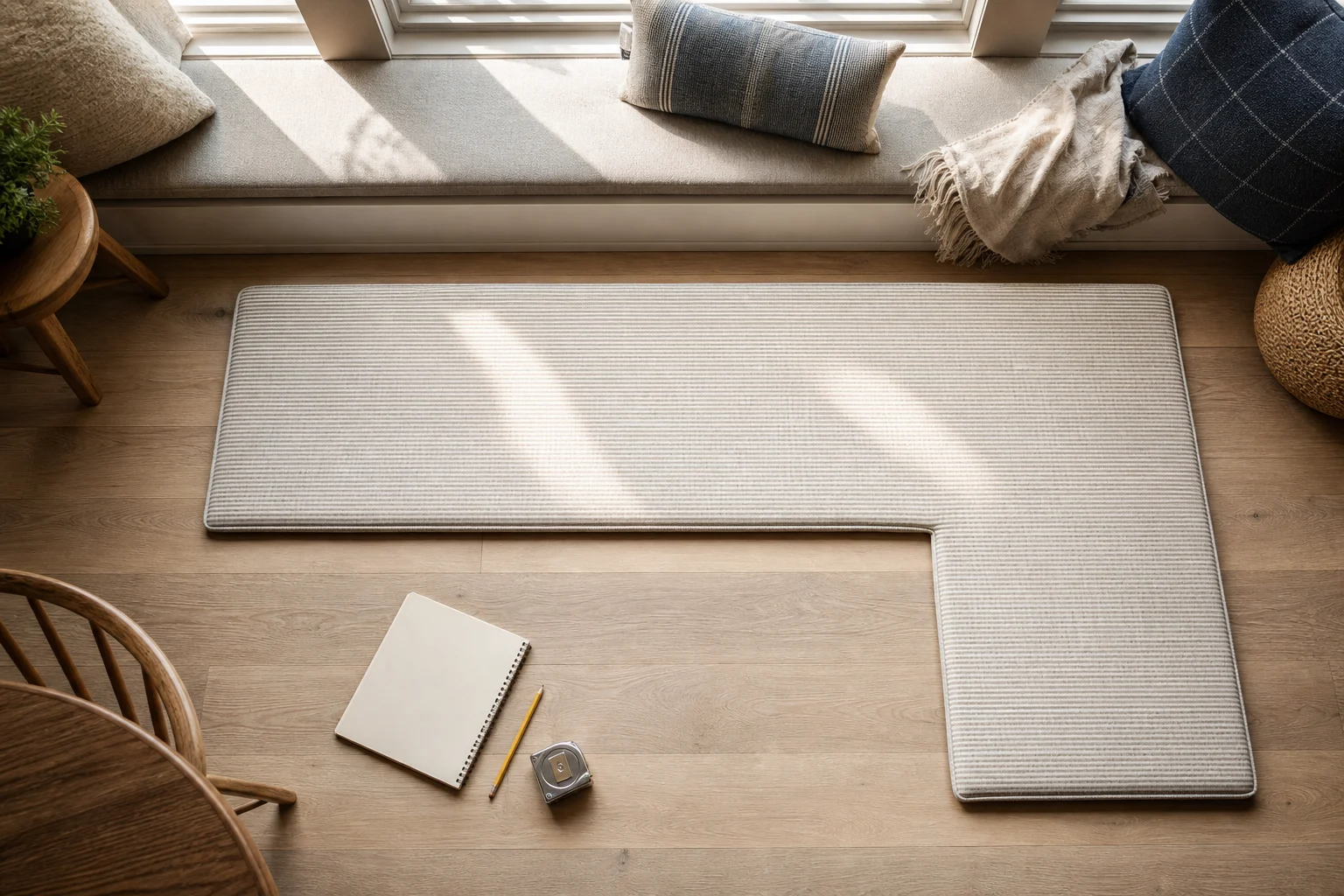
Read as a footprint: an L 72 inches along the top, 30 deep, with a 30 × 24 wing at one end. The cut sheet needs nothing else — no angle, no diagonal, no inside-corner dimension. Those five numbers are complete, which surprises people who arrived with nine.
For reference, an actual Hampton Bay sectional corner measured by owners runs about 27″ front width to 72″ along the back (owner-measured, treat as approximate) — same idea, different proportions, and the reason sectionals get measured block by block rather than trusted to a model number.
The Traps That Ruin L-Shaped Orders
- Measuring into the inside corner. The classic. Measuring each leg to the inside corner face creates a hidden overlap — the corner gets counted in both legs, both legs come back short, and the corner gapes. Outside edges only.
- Stopping the tape at the inside corner for B. B is the full depth of the long arm including the corner zone. Stopping short under-measures the piece exactly where it is most visible.
- Mixing up D and E. D is the short arm’s width along its outside edge; E is only the part beyond the long arm. If you give us D where E belongs, the wing comes back the size of the whole leg.
- Measuring a cushioned bench with the old cushion in place. Old foam compresses; covers stretch. Pull the old cushion, measure the deck, and if the deck is unreachable, follow the old-cushion protocol in cushion measurement mistakes — seam to seam, flat, unstretched.
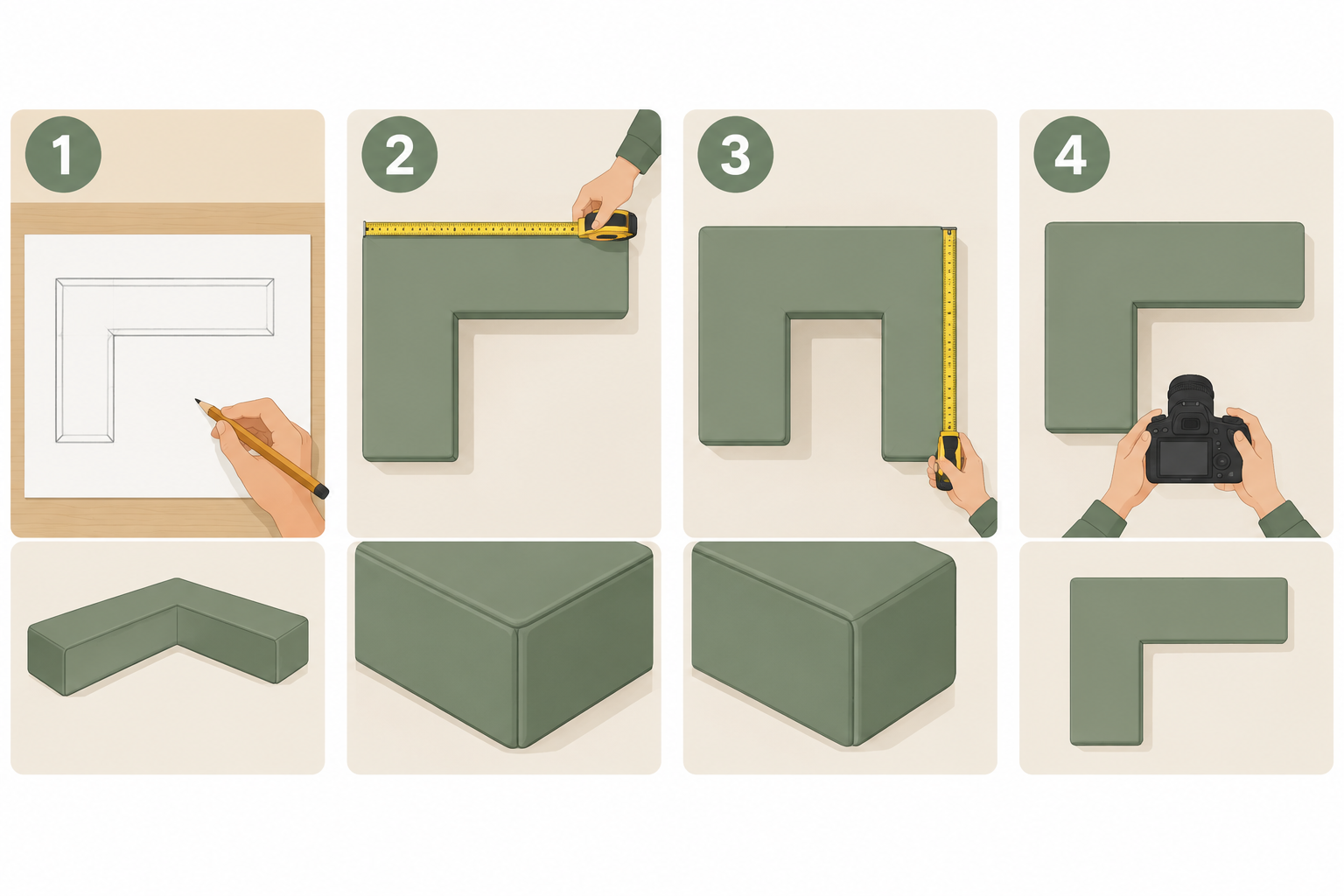
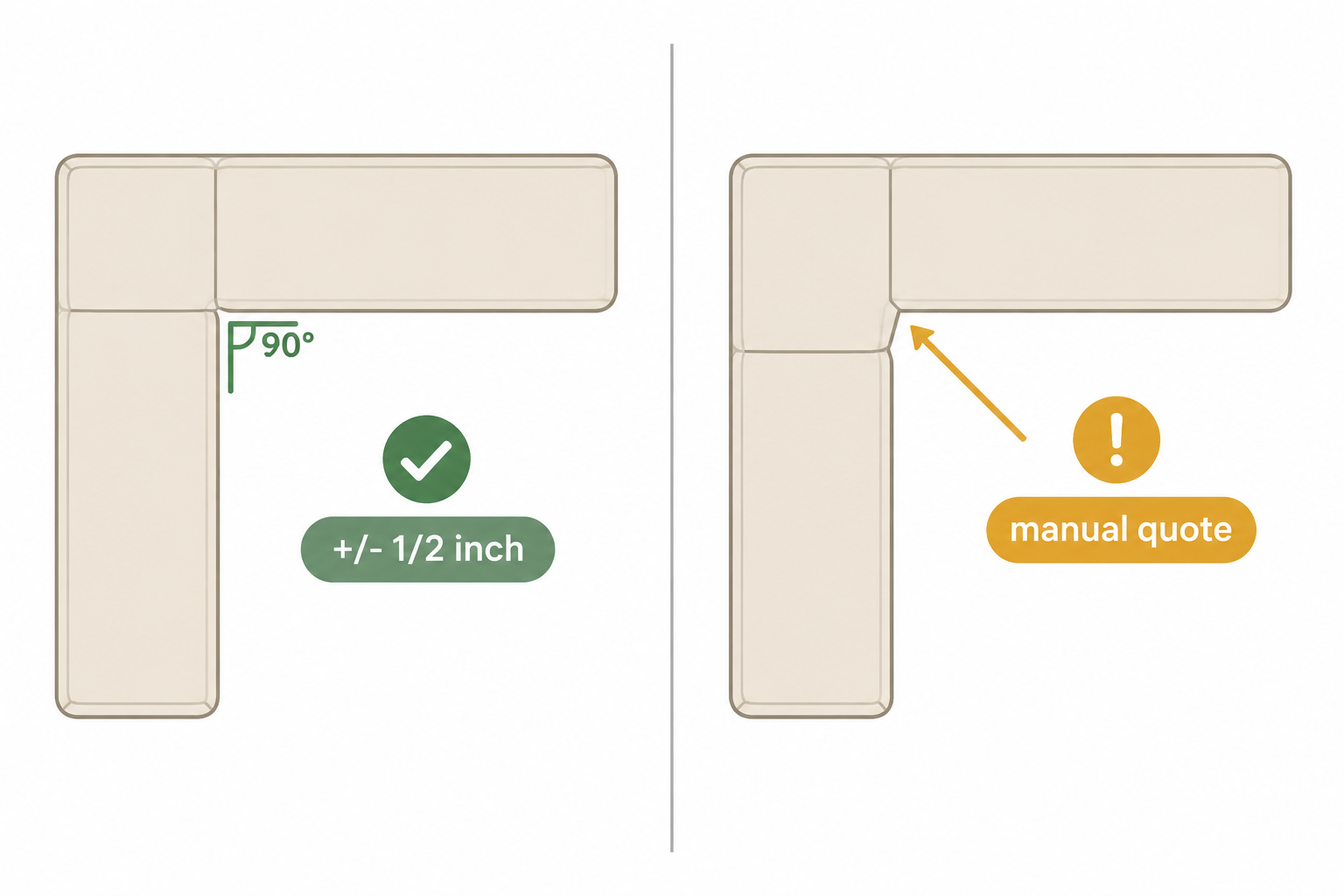
- Forgetting the wall is not square. On banquettes, check whether the corner where the two walls meet is actually 90 degrees (a carpenter’s square or the 3-4-5 tape method). Out-of-square walls are common in older kitchens; if the corner is off, note it and send a photo, because the fix is cutting the corner slightly differently — not guessing.
What Does an L-Shaped Cushion Cost?
Custom cushions start at a $45 make-base plus material at per-square-foot foam and fabric rates, and every shape prices at its bounding rectangle — the full A × B rectangle the L sits inside, at the same shape factor as a plain rectangle. The missing corner is not a discount and the corner seam is not a surcharge; you pay for material, not for geometry. Fabric runs a flat $7.43 per square foot (all 119 fabrics), and the custom cushion builder prices your L live as you enter the five numbers. Production runs 4–7 business days, rush 3–5. The full pricing mechanics — base, foam-rate grid, worked examples — are laid out in custom cushion pricing explained.
FAQs
Should I order one L-shaped piece or two rectangles?
Order one piece for the tailored look — the corner never opens and nothing shifts; order two pieces only if the bench doubles as storage lids or you want to rotate and clean halves independently. Both cost the same at the sewing table, and both are measured the same way: A, B, D, E and C along the outside edges.
Do you need the inside-corner measurement too?
No. The five outside-edge numbers — A (total length), B (total depth), D (short-arm width), E (arm depth) and C (thickness) — fully define the L. Inside-corner measurements are exactly how double-counting errors creep in: the corner gets counted in both legs and both legs come back short. Outside edges only.
My corner is not a perfect 90 degrees. Can you still cut it?
Yes — a non-square corner simply routes through a manual quote instead of the standard L-shape builder. Read the angle with a carpenter’s square or the 3-4-5 tape method, note it on the order, attach a photo, and the order desk confirms the corner geometry with you before anything is cut.
What if my L is really a U (three sides)?
A U-shape is ordered as three pieces (two arms plus a front rail) or as one custom-quoted piece cut from a traced template. Send the sketch with dimensions through contact and the order desk lays out both options with prices.
How thick should an L-shaped bench cushion be?
2.5–3″ for eating-height banquettes where legroom matters, 4–5″ for window benches and reading nooks, 5–7″ for deep lounging — and we cut any thickness from 2–8″. Every extra inch is real foam and shows in the live quote.
How accurate do my measurements need to be?
Measure to the nearest quarter inch and we cut to within ±½″ of your confirmed dimensions. On any side longer than 36″, tolerance widens to ±¾″. An off-by-an-inch sketch matters; the last eighth of an inch does not.
What happens if the cushion arrives cut wrong?
If a piece does not match your confirmed dimensions, we remake it free of charge and cover the freight. That is also why the order desk re-verifies every dimension against your photo before the foam is ever cut.
How long does an L-shaped cushion take, and what does it cost?
Production runs 4–7 business days, rush 3–5. Pricing starts at a $45 make-base plus material — fabric runs a flat $7.43 per square foot across all 119 fabrics, and an L prices at its full A × B bounding rectangle, so the missing corner is not a discount and the corner seam is not a surcharge.
Is This Guide Enough for Your Piece?
The five-letter method above covers the large majority of L-shaped benches — but it has hard edges, and knowing them before you order is cheaper than learning them after.
- – Square inside corners only. The builder and this measuring method assume the inside corner is a true 90 degrees. Angled, rounded or curved inside corners cannot be entered as five numbers — they are cuttable, but they route through a manual quote where a person reads your sketch instead of a form.
- – Tolerance is ±½″, widening on long pieces. We cut to within ±½″ of your confirmed dimensions on sides up to 36″ long; sides longer than 36″ carry ±¾″. Measure to the nearest quarter inch and the tolerance absorbs the rest.
- – Extra-long benches quote manually. Pieces running past the builder’s 120″ length ceiling — a 142″ wraparound deck bench, for example — are quoted by hand rather than priced live, because cutting, foaming and freight all change at that scale.
- – Not sure your numbers are right? Attach a photo of the bench taken from above at checkout and the order desk re-verifies every dimension against the drawing before the foam is cut — free, on every order. If the tape still scares you, send the sketch through contact first and a human will read your numbers back to you.
Next Steps
- Sketch the bench from above, mark the five letters, and measure along the outside edges to the nearest quarter inch.
- Enter A, B, D, E and C in the L-shape builder and compare the live drawing with your bench.
- Attach a photo from above at checkout — the order desk re-verifies every dimension against the drawing before the foam is cut. For indoor bench work beyond the L, custom bench cushions is the category page with the long-run and width-break options; for outdoor L-benches and porch corners, custom outdoor bench cushions presets the build to rectangle plus outdoor.
What Size Bed Gap Filler Do I Need? Thickness, Length and Density
Size a bed gap filler from three measurements, not the bed’s name: thickness equals gap width plus half an inch to one, length runs the full seam, height runs platform to mattress top. Density starts at 50D.
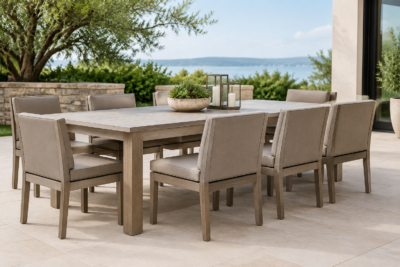
Cushion Thickness & Seat Height: Match the Pad to the Table
Cushion specs usually answer comfort questions. Thickness answers a geometry question: how high off the floor you end up sitting,

Church Pew Cushion Sizes: Standard Dimensions and How to Measure
Standard pew seats run 19-21 inches deep; cushions are cut 2-3 inches thick to measured runs at plus-or-minus half inch tolerance. Dimensions table, taper rules, and the pew-by-pew measuring method.
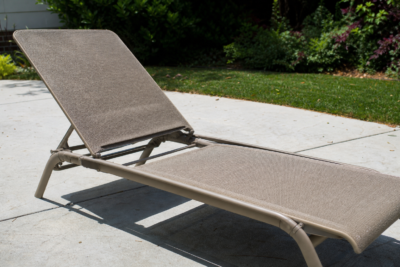
Chaise Lounge Cushion Measurements: A Complete Guide to Getting the Fit Right
How to measure a chaise lounge cushion correctly — seat depth, back height, thickness, hinge points and one-piece vs two-piece styles — with real Hampton Bay chaise dimensions.
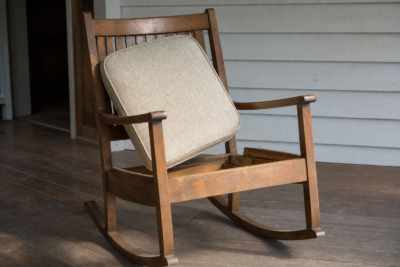
How to Measure Rocking Chair Cushions: Seats, Backs and Tie Positions
How to measure rocking chair cushions — tapered seats, curved backs, slat-gap tie maps and rock clearance — with the three-number protocol for both pieces of a rocker set.
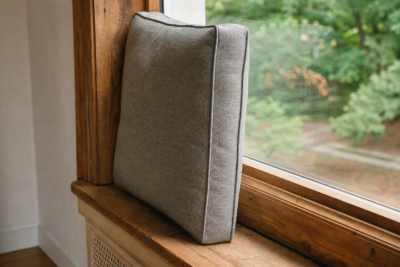
Window Seat Cushion Measurement: How to Get a Perfect Fit
Measure a window seat cushion correctly — width across alcoves, depth front to back, thickness vs sill height, radius corners and bay window angles — with tips from the cutting floor.