
HD Foam vs Dry-Fast Foam: The Outdoor Cushion Guide
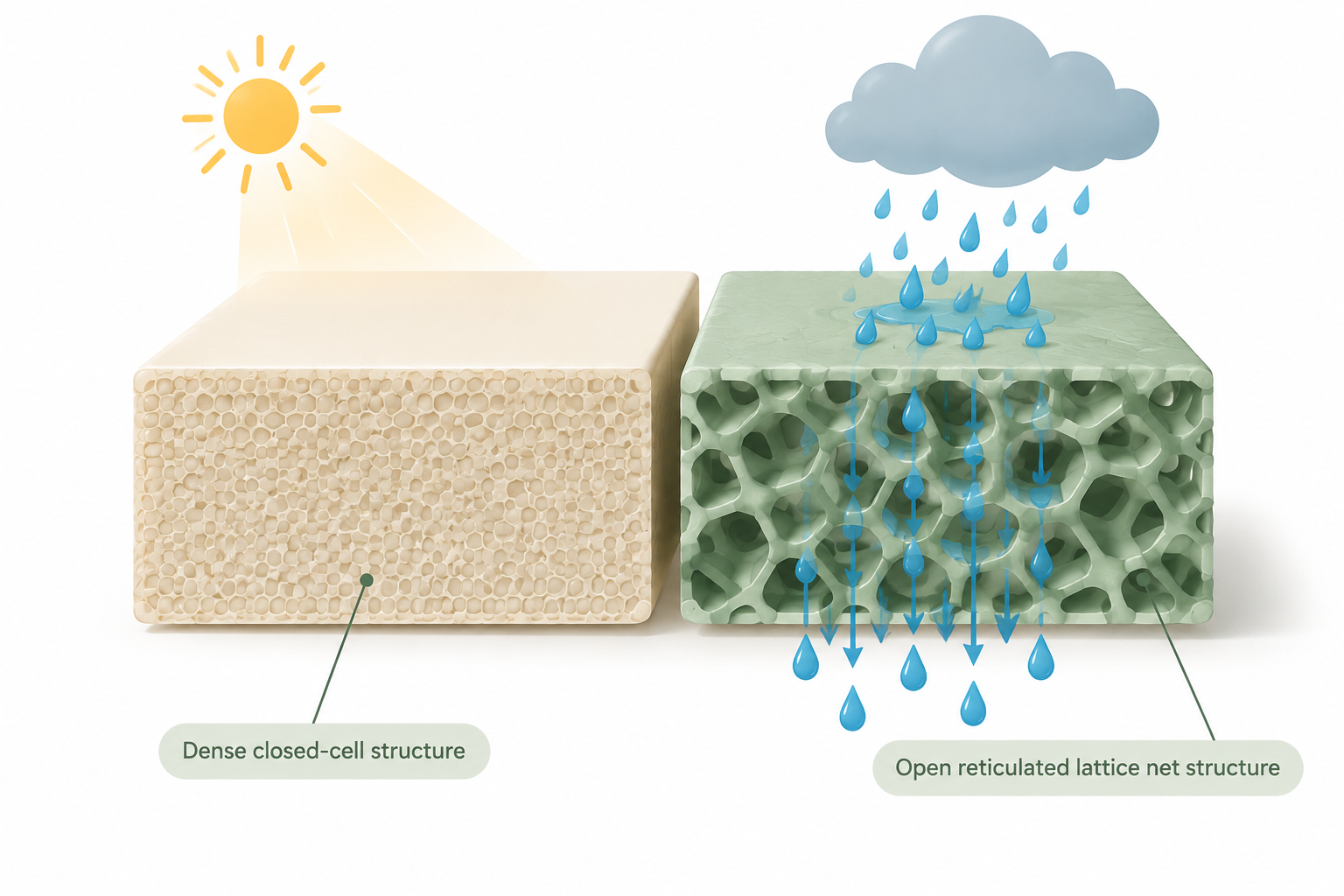
Every outdoor-cushion buyer meets the same fork: standard high-density foam or dry-fast (reticulated) foam — usually with a price gap and no explanation of what the gap buys. The physics is actually clean: one foam keeps its cell windows and therefore its plushness; the other has the windows burned out so water pours straight through. Neither is “better.” One is for cushions that get rained on as a routine; the other is for everything else. This guide gives you the structure, the spec numbers, the measured market premium — and the two-question test that ends the debate for your patio.
Same Polymer, Two Different Foams
Both start as polyurethane. The difference is what happens to the cell windows — the thin membranes stretched across each bubble in the block:
| High-density foam (HD) | Dry-fast foam (reticulated) | |
| Cell structure | Open-celled, but most windows intact | Windows removed entirely — open lattice of struts |
| Spec you buy by | Density (35D–65D, ×10 convention) | Density plus PPI (pores per inch, ~25–80 seating grades) |
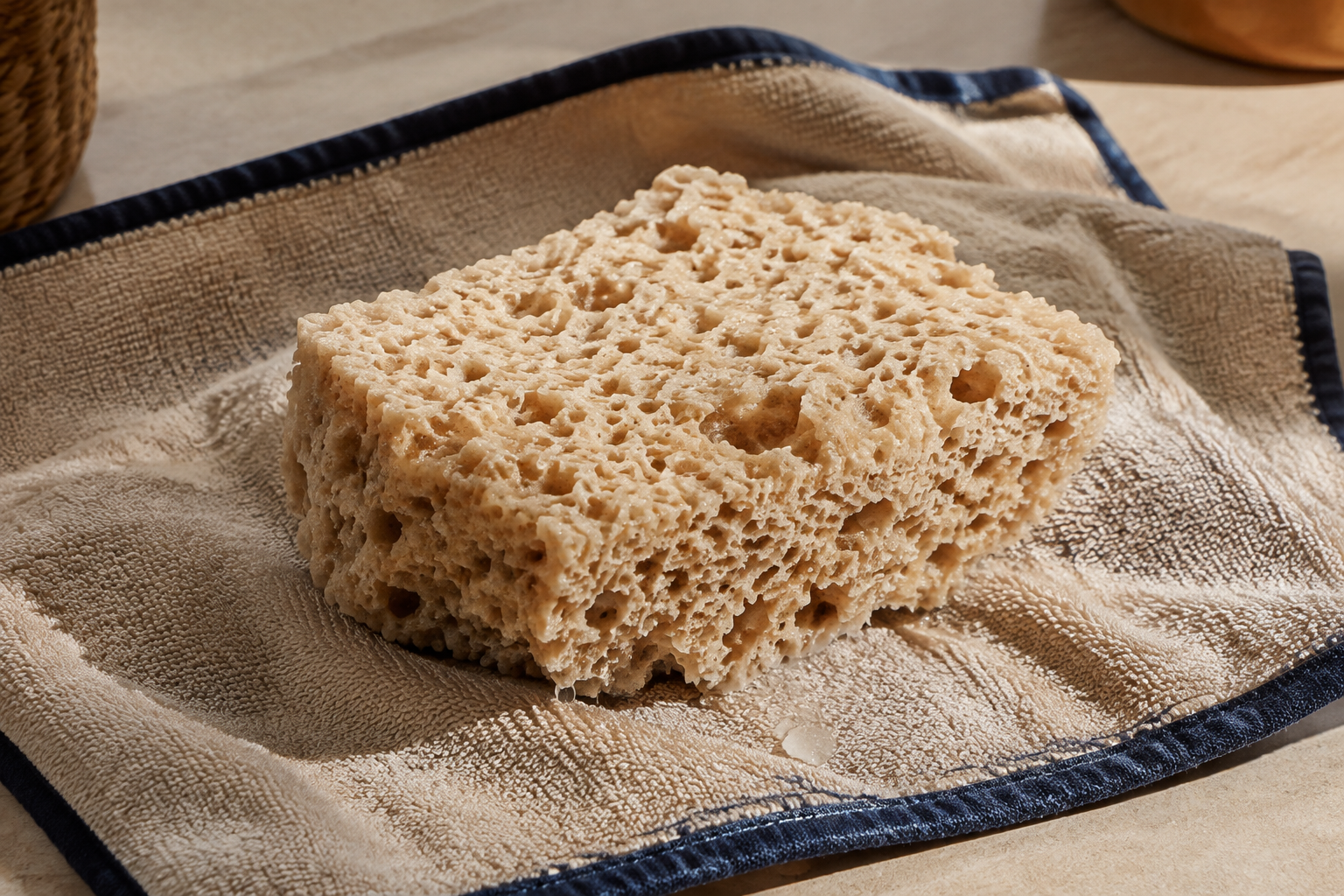
| Water behavior | Absorbs and holds; a soaked core stays damp for days | Drains in seconds, dries in hours |
| Feel at equal density | Softer, plush, familiar seating feel | Noticeably firmer — less wall compressing per volume |
| Failure mode | Compression set (dishing) over years | Strut fracture under hard crush (storage/transit) |
| Mildew story | Damp interior invites it | Interior never stays damp — dryness is the mechanism |
That third row is the entire commercial logic of dry-fast foam, and no fabric upgrade substitutes for it: a “waterproof” cover over standard foam traps the moisture that eventually gets in. The deep treatment of the material — how reticulation works chemically, PPI grading, the compression caution — is in quick-dry foam explained.
What the Upgrade Actually Costs
Two price signals, both real, pointing the same direction:
At the configurator (measured, September 2026): the same competitor’s curved bench page, same size, same fabric, only the core changed — high-density foam $186.30, dry-fast foam $203.35. The dry-fast premium was $17.05, or +9%.
At the foam supplier (published board-foot lists): one North American foamite’s public price card runs conventional polyurethane at roughly $17–35 per cubic foot against their outdoor quick-dry grade at ~$95 — the wholesale market has charged a 3–4× premium for reticulated stock for decades. Retail cushion shops, buying finished-goods economics rather than raw block, compress that spread to the single digits you see at configurators — but the direction is permanent: reticulated costs more than conventional, everywhere, because the extra processing step is real.
The comfort conclusion from the numbers: a ~9% premium buys total water dominance. Whether that is a bargain depends entirely on the next section.
The Two-Question Test
1. Do the cushions live uncovered — rain, sprinklers, pool splash?
Yes → dry-fast foam. Not a luxury, a requirement: standard foam left out in weekly rain becomes a sponge inside a zippered bag, and that story ends in mildew odor and a dead core long before the fabric wears out. Uncovered patios, pool furniture, marine seating and boat cushions run on reticulated foam for this reason. The uncovered setup also wants the right skin — the fabric side of the decision is covered in the outdoor cushions hub.
No — covered porch, sunroom, gazebo → high-density foam is not a compromise, it is the correct engineering. A roof does to rain what the foam would have done, and HD’s plushness and density ladder (35D light use → 50D nightly → 60–65D heavy) is exactly what a covered seat wants. Putting marine fill under a roof is buying a lifeguard for a bathtub.
2. Does anything soak the cushions besides rain?
Pool chlorine, wet towels, washdowns, dew-heavy climates under cover — anything that wets the core routinely pushes the answer toward dry-fast even under a roof; humidity alone usually does not.
Density Still Matters Inside Each Choice
Choosing dry-fast does not exit the density conversation — reticulated grades still carry a density class (most seating grades sit in the 2–3 lb/ft³ band), and density still sets lifespan inside the water-proof family. The practical shorthand: pick the fill by water exposure, pick the density by hours of sitting, the same ladder you would use indoors. If you are re-doing cushions that also carry daily weight — a poolside bench that doubles as the family’s outdoor sofa — the fill/density matrix in cushion filling types handles the combined case.
Where Each Belongs, in One Table
| Setup | Right core | Why |
| Uncovered patio, rainy climate | Dry-fast | Weekly soak-and-dry cycles kill standard cores |
| Pool / marine | Dry-fast | Splash and chlorine are routine; drainage is the spec |
| Covered porch, humid air | HD (50D+) | Roof handles rain; airflow handles humidity |
| Sunroom / indoor-adjacent | HD (35–50D) | No water story at all — buy comfort and years |
| Storage note for either | No hard crush | Reticulated struts fracture permanently under deep compression; HD rebounds |
The Bottom Line
Dry-fast foam is not the premium tier of high-density foam — it is a different tool with a ~9% measured premium and one job: letting water through. Buy it when the sky touches your cushions; skip it when a roof already does that job, put the same dollars into density instead, and spend the difference on fabric that survives the sun — the fade-and-UV side of outdoor durability is its own conversation in the Sunbrella fabric guide. Cushions that live entirely indoors skip this debate — indoor couch foam buys comfort and years with no drainage premium to justify.
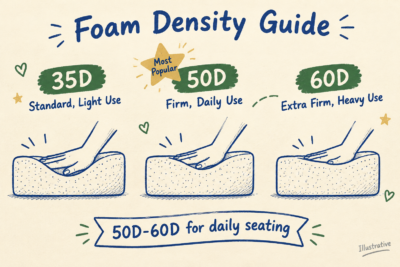
Foam Density Explained: D-Ratings vs lbs/ft³
What foam density actually measures, why D-ratings and lbs/ft³ (PCF) are two different languages with no direct conversion formula, and how to translate between them honestly — by use tier and lifespan, with the 35D–65D grades decoded.
Flame Retardants in Cushion Foam: What Changed and What to Ask
Cushion foam flame retardants explained: why California TB117 put additive chemicals into furniture foam, what the TB117-2013 revision changed, what CertiPUR-US and GREENGUARD actually certify, how to read new-foam off-gassing, and the six questions to ask any supplier for nursery and commercial buying.
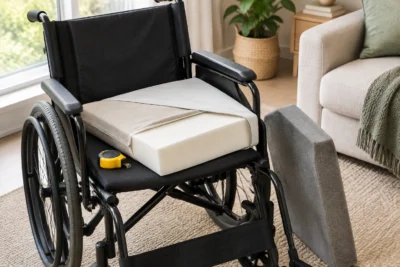
Wheelchair Cushion Foam Replacement: Measure, Order, Revive
Replace wheelchair cushion foam instead of the whole pad: three signals the core is done, W x D and thickness measuring, 50D-65D density for all-day seats, and cover fit – cores cut to your measurements.
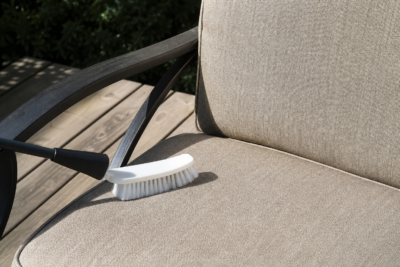
How to Care for Polyester Cushions: Washing, Fading and Stretching Them Back
Polyester cushion care from top to bottom: what spun polyester can and can’t handle, the wash-day routine that won’t ruin fills, how to slow the fading that defines the tier, and reviving covers that have stretched out.
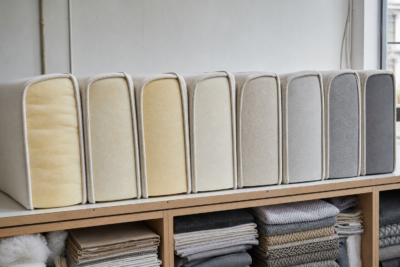
How to Choose Foam Density: 35D vs 50D vs 60D vs 65D (Decision Guide)
Pick cushion foam density in three questions: 35D for occasional seats, 50D as the daily-use default, 60D for heavy sitters and long hours, 65D for commercial and marine duty — with lifespan rules of thumb and what each upgrade costs.
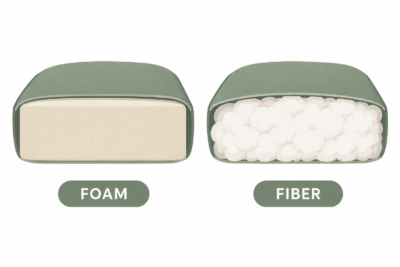
Foam vs Fiber Cushion Filling: Which Lasts Longer?
Foam vs fiber cushion filling compared on structure, lifespan and real price — why foam wins seats, where fiber belongs, and what a live configurator price test shows about the durability premium.