
Most window seats fail the same way: someone puts a thin pad on a plywood deck, calls it a reading nook, and nobody ever sits there. A window seat has no springs, no frame give and no back — it is a hard ledge in a nice location. The nooks that actually get used are built in layers, and this guide walks through all three: the structural seat cushion underneath, the back padding that turns a ledge into a seat, and the window seat pillows that make it somewhere you want to stay.
We cut and sew custom cushions on our own mill floor, so the advice below is what we build for customers every week — including the density numbers, the thickness limits and what a layered set costs before you order.
The Three Layers of a Window Seat
Think of a window seat as a system, not a single product:
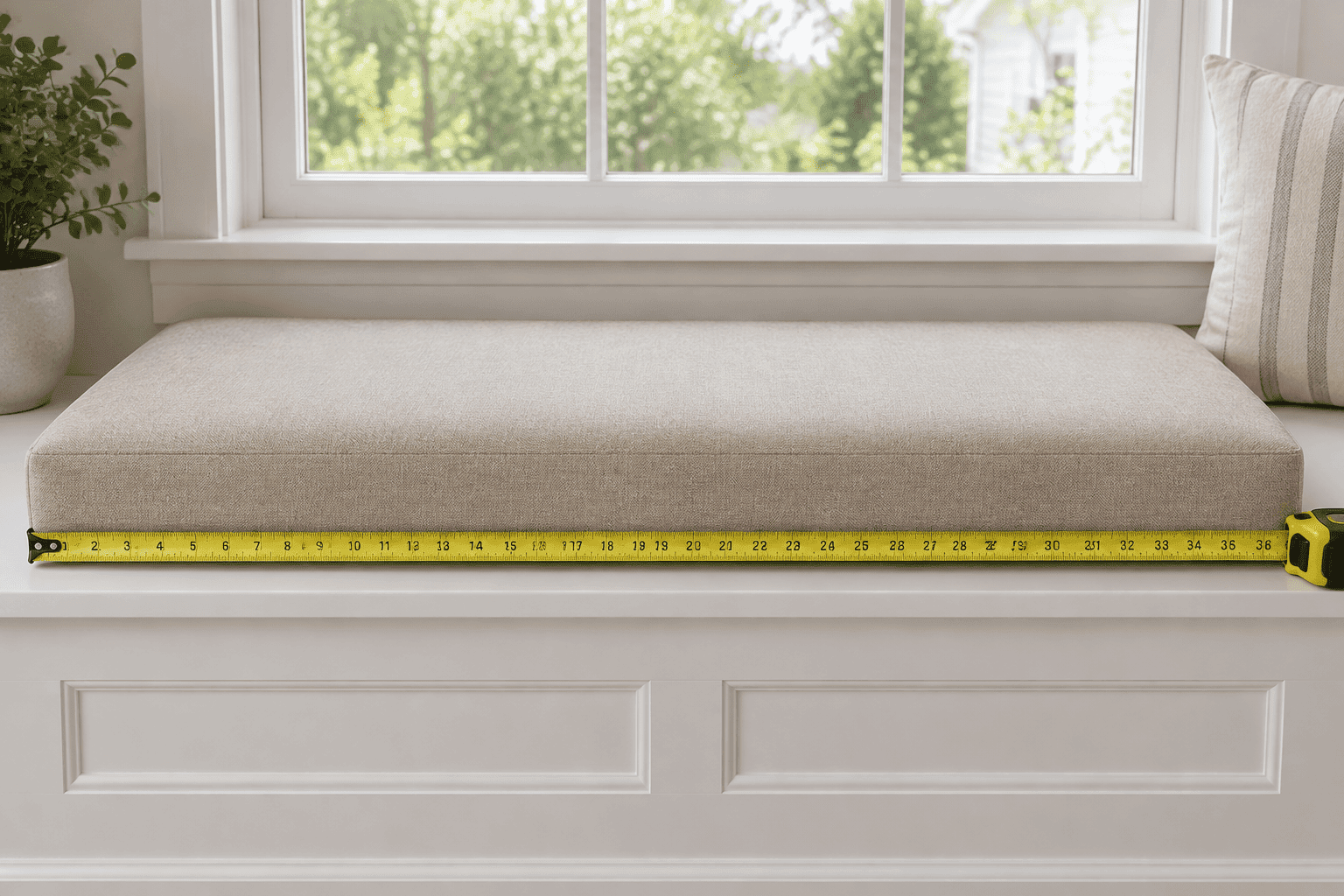
- Layer 1 — the seat cushion. Carries the body. Firmness and density live here, and a weak base layer cannot be fixed by anything you put on top of it.
- Layer 2 — the back padding. The wall behind a window seat is drywall, trim or glass. None of it forgives a spine. A back cushion or a firm lumbar pad is what makes sitting for an hour possible.
- Layer 3 — the throw pillows. Small, movable, decorative. They fine-tune the lean, add color, and can be swapped with the seasons without touching the made-to-measure pieces.
The order matters. Customers who buy only pillows for a bare ledge end up pushing them flat within a month. Customers who buy a thick seat cushion and skip the back layer last about twenty minutes before their shoulders ask to leave.
Layer 1: The Seat Cushion Is the Structure
The seat cushion takes 100% of the weight, so this is where density matters most. For a window seat that gets daily use, we recommend 60D high-density foam — firm enough that the sitter floats on top rather than sinking to the deck. A storage-bench seat that sees occasional guests can drop to 50D and still hold up; 35D is a padded shelf, not seating.
Thickness for a typical window bench runs 3 to 5 inches. The real ceiling is the sill: measure from the deck surface up to the bottom of the window trim, subtract an inch of clearance, and whatever remains is your maximum thickness. If the sill sits 4 inches above the deck, a 3-inch cushion is the honest answer — a taller one blocks the view that made the nook worth building.
Width and depth come from the deck itself, edge to edge, with a few rules about radius corners and angled bays that we cover in the window seat measurement guide — read it before ordering any layer, because the back padding is cut to sit on top of what the seat cushion leaves you.
Layer 2: Back Padding Turns a Ledge Into a Seat
There are three ways people solve the hard-wall problem, and they are not equal:
- A made-to-measure back cushion. A slim box cushion (3 to 4 inches thick, 50D foam — one density grade softer than the seat) cut to the same width as the seat cushion so the two read as one unit. This is the durable answer for nooks that get used every morning.
- A large lumbar cushion. A 14-by-20-inch or 16-by-24-inch support that covers the lower back only. Cheaper, movable, and honestly the better choice for shallow seats under 18 inches deep.
- Pillow-stacking. Resting standard bed pillows against the trim. Free, but bed pillows compress to nothing under real weight and slide every time someone stands up.
For back height, plan on supporting from the seat surface up 12 to 18 inches. Above that the wall can stay visible — padding the full height of the window glass usually reads as upholstery-shop overkill in a residential nook, and it eats daylight.
Because our cushions are cut to order in any size, seat and back pieces can be ordered together in one fabric, which we strongly recommend: a matched set shares one dye lot, so the two layers will not drift apart in color after a summer of sun. Start at the cushion designer to price both pieces in the same run.
Layer 3: Window Seat Pillows Are the Adjustable Layer
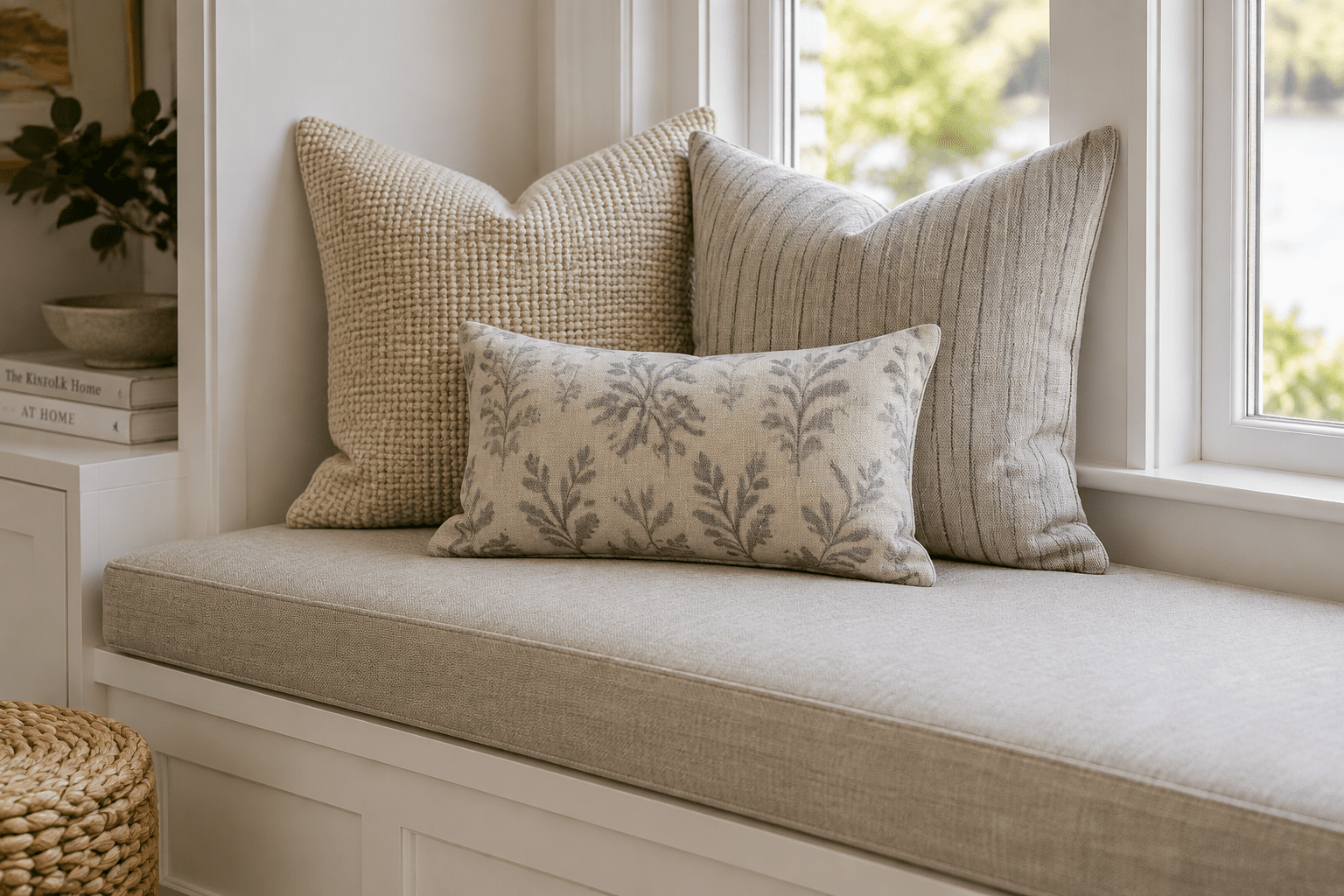
Throw pillows are the one layer you do not need us for — and the one layer decorators get wrong most often. The rules that matter on a window seat:
- Size to the depth, not the room. A window seat is typically 16 to 24 inches deep. A 26-inch pillow on an 18-inch seat hangs over the edge and gets sat through. On standard 20-plus-inch depths, one or two 20-to-22-inch squares plus a 14-by-20 lumbar is the classic working trio.
- Count by width. Under 48 inches of seat width: two squares. Around 72 inches: two squares plus a lumbar layered in front. Beyond 96 inches (usually a bay window): treat each section of the bay as its own seat and repeat the trio — our bay window guide covers how the angled sections change the layout.
- Tie the palette to the made-to-measure pieces. The seat and back cushions are sewn from a fixed fabric; pillows are your changeable accent. Pick covers that echo one color family from the seat cushion fabric rather than introducing a brand-new scheme at window height, where the light is least forgiving.
- Firm fills read better than floppy ones. Overstuffed pillow forms hold a crease when you chop the top edge — the styling trick that makes catalog nooks look tailored. Limps fills cannot hold shape no matter how they are arranged.
One practical note on ordering: if the whole nook needs to match exactly — seat, back and pillow covers in one fabric — ask when you order. Covers sewn in the same run as your cushions share the dye lot; covers bought later from a different bolt may not.
Padding for a Window Seat: Foam Density vs. Fiber
“Padding” shows up in this decision twice, and the material matters as much as the layer:
- High-density foam (35D to 65D) is the only filling that supports daily sitting. It rebounds instantly, keeps its height for years, and comes in firmness grades — which is why the seat gets 60D and the back gets 50D in a made-to-measure set.
- Fiber and down-alternative fills feel luxurious for the first week, then compress. They suit Layer 3 (pillows you can fluff back) and nothing structural. A fiber-filled seat cushion needs refluffing after every sit, which is why we do not sell them for seating.
- Foam-and-fiber wraps — a thin fiber jacket over a foam core — soften the surface without giving up support. A reasonable ask for a back cushion; unnecessary on the seat, where a good fabric does the same job.
For placement against glass, also read up on solution-dyed acrylic fabrics — a south-facing window is as hard on textile color as a patio, and the same fabric logic applies indoors.
What a Layered Window Seat Costs
Our pricing is a $39 make-base per cushion plus per-square-foot foam and fabric rates, figured on the bounding rectangle of each piece. Two concrete examples at our Cotton Linen rate:
- 72-by-18-inch seat cushion plus a 60-by-16-inch back cushion: 15.7 square feet combined, roughly $130 for the two-piece set. The same pair in Premium Velvet runs closer to $165.
- A 36-by-18-inch small nook (seat only, lumbar pillow from a home store): about $75 made to measure, and the pillow layer is whatever you choose to spend — decorative pillows typically run $20 to $60 each at retail.
If you are also sewing or buying fabric separately, our cushion fabric yardage guide shows how much material a cushion actually consumes — the math surprises most people who have only used online calculators.
Every order is made to order: standard production runs 4-7 days, rush production 3-5 days, and flat-rate tracked shipping to most US addresses. Nothing is cut until your measurements are confirmed against the order — odd numbers get a phone call, not a guess.
FAQs
What size throw pillows look best on a window seat?
Match the pillow to the seat depth first: 18-inch-deep seats take 16-to-18-inch pillows, while 20-inch and deeper seats carry 20-to-22-inch squares. A working combo is two squares plus one 14-by-20 lumbar in front for a lower-back adjustment layer.
How thick should the padding on a window seat be?
3 to 5 inches for the seat cushion, with the window sill as the hard ceiling — leave at least an inch of clearance below the trim. Back cushions run thinner at 3 to 4 inches so they do not push you off the seat depth.
Should the back cushions match the seat cushion?
Matched sets look intentional and can be ordered in one fabric run, which keeps the dye lot identical. A deliberate contrast — natural seat fabric with colored back cushions — also works when the pillows pick up the back cushion’s color.
Can I order seat and back cushions in the same fabric?
Yes — order both in the same run at our cushion designer and the pieces are cut from the same bolt. That is the only way to guarantee an exact color match after years of sun exposure.
My window seat has unusual angles or a bay section. Where do I start?
Start with the window seat measurement guide — bay sections, radius corners and radiator cutouts each change what gets measured, and the back layer is cut based on what the seat layer leaves. The bay window guide handles multi-panel bays in detail.
How long does a made-to-order window seat set take?
Standard production is 4-7 days, rush is 3-5 days, and shipping is flat-rate with tracking. Custom window seat cushions in any size start at the custom window seat cushions page.
Best Outdoor Furniture Materials: What to Buy for Your Climate and Budget
The material-by-material guide to outdoor furniture — teak, aluminum, steel, HDPE wicker, resin, recycled plastic and more — ranked for weather endurance, maintenance burden and cost, with the cushion spec each one implies.

Luxury Patio Furniture: What the Premium Tier Actually Buys
What separates genuine luxury outdoor furniture from marked-up mid-tier — materials (teak, premium sling, solution-dyed systems), construction and design licensing, warranty depth, and where premium spend is worth it versus where custom cushions achieve the same end.
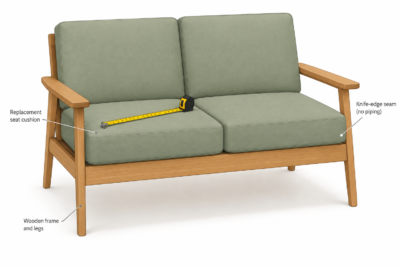
Settee Cushion Foam: Sizing, Density and Replacement Guide
Settee cushion foam answered: two-seat measuring rules, density by how your settee lives, thickness the rails allow, and real prices for a 48 x 18 inch pair.
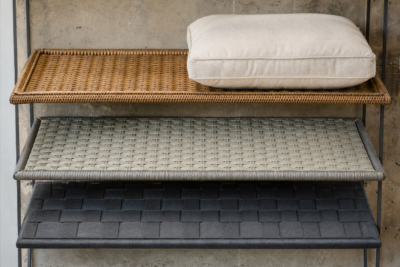
Types of Wicker Materials: Natural, Resin and HDPE Compared
Every wicker material family ranked — rattan core, paper fiber, bamboo, willow and reed on the natural side; PVC-resin and woven HDPE on the synthetic side — with outdoor ratings, lifespans and what each means for cushions.
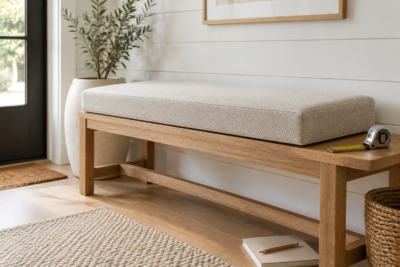
Bench Cushions: The Complete Guide to Sizes, Types and Custom Fit
A bench cushion is only as good as three numbers: the length and depth of the seat deck it sits
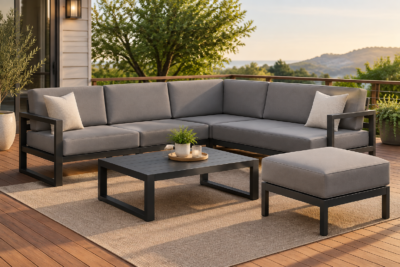
How to Buy Patio Furniture Online Without Regret: The Complete Method
The online patio-furniture method that prevents the classic regrets — dimension-verification discipline, photo-evidence buying, material questions to ask, shipping and return reality, and why custom cushions solve online’s worst problem: fit.