
A 60-inch bench cushion is not a long chair pad — it is a different product with different physics. Past the five-foot mark, cushions develop problems their shorter siblings never see: fill migration that hollows the middle and humps the ends, covers that pucker along their length, seams that carry loads they weren’t designed for, and shipping that becomes part of the product decision. This guide covers the long-pad problems and their answers, for hallway benches, deck and porch runs, window-seat spans, and the picnic-table-length builds. The general bench sizing background is bench cushion measurements; the outdoor version is outdoor bench cushions.
Where Extra-Long Cushions Live
The common extra-long situations and their specs:
| Situation | Typical length | Duty notes |
| Hallway and entry benches | 60–72″ | Landing-pad duty; thin-tailored profile |
| Deck and porch bench runs | 60–96″ | Full outdoor spec; usually fixed to the deck frame |
| Window-seat spans | 60–84″ | Reading duty; thickness by use — window seat measurement |
| Picnic table benches | 60–72″ | Heavy, wet, abused; the toughest duty in the category |
| Banquette runs and nooks | 60–96″+ | Dining duty; corner geometry — banquette cushions |
| Mudroom and storage benches | 60–72″ | Wet-coat duty — mudroom bench cushions |
The Fill-Migration Problem (And the Stitch Answer)
The physics that defines the category: loose fill and even foam-and-fiber wraps migrate along the pad’s length under normal use. Every sit compresses the fill and lets it creep; over months, the sat-upon middle hollows and the unsat-upon ends thicken. The pad develops a topography.
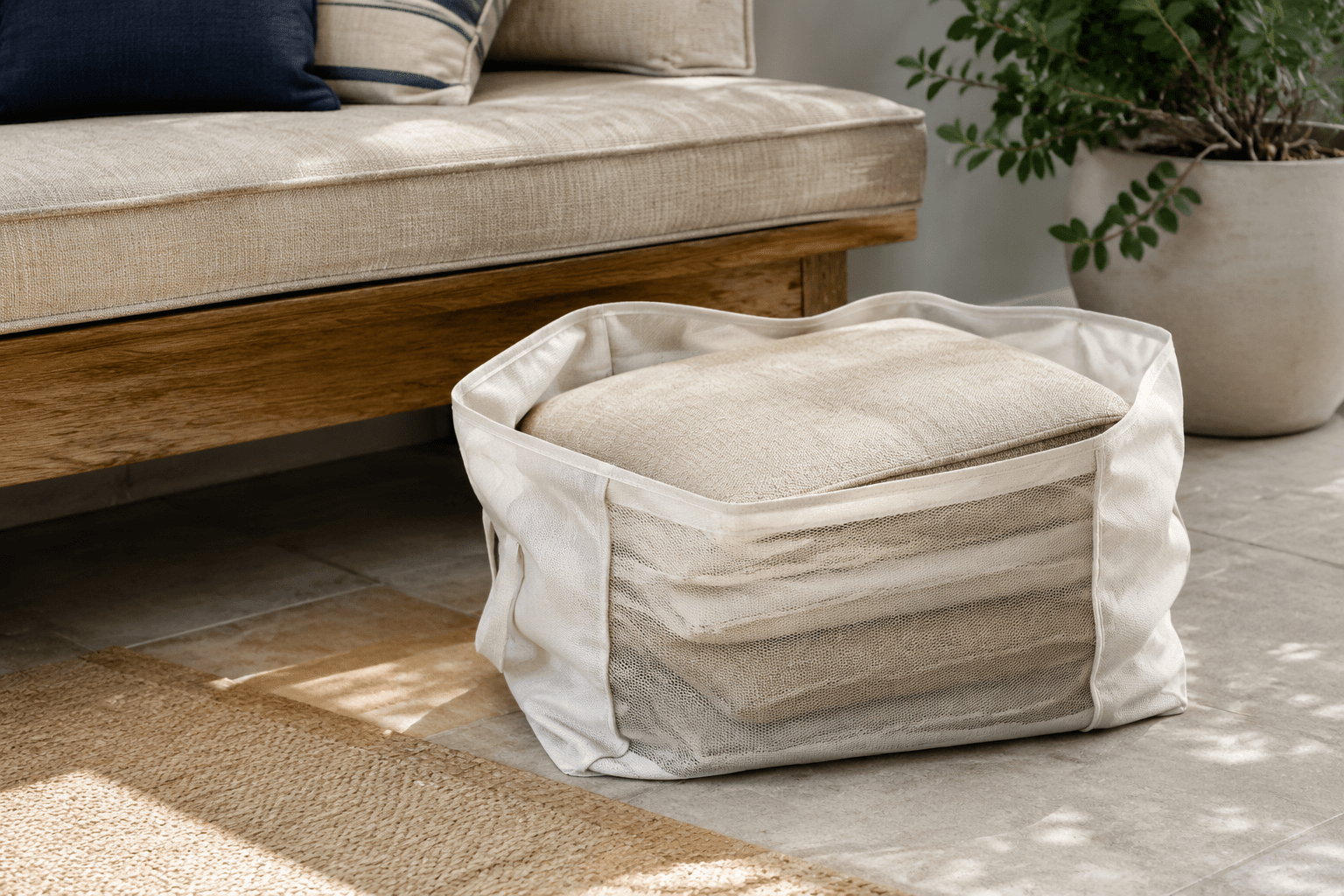
The answer is the stitch pattern: grid or linear stitching ties the cover to the fill at intervals along the pad’s length, eliminating the migration path. Tufted and channel-stitched long pads hold their section-to-section consistency for years where unquilted long pads show topography in one season. In custom work, stitch patterns (linear channels, grids) are modest per-piece add-ons — the single most cost-effective upgrade in the extra-long category. The same physics and answer at bench scale: indoor bench cushions; the tufted-versus-smooth trade generally: tufted vs unbuttoned cushions.
One Piece or Two: The Long-Pad Decision
Past 60 inches, the one-versus-two-piece question is real:
One piece. The seamless look; nothing to drift apart; a single clean line down the hallway or deck. The costs: it can’t be flipped end-to-end or rotated in halves (the single best maintenance move for any pad), it’s awkward to clean and store, and a damage event takes out the whole piece.
Two pieces with a center seam. Each half flips, rotates, cleans, and replaces independently; the seam sits where nobody sits (the middle); damage is halved. The costs: a visible seam, and two edges to keep aligned.
The working guidance: decorative runs (the hallway bench, the formal window seat) earn one piece; duty runs (the mudroom, the picnic table, the deck) earn two. The same decision at L-shaped scale is argued in how to measure an L-shaped bench cushion — separate runs win for maintenance, one-piece wins for looks.
Measuring the Long Run
Long measurements carry their own error sources:
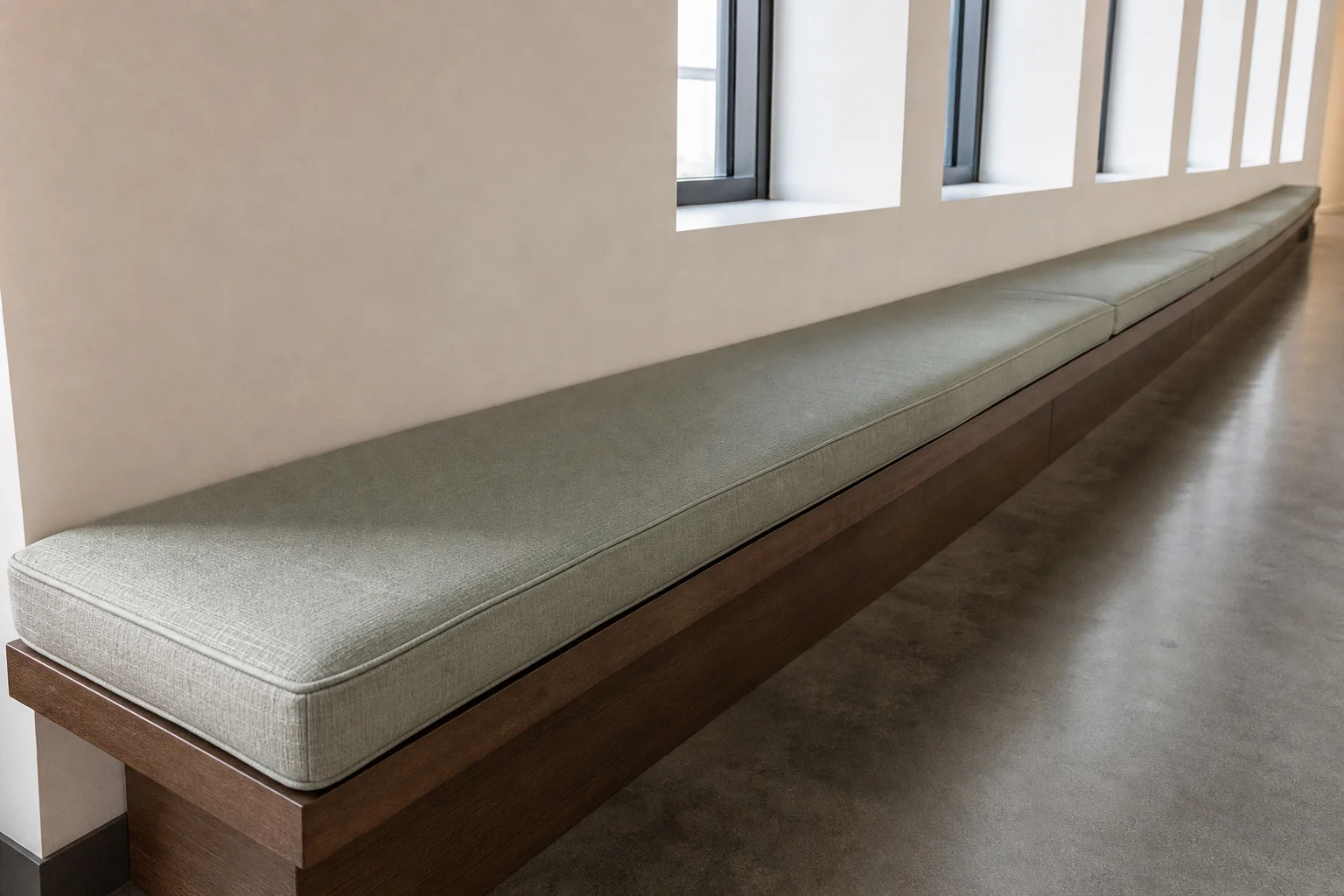
- – Measure at both edges and the center. Long benches — especially wooden and built-in ones — bow and taper; a run that’s 71 inches at the wall and 72 at the front edge needs the taper noted, not averaged away. Widths at each end and the middle catch the bow.
- – The tape sag problem. Steel tapes sag over 8 feet and read long; measure long runs in two overlapping spans from fixed points, or use two people and a taut line. Quarter-inch accuracy at 84 inches requires it (how to measure covers the general discipline).
- – Note the high-traffic zone. Where the run is actually sat upon (the middle by the door, one end by the window) is where density matters most — long runs can be zoned, with heavier-duty spec at the duty end.
- – For fixed deck runs, measure the actual frame between its ends — deck carpenters are no more precise than anyone else, and the gap between deck bench and rail caps is not a standard.
Fill and Duty: The Long-Run Specs
- – 50D-class cores for daily-duty runs — the density logic in how to choose foam density; long runs are usually heavy-traffic furniture.
- – Outdoor runs take the full weather stack: solution-dyed acrylic fabric (best outdoor cushion fabric), quick-dry (reticulated) foam for uncovered decks — a marine-specialist buy, not something we cut (quick dry foam for outdoor cushions) — and ties at the frame’s joists — the wind force on a 96-inch pad is real (how to keep cushions from blowing away).
- – Picnic-table duty is the category’s extreme: 60D where budget allows, the most cleanable fabric in the ladder, and two-piece construction — the damage math of public-duty furniture.
- – Pew and sanctuary runs: repeated equal-length pads in one dye lot — custom church pew cushions, priced by the linear foot.
- – Thickness: 2–3 inches indoors, 3–4 on decks. Extra-long runs read best at tailored profiles; thickness adds both visual weight and windage at length.
Ordering the Long Pad
Extra-long cushions are custom by nature — the lengths vary too much for stock, and the one-versus-two and stitching decisions belong to the buyer:
- Measure the run at both ends and center (widths and lengths), note the traffic zones and tie points, and decide one-piece or two.
- Set the build: 50D core (weather stack if outdoors), a stitch pattern — non-negotiable on long single pieces — after-market ties at the real joists, and fabric graded to duty.
- Order at custom outdoor bench cushions for deck and porch runs (or custom indoor bench cushions for hallways and window seats): pricing from a $45 make-base plus per-square-foot foam and fabric rates — note that a long outdoor piece’s fabric grade is the biggest price lever — 4–7 business days, with every dimension confirmed before cutting.
The Fixed Deck Run: Built-In Benches 60 to 96 Inches
The extra-long category’s outdoor heart is the fixed deck bench — the built-in run along a deck rail, a garden wall, a pool fence — and it has structural specifics the movable bench doesn’t:
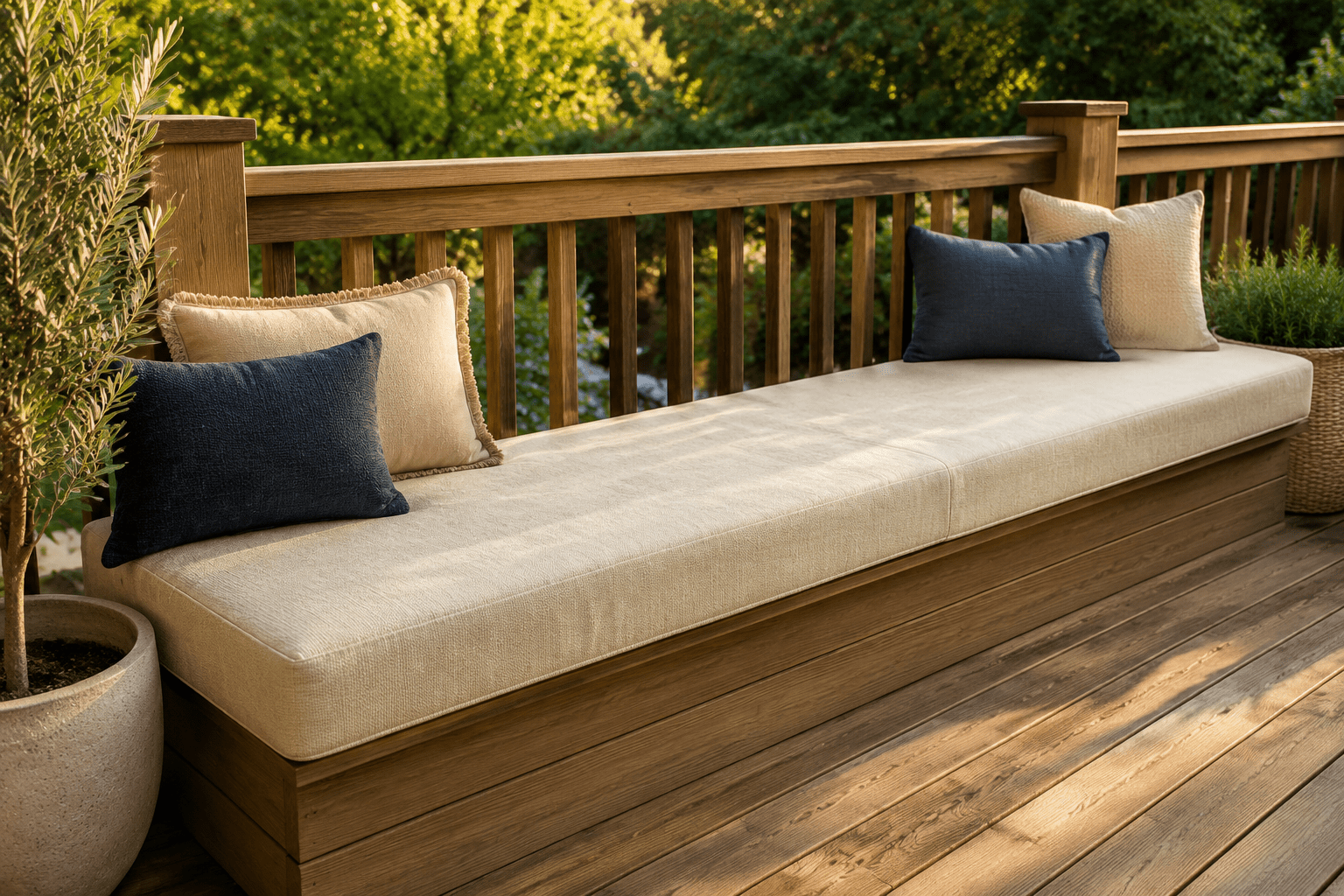
- – Measure the structure, not the pad that’s on it. Fixed runs are usually built on site by carpenters or homeowners, which means every dimension is bespoke: the run’s length is the deck’s, the depth follows the 2x lumber, and the corners follow whatever the builder did. Templates shine on irregular runs — trace the deck bench’s outline and the curve at the corner is captured exactly (cushion measurement mistakes recommends this for every resistant shape).
- – Zoned duty is real on fixed runs. A 96-inch deck bench’s west end hosts the morning-cookout crowd while its east end hosts the plant pots; the pads can be zoned by duty — heavier fill at the sat-upon stretch, standard elsewhere — or simply rotated seasonally (the two-piece build makes this a one-minute swap, which is half of its maintenance argument).
- – The weather exposure runs the full range. A deck bench against a rail is often the most weather-exposed seating on the property — no eave, no umbrella, full rain and sun. That’s the full outdoor stack: solution-dyed acrylic (best outdoor cushion fabric), quick-dry (reticulated) foam — a marine-specialist buy (quick dry foam for outdoor cushions) — ties at the deck framing’s joists, and the honest seasonal-storage routine (how to store outdoor cushions for winter) — which for a fixed run means the pads come off the deck entirely and winter indoors.
FAQs
How long can a bench cushion be?
Practically unlimited with stitch support — 96-inch and longer runs are routine. The constraints are shipping and handling, not manufacturing; the stitch pattern is what keeps very long pads structurally honest.
Why does my long bench cushion sag in the middle?
Fill migration — each sit lets the fill creep, and the middle hollows over months. Grid or channel stitching ties the fill in place and is the fix; see indoor bench cushions.
Should a long bench have one cushion or two?
Two for duty runs (each half flips, rotates, and replaces independently); one for decorative runs where the seam would offend. The maintenance math: how to measure an L-shaped bench cushion.
How do I measure a bench run over six feet?
At both ends and the center, with two overlapping tape spans — long tapes sag and read long. Note tapers and bows rather than averaging them: how to measure.
What thickness for an extra-long bench cushion?
2–3 inches indoors, 3–4 on decks — long runs read best tailored, and thickness adds windage at length.
Do long outdoor bench cushions need more ties?
Yes — ties at each joist or frame bar; an 8-foot pad is a sail. The wind logic: how to keep cushions from blowing away.
Next Steps
- Measure the run properly — overlapping spans, both ends and center, tapers noted — and mark the traffic zones and tie joists.
- Decide one-piece or two by duty, and spec the stitch pattern on any long single piece.
- Order at custom outdoor bench cushions (or custom indoor bench cushions) — dimensions confirmed before cutting, 4–7 business days.
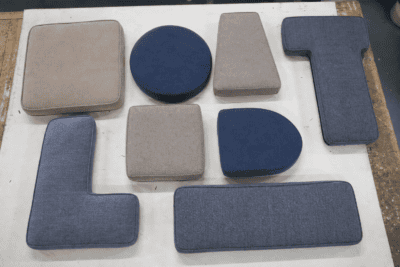
Cushion Shapes Guide: All 11 Shapes, What They Fit, and How to Measure Each One
A field guide to every cushion shape we cut — rectangle, chaise, L-shape, T-cushion, bowed, notched, round, oval, half-round and wedge — which furniture each one belongs to, how to measure it in inches, and exactly which shape to pick in our custom cushion builder.
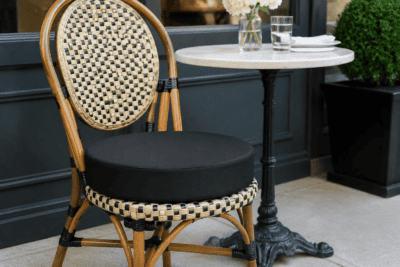
Round Outdoor Cushions: Diameter Duty on the Patio
Round outdoor cushion guide: round patio dining sets, fire-pit seating and round loungers; diameter measuring with the two-axis check, thickness bands, weather specs for circular pads, and ordering rounds.
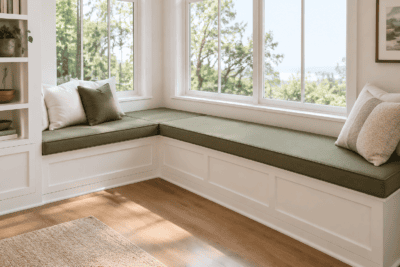
U-Shaped Cushions: Measuring the Wraparound Seat
U-shaped cushion guide: the three-arm geometry of wraparound seating, inside versus outside radius measuring, seam placement at the corners, continuous versus sectioned builds, and ordering U-runs to template.
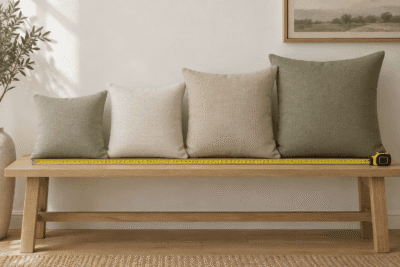
Throw Pillow Sizes: Standard Chart and How to Measure
There is no industry law, but there is a firm convention: throw pillows cluster at 16, 18, 20 and 22
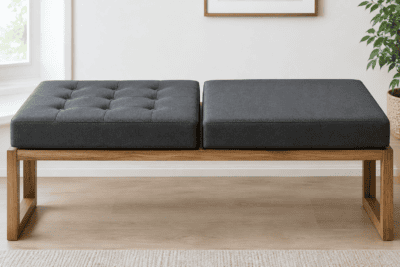
Tufted vs Unbuttoned Cushions: The Stitch Decision
Tufted versus plain cushion tops compared: what tufting and stitched patterns actually do to fill, feel and lifespan, button versus stitch construction, the market’s custom stitch styles, and when plain wins.
How Much Fabric Do You Need for Custom Cushions? (Yardage, Math and a Reality Check)
Two very different people ask how much fabric a cushion needs. One is sewing it herself and standing at a