
“Deep seating” is the label patio makers put on anything with a seat deeper than about twenty inches — and it is a terrible label to shop against, because a deep seat club chair, a three-seat outdoor sofa, a sectional corner module and a chaise all hide behind it, and each one asks for a different cushion set. If you already have your numbers and want the sizing logic, that is covered end to end in the deep seat cushion sizing guide. This page works one step upstream: identifying which seating type you own, what piece structure it asks for, and where stock “universal” deep seat sets miss for that type specifically. By the end you should be able to name your furniture’s type, its piece count, and the three measurements to take before ordering anything.
Deep Seating Is a Family of Furniture, Not One Size
The working definition is simple: seat depth past roughly 20 inches is deep seating, past 24 is very deep, and every maker draws the line slightly differently. What the definition does not capture is structure. Two chairs can measure 23 inches deep while one takes a single 23-inch seat pad and the other takes a seat, a back, and two side bolsters. That structural difference — not the depth number — is what decides which cushions you need, which is why this page sorts by furniture type first and treats depth as one input among several.
The Five Seating Types, and What Each One Asks For
| Seating type | Cushion pieces | Typical seat depth | The fit problem it owns |
|---|---|---|---|
| Deep seat club chair | 1 seat + 1 back | 22–24″ | Depth eats the knees; a thick seat pushes you off the backrest |
| Loveseat / sofa | 2–3 seats (one run or blocks) + back run | 22–26″ | Continuous run vs. block seams; back heights vary by maker |
| Sectional with corner | Seats per module + corner wedge + backs | 24–26″ | The 90° interior corner wedge — no stock size matches it |
| Chaise lounge | 1 long lounging run + angled back | 24–30″ deck | Length and back angle, not depth, are the spec |
| Conversation set | Mixed: chairs + sofa + often ottoman | 22–26″ | Matching across unlike pieces — one order, one batch |
The club chair is the simplest deep seating case: one seat, one back, and the only real decision is thickness, covered below. Its fit problem is depth arithmetic — a 23-inch seat deck under a 6-inch cushion leaves 17 inches of effective depth, which suits long legs and starves shorter ones.
Loveseats and sofas add the run question. A single seat cushion spanning the full width looks tailored but cannot be flipped end to end, and a long run of foam flexes differently than three blocks. Blocks — one per seat position — rotate, swap and ship more sensibly, at the cost of visible seams. Makers rarely agree on back height either, which is why the back run is the piece universal sets miss most often; the outdoor sofa cushion guide works that piece in detail.
Sectionals inherit every sofa problem and add the corner. An interior corner wedge is two measurements meeting at 90 degrees — width along one rail, width along the other — and stock sets ship rectangles. Ordering the corner as a measured wedge, with the adjacent pieces cut to meet it, is the difference between a sectional that looks built-in and one that looks dressed in borrowed clothes. The sectional buying guide covers configuration before the cushions.
Chaises are length problems wearing a depth costume. The lounging run often crosses 60 inches, the back reclines at an angle no flat stock cushion follows, and the deck narrows toward the foot on some frames. Measure the run, not the seat: the routine is in how to measure lounge chair cushions.
Conversation sets — the patio living room groupings of a sofa, two chairs and an ottoman — are matching problems. Five to nine cushion pieces across four furniture silhouettes, ordered from three different listings, will arrive in three dye lots. More on batches below; the grouping logic itself is in the conversation set guide.
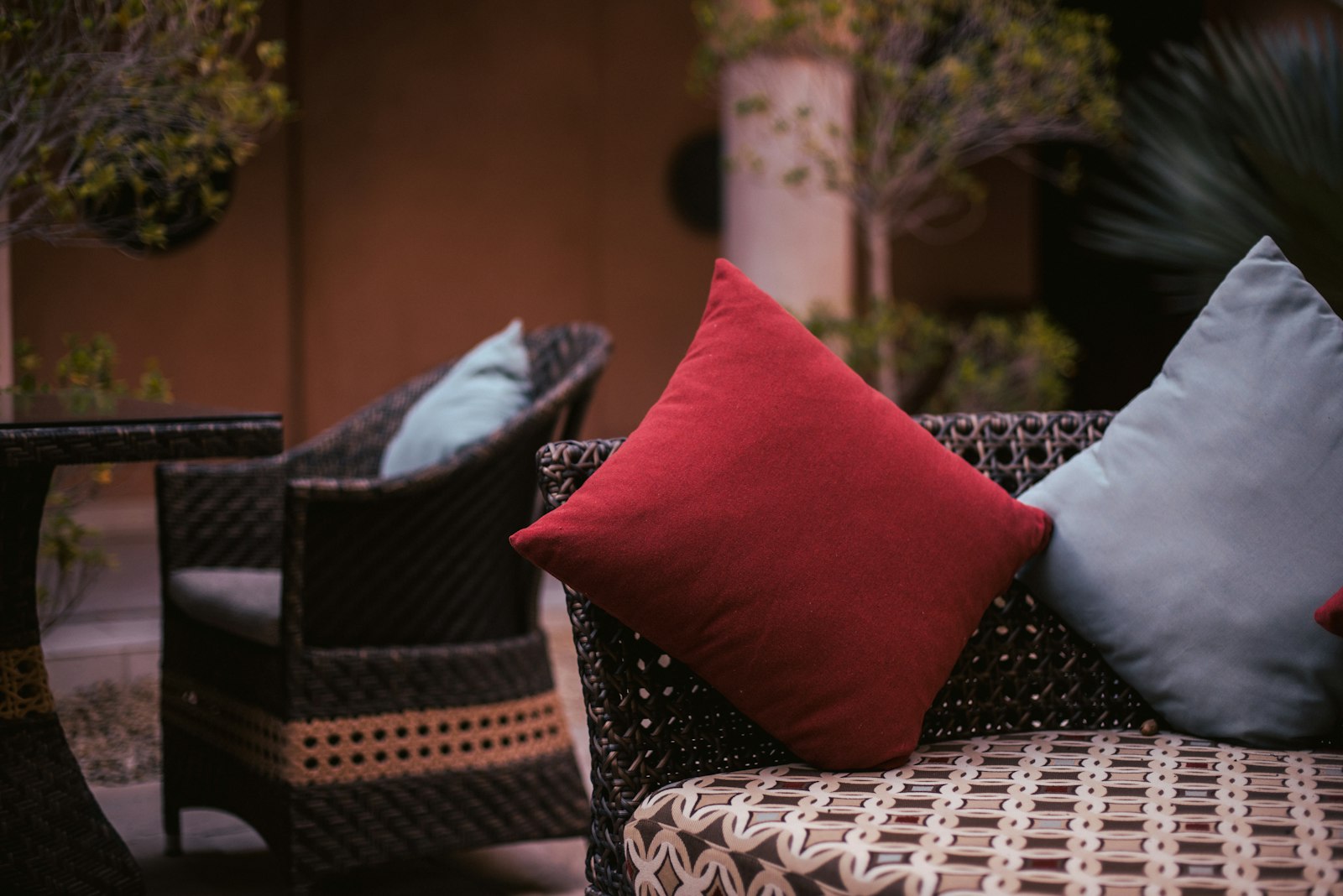
Where Universal Sets Miss, by Type
Universal deep seat sets are built on an average — usually a 22×24 or 24×24 seat with a 22- to 24-inch back — and averages fail differently depending on what you own:
- On a club chair, a two-inch depth miss either overhangs the front rail or leaves your knees floating, and the back rides up or down the frame depending on which way the error runs.
- On a sofa or loveseat, the run length is nobody’s run length: a stock piece cut for “most three-seat frames” is gambling that your maker built to the same modularity everyone else did.
- On a sectional, the corner simply has no counterpart in the box — owners end up forcing two rectangles into the wedge and living with a seam ridge at the pivot.
- On a chaise, the error compounds down a 60-inch run; an inch of width slack per side becomes two inches of wander, and depth-fit padding does nothing for a length mismatch.
- On a conversation set, each piece ordered separately clears its own bar and the grouping still fails as a set, because the fabric did not come off the same roll.
There is a second-order problem universal sets create even when they fit: slack. Every half inch of clearance a generously-cut stock piece carries is travel budget — the cushion migrates into it every time someone sits, which is the mechanism laid out in why custom cushions slide less. The short version of that page: a cushion cut to the measured frame has no gap to migrate into, and fit does more against sliding than any coating or gripper added to the wrong size. For the general case against universal sizing, the deep seat guide runs the numbers.
Spec by Exposure, Not by Aesthetic
Deep seating lives where the weather is, and fabric specs should follow the exposure the furniture actually sits in rather than the color story:
Full sun, open sky. UV is the budget item. Solution-dyed acrylic and olefin both carry color in the fiber rather than printed on it — why that matters is explained in solution-dyed acrylic, explained, and the two workhorses are compared in Olefin vs Sunbrella. Anything printed or piece-dyed will shift within a season on an uncovered patio.
Covered or semi-covered. A roofed porch cuts UV and rain by most of the fight; the spec question becomes airflow and drying, because trapped moisture is what mildew needs. Fill choice starts mattering more than fabric here — the fill comparison separates quick-dry polyfiber from foam on feel and drain time.
Poolside and damp shade. Prioritize fill that drains and a face fabric that sheds; a foam core that holds water turns a summer shower into a three-day dry-out. The full fabric decision tree by climate and budget is the outdoor cushion fabric guide.
One Order, One Batch
Deep seating sets run five to nine pieces, and every piece ordered separately is a fresh roll of dice: dye lots differ between production runs, foam batches differ in feel by a few points of density, and a back ordered six months after its seat will not match it. Ordering the full set in one order puts every piece on the same fabric roll and the same foam batch — the reasoning behind matched sets is laid out in seat and back cushion sets. If the budget forces phasing, phase by furniture piece (all of the sofa, then all of the chairs) rather than by role (all seats, then all backs), so no single piece-pair straddles two batches.
The Thickness Trade-Off
Deep seat cushions look luxurious at 5 and 6 inches, and on deep seating the frame can absorb it — but thickness spends seat depth. A 24-inch deck under a 6-inch cushion serves 18 inches of effective depth; that flatters long-legged sitters and leaves shorter ones reaching for the floor. Work the arithmetic before choosing: measure the deck, subtract the thickness you are considering, and check the remainder against the people who sit there most. The layering logic and where extra thickness genuinely earns its place — and where it is just styling — is in the extra thick cushion guide.
FAQs
What size is a deep seat cushion for outdoor furniture?
Typical deep seating runs 22–24 inches of seat depth, with very deep frames past 24 — but the number that matters is your own frame measured rail to rail. Typical sizes are planning guides, never order inputs; measure the deck and order to it.
How many cushions does a deep seat sofa need?
Either one continuous seat run or one block per seating position, plus a back run — the run-vs-block trade-off is covered above. Blocks rotate and ship more sensibly; runs look more tailored. Most three-seat frames take three blocks or one run around 72–84 inches, cut to the measured interior.
Can I use deep seat cushions on regular patio chairs?
Generally no — a deep seat pad on a standard 17–19 inch deck overhangs the front rail, tilts the sit, and spends the legroom the chair was designed around. Standard-depth frames take standard-depth pads; the depth spec should follow the frame, not the cushion aisle.
Are thicker cushions better for deep seating?
Only up to the point the people sitting have legs for the remainder. Thickness subtracts from usable depth — 6 inches on a 24-inch deck leaves 18 effective — so the right thickness is the one that leaves the sitters’ feet on the floor and their backs on the backrest.
What fabric lasts longest on uncovered deep seating?
Solution-dyed acrylic and olefin, because the color lives in the fiber and resists the UV that shifts printed and piece-dyed fabrics within a season. Between the two, the differences are in hand-feel and cost — compared in Olefin vs Sunbrella.
Can I replace sectional cushions one piece at a time?
You can, but each reorder is a new dye lot, and a corner replaced a year after its neighbors will read as a different color in slanting light. If phasing is unavoidable, replace whole furniture pieces at a time and keep piece-pairs on the same order.
Do deep seat cushions need ties?
On framed deep seating, usually not — a cushion cut to the frame’s interior dimensions has no gap to travel into, which is the sliding mechanism explained in why custom cushions slide less. Open slatted frames without usable boundaries are the honest case for ties.
How do I measure if the old cushions are gone?
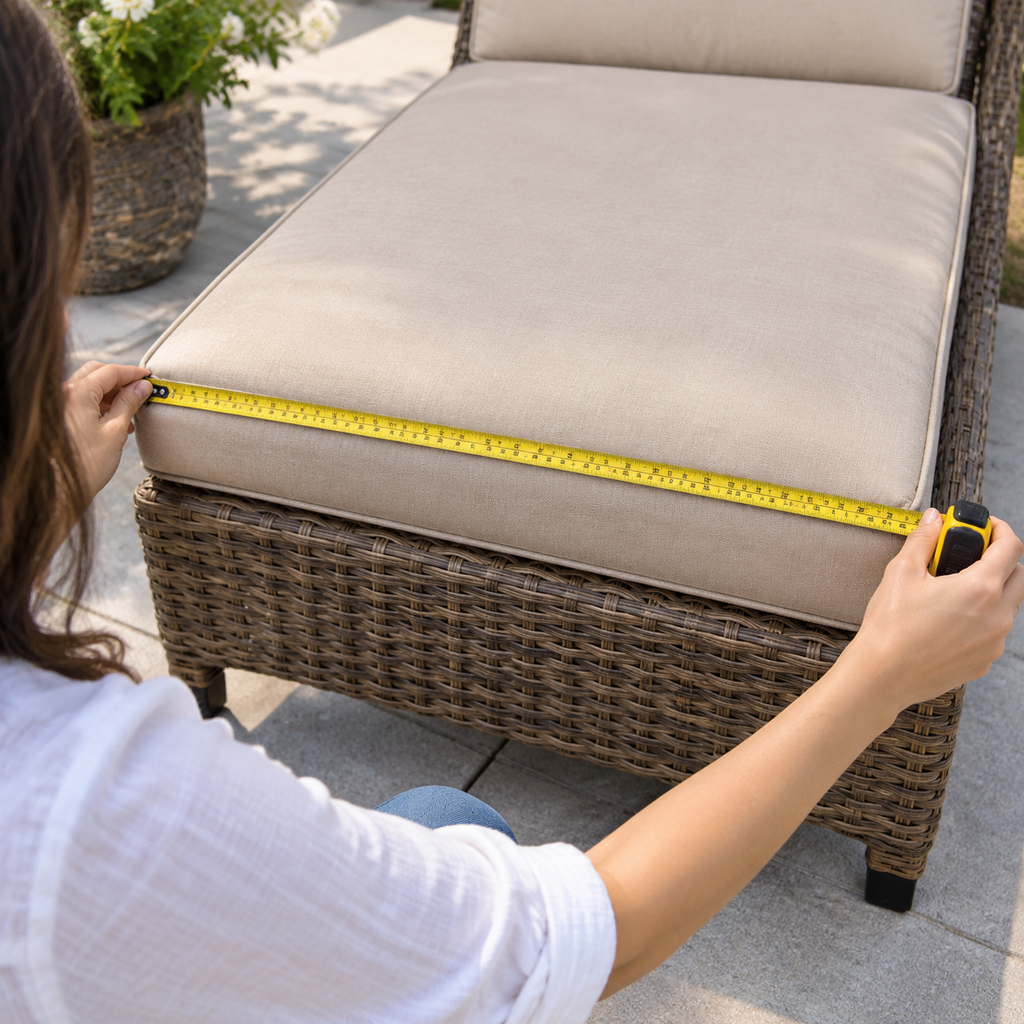
Measure the frame, not a memory of the cushions: seat depth rail to rail, seat width between arms, and back height from the seat deck to the top of the back frame. The full routine, including T-cushion arms and odd backs, is in how to measure couch cushions.
Next Steps
- Name your type from the table above and list its pieces — a club chair is two, a conversation set can be nine.
- Measure each frame’s three numbers — depth, width, back height — recording to the nearest quarter inch, per the measuring routine.
- Order the full set in one order so every piece shares a fabric roll and a foam batch — custom deep seat cushions takes your dimensions per piece, with standard making running 4–7 business days (rush 3–5) and shipping in 3–6 weeks, dimensions confirmed before anything reaches the saw.
Types of Wicker Materials: Natural, Resin and HDPE Compared
Every wicker material family ranked — rattan core, paper fiber, bamboo, willow and reed on the natural side; PVC-resin and woven HDPE on the synthetic side — with outdoor ratings, lifespans and what each means for cushions.
Patio Chair Cushions: The Complete Buying Guide (Outdoor Too)
Everything that decides a patio or outdoor chair cushion — sizes, thickness, ties, fabric tiers and where each buying route wins. Custom from $45 when grids fail.
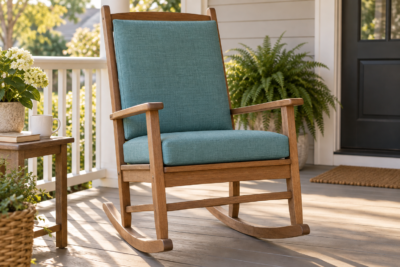
Outdoor Rocking Chair Cushions: The Weatherproof Guide to Sizes and Fabrics
An indoor rocking cushion dies fast on a porch. The sun bleaches the print in a single season, the foam
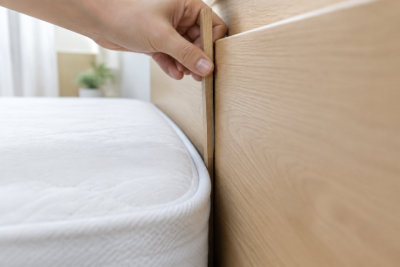
What Size Bed Gap Filler Do I Need? Thickness, Length and Density
Size a bed gap filler from three measurements, not the bed’s name: thickness equals gap width plus half an inch to one, length runs the full seam, height runs platform to mattress top. Density starts at 50D.
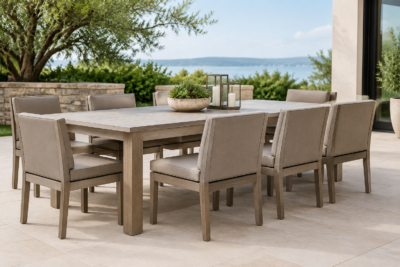
Cushion Thickness & Seat Height: Match the Pad to the Table
Cushion specs usually answer comfort questions. Thickness answers a geometry question: how high off the floor you end up sitting,
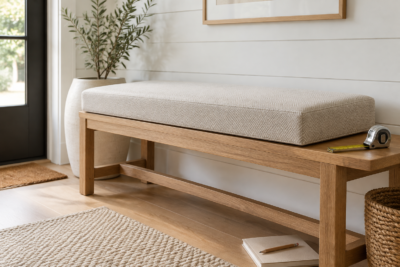
Bench Cushions: The Complete Guide to Sizes, Types and Custom Fit
A bench cushion is only as good as three numbers: the length and depth of the seat deck it sits