Mold on outdoor cushions is presented as a fabric problem — buy the right fabric, the story goes, and mold is solved. The factory view is different: mold is a moisture-management problem with three inputs, and fabric is only one of them. Every moldy cushion we see has the same story: water got in, stayed, and found something to eat. The fabric is guilty mainly of being present.
Understand the triangle and prevention stops being a shopping decision and becomes a system — one you can mostly implement with cushions you already own.
The Mold Triangle: Water + Food + Time
Mold needs all three, so prevention means breaking any leg:
- Water. Rain, condensation, wicking from wet decks, trapped moisture in sealed covers. Water is the trigger input — and the only one you fully control.
- Food. Mold does not metabolize acrylic or polyester fiber — it eats the film on them: pollen, dust, food residue, body oils, soap scum. A dirty cushion is a fed cushion.
- Time. Mold establishes in roughly 24–72 hours of continuous dampness in warm conditions. Anything that dries faster than that breaks the third leg.
Every prevention tactic below attacks one of the three. That is the entire logic.
Layer 1: Fabric Choice (Attacks Water and Food)
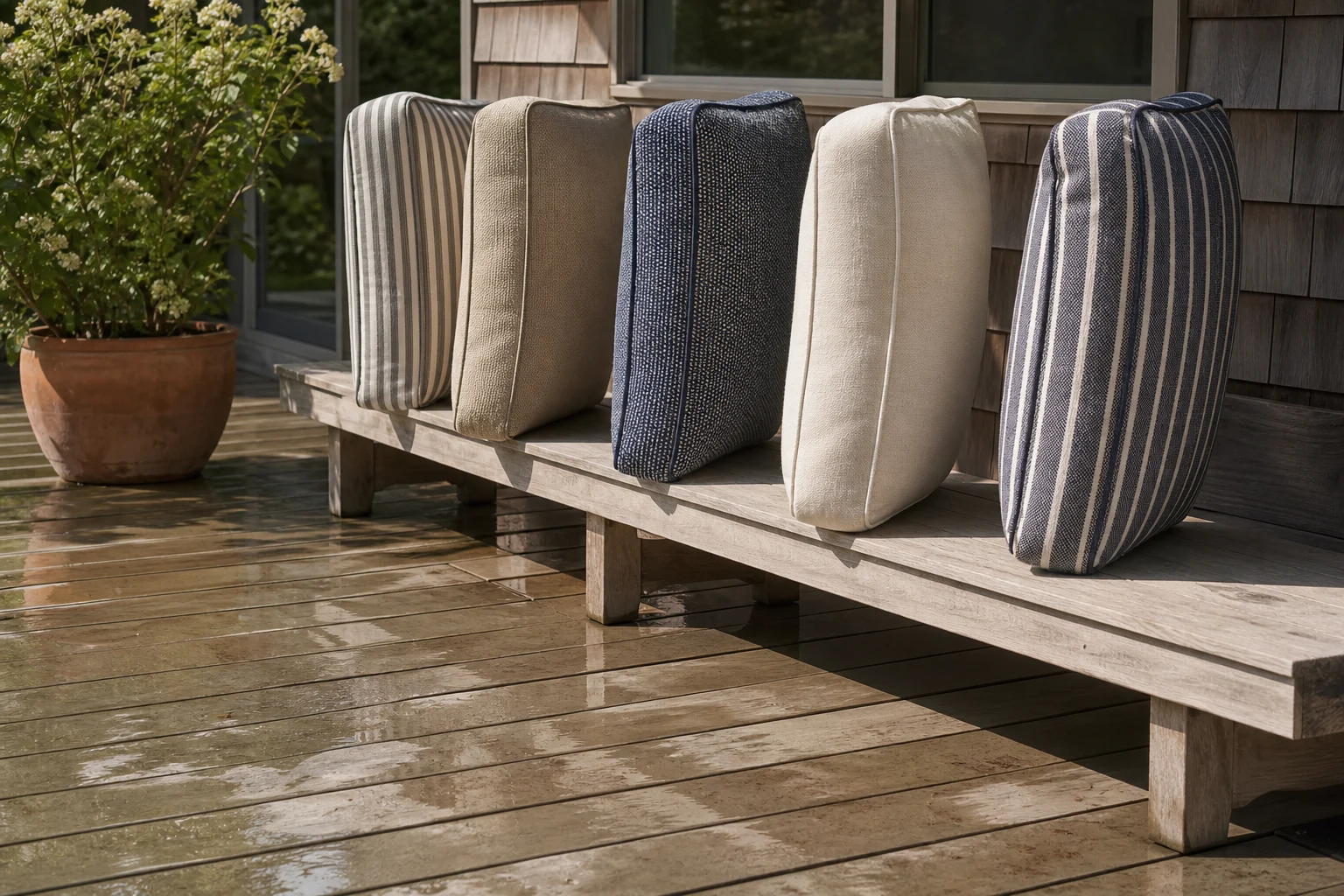
- – Solution-dyed acrylic (Sunbrella-class) and olefin absorb little water, dry fast, and — critically — are bleach-cleanable, so when mold does find a food film, you can kill it and its stain completely. Piece-dyed polyester cannot survive that treatment, which is why the same mildew event is recoverable on one fabric and terminal on the other. (fabric comparison)
- – Skip sealed/”waterproof” builds — this is the counterintuitive one. Vinyl-backed and laminated covers block water and block drying, so condensation and seam intrusion get trapped against the foam: interior mold you cannot see or clean. The physics is laid out in waterproof cushions explained. Breathable beats sealed for anything that lives outdoors.
Layer 2: Foam Choice (Attacks Time)
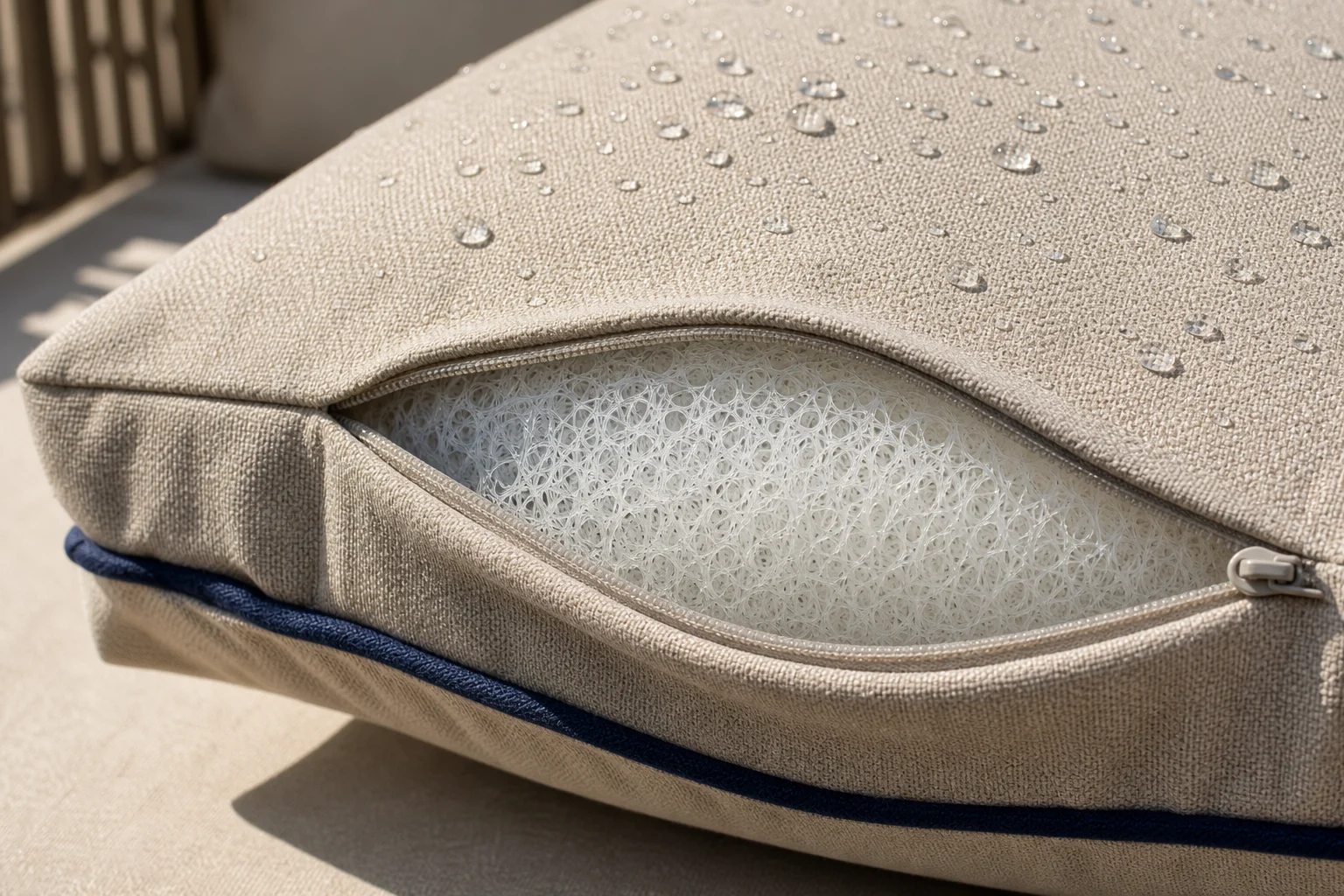
Standard fine-celled foam holds water in tiny cells for days — well past the 72-hour establishment window. Quick-dry (reticulated) foam has large connected cells that let water drain and air flush through, drying in hours. If your furniture sits uncovered in a rainy climate, quick-dry core plus breathable cover is the single best anti-mold specification that exists — foam options compared in cushion filling types; we do not carry reticulated cores, and our outdoor line pairs waterproof covers with high-density foam on custom cushion orders.
Layer 3: Placement and Furniture Geometry (Attacks Water)
The most underrated layer — free, and applies to what you own now:
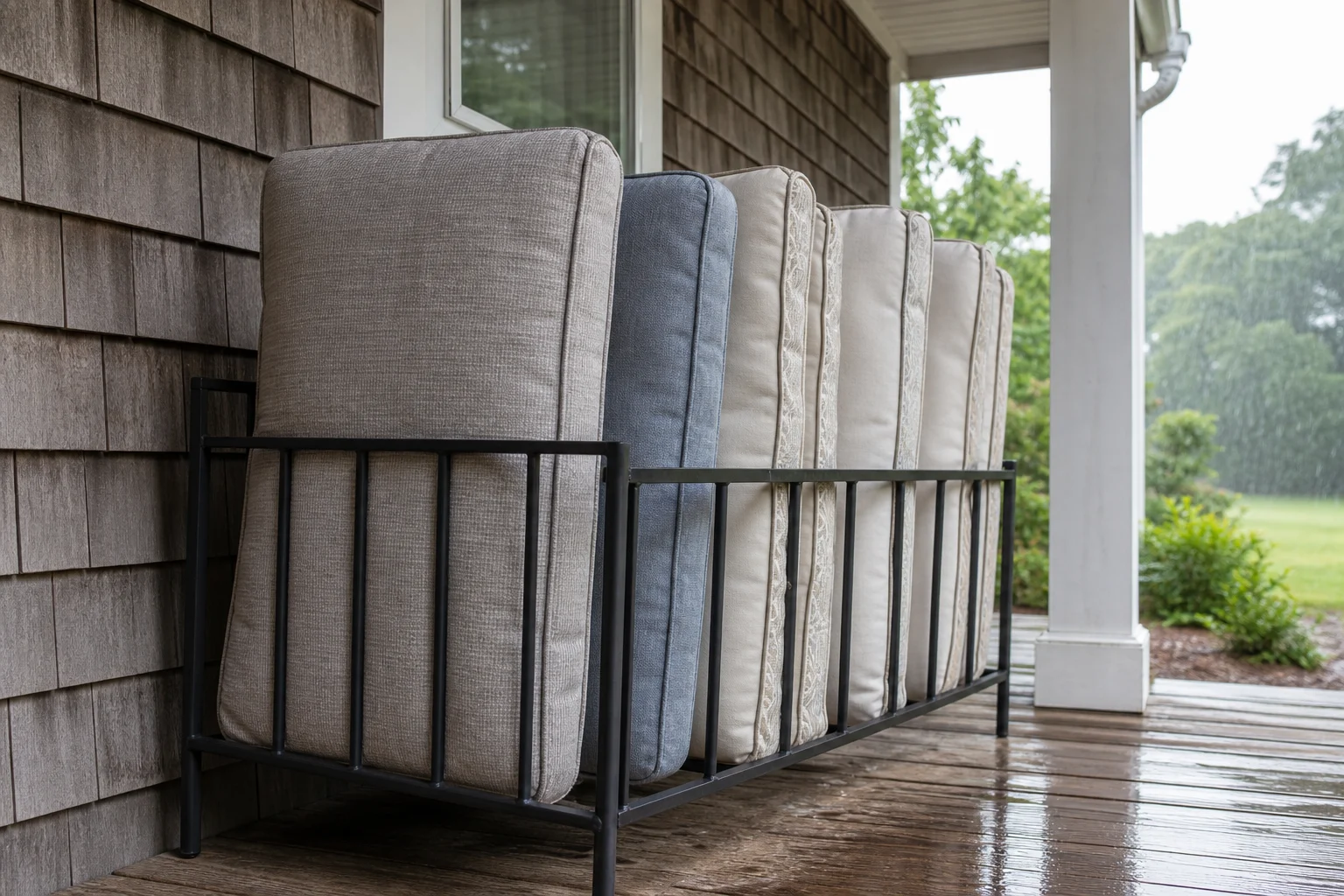
- – Never let cushions sit flat on a wet solid surface. The underside wicks water faster than rain penetrates the top. Slatted furniture drains; solid decks pool. On solid surfaces, add airflow: furniture glides, or tip cushions on edge after rain.
- – Stand cushions on edge after heavy rain — both faces drain, air moves through, drying time drops from days to hours.
- – Mind the microclimate: cushions against walls, under dense evergreens, in corners with no cross-breeze stay damp longest — mildew starts at the wall-side corner, every time. If a corner of your patio always molds, the problem is the corner, not the cushions.
- – Leave breathing gaps when stacking stored-outdoor cushions; a tight stack traps the humidity the bottom cushion exhales.
Layer 4: Habits (Attacks Food and Time)
- – Monthly rinse-and-brush — keep the food film thin. Full methods: how to clean outdoor cushions.
- – Blot spills immediately — food and drink are mold’s favorite meals.
- – Quarterly flip and rotate — the side against the furniture stays damp longest; rotation evens the exposure (extend cushion life).
- – Never store or stack damp — the rule that outranks all others, especially pre-winter (storage guide).
If Mold Has Already Appeared: The Triage
- Surface mildew on fabric (spotting, no smell beyond the spot): cleanable, today. Bleach-safe fabrics: soap + 1 cup bleach per gallon, 15-minute dwell, scrub with the weave, rinse fully, sun-dry (the full method). Polyester: soap-only and accept a shadow.
- Returns within weeks of proper cleaning: the colony is in the foam. No home method reaches interior mold; the cushion is a replacement (when to replace cushions) — and fix the layer that fed it before the new set arrives, or you will be back here next season.
- Smell with no visible stain: unzip and inspect the foam — interior mold announces itself to the nose first. Damp-sour that survives a full sun-dry means the core is colonized.
The Prevention Stack, Compressed
| Layer | Action | Breaks which leg |
| Fabric | Solution-dyed/olefin, breathable (never sealed) | Water, Food |
| Foam | Quick-dry reticulated core for uncovered use | Time |
| Placement | Edge-standing after rain, airflow, no flat-on-wet-deck | Water, Time |
| Habits | Monthly cleaning, immediate spill response, rotation | Food |
| Storage | Bone-dry before storing, breathable containment (guide) | All three |
For new orders, the honest stack — since we do not carry a reticulated/quick-dry core — is a waterproof cover over high-density foam for sheltered-but-soaked seating, with a marine-specialist reticulated core the right buy for permanently uncovered rain climates, in a color that shows mildew early (light colors reveal at stage 1 — see choosing cushion colors). For existing cushions, layers 3 and 4 are free and cut most mold events by themselves.
Mold by Climate: Where It Usually Starts
Knowing the first failure point for your climate speeds the diagnosis when something smells off:
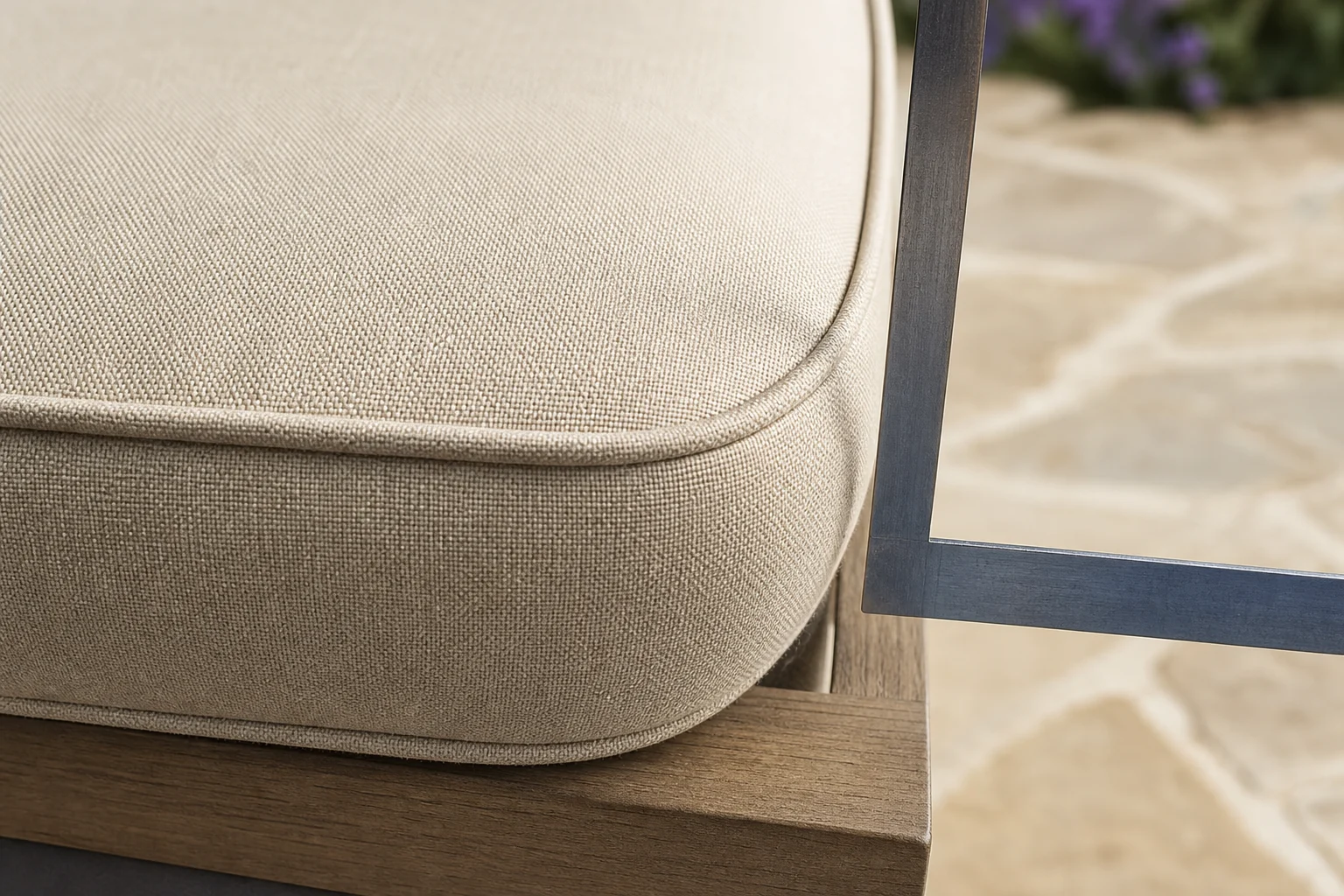
- – Humid South / Gulf: wall-side corners and cushion undersides — damp surfaces plus still air. The first sign is usually smell, not sight; unzip and inspect monthly in season.
- – Pacific Northwest / rainy summers: seams and zipper tracks where water wicks and dries slowest. Look for gray threading along stitch lines — early mildew in the thread before it spreads to faces.
- – Snow-belt with winter storage: interior foam from stored-damp cushions — the spring discovery. Prevention is entirely the storage discipline; in-season, these climates rarely mold.
- – Dry Sun Belt: food-film mold under trees and against walls — pollen plus irrigation overspray. The mildest case; monthly cleaning is usually the whole program (methods).
The Three-Question Mold Audit
Run this monthly in season — two minutes per set, and it catches every case at stage one:
- The smell test: does anything read damp or sour a full day after rain? Yes → unzip, inspect foam.
- The seam test: any gray or dark threading along stitch lines, especially wall-side? Yes → stage-one mildew; clean today, not this weekend.
- The contact test: lift each cushion — is the surface beneath damp, or the cushion’s underside? Yes → placement problem; add airflow, edge-stand after rain.
Any “yes” answered with same-day action stays a cleaning. “Yes” answered next month becomes a replacement — that is the entire economics of mold (the triage).
Mold vs Mildew vs Staining: Know What You’re Fighting
The triage changes with the diagnosis, and the three get confused constantly:
- – Mildew (surface, early stage): flat, powdery or downy growth in gray-white patches — the stage-one cleanup candidate. Bleach solution on bleach-safe fabric removes it fully (methods).
- – Mold (established colony): darker — green, black, or blue-green spots that have penetrated the film and often the thread. Cleanable on the surface if the foam is uncolonized; the smell test distinguishes (the audit above).
- – Non-biological staining: water rings, tannin, rust — discoloration without life. Cleaning treats it, preventions differ (airflow for rings, tree management for tannin, hardware replacement for rust).
Why it matters: bleach-killing surface mildew on a cushion whose foam is colonized feels like success for two weeks — then the regrowth begins, because the interior colony re-seeds the surface. The sniff-through-the-zipper check is the only way to know which fight you’re in before choosing a weapon.
FAQs
Why do my outdoor cushions keep getting moldy?
Because the mold triangle stays intact: water is getting in and staying past ~72 hours (trapped moisture, poor airflow, flat contact with wet surfaces) with a food film present — recurring mold is a moisture-and-placement problem before it is a fabric problem.
What cushion fabric resists mold best?
Solution-dyed acrylic and olefin — low absorption, fast drying, and bleach-cleanable when mildew does land; but no fabric out-dries a sealed cover’s trapped condensation, so breathability matters more than brand (waterproof cushions explained).
Can I prevent mold on cushions I already own?
Yes, mostly for free: stand cushions on edge after rain, keep them off flat wet surfaces, maintain monthly cleaning, never stack or store them damp — placement and habits break two of the three triangle legs.
Does waterproofing help against mold?
Sealed covers make interior mold worse by blocking drying; repellent finishes on breathable fabric help mildly and need annual renewal — the useful version is quick-dry foam plus breathable fabric, not sealing.
When is a moldy cushion beyond saving?
When mildew returns within weeks of proper cleaning, or any damp smell survives full sun-drying — both mean the colony is inside the foam where cleaning cannot reach, and the cushion is a replacement (triage above); our outdoor line — waterproof covers over high-density foam — is specified at custom outdoor cushions.
Why One Rain Ruins a Patio Cushion (and How to Dry It in Time)
One rainstorm can kill a patio cushion — not by getting it wet, but by trapping water in the foam for days. The physics of why cushions stay wet for 5 days, the 72-hour mold clock, and a time-based triage for saving soaked cushions.
POLYWOOD Cushions: Fabric, Waterproofing, Cleaning and When to Replace
POLYWOOD frames are famous for outliving everything around them — the recycled HDPE lumber shrugs off rain, salt and sun
Insect-Proofing Patio Cushions: What Works on Bugs, Without Ruining Fabric
Why insects target outdoor cushions (nesting sites, food residue, moisture), the prevention stack — cleaning, storage, covers, placement — what sprays and repellents are fabric-safe, and the honest limits of keeping a patio bug-free.
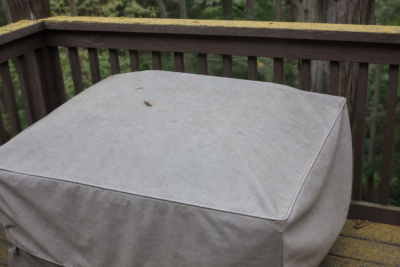
Pollen Season on the Patio: Protecting Cushions and Furniture
What pollen actually does to outdoor cushions (it’s not the color — it’s the chemistry), the spring protection playbook from covers to placement, cleaning pollen off fabric without grinding it in, and fabric choices for the perpetually dusty patio.
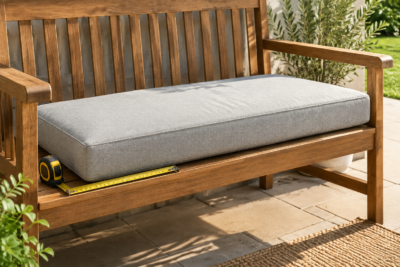
How to Clean Mold Off Outdoor Cushions (and When It’s Too Late)
How to tell salvageable mold from a dead cushion, the vinegar-and-oxygen-bleach method that works, and what to buy so it never comes back.
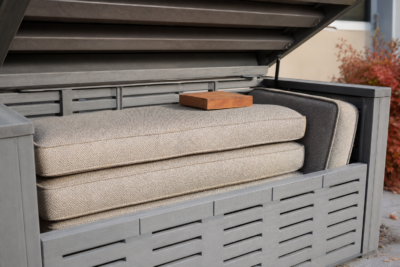
How to Store Outdoor Cushions for Winter: The Complete Method
The right way to winterize outdoor cushions — deep clean, bone-dry, ventilated storage, what never to do — and which climates need indoor storage at all.