
Every patio-cushion thread on Reddit eventually produces the same confession, and it has for years: “10 minutes of rain, 5 days to dry, and by the weekend there’s mold.” The numbers barely change between a 2021 thread and a 2026 one, because the physics don’t change — a sewn cushion cover sheds most of a shower while the foam core underneath drinks the rest, and mold only needs a few days of trapped moisture to move in (how water gets in and how to get it out).
The threads also produce something more useful than commiseration: a working consensus on what actually rescues a cushion, and an equally clear agreement on when nothing will. This guide follows that same split — first the sixty-second triage that tells you whether your cushion is a cleaning job or a replacement job, then the step-by-step method for the salvageable ones, and finally what to buy so the mold story doesn’t get a sequel.
Can This Cushion Be Saved? Triage First
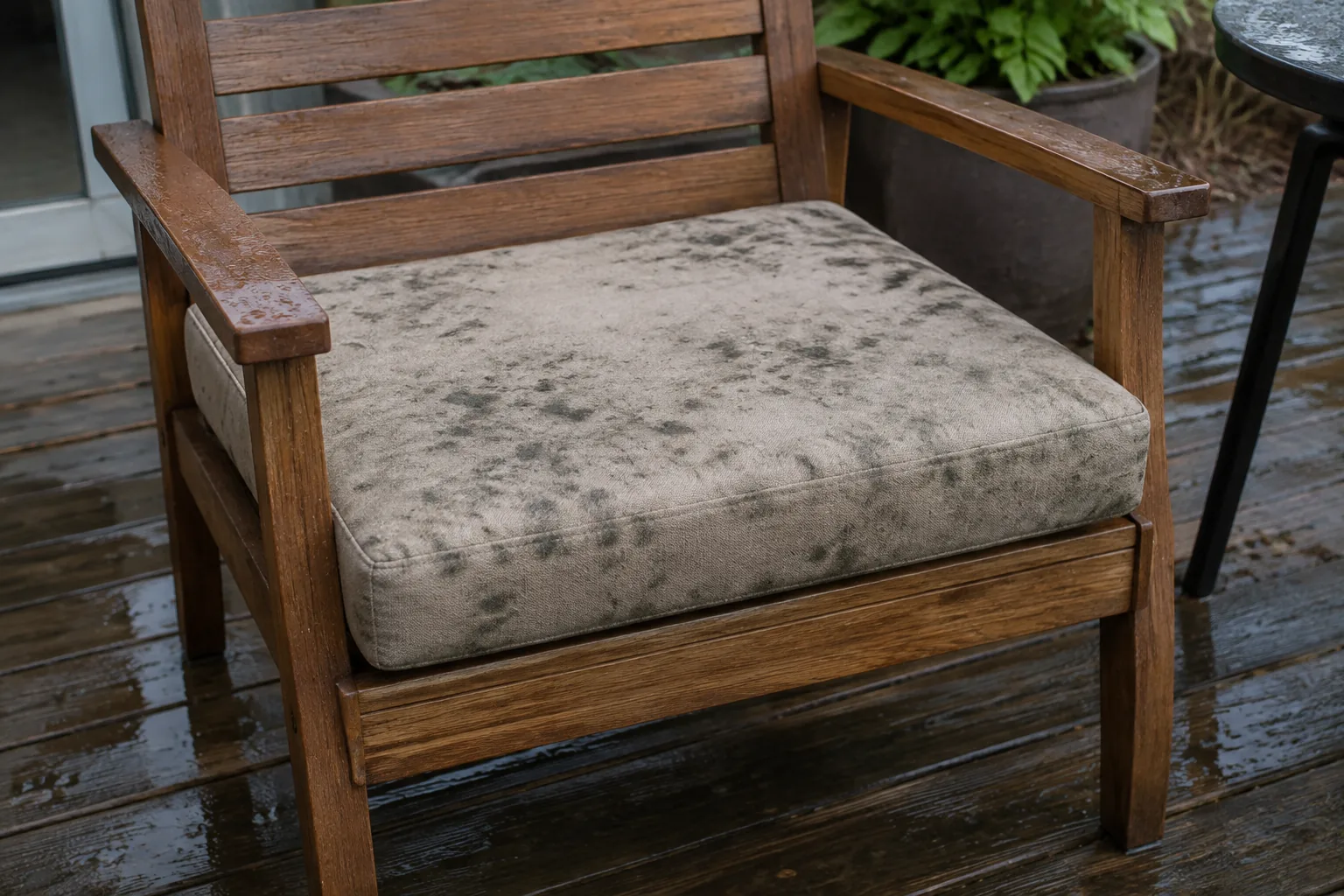
Mold on a cushion is two different problems wearing one stain. Surface mildew — spotted on the fabric, no smell when you bury your nose in it, foam still its original color — is a cleaning problem, and it usually cleans up in an afternoon. Mold that has colonized the foam core is a biology problem, and no brush reaches it. Everything in triage is about telling those two apart:
- The smell test, unzip first. Open the zipper and smell the foam, not the cover. A musty cover means mildew on fabric. A musty core means spores are inside the block, where cleaning solutions don’t reach.
- Look at the foam itself. Gray-black staining or dark streaks on the foam (not the fabric) means the colony has a foothold inside. Surface-clean all you want — the stain and the smell are permanent residents now.
- Measure the spread. Spots you can cover with a hand, on one or two faces, are surface colonies. A mottled haze across a third or more of the cushion usually means the fabric stayed wet long enough for growth underneath and inside the seams.
- Count the cleanings it has survived. A cushion that has been cleaned, dried, and gone musty again within weeks isn’t re-infected — it was never fully cleared. The second recurrence is the foam telling you it’s done.
The honest line, the one every long thread eventually lands on: if the mold is in the foam, the cushion is not coming back. Fabric is cleanable; a porous sponge full of dead spores and living roots is not. The good news is that most “moldy cushion” panic discovered within a day or two of the rain is still a surface problem — which is exactly the case the next two sections handle.
What Actually Kills Mold (and What Just Moves It Around)
Before the scrubbing, pick your weapon, because the popular answers are not equal:
- White vinegar is the workhorse. Undiluted or cut 1:1 with water, it kills the mold colony on fabric down to the root structure it has grown into the weave, not just the visible patch. It’s cheap, it doesn’t bleach color, and it’s what most of the repeat-success comments in those threads converge on.
- Oxygen bleach (sodium percarbonate) is the deep-clean upgrade. A warm solution soaks into the fabric and continues lifting both the colony and the stain after the vinegar has done the killing. This is the borax-and-oxiclean family of advice, and it earns its reputation on older stains.
- Chlorine bleach is the one to be careful with. It kills surface mold on contact but it bleaches colored fabric, weakens fibers with repeated use, and does nothing to spores inside seams or foam. On a white sling chair, fine, diluted. On anything colored you care about, it’s how a mold spot becomes a bleach spot.
- Sunlight is the finisher, not the fighter. UV helps kill what the solutions missed and — more importantly — it dries the cushion, which is half the cure. But sun alone on an untreated stain mostly gives you warmer mold.
Step by Step: Cleaning Surface Mold Off the Cushion
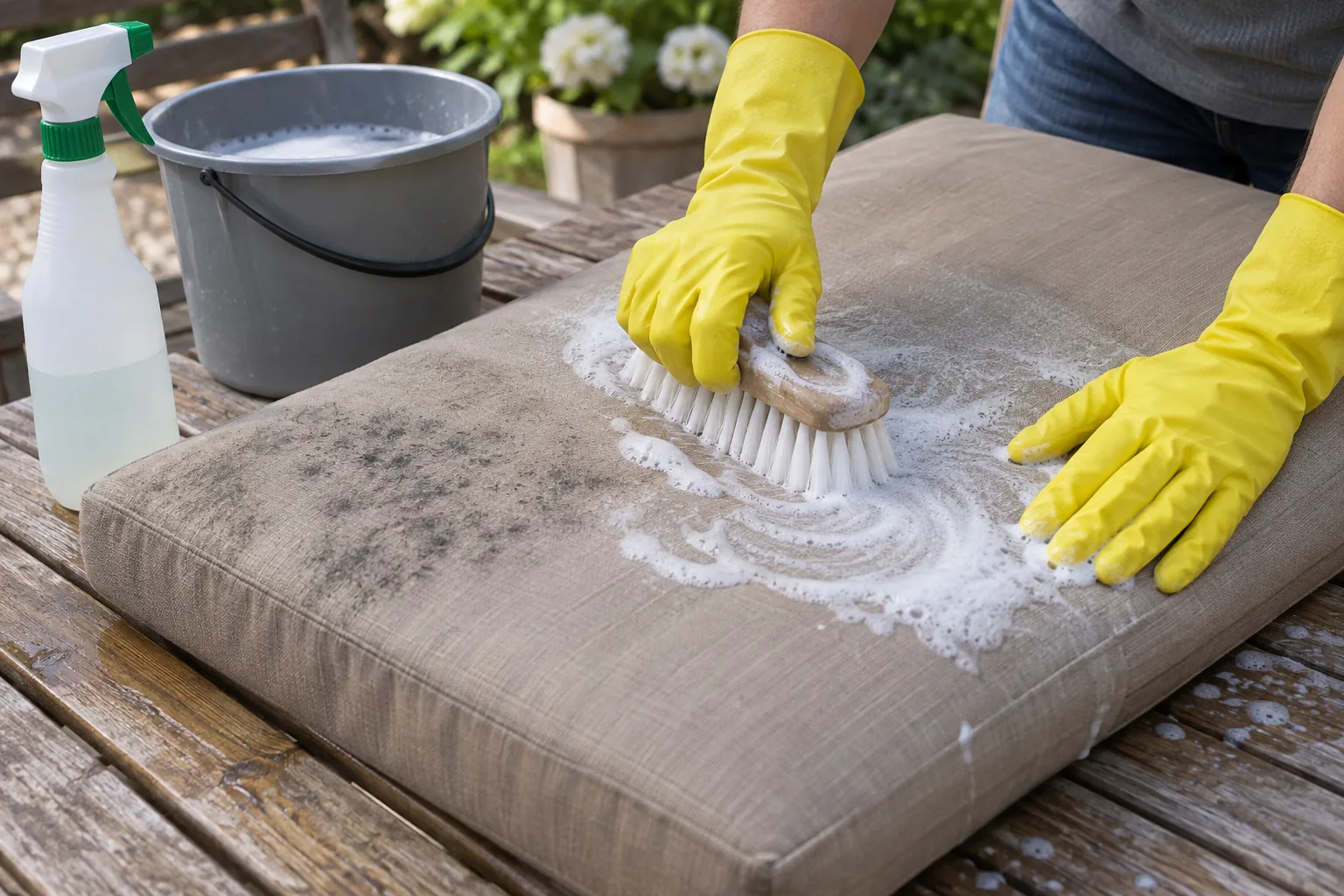
This is the assembled method — the sequence that thread after thread arrives at from different starting points. Work outside, and don’t skip the last step no matter how tired of this you are:
- Dry-brush first, outdoors. Take the cushion outside and brush the spotted areas with a stiff dry brush, angled away from your face. This removes the loose spore layer so you’re not scrubbing it deeper. Never dry-brush indoors — you’re launching spores, and they will land somewhere with moisture.
- Vinegar, then patience. Spray white vinegar (full strength for heavy spots, 1:1 for light ones) until the fabric is wet, not misted. Let it sit 10 to 15 minutes. The wait is the step people skip and then blame the method.
- Scrub with soap and warm water. A tablespoon of dish soap in a bucket of warm water, a soft-bristle brush, and firm short strokes working outward from the stain. Rinse the brush often — you’re carrying spores away, not around.
- Oxygen-bleach soak for stubborn stains. If gray shadows survive the vinegar pass, treat with an oxygen-bleach solution per its label directions, let it sit 15 to 30 minutes, then scrub again briefly. Color-safe on most outdoor fabrics; test a zippered seam allowance first if you want certainty.
- Rinse like you mean it. Hose the whole cushion face down until the water runs clear and no soap remains. Residual soap holds dirt and moisture — both mold’s favorite catering.
- Dry it completely — this is the real last step. Stand the cushion on edge in airflow and sun, rotate it to a fresh face every few hours, and press on the center when you think it’s done: if the foam underneath feels cool or damp, it isn’t. A cushion put away “fabric-dry” with a wet core is a cushion you are pre-treating for its next mold cycle. When in doubt, give it a full second day (the full dry-out method for soaked cores).
Safety notes that matter: wear gloves and don’t make the dry-brushing an indoor activity, as above. If you do use chlorine bleach, ventilate, dilute per the label, and never mix it with vinegar or anything acidic — that combination produces chlorine gas, and no cushion is worth that. Anyone with asthma or mold sensitivity should let someone else handle the brushing, or wear an N95 for it.
Why the Smell Sometimes Survives Everything
Here’s the failure mode that generates the angriest follow-up comments: the stain is gone, the cushion looks new, and two warm days later the musty smell is back. That smell is the tell. It means the colony’s roots reached the foam, the cleaning killed everything reachable in the fabric, and what’s inside is still there — dormant when dry, fragrant when humid. You cannot wash a cushion’s interior; you can only starve it by drying. If a musty return happens twice after proper cleaning and proper drying, the foam is colonized and the cushion is a replacement, whatever the fabric looks like. The full checklist for that verdict is in when to replace outdoor cushions.
When It’s Too Late: Replace Into a System That Doesn’t Repeat the Cycle
When triage says the cushion is done, the worst move is replacing it with the same cushion. The mold wasn’t bad luck — it was a fabric-and-foam combination that held water longer than mold needs to get established, roughly a long weekend of trapped moisture. The replacement question isn’t “which cushion is prettiest” but “which one dries fastest after the next ten-minute rain.”
The people in those threads who never write the mold complaint have usually noticed the same thing resort and marina furniture proves by surviving daily soaking: wipe-clean, non-absorbent faces don’t grow anything, because there’s nothing for spores to root into. The classic version is vinyl, which shrugs off rain perfectly and pays for it by feeling like a vinyl couch — sticky in heat, no breath against your legs in summer.
That trade-off is why we build our outdoor line the way we do: waterproof, wipe-clean Tech Fabric covers over high-density 35–65D foam cores (custom outdoor cushions). After rain, you wipe the face down and stand it on edge; the shell never gives mold the damp fabric holdfast it needs, and the dense core doesn’t sponge water the way standard fill does. Sunbrella-style solution-dyed acrylic — which we cover separately in fabric care for acrylics — is the other mold-resilient route, breathable and cleanable, as long as you respect its drying rules.
Two practical notes if you go the custom route. Measure the seat, not the old cushion — foam collapses and spreads as it dies, so a dying cushion is a lying template; send us the furniture’s dimensions and we cut to them, re-verifying before anything is sewn. And because the cushions are cut to your exact measurements, they fit snug and stay put — no hardware, no fuss, the geometry does the holding. Every set is made to order: 4–7 days of making, 3–6 weeks of shipping, so a spring order beats a July panic (how ordering works).
Keep the Sequel From Loading
Cleaning buys the cushion back; habits keep it. The short version of the prevention system: stand cushions on edge after rain instead of leaving them flat, never put away a “fabric-dry but core-damp” cushion, and store them somewhere ventilated for the off-season rather than sealed in plastic, which is a humidity terrarium. The full moisture-management protocol — furniture placement, spacing, drainage checks — lives in how to prevent mold on outdoor cushions, and it’s a shorter read than another weekend of scrubbing.
FAQs
Does white vinegar kill mold on outdoor cushions?
Yes, for surface colonies on fabric — spray full strength or 1:1, let it sit 10 to 15 minutes, then scrub with soap and water. Vinegar kills the root structure mold grows into the weave, which is why the stain doesn’t bloom back the way it does after a wipe-down with generic cleaner. It does not reach mold inside the foam core.
Can you use bleach on outdoor cushion mold?
Chlorine bleach kills surface mold but bleaches colored fabric and weakens fibers with repeated use — and it can’t touch spores inside seams or foam. Oxygen bleach (sodium percarbonate) is the safer default: color-safe, and it lifts the stain along with the colony. Never mix chlorine bleach with vinegar; the combination releases chlorine gas.
Can moldy foam inside a cushion be saved?
No. Once the foam core shows gray-black staining or keeps a musty smell through two full clean-and-dry cycles, the colony is inside the block where no cleaner reaches. The cover can still be cleaned; the cushion can’t. That’s the triage line for replacement.
How do you get the mildew smell out of patio cushions?
For fabric-held smell: the vinegar-and-soap method above, then a genuinely complete dry — on edge, rotated, until the center of the foam feels dry, not just the faces. If the smell returns with the first humid week after a proper cleaning, it lives in the foam, and no spray fixes that.
What kind of outdoor cushions don’t mold?
Ones that never offer mold damp fabric to root in: wipe-clean waterproof faces (vinyl at resorts, or waterproof Tech Fabric) over dense, fast-recovering cores. Solution-dyed acrylic is the breathable alternative — cleanable and mold-resistant as long as it dries fully after soaking. No sewn cushion is immune; the goal is a system that dries faster than mold establishes, which takes roughly 72 hours of trapped moisture.
Insect-Proofing Patio Cushions: What Works on Bugs, Without Ruining Fabric
Why insects target outdoor cushions (nesting sites, food residue, moisture), the prevention stack — cleaning, storage, covers, placement — what sprays and repellents are fabric-safe, and the honest limits of keeping a patio bug-free.
Pollen Season on the Patio: Protecting Cushions and Furniture
What pollen actually does to outdoor cushions (it’s not the color — it’s the chemistry), the spring protection playbook from covers to placement, cleaning pollen off fabric without grinding it in, and fabric choices for the perpetually dusty patio.
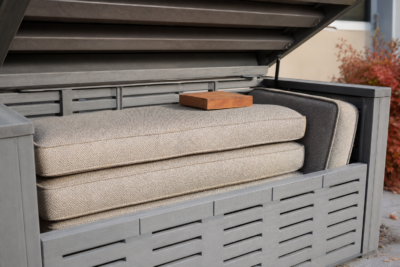
How to Store Outdoor Cushions for Winter: The Complete Method
The right way to winterize outdoor cushions — deep clean, bone-dry, ventilated storage, what never to do — and which climates need indoor storage at all.
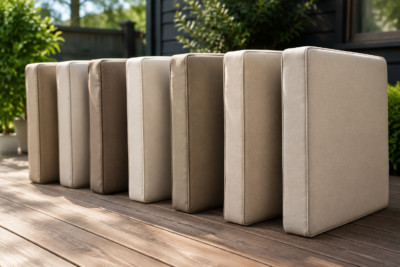
How to Drain Waterlogged Cushions (and When Foam Is Done)
How to rescue a waterlogged outdoor cushion fast — free drain, pressing, air-drying and verifying the core — plus the honest signs that the foam is past saving.
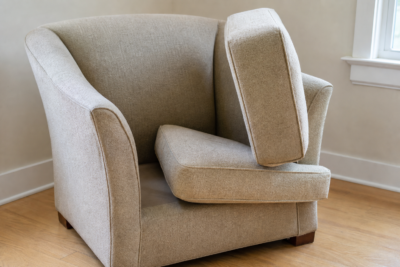
Indoor Cushion Care: Keeping Fabric, Foam and Shape Alive for Years
The indoor counterpart to outdoor cushion maintenance: rotation discipline, sun and humidity management indoors, cleaning by fabric family, foam revival between deep cleans, and the seasonal calendar that keeps inside cushions out of the replacement cycle.
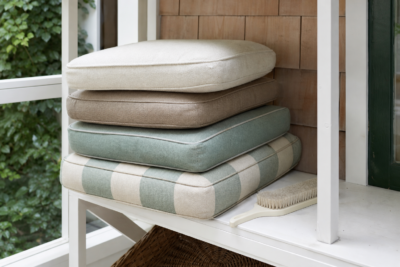
How to Make Outdoor Cushions Last Longer: 12 Habits That Add Years
The maintenance system that extends cushion life — rotation, edge-drying, cleaning cadence, protectant renewal, storage discipline and the specs that matter most.