
The complaint arrives in several forms: wasps nesting under the bench cushion, ants farming the spilled juice on a seat pad, spiders building between stacked cushions, moths or carpet beetles finding something to eat in a stored set. Insects don’t attack cushions out of malice — they respond to what cushions offer: shelter, moisture, food residue, and undisturbed dark. Insect-proofing is therefore less about repellents than about removing what attracts them, with a few targeted barriers where removal isn’t possible.
The general care routines this builds on: outdoor cushion maintenance tips for the cleaning cadence, and how to store outdoor cushions for winter for the storage half of the problem.
Why Insects Find Your Cushions
Shelter. The gap under a cushion, the seam between a cushion and a chair back, the space inside a stacked pile — all of it is prime real estate for wasps (paper nests in quiet voids), spiders (anchored webs between cushion and frame), ants (colonies under anything that holds warmth and moisture), and solitary bees.
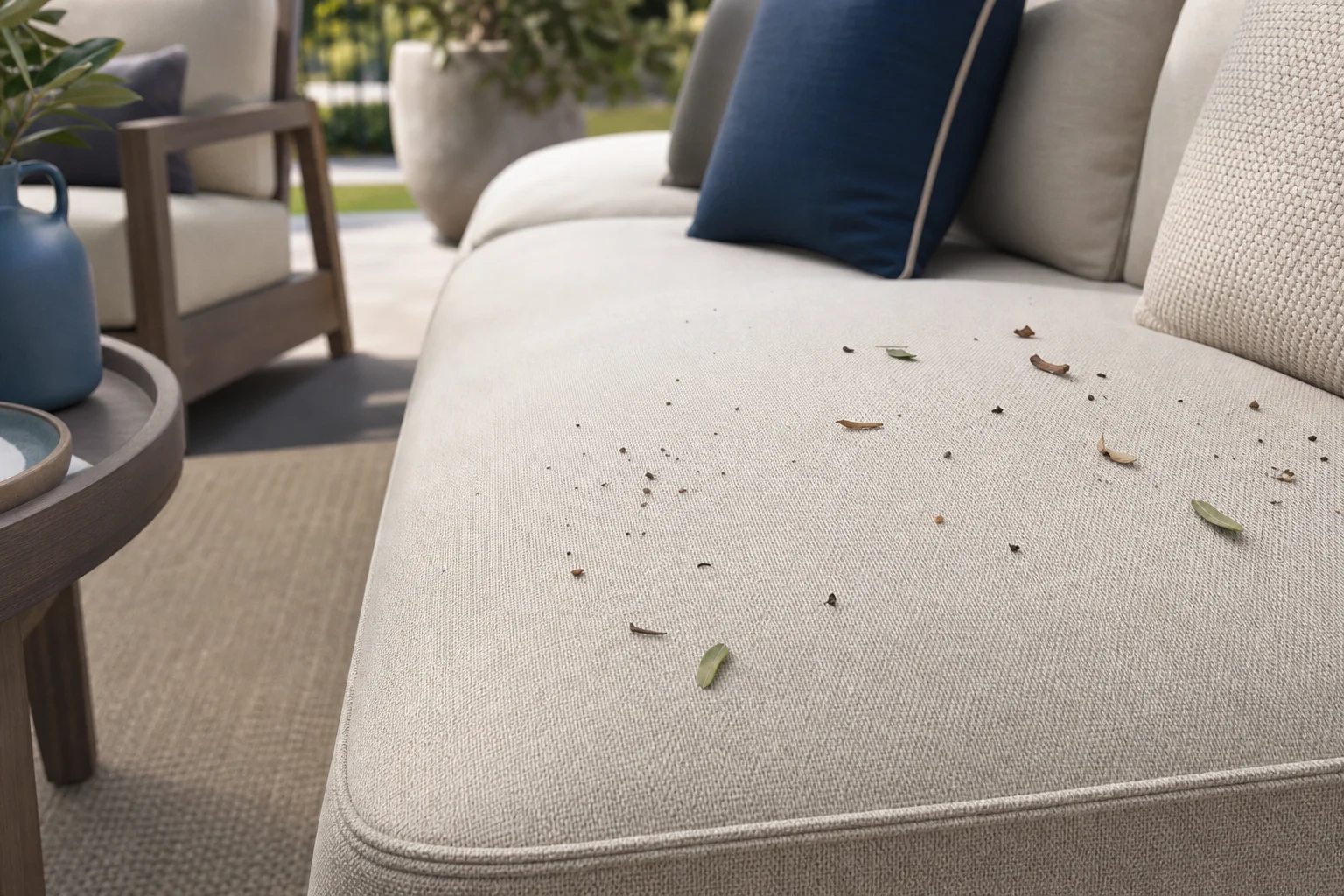
Food. Spilled drinks, crumbs, pollen, and the organic film that builds on outdoor fabric are food for ants, flies and the microfauna they hunt. A cushion that’s never cleaned is a buffet; the insects you see are often harvesting something smaller than what you’d notice.
Moisture. Wet foam and damp fabric support the molds and fungi that several insect species (and the mites they attract) feed on. The moisture-management routine in prevent mold on outdoor cushions is, functionally, half an insect program.
Fabric itself, sometimes. Indoors and in storage, natural fibers (wool, feather, down, cotton blends) feed clothes moths and carpet beetles. Outdoor synthetics (polyester, acrylic, olefin) are not food — but stored cushions that carried food residue or organic grime can still attract scavengers into the storage bag, where they’ll process what they find and leave damage on whatever’s adjacent.
The Prevention Stack
1. Cleanliness (the foundation)
The single most effective insect control on a patio is a cushion that offers nothing to eat:
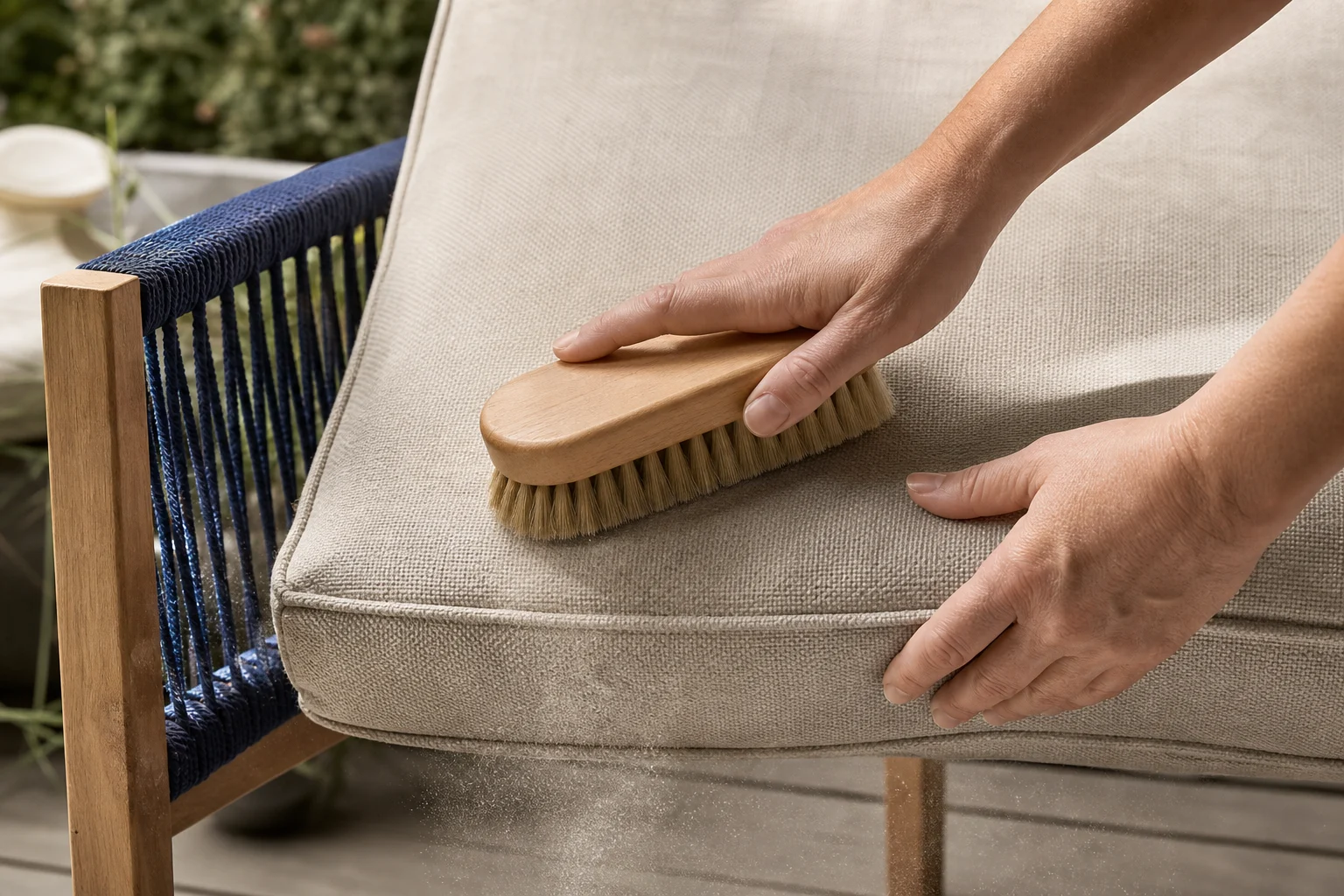
- – Monthly cleaning of covers per how to wash cushion covers — detergent removes the organic film, rinse removes the detergent residue that can itself attract.
- – Immediate spill response (the blot-first protocol in how to clean outdoor cushions) — yesterday’s juice is this weekend’s ant column.
- – Pollen management in spring — the feeding logic is in pollen protection for patios; pollen feeds everything down the chain.
2. Dry discipline
Stand cushions on edge after rain, never store them damp, and air the stack periodically through the season. Dry cushions lose their appeal to moisture-dependent species and stop supporting the mold layer that feeds others.
3. Storage that seals
The storage season is when the worst insect damage happens — moths and beetles work quietly for months in a dark bag. The protocol:
- – Clean and bone-dry before storage (non-negotiable; food residue in a sealed bag is a colony starter kit).
- – Sealed containers — plastic bins with gasket lids beat open shelves and beat fabric bags for exclusion. If using bags, seal them fully.
- – Cedar and lavender are traditional moth deterrents with real-but-modest effect; they work as a supplement to sealing, not a replacement. Refresh cedar annually (its oils fade).
- – The full storage routine is how to store outdoor cushions for winter.
4. Placement and furniture hygiene
- – Sweep and rinse under and behind furniture — the reservoir of crumbs and debris that feeds ground-level insects lives there, and ants find your cushions from the ground up.
- – Keep seating away from active nests and colonies: if wasps are nesting in the eaves above your bench, cushion-level measures are theater. Deal with the source (or professionally, for stinging insects — this guide covers cushions, not nest removal).
- – Check the voids weekly in wasp season: the gap under a seat cushion takes a queen wasp about two days to claim. Lifting cushions when you water the plants catches nests at the three-cell stage instead of the three-hundred.
5. Barriers and treatments (what’s fabric-safe)
- – Perimeter deterrents, not fabric sprays. For ants, a barrier treatment applied to the patio perimeter or the furniture legs (dusts or granules labeled for the purpose) intercepts the column before it reaches the cushion. This is the efficient geometry: treat the approach, not the target.
- – DEET and picaridin are skin repellents — they can stain and degrade some fabrics, and they have no residual value on cushions. Don’t.
- – Essential oil sprays (citronella, eucalyptus, peppermint) have mild spatial repellency for people-space use; they can also mark light fabrics with oil spots. If you use them, spray the air and furniture frames, not the cushions.
- – Permethrin fabric treatments exist for outdoor gear and are effective against several insects — but they’re an added-chemistry solution to a problem that cleaning and storage hygiene solve without chemistry. Reserve them for specific, persistent problems rather than as a default coat on seating your family and pets use.
6. What to do when you find the nest
Paper wasps under a bench cushion at three cells: put on gloves in the cool of evening, lift the cushion away from the seating area, and knock the nest off (they don’t defend incipient nests aggressively). Established nests, or anything with more than a dozen workers: stop, and either wait for professional treatment or use the season’s end (they abandon in fall). Spiders between cushions: they’re controlling the other insects; relocate the web with a stick if it offends. Ants farming a spill: remove the spill (cleaning), and the ants leave on their own schedule — then treat the approach path.
Fabric Choices That Help
None of this is a fabric-tier decision — insects don’t discriminate between acrylic and polyester the way they do between wool and everything else. The fabric choices that help are the maintenance-adjacent ones: tight weaves rinse cleaner than loose textures (less retained food film), and solution-dyed acrylic’s bleach-cleanability (the construction) means even the aftermath of an insect event — the droppings, the mildew from a nest’s moisture — is fully treatable. The tier logic for exposure generally is the best outdoor cushion fabrics.
Two Furniture-Level Upgrades That Change the Game
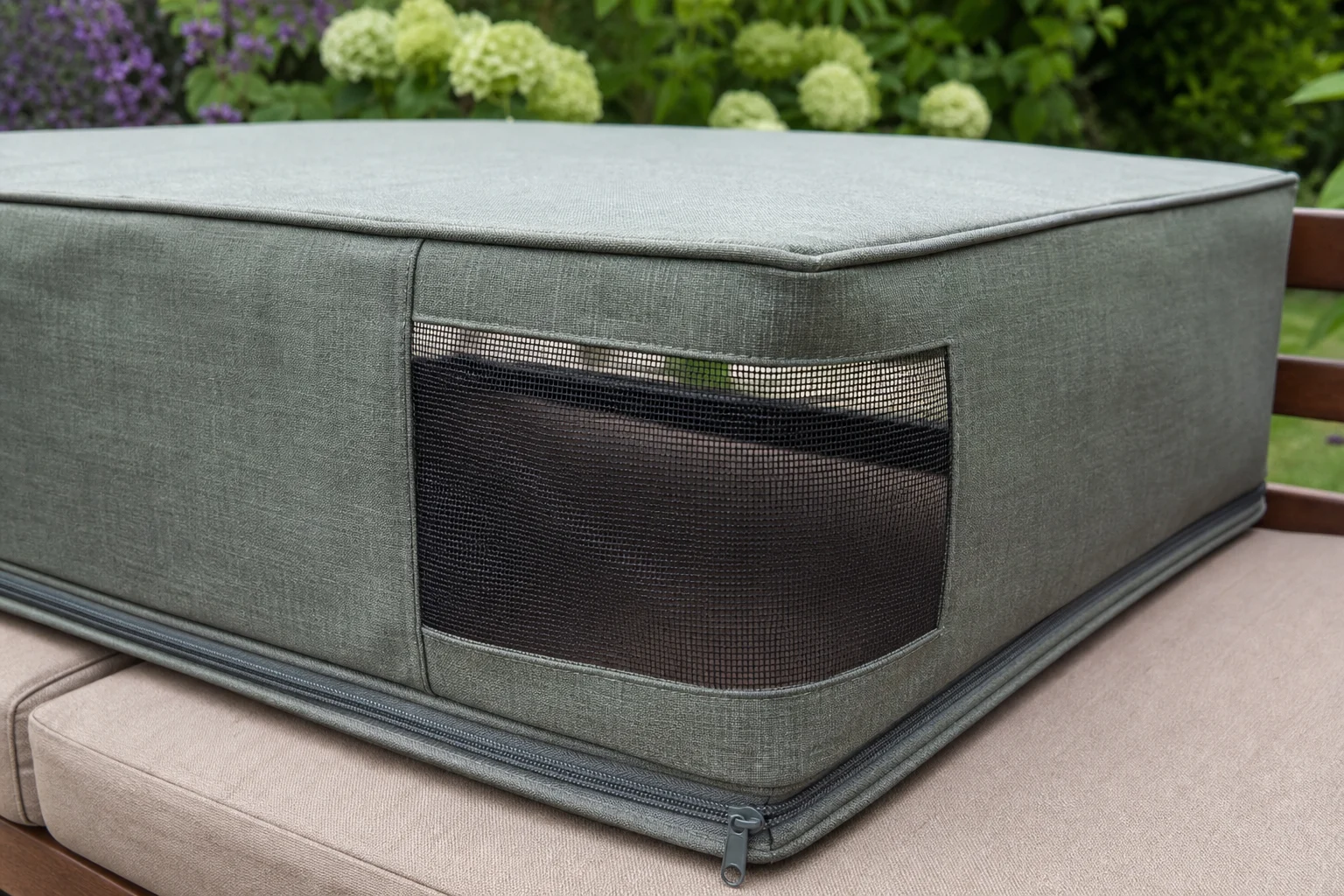
If insect pressure is an annual event at your address, two changes at the furniture level outperform every season of cushion-level defense. Storage benches with sealed lids — teak or resin boxes at the seating group — turn the post-rain and overnight periods (when most nesting happens) into a ten-second put-away instead of a pile of exposed voids. A storage bench does triple duty: insect exclusion, weather protection, and it solves half the blowing-away problem in the same move. Slatted or mesh furniture frames — open construction that airflow moves through — offer insects no enclosed voids to claim in the first place; the same construction dries faster after rain, which removes the moisture half of the attraction. Neither change replaces the hygiene routine; both remove the habitat the routine was defending. When the next furniture purchase is on the table, buy the version of the chair that doesn’t have a sealed cavity under the seat, and put a lidded box within arm’s reach of it.
FAQs
How do I keep bugs out of my outdoor cushions?
Remove what they want: clean covers monthly (food film), keep everything dry, store sealed and clean, and lift cushions weekly in wasp season to catch nests early. Repellents are the last mile; hygiene is the road.
Why are wasps nesting under my patio cushions?
Because the void under a cushion is sheltered, warm, and undisturbed — perfect wasp real estate. Weekly lift-and-check in spring catches nests at the harmless stage; standing cushions on edge or storing them during the founding weeks removes the real estate entirely.
Can I spray insect repellent on cushions?
Not fabric repellents at people-contact surfaces, and not skin repellents (DEET stains). Treat the geometry instead: perimeter and furniture-leg barriers for ants, spatial sprays in the air for mosquitoes, cleaning for everything that’s actually feeding on the fabric.
Do moths eat outdoor cushions?
Not the synthetics — outdoor polyester, acrylic and olefin aren’t food. Moths and carpet beetles damage stored natural-fiber cushions (wool, feather-down blends) and scavenge food residue in improperly stored sets. Clean, dry, sealed storage solves it: how to store outdoor cushions for winter.
There’s mildew where the ants were. Now what?
Clean the mildew per the standard protocol (the treatment table is in how to clean outdoor cushions), then fix the moisture that fed both problems — insects and mildew attend the same damp conditions. The prevention chain runs through mold prevention.
Next Steps
- Put the two habits on the calendar: monthly cover washes (the organic film) and weekly cushion lifts through wasp season (the voids).
- Audit your storage plan before this season’s put-away — sealed, clean, dry is the whole insect program for the off-season.
- If this is the year you replace rather than defend: custom outdoor cushions in a tight-weave solution-dyed wipe-clean family makes the hygiene half of insect-proofing as easy as it gets.
Pollen Season on the Patio: Protecting Cushions and Furniture
What pollen actually does to outdoor cushions (it’s not the color — it’s the chemistry), the spring protection playbook from covers to placement, cleaning pollen off fabric without grinding it in, and fabric choices for the perpetually dusty patio.
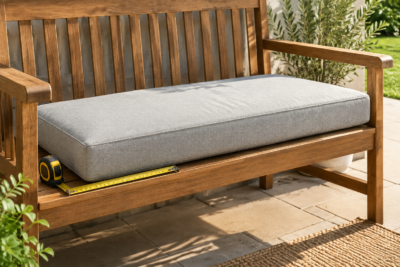
How to Clean Mold Off Outdoor Cushions (and When It’s Too Late)
How to tell salvageable mold from a dead cushion, the vinegar-and-oxygen-bleach method that works, and what to buy so it never comes back.
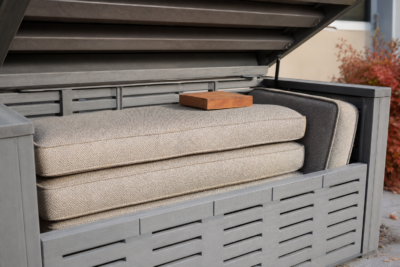
How to Store Outdoor Cushions for Winter: The Complete Method
The right way to winterize outdoor cushions — deep clean, bone-dry, ventilated storage, what never to do — and which climates need indoor storage at all.
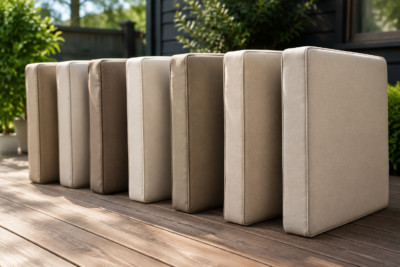
How to Drain Waterlogged Cushions (and When Foam Is Done)
How to rescue a waterlogged outdoor cushion fast — free drain, pressing, air-drying and verifying the core — plus the honest signs that the foam is past saving.
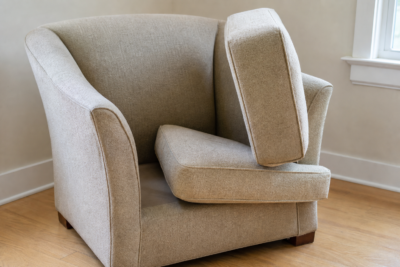
Indoor Cushion Care: Keeping Fabric, Foam and Shape Alive for Years
The indoor counterpart to outdoor cushion maintenance: rotation discipline, sun and humidity management indoors, cleaning by fabric family, foam revival between deep cleans, and the seasonal calendar that keeps inside cushions out of the replacement cycle.
How to Make Outdoor Cushions Last Longer: 12 Habits That Add Years
The maintenance system that extends cushion life — rotation, edge-drying, cleaning cadence, protectant renewal, storage discipline and the specs that matter most.