
The patio lounge chair is outdoor furniture built for staying: deeper than a dining chair, reclined by design, and occupied for hours at a stretch rather than the length of a meal. Its cushion is correspondingly the most demanding outdoor pad short of a daybed — thick enough for real lounging, shaped to frames that fold and recline, tough enough for the full sun the chair deliberately faces. This guide covers the geometry, the measuring, and the duty spec for lounge seating. The related guides: patio chair cushions for the category landscape, chaise lounge cushion measurements for the flat lounger, deep seat cushions for the deep-seating family.
Lounge Versus Dining: Different Products
Patio seating splits into two duty classes, and the cushion spec follows the split:
- – Dining chairs: upright, 90-degree seats, occupied 30–60 minutes. Thin firm pads (2–3 inches), attachment for the sit-stand cycle, fabric for meals. Covered in kitchen chair cushions logic applied outdoors.
- – Lounge chairs: reclined 100–130 degrees, deep seats, occupied for hours. Thick pads (4–6 inches), multi-position geometry, fabric for sun and long static sits. This guide.
The mistake the market makes constantly is selling dining-spec pads for lounge furniture — the thin pad that makes a deep recliner feel like a plank. Lounge chairs need lounge cushions, and the difference is measurable in comfort per hour.
The Frames: Four Lounge Geometries
Adjustable sling loungers. The zero-gravity-adjacent frame with a fabric sling and a ratcheting back. The pad (or the sling itself) follows the frame’s length; the measuring logic is in zero gravity chair cushions.
Deep-seat lounge chairs. The outdoor wing of deep seating: thick frames, seat depths of 22–28 inches, generous backs. The largest cushions in patio furniture after the daybed, measured and specified like the indoor family in deep seat cushions, with the outdoor fabric and fill spec swapped in.
Club and conversation loungers. The lower, wider reading chairs of conversation sets — covered from the set perspective in conversation set guide.
Rocking and gliding loungers. Outdoor gliders and patio rocking chairs — the attachment questions of glider rocker cushions and rocking chair cushions, with the outdoor fabric stack. Past saving? Replacement rocking chair cushions rebuilt to your measurements bring the rocker back.
Measuring: The Multi-Position Reality
Lounge frames move — backs recline, footrests extend — and the pads must measure to the geometry, not just the footprint:
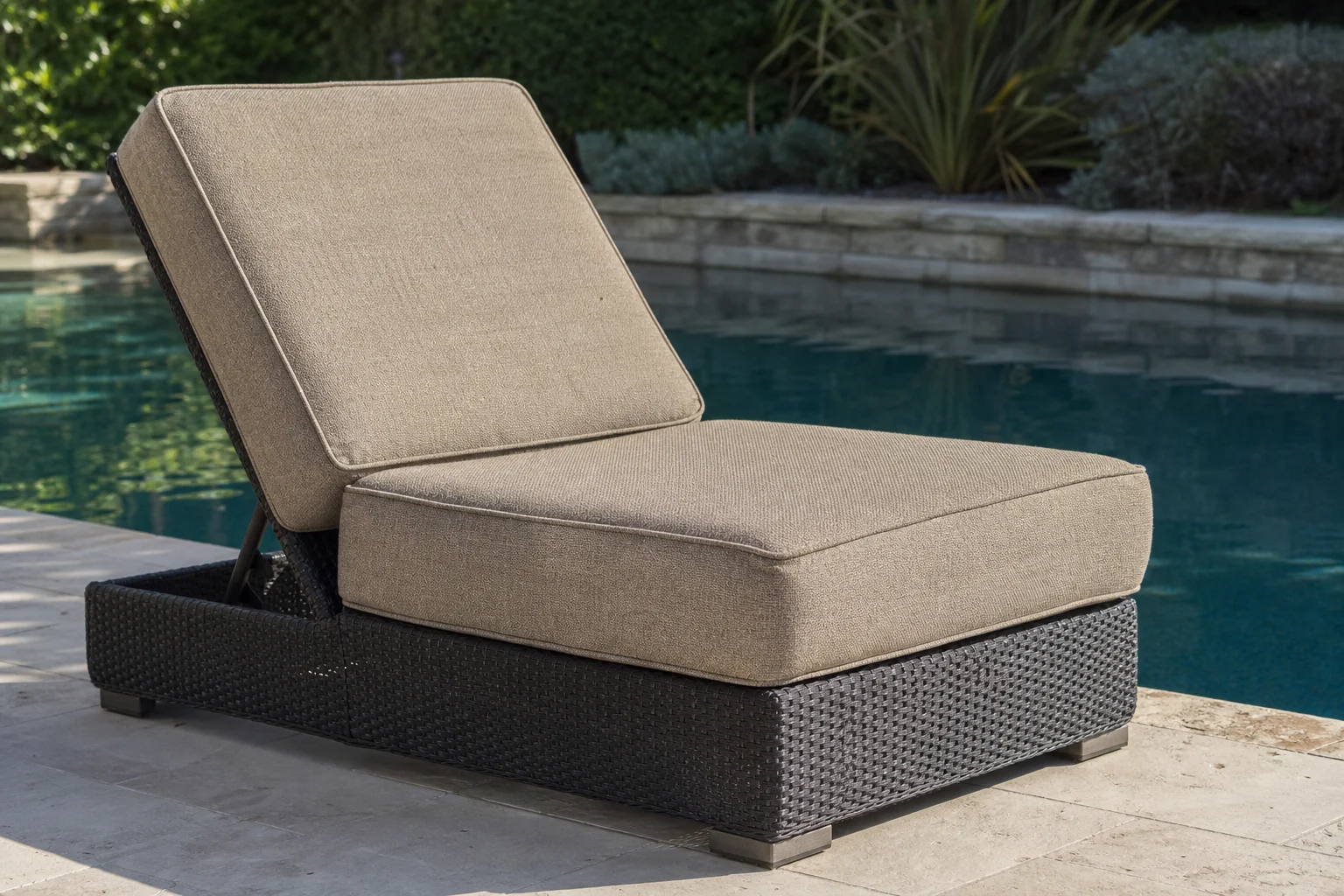
- – Seat: width between the arms, depth front to back, at the deck. Deep seats run 22–28 inches of depth; measure the deck, not the old pad, per the frame-first rule in how to measure outdoor cushions.
- – Back: width, height along the recline, and thickness. Measure the back along its actual reclined length (not the vertical projection) — the pad covers the surface, and the surface is angled. Adjustable backs add the position check: measure with the back in the primary position and confirm the pad’s attachment points work at the extremes.
- – Thickness: 4–6 inches. The lounging band: thin pads bottom out on the frame under an hour of reading; above 6 inches the pad gets sail-like and unwieldy. The thickness-depth logic from deep seat cushions transfers.
- – The hinge lines on adjustable frames. Pads live between hinge points or flex across them deliberately — never accidentally. Note each hinge position on the sketch (the same hinge discipline as futons, per futon cushion replacement, with the build side in custom futon cushions).
- – Photograph every adjustable position — upright, mid, full recline — with and without the old pads. The photos catch what numbers miss on moving frames.
Fill: Hours of Static Sun-Sitting
Lounge duty is long static occupation — the outdoor equivalent of the reading chair, with sun added:
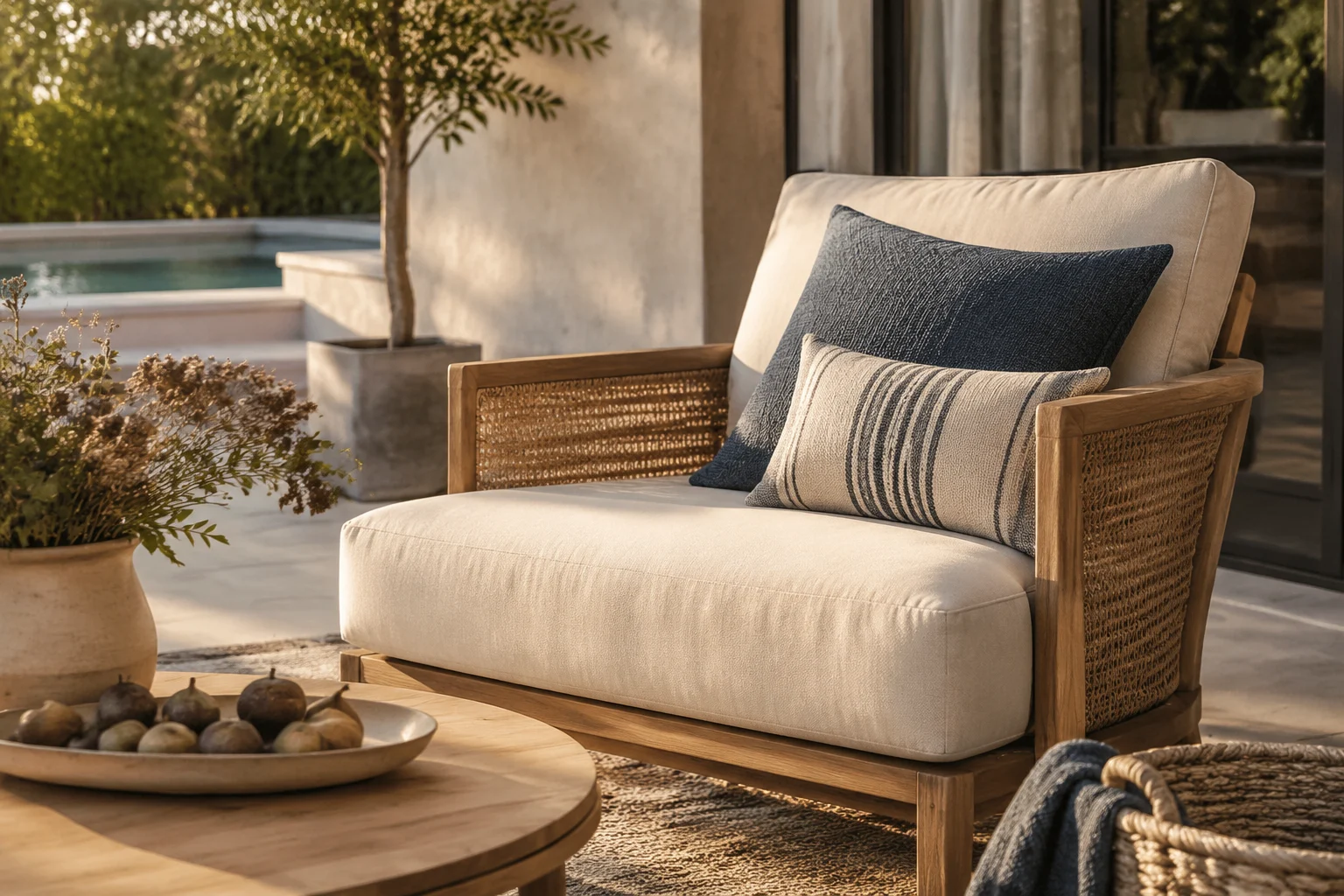
- – 50D–60D cores at 4–6 inches are the working build. Density holds the surface for years of hours-long sits (how to choose foam density); the deep-seat sizing logic is in high density foam for couches, which is the same product conversation.
- – Memory or gel comfort tops are the lounge upgrade that earns out — long static sits are the memory layer’s home turf, per memory foam topped cushions and gel foam cushions (with the honest caveat that gel’s cooling is a first-half-hour phenomenon, not an all-afternoon one).
- – Quick-dry foam for uncovered loungers. Open-cell fill that drains and dries — the case in quick dry foam for outdoor cushions — because a lounge pad is thick, slow to dry, and soaked by every storm that catches it.
- – Fiber-only lounge pads flatten into the sitter’s silhouette within a season of real use; the fill landscape’s honest ranking is cushion filling types.
Fabric: The Full-Sun, Full-Hours Spec
The lounge chair points itself at the sun on purpose; the fabric lives there:
- – Solution-dyed acrylic (Sunbrella family) is the grade that survives years of that exposure with color intact and cleans from the sunscreen, drinks, and food of lounging life. The comparison and the honest cost-per-year logic: Sunbrella vs regular outdoor fabric, is Sunbrella worth it. On a large lounge set — multiple thick pads — the durable grade is also the financially rational one; replacing a cheap set every second summer costs more by year four.
- – Color and heat. Dark fabrics read hot at 2 p.m. in July; the color-sun-heat trade is mapped in choosing cushion colors. The lounge-specific note: the difference between a mid-tone and a black pad in full sun is the difference between sitting at 3 p.m. and not.
- – Cleaning on the outdoor routine. How to clean outdoor cushions by fabric family, applied to zippered covers, spot-cleaned between washes — the routine the lounge set needs most, since lounging generates the spills.
Attachment: Thick Pads in the Wind
Lounge pads are large, thick, and therefore wind-loaded:
- Ties at every structural bar — seat deck, back rails, footrest frames. Position per the actual frame bars, photographed during measuring.
- Non-slip undersides keep the thick pads square on the deck between positive anchors.
- The full wind playbook — including when to just bring the pads in — is how to keep cushions from blowing away; the storm-aftermath routine is how to drain waterlogged cushions.
Replacing the Whole Set
Lounge sets are usually bought as conversations sets or lounge groups — matching chairs, a sofa or two, a coffee table — and the cushions age as a set even when individual pieces die at different rates. The renewal economics: replace the set’s pads as a set (one order, one dye lot, matched specs), and the furniture reads new; replace pieces piecemeal and the set drifts — in loft, in color, in everything the eye uses to see “matching.” The set-level decision logic is the same as sectional cushion replacement: the pieces are separate order lines, but the order is one. If your lounge group is a branded set, the measured pattern may already exist — the Hampton Bay Verrado five-piece group and the Fenton lounge trio are charted piece by piece on the replacement hub.
The Reading-Lounger Upgrade: Comfort Layers in Practice
The difference between a good lounge cushion and a great one is usually what happens in the second hour — and that is the comfort layer’s territory. In practice, the layered build earns its cost on exactly the furniture where sessions run long: the lounger that hosts the Saturday afternoon, the deep-seat chair that becomes the work-from-patio office in summer. The working configurations, from hundreds of order-desk conversations:
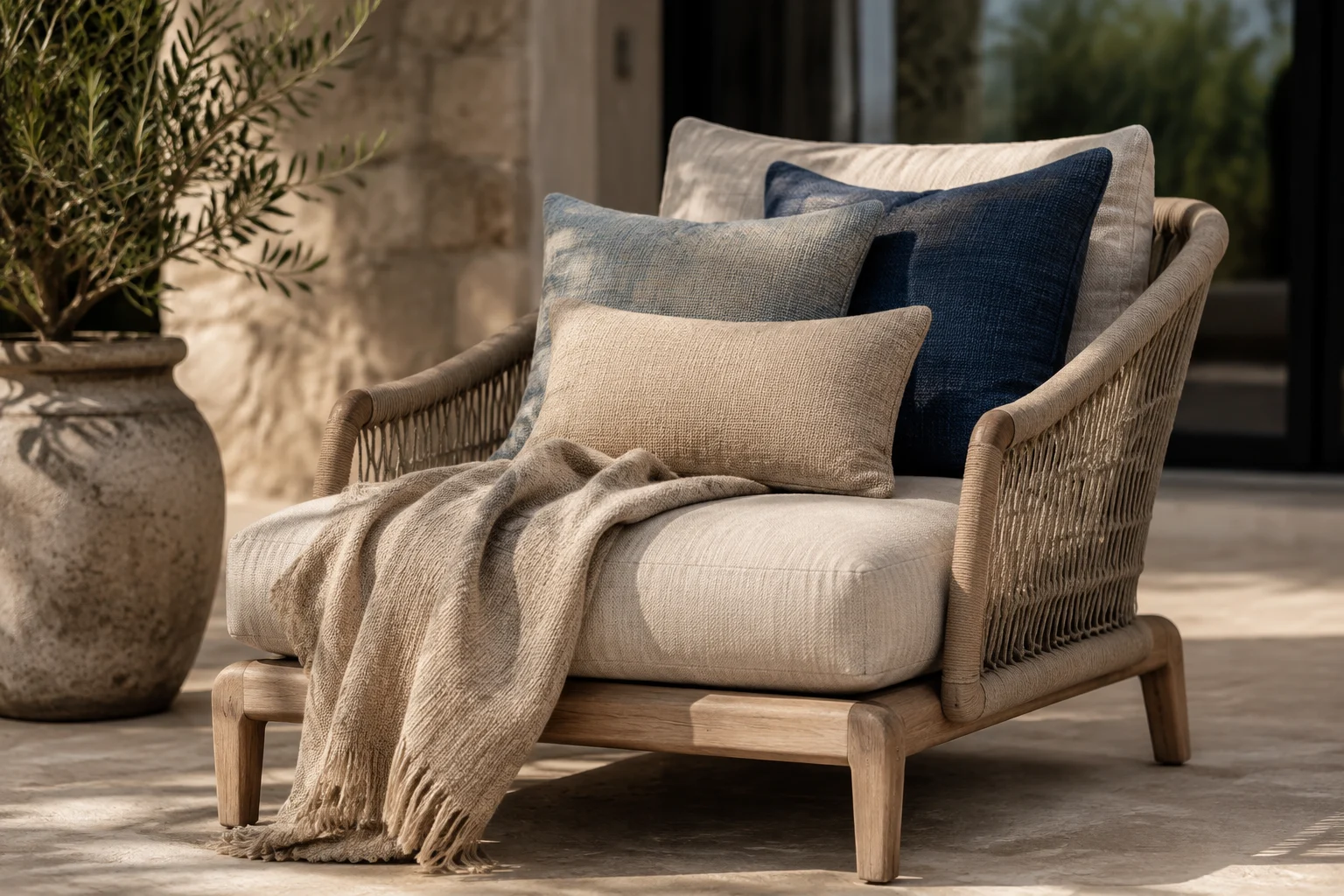
- – The standard great build: a 60D core at 4–5 inches with a 1-inch memory top — support that never bottoms, surface that never pressures. This is the configuration that converts “the patio chair” into “the chair I disappear into,” and the memory layer’s honest scope (long static sits, pressure points at tailbone and shoulder) is mapped in memory foam topped cushions.
- – The hot-climate variant: swap the memory top for gel-infused memory — cooler first touch for the sun-exposed lounger, with the honest physics (the cooling is real but finite) from gel foam cushions.
- – The budget-honest variant: a plain 50D core, no layer — firmer, simpler, and entirely serviceable for households whose lounge sessions run in the 30–60 minute band. The layer is for hours, not minutes.
The mistake to avoid is the all-plush build: thick soft foam without a dense base feels showroom-perfect and compresses into a hollow by midsummer, which is the sagging-cushion story retold outdoors (how to fix sagging couch cushions covers the indoor version and its remedies).
FAQs
How thick should patio lounge chair cushions be?
4–6 inches — thin pads bottom out under hours of lounging, and beyond 6 the pad becomes a sail. Lounge is its own duty class, not a thicker dining pad.
How do I measure a lounge chair with an adjustable back?
Measure the back along its reclined length in the primary position, confirm attachment points at the extremes, and note hinge lines so pads flex deliberately, never accidentally. The frame-first routine: how to measure outdoor cushions.
What foam for outdoor lounge chairs?
50D–60D cores, quick-dry fill if the lounger lives uncovered, optional memory or gel top for long static sits. The density logic: how to choose foam density.
Do gel-topped lounge cushions stay cool?
For the first half hour — then they equalize like any foam. The honest physics is in gel foam cushions; the real heat fix is fabric color, per choosing cushion colors.
Can I replace just the seat pads on my lounge set?
Yes — seats, backs and footrests are separate order lines — but renew the set as one order when two or more pieces are tired. Piecemeal replacement drifts; one-lot orders match. (sectional cushion replacement covers the set logic.)
Is a deep-seat lounge cushion just a big chair pad?
No — deep seats are 22–28 inches of depth with their own thickness and density logic. The family guide: deep seat cushions.
Next Steps
- Measure each piece frame-first — seat decks, reclined back lengths, hinge lines — and photograph every adjustable position before the pads come off.
- Set the duty: 50D–60D cores, waterproof fabric by exposure, comfort top for the long-session loungers, in a heat-aware color.
- Order the set at custom deep seat cushions — the deep-seating flow takes multi-piece lounge sets: pricing from a $45 make-base plus per-square-foot foam and fabric rates, one dye lot across every piece, 4–7 business days of crafting and 3–6 weeks delivery, and every dimension confirmed against your photos before cutting.
Patio Chair Cushions: The Complete Buying Guide (Outdoor Too)
Everything that decides a patio or outdoor chair cushion — sizes, thickness, ties, fabric tiers and where each buying route wins. Custom from $45 when grids fail.
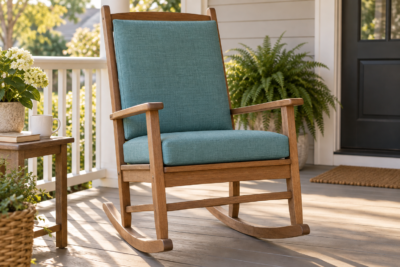
Outdoor Rocking Chair Cushions: The Weatherproof Guide to Sizes and Fabrics
An indoor rocking cushion dies fast on a porch. The sun bleaches the print in a single season, the foam
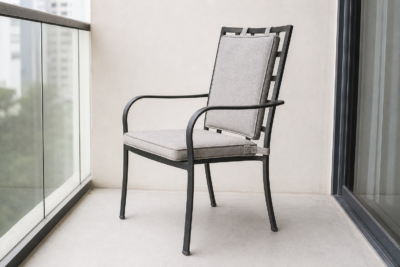
Cushions for Metal Patio Chairs: Frame Types, Grip and the Heat Question
Cushions for metal patio chairs guide: wrought iron, aluminum and steel frames and what each means for pads, sliding on slick metal, heat absorption in sun, sizing across mixed metal sets, and the outdoor duty spec.
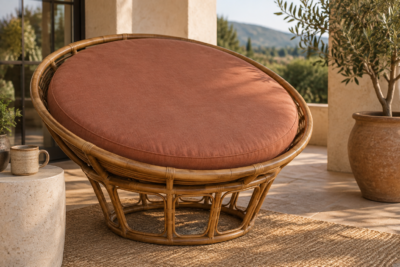
Outdoor Papasan Cushions: Weathering the Big Round
Outdoor papasan cushions fail in a known order — fabric, fill, bowl. The overhang-vs-inset diameter decision, fiber vs foam outdoors, and the honest line between a flat round and the concave original.
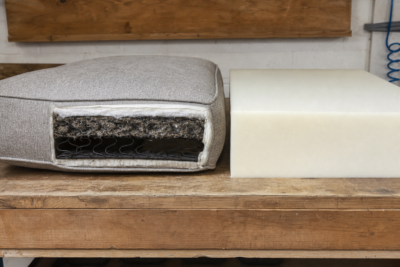
High Density Foam Couch Guide: What Density Actually Means
What high density foam actually means for a couch — the ×10 density convention, density vs firmness (ILD), the 35D–65D grades ranked by use, how each grade fails, and what density costs per square foot.
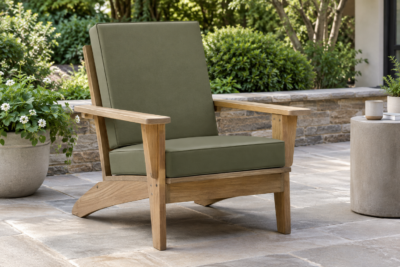
Adirondack Chair Cushions: Sizes, Selection & Replacement Guide
Adirondack cushion sizes decoded: 20×20 seats, tall-back options, tie patterns, best fabrics — plus fitting odd or vintage chairs.