
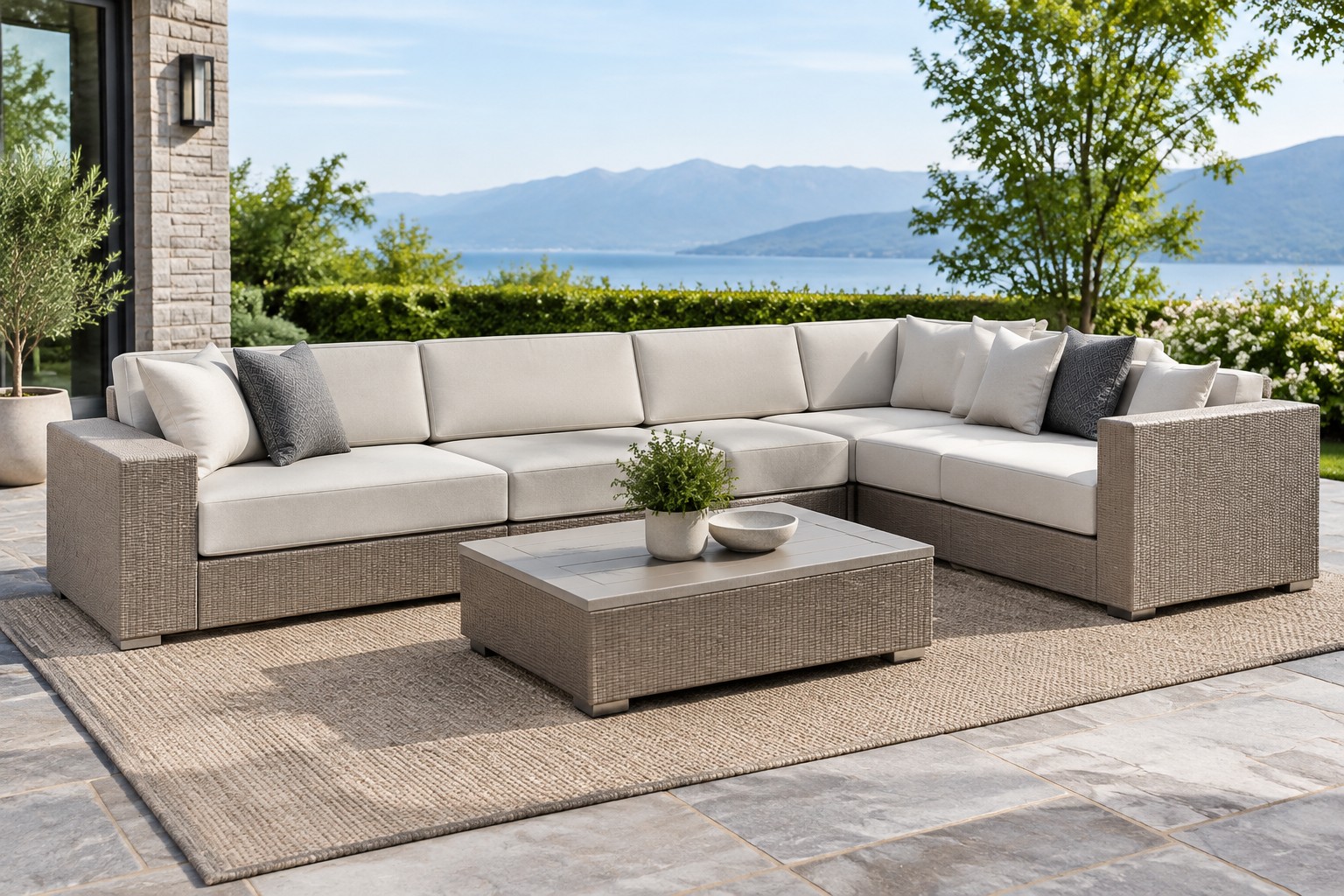
An L-shaped sectional is not one piece of furniture. It is five to nine cushions wearing one frame — and they do not age together. The pattern lands on our order desk weekly: a household sits on the same two seat blocks every evening while the corner wedge gets used a few times a year, and three winters in, two blocks are dead while the rest of the sofa is fine. The frame is solid, the deck is flat, and the dead blocks are the whole problem. Buying a new sectional to solve a two-cushion problem is the most expensive version of the fix; replacing the blocks that died is the cheapest, and the gap between them is the entire subject of this guide. It covers the decision (blocks vs. whole sofa), the cost math per block and per set, the honest signals for replace-versus-buy-new, and how to measure an L-shaped sectional one block at a time.
New Cushions or a New Sectional? The 30-Second Decision
If the frame sits solid, the deck under the cushions is flat, and only one to three blocks are dead — replace the blocks. Buy a new sectional only when the frame itself wobbles or squeaks, the deck sags, or more than half the cushions plus the upholstery have all expired together. The test order matters: cushions first, deck second, frame last, because each layer kills the layer above it. A sagging deck eats new seat blocks the same way it ate the old ones; a loose frame turns any cushion budget into money spent on the wrong layer. Three checks, half a minute:
- Press the center of each seat block, hard, for five seconds. Immediate spring-back is alive; a lingering dish is a dead core, and dead cores are replaceable by the block.
- Take the cushions off and look at the deck. Flat and firm carries new blocks properly; a deck that sags or slats that crack under hand pressure is a frame-layer problem, diagnosed in how to fix sagging couch cushions.
- Rock the frame. No wobble at the elbow joint, no squeaks, no legs off the floor — the structure passes, and the sofa is worth re-cushioning.
All three pass and the damage sits in a few blocks: replace the blocks. Deck or frame fails: read the sagging guide first — some decks are a repair, not a funeral.
The Cost Math: Block by Block vs. a New L-Shaped Sofa
A new L-shaped sectional runs roughly $800–$2,500 across the retail range; replacing the two or three blocks that actually died runs about $320–$500 — near a third of a mid-range new sofa, and a smaller fraction the further up the range you compare. Full re-cushioning sits between: about $630–$840 for the seat set, roughly $1,000–$1,800 to rebuild every block including backs, by block count. Every number below is priced by the same formula — a $45 make-base per cushion plus area at per-sqft foam and fabric rates — laid out openly in custom cushion pricing explained.
Worked examples at 50-density foam: a 24×24×5-inch seat block prices near $168, a 26×26×5 corner wedge near $190, and a 60×24×5 chaise block near $353 — sectionals are mostly rectangles and wedges, which keeps them at the simple end of custom work. Per-block pricing starts at custom sectional cushions.
When Replacement Wins — and When a New Sofa Is the Honest Answer
Replacement wins when the frame and deck pass and the failure is concentrated in identifiable blocks — the daily-driver seats, one sun-rotted window-side piece, a chaise that took a decade of naps. A new sofa is the honest answer when the structure itself is failing or the whole upholstery has aged out at once. The signals, separated by layer:
- Replace the blocks when: the press test kills a few blocks and spares the rest; the covers on the dead blocks are split, stained or sun-rotted while the frame sits solid; you want a density upgrade on the seats you actually use; or the room needs a new fabric and the sofa otherwise works.
- Buy new when: the elbow joint wobbles or the frame squeaks under normal sitting; the deck sags and re-tightening does not lift it; more than half the blocks are dead and the surviving covers are worn too; or the sectional’s shape no longer fits the room — a re-cushion changes everything except the footprint.
One boundary case worth naming: a sectional whose series has been discontinued. The brand’s official replacement channel closes when the line does — which matters less than it sounds, because cushions cut to measurements never had a model number in the first place. The same logic, with the brand names attached, is in how discontinued series get re-cushioned.
The Sectional Advantage: Replace Only the Blocks That Died
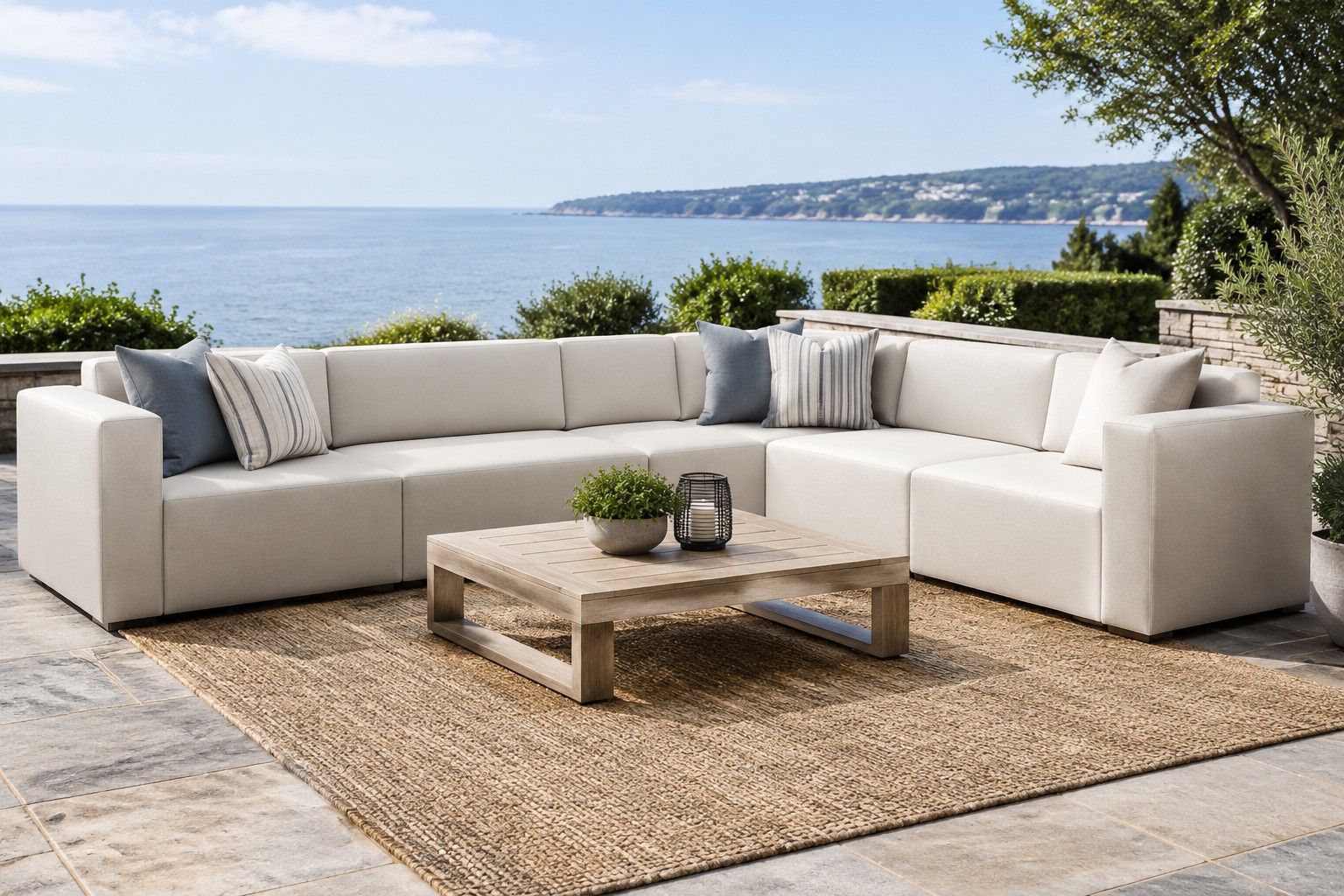
A sectional is the one sofa type where partial replacement is structurally clean: each block is its own cushion with its own three dimensions, so the two dead seats can be rebuilt at 50–60-density while the sound corner and chaise stay untouched — the money goes exactly where the sitting happens. That is the modular logic of an L-shaped set, and it pays three ways:
- You stop paying for what still works. Two new seat blocks at about $320 against $800–$2,500 for a new sofa is arithmetic, not salesmanship.
- You can upgrade the blocks that carry the load. Old seat cores were likely low-density by today’s standards; daily-use seating at 45–60D holds its loft for years where 30-class foam packed flat — the density reasoning is in cushion filling types. The corner and chaise blocks take the most concentrated lounging, which makes them the wrong blocks to economize on.
- One order keeps the set one set. All blocks cut in a single run share density, loft and dye lot. Piecemeal replacement across years builds a sectional of slightly different blues and lofts — if you must phase the work, phase it in one fabric and say so on the order.
Two ordering rules from the sewing floor that save sectionals specifically: replace in symmetry pairs — one dead seat on a three-seat run is really two, because a new block beside an old one shows the loft difference, and the survivor becomes the spare; and send the whole block list even when ordering half — a workshop that knows the full set can check your numbers against each other, and odd numbers get a phone call, not a guess. Both rules run inside custom sectional cushions.
How to Measure Sectional Cushions, Block by Block
Name every block first — seats, corner wedge, chaise end, backs, ottoman — then measure each one seam to seam to the nearest quarter inch, as a family: adjacent blocks must share matching dimensions or the joins show, so three seat readings of 24, 24.25 and 24 inches mean the set was cut at 24 and one cover stretched. Never order by seat count (“five-seat sectional, five cushions” — the corner and chaise are not seats), and never trust the impression a block leaves on the deck over the block itself. Per block, four numbers:
- Width and depth, seam to seam, quarter inch. Our cutting forms accept 1/8-inch increments; record quarter and stop. The general outdoor measuring walkthrough is here and works indoors unchanged.
- Thickness at the edge, where the seam sits — about 4–5 inches for seats, 5–7 for deep-seat and chaise pieces.
- Corner wedges get both depths — front edge and side edge. Most corner blocks are not square, and a 38×38 guess against a 36×40 reality leaves a gap at the elbow no tucking hides.
- Hinged pieces get the hinge line measured — the fold position is a dimension, not a suggestion; T-cushion arms and chaise notches get sketched with dimensions labeled.
The traps that cause remakes — measuring stretched covers, rounding joins into mismatched neighbors, skipping the second corner depth — are collected in cushion measurement mistakes. Two layout notes: if your sectional runs its chaise as one long L-shaped cushion rather than separate blocks, it is cut as one piece — both arms measured, hinge or corner specified — and that build starts at custom L-shaped cushions. Smaller two-seat runs and apartment-sized pieces follow the identical method at custom loveseat cushions.
Frequently Asked Questions
How much does it cost to replace cushions on a sectional?
About $160–$170 per typical seat block, $320–$500 for the two or three blocks that commonly die, and roughly $1,000–$1,800 to re-cushion an entire L-shaped set including backs — priced by formula at $45 make-base per cushion plus area at per-sqft rates, so block count and dimensions drive the total. Worked examples and the pricing mechanics: custom cushion pricing explained.
Can I replace just one or two cushions on my sectional?
Yes — partial replacement is the standard sectional job, with one discipline: order dead blocks in symmetry pairs, because a new block sitting beside an old one shows the difference in loft, and the survivor becomes your spare. Send the full block list with the order so the set logic can be checked against your numbers.
How do I measure an L-shaped sectional cushion?
Break the sectional into named blocks — seats, corner, chaise, backs — and measure each seam to seam to the quarter inch as a family; if the original chaise runs as a single L-shaped piece, it is ordered as one piece with both arms measured. The full block-by-block method is in the measuring section above; single-piece L builds start at custom L-shaped cushions.
Is reupholstering cheaper than replacing the cushions?
On sets, no — a local upholsterer bills skilled labor by the hour plus retail fabric through the shop, which is the majority of the bill, while formula-priced replacement puts new foam and new covers in one price, usually lower for the whole set than the labor line alone. Upholstery craft stays worth it for single heirloom pieces with living cores.
What foam density should sectional seat blocks carry?
45–60D for daily family seating (our 50D and 60D grades), 65D for heavy-duty frames — density is the lifespan spec, and the corner and chaise blocks take the most concentrated load, which makes them the wrong place to save. The full density logic: cushion filling types.
How long do custom sectional cushions take?
Made to order in 4–7 business days, with 3–5-day rush available — 3–6 weeks delivery door to door, because the mill ships direct rather than sitting in weeks-long US custom-shop queues. Large sectionals with hinged and notched pieces run toward the full window; straightforward rectangles run fast.
Next Steps
- Run the five-second press test on every block and sort the set into dead and living — the diagnosis, including when the deck is the real culprit, is how to fix sagging couch cushions.
- Draw the floor plan, name every block, and measure each one seam to seam, quarter inch, as a family — corner depths, hinge lines and notches included.
- Quote the blocks — partial set or full rebuild — at custom sectional cushions; nothing is cut until your dimensions are confirmed, and a real person replies within one business day.
Couch Cushion Foam Replacement: Density, Cost and Buying Guide
Replace couch cushion foam in one right order: 50D vs 60D density, measuring the old core, four ways to buy, and real worked prices for one seat and a full set.
Where to Buy Replacement Patio Cushions: 5 Ways, Compared
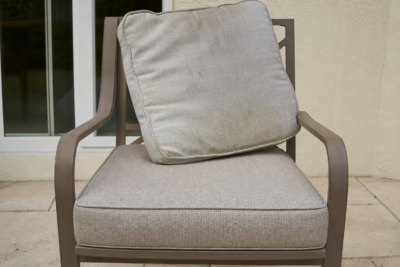
Five ways to replace patio cushions — the set maker’s parts program, seasonal aisles, universal-fit listings, specialists and measured custom — plus the Home Depot house-line route with 31 measured collections.
Why Is Patio Furniture So Expensive? The Cost Anatomy, Explained
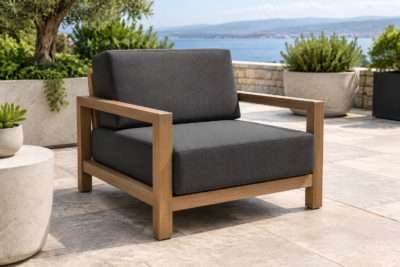
What actually drives patio furniture prices — weatherproof materials, UV-stable finishes, marine-grade hardware, freight on bulky goods, and seasonal retail economics — why the good stuff costs 3-5x the box-store set, and where the value concentrates.
Patio Set vs Buying Separately: The Real Trade-offs
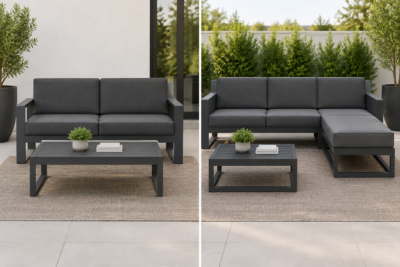
Buying a complete patio set versus assembling pieces: price coherence and one-click convenience versus fit-to-space precision, mixable quality and replacement flexibility — how to decide, and the hybrid strategy that captures both sides.

How Much Do Custom Cushions Cost? Price Ranges by Shape (2026)
Custom cushions cost USD 50-400 depending on shape, size, density and fabric. Live factory-direct price ranges for bench, window seat, outdoor, sofa and boat cushions — and how to price your own.
Outdoor Cushion Foam: Density and Thickness Guide With Real Numbers
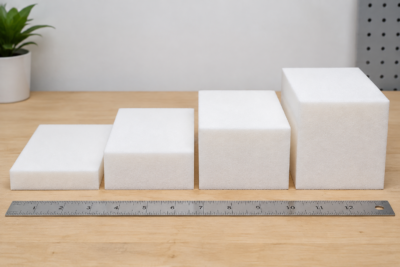
Short answer: for a daily-use outdoor seat, order 3 inches of foam at 50D–60D; move to 4 inches and 60D