
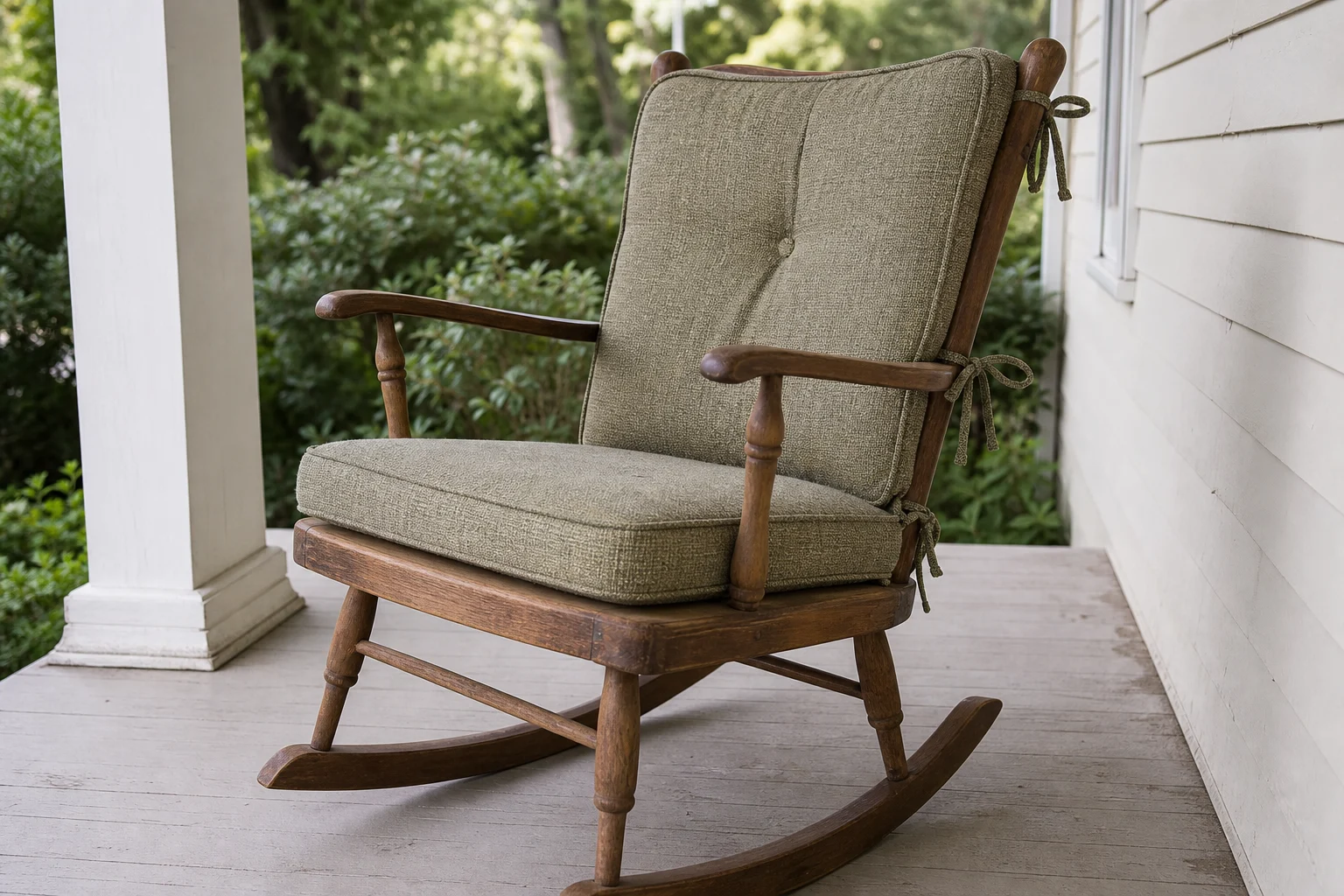
A rocking chair destroys cushions differently than static furniture: the constant motion saws at ties, walks cushions sideways, and shifts seams against the slats until they fray. Buying rocking cushions is therefore about two things beyond size — tie engineering and non-slip behavior. This guide covers standard dimensions (indoor and porch rockers), the tie patterns that actually survive motion, fabric selection, and the non-standard cases (IKEA POÄNG rockers, wicker porch rockers, vintage pieces). General measuring method: how-to-measure.
What Size Cushions Do Rocking Chairs Take?
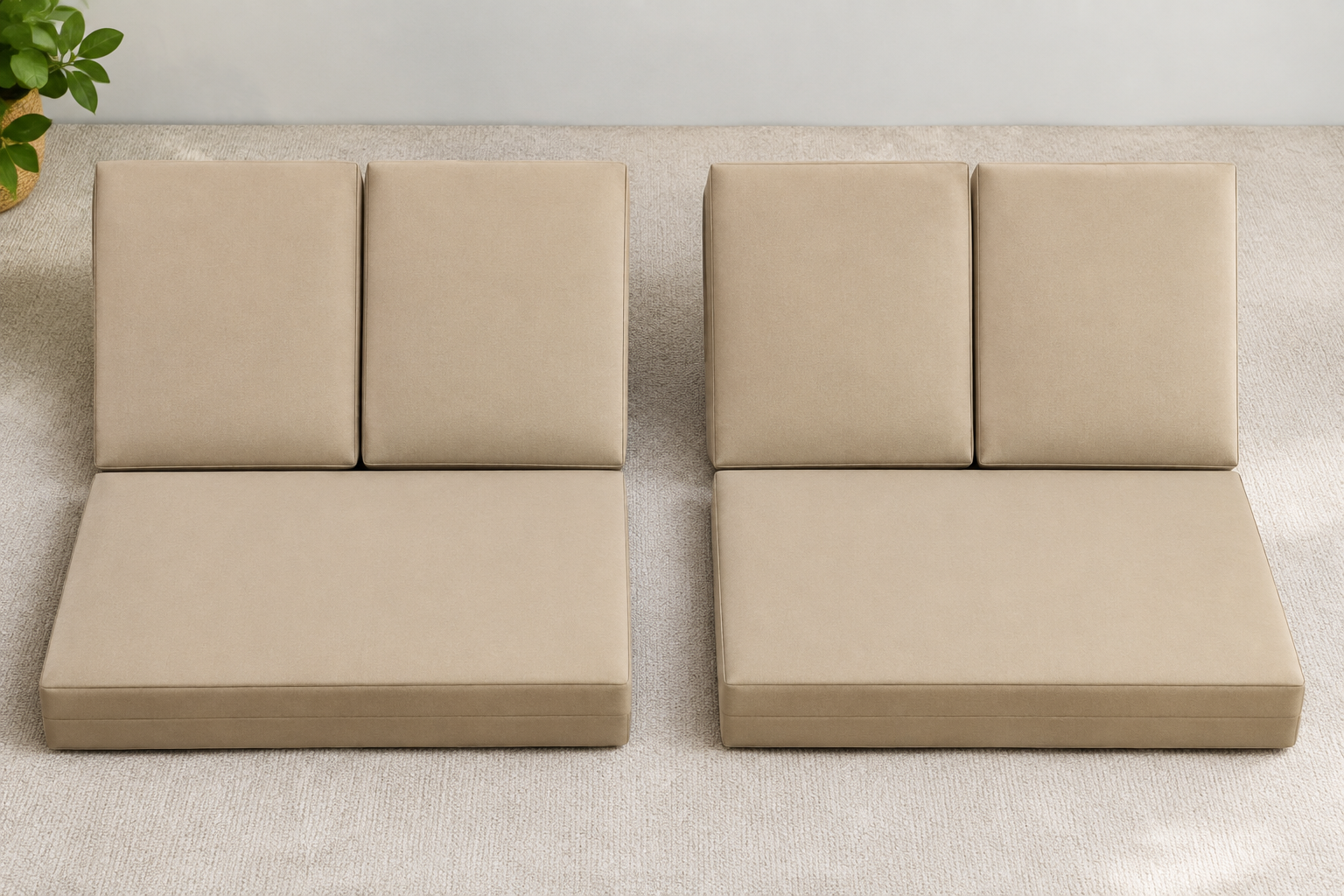
Summary before the table: most rockers take a two-piece set (seat pad + back pad) around 17-19 inches wide; porch wicker rockers run larger (19-21 inches); and thickness is where comfort lives (2-4 inches on the seat).
| Chair type | Seat cushion | Back cushion | Notes |
| Indoor wooden rocker (classic) | 17-18 W x 16-17 D | 17-18 W x 16-19 H | Thinner seats (2 in) keep rocker clearance |
| Spindle/heritage rocker | 17-19 W x 16-18 D | 17-19 W x 17-20 H | Slatted backs need tie-through gaps |
| Porch wicker rocker | 19-21 W x 18-20 D | 19-21 W x 18-21 H | Deeper seats than indoor rockers |
| Glider rocker (upholstered) | 19-21 W x 19-21 D | 20-22 W x 22-25 H | Often thick attached-back pads |
| IKEA POÄNG rocking chair | 22 W x 19.625 D (official) | matching bent-wood pad | Official cushion 2 inches thick, sold as spare |
That POÄNG row is the best-documented rocker spec in furniture: IKEA publishes the seat at 22 x 19.625 inches and sells its chair cushion (22.5 inches wide, 2 inches thick) as a separate article — see our IKEA sizes chart for the full POÄNG line, including the ottoman that matches.
The Tie Problem: Why Rocking Cushions Fail
Motion is the enemy. Three failure modes, three fixes:
- Tie tear-out. Rocking drags the cushion backward on every forward stroke; ties absorb the load until the stitching rips out of the seam. Fix: look for box-stitched or reinforced tie roots, not basic bar-tack. Wider ties (1 inch+) distribute load better than string ties.
- Cushion walk. The seat pad migrates sideways off center with each rock. Fix: four-tie seat cushions (front and back), or non-slip backing fabric on the underside; on wooden rockers, a grippy rug-pad offcut under the cushion works between replacements.
- Back pad sag. Back pads tied only at the corners rotate as you lean. Fix: tie-through designs that thread between the slats at multiple heights, or full-slipover back styles on chairs where the back shape allows.
When ordering or commissioning cushions, the tie layout matters as much as the dimensions: note the positions of your chair’s slat gaps or spindle spacings, and the distance from the seat corners to the frame where ties fasten.
Indoor vs Porch: Fabric Choice by Location
- – Indoor rockers (nursery, living room): cotton, cotton-poly blends, or upholstered-grade fabrics are fine. Prioritize cleanability — nursery rockers especially — so a wipe-clean family beats a delicate weave.
- – Covered porches: treat as semi-outdoor. Olefin or solution-dyed acrylic resists humidity and UV that reaches even shaded porches; fills should dry fast (foam-core over absorbent loose fiber).
- – Fully exposed rockers: full outdoor treatment — acrylic fabric, quick-drain fill, and realistic expectations. Few rockers live fully exposed, but porch wicker rockers in rainy climates qualify.
For nursery use, note that washability outranks everything: the cushion will be washed, so removable zip covers and colorfast dye (solution-dyed or quality printed) are the spec that matters.
Non-Standard Rockers and How to Fit Them
IKEA POÄNG rocking chair
The comfortable default replacement route is IKEA’s own spare cushion; the upgrade route is custom-cut foam and cover to the same 22 x 19.625 footprint in your fabric — our custom cushions service builds to your IKEA measurements (dimension reference: IKEA chart).
Wicker porch rockers
Larger seats, rounded backs, and often a curved back frame that flat back pads fight against. Measure the seat (width front and back if it tapers — wicker rockers frequently taper) and the back’s curve height; custom back cushions can be cut with a slight curve or made as tie-through sections for slatted backs.
Vintage and handmade rockers
The pre-standardization population: seats from 15 to 20 inches wide, odd depths, spindle spacings that match no stock tie layout. These take measured custom sets — seat, back, and custom tie placement in one order.
Glider rockers (the motion cousin)
Glider cushions and rocking cushions are not interchangeable: gliders have thicker, often attached back pads and deeper seats (19-21 inches). The good news for glider owners: replacement cushion sets for major glider brands ( Dutailier and similar) are a recognized aftermarket category; the bad news is brand-specific fit — measure your old set rather than buying “glider cushions” generically.
A Quick Word on Thickness and Rocking Geometry
Thicker is not automatically better on a rocker: every inch of seat height changes your leg angle relative to the floor-stopper geometry, and on low rockers a 4-inch pad can make the chair feel like it is launching you. Two inches is the traditional seat thickness for classic wooden rockers; three is the comfort sweet spot on larger frames; four belongs on oversize porch rockers only.
How to Measure a Rocker for Cushions
Rocker-specific notes on top of the standard method (how-to-measure):
- Seat width and depth seam-to-seam on the existing cushion, or deck edge-to-edge if the cushion is gone. On spindle rockers, measure between the arm posts at the front and at the back — many rockers taper an inch or more.
- Back width and height: width between the back stiles, height from the seat deck to the top rail. For slat backs, subtract nothing for the slats — the back pad sits proud of them.
- Record the slat gaps: distance from seat deck to each gap between slats. This is the map for tie-through back cushions; a back pad whose straps miss the gaps cannot be secured.
- Measure the rock clearance: the gap between the seat deck’s underside and the floor at mid-rock. This sets the practical ceiling on seat thickness — if clearance is tight, each inch of cushion raises your weight and steepens the rock arc.
- Note the existing tie positions on a surviving cushion before it disintegrates — reproducing tie placement is half the fit.
Caring for Rocking Cushions
- – Re-tie correctly after washing: ties belong snug around the frame rail (or through the slat gap), not knotted to themselves. Loose ties are how cushions walk and how tie roots tear.
- – Rotate seat pads monthly on chairs that get daily sun from one side — the reclined back exposes the seat unevenly.
- – Nursery rockers: wash covers before they are visibly soiled (fabric absorbs skin oils that set permanently), and keep a spare cover if the chair is in daily rotation — turnaround on wash days matters more than fabric luxury.
- – Porch rockers over winter: bring them in. The rockers themselves can stay under a furniture cover, but cushions store flat in a closet in a fraction of the space, and the freeze-thaw cycle is hard on foam that has absorbed any moisture.
Sourcing Rocking Cushions: Three Routes
- – Craft-marketplace sets (Etsy-class): the traditional route — hundreds of makers sewing two-piece rocker sets in hundreds of fabrics, usually with proper tie engineering. Fit depends on your chair matching their pattern; most list the dimensions clearly. Best for standard classic rockers and nursery use.
- – Retail seasonal aisle: covered in the Lowe’s and Home Depot guides — fine for porch rockers taking 19-21 inch pads; check fabric tier and tie quality per those guides’ checklists.
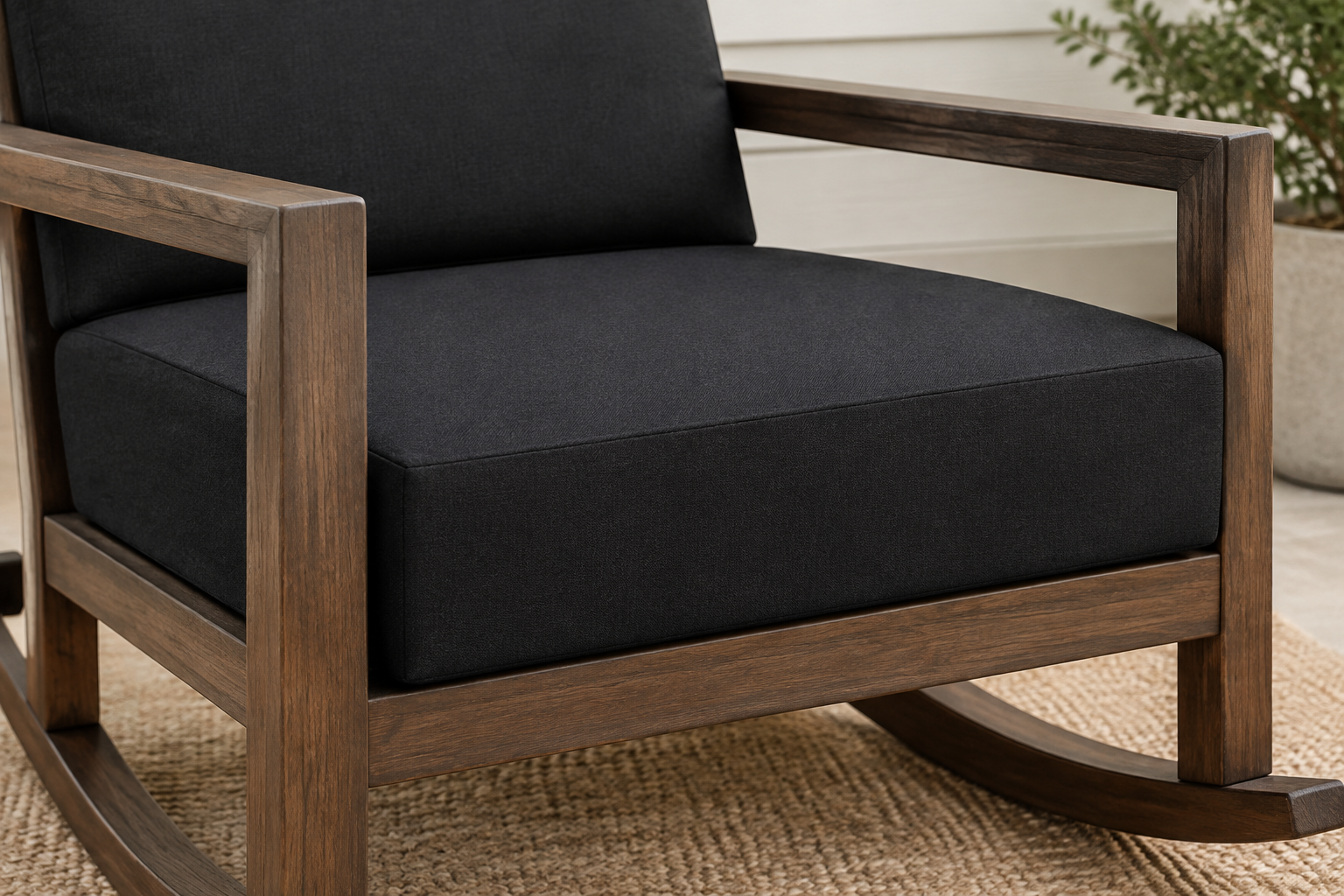
- – Custom workshops: for vintage rockers with tapered seats, wicker rockers with curved backs, POÄNG upgrades in your own fabric, and any chair whose slat gaps match no stock pattern — measurements plus slat-gap positions get you an exact-fit set: custom cushions. Custom rocking chair cushions is the category page for this route — pieces ship without sewn ties, and the retrofit side is covered in how to add ties to cushions.
The decision shortcut: if your rocker is a standard hardwood classic, the craft-marketplace route offers the best combination of fit and fabric choice. Everything non-standard goes custom on the first attempt rather than the third.
FAQ
What size cushions fit a standard rocking chair?
Classic indoor rockers take roughly 17-18 inch wide seat pads and matching back pads; porch wicker rockers run 19-21 inches. The IKEA POÄNG rocker is officially 22 x 19.625 inches on the seat. Measure your seat seam-to-seam (method) to be sure.
How do I keep rocking chair cushions from sliding?
Four ties instead of two, reinforced tie roots, and non-slip backing. On wooden rockers, threading rear ties through the slat gap (not around the rail) prevents the backward walk that rocking motion causes.
Can I buy replacement cushions for a glider rocker?
Yes — glider cushions are a recognized aftermarket category, but fit is brand-and-model specific (seats 19-21 inches with thick attached-style back pads). Measure your existing set rather than ordering generically.
What’s the best fabric for a nursery rocking chair?
Wipe-clean family — cotton or indoor-outdoor blend, colorfast. Solution-dyed or high-quality printed fabric survives the bleach-adjacent spot cleaning that nursery cushions inevitably need.
My rocker is vintage and nothing fits. Can I get custom cushions?
Yes — send seat and back measurements plus your slat-gap positions, and each piece is cut to fit (sewn ties are not part of the build — how to add ties to cushions covers the retrofit). Vintage rockers with tapered seats need front and back widths measured separately. Start at custom cushions.
Breakfast Nook Cushions: The Corner-Seating Build Guide
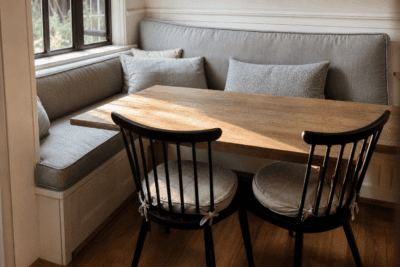
Breakfast nook cushion guide: L-shaped and U-shaped runs, corner geometry and seam placement, seat-plus-back builds at dining height, morning-sun fabric logic, and ordering the whole run from one fabric lot.
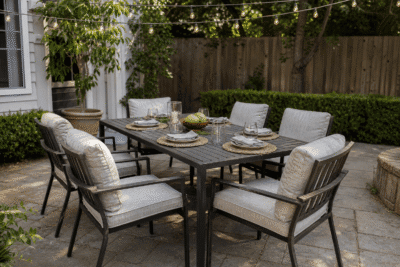
Outdoor Dining Sets: Buying the Set Right So the Cushions Work
Outdoor dining set buying guide: how the set choice locks in your cushion future — seat sizes, arm heights, frame materials, cushion quality in boxed sets versus custom pads, and set versus separate buying.

At Home Outdoor Cushions: The Decor Superstore’s Seasonal Wall
At Home runs a full-scale seasonal cushion department at decor-store prices — what the wall stocks, the fit grid, and when the superstore route ends at custom.
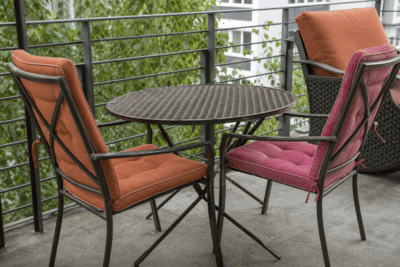
Target Outdoor Cushions: Threshold, Sizing and Replacement (2026)
Target’s Threshold cushions look designer but run generic sizes. What fits, what the seasonal rotation kills, and when custom replacements beat another Threshold refresh.
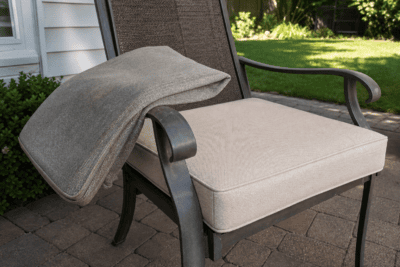
Hampton Bay Cushion Covers: Replacement Covers vs Full Cushion Replacement
The Hampton Bay covers question answered — why OEM cover-only replacements are rarely available for most series, the exact-fit route (full cushions by your series dimensions), re-covering services and DIY, and how to identify your series first.
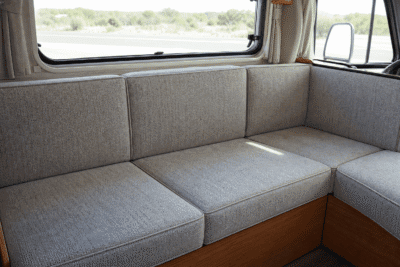
RV & Camper Cushion Replacement: The Complete Guide
RV dinette and berth cushion replacement — sizes, 45–60D foam for daily use, spill-proof fabrics, and the paper-template method for odd cabin shapes.