
A soaked cushion is not really a fabric problem — it is a foam problem. The cover sheds water and dries in hours; the core underneath is a sponge by design, and standard fine-celled foam holds water in its tiny cells for days after the fabric feels dry to the touch. That gap — dry cover, wet core — is where cushions die, because mold does not need the fabric to be wet. It needs roughly 72 hours of trapped moisture to establish, and a saturated core delivers exactly that (why “waterproof” cushions mostly aren’t).
The good news: a waterlogged cushion is usually rescuable if you work the water out on purpose instead of waiting on the sun. This guide covers the drain method step by step, the triage that tells you which cushions are worth the effort, and the four signs that the foam is done and no amount of drying will bring it back.
Why Cushions Hold Water (and Why the Clock Starts Immediately)
Water gets into a sewn cushion through three doors, none of which any factory can close:
- Stitch holes — every seam is a row of needle perforations; rain and sprinklers walk straight through them.
- The zipper — a water management compromise by design; it is there so you can wash the cover, and it admits water every time it rains sideways.
- The underside — most cushions have an uncoated or lightly coated bottom panel that sits against wet slings and frames like a wick.
Once inside, water meets the foam, and foam type decides everything. Standard open-cell foam has small, winding cells that hold water by capillary action — squeeze it and the water comes back tomorrow. Quick-dry foam (reticulated foam) has large, connected cells that drain and flush with airflow, which is why marina and pool furniture recovers from a soak in hours. The full system logic — breathable covers over draining cores — is in waterproof cushions explained.
The clock: mold spores are always present. What they lack is standing time. Drain actively and the core dries inside the danger window; wait for “it’ll dry on its own” and you are running a mold incubator with a zipper in it (the full mold prevention protocol).
How Wet Is It? Triage in Sixty Seconds
Before any drying, sort your casualties. Lift, press, unzip, smell:
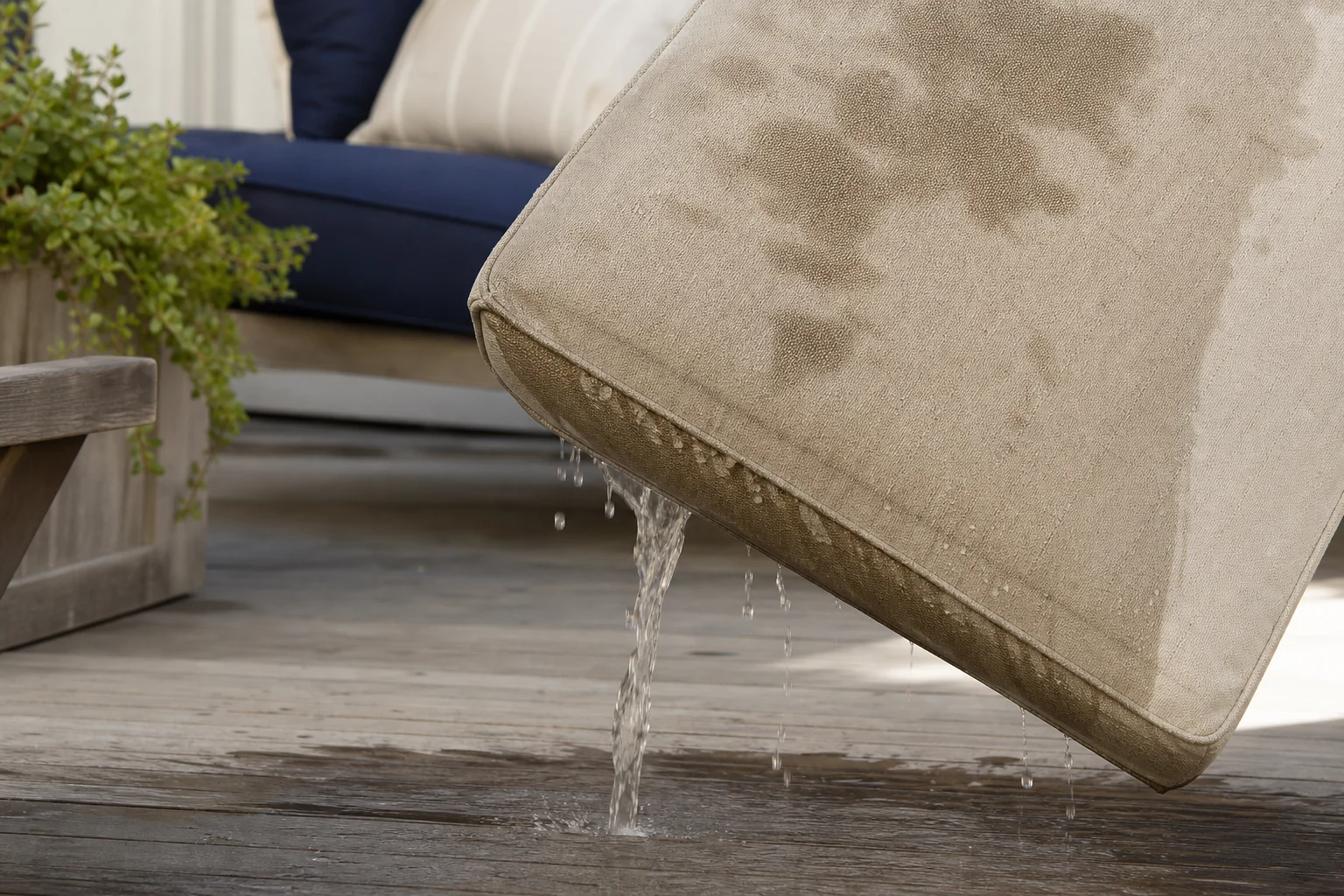
- Lift it. A seat cushion that suddenly weighs like a sandbag is saturated; a cover-only dampening weighs nearly normal.
- Press a corner. Water weeping out of the seam under hand pressure means the core is full. Fabric that darkens but springs back dry-ish means the shell took the hit, not the core.
- Unzip and touch the foam. This is the only certain test — covers lie, foam doesn’t. Damp is workable; soaked is a multi-day job; pooling means you are already late.
- Smell it. Sour or basement-smelling on day one means the soak is not your first — there is history inside that cushion, and it changes the calculus below.
Sort the set into three piles: cover-damp (dry in a day), core-saturated (this guide’s main event), and saturated-plus-smell (read the foam triage section before spending effort).
The Drain Method, Step by Step
1. Stand it on edge, lowest seam down. Gravity is the first and free-est tool. Prop the cushion on its edge — end or side, whichever puts a seam at the bottom — on a grate, a drying rack, or two pool noodles so air reaches the underside too.
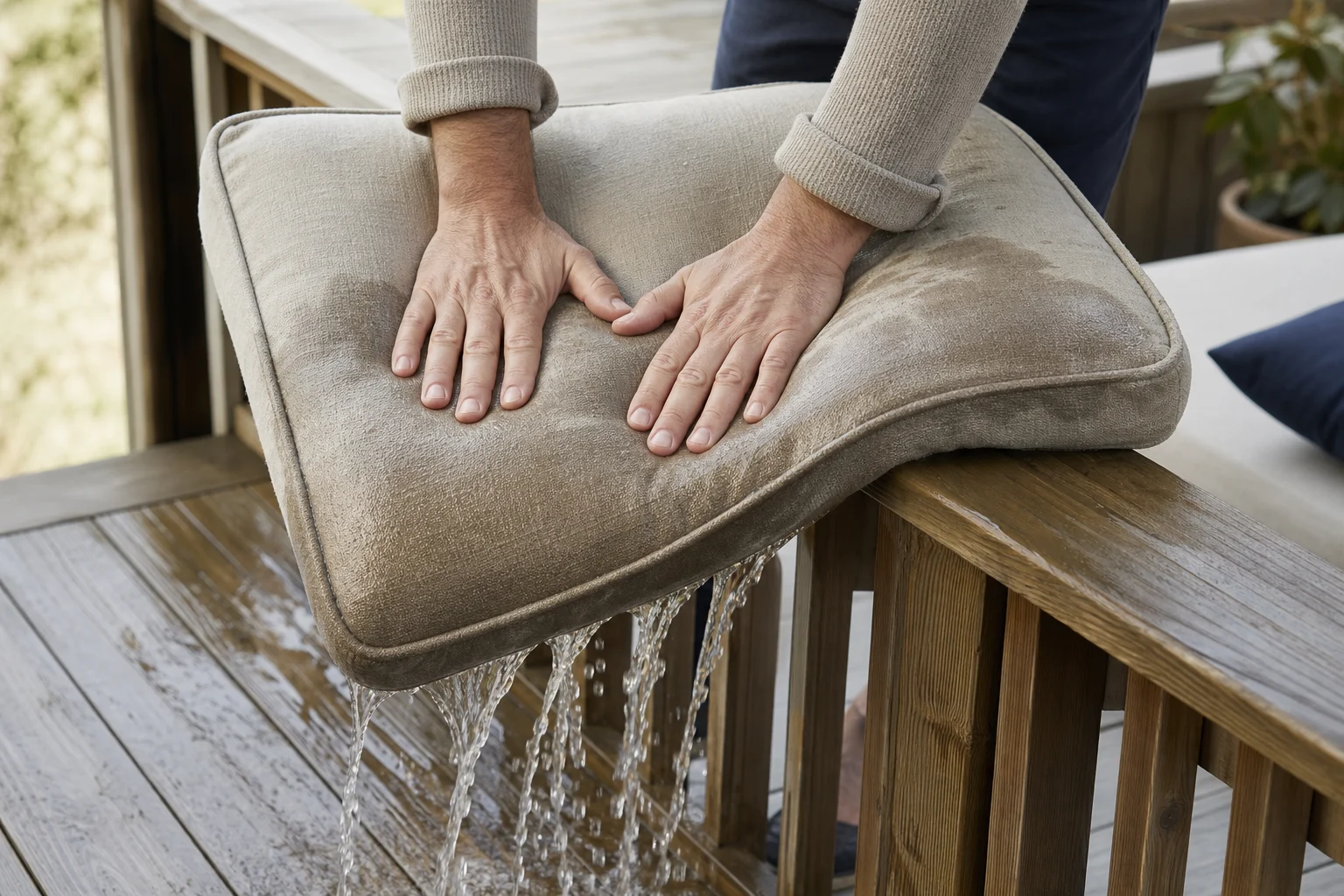
2. Let it free-drain for 30–60 minutes. Do not press yet. Loose water leaves on its own faster than you’d expect, and pressing a fully flooded cushion mostly moves water from cell to cell.
3. Press, don’t wring. Lay the cushion flat on a hard, drainable surface — a patio slope, a deck edge — and press with flat hands or a knee, working from one end to the other, turning the cushion and repeating. Stop, let it rest five minutes, press again. You will get significantly more water out on the third pass than feels reasonable. Never wring or twist: foam tears along cell walls when twisted, and a torn core is a replacement core.
4. Towel-wick the seams. Press dry towels along the stitching lines and the zipper. Seams are the last highways out, and a wet seam track keeps feeding the interior by capillarity while the faces dry.
5. Air and sun, both faces, for a day minimum. Back on edge, in sun if the fabric tolerates it (solution-dyed acrylic and olefin yes; coated polyester prefers bright shade), with a fan if you have one. Rotate to the other edge at half-day. Thick pieces — 5–7″ back cushions, deep-seat cores — hold out for a full day or two; fans shorten it.
6. Verify the core, not the cover. The method is not done when the fabric is dry. Unzip and press the foam directly in the middle of the cushion — the last place to dry — and smell your hand. Dry and neutral: back in service. Cool, damp, or faintly sour: another drying cycle, and if a second full cycle doesn’t clear the smell, keep reading.
When the Foam Is Done
Draining rescues waterlogged foam; it cannot rescue dead foam. Four signs, any one of which is a verdict:
- The smell survives two full dry cycles. A sour or musty odor that persists after the core has genuinely dried twice means the mold colony is internal — cleaning the cover is re-arranging deck furniture. The core is the problem.
- It doesn’t rebound. Press hard, release: foam that keeps a dimple, stays compressed at the seam edges, or has a visible dishing where you sit was already at end of life — the soaking just finished it.
- Interior staining. Brown-black tide lines or gray bloom inside the cover, on the foam itself, is established colony territory.
- Mildew returns within weeks of a proper cleaning — the recurring-outbreak signature (the full replacement triage).
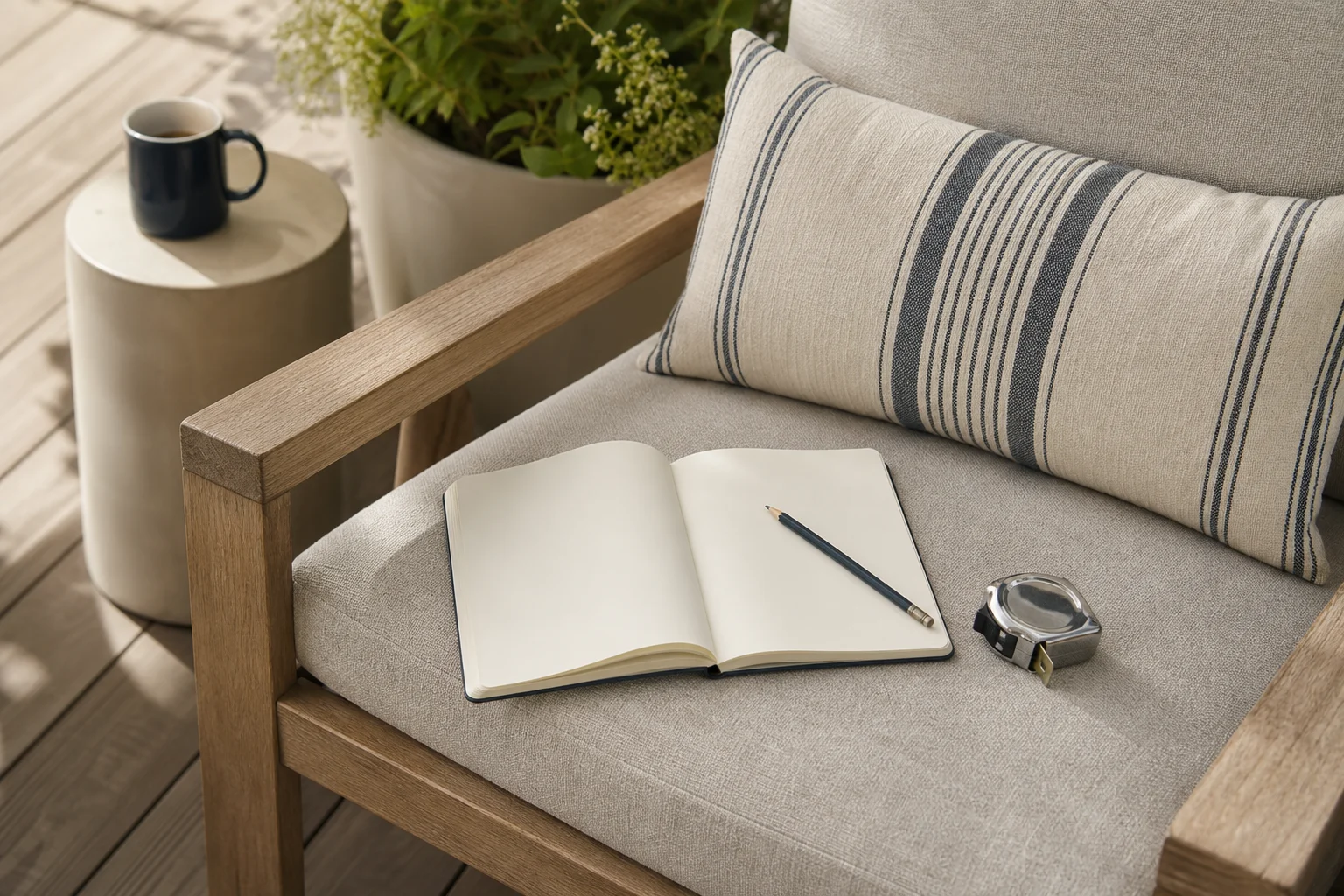
The replacement path is cheaper than the search path: a set that fits your frame can be re-cut to the same numbers, in the same or a better spec. Replacement covers and cores are both orderable at custom cushions — measure the old piece before it goes to the bin, because the old cushion is the easiest measuring template you will ever have (how to measure).
Make the Next Soak Less Dramatic
Every rescue is a prevention failure somewhere upstream. The habits that matter:
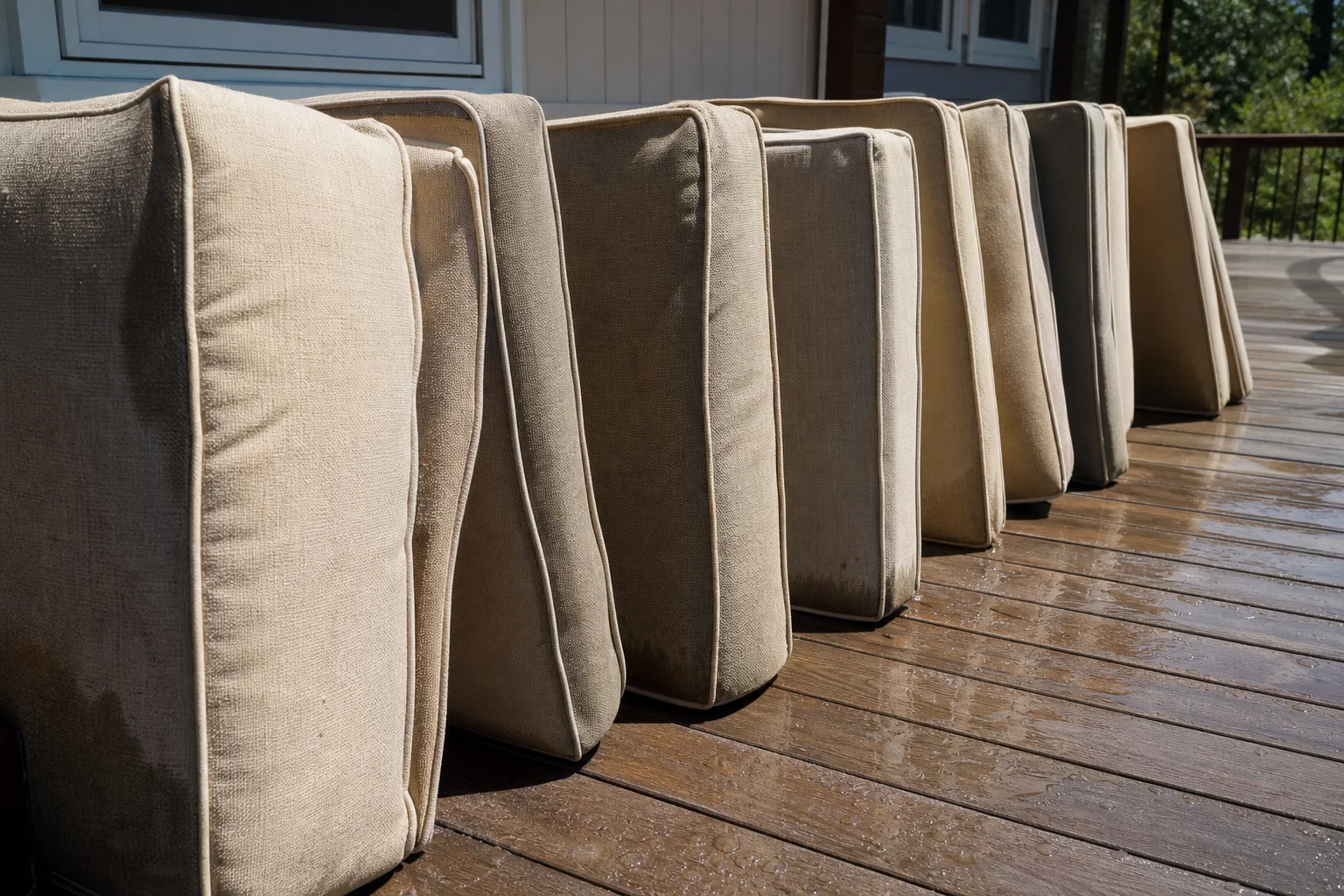
- – Edge-stand after every rain. Two minutes. Cushions propped on edge drain and dry on both faces; cushions left flat hold water against the sling. This single habit prevents most saturation events (maintenance routine).
- – Check the furniture’s drainage, not just the cushion’s. Cushions sitting in a low spot, against a wall splash line, or on slings that pool water get hydrologically punished. A one-inch air gap under the seat does more than any fabric coating.
- – Storm protocol. If the forecast is serious, stack cushions somewhere covered or indoors. The best drainage spec in the world still loses to a tropical storm sitting on it.
- – Spec for exposure at purchase. Uncovered, rainy-climate furniture is the exact use case for quick-dry foam (reticulated foam) over standard cores. We do not carry reticulated cores; our outdoor line pairs waterproof, wipe-clean Tech Fabric covers with high-density 35–65D foam cores — a combination that survives rain the ordinary way, by drying fast afterward (custom cushions).
What to Spec on a Wet Patio
Our fabric menu runs three families: Cotton Linen (natural breathable weave), Tech Fabric (waterproof, wipe-clean), and Premium Velvet (no pilling, cat-claw resistant). For furniture that actually gets rained on, Tech Fabric over a high-density core is the practical pick — a shell you can hose off and a core that carries its weight in the rebound. Every set is made to order in 4–7 business days, cut to your measurements after we re-verify them (how our process works).
Next Steps
- Drain today’s casualty — the six-step method above, and don’t skip the core check at the end.
- Audit the rest of the set — the when-to-replace checklist catches dying foam early, when a re-core is still the cheap fix (cushion triage).
- Spec the next set for your real weather — custom outdoor cushions, built to your measurements and exposure.
FAQs
How long does a waterlogged cushion take to dry?
A cover-damp cushion dries in a day; a saturated standard-foam core takes one to two full days of active draining, pressing and airflow — thick back cushions the longer end — and it is dry only when the foam feels dry at the center, not when the fabric does.
Can you dry cushions by standing them upright?
Yes — standing on edge is step one of every correct dry-out: it drains loose water at the lowest seam and puts airflow on both faces. It is a first step, not the whole method; saturated cores still need pressing and time.
How do you know if waterlogged foam is ruined?
The smell survives two full dry cycles, the foam keeps a dimple when pressed, there is interior staining on the core, or mildew returns within weeks of cleaning — any one of these means the foam is done (the full triage).
Should you put wet cushions in the sun?
Yes for solution-dyed acrylic and olefin — sun is the fastest safe drying engine they have. Coated polyester dries better in bright shade, because heat accelerates the coating wear that fabric is already carrying.
Will a waterproof cover stop cushions getting waterlogged?
It reduces the intake but no sewn cover stops it — stitch holes and zippers admit water by design, which is why the goal is a fast-drying system, not a sealed one (waterproof cushions explained).
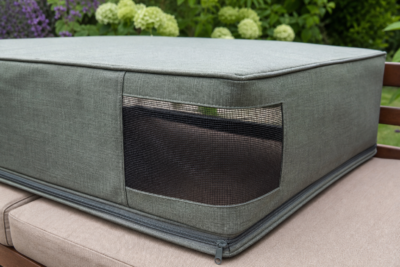
Insect-Proofing Patio Cushions: What Works on Bugs, Without Ruining Fabric
Why insects target outdoor cushions (nesting sites, food residue, moisture), the prevention stack — cleaning, storage, covers, placement — what sprays and repellents are fabric-safe, and the honest limits of keeping a patio bug-free.
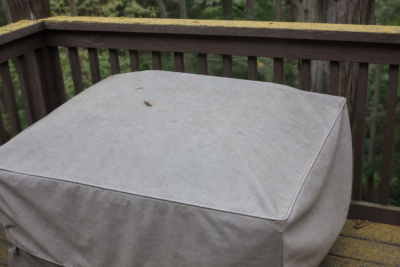
Pollen Season on the Patio: Protecting Cushions and Furniture
What pollen actually does to outdoor cushions (it’s not the color — it’s the chemistry), the spring protection playbook from covers to placement, cleaning pollen off fabric without grinding it in, and fabric choices for the perpetually dusty patio.
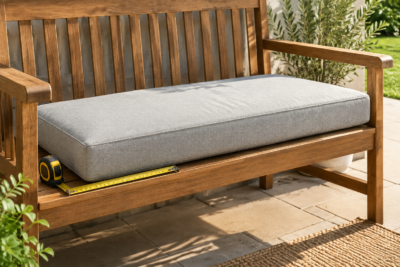
How to Clean Mold Off Outdoor Cushions (and When It’s Too Late)
How to tell salvageable mold from a dead cushion, the vinegar-and-oxygen-bleach method that works, and what to buy so it never comes back.
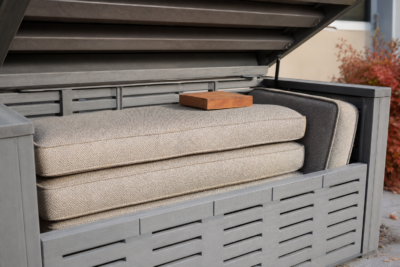
How to Store Outdoor Cushions for Winter: The Complete Method
The right way to winterize outdoor cushions — deep clean, bone-dry, ventilated storage, what never to do — and which climates need indoor storage at all.
Indoor Cushion Care: Keeping Fabric, Foam and Shape Alive for Years
The indoor counterpart to outdoor cushion maintenance: rotation discipline, sun and humidity management indoors, cleaning by fabric family, foam revival between deep cleans, and the seasonal calendar that keeps inside cushions out of the replacement cycle.
How to Make Outdoor Cushions Last Longer: 12 Habits That Add Years
The maintenance system that extends cushion life — rotation, edge-drying, cleaning cadence, protectant renewal, storage discipline and the specs that matter most.