
When a sofa “dies,” the foam usually died first and took the blame for the whole piece. The frame underneath is fine; the cores inside have simply flattened, and a $900–$3,000 replacement gets bought to solve a $300–$850 foam problem. This guide is the foam’s side of the ledger: what re-foaming actually costs by path, what the density number predicts, and the honest test for when new foam beats a new couch. We sell complete custom cushions — cores and covers together — and we will flag plainly where the foam-only path is the smarter buy. For the whole decision including upholsterer quotes, see replace your sofa cushions or buy a new sofa: the real cost breakdown.
The $834 Re-Foam, Examined
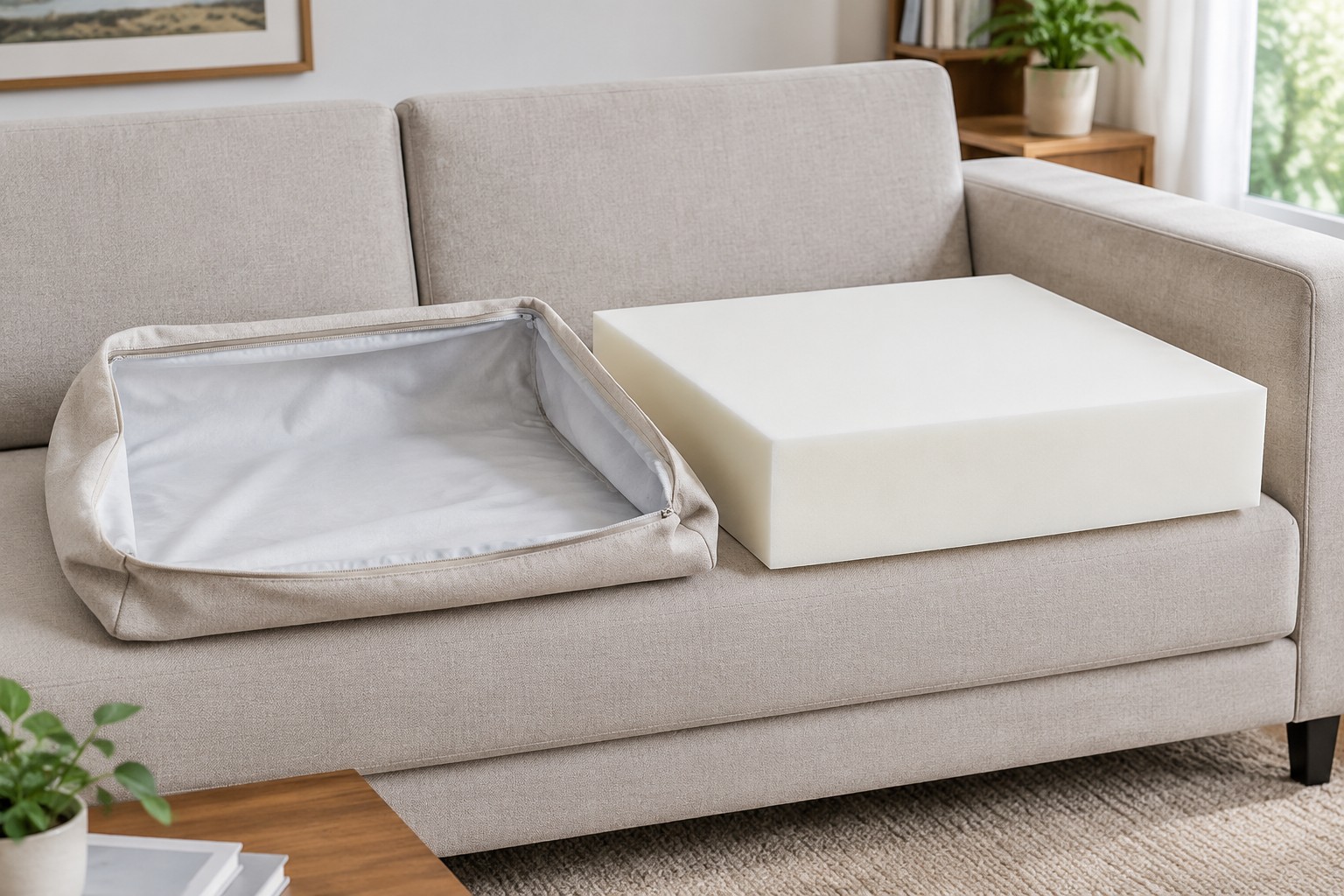
Start with a real order. In September 2026, a customer we will call Matt re-cushioned his four-seat IKEA Kivik for $834 — complete cushions, cores upgraded to a 50D daily-duty grade, sewn in one production run. That is about $208 per seat, new foam and new fabric together. The DIY foam-only route for the same sofa would have run roughly $30–$90 per seat in cut-to-size cores; a new Kivik listed around $900–$1,100 and would have arrived with commodity 1.8 lb foam — the same grade that had just flattened.
Why did he pay the full-cushion price when foam-only was a quarter of it? Two reasons, and they are the two reasons that decide most of these orders. First, his covers were eight years old and worn at the front edges — new cores inside dead fabric is a rebuilt engine in a rusted hood. Second, one run meant one dye lot and one firmness across all four seats instead of a patchwork. His case is the standard one our custom sofa cushions line is built for; the foam-only path below is real, and we will tell you when it is the right one.
What Foam Replacement Costs: Five Ways to Do It
Per seat, in 2026: DIY self-cut cores run about $30–$90; cut-to-order cores from a foam shop run about $60–$150; complete custom cushions (new core plus new cover) run from $126 up — Matt paid $208; a local upholsterer re-stuffs at roughly $75–$200 per cushion; and a new sofa amortizes to $225–$750+ per seat before delivery and disposal. The spread is four-fold, and the deciding variable is never the labor — it is which density grade each path installs.
| Path | Per seat | 4-seat set | What decides its lifespan |
|---|---|---|---|
| DIY cores, self-trimmed | ~$30–$90 | ~$120–$360 | The foam grade you order |
| Cut-to-order cores (you install) | ~$60–$150 | ~$240–$600 | Foam grade; accuracy of your measurements |
| Complete custom cushions | from $126 (Matt: $208) | ~$500–$900 | Core grade + fresh cover, one dye lot |
| Upholsterer re-stuff | ~$75–$200 | ~$600–$1,500 | Which foam the shop stocks |
| New sofa | $225–$750+ | $900–$3,000+ | Factory spec — usually 1.8 lb commodity foam |
Upholsterer figures are published national averages; local quotes can sit well outside them. Whichever path you take, the question that predicts the years is the same one: what density is going inside?
1.8 lb vs High-Density: The Number That Predicts Lifespan
Density is simply how much polymer sits in each cubic foot of foam, written either as lb/ft³ or in the ×10 convention our catalog uses — 1.8 lb ≈ 18D, 3.5 lb ≈ 35D, 5.0 lb ≈ 50D. It is not a comfort rating; a 65D core can be cut soft and a 24D core can feel firm for a month. Density sets one thing: how many years the core holds its loft under load.
| Grade | The job it is cut for | Real-use lifespan |
|---|---|---|
| 18–24D (1.8–2.4 lb) | Furniture-in-a-box; what mid-market sofas ship with | 1–2 years daily use; 3–5 occasional |
| 35D (3.5 lb) | Guest rooms, window seats, decorative chairs | 5–10 years |
| 50D (5.0 lb) | Daily family seating — Matt’s grade | 10+ years |
| 60–65D (6–6.5 lb) | Heavy daily or light commercial use | 12–15+ years |
The full ladder, and the myths around it — firmness vs density above all — are unpacked in cushion foam myths; seat-vs-back filling trade-offs live in foam vs fiber cushion filling. Outdoor seating swaps the question from density to drainage — that comparison is in HD vs dry-fast foam.
The 30-Second Decision Test
Three questions. One: is the frame sound — tight joints, no creaks, no wobble at the arms? Two: does the sofa’s size and layout still fit the room? Three: are the covers worth keeping — or the piece worth keeping — for another decade? Three yeses: re-foam. The frame fails, the fit is wrong, or the quote passes half a new sofa’s price: keep reading, because a new couch may be the honest answer.
Four Signs the Foam Is Dead
The foam is the patient whenever you see: a dish deeper than an inch in the seat center; a sit that “bottoms out” — you feel the platform through the core; a press test where a handprint stays or springs back over several seconds; and edges or front corners that have collapsed into shoulders. Any two of these together mean the core is done. All four with a solid frame is the clearest re-foam case there is.
Run the checks in one sitting. Look across the seat from the side in raking light — a dish shows as a shallow bowl. Sit down hard once: landing on the deck through the foam is a failed core, not a “firm” one. Press a flat hand into the worst spot for five seconds: healthy high-resilience foam recovers almost immediately, spent foam leaves a crater. Sagging that fluffs back is fiber fill tiredness, covered in how to fix sagging couch cushions; sagging that no fluffing fixes is the core.
Three Signs the Frame Is Too
Re-foaming is wrong for the sofa when the frame itself is failing — joints that shift, rails that crack, creaks under ordinary sitting — when the structure is broken (a fallen spring deck, collapsed suspension), or when even the DIY core cost plus covers passes roughly half the price of a comparable new sofa. On the third one, we will say it outright: at that point do not buy cushions from us or anyone. The repair has stopped being a repair.
The distinction matters because frame failure hides behind cushion symptoms. A sofa that “sits crooked” can be one dead core on one side — a $60 fix — or a cracked rail that no foam will ever straighten. Lift a corner and let it drop: a rattle is the frame asking to be retired, and new foam on it is money poured into a shell.
Foam-Only or Full Rebuild?
Foam-only wins when the covers are genuinely good — no worn edges, no permanent stains, zips intact — and you accept installing cores yourself or paying a shop an hour’s labor. Full rebuild wins when covers show their age, when the set should match in one dye lot, when you want a different fabric or a firmer grade throughout, or when the seats are notched T-cushions that need sewing, not just foam. Matt’s worn front edges put him in the second camp.
The middle path — keeping the cover and upgrading everything inside it — is argued properly in cushion covers vs full replacement. One shape note: oversized or extra-deep seats punish DIY cores, because a 6-inch 50D slab cut a half-inch proud of its cover puckers the seams; deep-seat builds are better left to a workshop’s custom deep-seat cushion patterns.
How to Measure the Core in Three Steps
Measure the bare core, not the cover: unzip, slide the foam out, and take length × width × thickness of the foam alone, resting flat, tape snug. No surviving core? Measure the frame’s clear opening — arm-inside to arm-inside, front rail to seat deck — and subtract nothing; the workshop cuts to fit the opening. Sketch every notch and curve rather than describing them. Our cutting tolerance is ±½″ (±¾″ over 36″).
1. Core out of the cover, measured flat at the widest points — covers add up to half an inch of puff that the foam does not have. 2. Cross-check against the frame opening; a disagreement over an inch means the original was cut oversized — the step-by-step measuring walkthrough applies indoors unchanged. 3. Mark T-cushion notches and any attached back on a sketch — the pattern, not the rectangle, is what the cutter needs. The mistakes we catch most often are collected in cushion measurement mistakes, and the sofa cushions page runs the same steps beside the configurator.
Frequently Asked Questions
How much does it cost to re-stuff couch cushions?
Nationally published averages put professional re-stuffing around $75–$200 per cushion — $600–$1,500 for a four-seat set before any fabric work. DIY cut-to-order cores run $30–$150 per seat depending on grade and thickness. In every version, the quote should name the density going in; a re-stuff that will not say is a re-stuff installing the cheapest foam on the shelf.
How long does 1.8 lb sofa foam last?
Not long under real use: 18–24D (1.8–2.4 lb/ft³) cores hold one to two years of daily family sitting, three to five of light use. That is the grade most new mid-market sofas ship with, which is why “the cushions went” is the near-universal obituary at year six. A 50D core in the same frame is a ten-year-plus part.
Can I replace the foam myself?
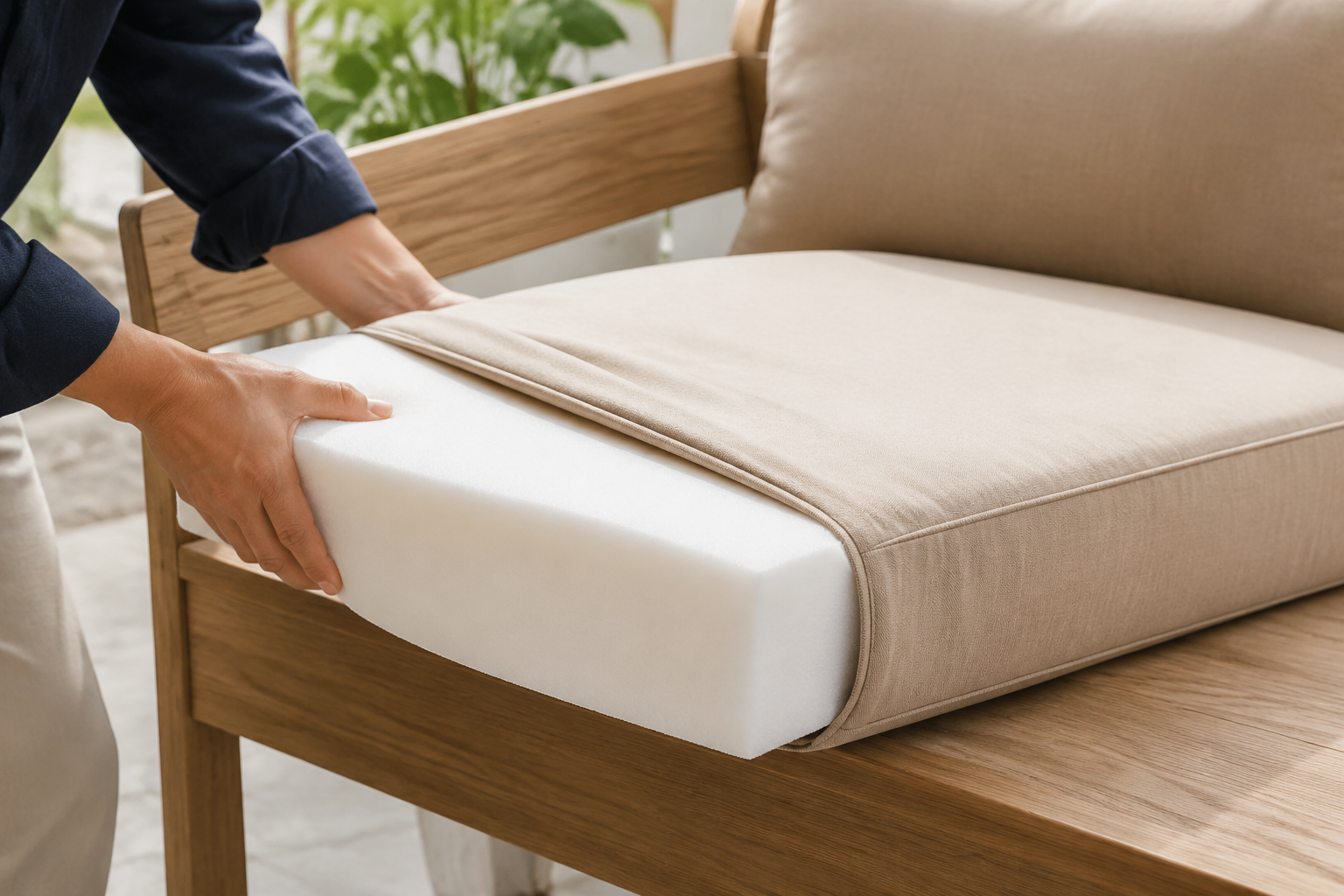
Yes, when the covers unzip and are worth keeping: measure the bare core, order the same dimensions in the grade you want, trim if needed — how to cut foam covers home trimming — and seat it with a quarter-turn so it fills the corners. Budget an afternoon for a full set. It stops being a DIY job when covers need sewing or seats are notched T-cushions.
Is foam replacement the same as reupholstering?
No — they fix different failures. Reupholstery is fabric work that usually leaves the old core in place; foam replacement is core work that leaves the mechanical problem solved. A sofa that has collapsed needs the second, whatever its covers look like. Doing the first to solve the second is how a $900 reupholster bill ends with a sofa that still swallows its occupants.
My seats have spring units. Will all-foam cores feel different?
They will. Coil units feel bouncier and lighter in the first inch of sit; a solid high-resilience core feels denser and more even through the whole press, with less bottoming out. Most people stop noticing within two weeks. If you want to keep something of the coil feel, a slightly softer grade or a wrapped core is the move — say which seat you are coming from when you order and the grade can be tuned for it.
Can I order just the cores without new covers?
Not from us — our line is complete cushions, cores and covers cut together, because that is what we can hold to tolerance and dye-lot match. If your covers are in honest good condition, buy cut-to-order cores from a foam supplier and spend the difference on density: that is the better use of your money, and pretending otherwise would be selling you a cover you do not need.
Get a Quote
The economics compress to one line: a dead core on a live frame is a $126–$210-per-seat problem wearing a $1,000 costume. Measure the old cores (or the frame opening), pick the density the job actually demands — 50D for daily family seating — and the sofa comes back firmer than the day it shipped. Order windows matter more than usual right now: workshop queues stretch from late October into the holidays, and re-foaming before the season beats re-foaming after it embarrasses you at Thanksgiving.
Price my replacement foam → — four steps, per-seat pricing from $126, cores cut to your measurements in one production run.
Couch Cushion Foam Replacement: Density, Cost and Buying Guide
Replace couch cushion foam in one right order: 50D vs 60D density, measuring the old core, four ways to buy, and real worked prices for one seat and a full set.
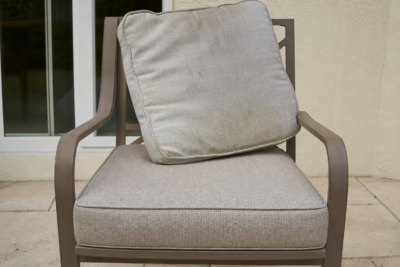
Where to Buy Replacement Patio Cushions: 5 Ways, Compared
Five ways to replace patio cushions — the set maker’s parts program, seasonal aisles, universal-fit listings, specialists and measured custom — plus the Home Depot house-line route with 31 measured collections.
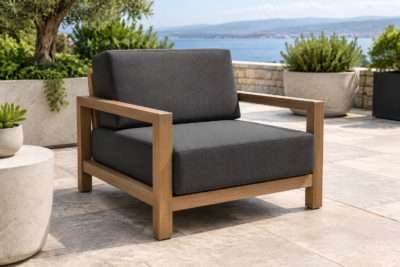
Why Is Patio Furniture So Expensive? The Cost Anatomy, Explained
What actually drives patio furniture prices — weatherproof materials, UV-stable finishes, marine-grade hardware, freight on bulky goods, and seasonal retail economics — why the good stuff costs 3-5x the box-store set, and where the value concentrates.
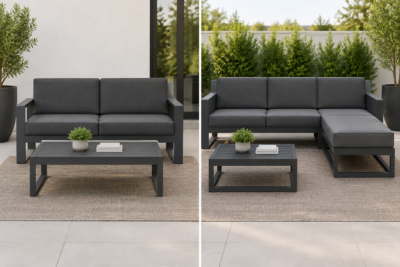
Patio Set vs Buying Separately: The Real Trade-offs
Buying a complete patio set versus assembling pieces: price coherence and one-click convenience versus fit-to-space precision, mixable quality and replacement flexibility — how to decide, and the hybrid strategy that captures both sides.
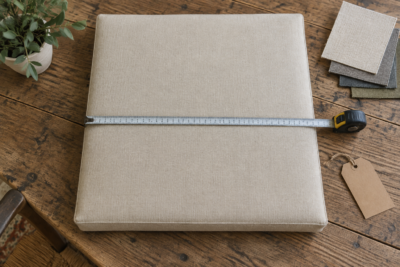
How Much Do Custom Cushions Cost? Price Ranges by Shape (2026)
Custom cushions cost USD 50-400 depending on shape, size, density and fabric. Live factory-direct price ranges for bench, window seat, outdoor, sofa and boat cushions — and how to price your own.
Outdoor Cushion Foam: Density and Thickness Guide With Real Numbers
Short answer: for a daily-use outdoor seat, order 3 inches of foam at 50D–60D; move to 4 inches and 60D