
“Washable” is the most wished-for word in cushion buying and the most misunderstood. People imagine throwing the whole cushion in the machine; what the word usually describes is something narrower — a fabric that tolerates water, a cover that can be cleaned some particular way, or a pad whose fill survives washing. Buy on the assumption instead of the definition and you get shrinkage, delamination, foam crumble and covers that never fit again.
This guide defines washable honestly for each cushion layer, then shows how to spec a set for cleanability from the ground up. The companion routines: how to wash cushion covers and how to clean outdoor cushions.
The Three Meanings of Washable
1. Washable fabric. The fiber and dye tolerate water and soap — solution-dyed acrylic famously tolerates bleach-dilution cleaning, polyester families tolerate soap and water well (polyester cushion care), cotton tolerates washing but shrinks. This is a fabric property only: it says nothing about the foam or construction behind it.
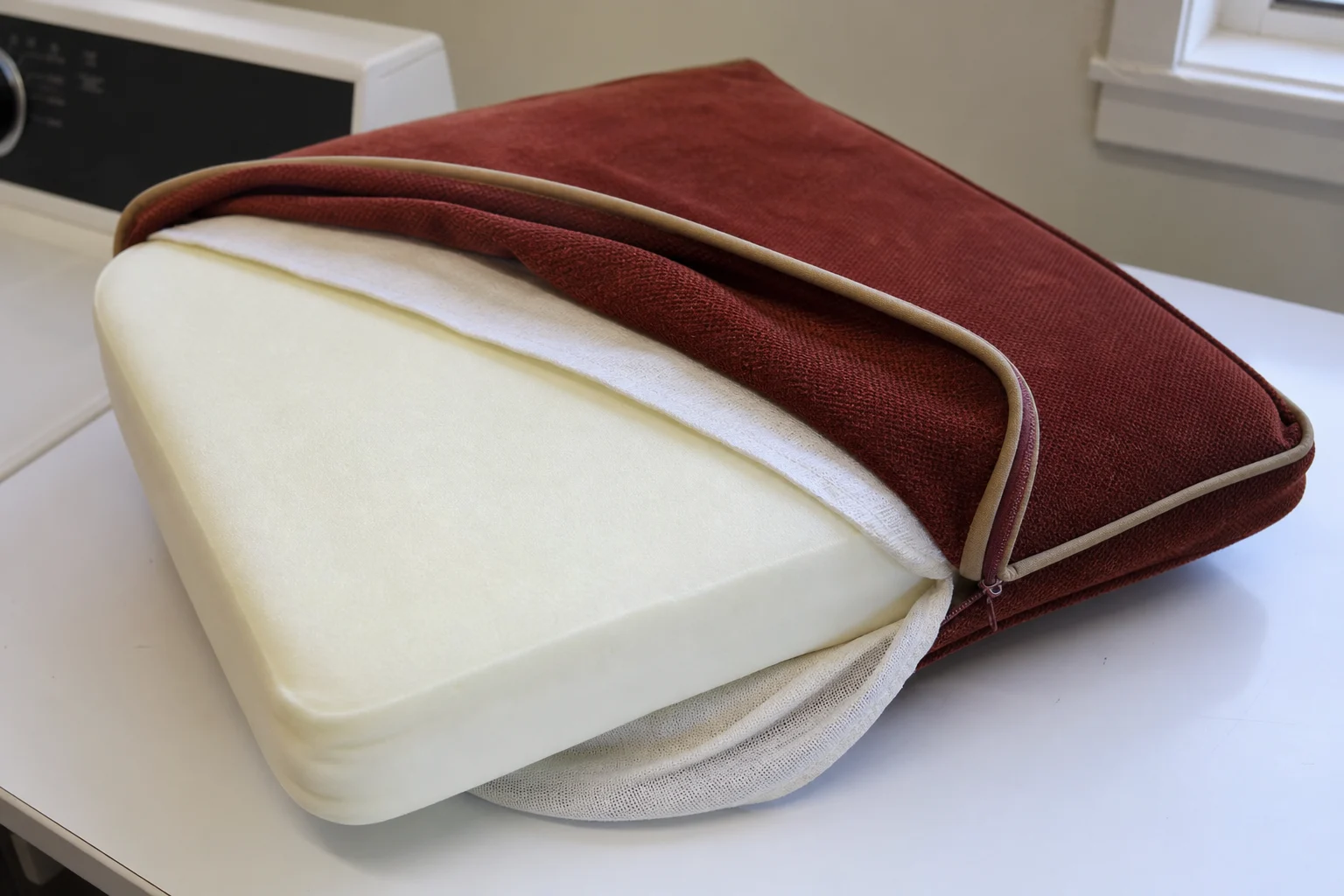
2. Washable cover. A cover that can be removed and washed — and here’s the honest part for custom cushions: at Cushion Mill, covers close with zippers — removable and washable, by design: a zippered cover keeps foam aligned with the fabric while letting the cover wash on its own, and a cover off the foam dries flat and fast. Removable, machine-washable covers are the ready-made industry’s answer — and ours; the custom answer is the same zipper, plus the DIY route (how to make cushion covers) for people who want to sew their own washable layer.
3. Washable pad. Fill that survives water: fiber-fill pads can often be washed and re-fluffed (with air-dry discipline); solid foam can be rinsed and thoroughly dried; quick-dry outdoor foam is engineered for repeated soaking (quick dry foam). Memory foam layers are the fragile member — saturated memory foam takes days to dry and degrades with washing, per memory foam topped cushions.
The buying translation: “washable cushion” as a single product claim is almost always one of these three wearing the title. Find out which before you count on it.
Specifying a Set for Cleanability
Cleanability is decided at purchase, layer by layer:
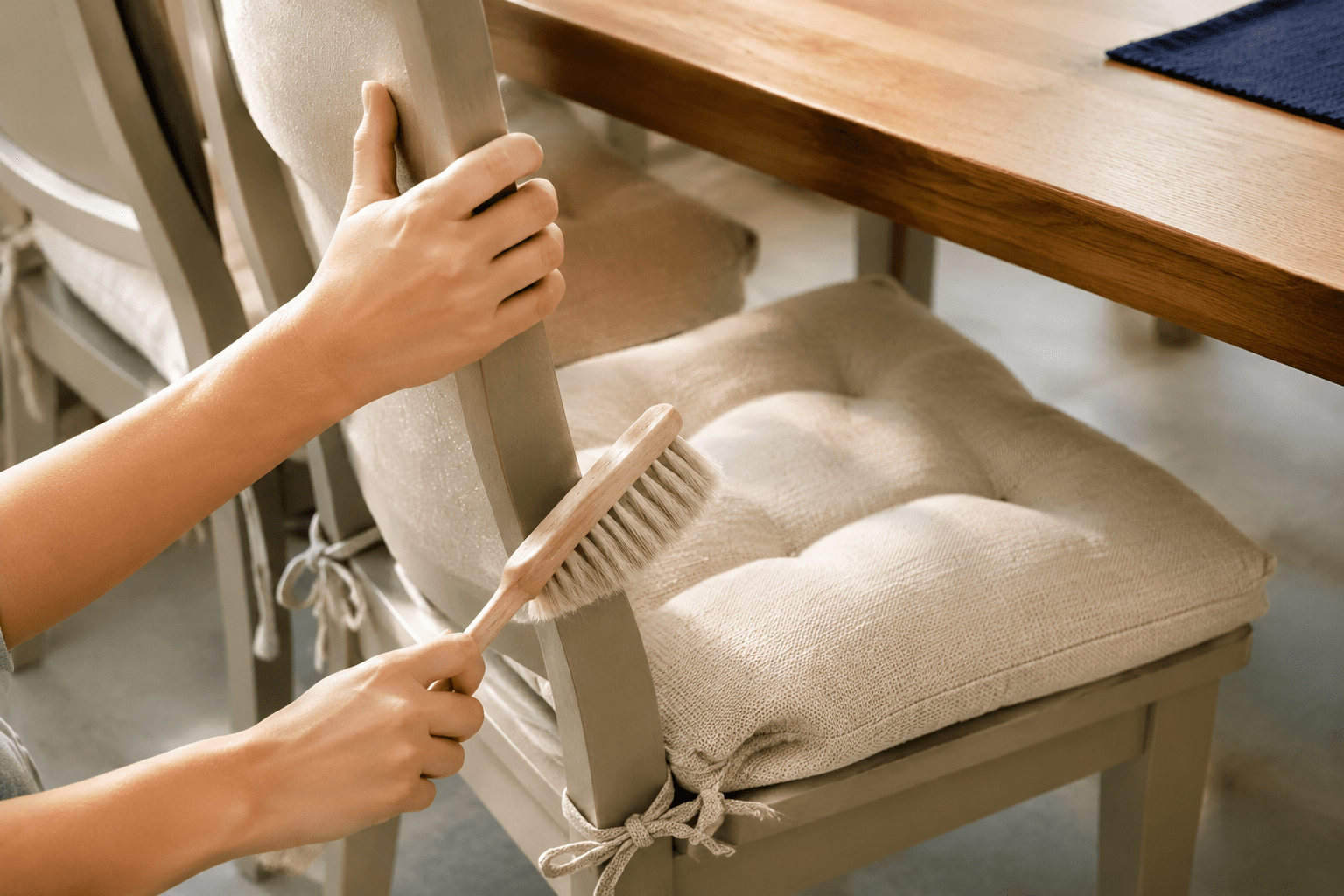
Fabric family by mess-type. Dining and kitchen sets live in a spill zone: performance polyester families shrug off water-based stains and clean with soap and water — the family logic is in best outdoor cushion fabric, and white’s special case in white outdoor cushions. Living-room fabric families (leather cushion alternatives, chenille, boucle) trade washability for texture — plan spot-clean discipline instead of machine dreams.
Construction that cleans in place. Fewer seams collect less soil: smooth construction and linear stitch wipe down faster than grid or channel stitching, whose grooves hold crumbs and dust. This is a real trade-off — channel construction holds loft beautifully (ergonomic cushions and posture) — but on a dining set that gets wiped weekly, seam-count is a cleaning multiplier.
Fill by exposure. Kitchen and eating-adjacent cushions benefit from foam you can rinse: solid foam grades (35–65D, per how to choose foam density) rinse and dry on edge in a day; quick-dry fill drains fastest where soaking is routine. Avoid untreated fiber fill in any piece you expect to wash — it mats.
The underlayer move. For genuinely wash-obsessed households, the two-layer strategy works: a custom cushion in a cleanable performance fabric, plus a washable decorative layer you sew or buy (no-sew cushion cover ideas includes quick removable layers). The structural piece stays spot-cleaned; the wash load goes to the cheap layer.
The Cleaning System That Applies to Everything
Whatever the construction, the cleaning discipline is the same ladder — escalate only as needed:
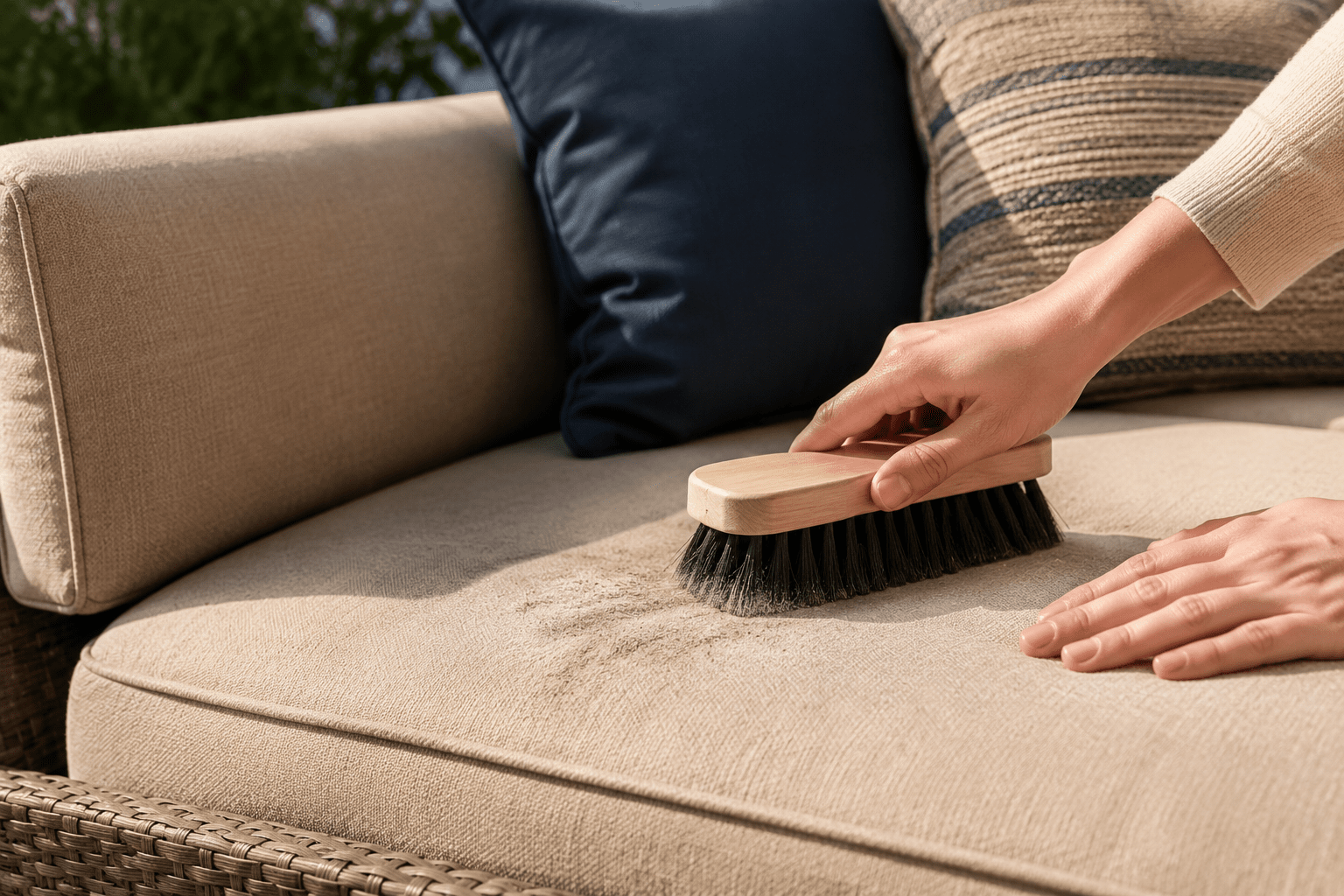
- Weekly dry routine. Brush or vacuum with an upholstery attachment — most “dirt” is particulate that hasn’t bonded yet. This single habit is most of washability in practice.
- Spot protocol, immediately. Blot (never rub), water plus mild soap, rinse, air-dry. The stain-by-stain playbook is in how to clean outdoor cushions; the cover-specific version in how to wash cushion covers.
- Periodic deep clean — zippered covers unzip and machine-wash per the care label; in place, this is a sponge-and-soil-extraction pass, not submersion. The fabric’s care line is the law; bleach only where the fiber chemistry allows (solution-dyed acrylic yes; nylon-family fibers never — chlorine yellows them permanently).
- Full dry, always, before use or storage. Damp cushions in use or in storage grow mold — the prevention system is in how to prevent mold on outdoor cushions, and the recovery routine in how to drain waterlogged cushions.
The habit stack that makes any cushion effectively washable — weekly, immediate, seasonal — is collected in outdoor cushion maintenance tips, and it transfers indoors unchanged.
The Honest Cost Comparison
Custom cushions at Cushion Mill come with zippered, removable and washable covers — a deliberate spec: $45 base per cushion plus area × fabric rate ($7.43 per square foot flat, all 119 fabrics), with fabric families chosen for how they clean, in place or in the machine. The honest comparison to “machine-washable” ready-made sets is about fabric weight and foam, not the zipper: ready-made covers use featherweight shells and thin foam, and the cover outlives the seat (the quality analysis in cheap vs quality outdoor cushions). A performance-fabric custom cushion, washed at the right cadence, outlasts several generations of ready-made sets — the cost-per-year framing is in custom vs standard cushions.
Cleaning by Room: Each Zone’s Mess Profile
Cleanability specs work best when matched to what actually lands on the cushion:
- – Dining and kitchen — water-based spills plus grease. Soup, juice, sauces, coffee: performance polyester and solution-dyed families handle these with blot-and-soap. Grease is the escalation case — degreasing dish soap first, rinse, dry. Smooth or linear construction for wipe speed.
- – Living room — body oils, snacks, pet residues. The mess is slower and oilier: weekly vacuuming matters more than washing, and a removable decorative layer (no-sew cover ideas) carries the visible wear. Chenille and textured families are spot-clean territory by nature.
- – Kids’ spaces — everything, repeatedly. The two-layer strategy earns its keep here: a rugged structural cushion plus a cheap washable outer layer that shrugs off marker, yogurt and mystery stickiness. Performance fabric on the inner piece, because the outer layer will have gaps.
- – Outdoor — organic load plus weather. Pollen, leaves, bird droppings, mold pressure: the outdoor system is a different discipline entirely, per how to clean outdoor cushions and how to prevent mold on outdoor cushions — but the same in-place ladder (dry-brush, spot, deep-clean) governs both worlds.
- – Pet-adjacent — hair, dander, accidents. Tight weaves release hair in one vacuum pass where plush weaves mat it in; the fabric-family trade-offs for pet households are in dog friendly outdoor fabric, and the odor-and-accident routines transfer indoors unchanged.
The pattern across every zone: the fabric family buys tolerance, the construction buys wipe-speed, and the cadence buys the rest. No single choice does all three — the washable set is the one that got all three right for its room.
FAQs
Are custom cushions washable?
Yes — covers unzip and remove for machine washing. Between washes, performance families also clean in place with soap, water and a sponge, so the machine is for the deep clean, not the daily spot.
Do the covers have zippers?
Yes — every cover closes with a zipper and removes for washing, so machine cycles and in-place cleaning are both on the table.
Can I wash foam cushions?
Solid foam can be rinsed and thoroughly air-dried; quick-dry foam handles repeated soaking. Fiber fill mats when washed, and memory foam layers degrade when saturated — the fill taxonomy is in the filling-types guide.
What fabric cleans easiest?
Solution-dyed acrylic and performance polyester families — water-based stains lift with mild soap, and the acrylic tolerates oxygen-bleach dilution. The family logic is in the fabric guide.
How do I keep dining cushions clean with kids?
Performance fabric, smooth or linear construction, weekly dry-brush, immediate spot protocol, and a washable decorative layer over the structural cushion. The two-layer strategy buys machine-washability without compromising the seat.
Does washing ruin cushion covers?
Machine cycles shrink and fade most upholstery fabrics, and repeated hot washing delaminates coatings. In-place cleaning at the right cadence preserves both fabric and fit — the routines are in the washing guide.
Next Steps
- Pick the fabric family by your mess-type (spill zone vs. living room) using best outdoor cushion fabric and polyester cushion care.
- Adopt the cleaning ladder now — weekly dry routine, immediate spot protocol, seasonal deep clean — from how to wash cushion covers.
- Spec the cleanable set at the custom sofa cushions builder — performance fabric, smooth or linear construction, foam grade chosen to tolerate the rinse-and-dry routine.
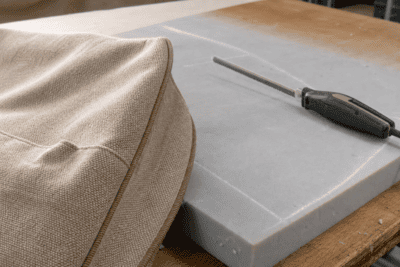
Sofa Foam Cut to Size: How to Order Exact-Fit Foam
How to order sofa foam cut to size — measuring the core, adding the compression allowance, specifying density, thickness and shape, and the checklist to run before any foam is cut.
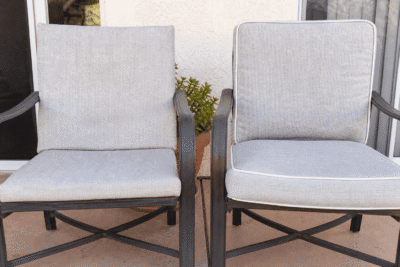
Cheap vs Quality Outdoor Cushions: Where the Money Actually Goes
What separates a $15 cushion from a $60 one and a $150 one — fabric construction, fill, stitching and covers — which upgrades matter, which are markup, and how to buy the quality your furniture actually needs without overpaying.
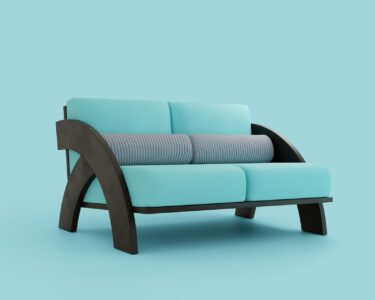
Couch Cushion Foam Inserts: Measure and Order New Cores
A foam insert replaces the flattened core inside the covers you already own. Measure seam to seam, pick 60D seats and 50D backs, and price the set in one order.
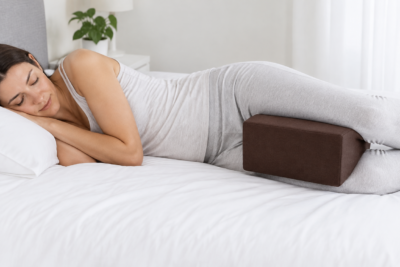
Knee Bolsters for Side Sleepers and Back Sleepers: A Firm Support Guide
A firm half-round D bolster fills the gap between the knees for side sleepers and under both knees for back sleepers. Heights, densities and lengths explained — positioning and comfort, made to order.
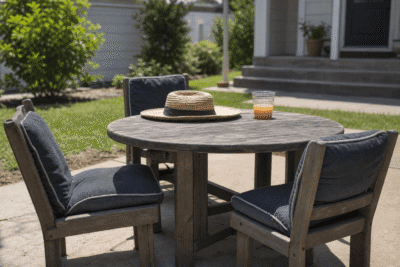
Kid-Friendly Patio Cushions: The Family-Proof Spec
Cushions that survive children — fabric families that shrug off juice and markers, construction that wipes fast, foam that handles jumping duty, attachment systems that stay put and stay safe, and the two-layer strategy that saves the good cushions.
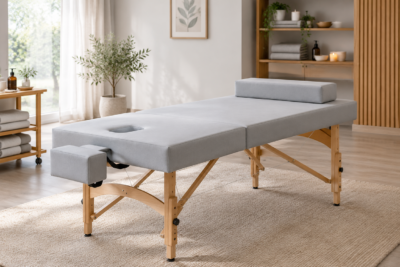
Massage Table Bolsters: Firmness, Sizing and Placement
A firm foam wedge is the positioning tool a massage table lacks. Four set sizes for ankles, knees, wrists and side-lying, solid 50D or layered builds, fabric choice included — priced 20% below custom.