
No-sew cushion covers are the gateway project of home sewing-adjacent DIY: the promise is a fresh cushion look with scissors and glue instead of a machine. The promise is partly true — several no-sew methods genuinely work, a couple are brilliant, and the category as a whole has a ceiling that matters: glue-and-knot construction is a styling layer, not a structural one. Use the right method for the right job and no-sew earns its place; expect it to replace a sewn cover on a daily-use seat and it fails by design.
This guide ranks the seven methods that work, with materials and honest durability expectations. For real sewing (which outlasts all of these), the full path is how to make cushion covers, and for recovering old cushions properly, cushion recovery DIY.
Method 1: The Envelope Wrap (Best Overall)
A single piece of fabric wrapped around the cushion with overlapping panels on the back — the flaps hold by friction and overlap tension, and the whole thing comes off for washing in seconds.
- – How: cut fabric to cushion width × 2 plus 6–8″ overlap, wrap, fold the back like a parcel, secure the overlap with hidden fabric-safe pins or sew-on snaps at the corners.
- – Best for: seat cushions on chairs and benches, throw-pad scale, anything you want to change seasonally.
- – Durability: excellent — nothing to fail but the fabric itself. The method behind most “instant slipcover” products.
- – Upgrade path: add sewn velcro tabs on the overlap (hand-tacking velcro takes minutes and needs no machine).
Method 2: Tie-Front Panel (The Classic)
The old-school method: fabric panel laid over the cushion, ties at the corners or sides knotted to the chair frame.
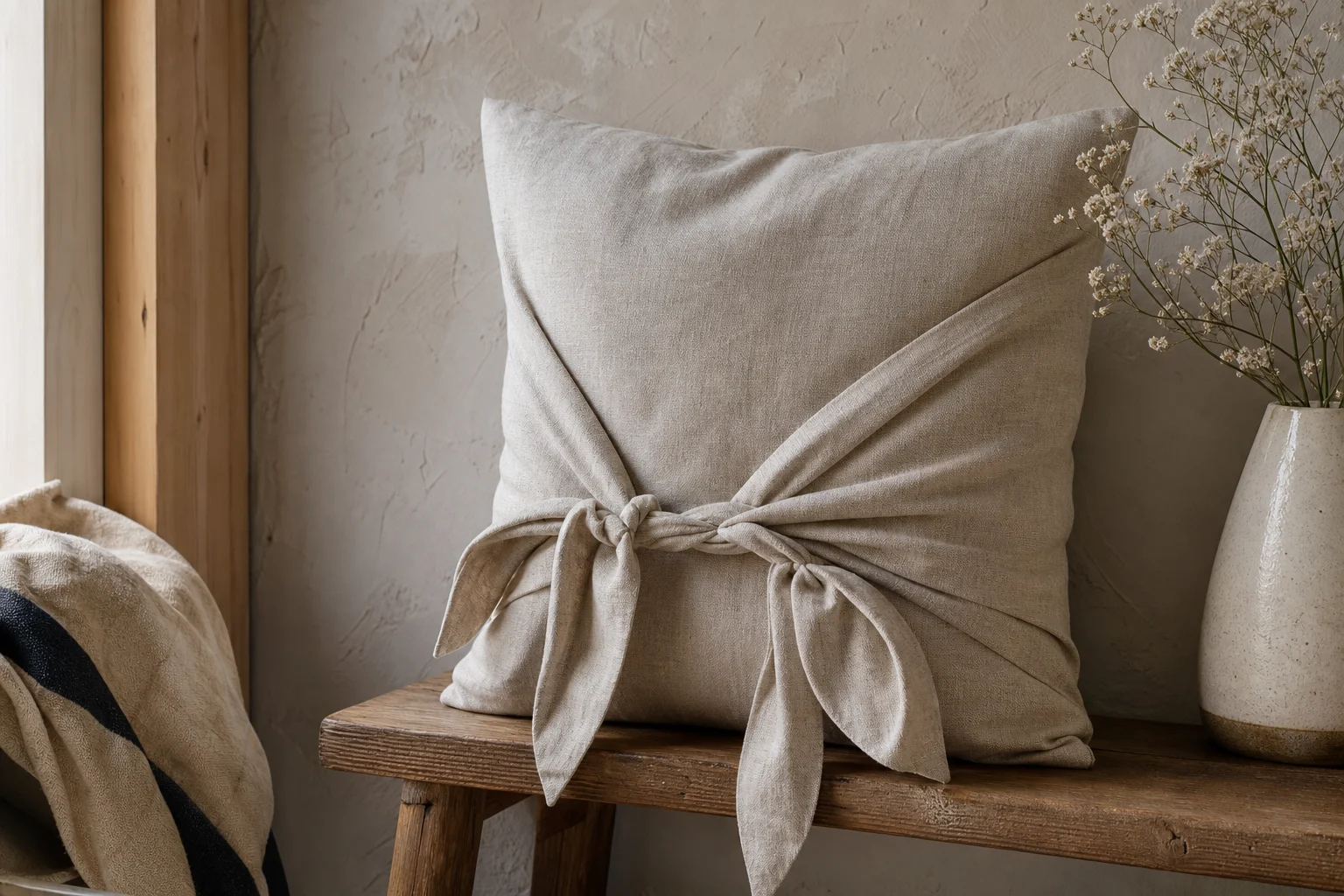
- – How: hem or glue-seal the panel edges, attach ready-made ties (or fabric strips) at corners, knot to chair corners or frame bars. Tie-positioning logic: how to add ties to cushions.
- – Best for: dining chair pads, café chairs, wicker seats — anywhere the frame offers anchor points.
- – Durability: very good; the panel itself is a flat piece with no stress seams.
Method 3: Fabric Glue Box Build (For the Patient)
Liquid fabric glue or fusible web (iron-on adhesive) builds a real box-style cover with zero stitching.
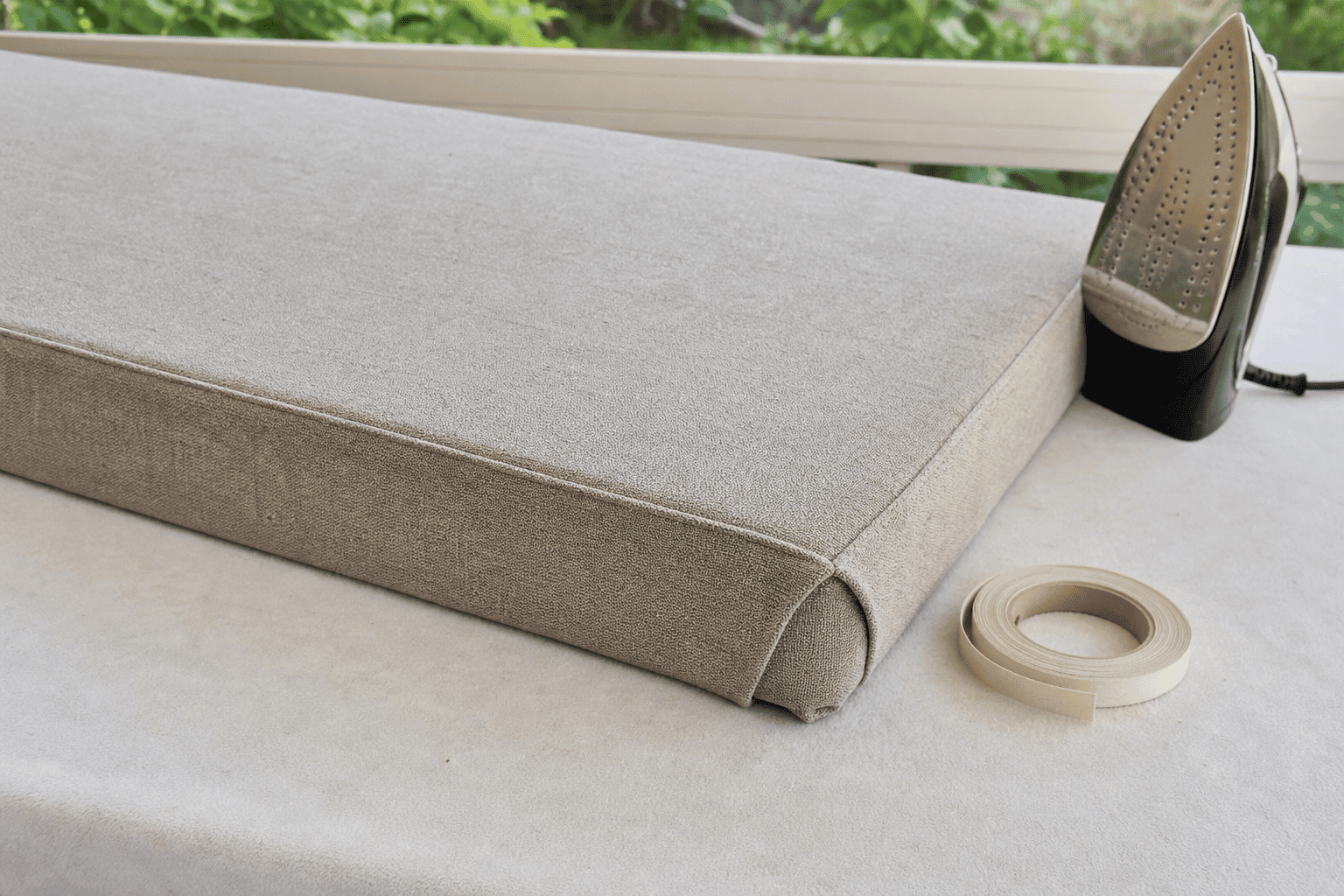
- – How: cut the box pattern from how to make cushion covers, join edges with fusible web and a hot iron, or fabric glue clamped overnight.
- – Best for: decorative cushions, show pieces, kids’ rooms.
- – Durability: the honest weak point — glued seams hold decorative loads and fail at stress points (corners, daily seat use). Wash cold, gentle, infrequently; glued seams and hot dryers are enemies.
- – Rule of thumb: fusible web beats liquid glue for seams; liquid glue is for hems and applique, not structure.
Method 4: The Fitted-Sheet Hack (Fastest)
A fitted sheet in the right size, tucked over the cushion like it’s a mattress.
- – How: match sheet size to cushion footprint (crib sheets fit many bench cushions; standard pillowcases fit seat pads), tuck, done.
- – Best for: window seats, daybed cushions, bench tops — big flat pieces.
- – Durability: as good as the sheet; the elastic does real work. The sizing logic for benches is in bench cushion measurements.
- – Limit: reads as a sheet up close — style accordingly (this is a utility method, not a showpiece).
Method 5: Knotted Fringe Wrap (The Decorative One)
Fabric laid over the cushion, with fringe cut into the edges and knotted around it — zero tools, ten minutes.
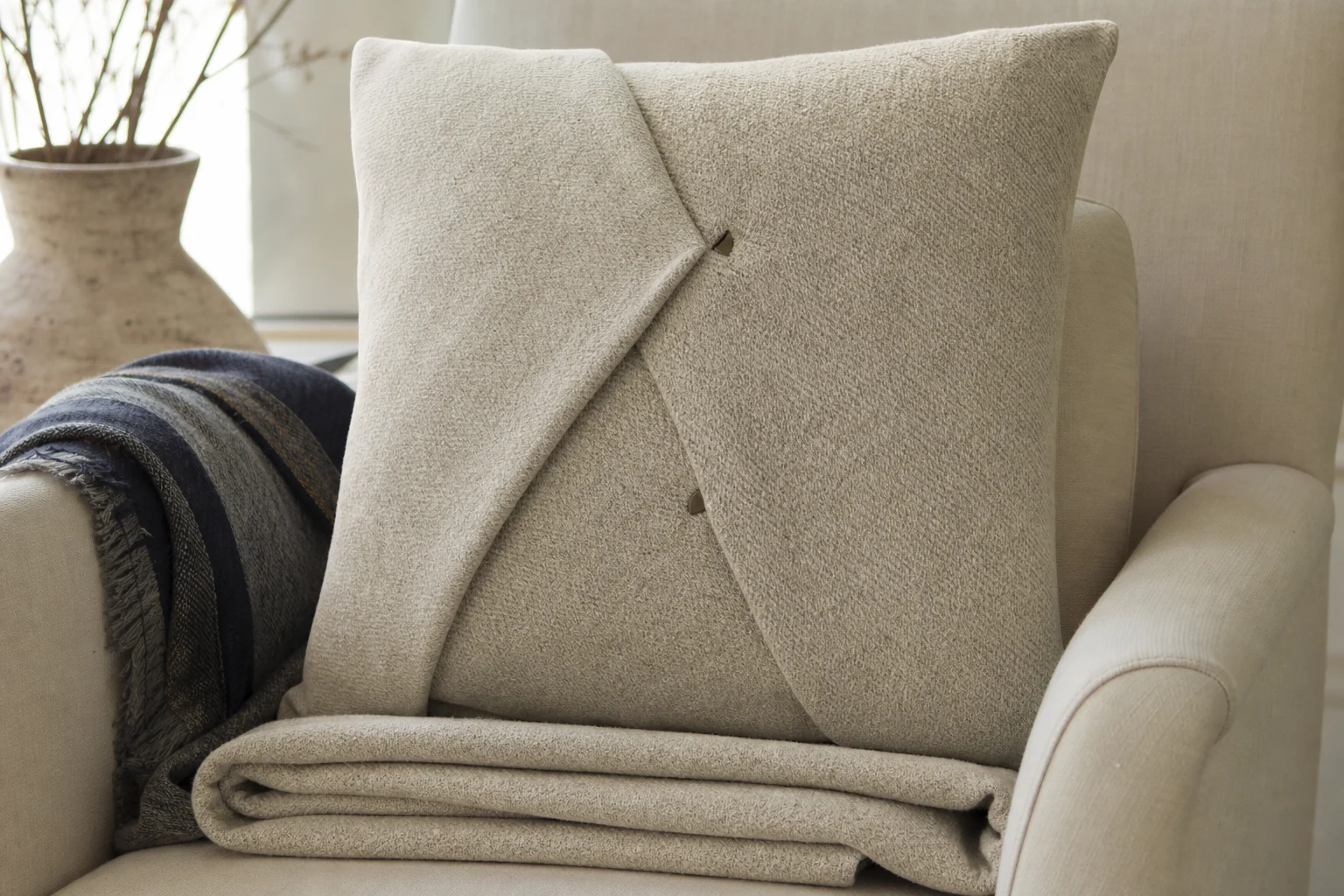
- – How: cut fabric with 4–6″ fringe margins on all sides, snip fringe, knot front-to-back fringe pairs all the way around.
- – Best for: floor cushions (the knotting is structural enough for casual seating — sizing per how to make a floor cushion), picnic pads, patio bench toppers.
- – Durability: good for casual duty; the knots loosen with serious abuse and retighten in seconds.
Method 6: Heat-Bond Tape Hems (The Tailored Look)
Iron-on hem tape gives no-sew covers crisp finished edges — usually combined with Method 1 or 2 rather than standing alone.
- – How: fold and press hems with double-sided hem tape inside the fold.
- – Best for: making Methods 1 and 2 look finished instead of crafty.
- – Durability: hems hold well; same wash-cold discipline as glue.
Method 7: Velcro-Closure Wrap (The Semi-Permanent)
Envelope wrap + sew-on or iron-on velcro strip along the back overlap.
- – How: build Method 1, attach velcro along the overlap edge (iron-on velcro keeps it truly no-sew).
- – Best for: cushions handled often — dining sets, bench cushions, pet-adjacent furniture.
- – Durability: excellent; velcro is rated for thousands of cycles. The one caveat: sew-on velcro outlasts iron-on under washing.
What No-Sew Can’t Do
The honest ceiling, so the methods get used for the right jobs:
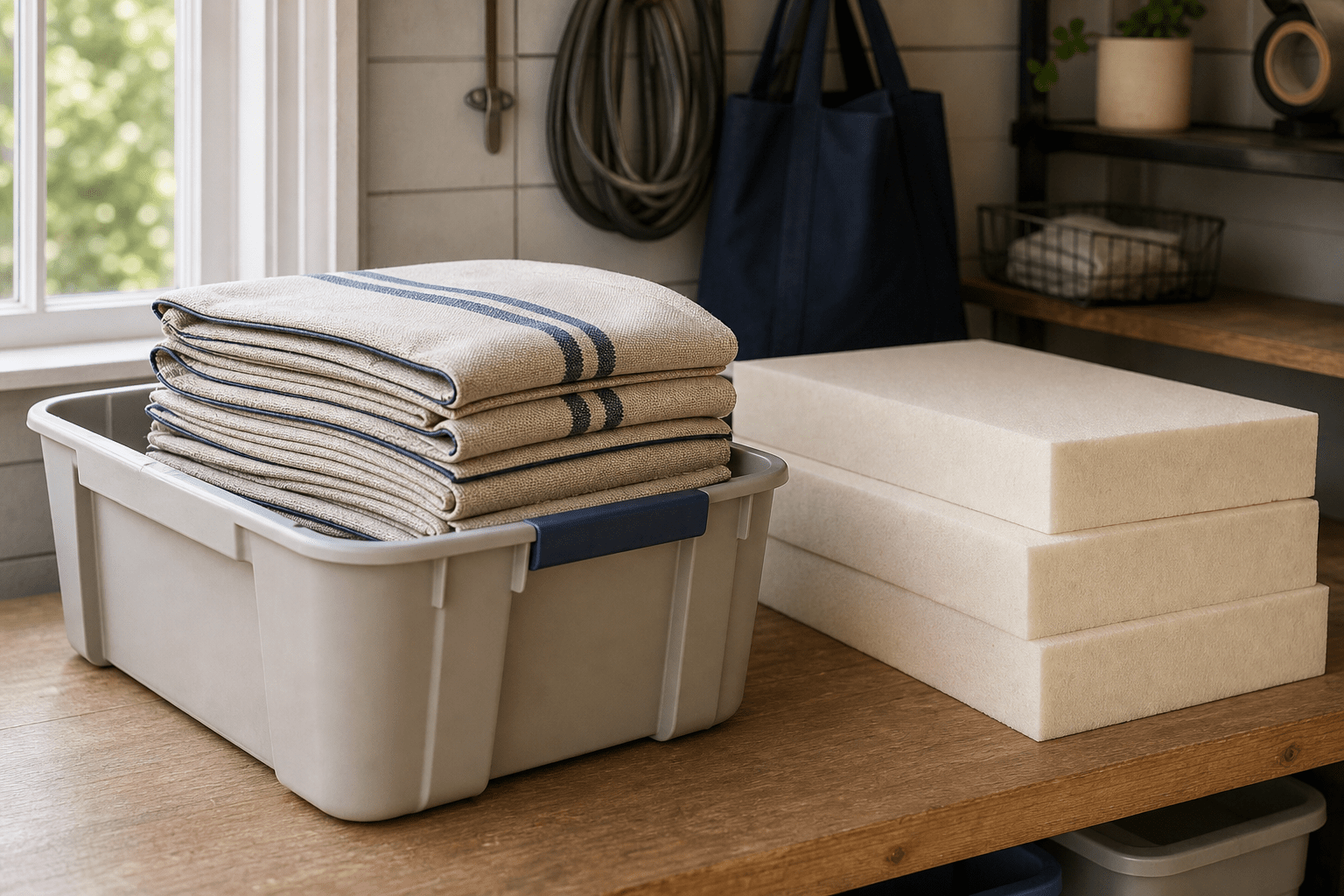
- – Structural seat work. Daily-use seat cushions need the cover to grip the foam under load — a fitted sewn box does this; wraps and glue builds shift. The structural piece under a no-sew layer should be a proper cushion (custom builds at $45 base plus fabric area: custom cushions). When the foam is as gone as the fabric, full replacement couch cushions solve both layers at once.
- – Precision fit. No-sew methods tolerate slop by design; a cushion that must fit inside a frame to a ±½” tolerance (±¾” over 36″) is a sewn/custom job — the fit logic in cushion measurement mistakes.
- – Outdoor exposure. Glued seams and knotted fringe degrade in sun and rain faster than sewn seams; outdoor no-sew is seasonal dressing over outdoor-rated construction, per best outdoor cushion fabric.
The smart pattern most homes land on: a durable structural cushion (bought or sewn once) + no-sew layers for style changes — the same two-layer strategy framed for washability in washable cushions. You get machine-refreshable looks and a seat that never goes flat.
Materials Shopping List
Every method above needs only a handful of supplies, and buying them right the first time saves the sad second trip:
- – Fabric yardage: cushion width + 2 × depth + 6–8″ for wraps and overlaps, pre-shrunk (wash and dry once before cutting — the no-sew build can’t compensate later for shrinkage). Mid-weight fabrics (canvas, duck, upholstery-weight polyester) hold wraps taut where flimsy quilting cotton sags.
- – Fusible web and hem tape: enough for the seam lines plus a spare foot — runs are cheap, mistakes are permanent.
- – Fabric glue: one small bottle of quality permanent fabric adhesive; skip the multipurpose craft glues, which dry stiff and crack at folds.
- – Sew-on and iron-on velcro: a yard covers several cushions; buy sew-on for anything washed often, iron-on for speed.
- – Ready-made ties and straps: grosgrain ribbon, twill tape, or premade cushion ties — plus a lighter for heat-sealing ribbon ends.
- – Hidden pins and safety clips: the upholstery-grade curved safety pins, not household straight pins, for envelope wraps that get sat on.
Total cost for a dining set’s worth of no-sew layers typically runs $30–60 — which is the point: cheap enough to change with the seasons, sturdy enough in the right method to last years, and never asked to do structural work it can’t.
FAQs
What’s the best no-sew cushion cover method?
The envelope wrap — one fabric piece, overlapping back panels, removable in seconds, nothing structural to fail. Add velcro on the overlap for cushions handled daily.
Do fabric glue cushion covers hold up?
For decorative duty, yes; for daily seat use, no — glued seams fail at stress corners. Fusible web beats liquid glue for seams; wash cold and gentle either way.
Can I use no-sew covers outdoors?
As seasonal dressing over outdoor-rated cushions, fine; as the construction itself, no — glue and knots degrade in sun and rain faster than sewn seams. The outdoor fabric logic is in the fabric guide.
How do I make a no-sew cover stay on?
Ties to the frame, velcro on the overlap, or snug friction fit — pick by how much the cushion gets handled. Tie positioning follows the frame’s real gaps, per the ties guide.
Can no-sew methods fit a cushion inside a frame?
Not to the tolerance a frame demands — precision fit is a sewn or custom job. No-sew layers sit on top of platforms, not inside tight frames.
What’s the fastest decent-looking option?
The fitted-sheet hack for big flat pieces, the knotted fringe wrap for casual seating — both under fifteen minutes with zero adhesive.
Next Steps
- Pick the method by duty: envelope or velcro wrap for seats, glue build for decor, sheet hack for benches and daybeds.
- Measure the cushion footprint before cutting anything — platform sizing per bench cushion measurements — and pre-wash your fabric so shrinkage happens before the build.
- For the structural layer under your no-sew styling, build the durable base at the custom cushions builder — graded foam, fitted construction, and a fabric that works alone on the days the style layer is in the wash.
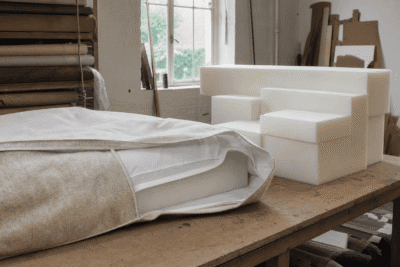
How to Replace Cushion Foam: A DIY Guide to Cutting and Fitting New Foam
Replace worn cushion foam yourself — choosing density and thickness, measuring the core, cutting foam at home, wrapping with batting and refitting covers.
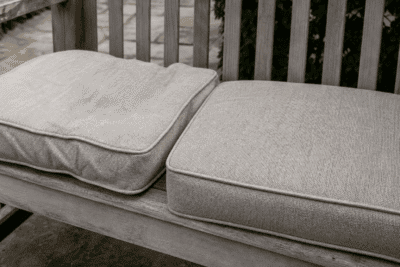
How to Tighten Cushion Covers: Seven Methods From Temporary to Tailored
Why cushion covers loosen — fabric stretch, fill loss, wrong original fit — and seven tightening methods in ascending permanence: repositioning tricks, quick refits, heat shrinking, sewn alterations, and re-covering with a properly sized cover.
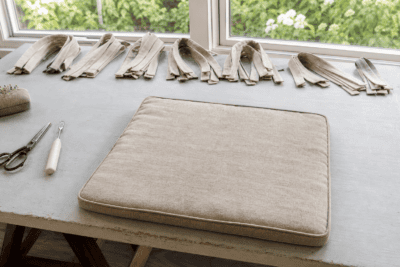
How to Add Ties to Cushions: Positioning, Sewing and the No-Sew Fixes
The complete guide to cushion ties — mapping positions to the frame’s real gaps, four tie styles from sewn loops to ribbon, hand-sewing and no-sew attachment methods, and when ties lose to straps, gripper bases or heavier anchors.
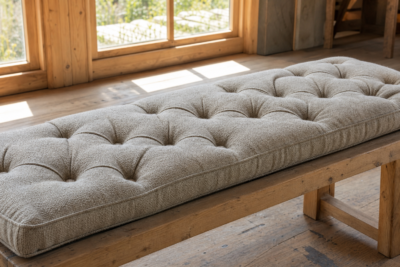
DIY Tufted Bench Cushion: How to Build the Quilted Look Yourself
A realistic walk-through of sewing a tufted bench cushion at home — materials list, the tufting method that works for beginners (buttons versus stitched pulls), foam and fabric choices, where DIY tufting goes wrong, and when to order the grid stitch instead.
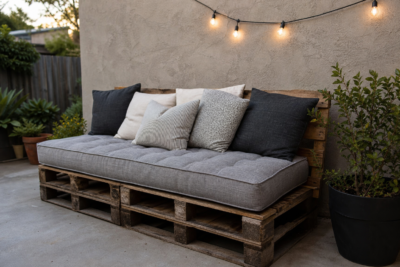
Pallet Bench Cushion DIY: From Shipping Wood to Seated in a Weekend
The full pallet-bench project — sourcing and deconstructing pallets safely, building a squared bench frame, sizing the cushion to the finished deck, and the honest moment to buy the cushion instead of sewing it.
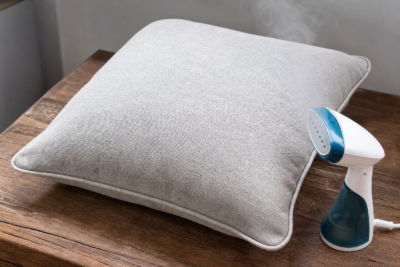
How to Get Wrinkles Out of Cushion Covers: Steam, Wash and Weight Methods
The complete wrinkle-removal guide for cushion covers — why covers wrinkle in the first place, the fabric-by-fabric method matrix (steam, dryer tricks, damp-weight, wash-and-air), the heat-safety rules by fiber, and the fit fixes that stop wrinkles returning.