
Polyester is the default fabric of the cushion market — it’s what most budget and mid-range cushions are made of, usually sold as “spun poly” when it’s woven to look like cotton. It’s inexpensive, reasonably tough, quick to dry, and soft to the touch. Its two weaknesses are well known: it fades in sun faster than any premium fiber, and its covers lose shape over seasons of washing and weather. Both can be managed — not eliminated, but managed — and that’s what this guide does.
For the material landscape and where polyester sits against solution-dyed acrylic and Olefin, see the best outdoor cushion fabrics. For acrylic-specific cleaning (including the bleach routine polyester must never get), see Sunbrella fabric care.
What You’re Caring For: Polyester’s Real Properties
Care routines work when they match the material. Polyester, honestly stated:
- – Strong and elastic. High tensile strength, good abrasion resistance, and it springs back from stretching better than cotton — which is why covers sag slowly rather than ripping.
- – Hydrophobic. The fiber itself holds almost no water, so polyester dries fast. But it’s often wrapped around a foam or fiber fill that holds plenty — “dries fast” describes the fabric, not the cushion.
- – Dye-surface vulnerable. Standard polyester outdoor weaves are piece-dyed or surface-coated for UV; pigment sits at the surface where UV attacks it. Fading is a property of the tier, not a defect of your particular cushions.
- – Heat-sensitive at the extremes. It survives sun but not dryers on high and not boiling water: polyester’s softening range starts well below cotton’s, which is why shrinkage and wrinkling show up when care labels are ignored.
- – Oily stains bond. Hydrophobic fibers repel water-based soils but grab oils — sunscreen, salad dressing, body oils — and hold them warm. Most “mystery stains” on polyester cushions are oil-plus-sun.
Every routine below is just these five facts turned into actions.
The Routine: Regular, Monthly and Seasonal
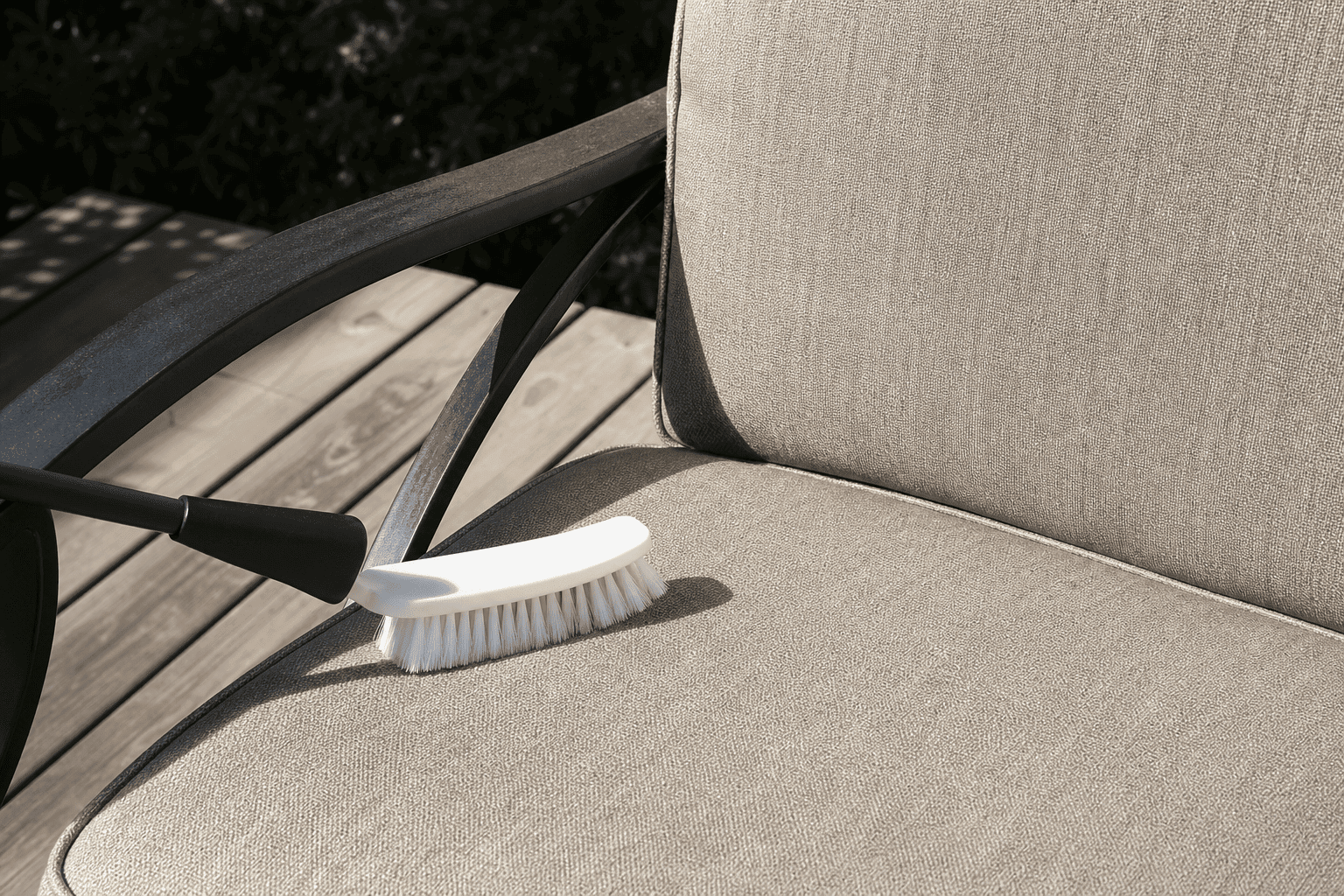
Weekly-to-monthly: surface reset. Brush loose dirt off with a soft brush — dry, always dry first; wetting dry dust makes mud. Then a quick rinse with the hose (plain water), or wipe with a cloth dampened in warm water with a few drops of mild dish soap. Rinse the soap out completely; residue is a dirt magnet and, worse, a mildew food source. Stand cushions on edge to drain and air-dry — the same rule that governs outdoor cushion maintenance generally.
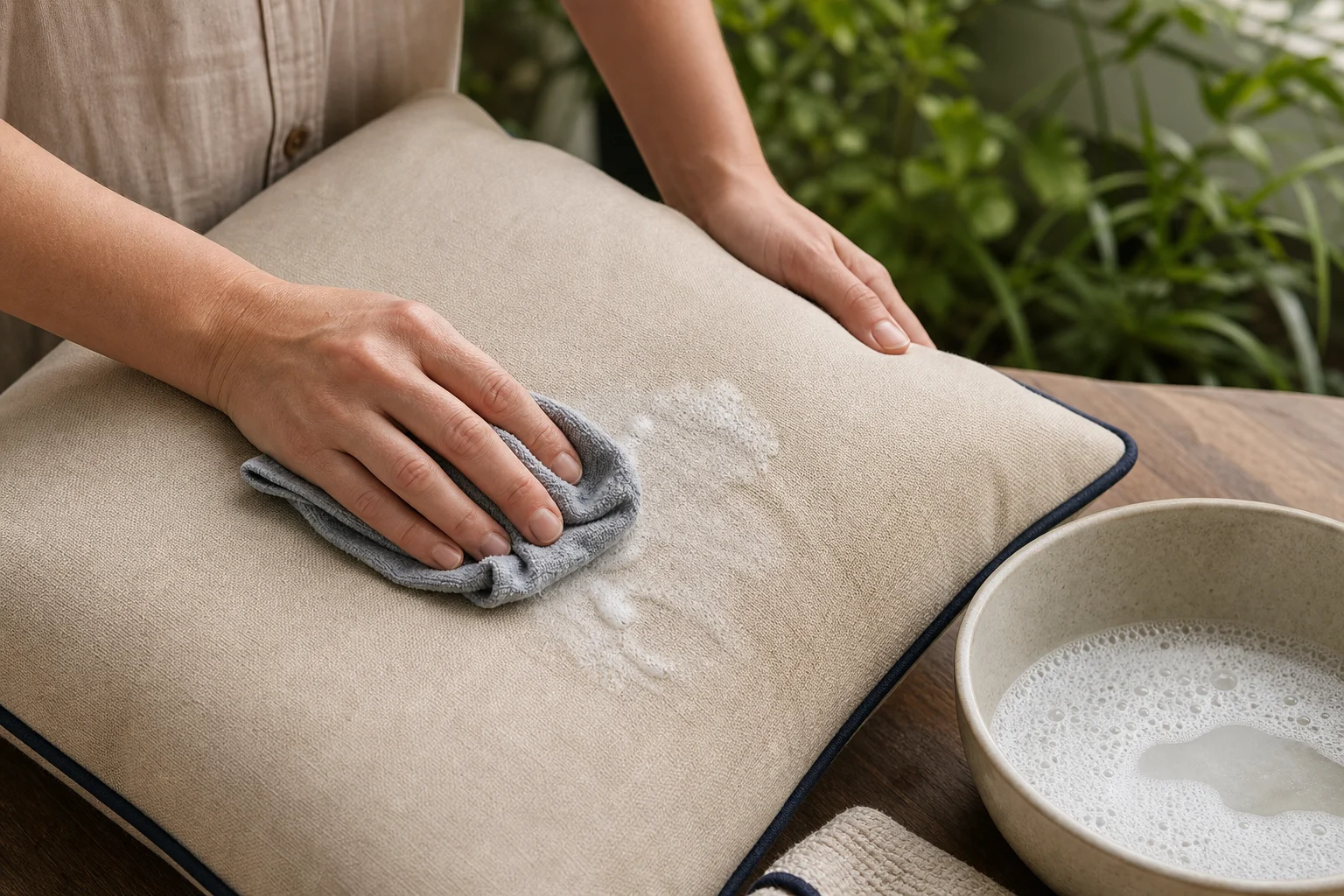
Spot-cleaning: attack oil early. For sunscreen, food grease, or tree sap: dab (don’t rub) with a cloth and a drop of dish soap in warm water — dish soap is formulated to emulsify oil. Rinse thoroughly. For set-in oil stains, a dedicated upholstery spot remover rated for synthetic fabrics works; test on a hidden seam first, always.
Monthly in season: the full wash. Remove covers if they zip (more on non-zipped covers below):
- Machine wash cold or warm — cold to 30°C/86°F is the safe default — on a gentle cycle, alone or with similar fabrics.
- Mild detergent, no bleach, no fabric softener. Bleach strips the surface dye polyester depends on (this is the one instruction where polyester care differs sharply from acrylic, where diluted bleach is fine). Softener leaves a coating that attracts dirt.
- Air dry. No machine drying on heat — polyester shrinks and wrinkles at temperatures a cotton towel shrugs off. Hang covers, smooth them roughly back into shape, and let them dry flat or hung.
- While covers are off, check the fill: compressed foam recovering its shape, no mildew dots, no musty smell. Foam issues follow a different playbook — how to clean outdoor cushions covers the interior side.
Seasonal: the storage handoff. Clean before storing — dirt and oil left over winter become permanent stains and mildew starter cultures. Bone-dry is the other half: polyester fabric dries fast, but the fill underneath sets the pace, and storing any cushion damp is how you open next spring to a mildew museum. The full winter routine, including the stand-on-edge rule, is in how to store outdoor cushions for winter.
The Fading Problem: Slowing the Inevitable
Polyester fades because its dye sits at the fiber surface where UV destroys it. You cannot stop this; you can slow it dramatically:
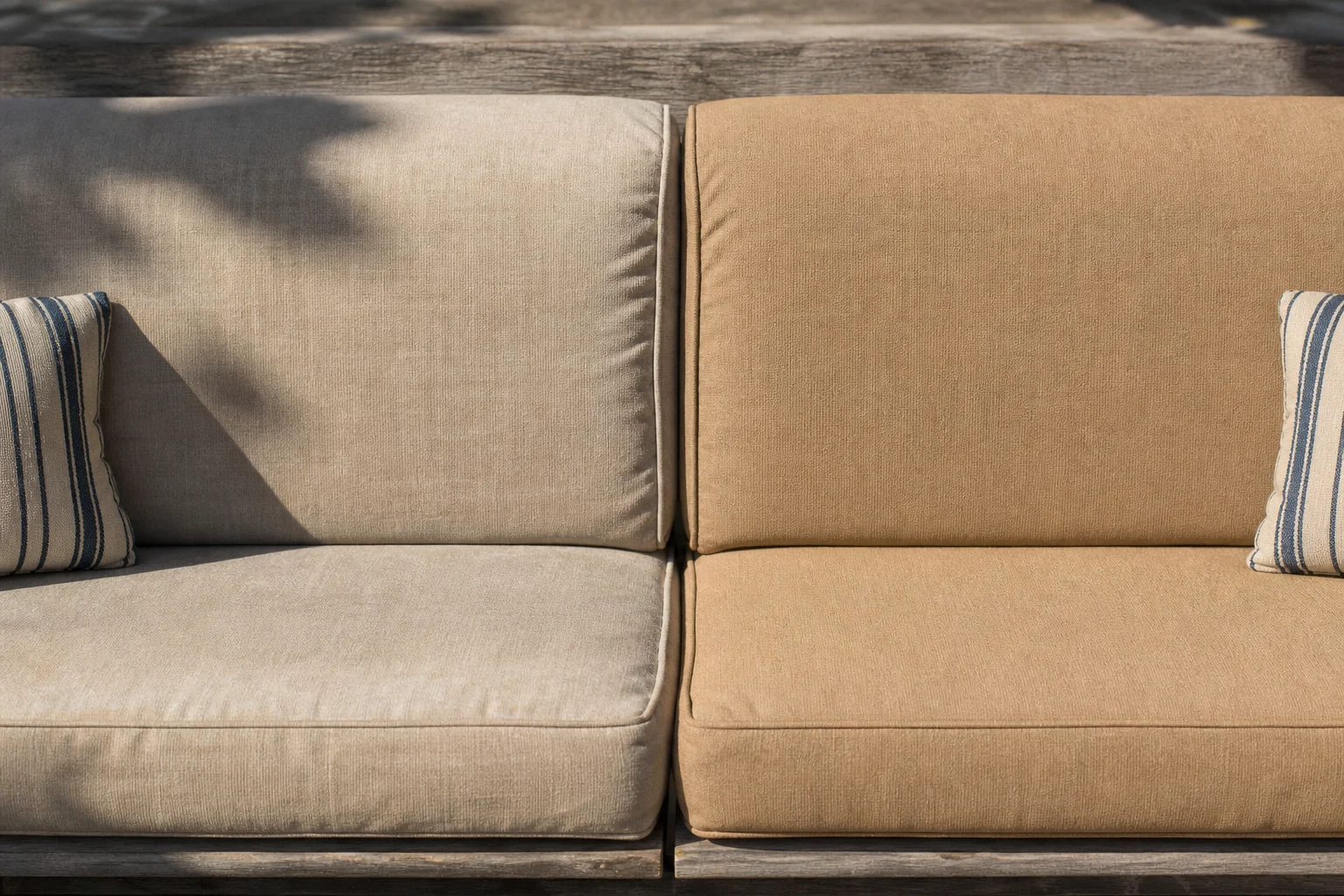
- Manage exposure hours. Under-cover storage between uses, or furniture placement that shifts the sun’s angle across the day, halves UV dose. Cushions that come in when the patio is empty outlast cushions that live out by 2–3 seasons.
- Choose colors that hide fade. Grays, taupes, and mid-tones show UV loss slower than saturated reds and blues (which bleach visibly) and slower than dark colors (which show the chalky contrast). If you already own the cushions, this is a note for the next purchase, not a fix.
- UV protectant sprays exist — use with expectations. Fabric-guard sprays add a sacrificial UV-absorbing layer. They work for a season, then wear off and need reapplication. They buy time; they do not convert polyester to acrylic. Apply clean, dry, evenly, and outdoors.
- Fade is asymmetric — rotate. The cushion face that faces the sun’s dominant angle fades first. Rotating cushions (and flipping reversible ones) spreads the loss evenly across faces — a two-second habit that buys a visible season.
When fade passes the point of no return, the honest math kicks in: covers-only replacement is a real option (see replacement cushion covers guide) when fills are still healthy, but faded fabric means the whole tier’s weakness has arrived, and the durable fix is a higher-tier fabric next round — the decision framework in custom vs standard cushions.
Stretched Covers: The Polyester Second Failure
After a few seasons of washing and load-bearing, polyester covers relax — wider than the insert, baggy at the corners, sagging at the seat front. Options, in escalating order:
- Wash-hot-then-dry-carefully trick (limited). Polyester shrinks slightly with heat. A wash at warm (not hot) followed by flat air-drying while smoothing to size can take up minor relaxation. Full-heat dryer shrinking is roulette: you’ll shrink the cover, but unevenly, and past the insert’s size.
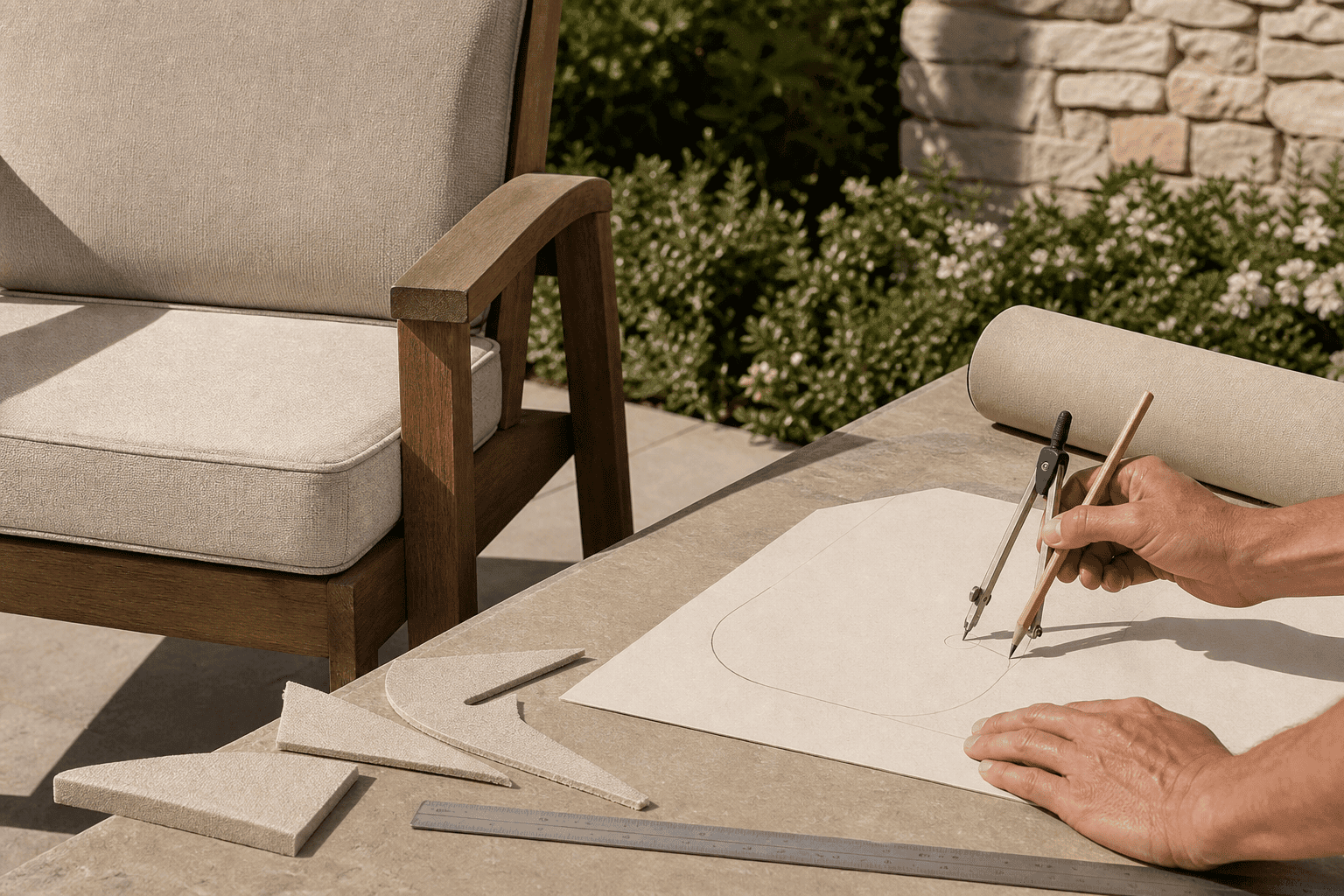
- New inserts to fill the slack. If the cover stretched because the fill compressed (the usual tandem failure), a fresh high-density core — the grades explained in how to choose foam density — takes the bagginess out and restores support in one move.
- New covers on existing fills. Healthy foam, tired fabric: the economy route, sized per the covers guide above.
- Full replacement. When both layers have aged out, replacement in a better fabric tier ends the cycle. On custom work fabric runs a flat $7.43 per square foot of top area across all 119 fabrics — no spread at all, so the durable-family upgrade is $0 per cushion, not a doubling.
FAQs
Can you machine wash polyester cushion covers?
Yes — cold or warm water, gentle cycle, mild detergent, air dry. The three killers are bleach (strips surface dye), fabric softener (coats the fiber), and heat drying (shrinks and wrinkles). Follow those and covers survive many cycles.
Can I use bleach on polyester cushions?
No — this is the one routine that differs from acrylic. Polyester’s dye sits at the surface, and bleach removes it. For mildew on polyester, use dedicated synthetic-fabric cleaner or a very diluted oxygen-bleach solution tested on a hidden seam first. Undiluted or standard-dilution chlorine bleach will cost you color.
Why do my polyester cushions fade so fast?
Because the dye is at the fiber surface, where UV destroys it — that’s the tier, not a defect. Premium solution-dyed fibers carry pigment through the core and hold color for years; the mechanism is explained in solution-dyed acrylic explained. Exposure management and rotation slow polyester fade; only a better fiber ends it.
My covers won’t come off — how do I deep clean?
Scrub in place: soft brush, soapy warm water, thorough rinse, then stand on edge to drain and dry fully. Rinse until no soap remains (residue attracts dirt and feeds mildew), and don’t sit cushions back on furniture until the fill is dry, not just the face. The in-place method is detailed in how to clean outdoor cushions.
The cover is bigger than the cushion now. What do I do?
First check whether the fill shrank rather than the cover grew. Compressed foam inside a still-good cover is the common failure and the cheap fix — a replacement core in the right density restores both fit and comfort. Genuinely stretched covers follow the warm-wash/flat-dry trick, then covers-only replacement if that fails.
Next Steps
- Run one monthly full wash now, before dirt cures into the weave — the routine above takes twenty minutes of hands-on time.
- Diagnose your weakest cushions honestly: faded fabric, dead fill, or stretched covers each route to a different fix, and the replacement covers guide has the decision table.
- When the cycle repeats, break it: custom outdoor cushions in a weatherproof fabric family and a density-graded core turns a consumable into a multi-year purchase.
- Replacing instead of nursing — when fade or stretch has won, store-brand patio sets are pre-charted: see the Wilson & Fisher cushion sets for the common backyard lines.
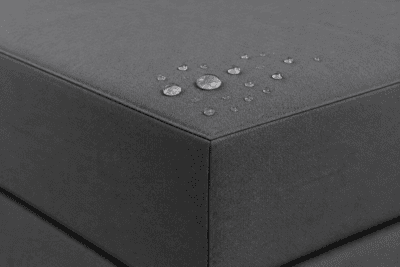
Best Outdoor Cushion Fabric: How to Choose by Climate, Exposure and Budget
A factory guide to outdoor cushion fabrics — solution-dyed acrylic, olefin, polyester grades and blends — ranked for fade, water, mold, comfort and cost per year.
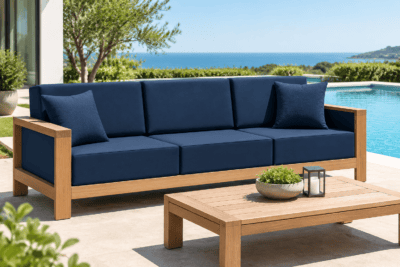
Is Sunbrella Fabric Worth It? An Honest Cost-Per-Year Analysis
Whether the Sunbrella premium pays off depends on sun exposure, horizon and color — here’s the honest math, warranty mechanics and when to skip the upgrade.
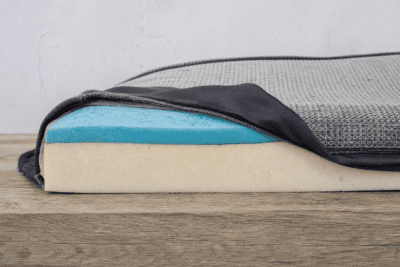
Memory Foam Topped Cushions: When Gel Layers Help (and Hurt)
Memory foam topped cushions and gel-infused layers examined — where a visco topper over HR foam genuinely helps, where it hurts, and the layer specs that separate luxury from a gimmick.
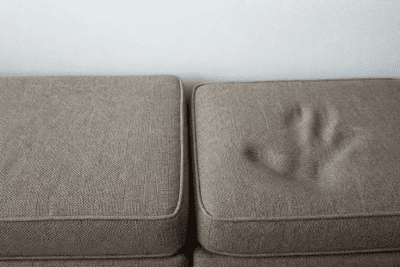
Memory Foam vs Regular Foam Cushions: What a Cushion Factory Wants You to Know
Memory foam vs high-resilience foam for seat cushions — density (35D–65D), ILD firmness, compression set and airflow explained by the people who cut foam daily.
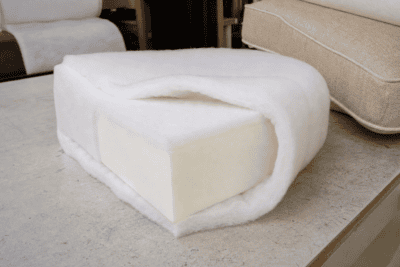
Dacron Batting: The Wrap Layer Explained (What It Does and When to Order It)
Dacron batting for cushions explained: the polyester wrap layer around foam cores, what it does for feel edges and fabric wear, thickness options, indoor and outdoor uses, and when the wrap earns its cost.
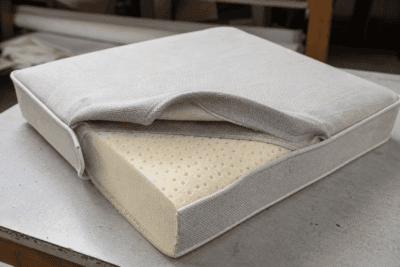
Latex Foam Cushions: Natural Rubber Seating, Honestly Assessed
Latex foam cushion guide: what natural and blended latex actually offer versus polyurethane — resilience, feel, lifespan, weight and cost — who latex seating serves, and the honest counterarguments.