
Between the foam core and the fabric cover of most quality cushions sits a layer almost nobody discusses: Dacron batting — the soft polyester sheeting wrapped around the core before the cover goes on. It’s the upholstery industry’s quiet standard, the difference between a cushion that looks tailored and one that looks like fabric stretched over foam, and the reason premium pads have rounded edges and soft shoulders where budget pads have hard corners and telegraphing seams. This guide explains the wrap layer: what it does, when it matters, and when to order it. The core it wraps: how to choose foam density; the fills landscape it lives in: cushion filling types.
What Dacron Batting Is
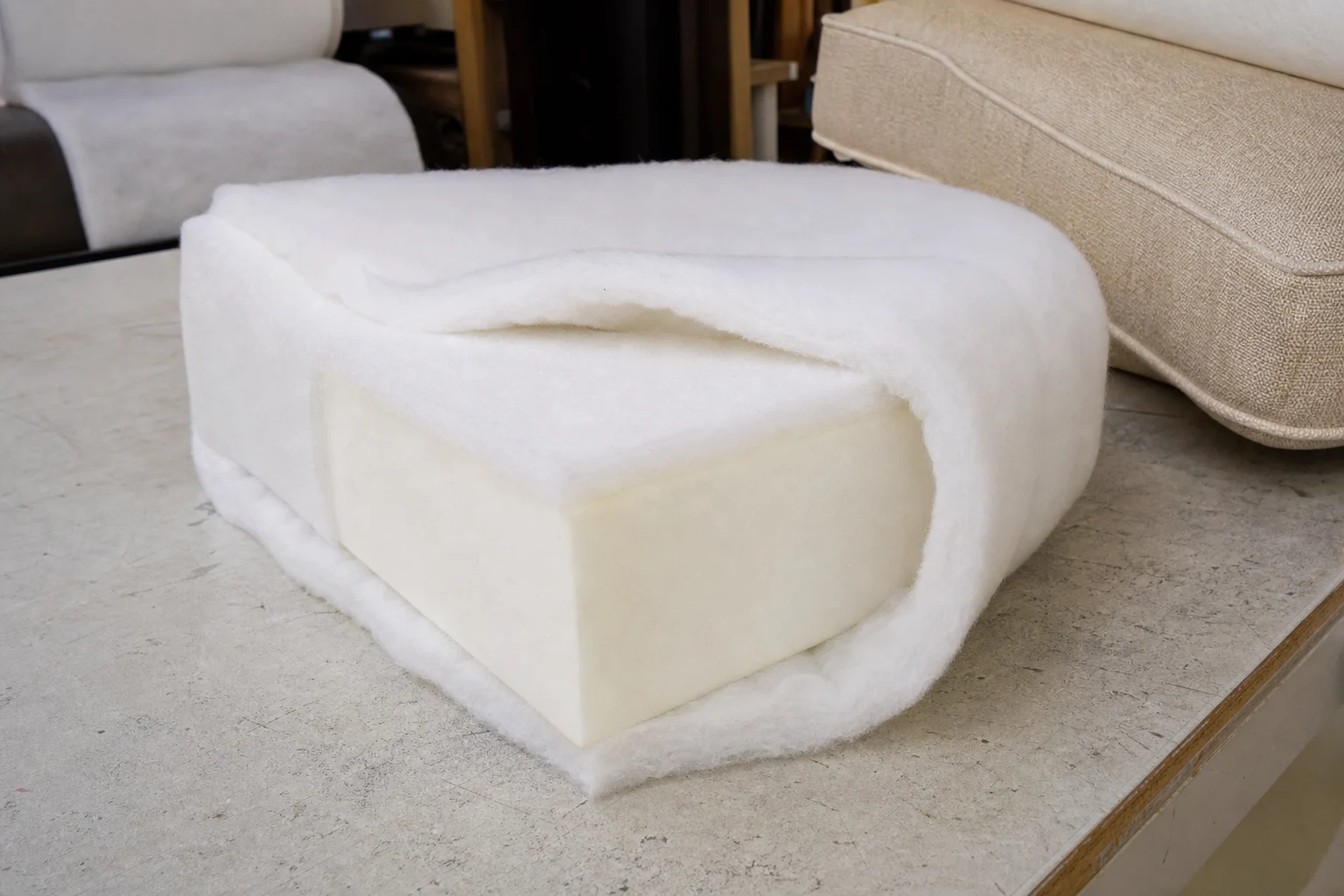
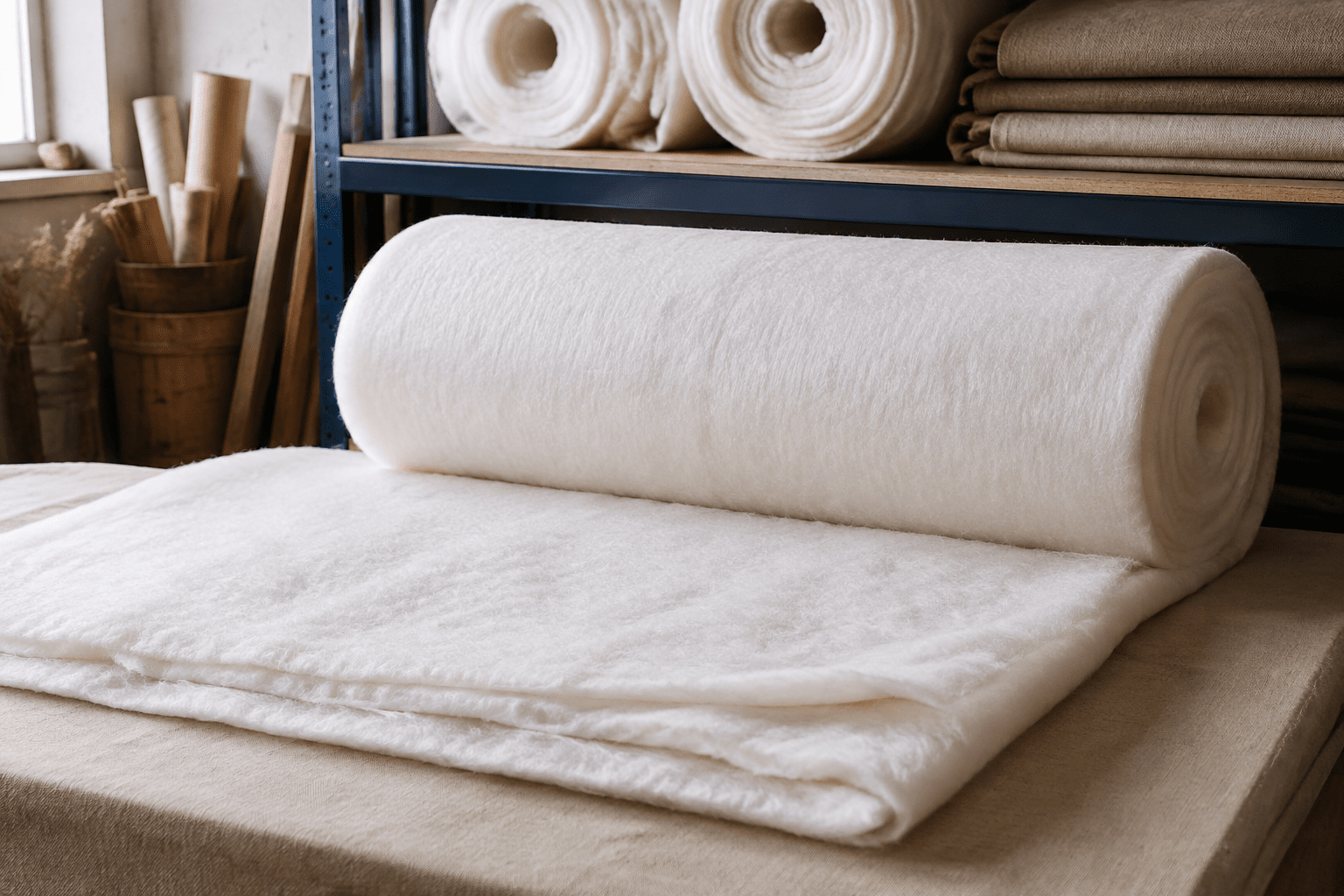
Dacron is DuPont’s trade name for polyester fiber; “Dacron batting” (or “Dacron wrap”) is the needled sheet of polyester fiber sold by the roll and cut to wrap cushion cores. It comes in weights/thicknesses — typically light wraps of 2–3 ounces per square yard up to heavy 8-ounce builds — and it is specified as a layer in the cushion’s construction rather than as a material the cushion is “made of.” The wrap goes around the foam (all six faces on quality work), the cover goes over the wrap, and the cushion gains a soft envelope between its structure and its skin.
The Four Jobs of the Wrap
1. The tailored look — rounding the edges. Bare foam under fabric is geometric: sharp corners, flat faces, visible edges. The wrap’s loft softens every corner and edge — the “crown” (the gentle convex rise across the cushion’s top) that quality cushions carry is batting doing its work. A crowned cushion reads upholstered; a flat one reads industrial.
2. Fabric protection — the abrasion buffer. The wrap sits between the foam’s slightly textured surface and the cover’s inner face, eliminating the micro-abrasion of foam-on-fabric that wears covers from the inside. On daily-use cushions, the wrap measurably extends cover life — the outside gets the credit, the inside does the work (outdoor cushion maintenance tips covers the outside’s half).
3. The slip layer — dress and fit. Foam grips fabric; batting lets the cover move slightly over the core, so the fabric settles into place without tension lines and puckers. This is why wrapped cushions look smooth after the plumping and unwrapped ones need it.
4. The feel adjustment — softening the sit. A thin layer of soft fiber over a firm core changes the first half-inch of the sit: soft entry, firm support. It’s the same layered logic as memory tops (memory foam topped cushions) at a fraction of the cost — not a substitute for the comfort layer, but a finishing softness.
When the Wrap Earns Its Cost
The wrap is a modest per-piece add-on in custom work, and it earns it in most applications — but not all:
Wrapped, definitely:
- – Any visible, quality build — the tailored look is the wrap; skip it and the cushion announces it.
- – Daily-use seating — the abrasion buffer pays in cover years.
- – Deep seats and thick pads — the crown and the soft shoulders matter more as pads get bigger (deep seat cushions).
- – Outdoor cushions — with one specification: outdoor wraps are polyester (which they already are — Dacron is polyester) and should be the light grades, because heavy wraps hold moisture against the foam; the outdoor moisture logic is quick dry foam for outdoor cushions and how to prevent mold on outdoor cushions.
Skip or minimize:
- – Tight-fit installations — cushions sliding into exact-width frames (RV dinette seats, some banquette runs) have no room for the wrap’s added dimension; measure and spec accordingly (RV dinette cushions).
- – Thin utility pads — a 1.5-inch event pad on a Chiavari chair gains little (Chiavari chair cushions).
- – Pure-fiber pads — batting wrapping fiber is fiber wrapping fiber; the jobs it does are already done (cushion filling types).
Weight and Thickness: The Spec
- – Light wrap (2–3 oz): the standard on outdoor builds and thin pads — the tailored edge without the moisture hold.
- – Medium (4–6 oz): the indoor standard — crown, softness, and protection in balance.
- – Heavy (8 oz+): the luxury-loft builds — deep crowns on show cushions and the “envelope” feel of high-end upholstery; overkill for duty furniture.
One practical note for measuring: the wrap adds dimension — roughly an eighth to a quarter inch per face at medium weight. Custom work accounts for it in the cutting (the cover is cut for foam plus wrap); DIY re-foamers discover it when the fresh wrap makes a cover that fit the old bare foam suddenly tight (replace cushion foam covers the re-foaming path where this bites most often).
Wrap Versus the Other Soft Layers
The wrap occupies the thinnest tier of the comfort-layer world, and it’s worth knowing what it is not:
- – Not a memory foam top — the wrap softens the entry; memory contours the sit. Long-session seating wants the real layer: memory foam topped cushions.
- – Not a fiber pad — wrapped fiber builds (the plush decorative pads) use fiber as the fill, not as an envelope; those are different products with different aging (cushion filling types).
- – Not a down wrap — the luxury envelope of down-and-feather around foam exists as the premium upholstery build (the down versus foam comparison); Dacron is its affordable, zero-maintenance stand-in with none of the fluffing.
Ordering the Wrap
In custom work the wrap is a specification line — grade and coverage — and its cost is modest per piece:
- Decide by application: outdoor and tight-fit builds at light grade or none; indoor quality builds at medium; show pieces at heavy if the look demands.
- Account for the added dimension where fits are tight, and trust the shop’s cutting where they’re not.
- Order through the standard flows — custom outdoor cushions for outdoor builds, custom sofa cushions for indoor seating — the wrap, fill and fabric all specify in one pass, from a $45 make-base plus per-square-foot rates, 4–7 business days, dimensions confirmed before cutting.
The Re-Foaming Intersection
The wrap layer meets most households at one specific moment: re-foaming — replacing dead foam inside sound covers, the standard sofa and chair renewal (replace cushion foam, how to replace sofa cushion foam). The intersection has two rules:
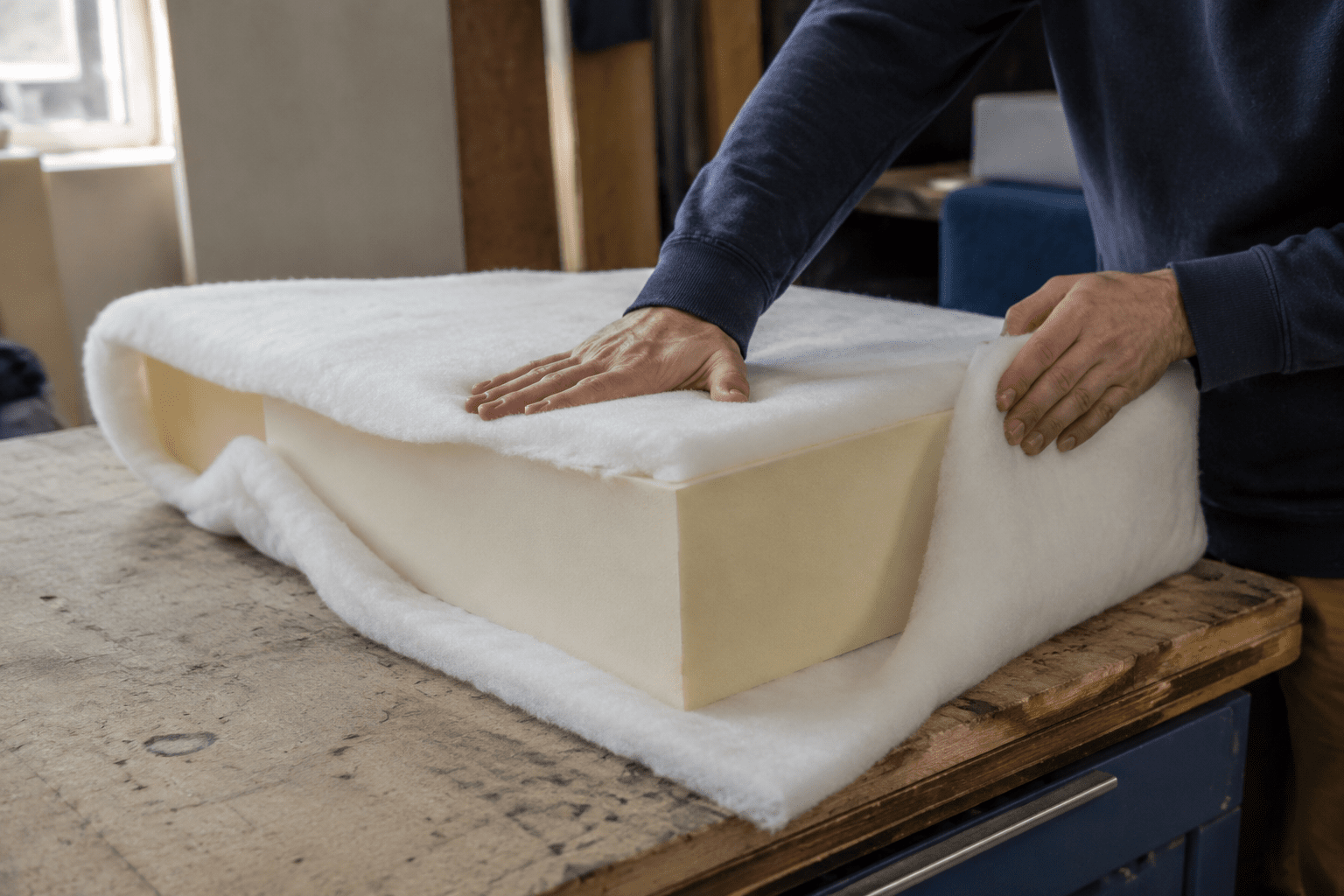
- – Match the original construction. If the old foam was wrapped (most quality originals were), the new foam wants the same wrap — the cover was cut for foam-plus-wrap, and bare new foam swims in it. The swimming cover reads as loose and wrinkles at the seams; the fix is the wrap, not a bigger foam block.
- – The wrap thickness adds up. A medium wrap on every face adds a quarter inch per face to the foam’s needed cut — foam ordered at the old piece’s bare dimensions plus fresh wrap arrives tight and bowing. Measure the old assembly (foam plus wrap as it was), spec the new foam at those dimensions minus the wrap’s contribution, or let the shop’s cutting logic handle it in one order — the dimensions-confirmed flow that prevents the most common re-foam remake.
The wrap is also the honest upgrade moment in re-foaming: new foam at a better density (how to choose foam density) plus a fresh medium wrap inside a sound cover is the whole renewal — the reupholster vs replace decision’s cheapest branch.
FAQs
What does Dacron batting do for cushions?
Four jobs — rounds the edges for the tailored look, buffers fabric from foam abrasion, lets covers settle without tension lines, and softens the sit’s first half-inch. The wrap layer is the upholstery standard.
Should outdoor cushions have Dacron wrap?
Yes, at the light grade — the tailored look without the moisture hold. Heavy wraps retain water against the foam; the moisture logic: quick dry foam for outdoor cushions.
Does batting make cushions softer?
The entry, yes — a soft first half-inch over the firm core. It’s not a comfort layer substitute: long-session softness is memory-top work (memory foam topped cushions).
Does the wrap add size to a cushion?
Roughly an eighth to a quarter inch per face at medium weight — custom cutting accounts for it; DIY re-foaming often doesn’t. The re-foam path: replace cushion foam.
Is Dacron wrap worth it on dining chair pads?
Yes at light-to-medium grade — the cover-life extension alone pays on daily-use sets, and the tailored look is the difference pads show.
What weight of batting should cushions use?
2–3 oz outdoor and thin pads, 4–6 oz the indoor standard, 8 oz+ for show-piece loft — grade by application, not by ambition.
Next Steps
- Classify the build — outdoor, indoor duty, or show piece — and pick the wrap grade: light, medium, or heavy.
- Note tight fits where the wrap’s dimension matters, and choose the fill and fabric alongside it.
- Order at custom outdoor cushions or custom sofa cushions — wrap, fill, fabric and attachments in one specification, confirmed before cutting, 4–7 business days.
Best Outdoor Cushion Fabric: How to Choose by Climate, Exposure and Budget
A factory guide to outdoor cushion fabrics — solution-dyed acrylic, olefin, polyester grades and blends — ranked for fade, water, mold, comfort and cost per year.
Is Sunbrella Fabric Worth It? An Honest Cost-Per-Year Analysis
Whether the Sunbrella premium pays off depends on sun exposure, horizon and color — here’s the honest math, warranty mechanics and when to skip the upgrade.
Memory Foam Topped Cushions: When Gel Layers Help (and Hurt)
Memory foam topped cushions and gel-infused layers examined — where a visco topper over HR foam genuinely helps, where it hurts, and the layer specs that separate luxury from a gimmick.
Memory Foam vs Regular Foam Cushions: What a Cushion Factory Wants You to Know
Memory foam vs high-resilience foam for seat cushions — density (35D–65D), ILD firmness, compression set and airflow explained by the people who cut foam daily.
Latex Foam Cushions: Natural Rubber Seating, Honestly Assessed
Latex foam cushion guide: what natural and blended latex actually offer versus polyurethane — resilience, feel, lifespan, weight and cost — who latex seating serves, and the honest counterarguments.
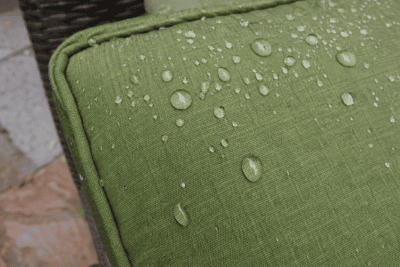
Are Waterproof Cushions Real? What Water-Resistant Actually Means
Why ‘waterproof’ outdoor cushions mostly aren’t — hydrostatic head, coated vs breathable fabrics, quick-dry foam and drainage design explained honestly.