A bolster cushion is a firm, cylinder-shaped (or half-cylinder) support cushion cut from dense foam rather than stuffed like a pillow — and its shape decides where it works: full cylinders support, half-rounds cradle flat against furniture, wedges fill gaps. Choose the cross-section for the job, then the length and diameter follow the furniture it serves.
This guide covers what separates a foam bolster cushion from the decorative bolster pillows sold by the big home retailers, the three cross-sections and the furniture each one suits, sizing logic for sofas, beds and outdoor sets, the density that keeps a bolster from flattening, and where the specialist bolsters — massage tables, knee supports, boat gunwales — are covered in their own guides.
What a Bolster Cushion Is (and What It Is Not)
Search “bolster pillow” and most of what comes back is a different product: a soft cylinder with a removable cover, stuffed with fiber or a thin memory-foam wrap, sold as decor in velvet and leopard print. Those are pillows. They are made to be looked at and leaned against gently, and the first time real weight rests on one — a knee, an arm, a headboard-side head — the fill packs down and stays down.
A bolster cushion, the way a cushion mill builds one, is the same silhouette with the opposite interior: a solid core of high-density foam, cut as a cylinder or half-cylinder, wrapped in fabric and closed with a zipper. The difference is not academic:
| Stuffed bolster pillow | Foam bolster cushion | |
|---|---|---|
| Interior | Polyester fiber, loose fill | Solid high-density foam core |
| Under load | Packs down, stays flattened | Rebounds, holds its shape |
| Lifespan in daily use | Months before it needs refluffing or replacing | Years — foam ages by density, not by fluffing |
| Best at | Decor, gentle lumbar lean | Supporting actual weight: knees, arms, heads, gunwales |
This is the same divide as cushion filling types across the whole catalog: density is lifespan, firmness is feel, and a bolster’s job — hold something in position — is a density job. That is why we cut bolsters from the same 35–65D foam grades as seat cushions, not from pillow fill.
The Three Cross-Sections, and the Job Each One Does
Every bolster is one of three cross-sections. Pick the section first; length and diameter come second.
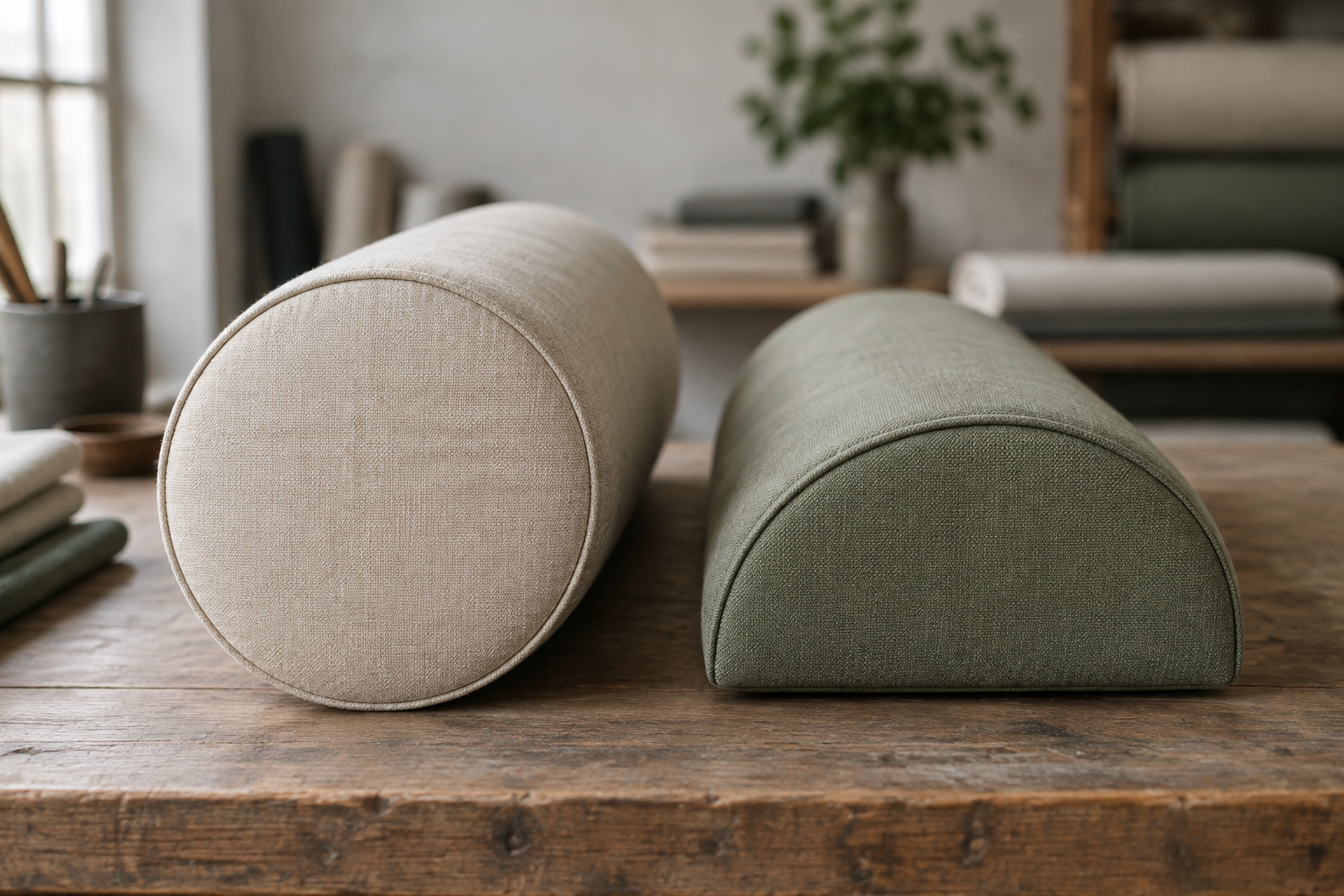
Full cylinder (round). The classic tube. It rolls, so it suits positions where the body or arm re-angles it: sofa arm rests where a forearm drapes, bed-edge rolls you tuck against, and supporting work where the cylinder is strapped or otherwise held. A cylinder in the open, unanchored, will wander — on a smooth deck or leather sofa, expect to re-place it.
Half-round (D-section). Flat bottom, curved top — a cylinder cut in half lengthwise. The flat base is the whole point: it sits still on any level surface without rolling. Half-rounds belong on sofa arms as elbow bolsters, along headboard edges, on window-seat backs and anywhere a cylinder would skate away. It is also the shape behind our knee bolster pillow — a flat base keeps it under knees all night without chasing it across the bed.
Wedge. A triangle section, low at one edge and high at the other. Strictly it is a bolster cousin rather than a bolster proper, but buyers searching bolsters usually need one somewhere in the project — propping a reclined back, filling the gap a mattress leaves at a headboard, raising an ankle. For filling long structural gaps rather than supporting a body part, see the gap-filler approach.
On the Sofa: Arm Bolsters and Lumbar Rolls
The couch is where bolster cushions earn their keep most often, and “bolster pillow couch” searches outnumber every other furniture pairing for good reason:
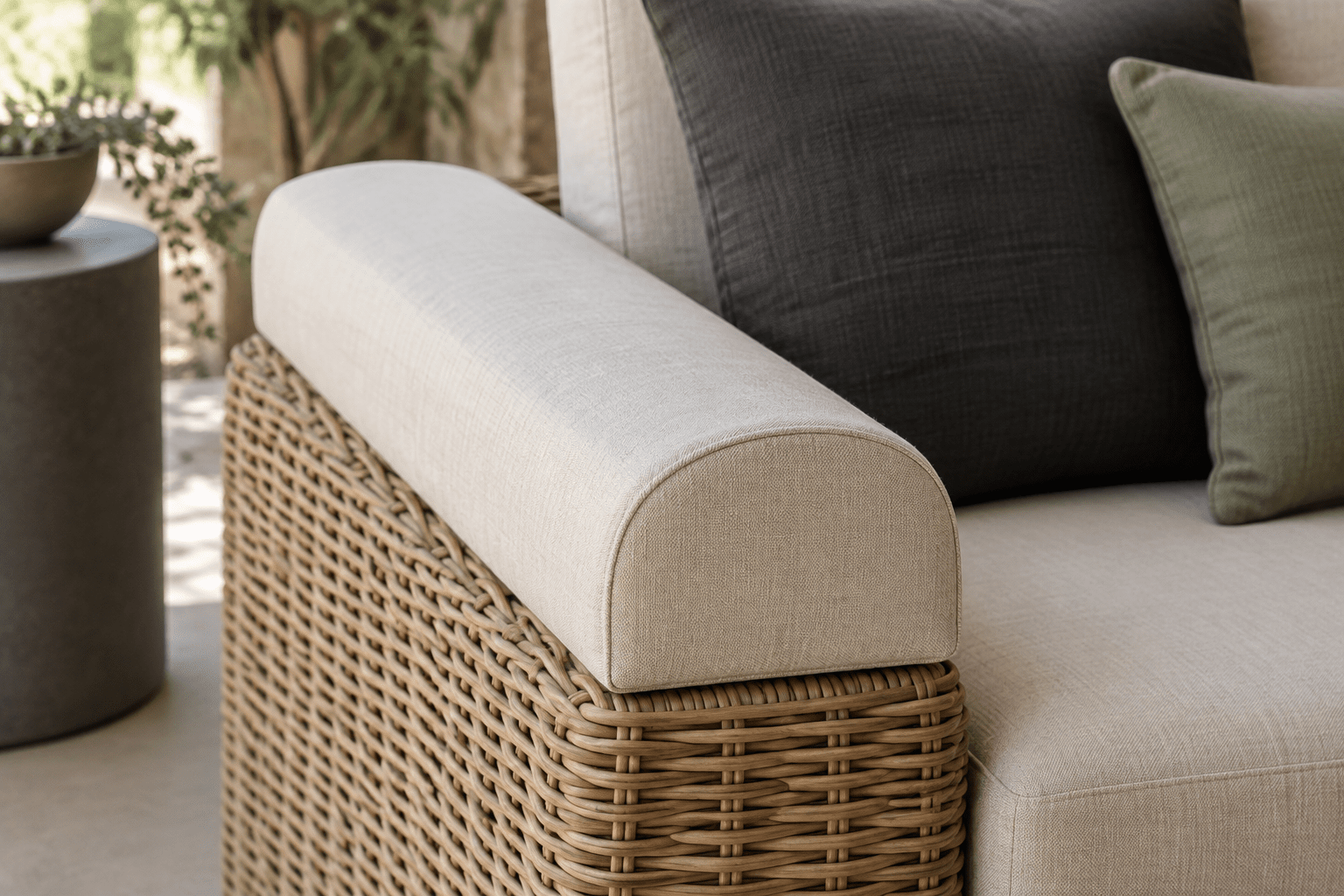
- Arm rolls. Sofa arms are the right height for resting a glass on and the wrong height for resting an arm on. A half-round bolster laid along the arm top converts a hard wood or wicker arm into a padded rail — and unlike a cylinder, it stays centered on the arm instead of rolling onto the floor the first time someone brushes it.
- Lumbar cylinders. A shorter cylinder at the lower back turns an oversized seat into something you can actually sit back in. Deep-seated sofas and oversized sectionals are the usual candidates; the cylinder wants enough diameter — 5 to 7 inches is the working range — to fill the lumbar curve without pushing you off the seat.
- Daybed and settee edges. Bolsters are the traditional backrest on daybeds and rattan settees: a row of half-rounds or cylinders along the back rail turns a bench-depth seat into a real lounging surface. The full daybed story is in daybed cushions.
On wicker or rattan frames the roll tends to settle between weave lines, which helps; on leather and polished upholstery it does not, and a half-round or a tie-off point is the fix.
On the Bed: Edge and Foot-of-Bed Bolsters
Bed bolsters are the oldest use of the form — the “husband pillow” of another century — and the modern reasons still track:
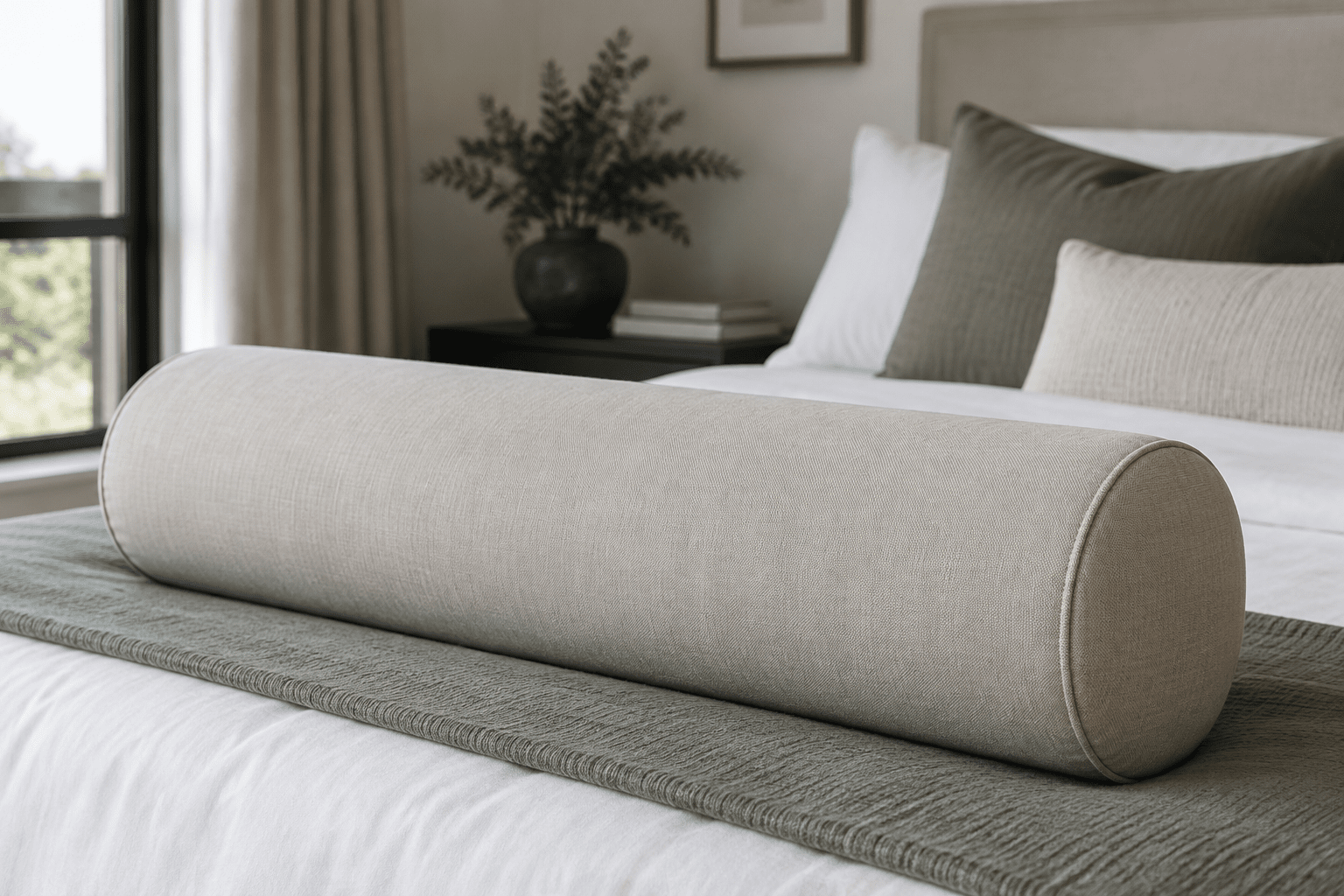
- Foot-of-bed roll. A cylinder laid across the mattress foot keeps a duvet’s weight off your feet and stops pillows migrating off the end. Length follows the bed: cut to the mattress width — 76 inches for an Eastern king, 60 for a queen — or a hand short so it tucks inside the sheets.
- Edge and headboard bolsters. Half-rounds along a hard headboard edge or the exposed side of a platform bed soften the lines you bump in the dark. The flat base grips the platform; a cylinder would roll off the first night.
- Bed-sharing bolster. A long cylinder as a divider between sleepers or against a wall edge holds its line all night in a way no pillow does — this is a density question again, and it is where stuffed bolsters fail first.
One honest caution we give every bed-bolster inquirer: a bolster is a positioning cushion, not a medical one. For anything involving circulation, swelling or recovery, that conversation belongs with a clinician — we happily cut firm foam, and we do not make therapy claims for it.
Bolster Sizes: Length Follows the Furniture
There is no standard bolster size table the way there is for seat cushions, because a bolster has no “seat” to match — the two numbers follow two different rules:
Length = the span it serves. Sofa arm bolsters run the arm’s full length plus an inch of overhang each end. Foot-of-bed rolls match mattress width. Gunwale bolsters (the boat world’s term for cockpit rail rolls) follow the rail. Measure the span, and order to it — bolsters are one of the easiest products to cut to length, because length is a straight cut.
Diameter = the support height. This is the number people under-order. A 4-inch cylinder under knees or a lumbar curve compresses to nearly nothing under load; 5 to 7 inches is the working range for adult support, and firm grades at that diameter still give under a hand’s pressure. For arm bolsters where the elbow just needs padding, 4 to 5 inches reads cleaner on the furniture.
Half-rounds follow the same diameter logic with the flat base down; a 6-inch half-round stands 3 inches proud of the surface, which suits most sofa arms and headboard rails.
Outdoor Bolster Cushions: The Same Shapes, Different Rules
Outdoor bolster pillows — the round rolls on deep-seating patio sets and teak daybeds — are the same three cross-sections under harder conditions, and two things change:
The foam must drain. A closed-cell-feeling standard foam holds rainwater and takes days to dry; outdoor bolsters belong on quick-dry (reticulated) foam, which flushes and air-dries. The full explanation is in quick-dry foam for outdoor cushions.
The fabric must not rot or fade. Solution-dyed acrylic — Sunbrella-class fabric — is the outdoor standard; our outdoor fabric primer covers how to choose outdoor cushion fabric. An indoor velvet bolster left on a deck will be a mildew science project in one season, and no foam grade saves it.
Outdoor rolls are also the one place cylinders beat half-rounds on more than looks: on a slatted teak daybed, a cylinder settles between the slats and stays put. On smooth surfaces — chaise decks, boat benches — the half-round’s flat base wins again. Boat cockpits are their own discipline entirely, covered in the boat cushions guide.
Firmness: Why a Bolster Wants the Dense End of the Range
A bolster holds a position; that is its entire job. Under-loading behavior follows directly:
- 35–44D — enough for decor-adjacent duties where the bolster is leaned on occasionally: arm rolls on rarely-used chairs, guest-room bed rolls.
- 50–65D — the working grades. Knee and leg supports, massage-table work, daily arm duty, outdoor rolls that get sat on. At these densities the foam carries weight all night or all session without taking a set, and the difference in cost on a bolster’s small footprint is minor.
Density versus firmness gets conflated constantly — density is how much foam is in the cut (lifespan), firmness is how it feels under load — and the distinction is unpacked in how to choose foam density. For bolsters the short version: firm feel with low density is the stuffed-pillow trap in disguise; firm feel with high density is the product that still works in year five.
Where to Read Deeper
The specialist bolsters each have their own guide, because their sizing rules differ from furniture work:
- Massage tables — placement-first sizing and firmness under a working client: massage table bolsters, and the product line at massage-table bolsters.
- Knee and leg support — the comfort-positioning case in full: knee bolster comfort.
- Boats — rail rolls, cockpit seats and marine foam: boat cushions guide.
- Daybeds — bolsters as a backrest system: daybed cushions.
FAQ
What is a bolster cushion used for?
Supporting a body part or softening a furniture edge — holding something in position, which is a firm-foam job. The classic uses: sofa arm and lumbar rolls, foot-of-bed rolls, daybed backrests, knee supports and boat rail pads. Decorative stuffed bolster pillows do the looking-good half of the job; a foam bolster does the holding-up half.
What size bolster do I need?
Length follows the span it serves (arm length, mattress width); diameter follows the support height — 5 to 7 inches for adult knees and lumbar support, 4 to 5 for arm padding. Unlike seat cushions there is no standard size ladder to shop from; bolsters are almost always better cut to the measured span.
Bolster pillow or bolster cushion — what is the difference?
Interior: a pillow is fiber-stuffed and soft; a cushion is a solid high-density foam core and holds its shape under load. If the bolster will carry real weight — knees, arms, heads — you want the cushion. If it is leaning against other pillows on a made bed, the pillow is cheaper and looks the same.
Can I get an outdoor bolster pillow?
Yes — same cylinder and half-round shapes, but on quick-dry foam and solution-dyed acrylic fabric, or it will hold water and fade. Outdoor rolls on slatted teak suit cylinders; on smooth chaise decks and boat benches the half-round’s flat base stays put better.
How do I clean a bolster cushion?
Spot clean day to day, machine-wash when due — cushions close with a zipper, so covers remove and wash per the fabric label, and the core stays put until you take it out.
Next Steps
- Pick the cross-section for the job — cylinder for held or cradled positions, half-round where it must sit still on furniture, wedge for gaps and angles. The specialist guides above cover each in depth.
- Measure the span and the support height — length to the furniture, diameter to the body part. Record to the nearest quarter inch.
- Price it and set expectations — bolsters cut from the same foam grades as our seat cushions through the quote selector, made to order in 4–7 business days (rush 3–5), with the knee and massage-table sizes already spec’d at knee bolster pillow and massage table bolsters.
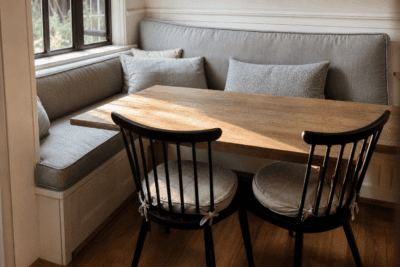
Breakfast Nook Cushions: The Corner-Seating Build Guide
Breakfast nook cushion guide: L-shaped and U-shaped runs, corner geometry and seam placement, seat-plus-back builds at dining height, morning-sun fabric logic, and ordering the whole run from one fabric lot.
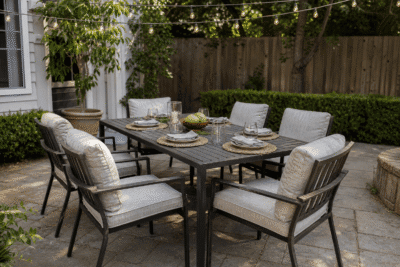
Outdoor Dining Sets: Buying the Set Right So the Cushions Work
Outdoor dining set buying guide: how the set choice locks in your cushion future — seat sizes, arm heights, frame materials, cushion quality in boxed sets versus custom pads, and set versus separate buying.
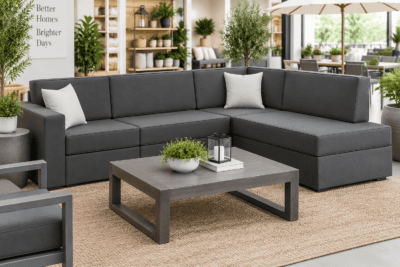
At Home Outdoor Cushions: The Decor Superstore’s Seasonal Wall
At Home runs a full-scale seasonal cushion department at decor-store prices — what the wall stocks, the fit grid, and when the superstore route ends at custom.
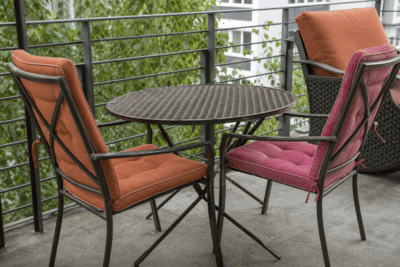
Target Outdoor Cushions: Threshold, Sizing and Replacement (2026)
Target’s Threshold cushions look designer but run generic sizes. What fits, what the seasonal rotation kills, and when custom replacements beat another Threshold refresh.
Hampton Bay Cushion Covers: Replacement Covers vs Full Cushion Replacement
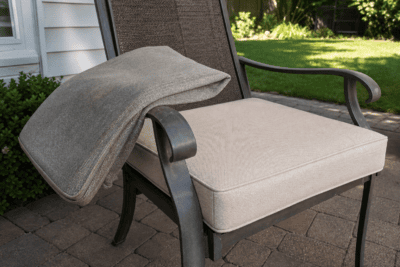
The Hampton Bay covers question answered — why OEM cover-only replacements are rarely available for most series, the exact-fit route (full cushions by your series dimensions), re-covering services and DIY, and how to identify your series first.
RV & Camper Cushion Replacement: The Complete Guide
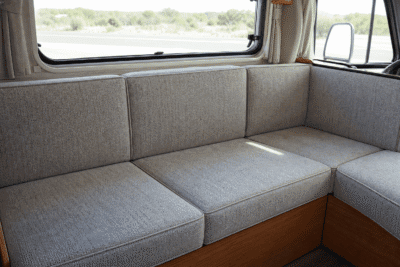
RV dinette and berth cushion replacement — sizes, 45–60D foam for daily use, spill-proof fabrics, and the paper-template method for odd cabin shapes.