Sunbrella is the fabric most outdoor-cushion buyers upgrade to — and the one most often cleaned wrong, because its care rules run opposite to instinct: it takes bleach that would destroy ordinary fabric, it shrugs off sun that fades everything else, and its covers can go in a washing machine while its foam never should. This guide answers the four questions Sunbrella owners actually ask — how to clean it, whether it can go in the machine, how it compares with Olefin, polyester and blended fabrics, and how long it lasts. The full cleaning-and-storage program (re-treating repellency, winter storage, stain-by-stain removal) is in the complete Sunbrella care guide; the color side of the system is covered in choosing Sunbrella colors.
How do you clean Sunbrella fabric?
Three steps, no special products, and it works on every solution-dyed acrylic in the line:
- Brush off loose dirt. A soft brush before it rains in — dry soil sweeps off in seconds; once wet, it works into the weave.
- Wash with a soap solution. 1/4 cup mild soap per gallon of lukewarm water, sprayed on and left to dwell up to 15 minutes — the dwell does the work, scrubbing is secondary. Then agitate gently with a soft brush, with the weave direction, not across it. For mildew, heavy grime or set-in organic stains, upgrade the same wash to 1 cup bleach + 1/4 cup soap per gallon — solution-dyed acrylic is bleach-safe, which is the single biggest care difference between Sunbrella and ordinary outdoor fabric.
- Rinse completely and air-dry in the sun. Every trace of soap out — residue is the next dirt magnet and feeds mildew’s food layer — then dry fully before sitting or stacking. No machine-drying, no forced heat.
How often: a five-minute monthly routine (brush, hose rinse, air-dry) is genuinely most of the program — regular light cleaning prevents the buildup that ever needs deep cleaning. A deeper soap wash makes sense seasonally or after heavy use; owners who run nothing tend to need the bleach deep-clean once every few years instead. Mold spots specifically respond to the bleach wash and direct-sun drying — the full regime is in cleaning mold off outdoor cushions.
Can you machine wash Sunbrella cushions?
The covers, yes — the cushion, no. Zip-off Sunbrella covers can typically go in the machine, but follow the tag and four rules that apply even when the tag is vague:
- Cold or lukewarm water, gentle cycle, mild detergent. Heat and agitation are what shrink seams and stress sewing.
- No fabric softener, ever. It leaves a film that kills water repellency and feeds soil — the most common machine-washing mistake on this fabric.
- Zip the zipper closed before it goes in. Open zippers are the #1 machine casualty — teeth catch other covers and tear seams.
- Air-dry only. Machine heat shrinks seams and distorts the cover; Sunbrella may wrinkle slightly when wet and relaxes as it air-dries.
The foam core never goes in the drum — it is the cover, not the cushion, that is machine-washable. While the cover is off, feel the core: firm and dry is what you want; a clean cover over a collapsed, waterlogged core is a replacement decision, not a laundry one (when to replace outdoor cushions). The fabric-by-fabric machine-washing rules and drying discipline are in how to wash cushion covers; if the fabric underneath is not Sunbrella, check polyester cushion care first — the bleach tolerance does not transfer.
How does Sunbrella compare with Olefin, polyester and blended fabrics?
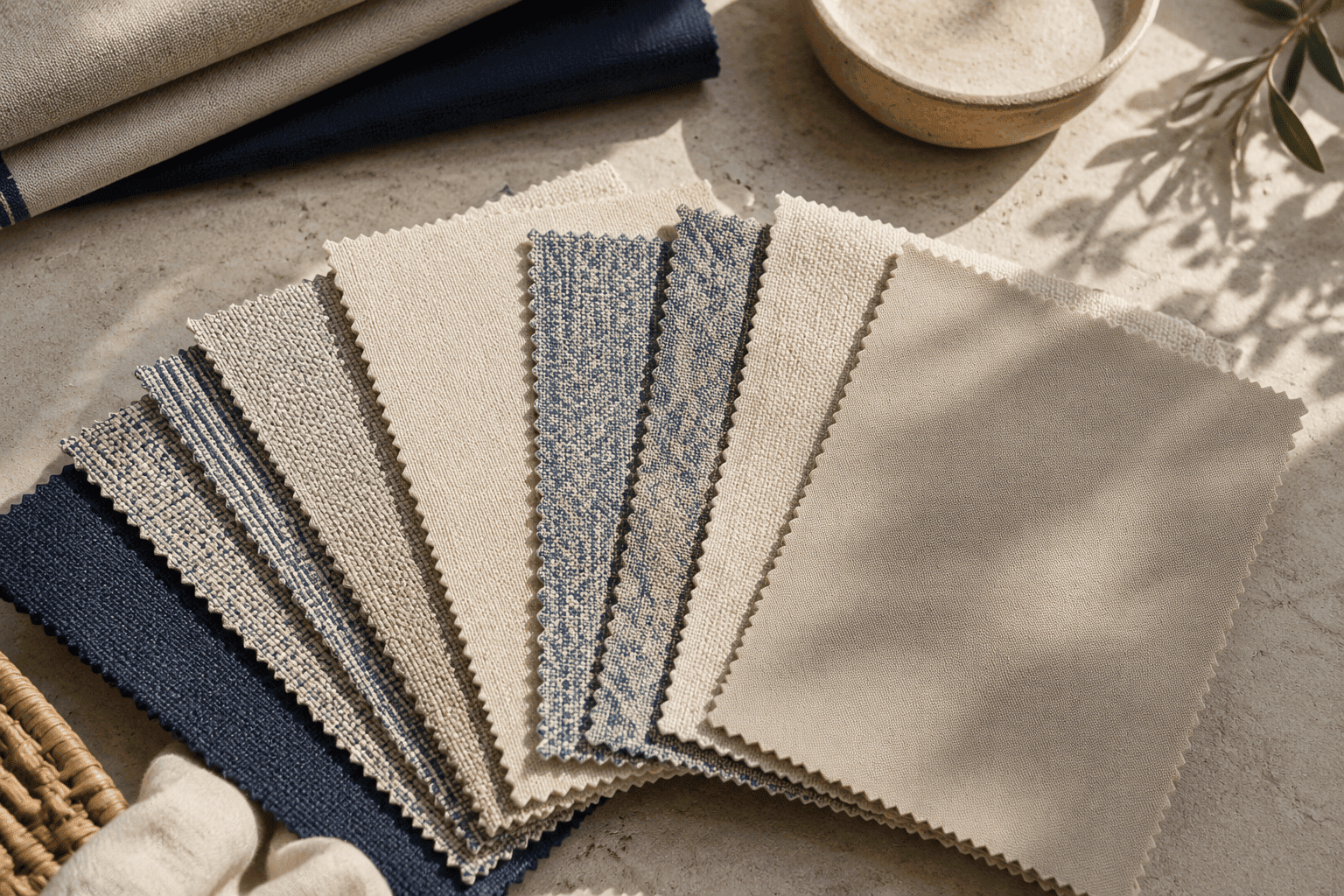
Four fabric families cover almost every outdoor cushion on the market. The differences come down to how the color is put into the fiber, what that means for fade and cleaning, and what each tier costs:
| Sunbrella | Olefin | Polyester | Blends | |
| Fiber and dye method | Solution-dyed acrylic — color through the fiber | Solution-dyed polypropylene | Piece-dyed — color coats the fiber surface | Mixed yarns, typically acrylic + polyester |
| Fade life in full sun | Years of colorfastness; 5-year fade warranty | Varies by mill, typically 2–3 years | Visible fade in 1 season; chalking by years 2–3 | Between the tiers — follows the weakest yarn |
| Wear and UV strength | Acrylic inherently UV-resistant; dense, canvas-class hand | Tough fiber with the lowest water absorption of any option | UV breaks the polymer chains down; fabric weakens over years | Adequate wear, but fade exposes the aging first |
| Cleaning rules | Bleach-safe deep cleaning (1 cup bleach + soap per gallon) | Soap and water; follow the mill’s bleach guidance | Mild soap only — bleach destroys the color | Treat by the weakest fiber; assume no bleach |
| Warranty | 5-year limited fade warranty | Typically 2–3 years | None to 1 year | Varies, usually short |
| Price band | Premium — canvas runs about $42/yard; finished cushions carry roughly a 30–80% premium over budget polyester | Mid — the value play among solution-dyed fabrics | Baseline — the budget tier at retail | Low-to-mid |
How to read the table: Sunbrella and Olefin share the dye construction that matters — color inside the fiber — so both hold color and clean aggressively; Olefin concedes palette depth and hand but delivers the best water behavior for mid-tier money, which makes it the answer to full-sun-on-a-budget rather than coated polyester. Polyester’s economy is real but short: in direct sun it is typically replaced in 2–3 seasons when it chalks and fades, and it cannot take the bleach wash that resets the solution-dyed fabrics. Blends sit in the muddy middle — they mix solution-dyed and piece-dyed yarns for price, and every performance question resolves to the weaker component, so they inherit polyester’s cleaning limits without its rock-bottom price. The full tier logic, the same-tier matchup with Tempotest, and the cost-per-year math are in Sunbrella vs regular outdoor fabric.
For real-money anchors: at retail, solution-dyed acrylic cushions typically run a 30–80% premium over budget polyester equivalents — commonly $100–250 of difference on a loveseat set. By the yard, US custom shops list Outdura-class acrylics around $22, name-brand Sunbrella canvas around $42, and decor weaves up to the high $80s. One counterweight worth knowing before spending the whole budget on fabric: on the same cushion, foam density and thickness are the bigger levers on how it feels and how long it lasts — the premium-fabric-over-weak-foam trade is the worst in the category, and the foam-tier math is in HD foam vs Dry-Fast foam.
How long does Sunbrella last?
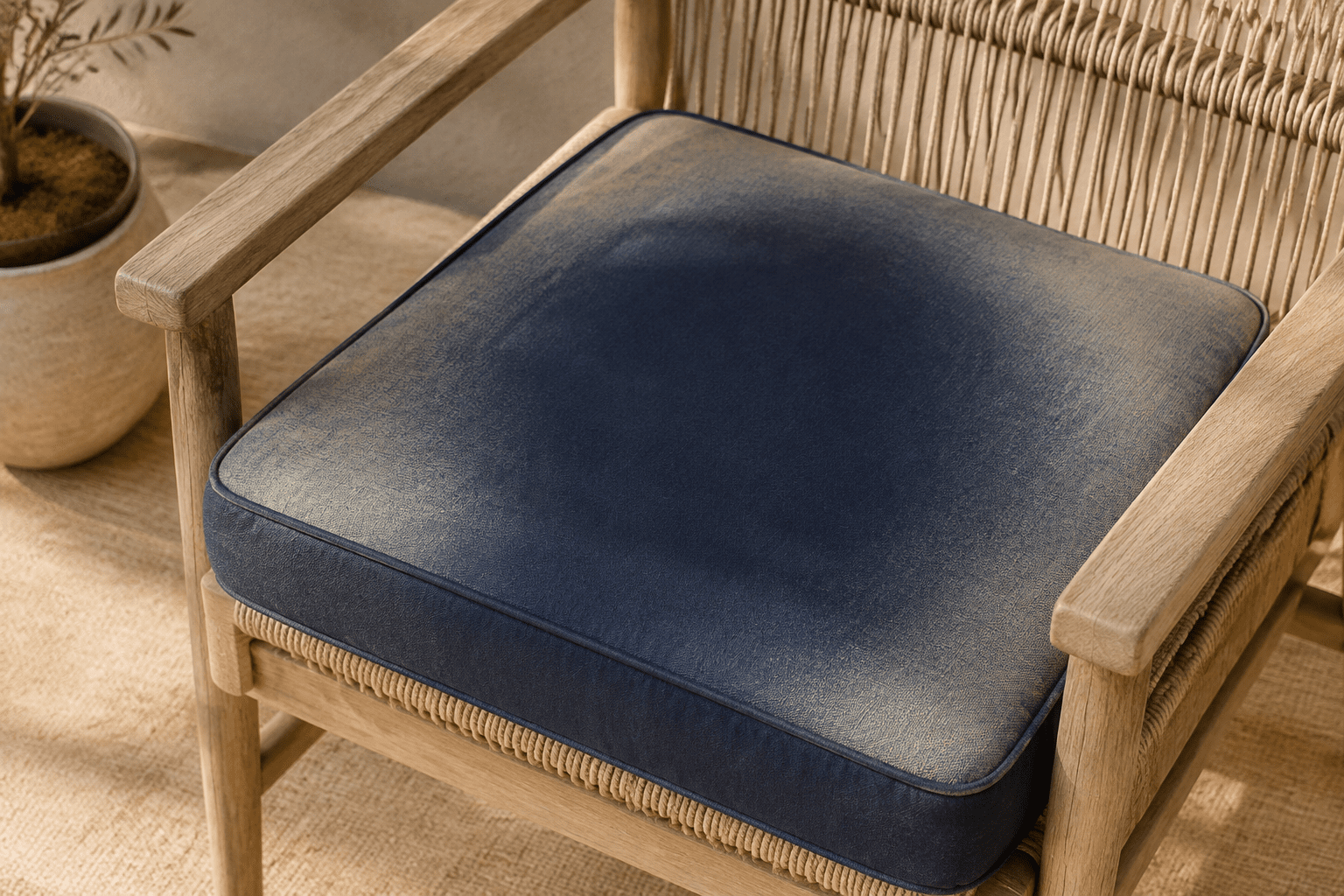
The committed number: Sunbrella fabrics carry a 5-year limited fade warranty — the brand backs the color against fading from normal sun exposure for five years, which is the longest standard commitment in the category (Olefin typically runs 2–3 years; polyester none to 1). The honest number: the fabric outlives the warranty when the calendar is kept. Sunbrella’s premium is largely a time premium — the fabric tolerates neglect that kills lesser fabrics, but the monthly rinse and seasonal wash reward it with years beyond the warranty, because the failure mode that ends most outdoor fabric is not the acrylic wearing out, it is the soil-mildew film that never got cleaned off a cheaper weave.
The practical frame is cost per year, not cost at the register. Cushions that sit in direct sun 4+ hours a day and are expected to last 5+ years: polyester is replaced two to three times before Sunbrella’s premium stops paying, so the second replacement cycle is where it breaks even and keeps compounding. A covered porch, deep shade, or a 2–3 year horizon (rental, staging, furniture you plan to change): the fade advantage never gets exercised and the cheaper tier wins. When a set does reach its end, the decision tree between recovering and full replacement is in cushion covers vs full replacement.
FAQs
Does Sunbrella fabric get moldy?
The acrylic fiber itself does not support mold growth — mold colonizes the film of soil, pollen and soap residue that sits on top of unwashed fabric. The bleach deep-clean (1 cup bleach + 1/4 cup soap per gallon, 15-minute dwell, full rinse, sun-dry) removes established spots, and the monthly rinse prevents the film from building at all.
Can you use bleach on Sunbrella fabric?
Yes — solution-dyeing puts the color inside the acrylic fiber, so a 1-cup-per-gallon bleach solution is the sanctioned deep-clean method for grime and mildew. The same bleach destroys piece-dyed polyester color, which is why fabric identification comes before any bleach touches a mixed set.
Is Sunbrella worth the extra cost?
In full sun with a 5+ year horizon, yes — the 30–80% premium breaks even by the second polyester replacement cycle and the 5-year fade warranty backs the color the whole way. In shade or on a 2–3 year horizon, the fade advantage never gets exercised and mid-tier Olefin or baseline polyester is the better buy.
Next Steps
- Put the monthly five-minute routine on the calendar now — brush, hose rinse, air-dry — and schedule the seasonal soap wash around your outdoor season’s end.
- If you are choosing fabric for a new set, match the tier to your sun exposure first: full sun and long horizon points to solution-dyed acrylic, budget full-sun to Olefin, and covered spaces to polyester or blends.
- When you’re ready to replace or order, custom outdoor cushions can be built to your measurements in Sunbrella-class fabrics — prices in USD, crafted in 4–7 days, a 4-7 business-day make-and-ship window, nothing cut until your dimensions are confirmed.
Wash Day, Start to Finish
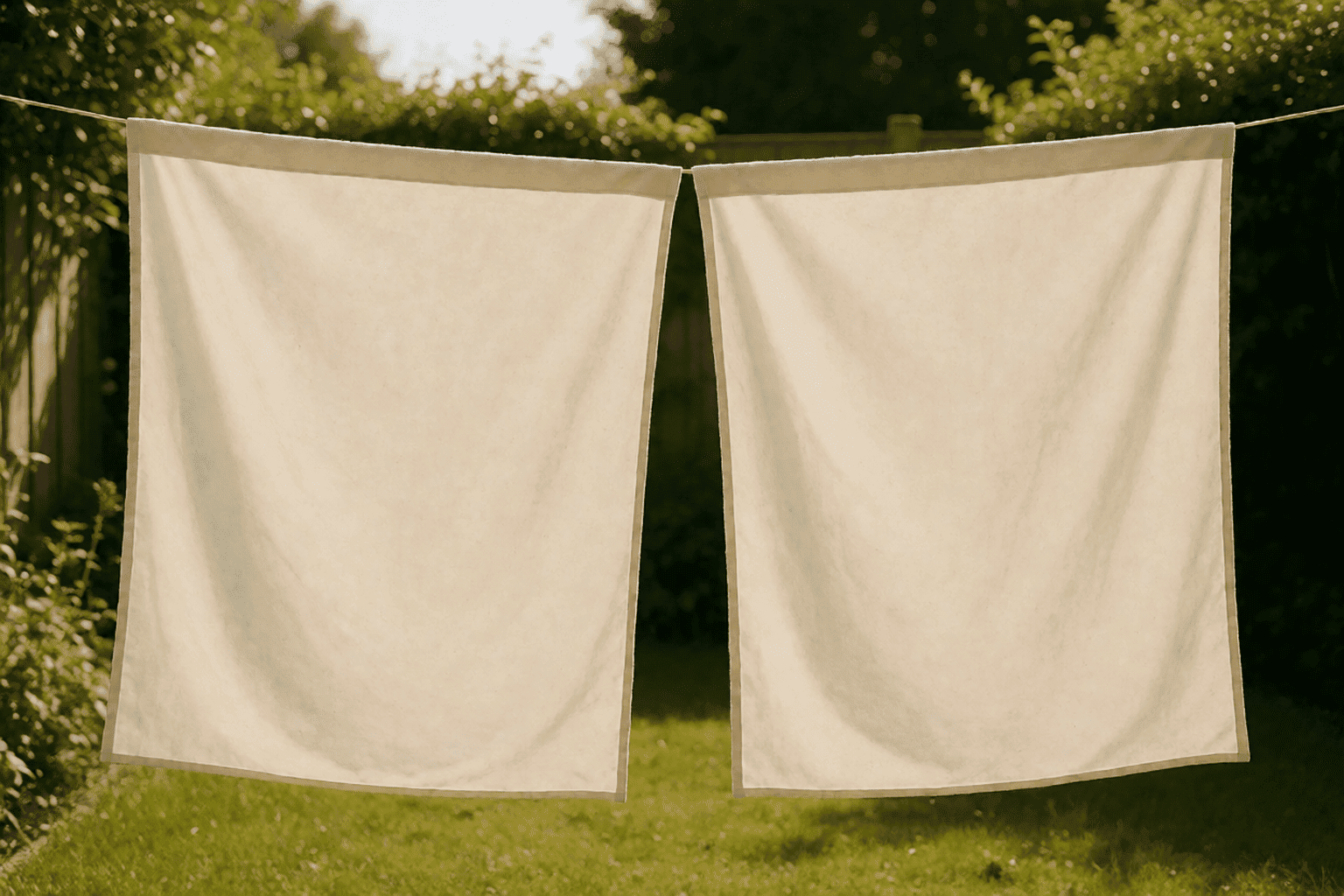
It begins with the covers off the pads and over the line: plain fabric shells hung evenly in the sun, gentle breeze shaping them, the garden green behind. Air drying keeps the fabric happy in a way a hot dryer never will.
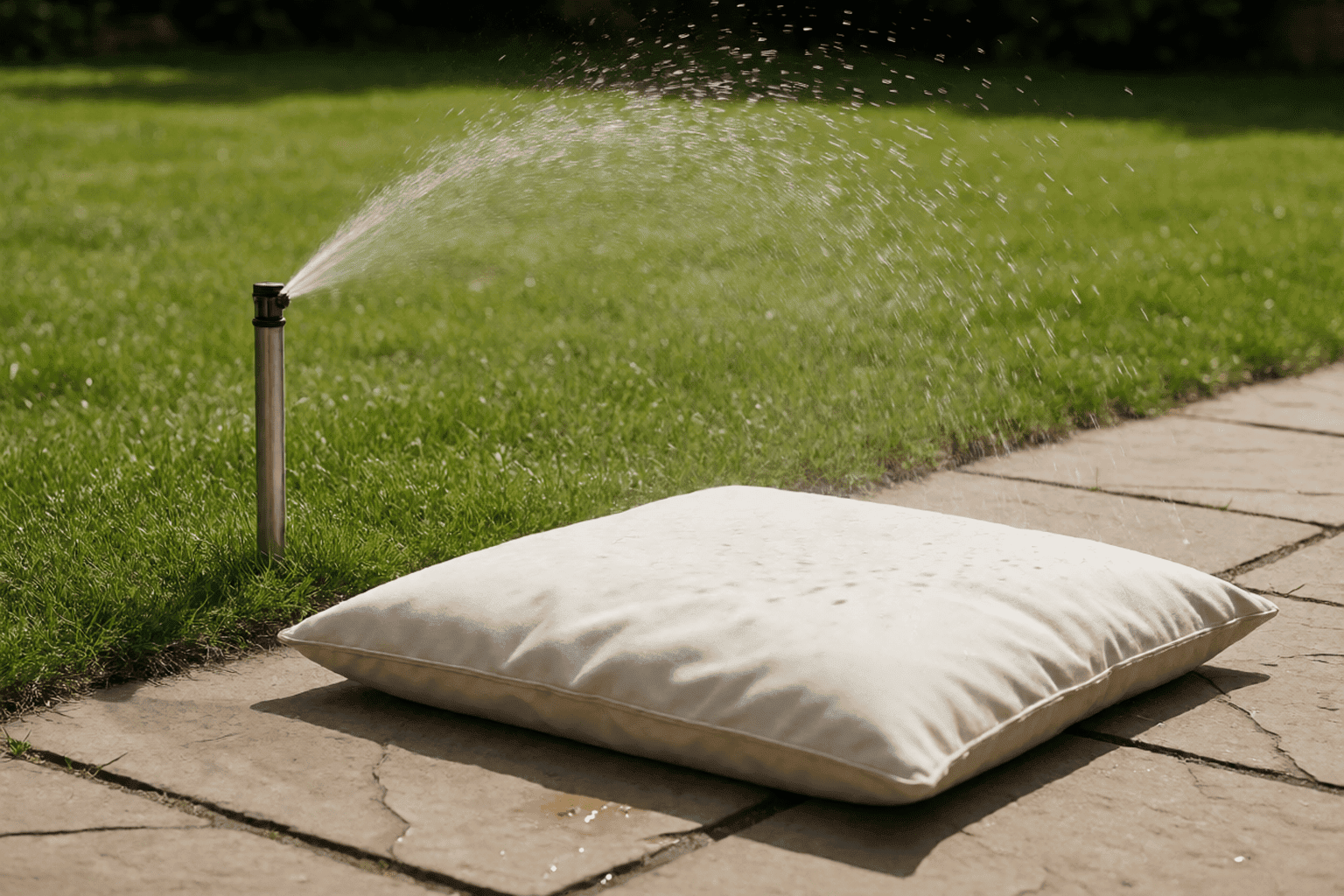
For the rinse itself keep it low-pressure and even: a fine arc of water falling across a pad laid flat on stone slabs, droplets beading on the surface, water sheeting off the smooth top. No scrubbing, no jet blast – just steady water moving the soap out.
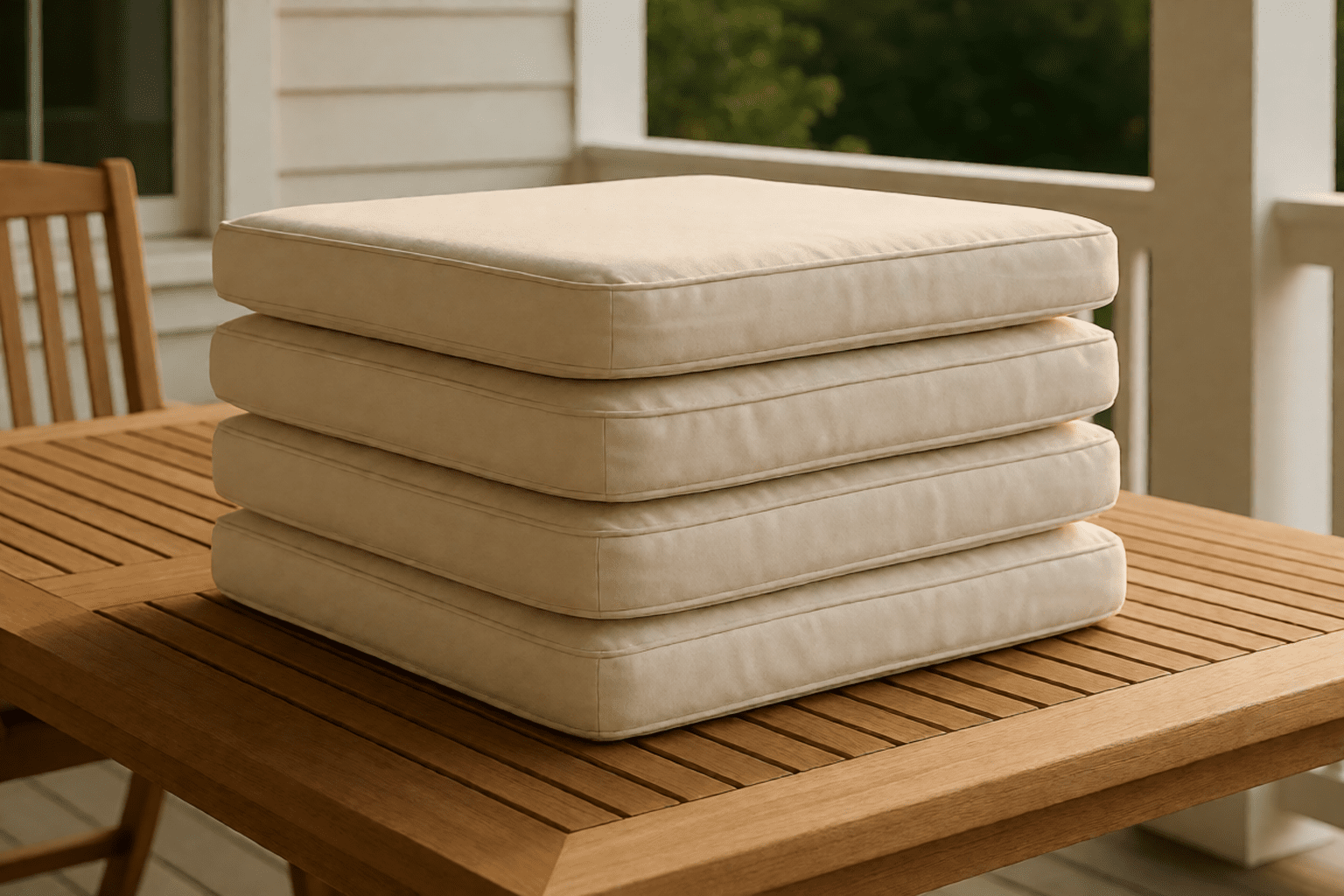
The last frame of wash day: four clean dry pads stacked flat on an outdoor teak table under a covered porch, ready to go back on the furniture the moment you need them. Stack them flat, never on their edges, and they keep their shape until the next season.
Care stretches the years, but frames usually outlast the foam and covers — when that day comes, the rebuild is cut to your measurements: custom Sunbrella cushions, any size and shape, in 38 outdoor fabrics, 4–7 business day builds.
Best Outdoor Cushion Fabric: How to Choose by Climate, Exposure and Budget
A factory guide to outdoor cushion fabrics — solution-dyed acrylic, olefin, polyester grades and blends — ranked for fade, water, mold, comfort and cost per year.
Is Sunbrella Fabric Worth It? An Honest Cost-Per-Year Analysis
Whether the Sunbrella premium pays off depends on sun exposure, horizon and color — here’s the honest math, warranty mechanics and when to skip the upgrade.
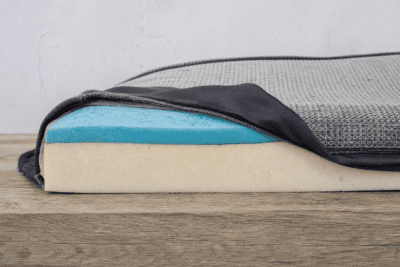
Memory Foam Topped Cushions: When Gel Layers Help (and Hurt)
Memory foam topped cushions and gel-infused layers examined — where a visco topper over HR foam genuinely helps, where it hurts, and the layer specs that separate luxury from a gimmick.
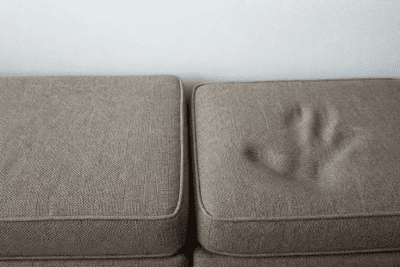
Memory Foam vs Regular Foam Cushions: What a Cushion Factory Wants You to Know
Memory foam vs high-resilience foam for seat cushions — density (35D–65D), ILD firmness, compression set and airflow explained by the people who cut foam daily.
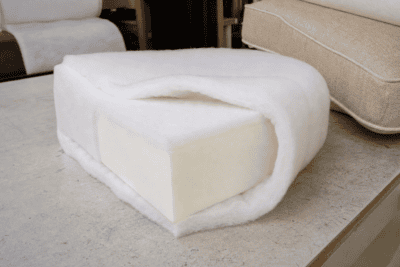
Dacron Batting: The Wrap Layer Explained (What It Does and When to Order It)
Dacron batting for cushions explained: the polyester wrap layer around foam cores, what it does for feel edges and fabric wear, thickness options, indoor and outdoor uses, and when the wrap earns its cost.
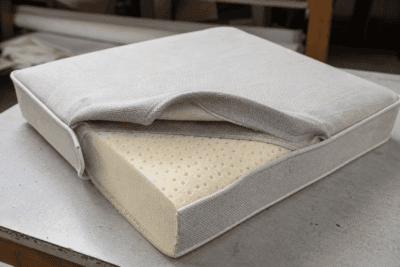
Latex Foam Cushions: Natural Rubber Seating, Honestly Assessed
Latex foam cushion guide: what natural and blended latex actually offer versus polyurethane — resilience, feel, lifespan, weight and cost — who latex seating serves, and the honest counterarguments.