
The loveseat is the two-seat sofa that furniture families build for pairs — apartments, reading corners, the sunroom — and its cushions die on the same clock as any sofa’s, with worse replacement odds. The loveseat market is small enough that replacement cushions for a specific model are rarely stocked, and “loveseat-size” universal sets fit the way universal anything fits furniture. The good news is that a loveseat is a small, simple cushion job — usually two seats and a back (or one bench seat), standard shapes, quick to specify — which makes it one of the most natural custom orders in seating. This guide covers the styles, the measuring, and the replacement decision. The full-size version of every topic here is how to measure couch cushions.
Loveseat Cushion Styles: The Four Builds
Identify your loveseat’s cushion style before measuring anything, because the piece list and dimensions follow from it:
- Two-seat with box cushions. Two square-ish seat cushions and two or three back cushions, each piece separate. The simplest replacement job — ordinary rectangles, measured individually.
- Two-seat with T-cushions. The seat cushions wrap forward under the arms in the classic T shape. The five measurements per T are different in kind (width between arms, seat depth, arm wrap per side, front overhang, thickness) and are covered in full in how to measure a T-cushion sofa.
- Bench-seat loveseat. One long seat cushion spanning both positions — common in modern and mid-century builds. One piece, one set of dimensions, and the fill-migration considerations of any long pad.
- Attached-back and tight-build loveseats. Backs sewn into the frame; replacement of “back cushions” is re-padding work, not cushion ordering. The decision tree for that fork is in reupholster vs replace cushions.
Measuring: The Frame Is the Truth
The rule that prevents most remakes applies doubled on loveseats, because their small frames make errors proportionally larger: measure the frame whenever the frame is reachable, and the old cushions only when it isn’t. Old foam compresses and old covers stretch; the seat deck under the cushions hasn’t changed since the day it was built.
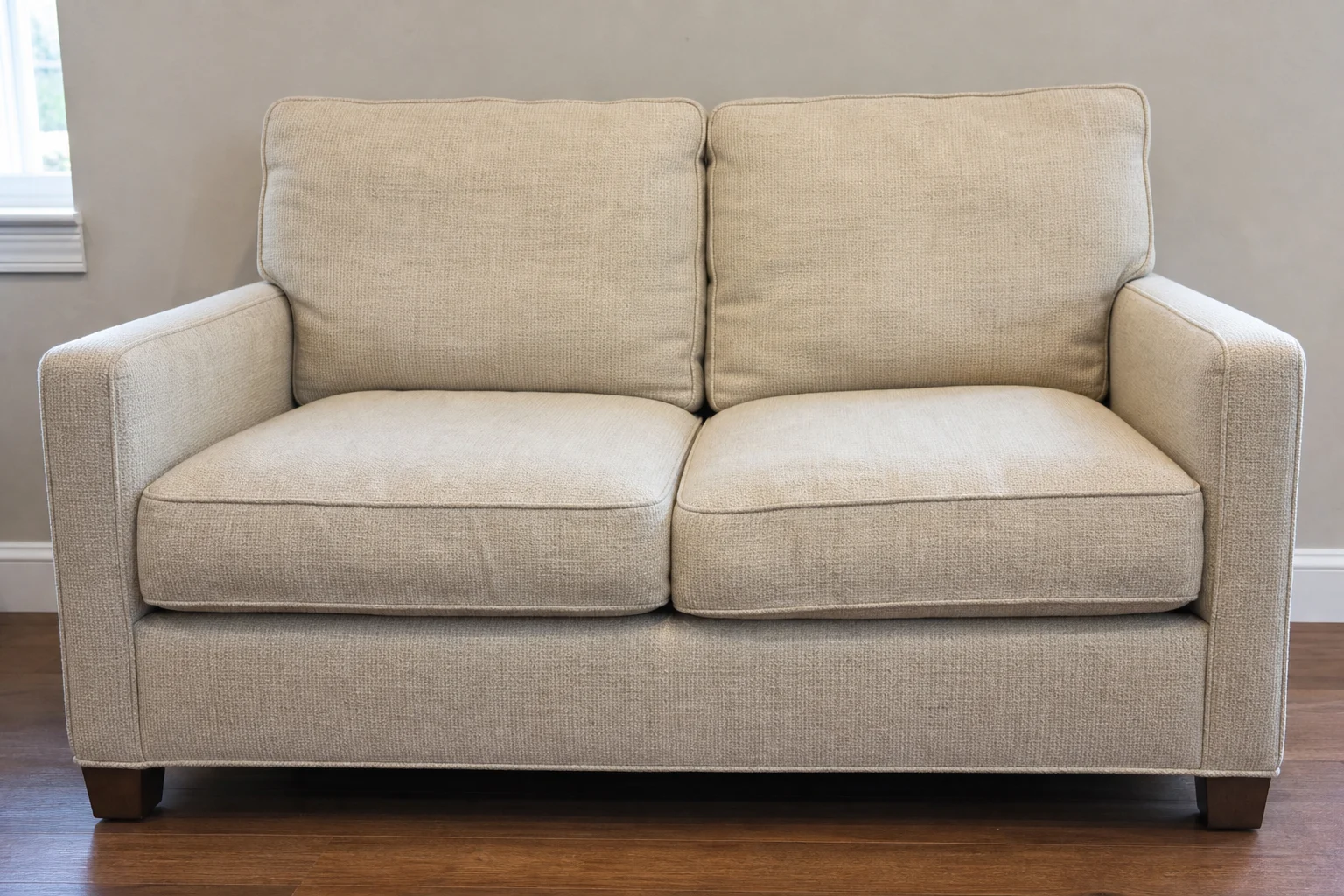
- – Seat width: for two-seat styles, measure each seat slot separately between the arms or dividers — factory slots on the same loveseat routinely differ by half an inch. For bench seats, the full deck width at the front and back; note any taper.
- – Seat depth: back of the deck to front edge. The cushion should reach the front edge; add an inch of front overhang only if the originals sat proud.
- – Back cushions: width of each back slot, height of the area covered, at top and bottom — a difference means a taper, which is a spec, not a surprise.
- – Thickness: off the old cushion stood on edge and uncompressed — or, if the foam is dead, the gap the cushion must fill. The correction table for old-cushion lies (bowing, stretched covers, hamping) is in how to measure couch cushions.
- – The compression allowance: loose seat cushions inside a frame order at measured width minus 1/2–1″ so covers slide in without bowling — the single most-missed correction in cushion ordering, per cushion measurement mistakes.
Density: Two-Person Duty Is Real Duty
A loveseat’s seats carry the same per-seat load as a full sofa’s — two people on a loveseat is not “half a sofa’s duty,” it is the same duty on less furniture:
- – 50D for daily use — the reading-corner loveseat sat in every evening. Holds loft five to eight years.
- – 60D for heavy duty — the household’s primary seat, heavier users, long hours.
- – 35D for occasional pieces — the guest room, the sunroom loveseat used on weekends.
- – Backs run a grade lighter. Backs don’t bear weight; 35D–50D holds the loft at lower cost. Mixed grades across one set are normal workshop practice.
The density-vs-firmness distinction (they are different words for different properties) is untangled in how to choose foam density. For sagging loveseats where the foam is dead but the frame is sound, the full revival path is how to fix sagging couch cushions.
The Replacement Decision: Foam, Covers, or Whole Cushions
Foam only — covers in good shape, foam dead. Measure the existing foam (seam to seam through the cover, or extracted), apply the age corrections, and order cut-to-size foam per buy foam for couch cushions and sofa foam cut to size.
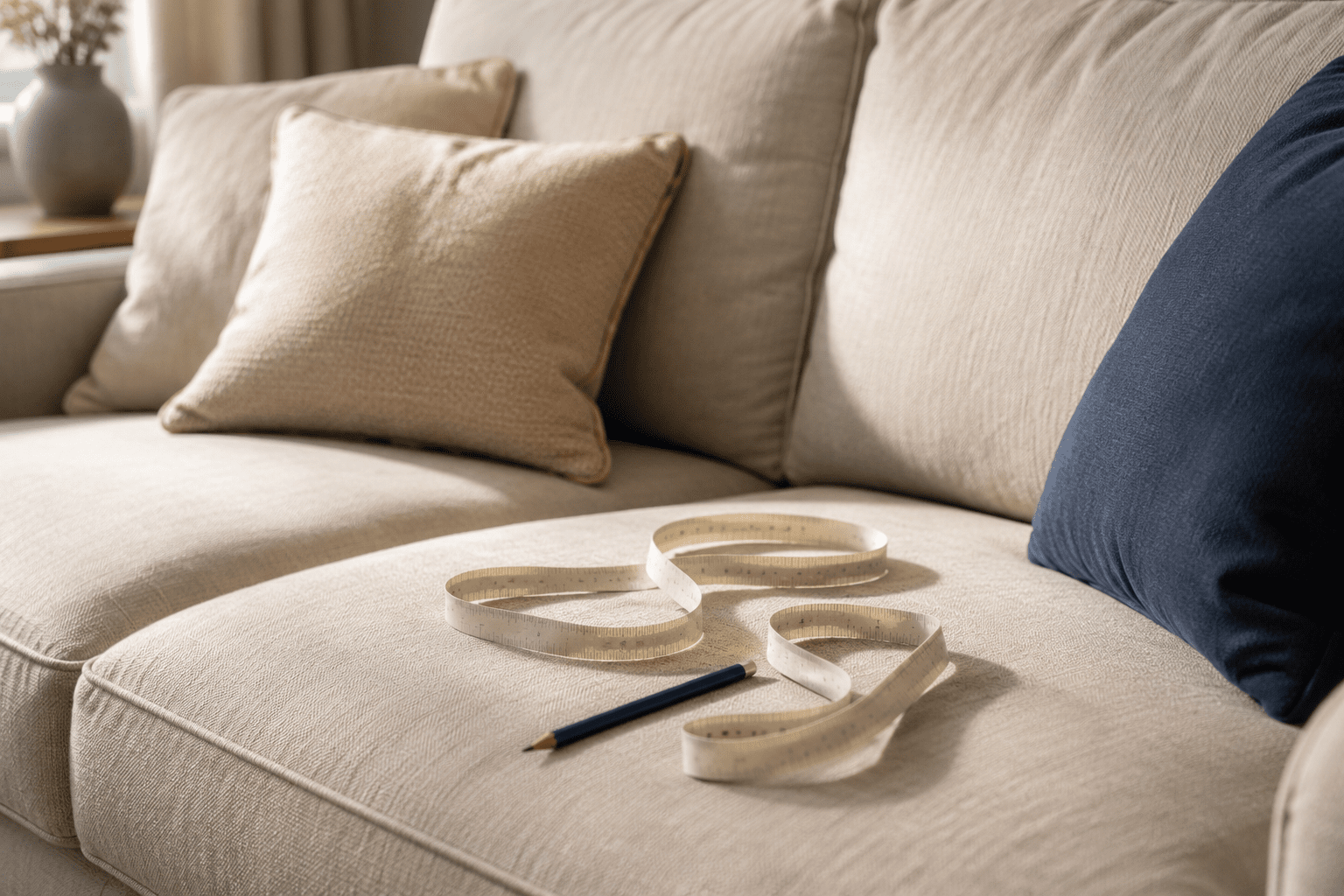
Cushions (foam plus covers) — the standard replacement when fabric and foam have aged together. You choose density and fabric fresh, matched to the frame’s measured dimensions; the set comes as finished pieces.
The covers-only route — keeping sound foam and re-covering — is measured differently (covers, not cushions) and has its own decision logic in replacement cushion covers. Note the honest pricing reality: quality covers with sewn closures are a substantial fraction of a full cushion’s cost, so the covers-only route pays mainly when the foam is genuinely premium or nearly new.
Fabric for a Two-Seat Life
Loveseat fabric follows the room it lives in, with two loveseat-specific notes:
- – The pair problem. Two people share one small surface; mid-tones and patterns distribute the wear marks that a pale solid would concentrate. The hide-the-wear arithmetic is in choosing cushion colors.
- – The ladder is short here. A loveseat set is a small order — the moment to climb the fabric ladder (a flat $7.43 per square foot, all 119 fabrics, linen-family to premium chenille) to the grade you actually want, because the upgrade is free — the same flat rate on two seats and two backs as on a full sectional.
- – Spot-clean between washes, serviced routinely. Quality zippered-cover cushions clean with mild soap and water at the mark — the fabric-by-fabric routine is in how to clean couch cushions.
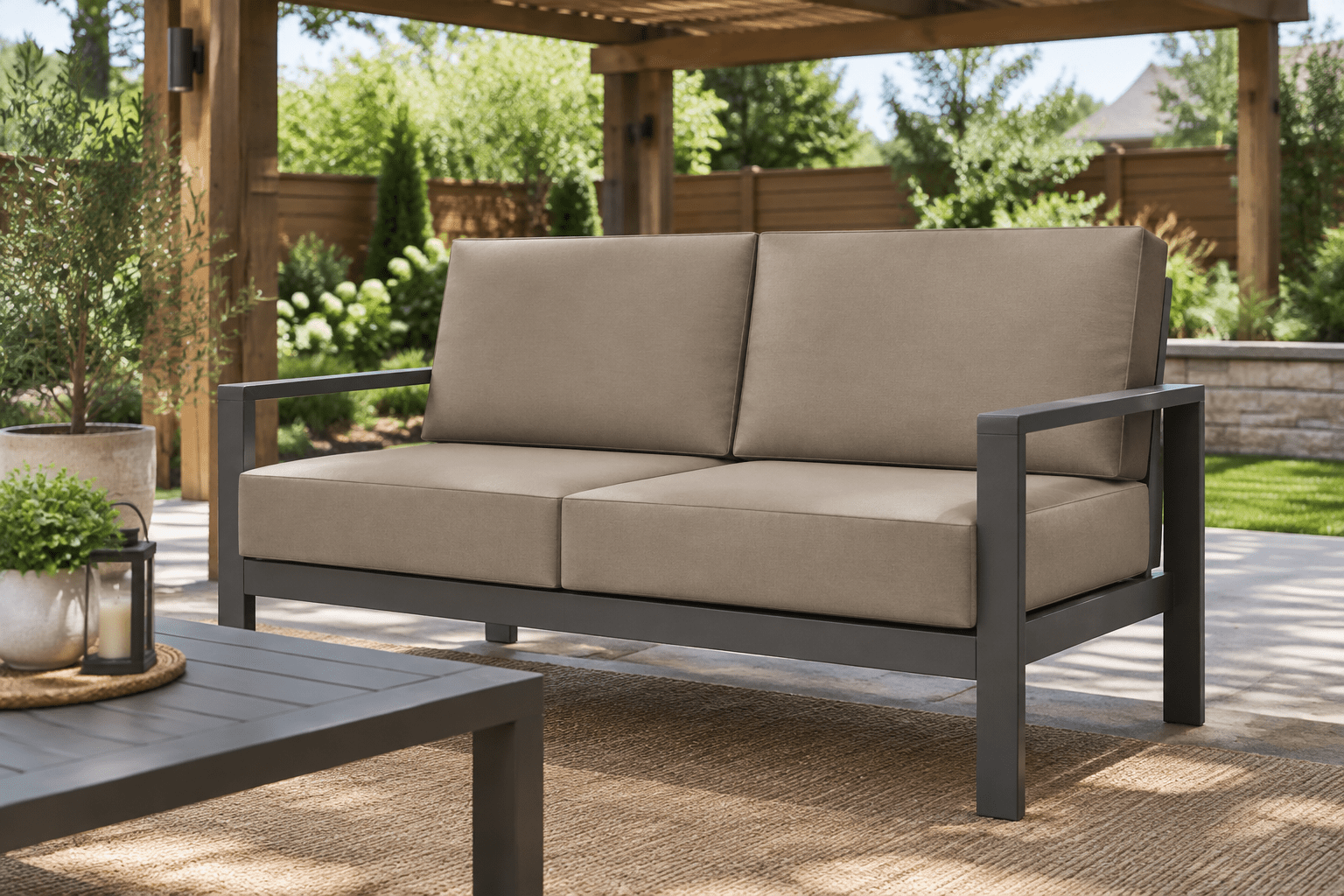
For sunroom and covered-porch loveseats, the fabric spec becomes the outdoor spec — solution-dyed acrylics above all, with reticulated quick-dry fill (a marine-specialist buy) reserved for truly uncovered spots — covered in best outdoor cushion fabric and quick dry foam for outdoor cushions.
Ordering the Custom Set
The loveseat is a small, high-success custom job when the numbers are right:
- Pull the cushions, photograph them in place, and measure the frame — every slot, every piece, on a sketch that matches your order lines (the one-session discipline from how to measure couch cushions).
- Specify per piece: dimensions, density (seats 50D/60D by duty, backs lighter), fabric grade, and any sewing-style preference — a linear or grid stitch pattern is a modest per-piece add-on that keeps seat pads from shifting fill.
- Order at custom loveseat cushions — dimensions, density, fabric and style in one flow; pricing runs from a $45 make-base plus per-square-foot foam and fabric rates, production is 4–7 business days, and every dimension is re-verified before cutting. T-cushion loveseats order through the T-cushion shape flow directly.
The Matching Pieces: Ottomans, Pillows and Set Consistency
Loveseats rarely live alone — a matching ottoman or a pair of accent pillows usually shares the room, and the replacement moment is the moment to decide the whole set’s consistency:
- – The ottoman spec. A matching ottoman pad is the same discipline as a bench pad — measured to the ottoman’s top footprint, 2–4 inches by use (footrests want firm thin fill; feet deliver more pressure per square inch than people assume), and cut from the same fabric lot as the loveseat set. Ordering the ottoman with the seats is both cheaper than a separate later order and the only way to guarantee the lot matches.
- – Accent pillows are a different product decision. Pillows carry the cushion filling types logic (fiber, feather, or foam-core by feel), and their fabric can echo rather than match the seat set — a lighter tone or a texture from the same family reads as intentional design, where a half-close shade match reads as a failed match.
- – Aging together beats matching now. Fabric cut from one lot and installed the same month fades and wears on the same clock. Sets assembled piecemeal over a year or two drift apart in shade even with the same nominal fabric — the quiet argument for ordering the full set, ottoman included, in one specification.
The same one-lot discipline applies to sectional owners adding a loveseat-sized section: sectional cushion replacement covers the matched-set logic at full scale.
FAQs
What size are loveseat replacement cushions?
There is no standard — two-seat styles typically run two seats around 25–30 inches wide, but every loveseat must be measured frame-first, slot by slot. The method is in how to measure couch cushions.
Can I replace just the seat cushions on my loveseat?
Yes — seats, backs and any T-cushions are separate order lines. Replace the set when two or more pieces are tired, so thickness stays matched across the pair.
How much smaller than the opening should loveseat seat cushions be?
Half an inch to an inch on width for cushions that live inside a frame — the compression allowance that lets covers slide in without bowling. Full-size for platform-sitting cushions.
What density for a loveseat used daily?
50D seats with lighter backs; 60D if it is the household’s primary seat. Two people on a loveseat is full sofa duty on less furniture — grade accordingly per how to choose foam density.
Are T-cushion loveseats harder to replace?
Only in the measuring — the five T measurements per cushion are routine custom work. Follow how to measure a T-cushion sofa and the shape orders directly.
Is it worth re-cushioning an old loveseat?
Judge the frame. A sound frame (solid deck, tight arms, working suspension) earns new cushions on a 4–7 day custom order; a creaking frame is a whole-furniture decision, per reupholster vs replace cushions.
How wide is a loveseat, and does width change cushion sizing?
How wide is a loveseat: 52–64 inches for a standard two-seat, and under 48 inches means a chair-and-a-half. Width sets seam count — T-cushion loveseats take three cores, seats at 60D and backs at 50D, sewn in 4–7 days.
Next Steps
- Identify your cushion style (box, T, bench, attached-back), pull the pieces, and measure the frame slot by slot with the corrections table from cushion measurement mistakes.
- Set density per duty — 50D daily default — and choose the fabric grade; a small set is the affordable moment for the good weave.
- Order the set at custom loveseat cushions — every dimension confirmed before cutting, 4–7 business days.
Breakfast Nook Cushions: The Corner-Seating Build Guide
Breakfast nook cushion guide: L-shaped and U-shaped runs, corner geometry and seam placement, seat-plus-back builds at dining height, morning-sun fabric logic, and ordering the whole run from one fabric lot.
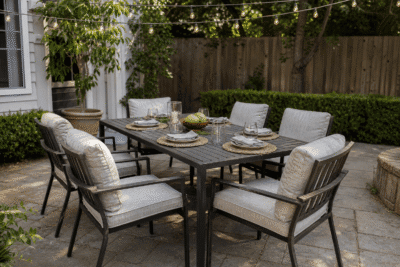
Outdoor Dining Sets: Buying the Set Right So the Cushions Work
Outdoor dining set buying guide: how the set choice locks in your cushion future — seat sizes, arm heights, frame materials, cushion quality in boxed sets versus custom pads, and set versus separate buying.
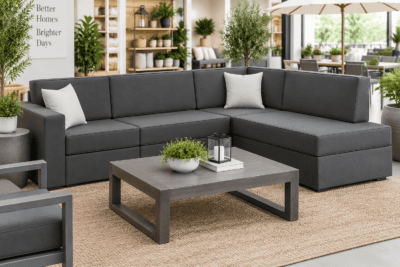
At Home Outdoor Cushions: The Decor Superstore’s Seasonal Wall
At Home runs a full-scale seasonal cushion department at decor-store prices — what the wall stocks, the fit grid, and when the superstore route ends at custom.
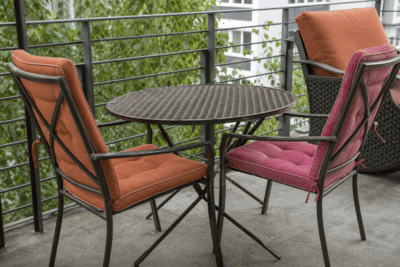
Target Outdoor Cushions: Threshold, Sizing and Replacement (2026)
Target’s Threshold cushions look designer but run generic sizes. What fits, what the seasonal rotation kills, and when custom replacements beat another Threshold refresh.
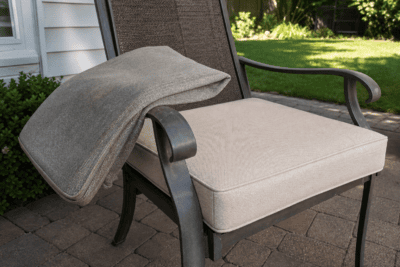
Hampton Bay Cushion Covers: Replacement Covers vs Full Cushion Replacement
The Hampton Bay covers question answered — why OEM cover-only replacements are rarely available for most series, the exact-fit route (full cushions by your series dimensions), re-covering services and DIY, and how to identify your series first.
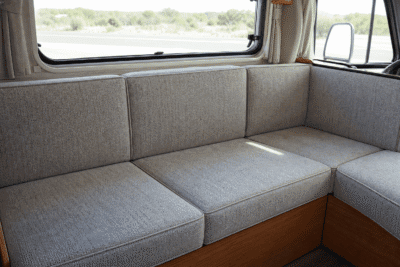
RV & Camper Cushion Replacement: The Complete Guide
RV dinette and berth cushion replacement — sizes, 45–60D foam for daily use, spill-proof fabrics, and the paper-template method for odd cabin shapes.