
Every spring, patios in pollen country acquire a yellow film — on tables, decks, chair arms, and any cushion left outside. Most people treat it as a cosmetic annoyance, wipe what they see, and move on. Then in July they notice gray shading on their cushions’ tops, a faint mustiness where cushions meet frames, and fabric that never quite looks clean again. That’s the part of pollen season nobody warns you about: pollen’s damage isn’t the yellow dust. It’s what the dust does after it lands.
This is the pollen-specific playbook. The full cleaning and maintenance routine is outdoor cushion maintenance tips; the deep cleaning methods are how to clean outdoor cushions.
What Pollen Actually Does to Cushions
Three separate mechanisms, in ascending order of consequence:
- Mechanical staining. Pollen grains are pigmented micro-particles. On contact with damp fabric (morning dew, humidity, a cushion fresh from cleaning), they release their pigment directly into the weave. Dry pollen brushes off; damp pollen stains.
- The food source. This is the one that matters. Pollen is organic matter — pure nutrition for mold and mildew. A cushion weave that collects pollen is stocking a pantry for the first spore that arrives with the next humid week. Mildew on outdoor cushions is usually less about rain than about what the fabric was holding when the rain came. The full mildew chain reaction is covered in prevent mold on outdoor cushions.
- The moisture bridge. A heavy pollen layer is hygroscopic — it holds moisture against the fabric surface longer than clean fabric would hold it, extending every dew event and every post-rain damp period. Longer damp times mean more mildew windows and faster fabric aging.
So pollen protection is really mildew prevention plus stain prevention, executed on a spring schedule.
The Protection Playbook
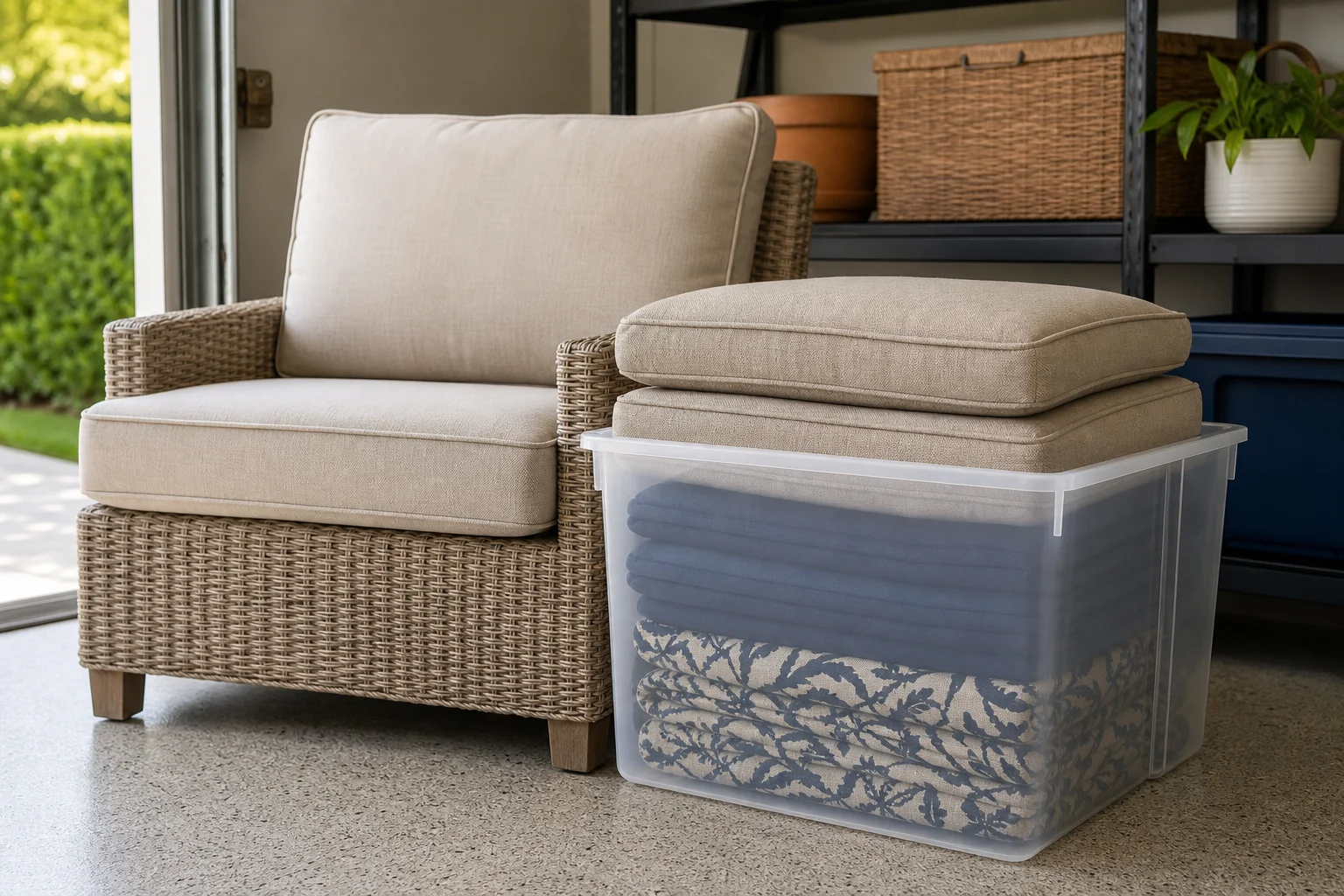
1. Cover or store during peak weeks. Pollen season is concentrated — in most of North America, the tree-pollen peak runs a few intense weeks in spring, with a grass-pollen echo in early summer. Cushions that live indoors or under fitted furniture covers during those weeks skip the entire problem. Covers need their own discipline (anchored, breathable, put on dry and removed promptly after the season — a cover left on through humid weeks creates the moisture problem you were avoiding, per the storage logic in how to store outdoor cushions for winter).
2. Shake and rinse on a schedule during the season. For cushions in active use, the rule is simple: pollen shouldn’t sit. Shake cushions out (downwind) twice a week in peak season, and give them a hose rinse weekly — plain water, no soap needed for maintenance. The rinse before the pollen gets damp with dew is worth more than any cleaning after.
3. Timing beats effort: rinse in the morning. Overnight dew dampens whatever pollen landed yesterday; morning is when pigment-transfer happens. A mid-morning shake-and-rinse interrupts the cycle at its worst point.
4. Placement arbitrage. Pollen falls everywhere, but it accumulates differently: under trees (direct source, plus the canopy drips concentrated pollen with every rain), on downwind sides of buildings, and in corners where airflow deposits it. Moving seating ten feet out from under a flowering tree reduces pollen load by an order of magnitude. It’s the single highest-leverage act in pollen management, and it’s free.
5. Fabric protectant sprays — modest, real help. A fabric guard spray (fluoropolymer-type) adds a temporary barrier that keeps pollen grains from bonding to fibers, making the weekly rinse more effective. It wears off in weeks-to-a-season and needs reapplication — think of it as sunscreen for cushions: useful, not transformative, and never a substitute for the schedule above. Apply clean, dry, evenly, outdoors.
Removing Pollen That’s Already There
The method matters — done wrong, cleaning drives pigment into the weave:
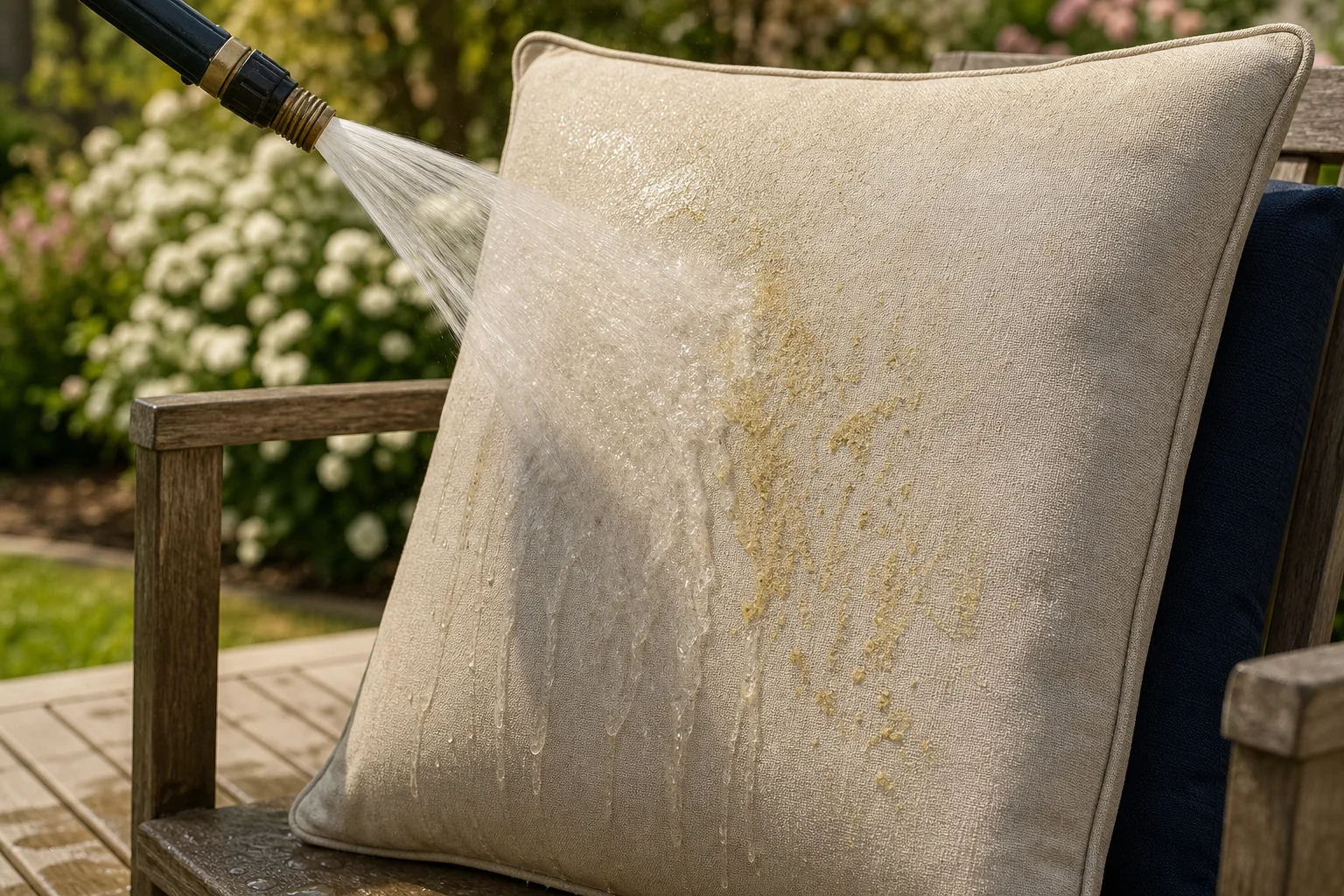
- Dry removal first, always. Take the cushion away from the seating area and beat or brush the pollen off with a soft brush, or vacuum it with the upholstery tool. Never wipe dry pollen with a damp cloth — that’s pigment transfer, the mechanism described above.
- Rinse with a hard stream of plain water from a hose, working from the top down, both faces. Most pollen responds to water alone.
- The stubborn residue (already dampened, already yellowing): mild detergent in warm water, soft brush in the direction of the weave, thorough rinse. If the yellow shadows remain on acrylic-family fabric, the diluted-bleach protocol from Sunbrella fabric care lifts organic staining without harming solution-dyed fiber — the bleach-safety logic is the solution-dyed acrylic construction paying off.
- Dry completely before returning to furniture — and check the spot where the cushion sits: the pollen film on the chair deck under a cushion is exactly the moisture-trapped pantry mildew loves. Wipe decks and frames down too.
Fabric Choices for Pollen Country
If you’re replacing cushions in a pollen-heavy yard, the fabric decision carries some of the burden:
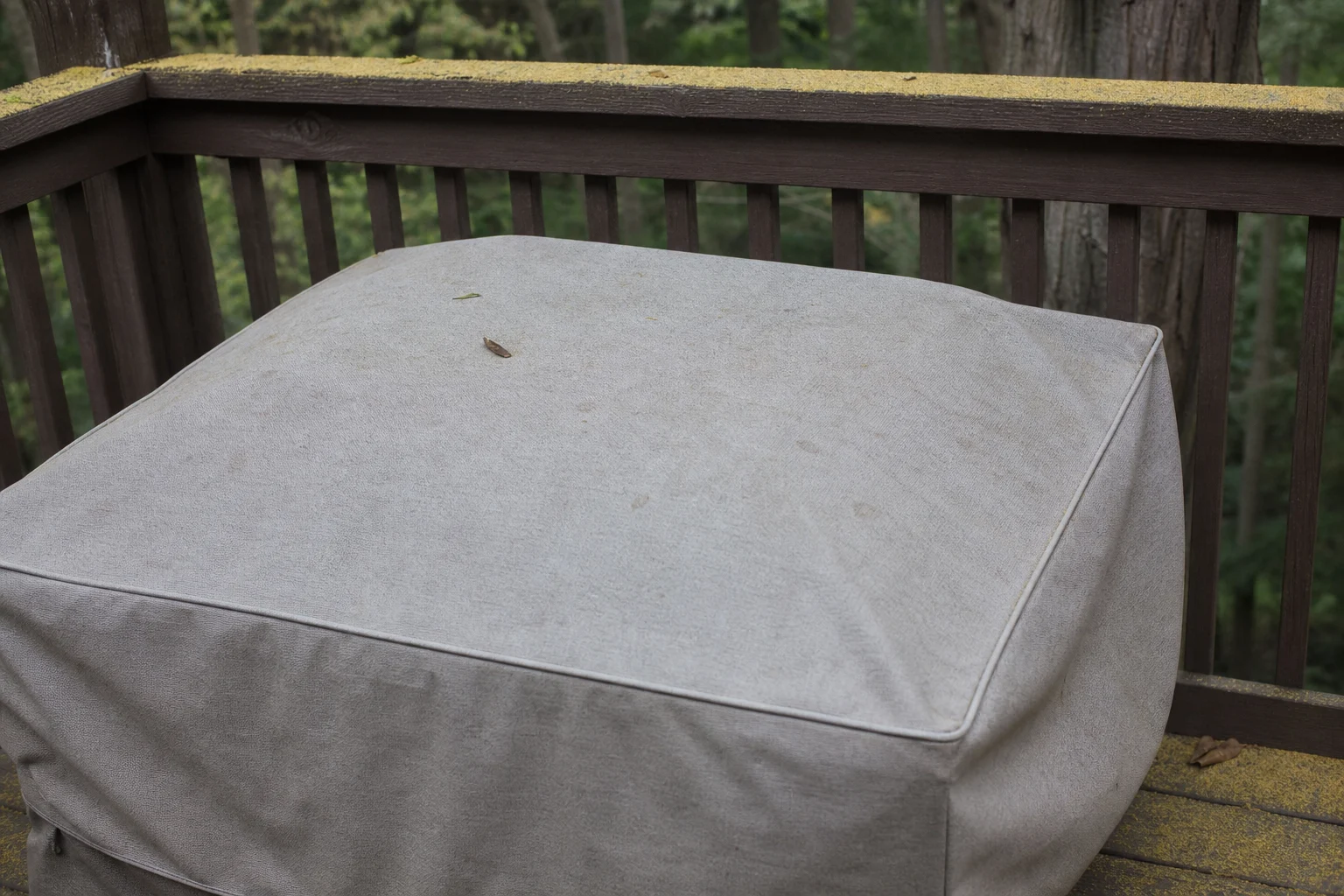
- – Solution-dyed acrylic is the pollen-country default: the tight weave sheds particles in rinsing, and its bleach-cleanability means the organic staining that remains is fully treatable.
- – Textured and loose weaves trap pollen physically — attractive to look at, expensive to maintain in spring.
- – Light colors show pollen but survive it (the yellow is visible early, prompting the rinse); dark colors hide it until the damage is done. Choose light colors in heavy-pollen sites, and accept the visibility as a maintenance indicator.
- – The general tier logic — which family for which exposure — is the best outdoor cushion fabrics.
The Rest of the Patio
Pollen management extends past cushions: wipe table tops and chair arms (the film you touch transfers to cushion fabric), sweep the deck (the reservoir under everything), and rinse umbrella canopies — an umbrella full of pollen rains it back onto your seating with every dew. A patio-level rinse during peak weeks keeps the whole system cleaner than cushion-by-cushion skirmishes.
The Pollen Calendar: Timing the Whole Program
Pollen season isn’t one event — it’s a sequence, and the protection program is easier to run when it’s timed to the sequence rather than to the weather app’s daily number. Tree pollen leads (early spring through late spring, the heaviest and stickiest of the loads — this is the cover-or-store window for cushions you can move, and the shake-and-rinse-every-few-days window for everything else). Grass pollen follows (late spring into summer, lighter loads but longer — the weekly rinse cadence covers it). Ragweed and late weeds close the season (late summer into fall, regional and variable — mostly a rinse-after-use matter). Then the fall put-away: the final full cleaning before storage, because whatever pollen and organic film the set carries into the bag becomes the mildew starter culture for six dark months — the storage routine in how to store outdoor cushions for winter exists for exactly this hand-off. Mark the tree-pollen peak weeks on the calendar once (they’re consistent year to year in a given region), and the rest of the program schedules itself: covers on before the peak, the rinse cadence through it, and the deep clean at the end. A program you calendar is a program you run; a program you improvise is a couch you replace.
FAQs
Does pollen ruin outdoor cushions?
Not on contact — dry pollen brushes off harmlessly. It ruins cushions by dampening (pigment stains), feeding mildew (pollen is organic matter), and holding moisture against fabric. A shake-and-rinse schedule through the peak weeks prevents all three.
How do I get pollen off cushions without staining them?
Dry first, water second: beat or vacuum the loose pollen off before any moisture touches the fabric, then a hard plain-water rinse. Wiping damp pollen with a cloth drives the pigment into the weave — that’s how yellow stains form.
Should I cover my patio furniture during pollen season?
Yes — during the peak weeks, it’s the highest-protection option short of indoor storage. Put covers on dry, anchor them, and remove them promptly once the season passes; a cover left on through humid weeks trades a pollen problem for a mildew one.
Why does my patio get mildew in spring when it barely rains?
Because pollen is feeding it — organic matter plus morning dew is a complete mildew diet. Spring mildew on outdoor fabric is usually a pollen problem in disguise; the chain is explained in prevent mold on outdoor cushions.
What’s the best cushion fabric for heavy pollen areas?
Solution-dyed acrylic in a light color: tight weave rinses clean, and bleach-safe construction means the worst organic staining is fully treatable. The full tier reasoning is in the best outdoor cushion fabrics.
Next Steps
- Identify your pollen peak weeks (local pollen counts are tracked by season) and put the shake-and-rinse schedule on the calendar for exactly that window.
- Do one dry-first deep clean now if spring has already deposited its film — the method above, before the next dew cycle sets the pigment.
- Replacing cushions in a pollen-heavy yard? Start at custom outdoor cushions with a solution-dyed fabric family — the maintenance math in pollen country favors that tier overwhelmingly.
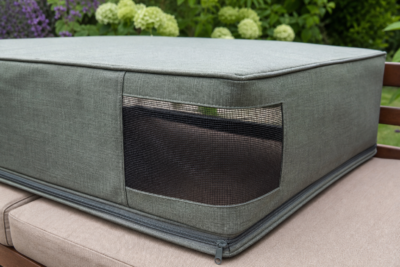
Insect-Proofing Patio Cushions: What Works on Bugs, Without Ruining Fabric
Why insects target outdoor cushions (nesting sites, food residue, moisture), the prevention stack — cleaning, storage, covers, placement — what sprays and repellents are fabric-safe, and the honest limits of keeping a patio bug-free.
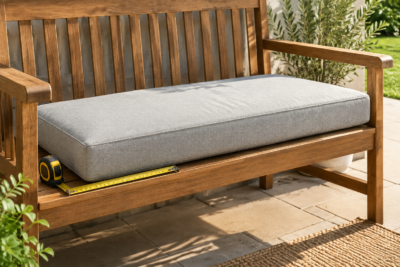
How to Clean Mold Off Outdoor Cushions (and When It’s Too Late)
How to tell salvageable mold from a dead cushion, the vinegar-and-oxygen-bleach method that works, and what to buy so it never comes back.
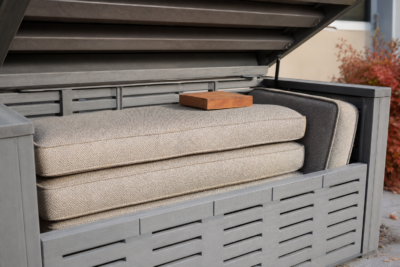
How to Store Outdoor Cushions for Winter: The Complete Method
The right way to winterize outdoor cushions — deep clean, bone-dry, ventilated storage, what never to do — and which climates need indoor storage at all.
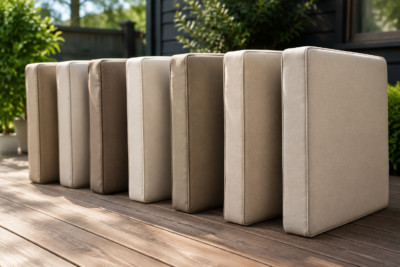
How to Drain Waterlogged Cushions (and When Foam Is Done)
How to rescue a waterlogged outdoor cushion fast — free drain, pressing, air-drying and verifying the core — plus the honest signs that the foam is past saving.
Indoor Cushion Care: Keeping Fabric, Foam and Shape Alive for Years
The indoor counterpart to outdoor cushion maintenance: rotation discipline, sun and humidity management indoors, cleaning by fabric family, foam revival between deep cleans, and the seasonal calendar that keeps inside cushions out of the replacement cycle.
How to Make Outdoor Cushions Last Longer: 12 Habits That Add Years
The maintenance system that extends cushion life — rotation, edge-drying, cleaning cadence, protectant renewal, storage discipline and the specs that matter most.