
Sunbrella is the easiest premium fabric in the world to care for, and most of its owners don’t know it. The property that makes it expensive — solution-dyed acrylic, color running through the fiber rather than coated onto it (why that matters) — is the same property that lets you clean it with tools that would kill ordinary cushion fabric. Bleach, the strongest household cleaner there is, is officially sanctioned. Most stains that are permanent on polyester are ten-minute jobs on Sunbrella.
That said, “low maintenance” is not “no maintenance,” and a few habits separate cushions that look new at year six from cushions that look neglected at year three. Here is the full care method, matched to the manufacturers’ own standards and to what we see work on returned cushions.
Why Sunbrella’s Care Rules Are Different (30-Second Version)
Solution dyeing means the pigment is in the fiber, so cleaners attack the soil, not the color. Three consequences:
- Bleach-safe — diluted bleach solutions cannot strip the color (piece-dyed polyester dies instantly in the same bath).
- Mildew-resilient — acrylic doesn’t feed mold; mildew grows only on the surface film and cleans off completely.
- Finish, not fabric, renews — water repellency comes from a factory finish that wears; re-treating restores it without touching the color.
This is also why we tell buyers that cleanability is half the value of the premium tier — the math is in is Sunbrella worth it?, and the fabric-line product pages are Sunbrella cushions and the outdoor fabric guide.
Routine Care (Monthly, Five Minutes)
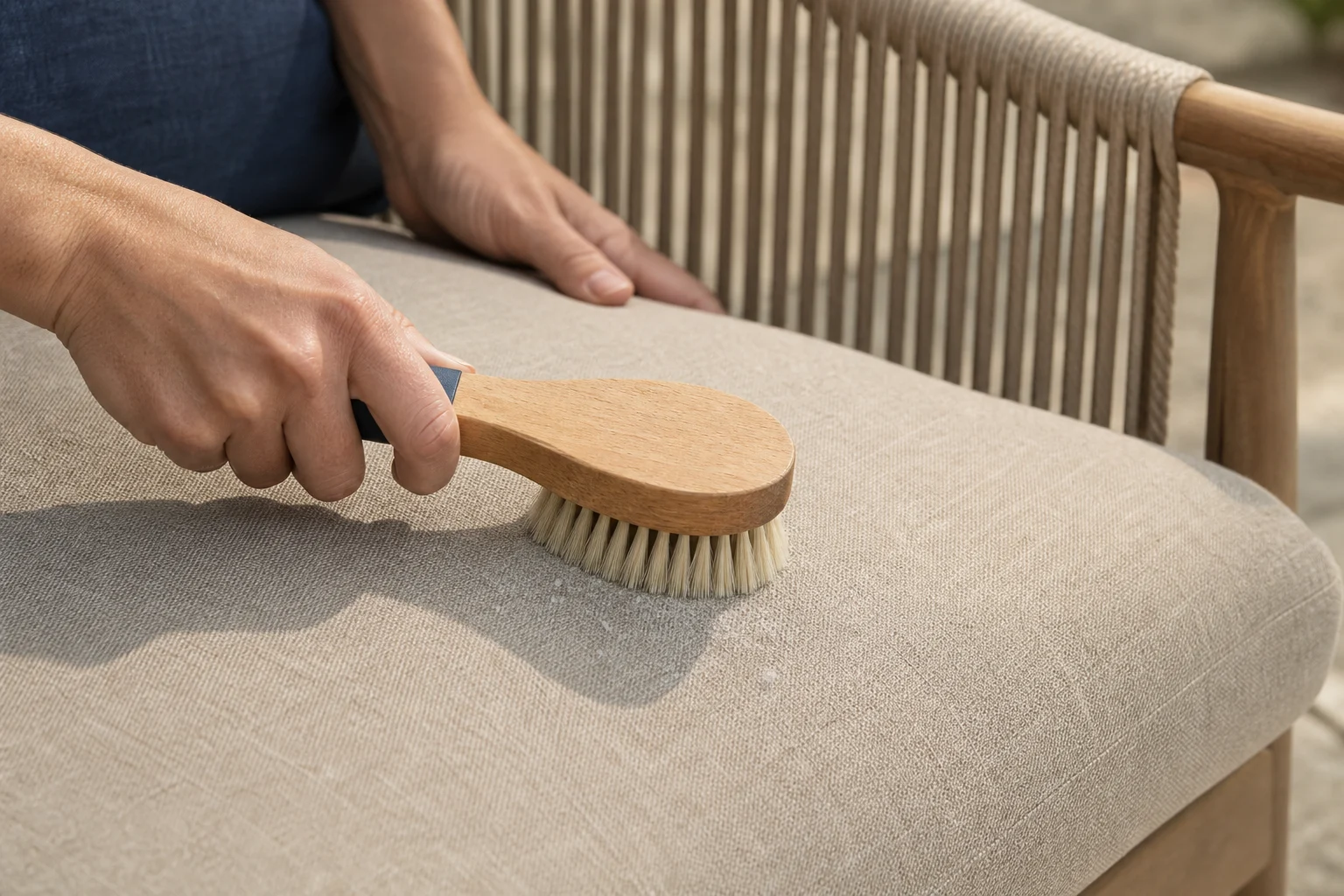
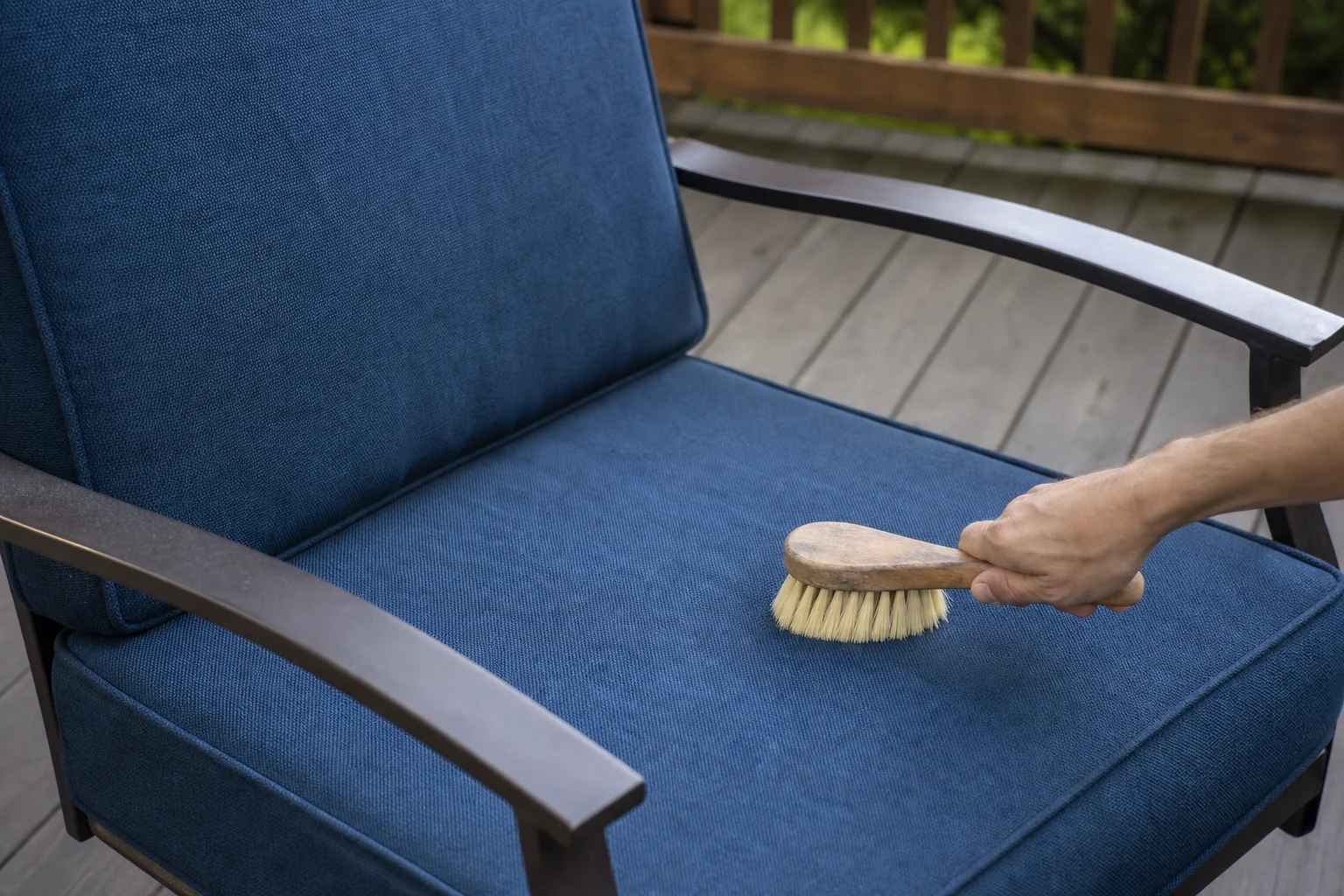
- Brush off loose dirt with a soft brush — before it rains it in.
- Rinse with the hose or a damp cloth; plain water carries off most dust and pollen.
- Air-dry in the sun, fully, before sitting or stacking.
- Blot spills on sight (see stains below), and flip/rotate cushions quarterly so sun and wear distribute (extend cushion life).
Routine care is genuinely most of the program — Sunbrella’s own guidance emphasizes that regular light cleaning prevents the buildup that ever needs deep cleaning.
Deep Cleaning (Seasonal, or When Needed)
The sanctioned method:
- Brush off loose soil.
- Mix: 1/4 cup mild soap per gallon of lukewarm water. For mildew, heavy grime or set-in organic stains, upgrade to 1 cup bleach + 1/4 cup soap per gallon.
- Apply and soak — spray on, let the solution dwell up to 15 minutes (the dwell does the work; scrubbing is secondary).
- Scrub gently with a soft brush, with the weave direction, not across it.
- Rinse completely — every trace of soap and bleach out. Residue is the next dirt magnet, and dried soap film feeds mildew’s food layer.
- Air-dry fully in the sun. Sunbrella may wrinkle slightly when wet; it relaxes as it dries. Don’t machine-dry or force heat.
One caution bleach users miss: protect adjacent materials. The solution is safe on the acrylic, but splashed runoff on wood decking, outdoor rugs or piece-dyed neighbors will lighten them. Rinse surroundings as you go.
Removable Covers
Zip-off Sunbrella covers can typically go in the machine — but follow the tag: cold or lukewarm, gentle cycle, mild detergent, no fabric softener (it leaves a film that kills repellency and feeds soil), zip closed, and air-dry — machine heat shrinks seams and stresses sewing. While the cover is off, feel the foam: firm and dry is what you want; a “clean cover, dead core” discovery route is when to replace cushions.
Stain Removal by Type
Blot, never rub — rubbing drives soil into the weave. Then:
| Stain | Treatment |
| Wine, coffee, berry | Blot immediately; soap solution; if color remains — bleach mix (10-minute dwell); rinse |
| Grease, sunscreen, food | Lift solids; blot; soap solution with a little agitation; rinse |
| Mildew spots | Full bleach deep-clean above; dry in direct sun |
| Sap, tar, tannin | Rubbing alcohol on a cloth, blotting from the edge inward (test a corner); soap finish; rinse |
| Bird droppings | Soften with water, lift, soap, rinse — never dry-scrub |
| Rust | Oxalic-based rust remover (bleach is useless on rust); test first |
Sunrise rule of stains: on solution-dyed acrylic, essentially nothing becomes permanent if treated within the day. The fabric’s stain ceiling is why poolside and dining sets benefit most from it — the comparison with what piece-dyed fabric tolerates is in how to clean outdoor cushions.
Re-Treating Water Repellency (Annual-ish)
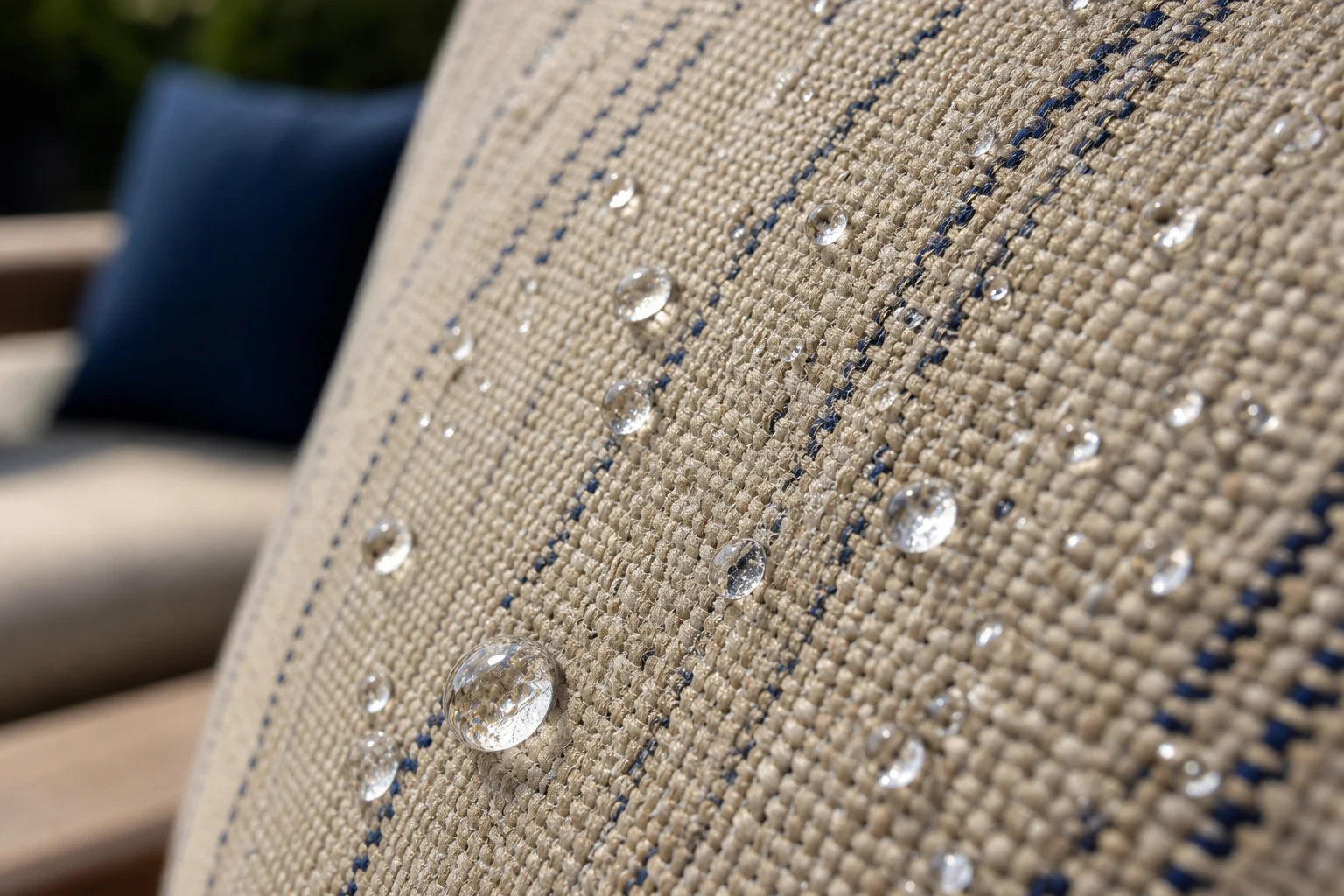
When rain stops beading and starts soaking in flatly, the factory finish has worn — normal after a season or two of use and cleaning:
- Clean first (a dirty surface won’t take treatment evenly) and dry completely.
- Apply a 303 Aerospace Protectant-class fabric treatment in a thin, even coat, out of direct sun.
- Let dry fully before exposure.
Expect to re-treat annually for full-exposure cushions, longer intervals for covered ones. This restores beading — remember it does nothing for seams or foam; the water system is explained in waterproof cushions explained.
Winter Storage
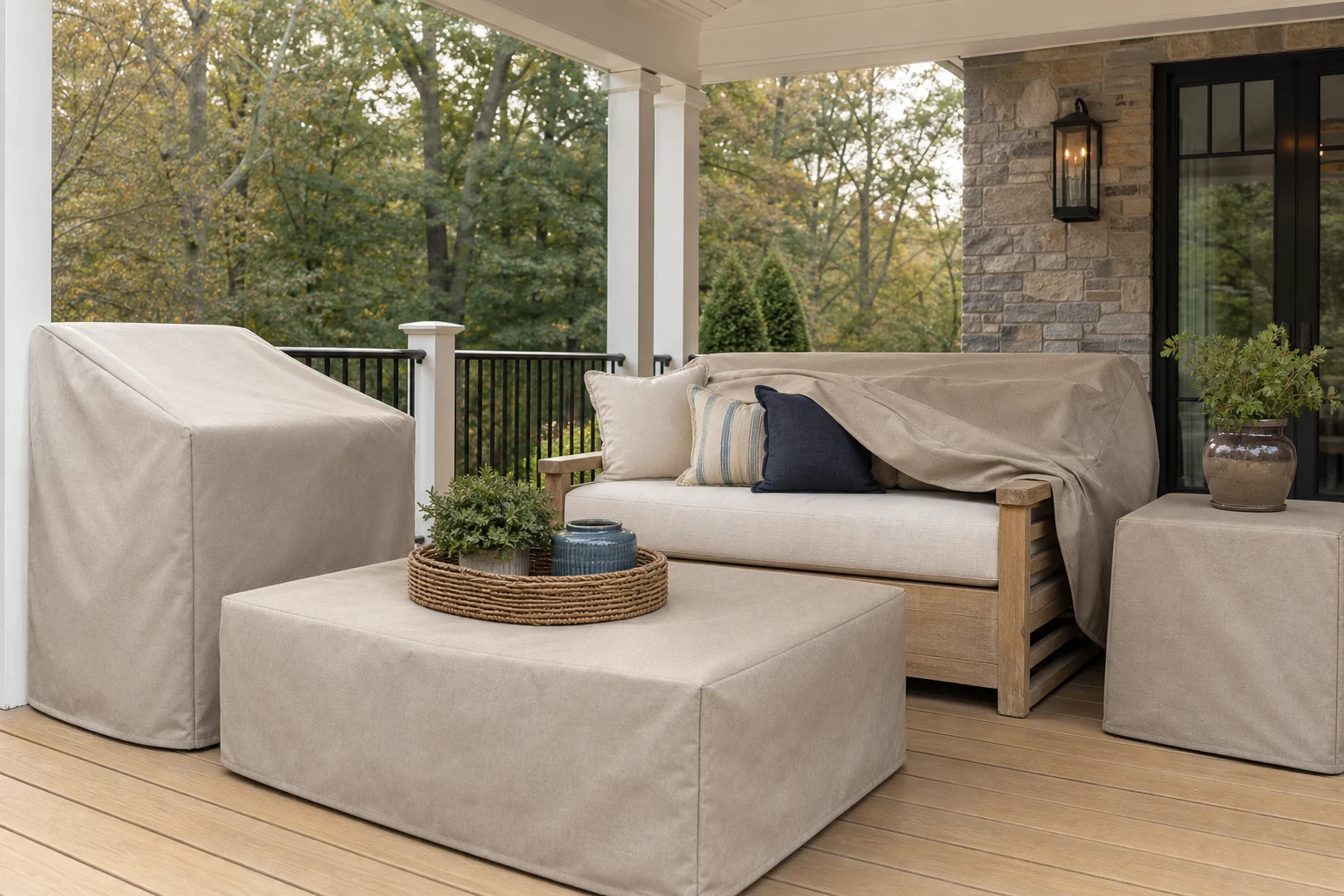
The standard program applies — clean, dry to the core (unzip and feel the foam; surface-dry isn’t dry), breathable storage, never sealed plastic. Sunbrella tolerates cold perfectly; the only winter threat is trapped moisture, same as every cushion. Full walkthrough: how to store outdoor cushions for winter.
What Sunbrella Care Cannot Fix
Honesty section: bleach-safe does not mean immortal. It cannot reverse UV-final chalking (rare on acrylic — if the fabric powders, it is at end of life), abrasion wear on arm edges after years of friction, or a foam failure underneath — a perfect cover over dead foam is a re-core or re-cover job (cover-only orders make that the cheap second half-life — ask for a quote). It also cannot make up for sealed storage — mold inside a plastic-wrapped cushion is a storage error, not a fabric failure (prevent mold).
Care Calendar: When to Do What
The whole program as an annual schedule — tape it inside the storage closet door:
| When | Task | Time |
| Monthly, in season | Brush + rinse + full dry; sit-smell check | 5 min |
| After heavy rain | Edge-stand until dry to the touch | 2 min |
| Quarterly | Flip and rotate cushions; spot-treat anything found | 5 min |
| Early fall | Deep clean (soap method; bleach only if needed); annual audit (the checklist) | 1 hr |
| Before storage | Verify core-dry via zipper; breathable bags; storage notes + photos | 1–2 hrs |
| Mid-winter | Storage sniff-check (deck boxes especially) | 5 min |
| Spring re-entry | Air out a full day; renew protectant if skipped in fall | 30 min |
| When beading stops | Clean, dry, re-treat with 303-class protectant | 30 min |
The compounding effect is real: owners who run this calendar typically deep-clean with bleach once every few years; owners who run nothing deep-clean every season and replace fabric tiers early. Sunbrella’s premium is largely a time premium — the fabric tolerates neglect that kills lesser fabrics, but it rewards the calendar with years beyond the warranty (the value math).
Common Sunbrella Care Mistakes
Five errors we see on otherwise well-kept sets:
- Bleach without soap — the soap suspends soil so the rinse carries it; bleach alone drives grime deeper into the weave while it kills the mildew on top.
- Skipping the rinse — dried soap film is mildew’s favorite food; “cleaned” cushions that mold fastest were usually not rinsed.
- Machine-drying zip-off covers — heat shrinks seams and stresses the sewing; air-dry, always.
- Storing before the core is dry — the #1 killer, fabric-independent (storage guide); a perfect cleaning followed by damp storage is a wasted cleaning.
- Fabric softener in cover washes — it leaves a hydrophilic film that defeats the repellency you’re maintaining.
FAQs
Can you use bleach on Sunbrella fabric?
Yes — 1 cup bleach plus 1/4 cup mild soap per gallon of lukewarm water is the sanctioned deep-clean for mildew and set-in organic stains; solution-dyed color cannot be bleach-stripped, though you should protect adjacent non-acrylic surfaces.
How often should Sunbrella cushions be cleaned?
A five-minute brush-and-rinse monthly, one deep clean per season, stains blotted on sight — that routine alone usually makes bleach cleans rare.
Why doesn’t water bead on my Sunbrella cushions anymore?
The factory repellent finish wears with use and cleaning — clean, fully dry, then apply a 303-class protectant to restore beading; expect renewal roughly annually for full-exposure cushions.
Can Sunbrella covers go in the washing machine?
Most zip-off covers can — cold gentle cycle, mild detergent, no fabric softener, air-dry — always per the tag; machine heat and softener are the two things to refuse.
How do I get mildew off Sunbrella?
Brush, then the soap-plus-bleach soak (15-minute dwell), scrub with the weave, rinse fully, sun-dry — mildew on Sunbrella lives only in the surface film and cleans off completely; if it returns within weeks, the colony is in the foam (triage here).
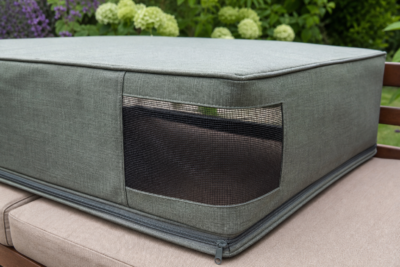
Insect-Proofing Patio Cushions: What Works on Bugs, Without Ruining Fabric
Why insects target outdoor cushions (nesting sites, food residue, moisture), the prevention stack — cleaning, storage, covers, placement — what sprays and repellents are fabric-safe, and the honest limits of keeping a patio bug-free.
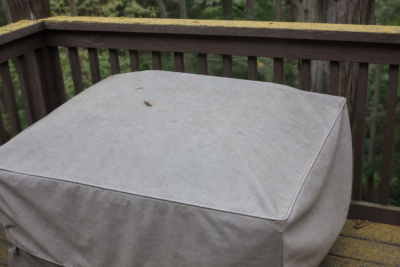
Pollen Season on the Patio: Protecting Cushions and Furniture
What pollen actually does to outdoor cushions (it’s not the color — it’s the chemistry), the spring protection playbook from covers to placement, cleaning pollen off fabric without grinding it in, and fabric choices for the perpetually dusty patio.
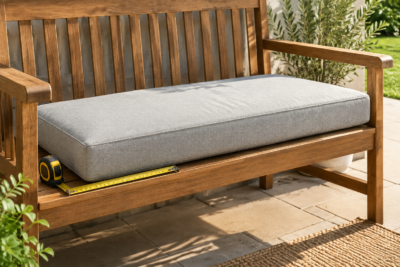
How to Clean Mold Off Outdoor Cushions (and When It’s Too Late)
How to tell salvageable mold from a dead cushion, the vinegar-and-oxygen-bleach method that works, and what to buy so it never comes back.
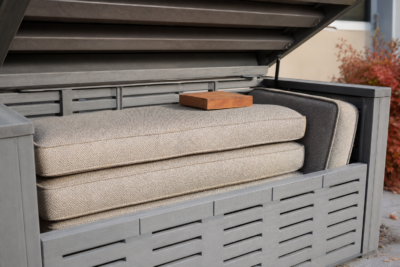
How to Store Outdoor Cushions for Winter: The Complete Method
The right way to winterize outdoor cushions — deep clean, bone-dry, ventilated storage, what never to do — and which climates need indoor storage at all.
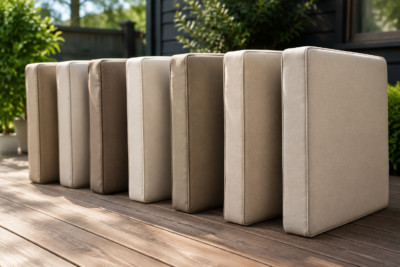
How to Drain Waterlogged Cushions (and When Foam Is Done)
How to rescue a waterlogged outdoor cushion fast — free drain, pressing, air-drying and verifying the core — plus the honest signs that the foam is past saving.
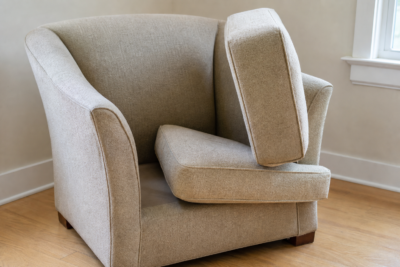
Indoor Cushion Care: Keeping Fabric, Foam and Shape Alive for Years
The indoor counterpart to outdoor cushion maintenance: rotation discipline, sun and humidity management indoors, cleaning by fabric family, foam revival between deep cleans, and the seasonal calendar that keeps inside cushions out of the replacement cycle.