
“Standard cushion size” is the most searched phrase in the category and the most misleading — because the honest answer is that standards exist by chair type, not across the industry. A standard dining chair seat and a standard outdoor dining seat differ; a standard bench is a range, not a number. This chart collects the real clusters — the dimensions that actually recur across furniture types — so you can locate your furniture’s neighborhood, understand what “standard” means for it, and know when the chart is enough versus when to measure. The measuring routine itself: how to measure outdoor cushions and how to measure.
Seat Cushions by Chair Type
The recurring seat dimensions, indoor and outdoor:
| Chair type | Typical seat W × D | Typical thickness | Notes |
| Indoor dining chair | 16–18″ × 16–17″ | 1.5–3″ | The tightest cluster; kitchen chair cushions |
| Wooden kitchen chair | 15–18″ square | 1.5–3″ | Mid-teens to 18 per the kitchen guide |
| Outdoor dining chair | 17–19″ × 16–18″ | 2–3″ | Slightly larger than indoor |
| Deep-seat lounge chair | 22–28″ depth | 4–6″ | Its own category: deep seat cushions |
| Adirondack chair | 19–21″ × 17–19″ | 2–4″ | Adirondack guide |
| Rocking chair | 17–19″ × 16–18″ | 2–3″ | Rocking chair guide |
| Wicker chair | 17–20″ × 17–19″ | 3–4″ | Weave-bridging thickness: wicker guide |
| Glider rocker | 18–22″ × 17–20″ | 2–4″ | Glider guide |
| Office/task chair | 17–20″ × 16–19″ | 1.5–3″ | Thin-firm ergonomic band |
| Bar stool | 13–17″ round | 2–4″ | Bar stool cushions |
| Folding chair | 15–17″ × 15–16″ | 1.5–2.5″ | Fold-gap constrained: folding chair cushions |
| Chiavari / event chair | ~16″ square | 1.5–2.5″ | The one true standard: Chiavari cushions |
Bench Cushions
Benches vary by length more than any dimension in the category — the length is the furniture’s, the depth clusters:
| Bench type | Length range | Typical depth | Thickness |
| Indoor hall/entry bench | 36–48″ | 14–16″ | 2–3″ |
| Bed-end bench | 48–60″ | 16–18″ | 2–3″ |
| Mudroom bench | 30–48″ | 15–18″ | 2–3″ |
| Dining bench | 42–72″ | 15–17″ | 2–3″ |
| Outdoor bench | 36–60″ | 16–19″ | 3–4″ |
| Extra-long runs | 60–96″+ | 16–20″ | 3–4″ |
The bench-length reality and its measuring consequences: bench cushion measurements, indoor bench cushions, extra long bench cushions.
Window Seats, Daybeds and Loungers
| Type | Typical footprint | Thickness | Guide |
| Window seat | By architecture, 16–24″ deep | 3–5″ | Window seat measurement |
| Bay window (3 panels) | Panel-run, angles | 3–5″ | Bay window cushions |
| Daybed | 33–39″ × 72–75″ | 4–6″ | Daybed cushions |
| Chaise lounge | By sections, 16–20″ wide | 3–5″ | Chaise measurements |
| Floor cushion | 22–36″ square or round | 4–6″ | Floor cushions |
| Swing bed (twin) | 38–39″ × 75″ | 4–6″ | Porch swing bed cushions |
Thickness: The Bands That Matter
Thickness clusters by duty, and the bands transfer across chair types:
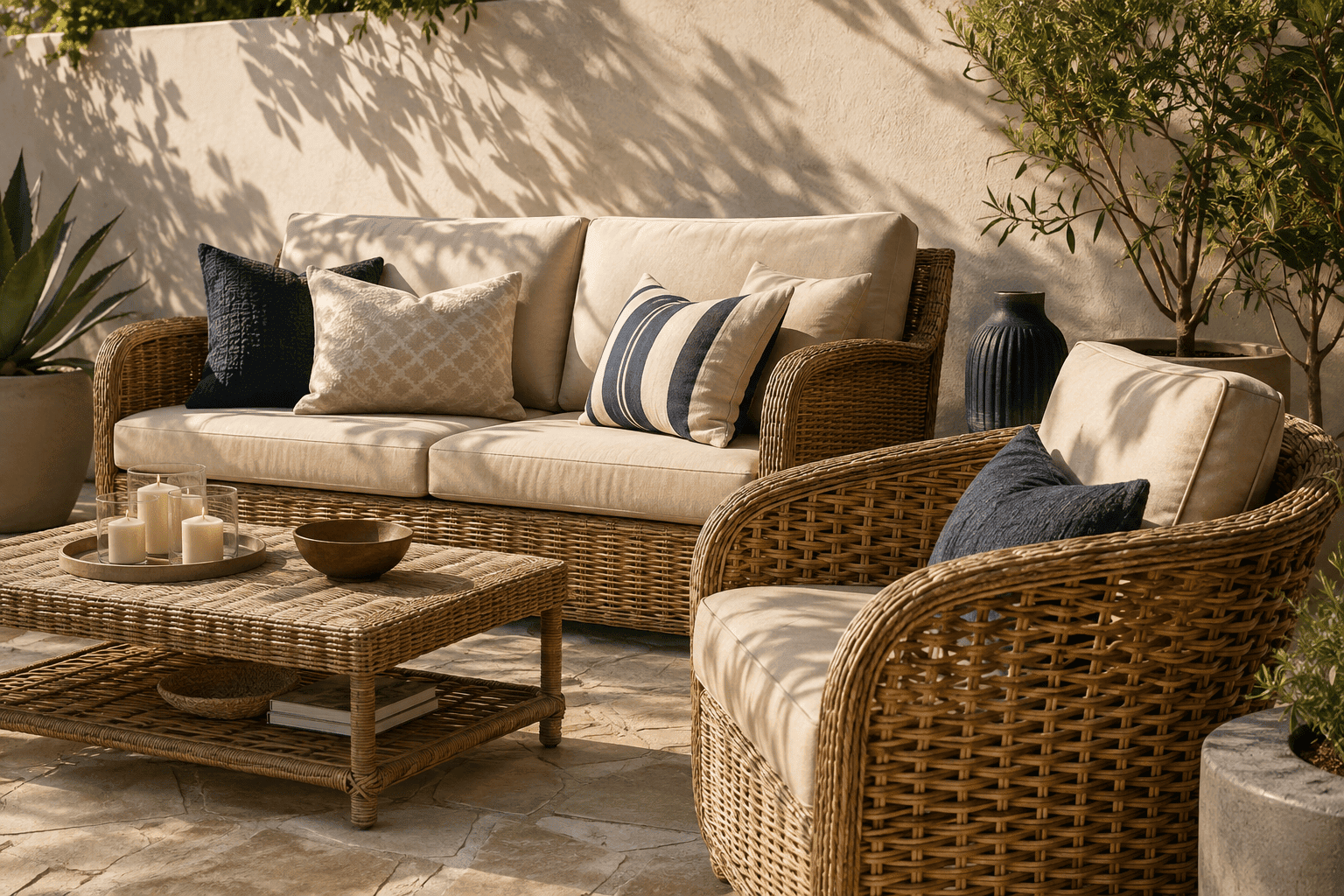
- – 1.5–2 inches: event and occasional seating, contour-preserving pads on ergonomic furniture (piano bench cushions is the pure case)
- – 2–3 inches: dining and task seating — capped by table geometry (kitchen chair cushions)
- – 3–4 inches: standard lounge, wicker (weave-bridging), outdoor benches
- – 4–6 inches: deep seating, daybed cushions, reading furniture, swing beds — extra thick cushions
Why “Standard” Disappoints: Three Honest Reasons
- Furniture eras vary. A 1950s dining chair and a 2020s one both answer to “standard dining chair” and differ by two inches per side. Imported, vintage, and hand-built furniture scatter around every cluster in the chart.
- Manufacturers round. A seat sold as 18 inches measures 17.5 or 18.25 — half-inch errors that matter at cushion tolerances.
- The pad changes the furniture. Thickness raises the sitter, depth affects table clearance, and a “correct size” pad that’s too thick breaks the ergonomics of the chair it fits (kitchen chair cushions covers the table-arithmetic).
The chart’s honest use: locate your furniture’s neighborhood, sanity-check an existing pad’s label, and plan thickness by duty. The chart cannot replace measuring your actual seat — the quarter-inch routine in how to measure and the error patterns in cushion measurement mistakes.
From Chart to Order: Two Paths
Path 1 — your furniture matches the chart and the stakes are low. Stock pads in your cluster’s dimensions serve: the Chiavari event fleet, the standard indoor dining chair, the folding-chair fleet. Buy, test-fit, keep what fits.
Path 2 — anything else. Custom cut-to-size: your measured dimensions (the chart told you the neighborhood; the tape gives the address), your density and fabric, from a $45 make-base plus per-square-foot foam and fabric rates. Entry points by type: custom dining chair cushions, custom indoor bench cushions, custom outdoor cushions, and the full builder at custom cushions — every path runs the same flow: dimensions confirmed before cutting, 4–7 business days of crafting and a 4-7 business-day make-and-ship window, ties, grip backing and stitch patterns as specified add-ons.
The Standard Sizes and Replacement Cushions
One more honest note on the phrase “standard replacement cushions”: replacement pads for named furniture (a specific patio set, a specific sofa) are sized to that furniture’s line, not to any industry standard — and the lines change. When the furniture’s own replacement pads disappear (the story in discontinued furniture cushions), the chart plus your tape measure is the permanent answer: the cluster tells you the ballpark, the measurement gets the fit, and custom work makes any “standard” your standard. Couch owners can skip the chart anxiety entirely — couch replacement cushions start from your measurements, not from any line chart.
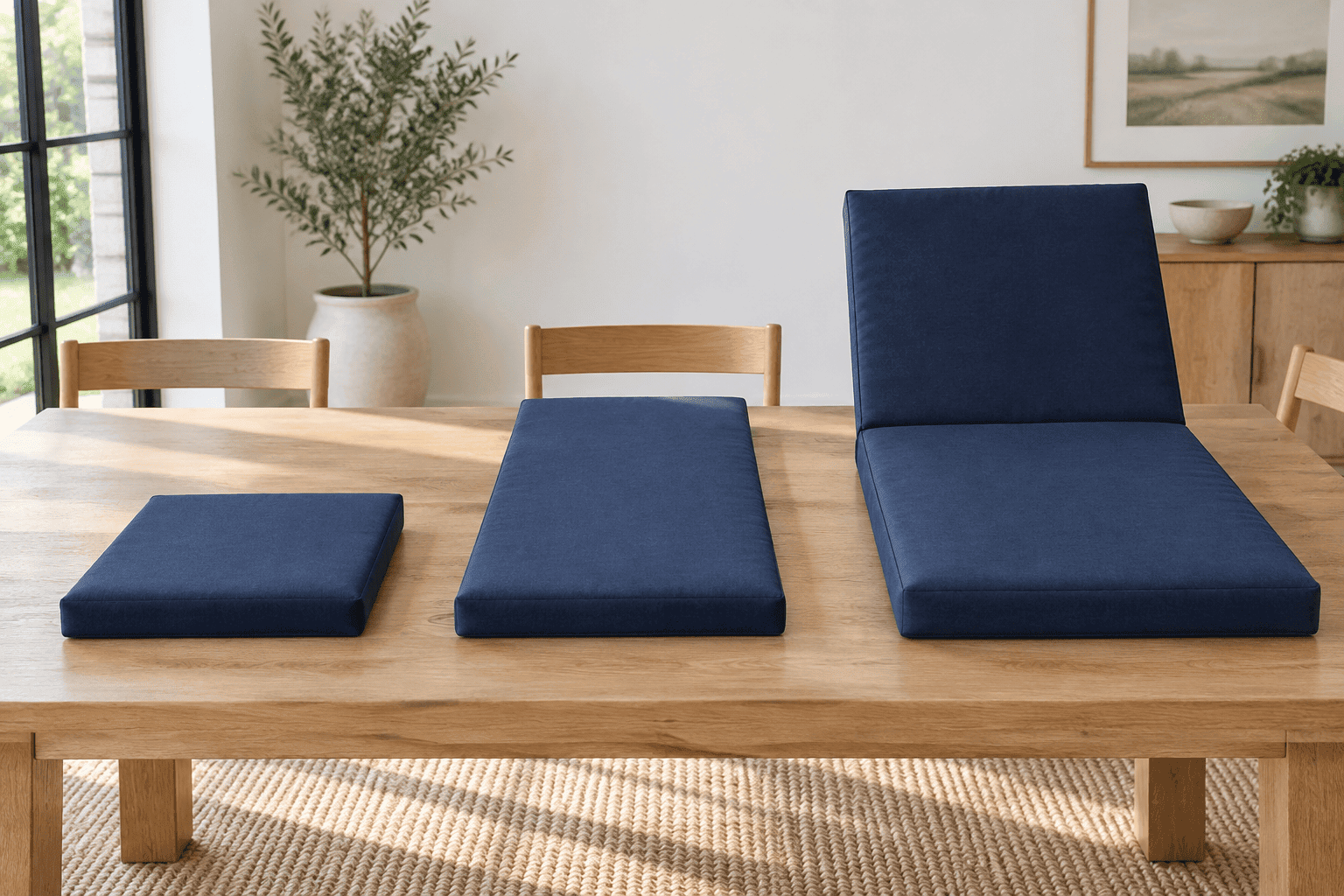
Thickness Plus Size: The Combination Table
The chart’s two halves combine into the practical spec — what thickness to order for which footprint at which duty. The combinations that recur in real orders:
| Use | Footprint | Thickness | Density | The reasoning |
| Everyday dining set | 17×17″ seats | 2″ | 50D | Table geometry caps height; density carries the daily cycles |
| Occasional kitchen chairs | 16×16″ seats | 2″ | 35D | Short-duty seats at light grade (kitchen chair cushions) |
| Outdoor dining, uncovered | 18×17″ seats | 2–3″ | 50D quick-dry | Weather stack at dining thickness (custom vs standard cushions) |
| Wicker lounge set | 19×18″ seats | 3–4″ | 50D | Weave-bridging plus lounge duty |
| Deep-seat conversation | 24–26″ seat depth | 5″ | 50D–60D | The geometry demands loft; density keeps it (deep seat cushions) |
| Window-seat reading nook | Run by architecture | 4″ | 50D + comfort top | Long static sits earn the layer (window seat measurement) |
| Daybed / guest sleeping | 35×72″ | 5–6″ | 50D–60D | Near-mattress duty (daybed cushions) |
| Floor cushion | 26–36″ | 5–6″ | 50D | The pad is the furniture (floor cushions) |
| Bench run, indoor hall | 60×15″ | 2″ | 50D | Tailored profile, daily traffic |
| Bench run, deck | 72×18″ | 3″ | 50D quick-dry | Weather exposure at bench scale (extra long bench cushions) |
Read the table as the starting spec, then adjust by the constraints the chart can’t see — the table’s apron, the sitter’s height, the frame’s condition. And when the combination you need isn’t in the table, that’s the custom conversation: any footprint at any thickness at any density, priced from a $45 make-base plus per-square-foot rates.
FAQs
What is a standard cushion size?
A cluster by chair type, not an industry number — dining seats run 16–18 inches, outdoor 17–19, benches vary by length with depths of 14–20. The full chart is above.
What thickness do seat cushions come in?
Bands by duty: 1.5–2 event, 2–3 dining, 3–4 lounge and outdoor, 4–6 deep-seat and daybed builds. Thickness is a category spec: extra thick cushions.
Are outdoor cushion sizes the same as indoor?
Close but larger — outdoor dining seats run an inch wider and deeper than indoor on average, and outdoor thickness runs one band higher.
Do standard-size cushions actually fit?
When your furniture sits inside its cluster’s range and the stakes are low, yes; vintage, imported and hand-built furniture scatter around every standard. The fit-deciding routine: how to measure.
What size is a standard bench cushion?
There is no standard length — benches run their furniture’s length (36–60 typically, to 96-plus for runs) with depths clustering 14–20 inches. Bench cushion measurements.
Where do I find replacement cushions in standard sizes?
Stock pads serve the tight clusters (dining chairs, Chiavari, folding); everything else is custom cut-to-size from your measurements — custom cushions — at a $45 make-base plus per-square-foot rates, confirmed before cutting.
Next Steps
- Locate your furniture in the chart — chair type, cluster range, thickness band — and treat it as the neighborhood, not the address.
- Measure the actual seat per how to measure (quarter-inch discipline; frame over old pad), and fix thickness by the duty band.
- Order to the measurement at the matching entry point — custom cushions or the type-specific builders — dimensions confirmed before cutting, 4–7 business days of crafting, a 4-7 business-day make-and-ship window.
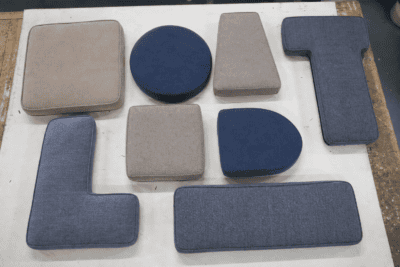
Cushion Shapes Guide: All 11 Shapes, What They Fit, and How to Measure Each One
A field guide to every cushion shape we cut — rectangle, chaise, L-shape, T-cushion, bowed, notched, round, oval, half-round and wedge — which furniture each one belongs to, how to measure it in inches, and exactly which shape to pick in our custom cushion builder.
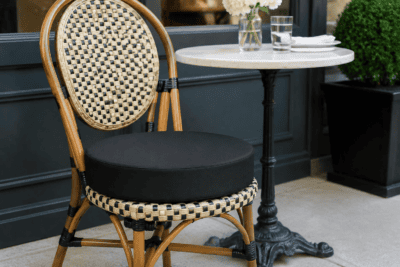
Round Outdoor Cushions: Diameter Duty on the Patio
Round outdoor cushion guide: round patio dining sets, fire-pit seating and round loungers; diameter measuring with the two-axis check, thickness bands, weather specs for circular pads, and ordering rounds.
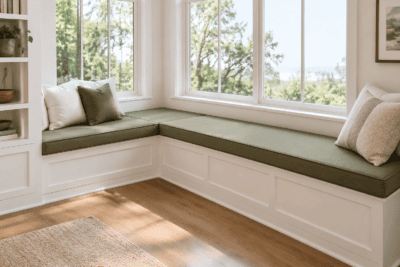
U-Shaped Cushions: Measuring the Wraparound Seat
U-shaped cushion guide: the three-arm geometry of wraparound seating, inside versus outside radius measuring, seam placement at the corners, continuous versus sectioned builds, and ordering U-runs to template.
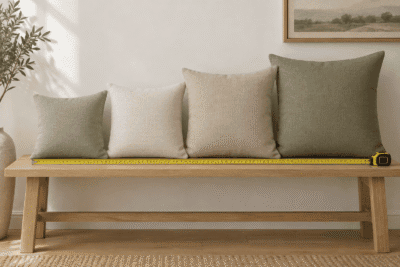
Throw Pillow Sizes: Standard Chart and How to Measure
There is no industry law, but there is a firm convention: throw pillows cluster at 16, 18, 20 and 22
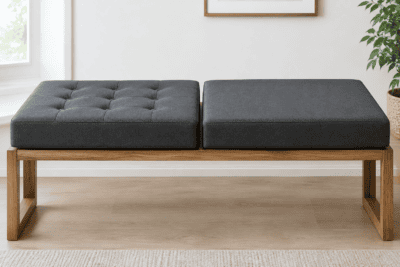
Tufted vs Unbuttoned Cushions: The Stitch Decision
Tufted versus plain cushion tops compared: what tufting and stitched patterns actually do to fill, feel and lifespan, button versus stitch construction, the market’s custom stitch styles, and when plain wins.
How Much Fabric Do You Need for Custom Cushions? (Yardage, Math and a Reality Check)
Two very different people ask how much fabric a cushion needs. One is sewing it herself and standing at a