
Indoor benches are the utility players of a house — entryway, foot of the bed, hallway, mudroom, dining table — and their cushions live the hardest indoor life of any pads in the home: sat on fully-clothed and wet-coated, stood on to reach the top shelf, moved, flipped, and used as furniture by the cat. Yet the replacement market for indoor bench pads is thin, because benches come in no standard length, and the “36-inch bench cushion” that fits the store’s bench fits almost nobody’s actual bench. This guide covers sizing by bench type, the firmness decision, the anti-slip methods, and the ordering route for real dimensions. The outdoor counterpart is outdoor bench cushions; measuring method in bench cushion measurements.
Bench Sizes: The Honest Landscape
There is no standard bench, but there are standard benching situations, and their dimensions cluster:
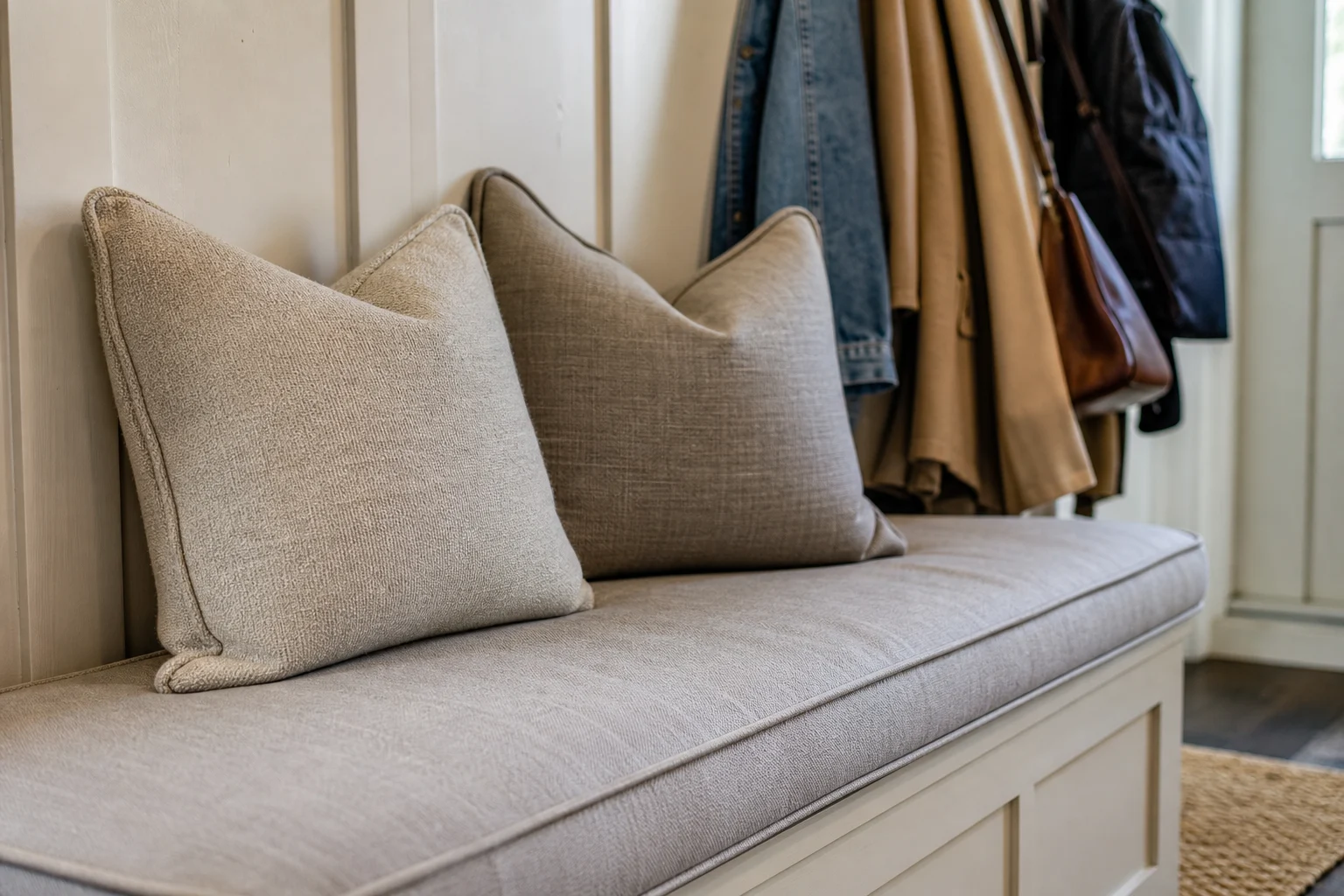
| Bench situation | Typical length | Typical depth | Duty |
| Entryway / hall bench | 36–48″ | 14–16″ | Sit-and-shoes; daily |
| Foot-of-the-bed bench | 48–60″ | 16–18″ | Landing pad; seating when dressing |
| Mudroom bench | 30–48″ | 15–18″ | Heavy daily; wet coats; storage under |
| Dining bench (table side) | 42–72″ | 15–17″ | Meal duty; slides under table |
| Piano / music bench | 28–30″ | 13–14″ | Ergonomic duty — see piano bench cushions |
| Hallway / window bench | Custom by architecture | 16–20″ | Varies — see window seat measurement |
The takeaway: measure your bench’s seat board edge to edge, and buy to the number. The routine — seam-to-seam, quarter-inch accuracy, and the corrections when measuring off old compressed pads — is in bench cushion measurements and how to measure. One bench-specific note: measure the seat board, not the bench’s overall length; arms and end panels routinely overhang the sitting surface, and a pad cut to the overall length drapes over the arms like a bad slipcover.
Thickness and Firmness by Duty
Bench cushions run 2–4 inches, and the right number comes from what the bench is for:
- – 2 inches — the landing pad. Foot-of-the-bed and hallway benches sat on briefly. Firm thin foam (a 35D–50D core) reads as a tailored pad and keeps the bench’s profile.
- – 3 inches — the daily sit. Entryway and mudroom duty where someone actually sits to deal with boots. The comfortable default.
- – 4 inches — the real seat. Dining benches and reading benches used for long stretches. Check under-table clearance on dining benches — same apron arithmetic as kitchen chair cushions.
- – Firmness scales with use. Daily-duty benches want 50D-class cores that hold their surface under full-weight sits in motion (benches get sat down on harder than chairs — there’s no defined “spot”); occasional benches can run lighter. The density decision logic is in how to choose foam density.
- – Fiber-fill bench pads — the tufted look — are decorative-grade. Under real bench duty they compress into channels within a season; the honest scope of fiber fills is in cushion filling types.
The Anti-Slip Question: Benches Slide Everything
A bare bench seat is finished wood — and finished wood is the classic slide surface. Three answers, ranked:
- Non-slip underlay. The invisible default for benches: a grip layer between pad and bench that holds position without touching the finish. For benches that get sat on and stood on, this is the working answer.
- Ties. Anchored at the bench’s end panels or through drill-holes the bench already has. Absolutely secure — the right answer for benches that double as step stools and for mudroom duty where the pad takes abuse.
- Hook-and-loop. For benches in fixed positions — hall benches that never move — loop strips on the bench and hook on the pad hold through anything. The commitment is hardware on the furniture.
The mechanics of why unpinned pads walk (and why “just reposition it” is a daily tax) are in how to stop cushions from sliding.
Fabric: Traffic, Coats, and the Entryway’s Real Life
Indoor bench fabric is chosen by traffic level, and entryway/mudroom traffic is outdoor-adjacent in its demands:
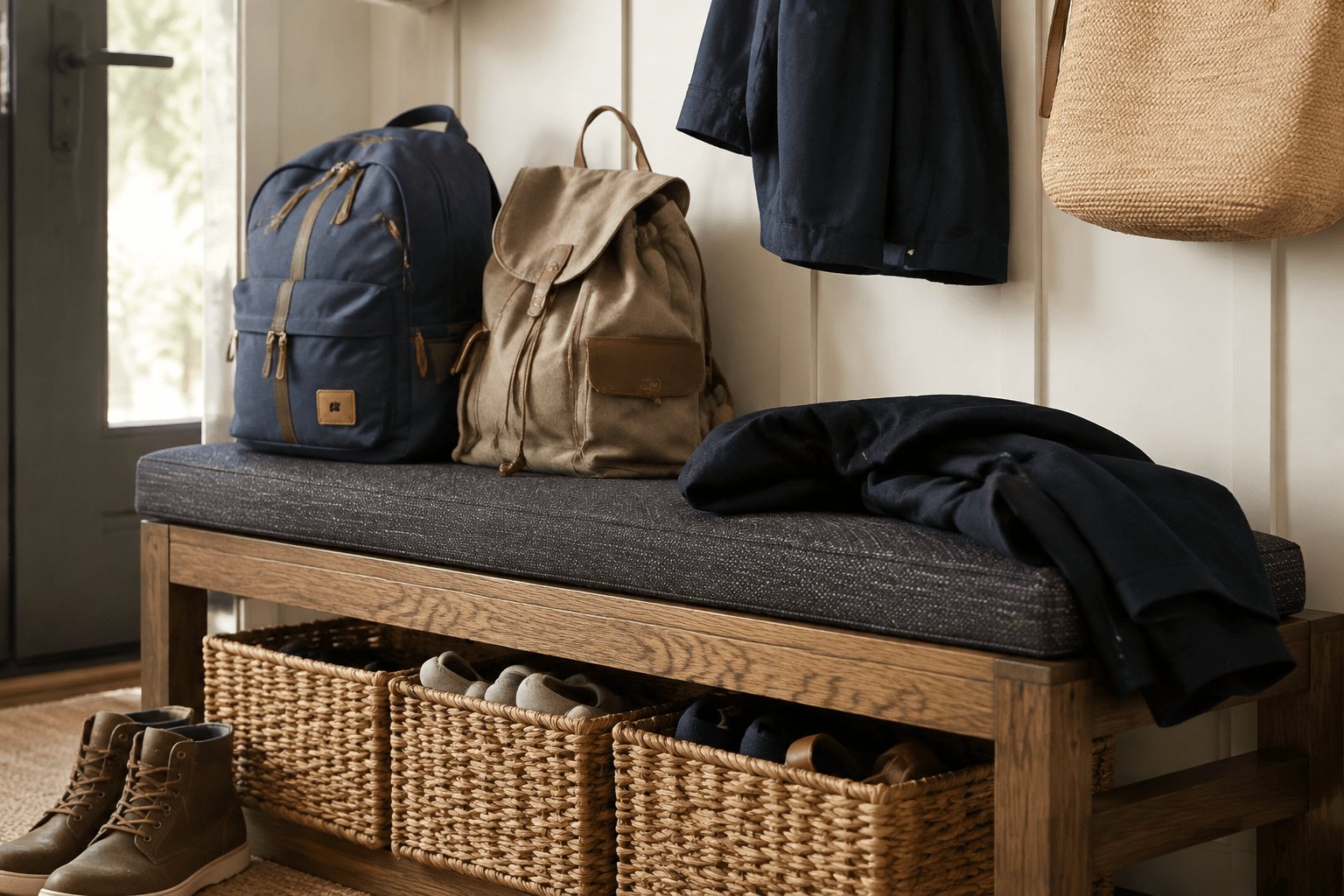
- – Tight heavy weaves are the working grade. Cotton linen blends at the accessible end, chenilles and textured weaves above — the ladder is one flat $7.43 per square foot, all 119 fabrics — and benches are mid-size pieces where the fabric upgrade is free. The tier logic is explained in best outdoor cushion fabric — the durability tiers transfer indoors unchanged.
- – Mid-tones and patterns for entry duty. The mudroom bench meets wet denim, dropped keys, and dog paws; patterns hide the interval between cleanings. The hide-the-wear logic is in choosing cushion colors.
- – Spot-clean between washes, serviced weekly. Quality zippered-cover pads clean with mild soap and water at the mark — entryway pads should get the routine before grime sets. The fabric-by-fabric method is in how to clean couch cushions.
- – Watch the fill-migration problem on long pads. Above 48 inches an unquilted pad’s fill migrates toward the ends within a year — a quilted (linear or grid stitched) build ties the fill to the cover and can’t shift and crease. When ordering, the practical alternative is splitting the run into two pads.
Odd Lengths and Special Benches
Long benches (60 inches and up). The fill-migration problem scales with length: a 72-inch unquilted pad develops hollows at the sat-on middle and humps at the unsat-on ends. Solutions: a grid-stitched build, or ordering the run as two pads with a clean center seam. Two pads also flip and rotate independently — maintenance wisdom that doubles pad life.
Storage benches. Pad sized exactly to the lid footprint, kept in the 2–3 inch band so the hinge isn’t fighting leverage — same logic as bay window storage lids.
Dining benches that slide under tables. Depth is set by the clearance under the table’s apron when stowed; thickness must survive the slide cycle without scuffing — firm thin foam, tight cover, and rounded front corners as a spec.
Church and chapel pew runs. The longest bench of all is a pew rail: repeated equal lengths, one dye lot for the whole sanctuary, and a snug cut that stays put without ties. We cut custom church pew cushions by the measured run — how to measure church pews is its own discipline.
Ordering: The Length Is the Point
Because bench lengths vary house to house, custom cut-to-size is the natural route — and a bench pad is one of the smallest, most economical custom orders in a home (pricing from a $45 make-base plus per-square-foot foam and fabric rates; small pieces mean small orders). The path:
- Measure the seat board edge to edge and front to back; note the anti-slip method your bench needs (grip underside or ties at specific points).
- Choose thickness by duty (2–4 inches) and density by use (50D for daily); pick a traffic-appropriate fabric and decide on a stitch pattern for long runs.
- Order at custom indoor bench cushions — the builder takes dimensions, density and fabric in one flow, production runs 4–7 business days, and nothing is cut until your dimensions are confirmed.
The Two-Bench House: Matching Without Matching
Many homes end up with two benches doing different jobs — the entry bench and the bed-end bench, or the mudroom bench and a hallway bench — and the replacement moment raises the matching question. The working answer is to match the build and vary the surface:
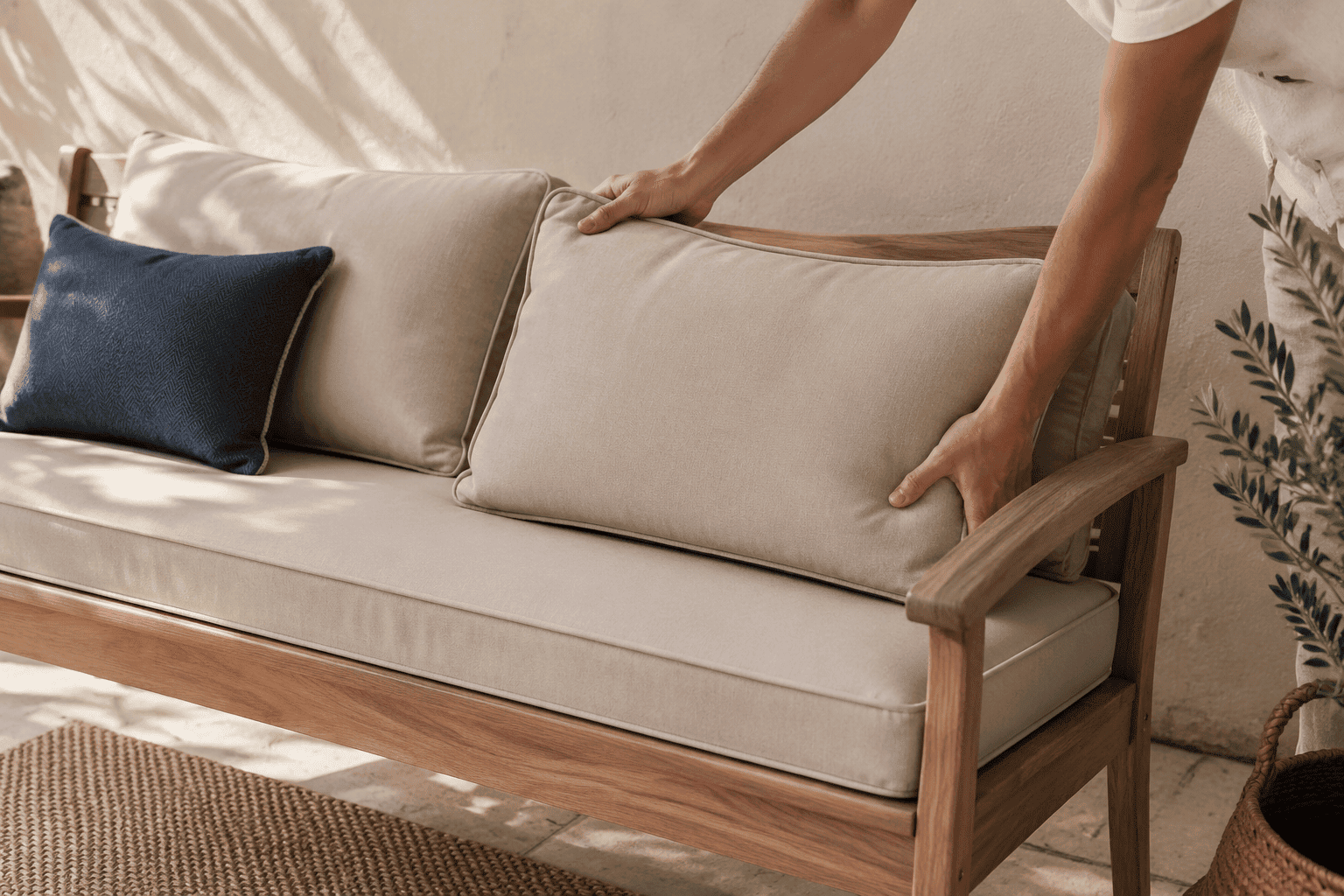
- – Same fabric family, different tone. Two pads in the same weave family (both linen-blend, both chenille) in tones one or two steps apart read as a considered pair; two pads in the same exact fabric read as a set that got separated, especially when one has aged in a sunny hall and the other hasn’t.
- – Same build specs, different duties. The mudroom pad takes quick-dry fill and ties; the bed-end pad takes standard foam and grip backing — the invisible difference that lets both pads be right for their jobs while looking like siblings. The mudroom duty spec is in mudroom bench cushions.
- – Order together anyway. Whatever the surface variation, one order means one dye lot family and one production run — the closest two deliberately-different pads can get to aging in step, and cheaper than two separate orders.
FAQs
What are standard indoor bench cushion sizes?
There is no true standard — situations cluster (36–48″ entry, 48–60″ bed-end, 42–72″ dining), but every bench should be measured edge to edge and ordered to its number. The size landscape is in bench cushion measurements.
How thick should a bench cushion be?
2 inches for landing pads, 3 for daily sitting, 4 for dining and reading — capped by table clearance on dining benches. Thickness is duty, not style.
How do I keep a bench cushion from sliding?
A non-slip textured underside for most benches; ties for benches that take abuse or double as step stools. The full sliding playbook is in how to stop cushions from sliding.
What foam density for a bench cushion?
50D-class for daily-duty benches, 35D acceptable for occasional seating. Benches get sat down on harder than chairs — density is what keeps the pad existing between you and the wood.
Should a long bench have one cushion or two?
Two, above about 60 inches. Each half flips, rotates, cleans, and replaces independently, and shorter pads resist the fill-migration that hollows long single pads; a grid stitch is the alternative if one piece is wanted.
What fabric for a mudroom bench cushion?
A tight heavy weave in a mid-tone or pattern, specified for spot-clean care and serviced weekly. Mudroom traffic is outdoor-adjacent; grade the fabric accordingly.
Next Steps
- Measure the seat board (edge to edge, front to back), note the bench’s duty class and anti-slip needs, and check under-table clearance if it stows.
- Set the build: thickness 2–4 inches by duty, 50D for daily use, traffic-grade fabric, and a stitch style for long runs.
- Order to your number at custom indoor bench cushions — dimensions and fill in one specification, confirmed before cutting.
One Long Run, Cut to the Bench
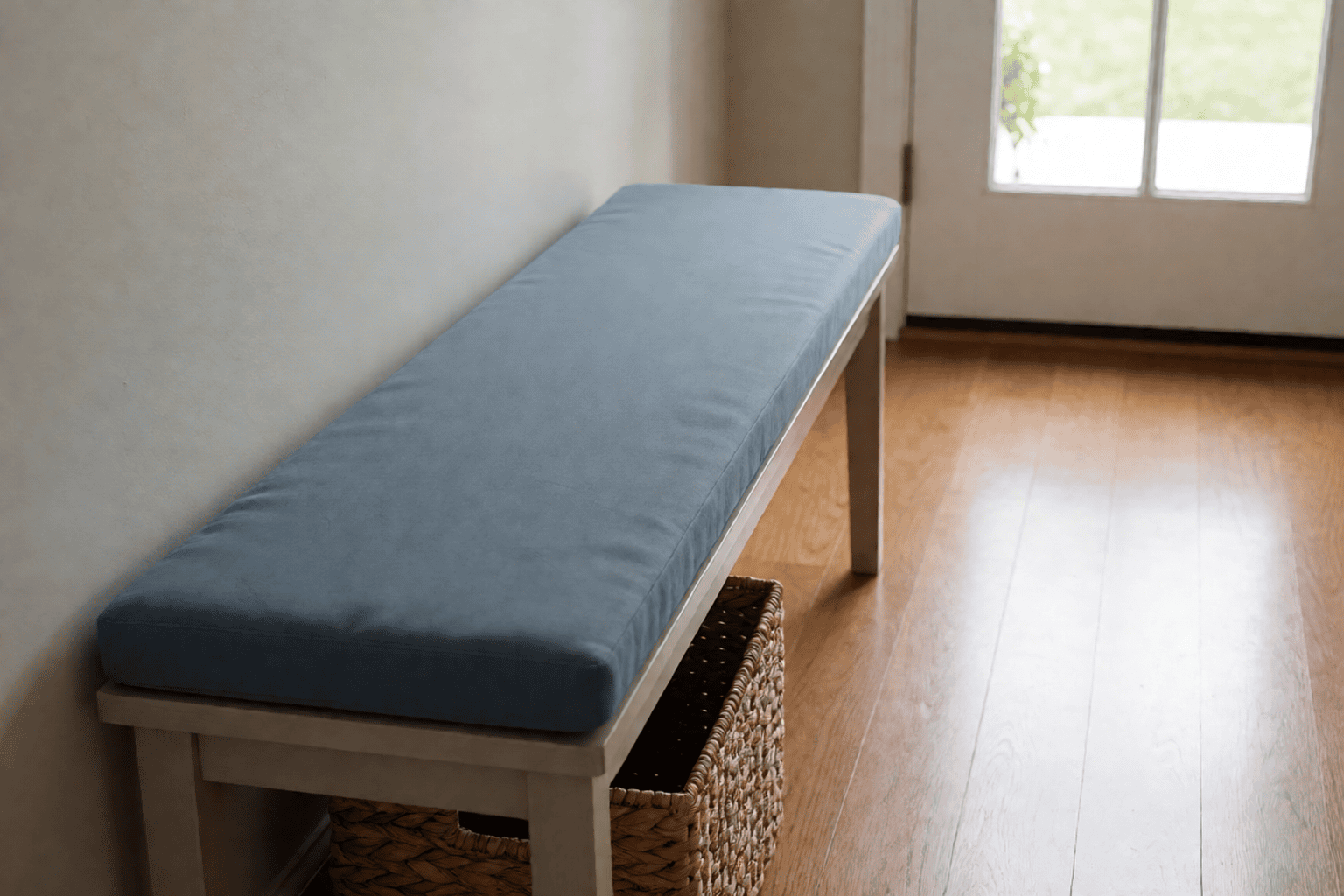
Long benches are why custom lengths exist: a single pad cut to the full run reads calmer than two butted squares, and the one-seam-per-end construction keeps the top flat from end to end.
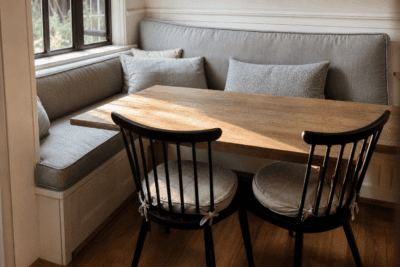
Breakfast Nook Cushions: The Corner-Seating Build Guide
Breakfast nook cushion guide: L-shaped and U-shaped runs, corner geometry and seam placement, seat-plus-back builds at dining height, morning-sun fabric logic, and ordering the whole run from one fabric lot.
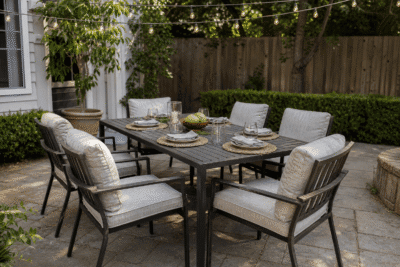
Outdoor Dining Sets: Buying the Set Right So the Cushions Work
Outdoor dining set buying guide: how the set choice locks in your cushion future — seat sizes, arm heights, frame materials, cushion quality in boxed sets versus custom pads, and set versus separate buying.
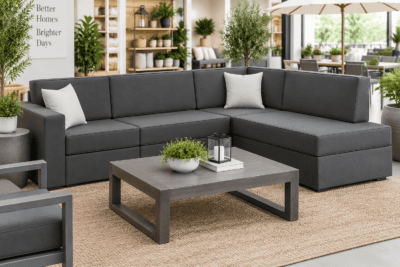
At Home Outdoor Cushions: The Decor Superstore’s Seasonal Wall
At Home runs a full-scale seasonal cushion department at decor-store prices — what the wall stocks, the fit grid, and when the superstore route ends at custom.
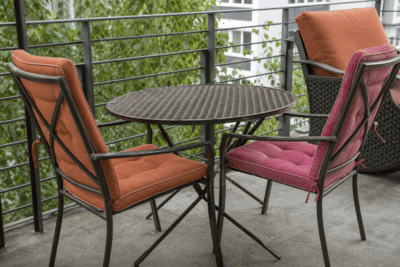
Target Outdoor Cushions: Threshold, Sizing and Replacement (2026)
Target’s Threshold cushions look designer but run generic sizes. What fits, what the seasonal rotation kills, and when custom replacements beat another Threshold refresh.
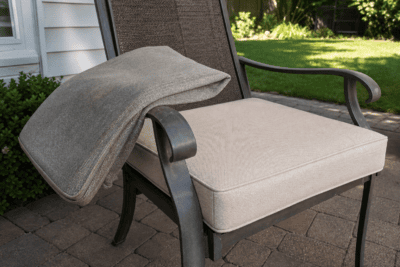
Hampton Bay Cushion Covers: Replacement Covers vs Full Cushion Replacement
The Hampton Bay covers question answered — why OEM cover-only replacements are rarely available for most series, the exact-fit route (full cushions by your series dimensions), re-covering services and DIY, and how to identify your series first.
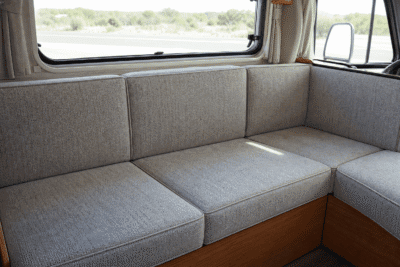
RV & Camper Cushion Replacement: The Complete Guide
RV dinette and berth cushion replacement — sizes, 45–60D foam for daily use, spill-proof fabrics, and the paper-template method for odd cabin shapes.