
Poolside seating gets the worst combination of conditions in outdoor living: water that arrives with chemistry in it (chlorine), soak cycles that repeat daily, sunscreen that transfers from every body that sits down, and full sun to bake it all in. A cushion that thrives on a covered porch — where “weather-resistant” means surviving rain — dies at a pool in a season or two, not from one catastrophic event but from the compounding of four slow attacks.
This is the poolside spec: what chlorine and soak cycles actually do, the fill-fabric-attachment triad that survives them, and the maintenance rhythm that makes the difference between a set that lasts and one that goes green. It builds on quick dry foam (the fill at the center of this environment) and weather resistant cushions (the ratings vocabulary).
What the Pool Actually Does to Cushions
Chlorine chemistry. Pool water isn’t just wet — it’s an oxidizer at low concentration, every splash. On fabric, chlorine attacks dyes first (the fading mechanism in fabric color fastness and UV stability, accelerated) and fibers second. On standard foam, trapped chlorinated water does the slow foam-breakdown dance plus the biological one: warm, damp, chemistry-fed foam interiors are mold’s favorite apartment. This is why poolside is the one environment where “quick-dry” stops being a marketing word and becomes the spec.
Soak cycles. One soaking is survivable for almost anything; the pool’s cruelty is repetition — wet-dry-wet-dry, daily, all season. Materials that tolerate a single rain (standard foam, coated fabrics) fatigue under cycling: foam cells break down, coatings delaminate, seams give. The failure patterns are cataloged in how to drain waterlogged cushions and how to prevent mold on outdoor cushions.
Sunscreen. The pool’s signature stain: oil-borne, UV-cured, transferring from every back and thigh onto cushion faces. It’s the same class of stain as the lotion damage in white outdoor cushions — degreasing soap immediately, or it sets permanently.
Full sun + reflection. Water surfaces double effective UV onto poolside cushions — the reflection load is real, and fabric hour-ratings need to be read as if the sun were stronger, because it is. Solution dyed acrylic explained covers why color-through fibers are the durable answer.
The Fill Decision: Quick-Dry Is the Whole Game
At the pool, fill choice matters more than any other decision:
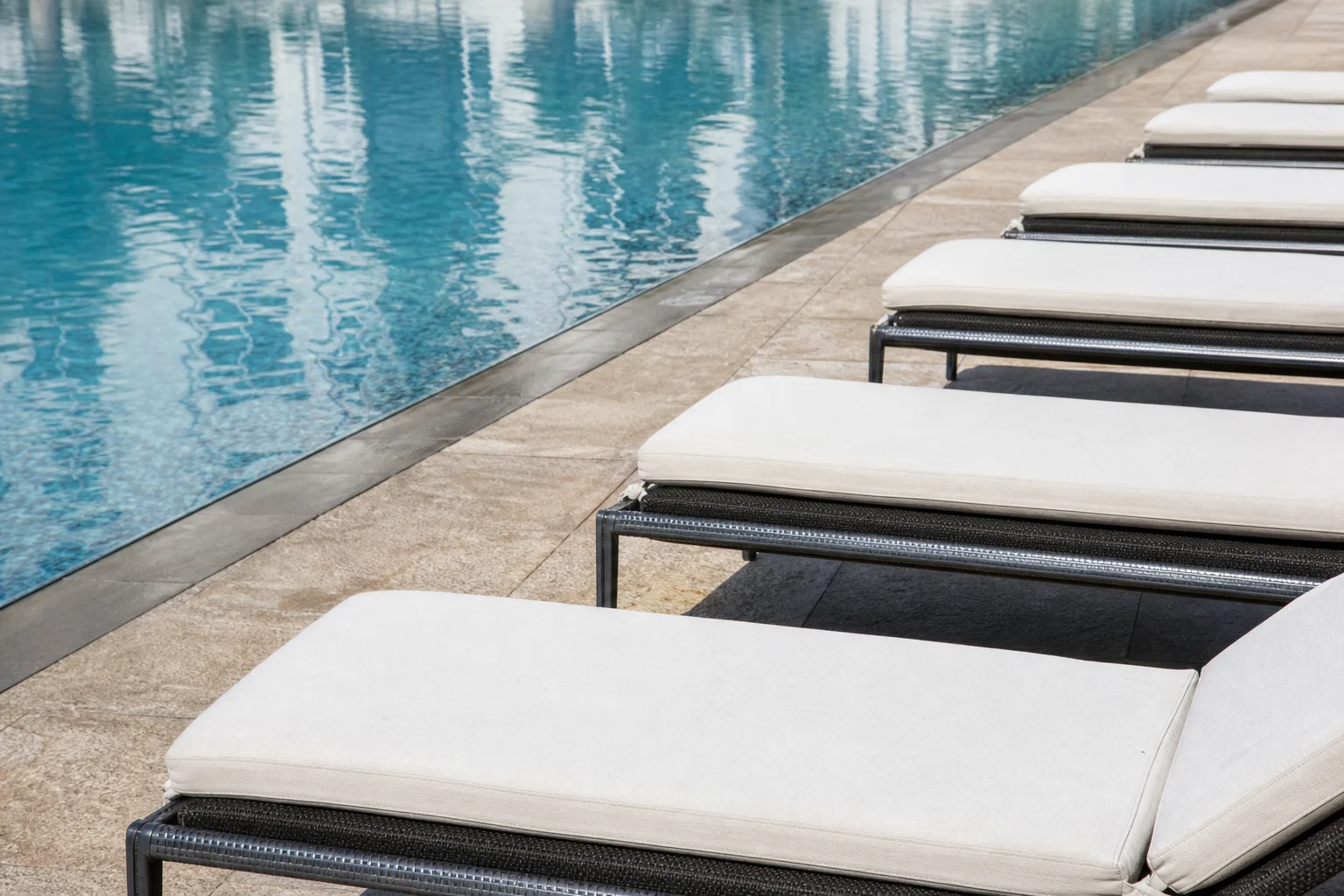
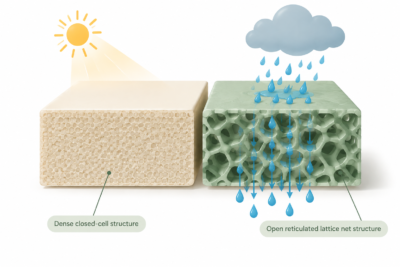
- – Quick-dry (reticulated) foam — open-cell structure engineered to let water pass through and air flush it out. A soaked quick-dry cushion drains in minutes standing on edge and dries in hours; the same event in standard foam takes days of compression-squeezing and still leaves moisture deep in the block. Around a pool, that difference is the whole ballgame — it’s the difference between a cushion that’s sitable tomorrow and a science project.
- – Standard polyurethane foam — holds water, and pool-chlorinated water held in warm foam is the mold-and-mildew lifecycle in a lab kit. Fine for covered, splash-free zones; wrong for poolside.
- – Fiber fill and blended fills — mat and hold moisture; pool loungers with fiber-fill cores are the classic one-season product, the quality gap in cheap vs quality outdoor cushions.
- – Mixed-spec sets: the wet zone (loungers, pool-edge chairs) wants drainage logic — our outdoor line pairs waterproof, wipe-clean fabric with high-density foam and survives the soak-and-dry cycle the ordinary way; a reticulated quick-dry core, for pads that live in the water, is a marine-specialist buy we do not carry. If the set includes dry-zone seating under a cabana, standard 50D foam there is legitimate — per-piece spec’ing is exactly what custom is for. Density logic for those seats: how to choose foam density.
The Fabric Decision
Solution-dyed acrylic first (best outdoor cushion fabric ranks the families; is Sunbrella worth it runs the cost-per-year math): color-through fibers resist the chlorine-plus-UV double attack, tolerate oxygen-bleach cleaning (the pool’s own chemistry in mild dilution is survivable), and hold color for seasons. Performance polyesters are the value tier with honest compromises — faster fade under reflected UV, and sunscreen stains need faster attention. Olefin splits the difference with strong chlorine tolerance.
Colors for the pool: mid-tones and patterns hide the mineral scale and sunscreen film that light solids display — choosing cushion colors applies, with the pool’s white-scale caveat (hard-water spots) added.
Construction and Attachment
- – Seam economy: every seam is a water path and a soil trap — smooth construction and linear stitch wet and drain faster than grid and channel options. At the pool, that’s functional, not just aesthetic.
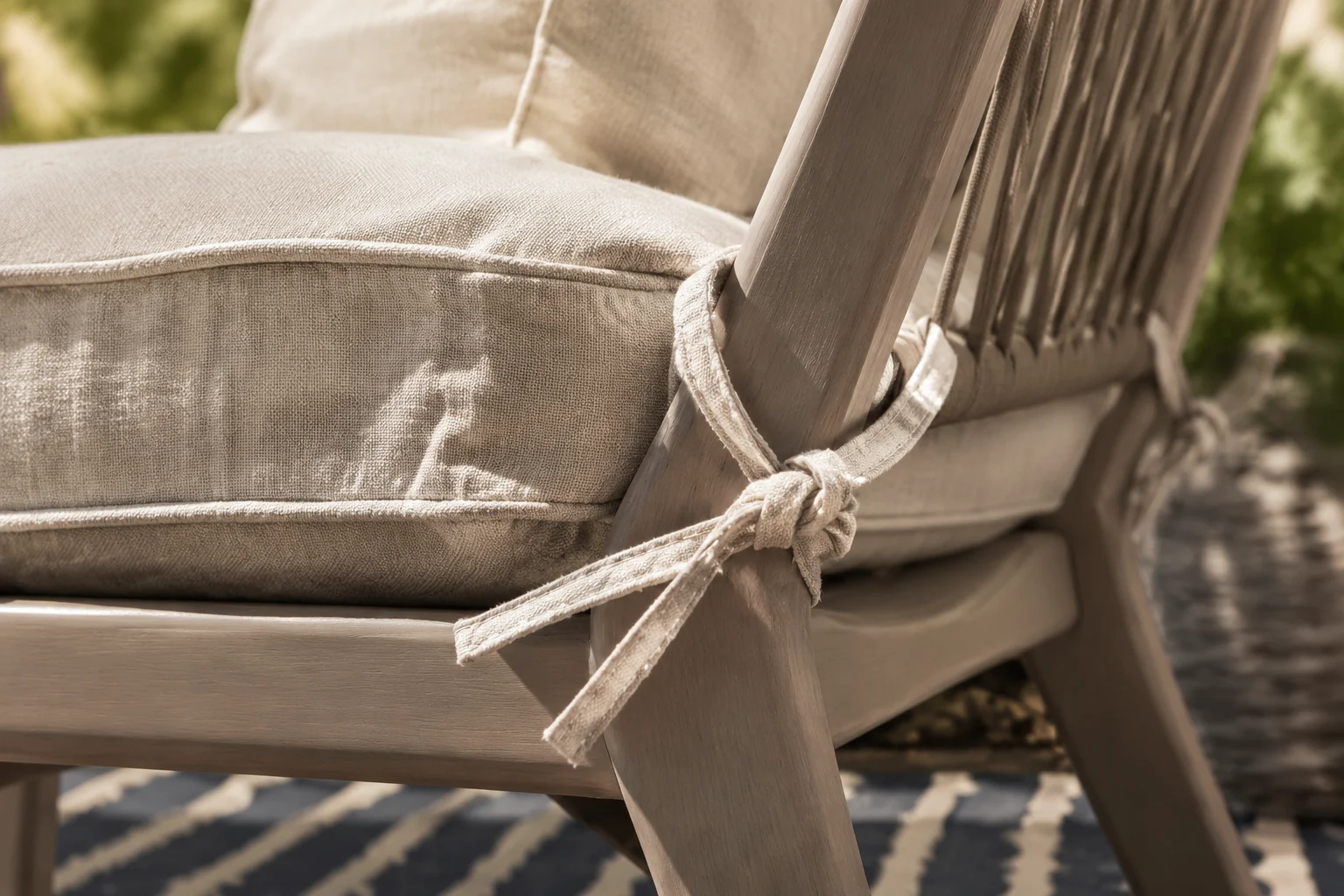
- – Ties and frames: pool loungers and sling chairs offer frame bars to tie to — ties positioned per how to add ties to cushions. Poolside wind (open water, no windbreaks) runs the wind hierarchy in how to keep cushions from blowing away.
- – A gripper underlay doubles as a drainage spacer on wet decks — the cushion’s underside, held slightly clear of the wet surface, dries instead of wicking.
The Maintenance Rhythm
Poolside sets live on a slightly modified version of the standard routine (outdoor cushion maintenance tips):
- Stand-soak response: after a dunking, stand the cushion on edge — minutes, not hours. Quick-dry fill makes this a formality; standard foam makes it an ordeal (how to drain waterlogged cushions is the rescue manual).
- Rinse weekly — plain water flushes chlorine residue (the chemistry doing slow damage) and sunscreen film before it cures.
- Sunscreen stains immediately: degreasing dish soap, rinse, dry — the set-it-forever window is hours, not days.
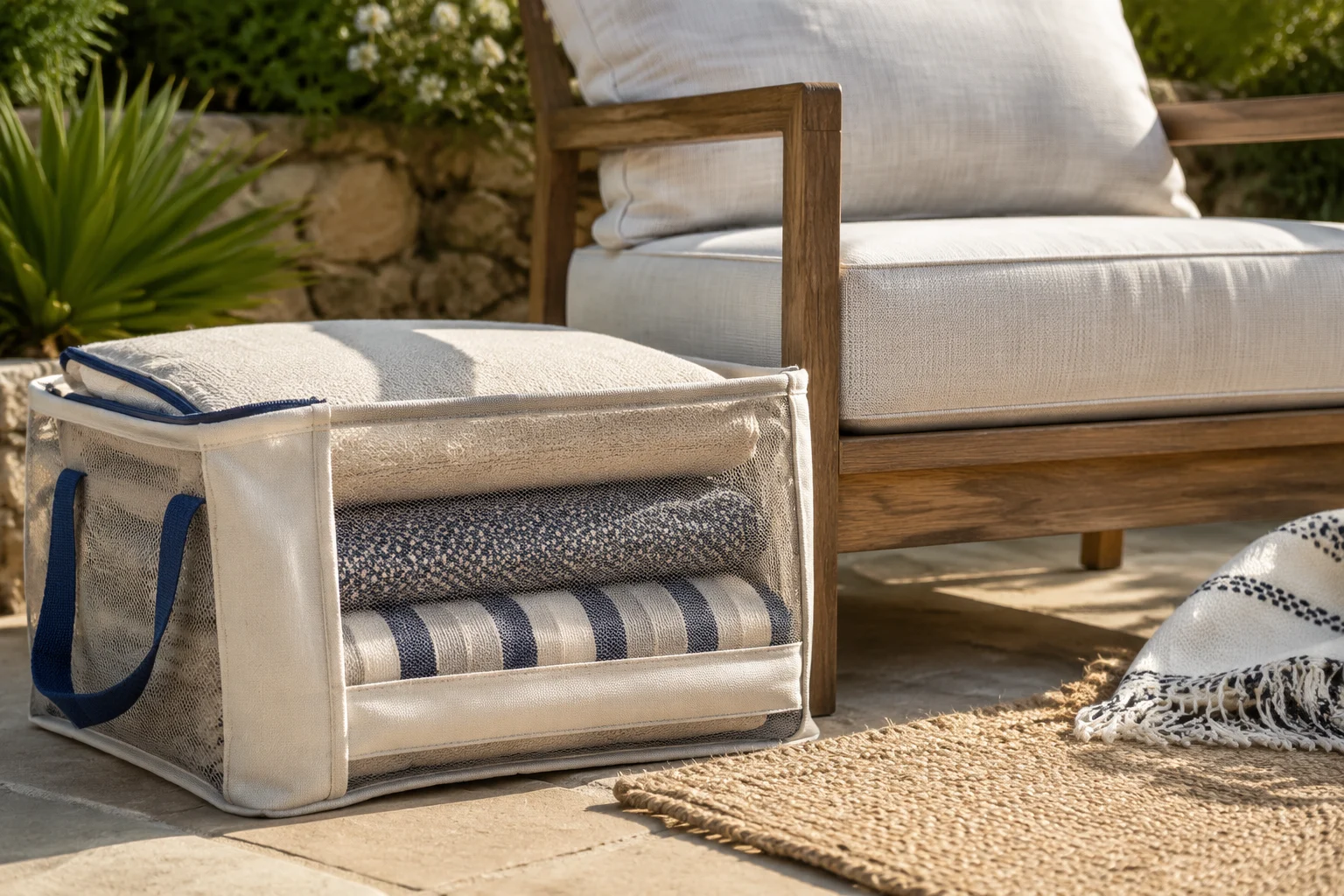
- Deep clean at season’s end and dry fully before storage per how to store outdoor cushions for winter — a pool cushion stored damp is next spring’s mold discovery.
- Re-treat water repellency when beading stops (303 fabric protector application) — at the pool, DWR is working overtime and renews seasonally rather than every other year.
Pool Furniture Patterns and the Cushion Specs They Imply
The furniture around a pool dictates its cushion spec, and three patterns dominate:
- – Sling loungers and chairs — stretched-fabric frames, fast-drying by design, where the cushion question is mostly a thin pad or none at all. The fabric frame does the draining; a 2″ quick-dry pad adds comfort without breaking the design. Sling wear and the re-sling versus replace decision are covered in re-slinging patio chairs.
- – Rigid-frame loungers — the classic chaise shape (chaise lounge cushions covers the measuring) with full cushions: this is where the poolside spec earns its keep — quick-dry fill, solution-dyed fabric, ties matched to the frame bars so a wet chaise cushion doesn’t slide off its frame (how to measure outdoor cushions is the sizing base).
- – Cushioned conversation and dining sets poolside — full-depth seating exposed to splash; the complete spec (5–7″ cushions for deep seating, per deep seat cushions) runs quick-dry throughout, because a soaked 6″ standard-foam cushion is a multi-day problem while a soaked 6″ quick-dry cushion is a few hours on edge. Poolside conversation sets are often branded runs — the Martha Stewart Lily Bay five-piece group and the Victoria Amelia chair-and-sofa pair rebuild to the same quick-dry spec from measured charts.
FAQs
What cushions are best for poolside?
Quick-dry fill under solution-dyed acrylic — fill that drains in hours and fibers that survive chlorine-plus-reflected-UV. Every other spec choice is secondary to those two.
Can regular outdoor cushions go by the pool?
Covered, splash-free zones only — standard foam in the wet zone holds chlorinated water and grows mold inside a season. The zone-by-zone logic lets you mix specs within one set.
How do I dry pool cushions after they get soaked?
Stand them on edge immediately — quick-dry fill drains in minutes and dries in hours; standard foam takes days and often never fully recovers. The full method is in the waterlogged-cushions guide.
How do I get sunscreen stains off cushions?
Degreasing dish soap immediately, rinse, air dry — the set-forever window is hours. Oil-borne stains cured by UV are the permanent kind.
Why did my pool cushions fade so fast?
Water reflection doubles effective UV, and chlorine attacks dyes — the double hit that makes solution-dyed fiber chemistry the poolside default. The rating logic is in the color-fastness guide.
Do I need ties on pool loungers?
Yes — open water means unbroken wind, and loungers offer frame bars to tie to. Position them to the actual bars.
Next Steps
- Map the wet zone versus the dry zone of your pool seating — waterproof fabric over high-density foam for anything splash-reachable, and standard specs only under cover.
- Set the maintenance rhythm now: edge-standing after soaks, weekly rinse, immediate sunscreen protocol, season-end deep clean and dry storage.
- Build the set at custom outdoor cushions — high-density foam under waterproof, solution-dyed fabric families, seam-economical construction and frame-matched ties, per piece, 3–6 weeks delivery (crafted in 4–7 days).
Foam Density Explained: D-Ratings vs lbs/ft³
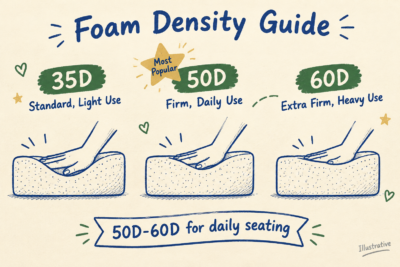
What foam density actually measures, why D-ratings and lbs/ft³ (PCF) are two different languages with no direct conversion formula, and how to translate between them honestly — by use tier and lifespan, with the 35D–65D grades decoded.
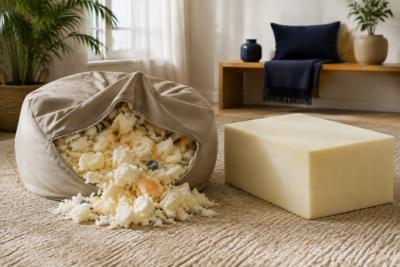
Flame Retardants in Cushion Foam: What Changed and What to Ask
Cushion foam flame retardants explained: why California TB117 put additive chemicals into furniture foam, what the TB117-2013 revision changed, what CertiPUR-US and GREENGUARD actually certify, how to read new-foam off-gassing, and the six questions to ask any supplier for nursery and commercial buying.
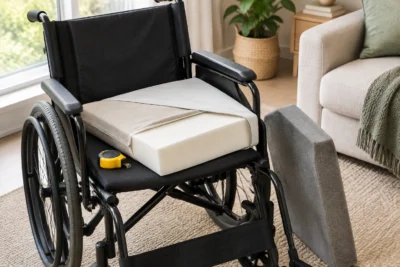
Wheelchair Cushion Foam Replacement: Measure, Order, Revive
Replace wheelchair cushion foam instead of the whole pad: three signals the core is done, W x D and thickness measuring, 50D-65D density for all-day seats, and cover fit – cores cut to your measurements.
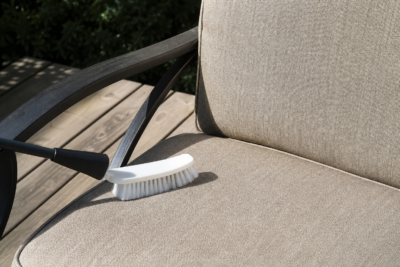
How to Care for Polyester Cushions: Washing, Fading and Stretching Them Back
Polyester cushion care from top to bottom: what spun polyester can and can’t handle, the wash-day routine that won’t ruin fills, how to slow the fading that defines the tier, and reviving covers that have stretched out.
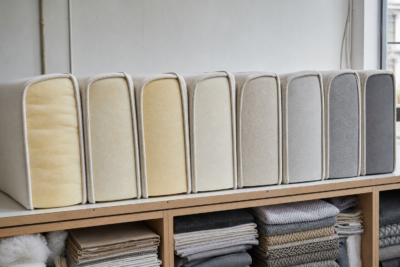
How to Choose Foam Density: 35D vs 50D vs 60D vs 65D (Decision Guide)
Pick cushion foam density in three questions: 35D for occasional seats, 50D as the daily-use default, 60D for heavy sitters and long hours, 65D for commercial and marine duty — with lifespan rules of thumb and what each upgrade costs.
HD Foam vs Dry-Fast Foam: The Outdoor Cushion Guide
High-density foam vs dry-fast reticulated foam for outdoor cushions — cell structure, PPI, feel, the measured price premium (+9% at one configurator), and the simple covered-vs-uncovered test that picks for you.