
The first decision in most patio projects isn’t which chair or which cushion — it’s whether to buy a set (a coordinated bundle of furniture and cushions from one maker) or to assemble pieces (frame from one source, cushions specified separately, mixed as your space and budget dictate). Retail pushes sets hard: they photograph as a vision, they’re priced as a bundle, and they close the sale in one transaction. The pieces route costs you decisions and gives you control. Which one wins depends on what you’re actually optimizing — and for a lot of people the answer is a deliberate hybrid of both.
The furniture-type selection logic lives in the outdoor cushions buying guide; this is the bundle-versus-pieces decision above it.
What a Set Actually Buys You
Design coherence, guaranteed. A set’s pieces are designed together — matched heights, coordinated fabrics, a resolved look. Coherence is the single hardest thing to assemble from pieces, because “goes together” at the store rarely survives the daylight of an actual patio. If design confidence isn’t your hobby, the set price includes a designer’s judgment.
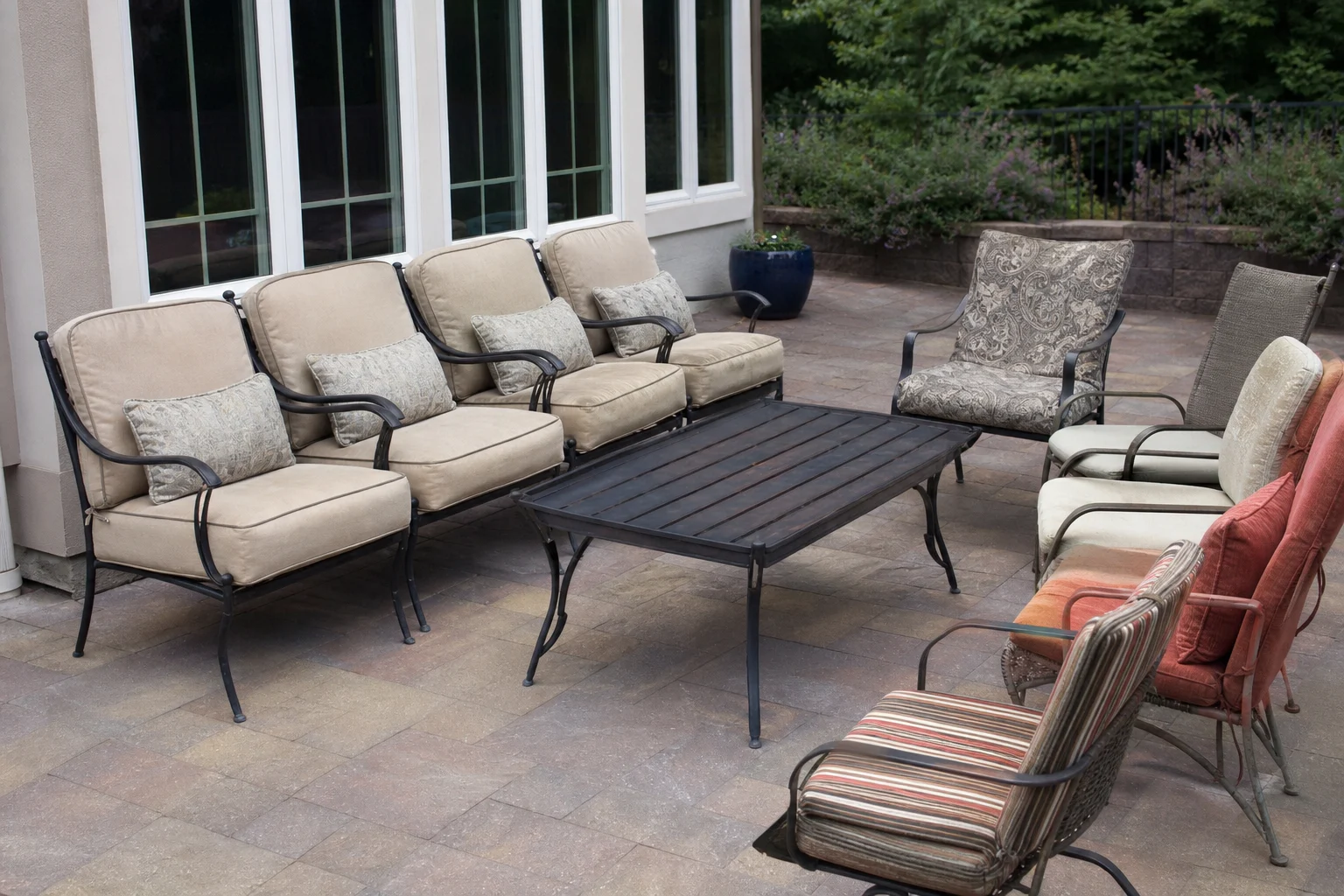
One specification, one risk. One transaction, one delivery, one warranty counter, one support line. When the loveseat’s cushion fails at month 20, the set route has an answer (a matching replacement from the line) where the pieces route has a research project — matching a fabric that’s drifted a dye lot (the color-matching problem) and a size that may not repeat.
Bundle pricing — sometimes. Sets carry real discounts against sum-of-parts list pricing. But read the bundle carefully: the discount is usually against that maker’s list for the components, and the set’s weakest component (often the cushions — thin fill, mid fabric) is where the bundle quietly saves the maker money. The cost anatomy of the cushion layer is cheap vs quality outdoor cushions.
What Buying Separately Buys You
Fit to your actual space. Sets come in standard configurations — 4-chair dining, 3-piece conversation, 6-piece sectional — and real patios have real constraints: the width of the door, the pillar, the odd corner, the balcony scale. The pieces route buys exactly what fits, measured first (how to measure outdoor cushions for the cushion layer, and the frame footprint measured with the same discipline). On a non-standard space, a set is a compromise you look at daily.
Quality where it matters. Assembling pieces means the frame budget goes to frames, the cushion spec goes to cushions — each layer bought at the tier it deserves. Sets flatten this: one price across mixed-quality components. The separation matters most at the cushion layer, where the upgrade from fiber fill to density-graded foam (how to choose foam density) is the difference between annual and multi-year replacement.
Replacement flexibility. Pieces fail individually — one chair’s cushion, one sling, one frame joint. A pieces-based patio replaces the failed piece without disturbing the system; a set-based patio inherits a discontinued-line problem (discontinued furniture cushions is its own genre of difficulty).
Mixing that ages well. A patio assembled in layers can be re-layered: new cushions transform old frames (reupholster vs replace), one piece can upgrade while the rest stay. Sets age as a unit and get replaced as a unit — the expensive way to refresh.
The Honest Decision Table
| Your situation | The route that serves you |
| Standard space, design confidence matters, one-transaction budget | Set — coherence and simplicity are worth the bundle |
| Non-standard space (balcony, odd dimensions, fixed features) | Pieces — fit beats bundle at every price |
| Daily-use, keep-for-a-decade furniture | Hybrid — quality frames (set or single), custom-spec cushions |
| Budget-constrained, covered or occasional use | Set on clearance (the clearance calendar) — bundle discounts stack with markdowns |
| Existing furniture, tired cushions | Pieces (cushions only) — the set question is already answered by your frames |
| Renters and short-horizon spaces | Set (cheap) or pieces (mix old and new) — either beats premium anything |
The Hybrid Strategy (What Professionals Do)
The route that captures both sides, and the one worth copying:
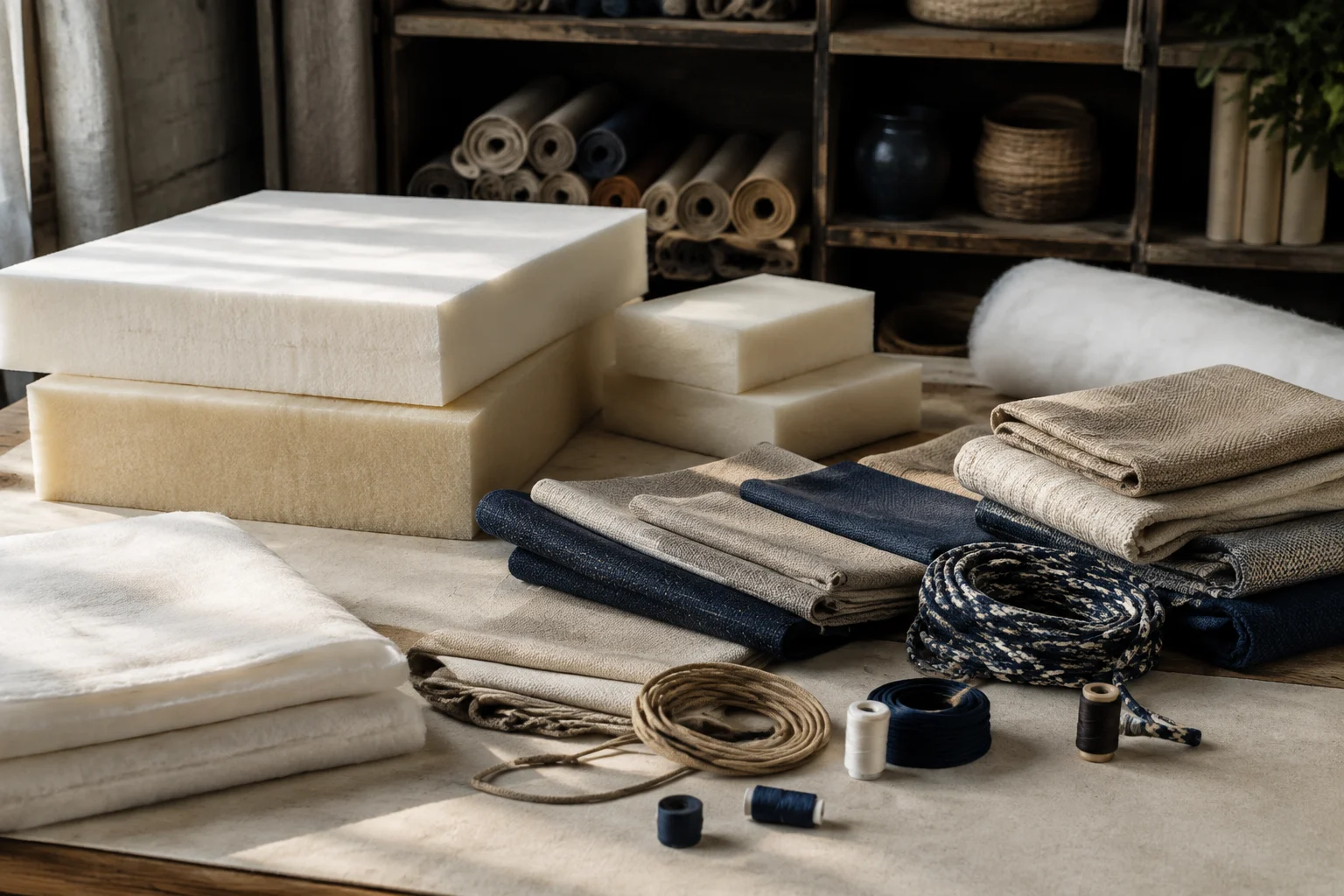
- Buy the frames as a set or as matched singles — the structural layer benefits most from coherence (heights, finishes, design language), and it’s the layer that lasts a decade. Spend here.
- Specify the cushions separately — exact dimensions per piece, density graded to actual duty (50D for daily dining, per the density guide), fabric family matched to real exposure (the best outdoor cushion fabrics), wipe-clean where spills will happen. This is where the set’s weakest component gets replaced by the spec you actually want.
- Add the outliers as singles — the bench that didn’t come with the set (outdoor bench cushions), the extra chair, the swing — specified in the same fabric family for coherence without the set’s rigidity. And one lookup before specifying anything: if the frames carry Hampton Bay or Martha Stewart branding (the most common case in American backyards), the measuring step may already be done — our measured library documents 195+ verified sizes across 31 collections, so “replace the set’s weakest layer without disturbing the system” starts from published per-piece dimensions (Hampton Bay hub, Martha Stewart hub).
The hybrid’s coherence comes from the cushion layer rather than the frame bundle: one fabric family across every piece is what reads as “designed together” from across the yard, and it’s the one variable you control completely when cushions are specified rather than bundled. On Cushion Mill quotes, that control is the point — dimensions, density and fabric per piece, one family across the set, washable covers throughout.
The Coherence Toolkit for Pieces Buyers
If you go the pieces route, coherence is the risk you accepted — and it has a toolkit. Anchor to one dominant piece: choose the largest item (usually the sofa or sectional) first, and let every subsequent purchase echo it — frame material, weave texture, or color family. The 80/20 material rule: eighty percent of the patio in one frame language (say, aluminum with wicker), twenty percent contrast (a teak bench, a metal bistro pair) reads as curated; fifty-fifty reads as accidental. Cushion fabric as the unifier, which is the highest-leverage move of the three: identical fabric family across every seating piece pulls even dissimilar frames into one design (the outdoor sectional guide applies the same one-family rule at larger scale). And buy anchor textiles in single runs — same order, same dye lot — because the unifier only unifies if it actually matches. Pieces-route patios that look designed were almost always designed at the cushion layer, whatever their owners believe about the frames.
A Worked Example: The Two Routes Priced
To make the comparison concrete, a typical 5-seat conversation patio (sofa, two chairs, coffee table, full cushions): the set route delivers a coordinated bundle at a bundle price — coherence, one delivery, matching everything, and a cushion spec chosen by the maker’s cost accountants. The pieces route, done properly: frames bought as a matched pair of singles plus a sofa (coherence at the frame layer), then the cushion layer specified separately — same fabric family across every piece, 50D cores instead of the bundle’s thin fill (how to choose foam density), wipe-clean families the bundle omitted. Run the cushion layer at custom benchmarks and the arithmetic is visible: the pieces-route cushion spec for this patio — sofa cushions at $469, two lounge chairs at $108 each, roughly $685 in 50D foam and entry-family fabric — sits against a bundled set whose cushion layer costs the maker a fraction of that (fiber fill over piece-dyed polyester is tens of dollars per piece at production scale), which is exactly how bundles hit their price points. The pieces route’s total lands near or slightly above the set, and its cushion layer outlasts the set’s by years — a 50D daily-use core runs 5–8 where bundle fill flattens in 2–3, so the total cost of ownership crosses over in roughly year three (the second bundle-cushion replacement), and widens every year after. That’s the structural argument in one project: sets win the receipt, pieces win the decade, and the hybrid route is how you get the receipt number with the decade outcome. One footnote from the material side of the ledger: once you are specifying the cushion layer anyway, the density upgrade that buys those extra years is nearly free at the plank level — the step from 50D to 60D foam is about $0.36 per cubic foot of material, a few dollars across a whole seat — priced at retail as a $20-30 line item. The pieces route’s real premium is the decisions, not the density.
FAQs
Is it cheaper to buy a patio set or separate pieces?
Sets carry real bundle discounts, but the discount is measured against that maker’s component list — and the cushion layer is usually where the bundle saves its money. Frames as a bundle + cushions specified separately often lands near the set’s price with a materially better cushion spec.
Can I mix patio furniture from different stores?
Yes, and the trick is coherence at the cushion layer: one fabric family across every piece reads as designed-together from any distance, even when frames come from different sources. Match heights roughly, materials loosely, fabrics strictly.
What’s the weakest part of most patio sets?
The cushions — thin fiber fill and mid-tier fabric are how bundles hit their price points. The upgrade path is the re-spec route: cushion filling types and the fabric guide define the spec the bundle skipped.
My set’s cushions died but the frames are fine. Now what?
The pieces route, at cushion-layer only: replace with exact-fit, density-graded cushions — measure per how to measure outdoor cushions, and skip the discontinued-line scavenger hunt entirely (the discontinued-cushions guide covers why).
Should I buy furniture and cushions from the same place?
Frames: coherence argues for one source. Cushions: spec argues for a specialist — the cushion layer is its own discipline (density, fabric, fit, washability), and it’s where the custom route’s advantages concentrate: custom outdoor cushions.
Next Steps
- Classify your space and horizon with the decision table — standard/temporary leans set, non-standard/permanent leans hybrid.
- Whichever route you take, hold the cushion layer to a written spec: dimensions, density, fabric family, cleanability.
- Price the hybrid’s cushion layer at custom outdoor cushions — one fabric family across every piece, exact fit everywhere, and the set’s coherence without the set’s compromises.
Couch Cushion Foam Replacement: Density, Cost and Buying Guide
Replace couch cushion foam in one right order: 50D vs 60D density, measuring the old core, four ways to buy, and real worked prices for one seat and a full set.
Where to Buy Replacement Patio Cushions: 5 Ways, Compared
Five ways to replace patio cushions — the set maker’s parts program, seasonal aisles, universal-fit listings, specialists and measured custom — plus the Home Depot house-line route with 31 measured collections.
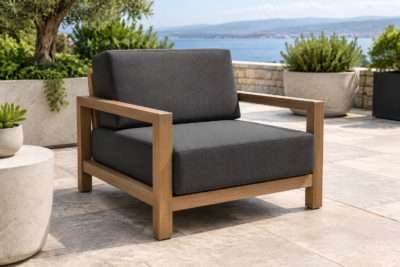
Why Is Patio Furniture So Expensive? The Cost Anatomy, Explained
What actually drives patio furniture prices — weatherproof materials, UV-stable finishes, marine-grade hardware, freight on bulky goods, and seasonal retail economics — why the good stuff costs 3-5x the box-store set, and where the value concentrates.

How Much Do Custom Cushions Cost? Price Ranges by Shape (2026)
Custom cushions cost USD 50-400 depending on shape, size, density and fabric. Live factory-direct price ranges for bench, window seat, outdoor, sofa and boat cushions — and how to price your own.
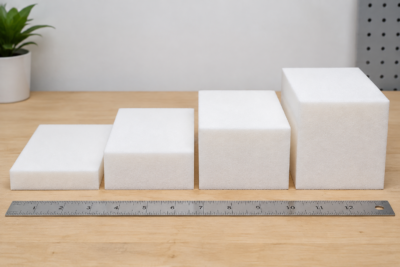
Outdoor Cushion Foam: Density and Thickness Guide With Real Numbers
Short answer: for a daily-use outdoor seat, order 3 inches of foam at 50D–60D; move to 4 inches and 60D
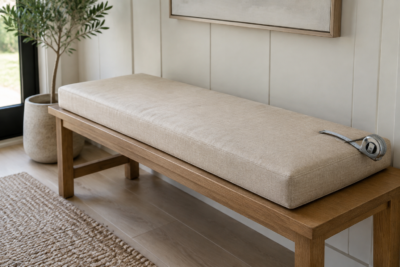
Local Upholsterer vs Online Custom Cushion Shop: Cost, Lead Time & How to Choose
Deciding where to get custom cushions made? The honest comparison of a local upholsterer versus an online custom cushion shop — cost stacks, lead-time clocks, fabric selection and who should choose which.