
“Patio set” is the category’s most convenient and most misleading word. Convenient because sets solve a whole design problem in one purchase; misleading because “set” hides enormous quality variance in exactly the components you’ll live with longest — the frames, the cushions, and the pieces you didn’t get to choose. The set decision done well is really three decisions: the type of set for how you actually live outside, the quality unpacking of what the bundle contains, and the honest set-versus-separate math.
This is the decoder. It builds on patio set vs buying separately (the economics), outdoor dining set guide (dining depth), and conversation set guide (the sectional-format sibling).
Step 1: Pick the Set Type by Use Pattern
The wrong set type is the most expensive mistake in the category, because it doesn’t reveal itself until a season of use:
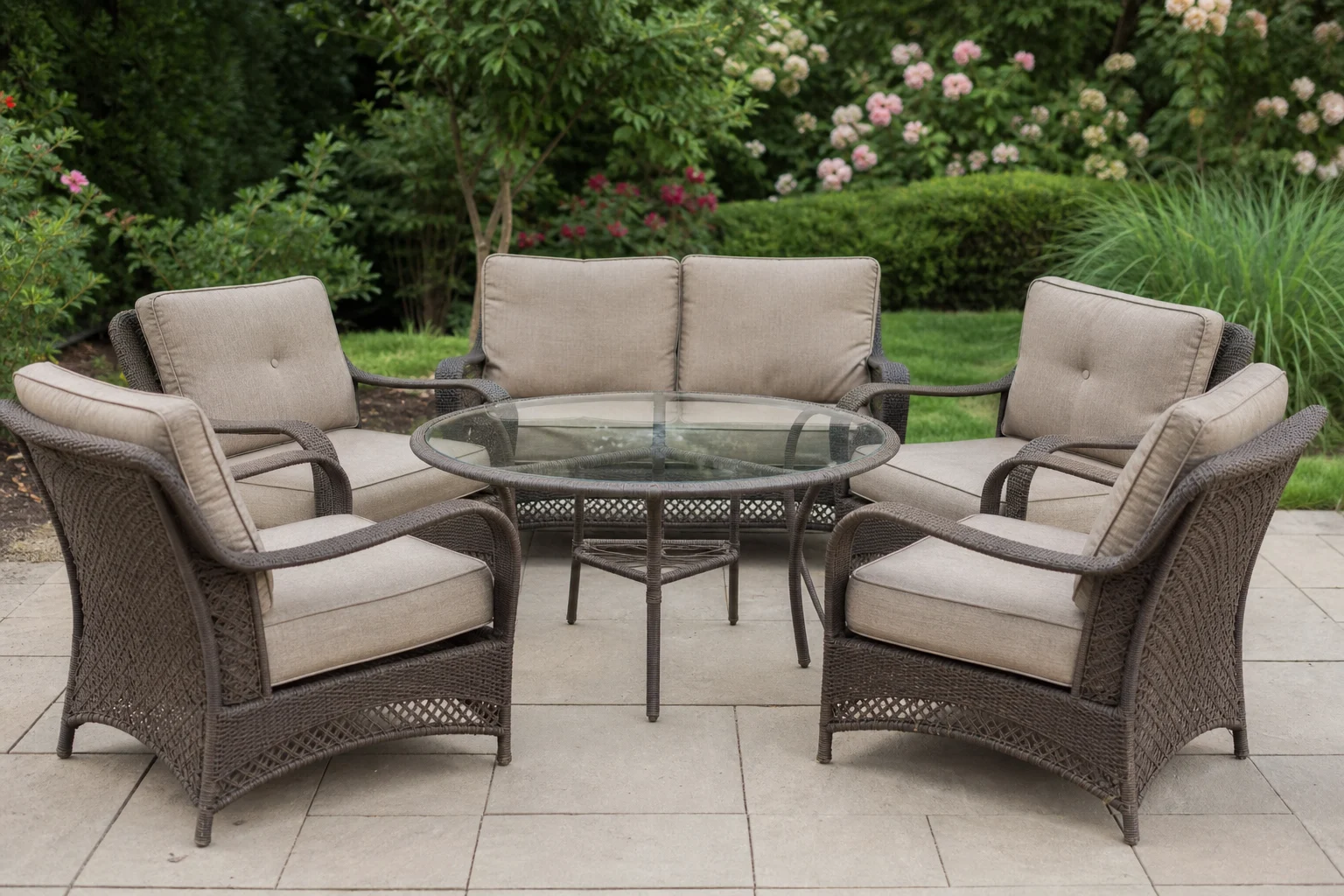
- – Dining sets (table + 4–6 chairs): for households that actually eat outside — meals, homework, long dinners. The table is the commitment: it anchors the layout and the use. Sizing and the full treatment: outdoor dining set guide.
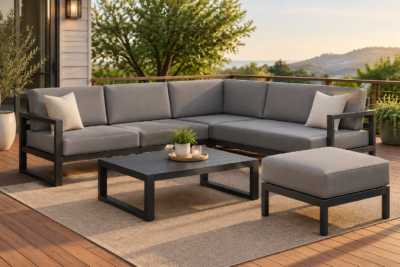
- – Conversation sets (sofa/loveseat + chairs + coffee table): for the outdoor-living-room pattern — drinks, reading, hosting that never involves forks. The deep-seat format rules here (deep seat cushions, conversation set guide).
- – Sectional/modular sets: the flexible large-format — rearrangeable pieces for varied hosting; the most cushion-dependent of all sets (outdoor sectional buying guide).
- – Bistro sets (2-seat, small table): the balcony and breakfast pattern (small patio spaces, balcony cushions).
- – Fire-pit sets: conversation geometry centered on a fire table — the ember-and-heat cushion spec applies (fire pit cushions).
The honest self-diagnosis: count your last ten outdoor evenings. Forks → dining set. Glasses → conversation. Two mugs → bistro. The set type should follow the evidence, not the showroom fantasy.
Step 2: Unpack What the Bundle Contains
Set pricing bundles quality variance invisibly. Unpack in this order:
Frames first — the decade component: material and construction per best outdoor furniture materials and most durable outdoor furniture. Aluminum and quality HDPE wicker over thin coated steel; the frame outlives everything else in the box.
Cushions second — the component sets quietly economize. OEM cushions are routinely the weak link at every price tier: unspecified foam “high density,” fabric families unnamed for exposure, one-size-fitting-none. The upgrade path is standard: budget the set for its frames, then spec the cushion layer deliberately — density by duty (how to choose foam density), fabric by exposure (best outdoor cushion fabric), attachments by frame (how to add ties to cushions). Custom cushions at $45 base plus area × fabric rate replace the OEM layer for the frames’ lifetime — the replaceable-layer economics in luxury patio furniture.
The table third — dining tables especially: material (teak, aluminum, slat composites each age differently), size against your household, and umbrella provisions if shade is the plan.
Assembly and hardware last — box counts, assembly complexity, fastener quality; the online-method details in how to buy patio furniture online.
Step 3: The Set-Versus-Separate Math
The honest version of the calculation (the full economics in patio set vs buying separately):
Sets win when: the pieces genuinely match your use pattern; the bundle’s frame quality matches your durability tier; and pricing beats the sum of parts — usually true at entry and mid tiers.
Separate wins when: your use pattern is mixed (a dining table and a lounge pair — sets don’t mix well); you’re upgrading selectively (good frames + better cushions); or one component matters disproportionately (a lifetime table with replaceable chairs).
The hybrid most households land on: a set for the core pattern plus separate pieces for the edges — and a custom cushion layer unifying them in fabric and stitch style, which is how mixed-origin furniture reads as a designed whole. One fabric family, one construction style (seat and back cushion sets on the set-spec discipline), across every piece.
Step 4: Size the Set to the Space
The arithmetic before any purchase:
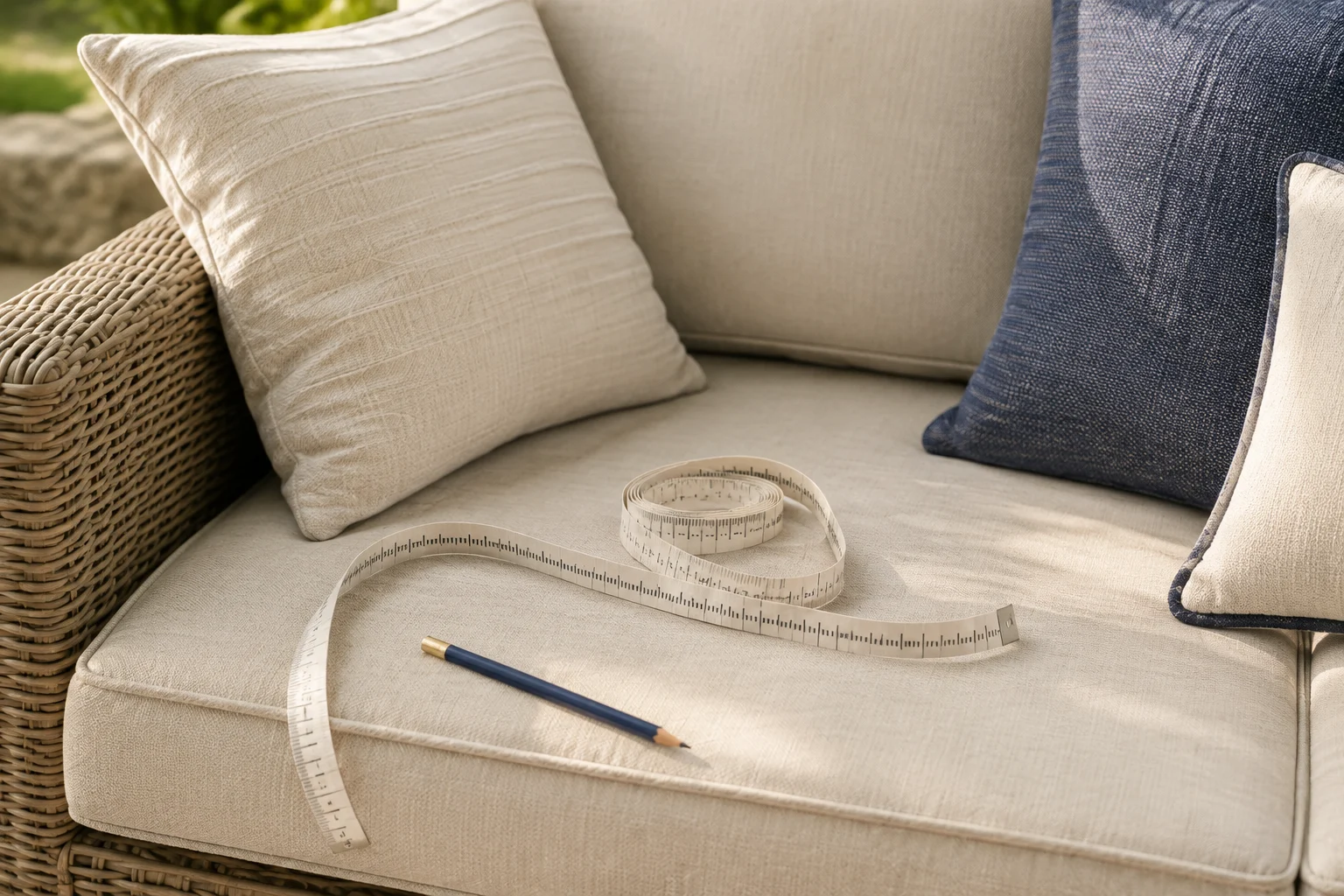
- – Tape out the footprint including the set’s full occupied dimensions (chairs pulled out, walkways needed) — the method in small patio spaces and how to buy patio furniture online.
- – Circulation: 18–24 inches clear around the occupied set; 30–36 inches where people pass behind seated diners.
- – Table math: 24 inches of table edge per diner minimum; a 60-inch round seats six comfortably, a 72-inch rectangular seats six with elbow room.
- – Cushion thickness in the geometry: deep-seat formats and thick cushions change effective seat height and walkways — verify with the real numbers (how to measure outdoor cushions).
The Maintenance Ledger
Sets multiply maintenance by piece count — six chairs means six times the joints, six cushions, six frames’ worth of coating inspection. Factor it: material families with low maintenance (aluminum, polymer, quality HDPE — best outdoor furniture materials) make large sets livable; high-maintenance materials (steel, iron) make six-piece sets a part-time job. The seasonal calendar in how long does wicker furniture last scales by piece count too.
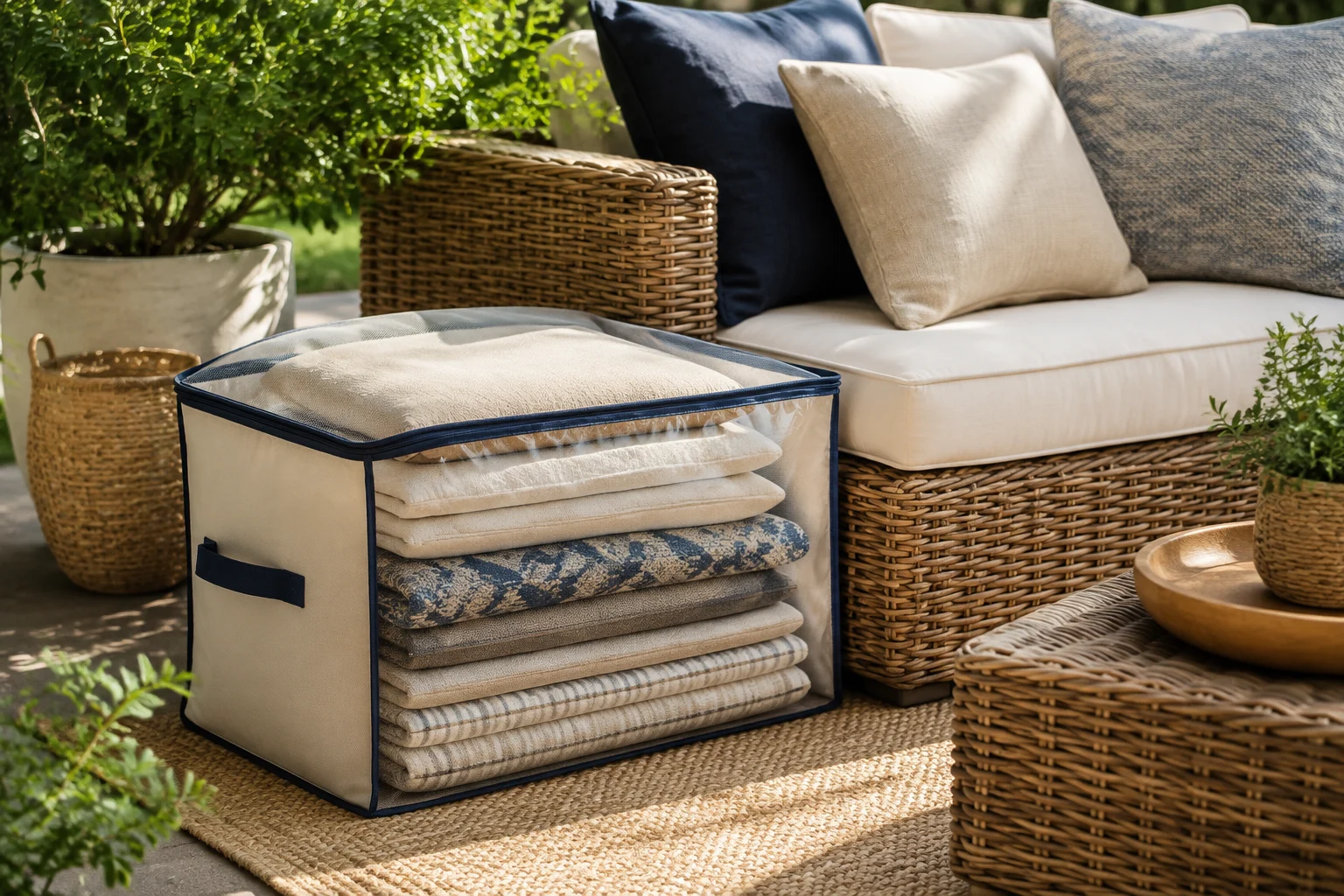
And storage: a set’s cushions stored correctly off-season (how to store outdoor cushions for winter) outlast the same set’s cushions left out — the cheapest lifespan decision in the whole purchase.
Set Shopping by Budget Tier
What each spending tier actually delivers in set form:
- – Entry ($300–800): functional frames — expect coated steel or entry resin wicker, commodity cushions, and a 2–4 season honest horizon (cheap vs quality outdoor cushions covers the cushion half). Fine for first homes and trial patios; plan on the cushion layer replacing early.
- – Mid ($800–2,500): the value sweet spot — aluminum and quality HDPE frames, real sling or entry solution-dyed fabric, and 5–10 year frames. The tier where spending the cushion budget separately (rather than accepting OEM) pays back fastest: new-grade cushions at $45 base per piece plus fabric area turn a mid set into a premium sit.
- – Premium ($2,500+): material chemistry and warranty depth (luxury patio furniture) — teak, marine polymer, heavy-gauge aluminum. The tier where the OEM cushion question returns: verify the cushion spec line-by-line even here, because premium sets economize on cushions too.
Every tier rewards the same diligence: frames inspected (most durable outdoor furniture‘s construction tells), cushions treated as their own line item, and the layout taped out before purchase (small patio spaces).
The pieces-not-in-the-box check. Sets arrive with what the photo showed minus what you assumed: umbrella provisions, cushion storage, side tables, covers. List the missing pieces before buying — the separate purchases that complete a set (shade, storage, the accent chair) belong in the budget math from the start (patio set vs buying separately).
The delivery-day checklist. Sets arrive as multiple boxes on freight or parcel, and the damage window is real: count boxes against the manifest before signing, photograph any crushed corners while the driver waits, and open the frames box first — a bent frame discovered after the driver leaves is a freight claim, and claims live on delivery-day documentation (how to buy patio furniture online covers the full method).
FAQs
What patio set should I buy?
The type your last ten outdoor evenings prove — forks mean dining sets, glasses mean conversation sets, mugs mean bistro — then quality-unpack the bundle: frames first, cushions second.
Are patio sets cheaper than buying separately?
Usually at entry and mid tiers, when the set matches your use pattern; separate wins for mixed patterns and selective upgrades. The full economics are in the set-vs-separate guide.
Why do set cushions wear out before the frames?
Because OEM cushions are the bundle’s economized component — unspecified foam and unnamed fabric families — at every tier. Spec’ing the cushion layer separately is the standard upgrade at $45 base plus fabric area.
How much space does a patio set need?
Its full occupied footprint plus 18–24 inches of circulation — tape it out with chairs pulled out before buying, per the space guide.
Can I mix set pieces and separate pieces?
Yes — and one fabric family plus one stitch style across the custom cushion layer is what makes mixed furniture read as a designed set.
What’s the most durable set material?
Aluminum frames and quality HDPE wicker lead the set market for longevity per maintenance dollar; teak sets lead outright where budget allows. The material map ranks the rest.
Next Steps
- Diagnose your use pattern honestly, then tape out the shortlisted set’s full footprint with walkways this weekend.
- Unpack the bundle quality — frames first, cushions deliberately planned as their own layer.
- Unify and upgrade that layer at custom outdoor cushions — one fabric family, one stitch style, density by duty, across every piece, in 4–7 business days.
Types of Wicker Materials: Natural, Resin and HDPE Compared
Every wicker material family ranked — rattan core, paper fiber, bamboo, willow and reed on the natural side; PVC-resin and woven HDPE on the synthetic side — with outdoor ratings, lifespans and what each means for cushions.
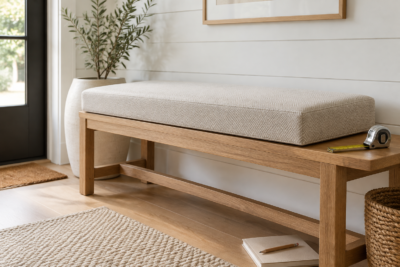
Bench Cushions: The Complete Guide to Sizes, Types and Custom Fit
A bench cushion is only as good as three numbers: the length and depth of the seat deck it sits
How to Buy Patio Furniture Online Without Regret: The Complete Method
The online patio-furniture method that prevents the classic regrets — dimension-verification discipline, photo-evidence buying, material questions to ask, shipping and return reality, and why custom cushions solve online’s worst problem: fit.
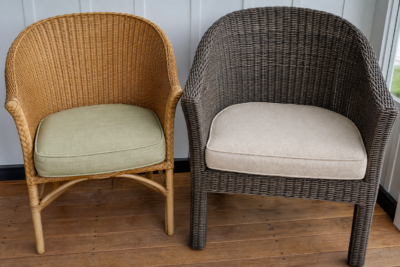
How to Tell Indoor from Outdoor Wicker: The Identification Guide
Five practical tests to classify any wicker piece — strand snap-test, frame magnet check, weave and weight inspection, tag and price decoding — and why getting this wrong is the most expensive wicker mistake there is.
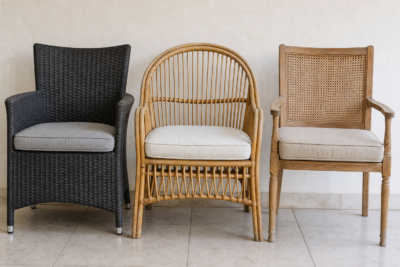
Wicker vs Rattan vs Cane: What Each Word Actually Means
The three most-confused words in woven furniture, sorted properly — rattan is a material, wicker is a weaving method, cane is a specific weave and fiber — and what each distinction means for cushions, care and outdoor use.
Is Wicker Furniture Waterproof? The Honest Weather Answer
No wicker is waterproof and good wicker doesn’t need to be — how rain, humidity and sun actually affect natural and synthetic wicker, what ‘all-weather’ really means, and the protection habits that add years to either family.