Search “custom cushions” and Etsy appears near the top, full of hand-sewn bench pads, personality fabrics and shop stories. For some projects that’s exactly the right channel. For others — the replacement cushion that must fit a specific frame, the outdoor set that has to survive three summers, the twelve-piece order that needs to match — a dedicated cushion workshop is the better machine for the job.
This is the honest comparison: what Etsy custom cushions genuinely do well, where a workshop like Cushion Mill does better, and how to tell which channel your project belongs in. For the broader channel landscape — retail, marketplace, local, custom — see where to buy replacement couch cushions and where to buy outdoor cushions.
What Etsy Does Well
Give the platform its due, because the strengths are real:
- – Personality fabrics and small-batch aesthetics. Etsy makers stock prints, colorways and designer-adjacent fabrics that no production workshop carries. If the goal is a look — a specific botanical print, a vintage-feed-sack vibe, a nursery palette — Etsy’s fabric long tail is unmatched.
- – Small decorative pieces. A single window-seat pad, a reading-nook bench cushion, a crib-adjacent rocker pad — one-off decorative work at small scale is the platform’s sweet spot.
- – The maker relationship. You’re messaging the person who will sew the piece. For collaborative, design-led projects that conversation is worth paying for.
- – Wedding and event work. Custom chiavari and event-chair cushions are an active Etsy category with real specialists.
Where a Cushion Workshop Does Better
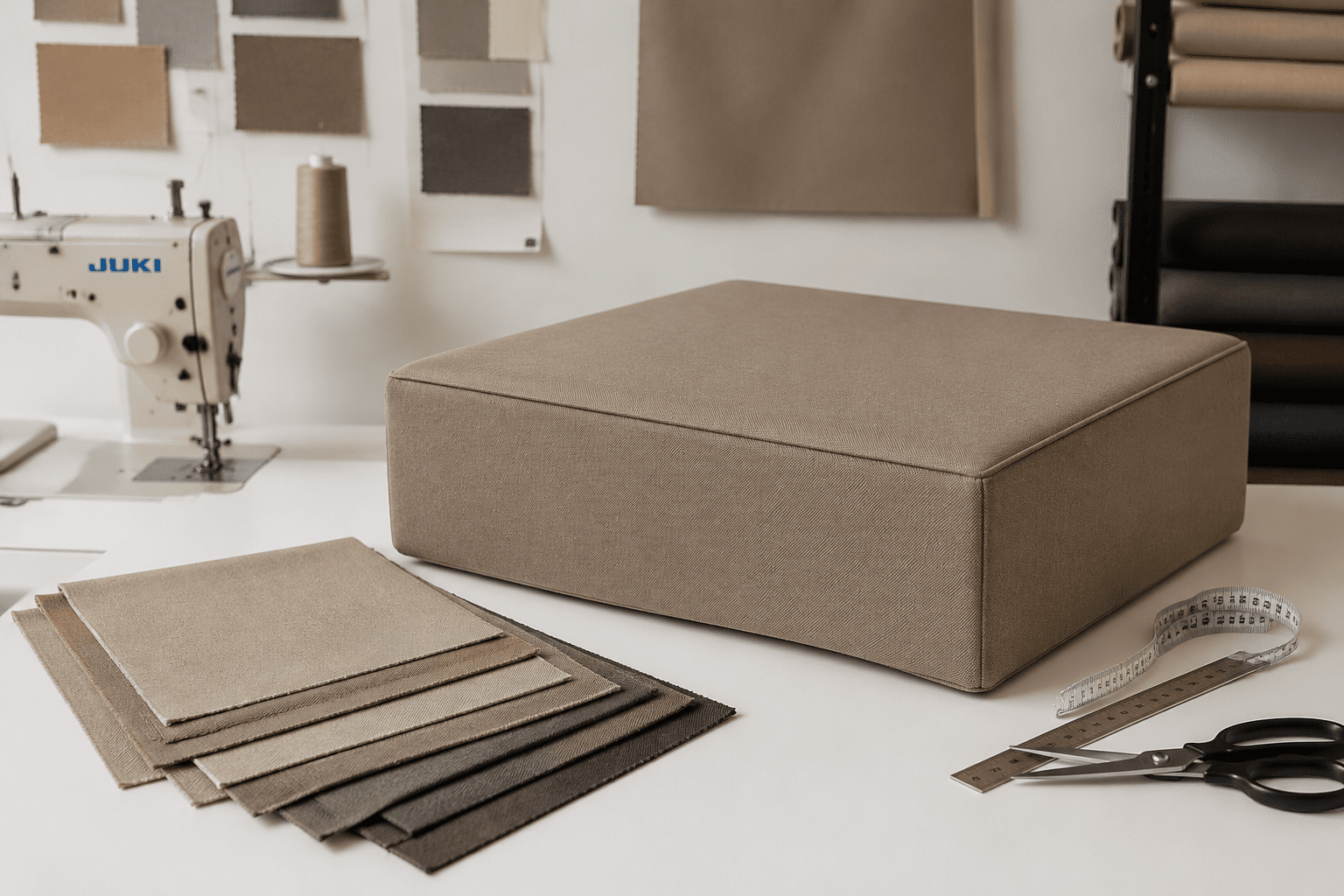
Fit precision and tolerance. A cushion workshop exists to hit a measured spec: cut-to-order foam, a stated tolerance (Cushion Mill works to ±½”, ±¾” over 36″), and a verification pass against your photos before anything is cut. Etsy tolerances are maker-by-maker — some are excellent bench sewists, some are hobbyists with a sewing machine — and there’s no shop-wide spec you’re buying against. For a cushion that must fit inside a frame — where half an inch is the difference between fitted and misfit, per cushion measurement mistakes — the stated tolerance is the product.
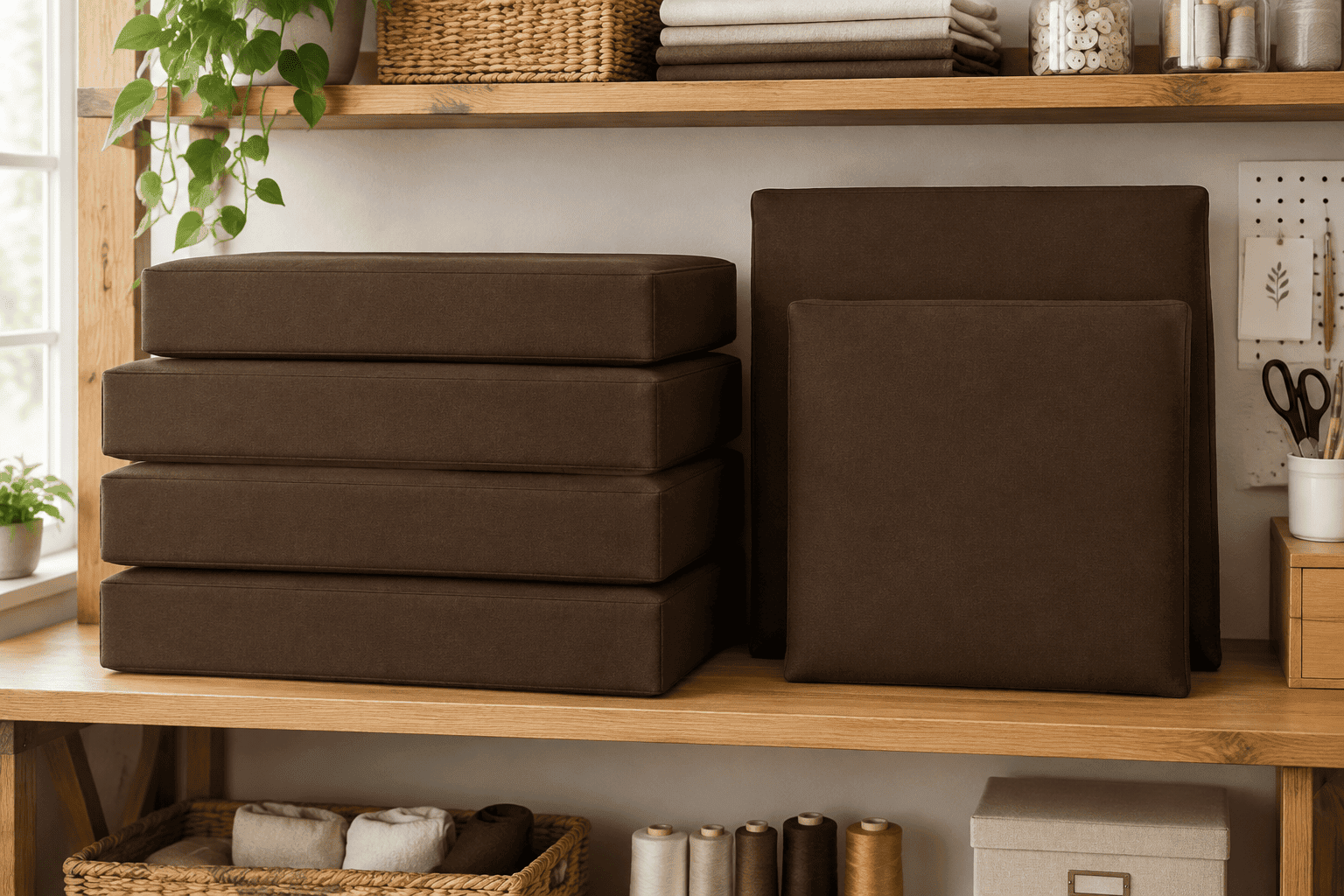
Foam as an engineering choice. Cushion lifespan is a density story, and density is a materials supply chain: 35D for occasional pieces, 50D for daily use, 60D for heavy daily, 65D for commercial and marine duty — the selection logic is in how to choose foam density. Workshops buy foam by grade and stand behind the spec; most Etsy listings describe foam as “high density” without a number, which is not a spec, it’s an adjective. The difference surfaces in year two, when the daily-use seat either holds its rise or doesn’t — the failure mode unpacked in cheap vs quality outdoor cushions.
Outdoor-grade construction. Outdoor cushions are a materials system — solution-dyed fabric (solution dyed acrylic explained), drainage-oriented fill (quick dry foam), UV-stable thread — and the system is what survives. Etsy indoor aesthetics moved outdoors is the most common “it faded in one summer” story in the category; the fabric logic that prevents it is in best outdoor cushion fabric.
Pricing transparency. Workshop pricing is a formula you can audit: at Cushion Mill, $45 base per cushion plus area × fabric rate ($7.43 per square foot flat, all 119 fabrics) — one flat sheet, no add-on menu. The whole mechanic is open in custom cushion pricing explained. Etsy custom listings typically quote per-project after a conversation — fine for one-offs, opaque at set scale, and the “custom” premium can drift well past workshop pricing once fabric markups and platform fees stack.
Lead time and remake policy. A single Etsy maker with a full queue is a variable lead time; workshop production runs 4–7 business days standard, with capacity behind it. On remakes: workshop orders are re-verified against photos before cutting, which prevents most fit failures at the source; Etsy remake terms are per-shop and worth reading before ordering, not after.
Sets and scale. Six dining chairs, a sectional, a bench plus chairs — multi-piece orders need per-piece measurement, one dye lot and consistent construction. The set logic is in chair cushion sets and seat and back cushion sets; it’s achievable on Etsy only by finding one maker for the whole job and accepting their queue.
The Decision Table
| Your project | Better channel | Why |
| One decorative piece, personality fabric priority | Etsy | Fabric long tail, maker collaboration |
| Cushion must fit a measured frame | Workshop | Stated tolerance, photo verification |
| Outdoor set, multi-season life expected | Workshop | Materials system, not aesthetics |
| Daily-use seating (dining, sofa, bench) | Workshop | Density spec = lifespan |
| Wedding/event pieces, one-off aesthetic | Etsy | Specialist makers active there |
| 4+ piece matching set | Workshop | Per-piece specs, one dye lot, capacity |
| Heirloom furniture, cottage-core look | Etsy | The look is the product |
| Boat, RV, marine-adjacent | Workshop | 65D duty grades under waterproof fabric; true reticulated cores are a marine-specialist buy |
The honest summary: Etsy sells the maker; a workshop sells the spec. Both have a place, and the mistake is buying the spec from the maker channel — expecting a precision fit, a stated density and a multi-season outdoor life from a listing that was never engineered to deliver them.
If You Order on Etsy Anyway
The channel can work for fit-critical projects if you buy like a spec engineer: send measured dimensions per piece (frame-first, per how to measure outdoor cushions), ask for the foam density in writing (a number, not “high density”), name the fabric family or accept indoor-grade limits, agree the tolerance and remake terms before paying, and attach photos of the furniture with a tape in frame. A good Etsy maker will welcome all five; hesitation on any of them is information.
The Third Channel: Local Upholsterers and Sewing Shops
The Etsy-vs-workshop frame leaves out a real middle option — the local upholsterer or sewing shop — and it earns its own line in the decision table:
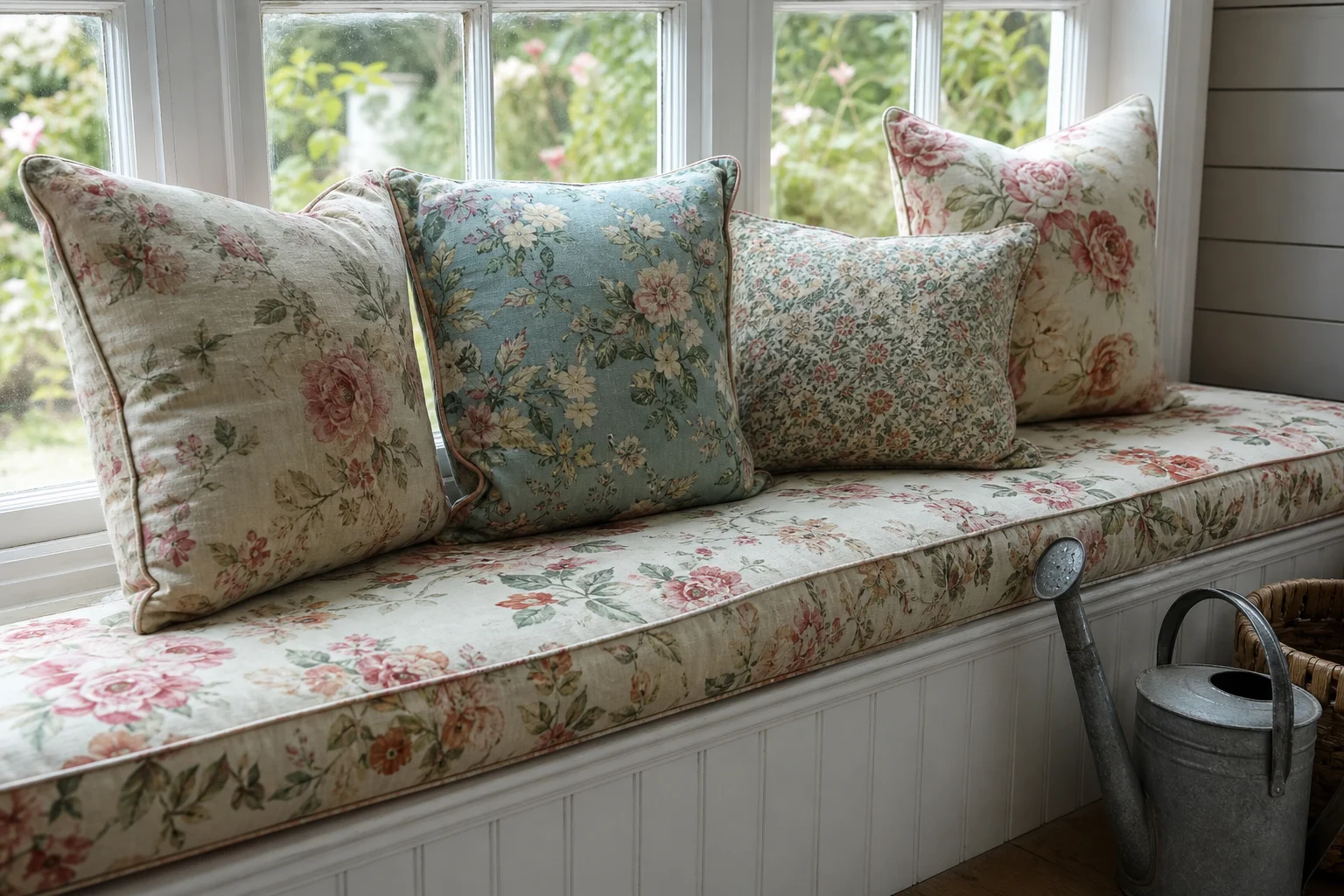
- – Strengths: sit-down consultation with the actual furniture (some will come to you), fabrication experience across odd shapes, and local accountability when something’s wrong. For a single odd piece — an antique settee, a curved bay-window seat — a good local shop is often the best available option, and vintage and antique furniture cushions covers why heirloom geometry rewards this channel.
- – Weaknesses: the same opacity as Etsy on pricing (quoted per project), variable foam sourcing (ask the density number, in writing), and scheduling that runs on one shop’s calendar. A multi-piece set can occupy a small shop’s queue for weeks.
- – Cost reality: local custom work frequently prices above both Etsy and dedicated workshops for standard pieces — you’re paying for the consultation and the proximity. Fair for odd one-offs, expensive for a dining set.
So the honest channel map is three-way: Etsy for personality one-offs, the local shop for odd single pieces needing hands-on consultation, and a cushion workshop for everything spec-driven — fit-critical, sets, outdoor, daily duty. The workshop is also the only channel of the three where the pricing formula, tolerance and verification pass are stated in advance rather than discovered in the transaction.
FAQs
Is Etsy good for custom cushions?
For one-off decorative pieces in personality fabrics — yes; for fit-critical, outdoor or daily-duty cushions — a dedicated workshop is the better channel. Etsy sells the maker; a workshop sells the spec.
Why does foam density matter when comparing channels?
Because density is the lifespan number — 50D daily use, 60D heavy daily — and “high density” without a number isn’t a spec. Workshop foam comes grade-stamped; most marketplace listings don’t.
Is Etsy custom pricing cheaper than a workshop?
Usually not at set scale — per-project quotes plus fabric markups and platform fees often drift past workshop formula pricing. Workshop pricing is auditable: $45 base plus area × fabric rate.
What lead time should I plan for?
Workshops run 4–7 business days standard with capacity behind it; Etsy lead times are per-maker and queue-dependent. Either way, count back from the date you need the piece.
Can I get outdoor-grade cushions on Etsy?
Sometimes — but outdoor survival is a materials system (solution-dyed fabric, drainage fill, UV-stable thread), and workshops engineer that system as the default. Ask pointed questions before ordering.
What should I send an Etsy maker for a fit-critical piece?
Per-piece measured dimensions, the foam density you want in writing, named fabric family, agreed tolerance and remake terms, and photos with a tape in frame. Buy like a spec engineer and the channel works.
Next Steps
- Classify your project by the decision table above — decorative one-off to Etsy, fit/outdoor/daily-duty to a workshop.
- If it’s a workshop job, measure to the frame per how to measure outdoor cushions and run the density check for the piece’s duty.
- Build the order at the custom cushions builder — transparent formula pricing, photo verification before cutting, and a stated ±½” (±¾” over 36″) tolerance on every piece.
Every cushion on this site is cut and sewn by the Cushion Mill workshop — ten-plus years at the cutting table, and every measurement confirmed in writing before anything is made.
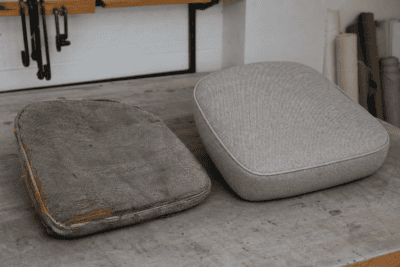
The $30 Cushion Subscription: The Real Annual Cost of Cheap Cushions
A $25–45 big-box cushion is not a purchase, it is a subscription — $13–45 a year for pads that flatten every season or two. The annualized math versus custom cuts that run $10–15 a year.
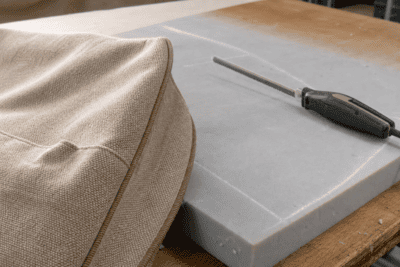
Sofa Foam Cut to Size: How to Order Exact-Fit Foam
How to order sofa foam cut to size — measuring the core, adding the compression allowance, specifying density, thickness and shape, and the checklist to run before any foam is cut.
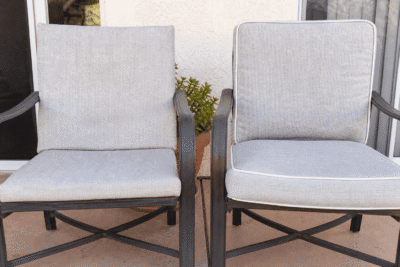
Cheap vs Quality Outdoor Cushions: Where the Money Actually Goes
What separates a $15 cushion from a $60 one and a $150 one — fabric construction, fill, stitching and covers — which upgrades matter, which are markup, and how to buy the quality your furniture actually needs without overpaying.
Couch Cushion Foam Inserts: Measure and Order New Cores
A foam insert replaces the flattened core inside the covers you already own. Measure seam to seam, pick 60D seats and 50D backs, and price the set in one order.
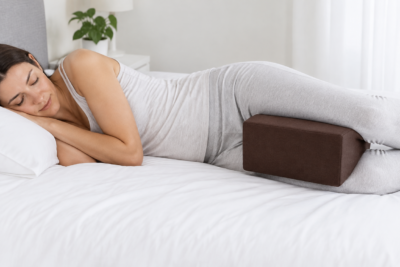
Knee Bolsters for Side Sleepers and Back Sleepers: A Firm Support Guide
A firm half-round D bolster fills the gap between the knees for side sleepers and under both knees for back sleepers. Heights, densities and lengths explained — positioning and comfort, made to order.
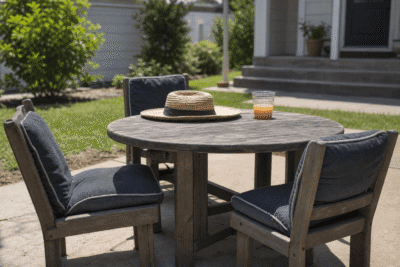
Kid-Friendly Patio Cushions: The Family-Proof Spec
Cushions that survive children — fabric families that shrug off juice and markers, construction that wipes fast, foam that handles jumping duty, attachment systems that stay put and stay safe, and the two-layer strategy that saves the good cushions.