
You are one screen into a cushion order and the form asks for a density: 35D, 50D, 60D or 65D (foam density ratings — what the D number physically measures). The price difference looks like a rounding error, which somehow makes the choice feel more urgent, not less. This page is the decision layer — one table, three questions, one answer. What density physically is and how the grades age is covered in high density foam explained; how foam compares to memory foam and fiber is the fill comparison. Neither article is required reading to order correctly today.
The one-line rule, borrowed from the cutting floor where density is the first number on every work order: density buys years, ILD (firmness) buys feel. The D number counts polymer per cubic foot — it sets how long the core holds its loft under your load, not how hard it pushes back on first sit. Feel is a separate dial: ILD runs lower for softer, higher for firmer, at any density. So do not pick 65D because you like a firm seat, and do not avoid it because you like a soft one. Match density to use, buy the feel separately — the two-dial explanation lives in cushion filling types.
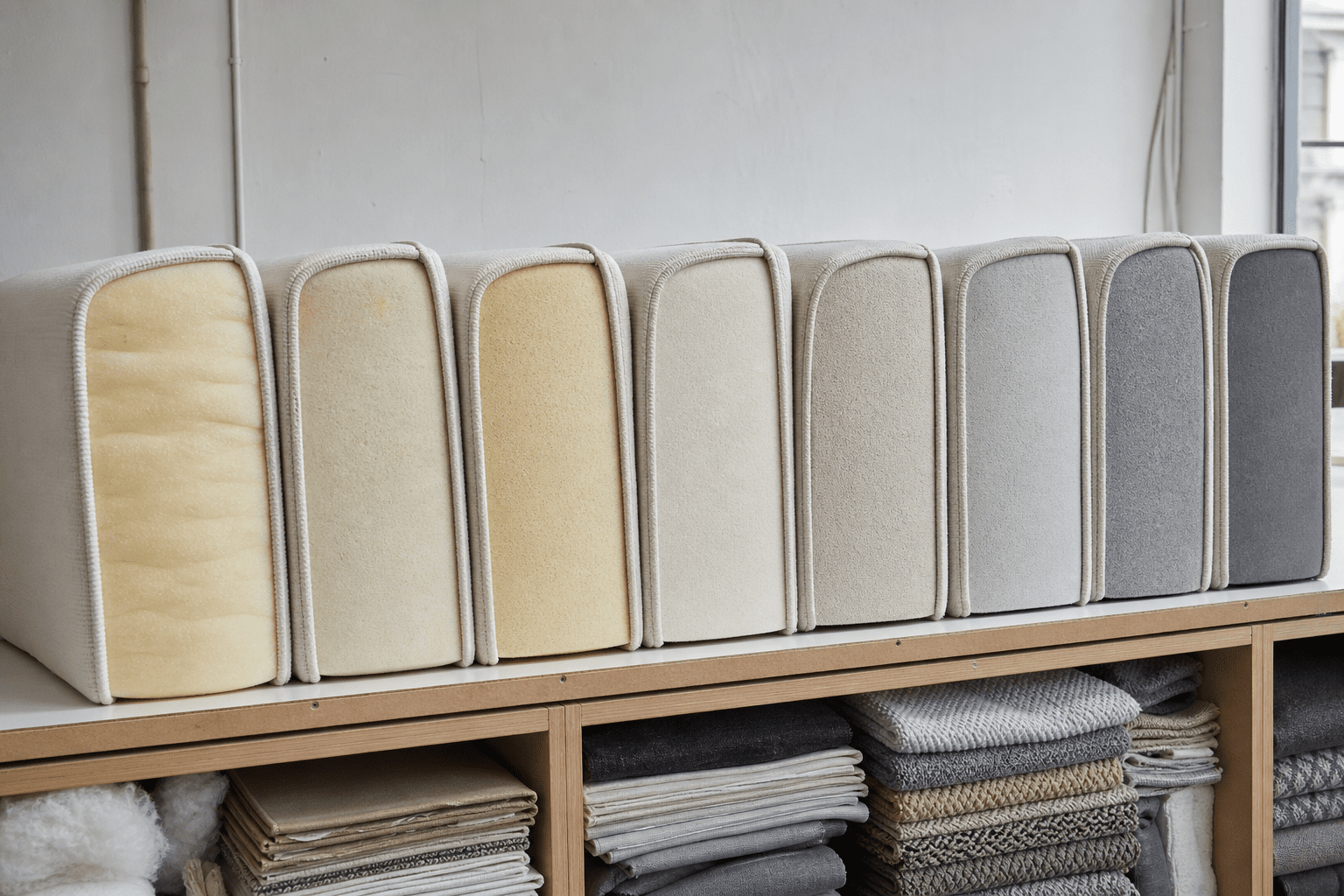
The Four Grades, Decided in One Table
| Grade | Order it for | The feel | Expected service life* | What it costs |
| 35D | Occasional furniture: decorative chairs, window seats, guest-room pieces; lighter sitters; budget-first projects | Soft-medium, yielding | ≈3–5 years if sat on daily; considerably longer on the occasional duty it is specced for | Entry rate of the four |
| 50D | Daily-use seating: dining chairs, sofas, patio sets — the grade most orders should be | Medium; holds loft through years of nightly use | ≈5–8 years of family use | A couple of dollars over 35D |
| 60D | Long daily hours, heavier sitters, deep seats used as everyday furniture, light commercial | Medium-firm under load; slow to age | ≈8–10 years | A few dollars more again |
| 65D | Heavy commercial duty, bar stools, reception furniture, boat cushions, full-season outdoor sets in waterproof covers | Solid; nearly impossible to bottom out | 10+ years — it outlasts the fabric around it | Top of a narrow band |
\* Service lives are industry rules of thumb, not laboratory promises. Hours, body weight, humidity and sun all move them, and no warranty covers how you sit.
35D — the honest economy grade. Order it when the furniture is decoration first and seating second. The mistake is never buying 35D; it is putting 35D under a nightly load and blaming foam as a category three years later.
50D — if unsure, choose 50D. This is the default our order desk quotes when a customer is torn, and it is where the builder starts. Daily dining chairs, the every-evening sofa, a patio set used every summer weekend from Memorial Day to fall: 50D.
60D — the load upgrade. Hours matter, but weight matters more — heavier sitters concentrate wear on the same cells every sitting. The workshop rule: one grade up from your instinct (50D instinct, 60D order) is the cheaper decision every time, because the upgrade costs dollars and the re-do costs the project. Light commercial lands here too — an office break-room bench, a café banquette that turns covers all day, and church pew cushions that seat a congregation on the same foam every week.
65D — when the cushion is equipment. Bar stools that open at 8 a.m., marina duty, rentals, reception furniture. On home furniture it reads as a tank. For cushions that live out full seasons in the weather, pair it with a waterproof cover tier — the foam carries the years, the fabric carries the water, and neither substitutes for the other (boat cushions take the same logic further).
Three Questions That Pick the Grade
1. How many hours a day does it get sat on? Under an hour — 35D clears. One to four hours — 50D. From dinner through midnight — 60D. Multiply by seven days: a bench sat on briefly but daily still counts as daily.
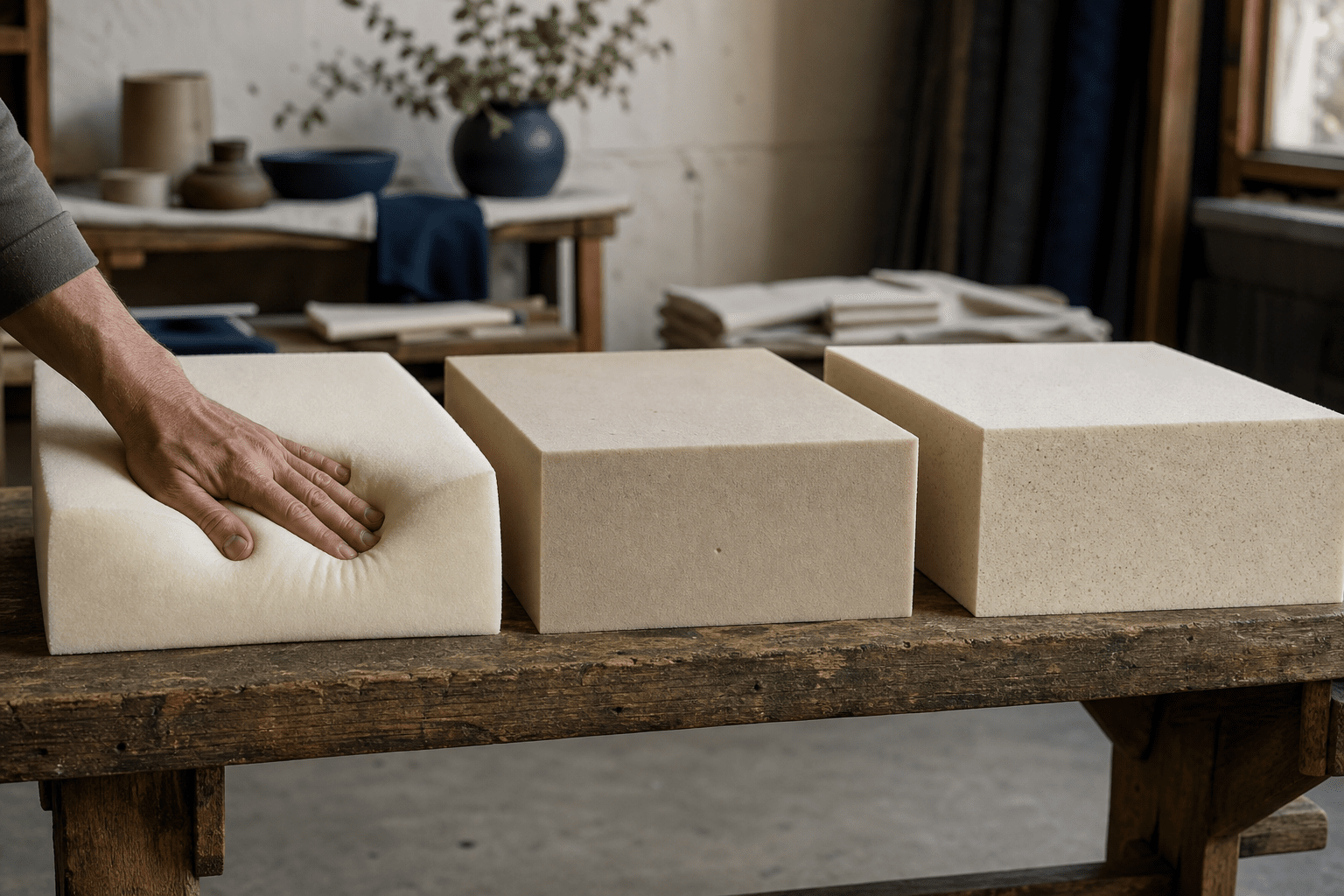
2. Who sits on it? Load ages foam faster than the clock does. If the answer is heavier sitters or a tall household, take your hours answer up one grade. This is the single cheapest durability decision in the whole order.
3. Where does it live? Indoors and covered patios follow the answers above. Furniture that stays out in full-season weather wants 60D or 65D inside waterproof covers. The marine end of that spectrum is its own conversation — see the boat cushion guide.
The tie-breaker: when the answers split between two grades, take the higher one. At our rates the whole ladder from 35D to 65D adds roughly seven dollars to a standard 24×24 seat, so a tie never survives contact with the math. And if you are still unsure after all three questions — 50D. That is the answer for most people, most furniture.
Three quick profiles, run through the tree. A hallway window seat nobody lingers on: under an hour, light load, indoors — 35D, and the money saved belongs in the fabric instead. The family sofa hosting homework, dinner and weekend naps: 50D, stepping to 60D if the household runs heavy. Four breakfast-bar stools that open every morning and moonlight as a work-from-home perch: 60D; the same stools bolted down in an actual bar: 65D. Every profile is the same two variables — hours and load — in different clothes.
Density, Thickness, Firmness: Three Separate Dials
Buyers conflate three specs because sellers report only one. Thickness is the shape you see — 2.5–3″ on dining chairs, 4–5″ on deep seats, 5–7″ on loungers — and it sets sink depth and edge feel on day one. Density sets how much of that shape is left in year five. ILD sets whether day one feels soft or firm. Change thickness and the seat reads differently immediately; change density and it reads the same now and different later. When re-foaming existing covers, match the old thickness first and choose density second — the interaction is worked through in the density guide.
FAQs
Will a higher density feel too hard?
No — density and firmness are independent specs; a 65D core can be cut softer than a 35D one, and “hard” is bought or avoided with ILD, not with the D number. If your current cushions feel hard, the culprit is the firmness grade or dead foam, not excess density — the diagnosis is in memory foam vs regular foam.
Can I mix densities in the same set?
Yes — seats and backs live different lives, and mixing grades across pieces in one set is normal workshop practice; every piece is cut to its own spec. The common split is 50D or 60D seats over 35D or 50D backs: backs carry almost no load, so seat-grade density under them buys nothing. The set looks identical — same thickness, same covers — and the money goes where the weight goes.
Is 65D worth the price difference?
For heavy use, yes without hesitation — the entire ladder from 35D to 65D adds roughly seven dollars to a standard 24×24 seat at our rates. For occasional furniture, no: 50D is already past the ceiling of what that use can wear out. The decision driver is use intensity, never budget — the budget gap is measured in coffees.
What density for a kids’ room?
50D for seating a child actually uses — children are light but not gentle, and jumping loads a core harder than sitting does; save 35D for the decorative pieces. A homework bench that doubles as a launch pad earns 60D.
What about pets?
Split the decision: pets age foam by load and age fabric by claws — a dog that naps on the window seat daily rates 50D or 60D in the core, while claws are a fabric-tier question. Our Premium Velvet tier is the one specified for no pilling and cat-claw resistance; the fabric side of pet-proofing is here.
Next Steps
- Answer the three questions above — hours, load, exposure — and let the table hand you the grade. Ties go up, and true uncertainty lands on 50D.
- See the price gap for yourself: load your dimensions into the builder once, then flip the density option and watch the total move by dollars, not hundreds.
- Order when the numbers look right — every set is made to order in 4–7 business days, and nothing is cut until your measurements are confirmed (the process).
- Upgrading a sofa you already own — an Ektorp, a Kivik — the density tables above map straight onto the IKEA replacement cushion library, sized per model.
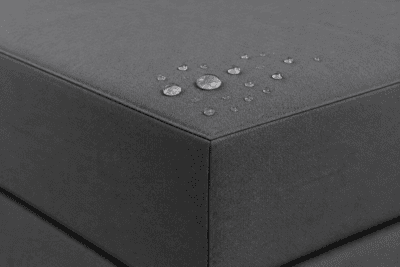
Best Outdoor Cushion Fabric: How to Choose by Climate, Exposure and Budget
A factory guide to outdoor cushion fabrics — solution-dyed acrylic, olefin, polyester grades and blends — ranked for fade, water, mold, comfort and cost per year.
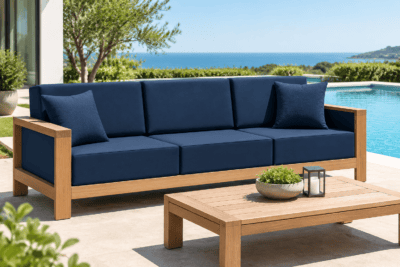
Is Sunbrella Fabric Worth It? An Honest Cost-Per-Year Analysis
Whether the Sunbrella premium pays off depends on sun exposure, horizon and color — here’s the honest math, warranty mechanics and when to skip the upgrade.
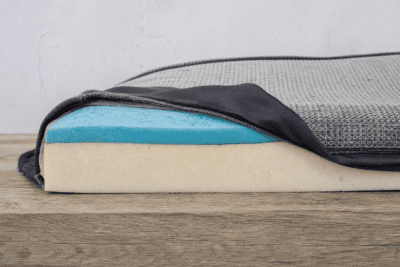
Memory Foam Topped Cushions: When Gel Layers Help (and Hurt)
Memory foam topped cushions and gel-infused layers examined — where a visco topper over HR foam genuinely helps, where it hurts, and the layer specs that separate luxury from a gimmick.
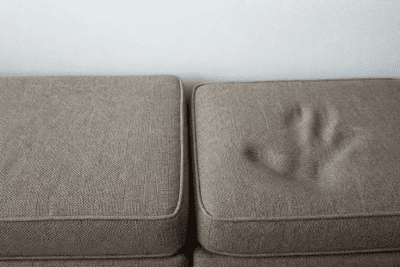
Memory Foam vs Regular Foam Cushions: What a Cushion Factory Wants You to Know
Memory foam vs high-resilience foam for seat cushions — density (35D–65D), ILD firmness, compression set and airflow explained by the people who cut foam daily.
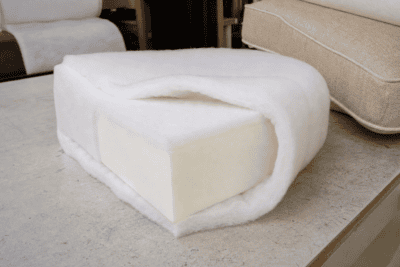
Dacron Batting: The Wrap Layer Explained (What It Does and When to Order It)
Dacron batting for cushions explained: the polyester wrap layer around foam cores, what it does for feel edges and fabric wear, thickness options, indoor and outdoor uses, and when the wrap earns its cost.
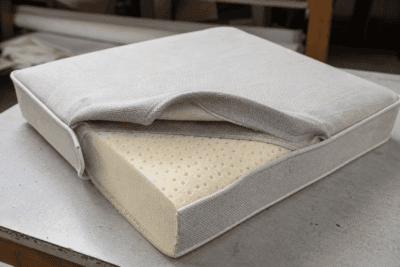
Latex Foam Cushions: Natural Rubber Seating, Honestly Assessed
Latex foam cushion guide: what natural and blended latex actually offer versus polyurethane — resilience, feel, lifespan, weight and cost — who latex seating serves, and the honest counterarguments.