
The U-shaped cushion is the geometry of wraparound seating: the banquette that wraps a kitchen nook, the window seat that follows a bay’s return, the boat cockpit that curves around the helm, the window bench that horseshoes a garden view. Three arms, two corners, one continuous sitting surface — and a measuring job that defeats every “standard” assumption in the cushion world. This guide covers the U’s geometry, the measuring that captures it, and the build decisions (seams, sections, continuous runs) that turn three arms into one seat. The two-arm version is covered in how to measure an L-shaped bench cushion; the corner mechanics scale up from there.
Where U-Shapes Occur
The realistic U-shaped situations, each with its own notes:
- – Wraparound banquettes and breakfast nooks — the indoor classic: two flanking benches plus a center run, wrapping three sides of a table. The dining-duty build logic is banquette cushions and breakfast nook cushions.
- – Bay and bow window returns — the window seat that follows the glass: bay window cushions covers the angles and radii.
- – Boat cockpits and L-U settees — marine seating wraps the hull: boat cushions covers the weather side.
- – Garden and deck horseshoe benches — the outdoor wraparound, usually fixed to structure.
- – Window benches in towers and turrets — the rare, fully curved case, where the “U” is actually an arc.
The Geometry: Three Arms, Two Corners, Four Radii
A U is specified by its arms and its corners, and the corners carry the geometry:
- – Arm lengths: each arm measured from the corner’s inside origin to its far end — three numbers (left arm, center run, right arm), each measured at the seat’s front edge and back edge if the runs taper.
- – Corner angles: usually 90 degrees in built seating, but verified rather than assumed — a two-degree error per corner moves the far end of each arm by an inch-plus, and the arms’ ends land wrong against walls and end panels. The verification method is the same as for bay windows (bay window cushion guide): an angle finder or a protractor on the frame.
- – Corner radii: built-ins often soften the corners with curves rather than angles — each corner then has an inside radius (the seat’s front edge curve) and the pad either follows the curve or mitered at the angle. The radius method: how to measure radius corners.
- – Seat depth: front to back, per arm — the three arms of a built U often differ in depth (the window side shallow, the flanks deep), and each depth is its own spec.
Measuring the U: The Template Era
Past the numbers, U-shaped work enters template territory — and this is the honest advice: a U that resists twelve clean numbers deserves kraft paper. The template method:
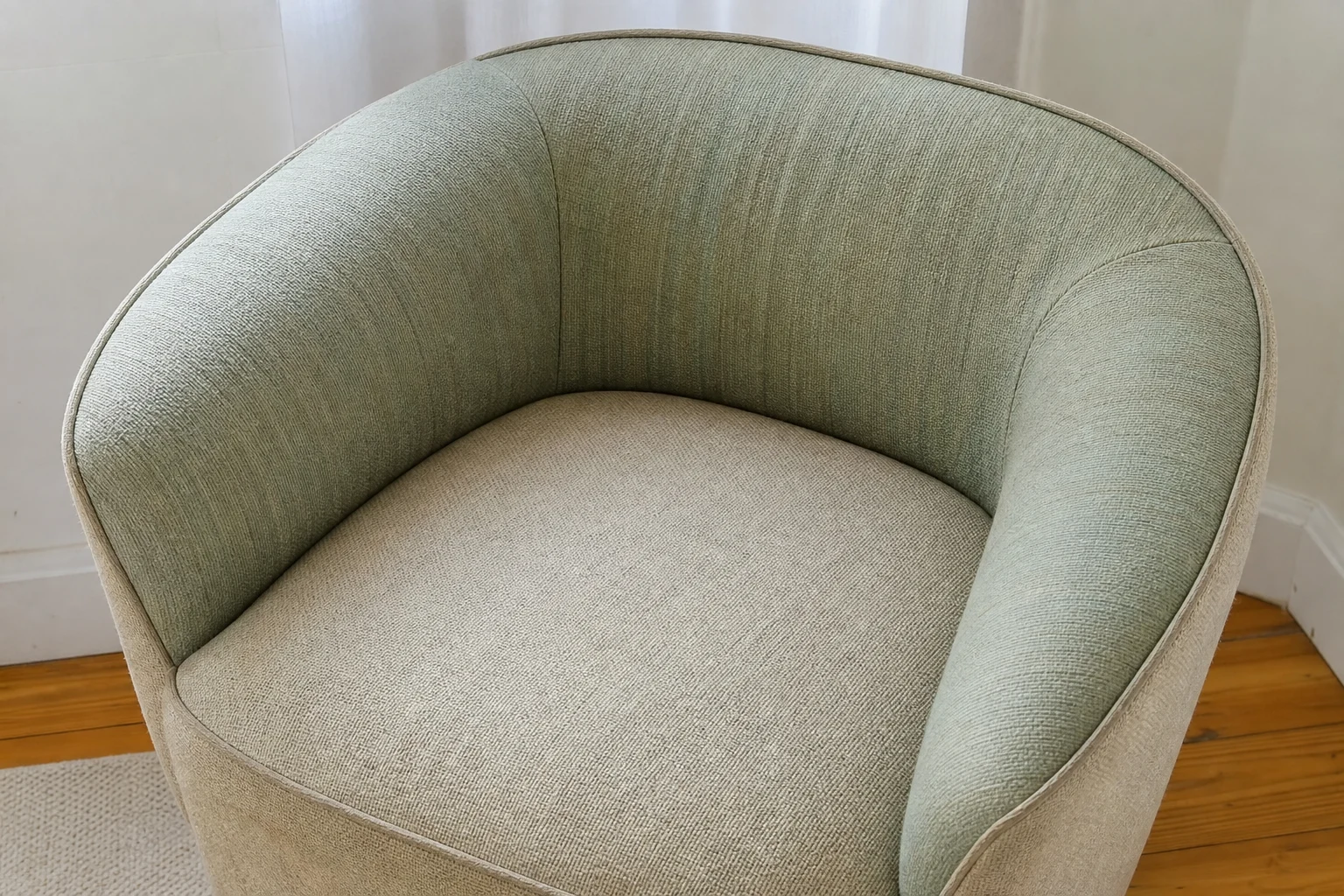
- Lay kraft paper on the seat surface, letting it fold up at the backs and ends.
- Crease or pencil the frame’s edges — the seat’s outline, the back line, the end lines.
- Label everything: front/back, the three arms’ positions (left/center/right from the sitter’s view), the corners’ orientation.
- Photograph the template in place on the furniture, then flat with a tape measure.
Templates capture what numbers approximate: the corner that isn’t quite 90 degrees, the arm that tapers, the bow in the long run’s wall. Custom shops cut to templates as routine work — the practice is recommended for every resistant shape in cushion measurement mistakes, and U-shapes are the method’s home turf. Photograph the dressed furniture too (old cushions in place): the photo shows the intent the template records.
The Build Decisions: Continuous or Sectioned
The continuous U — one piece, three arms, seamed at the corners or molded through them:
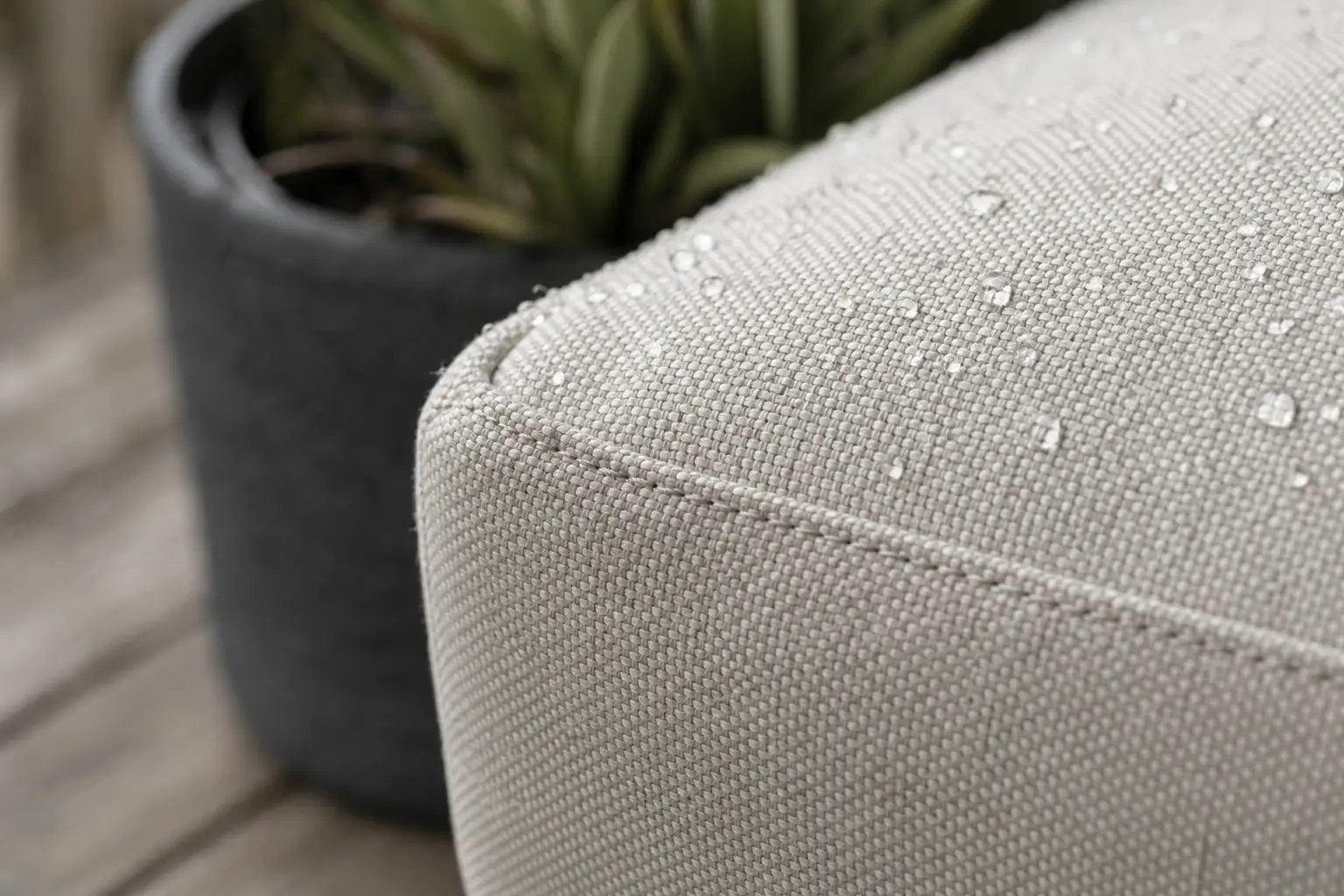
- – The seamless look, and nothing to drift apart.
- – Unmovable for cleaning and storage: a 10-foot horseshoe is a two-person awkward object.
- – Damage takes out the whole piece.
- – Continuous curved corners require shaped cutting — routine for the shop, impossible for the home sewer.
The sectioned U — three arm pieces meeting at two corner seams (or five pieces with separate corner wedges):
- – Each piece flips, rotates, cleans, and replaces independently — the maintenance argument that wins most dining nooks.
- – The seams land at the corners, where nobody sits; with the fabric matched at the seam, the sectioned build reads continuous from any normal distance.
- – Per-piece replacement is the economics: the center run that takes the daily wear renews without touching the flanks.
The working guidance is the same as L-shaped benches (how to measure an L-shaped bench cushion): duty runs section, show runs go continuous. Dining nooks section; the turret window seat goes continuous.
Fill and Fabric on the U
The U inherits its duty spec from its room:
- – Dining Us (nook and banquette wraps): 50D seats at 2–3 inches, lighter backs — the full spec in banquette cushions.
- – Reading Us (window wraps): 50D at 4–5 inches with comfort tops on the long-sit arms — window seat measurement.
- – Outdoor Us (deck and garden horseshoes): the weather stack — acrylic fabric and a duty-matched core, with tie-downs at the framing as your own retrofit (best outdoor cushion fabric, quick dry foam for outdoor cushions).
- – Marine Us: the boat stack — boat cushions.
- – One dye lot across every arm — the U is one visual object; shade drift between arms is the failure mode of piecemeal ordering. One order, one lot, always.
>
Ordering the U
- Measure the three arms and two corners (or template the run), fix the depth per arm, and photograph everything — dressed furniture and bare frames.
- Decide the build: continuous or sectioned (duty vs show), thickness by the room’s use, fabric by exposure, one lot.
- Order at the category entry — custom breakfast nook cushions for nook wraps (the L-shape flow extends to U-runs), custom bay window cushions for window returns, or the general custom cushions builder for everything else: pricing from a $45 make-base plus per-square-foot foam and fabric rates, 4–7 business days, and templates verified against your photos before anything is cut.
The Corner Experience: Seating at the Bend
The U’s two corners are its most contested seats — geometrically awkward for knees, behaviorally beloved (the corner is the protected spot, the one nobody can bump, the child’s throne at family dinners). The cushion spec can make the corners work rather than apologize:
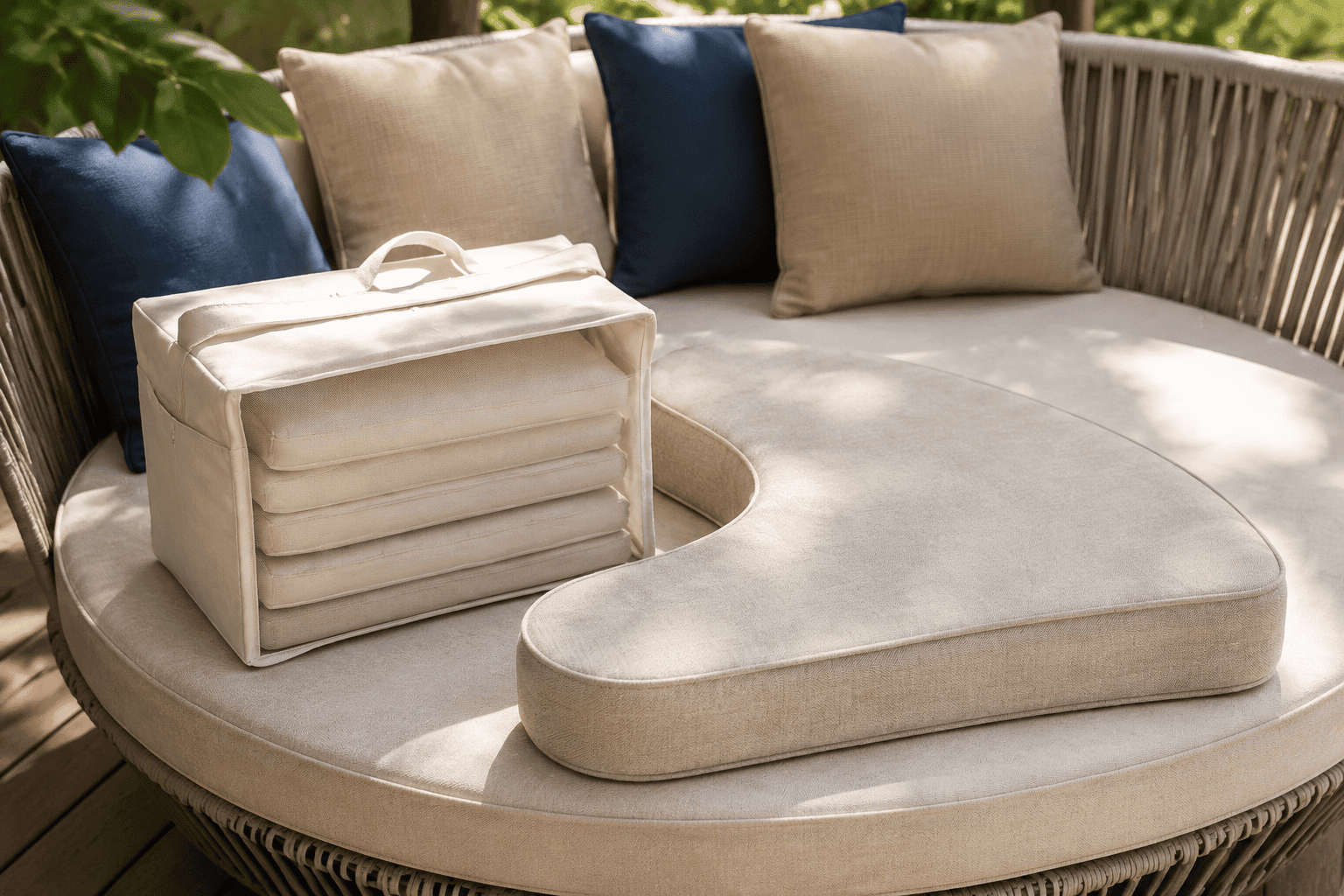
- – Radiused front corners at the bend recover the knee room the corner geometry costs: the table’s corner pokes into the knee zone on the diagonal, and a rounded pad front softens the furniture’s corner by two to three inches of usable space. The radius method is how to measure radius corners, and in a dining U it is comfort engineering rather than style.
- – The corner piece can run thicker. The corner sitter is usually the smallest or the longest-staying; a half-inch of extra loft at that one position is a legitimate per-piece spec — mixed thickness across a run is normal workshop practice, exactly as mixed densities are (banquette cushions covers the same corner-first logic).
- – The sectioned build’s quiet corner advantage: with separate arms, the corner wear (the protected seat is also the most-climbed-into one) renews on its own schedule — the corner piece replaces without disturbing the long runs, the same per-piece economics that govern L-bench maintenance decisions.
FAQs
How do you measure a U-shaped cushion?
Arm by arm — three lengths, two corner angles or radii, a depth per arm — or by kraft-paper template when the run resists clean numbers. The template method is the U’s home turf: cushion measurement mistakes.
Should a U-shaped seat have one cushion or sections?
Duty runs section (each arm flips and replaces independently); show runs go continuous. The same trade as L-benches: how to measure an L-shaped bench cushion.
How do corners work on U-shaped cushions?
Either seamed at the measured angle or cut as continuous curves — both routine custom work, both specified by angle or radius. The radius method: how to measure radius corners.
Can a curved U (an arc) get a cushion?
Yes — arc runs are template work; kraft paper captures the curve that numbers can’t. The bow-window logic in bay window cushions covers the curved variant.
What thickness for a U-shaped bench?
2–3 inches for dining wraps, 4–5 for reading window seats — the room’s duty sets the band. The nook spec: breakfast nook cushions.
Do U-cushion arms need to match in fabric?
They must come from one dye lot — a U is one visual object and shade drift between arms is the piecemeal-ordering failure. Order every arm in one specification.
Can I get U shaped chair cushions for vintage swivel chairs?
U shaped chair cushions for swivel rockers and vanity chairs are routine customs — one template tracing captures the U. Foam runs 60D with zippered, removable covers; sewing takes 4–7 days.
Next Steps
- Sketch the U — three arms, two corners, depths noted — and template anything curved; photograph dressed and bare.
- Fix the build: continuous or sectioned, thickness by duty, fabric by exposure, one lot for every arm.
- Order at custom breakfast nook cushions, custom bay window cushions, or the custom cushions builder — corners verified against your photos before cutting, 4–7 business days.
Cushion Shapes Guide: All 11 Shapes, What They Fit, and How to Measure Each One
A field guide to every cushion shape we cut — rectangle, chaise, L-shape, T-cushion, bowed, notched, round, oval, half-round and wedge — which furniture each one belongs to, how to measure it in inches, and exactly which shape to pick in our custom cushion builder.
Round Outdoor Cushions: Diameter Duty on the Patio
Round outdoor cushion guide: round patio dining sets, fire-pit seating and round loungers; diameter measuring with the two-axis check, thickness bands, weather specs for circular pads, and ordering rounds.
Throw Pillow Sizes: Standard Chart and How to Measure
There is no industry law, but there is a firm convention: throw pillows cluster at 16, 18, 20 and 22
Tufted vs Unbuttoned Cushions: The Stitch Decision
Tufted versus plain cushion tops compared: what tufting and stitched patterns actually do to fill, feel and lifespan, button versus stitch construction, the market’s custom stitch styles, and when plain wins.
How Much Fabric Do You Need for Custom Cushions? (Yardage, Math and a Reality Check)
Two very different people ask how much fabric a cushion needs. One is sewing it herself and standing at a
What Size Bed Gap Filler Do I Need? Thickness, Length and Density
Size a bed gap filler from three measurements, not the bed’s name: thickness equals gap width plus half an inch to one, length runs the full seam, height runs platform to mattress top. Density starts at 50D.