
A restaurant booth is the hardest job in the cushion world. Residential cushions measure duty in hours per day; a busy booth measures turns per day — eight to twelve sittings, every day, from customers who slide in and out, spill, and lean on the back like it owes them money. Behind it, the cleaning crew runs chemical sanitizers across every surface nightly. Nothing about a residential cushion spec survives that job, which is why booths get re-cushioned every few years as a line item and why the spec determines whether that cycle runs eighteen months or five years.
This is the commercial spec: density, fabric, construction, codes awareness, and the replacement economics. The companion commercial pieces: commercial outdoor cushions for patio programs and hotel and resort cushions for hospitality’s other formats, and custom church pew cushions for worship seating — budgets run on pew cushion cost per foot.
The Duty Profile, Quantified
What booth cushions actually endure, versus residential:
- – Use hours: 10–16 hours daily, year-round — versus 1–3 hours for a residential dining chair. Roughly a 5–10× duty multiplier.
- – Load cycles: every sitting is a full load-and-unload on the foam; a 20-table restaurant’s booths cycle thousands of times monthly. Foam fatigue is a cycle count problem (how to choose foam density maps density to exactly this).
- – Abrasion: sliding in and out — denim, rivets, belts across the seat front edge on every turn.
- – Chemical exposure: sanitizing solutions, degreasers, and the full food-spill spectrum, nightly.
- – Grease and soil load: airborne kitchen grease films everything, working into weaves.
The spec answers each of those loads directly.
Density: The 65D Booth Standard
Commercial seating is where the density ladder’s top grades earn their price. 65D is the booth standard — the grade specified for commercial and marine duty, carrying the turn-cycle load for years instead of seasons. 60D serves lighter-duty cafés and lower-turn venues; residential-grade 50D foam in a daily-turn booth flattens visibly within a year and dead within two — the false economy that re-cushioning projects are usually correcting.
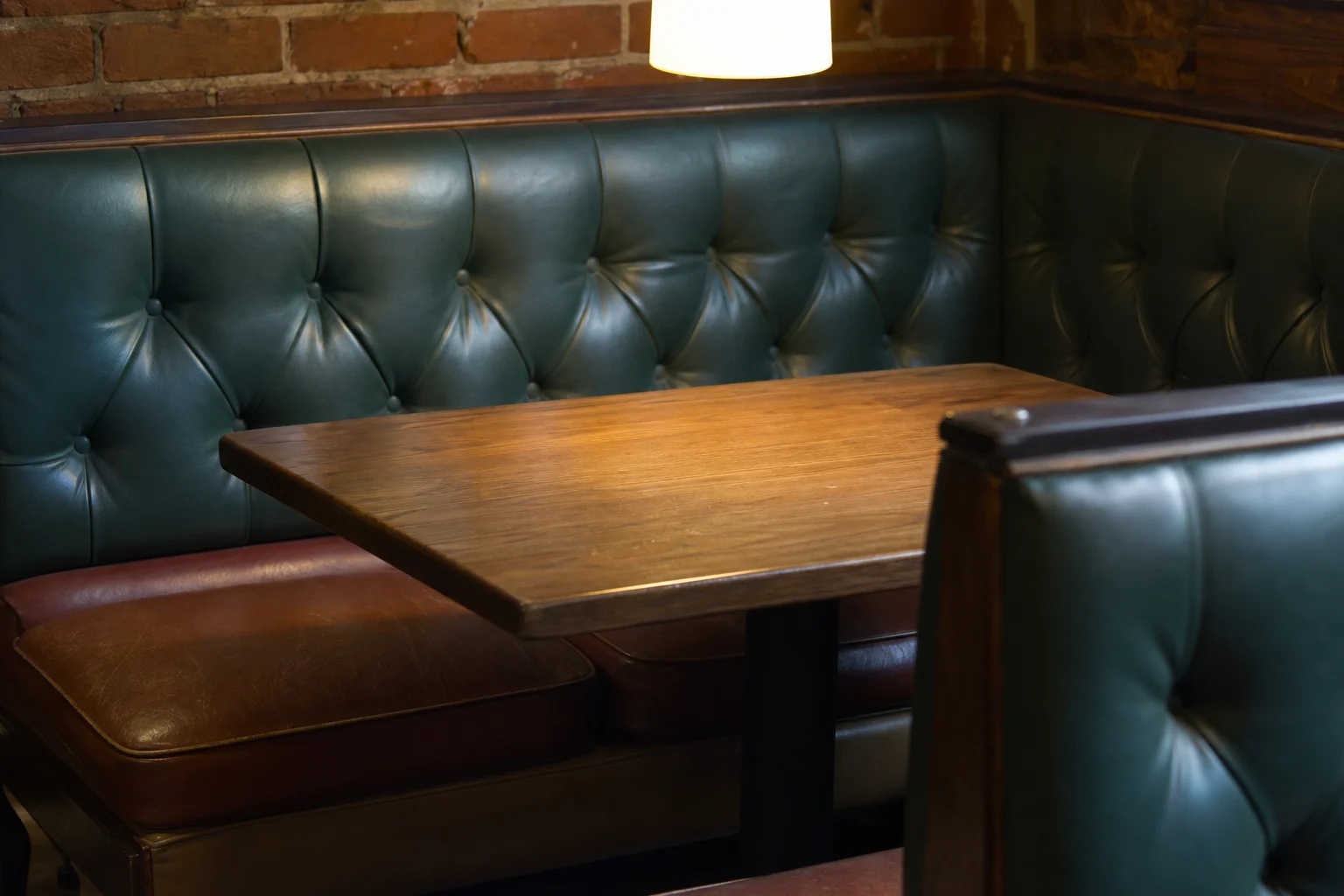
Back cushions run the same duty reality as seats in booths (customers lean through entire meals), so booths often run matched-grade seats and backs — unlike residential sets, where backs carry no load and run a grade lighter (seat and back cushion sets explains the residential split). The comfort layer question — a memory or soft top over the firm core — has a commercial answer too: thin comfort layers over the 65D core give dining-hour comfort without the bottoming-out of soft-only construction (memory foam topped cushions on the layer logic).
Fabric: The Food-Zone Demands
Booth fabric is a cleaning-chemistry decision before it’s an aesthetic one:
- – Commercial-grade vinyl and polyurethane (PU) faux leather — the diner-classic: wipes clean with sanitizers, resists grease, endures abrasion. The quality spread is real (commercial-grade PU versus discount vinyl is a lifespan decade), and the seam-welding quality matters as much as the face fabric.
- – Solution-dyed acrylic and performance polyesters — the upholstered-look route: real textile aesthetics with commercial cleanability (solution dyed acrylic explained; polyester cushion care for the cleaning behavior). Stain-treatment finishes matter in food zones.
- – The weave-tightness rule: open weaves and pile fabrics eat grease and never release it fully — tight weaves clean, in the same logic as dining-room residential fabric (best outdoor cushion fabric ranks tightness and cleanability).
- – Color strategy: mid-tones and patterns hide the between-clean film (choosing cushion colors); the darkest blacks show dust, the lightest show everything — booths run best in the middle.
Construction for Commercial Reality
- – Seam economy and reinforcement: seams are the failure points under commercial sliding abuse — fewer, stronger seams; bar-tacked stress points; and quality thread throughout (UV and chemical-stable thread matters even indoors for cleaning-chemical exposure).
- – Stitch styles that work in food zones: smooth and linear construction clean fastest — grid and channel stitching create soil channels; in booths, wipe-speed beats texture-trend (washable cushions makes the same argument residentially).
- – Attachment and fit: booth cushions are typically fitted to the booth carpentry — measured to the platform or frame, per the frame-first discipline in how to measure outdoor cushions — with per-piece measurements (booth carpentry varies as much as residential furniture; the per-piece rule from chair cushion sets applies doubled).
- – Codes awareness: commercial interiors have fire-code requirements for upholstered furniture by jurisdiction — fabric choices for commercial interiors should be verified against local code requirements. Workrooms experienced in commercial work (including Cushion Mill’s commercial orders) build to spec; the code verification responsibility sits with the operator.
The Replacement-Cycle Economics
Booth re-cushioning is a scheduled cost, and the spec sets the schedule:
- – The cheap cycle: low-density foam under commodity vinyl — attractive price, 12–18 month fatigue, plus a dated look. Over five years: 3–4 re-cushionings and a tired room.
- – The commercial cycle: 65D foam under commercial-grade fabric — higher entry, 4–6 year service, and the room reads maintained the whole time.
- – The math that matters: re-cushioning quality booth carpentry is a fraction of replacing booths — the same economics as reupholster vs replace cushions residentially, at commercial scale. Custom booth cushions at transparent pricing (Cushion Mill: $45 base per cushion plus area × fabric rate) make the cycle a budgetable line item instead of a capital surprise.
The Commercial Cleaning Interface
The spec has to survive the cleaning crew, not just the customers — and the two abuse profiles differ:
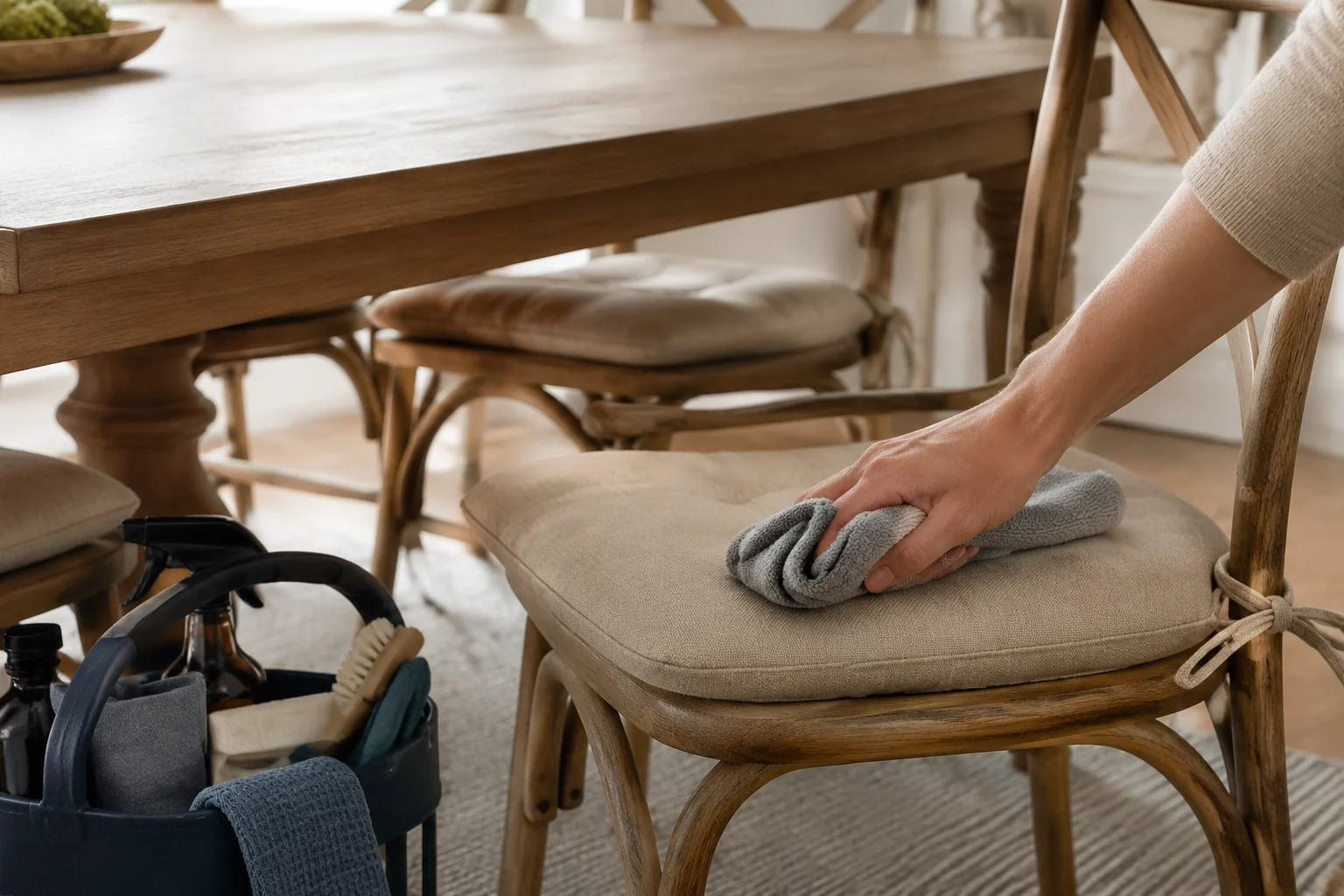
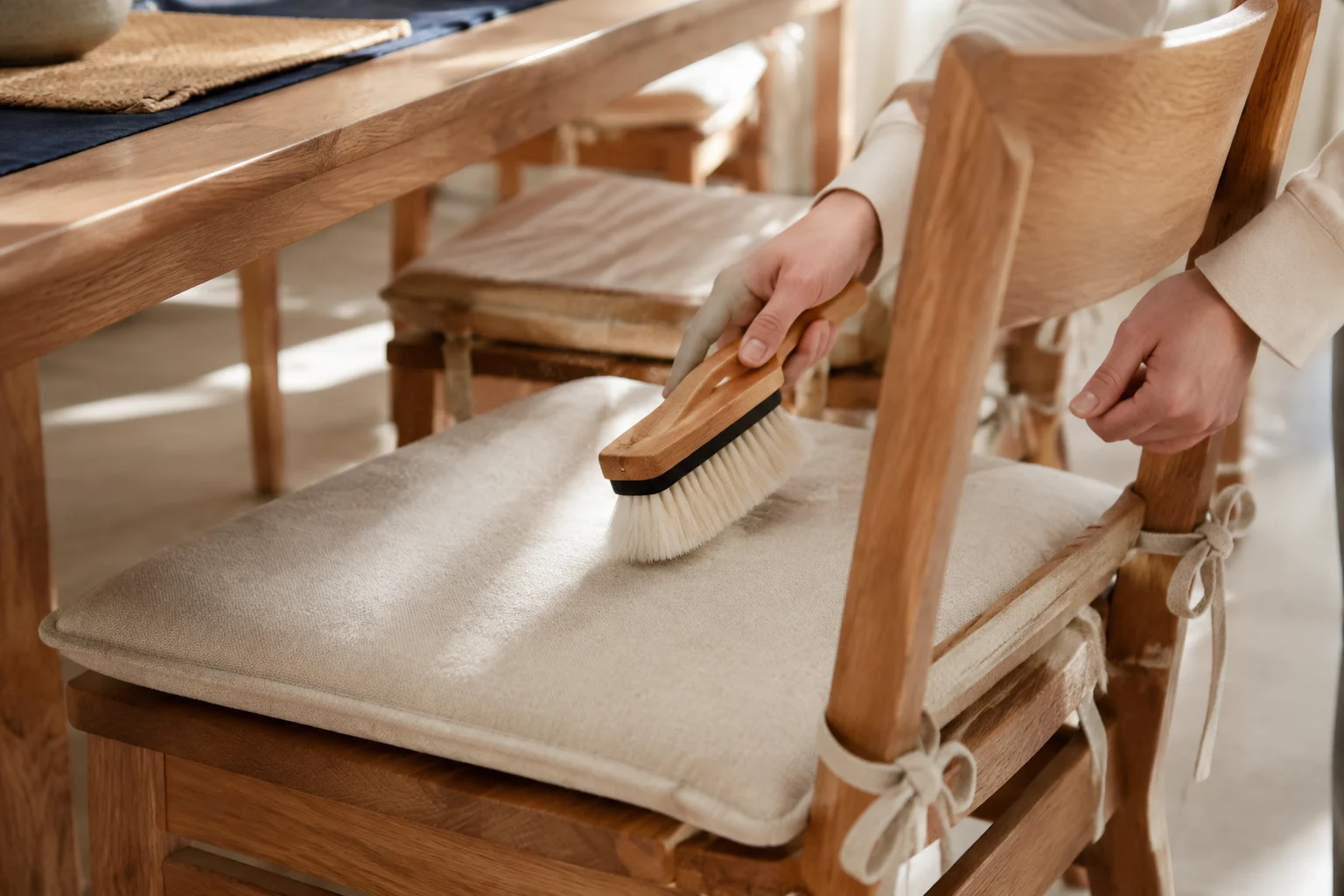
- – Chemistry compatibility. Sanitizing solutions and degreasers run nightly across every surface; fabrics chosen for looks alone degrade under commercial chemistry in months. Commercial-grade vinyl/PU and solution-dyed performance textiles are the families rated for the routine (polyester cushion care covers the cleaning behavior; washable cushions the in-place discipline).
- – Seam and edge design for wipe-downs. Rounded, welted edges and minimal stitching lines clean in single passes — food-zone construction favors the smooth and linear styles over grid and channel for exactly this reason.
- – The re-cover vs replace rhythm. Booth programs that plan the cycle — seat replacements at fatigue, back cushions a generation later, fabric refreshed when the room re-themes — keep the dining room permanently presentable at a budgetable cost. The operators caught re-cushioning in emergency mode are the ones who skipped the calendar; the ones on schedule treat per-piece custom pricing as a maintenance line, not a capital surprise.
The health-inspector interface. Food-service interiors have jurisdiction-specific requirements for cleanable surfaces and gap-free construction — the operator responsibility to verify locally before ordering. The practical habit: choose fabrics and constructions your inspector has already approved in other venues, and keep the spec sheet on file for the next inspection cycle.
The phased re-cushioning plan. Restaurants that cannot close for a full refresh re-cushion in phases — highest-wear zone first (typically the front-of-house booths), with matched-fabric orders sequenced so dye lots stay continuous. The per-piece transparent pricing model makes phasing exact: twenty booths this quarter, the remainder next, at the same per-cushion formula throughout the project.
The matching-bar-stool note. Booth programs usually run alongside bar and counter seating, and matching the two keeps the room unified: same fabric family, same density logic (60–65D at the bar for the constant use), per the height-specific measuring in how to measure bar stool cushions. One order, one dye lot, one re-cushioning cycle — the program thinking that separates maintained rooms from patched ones.
FAQs
What foam density do restaurant booths need?
65D — the commercial-duty grade that carries thousands of load cycles per month; 60D for lighter-turn cafés. Residential 50D in a daily-turn booth is a two-year mistake.
What fabric is best for restaurant booth cushions?
Commercial-grade vinyl/PU for maximum wipe-clean durability, or solution-dyed performance textiles for upholstered aesthetics with commercial cleanability — tight weaves only; open weaves hold grease.
How long do restaurant booth cushions last?
Commercial spec: 4–6 years of daily turns; commodity spec: 12–18 months. The spec sets the replacement schedule the budget lives on.
Can booth cushions be replaced without replacing the booths?
Yes — re-cushioning sound booth carpentry is a fraction of booth replacement, per-piece measured and cut to ±½” (±¾” over 36″), at $45 base plus fabric area.
Do booth seats and backs need the same density?
Usually yes — booth backs carry real lean-load through entire meals, unlike residential backs. The residential lighter-back rule inverts under commercial duty.
What should a restaurant ask a cushion workroom for?
Per-piece measurements of every booth, 65D foam spec’d in writing, commercial-grade fabric named by family, and a per-piece order with photos verified before cutting.
Next Steps
- Measure every booth platform per piece — the carpentry varies more than it looks — and photograph each for the order file.
- Set the spec: 65D seats and backs, wipe-speed construction, commercial-grade fabric by the cleaning-chemistry your crew actually runs.
- Build the order at custom cushions — per-piece specs, transparent per-cushion pricing, photo verification before cutting, 4–7 business days of crafting, a 4-7 business-day make-and-ship window.

Church Pew Cushions: The Complete Specification Guide
Pew cushions are a long-cycle institutional purchase — density for multi-service weekly duty, fabric for hymnal-and-quiet durability, fastener systems that survive decades, and the measuring method for pews, communion rails and pulpit seating.
Office Chair Cushion Foam: Replacing the Seat That Went Flat
The office-chair seat-foam replacement guide — why task-chair foam dies in 2–4 years, the density spec for 8-hour duty, measuring the seat pan correctly, and the replacement routes from cut-to-size foam to full custom cushions.