
Indoor cushions live gentle lives — no UV bombardment, no rain, no mildew pressure — and they die accordingly slowly, which is exactly why they’re neglected: nothing forces the issue until one day the sofa cushion has a permanent hollow and the fabric at the seat edge is shiny and thin. Outdoor cushion care is emergency management; indoor cushion care is long-term asset management. The enemies are quieter (compression, body oils, indoor UV, spilled coffee) and the countermeasures are cheaper, because nothing needs weatherproofing — just consistency.
The outdoor routine this mirrors is outdoor cushion maintenance tips; the deep-clean methods are in how to clean couch cushions and how to wash cushion covers. Here is the indoor system in full.
The Four Indoor Enemies
- Compression. Foam ages by load-hours. The favorite seat on the couch logs thousands of hours a year while the corner seat logs dozens — uneven aging that no material survives without help.
- Body oils and grime. Skin oils, hair products, airborne cooking grease (kitchen-adjacent seating) work into fabric and foam. They’re the reason headrests and arm edges yellow years before the rest of the piece, and they attract dirt that abrades fibers.
- Indoor UV. Window glass filters some UV but not all. Cushions in direct sun paths fade measurably within a couple of years — the same mechanism as outdoors (solution-dyed acrylic explained), just slower.
- Humidity and its absence. Damp rooms push cushions toward mildew slowly; over-dry rooms (winter heating) desiccate foam and natural-fiber fabrics, shortening their flexible lives. Both are room problems wearing cushion disguises.
The Rotation Discipline (Cheapest Life-Extender Known)
One habit does more than every product in this guide combined: rotate and flip cushions on a schedule.
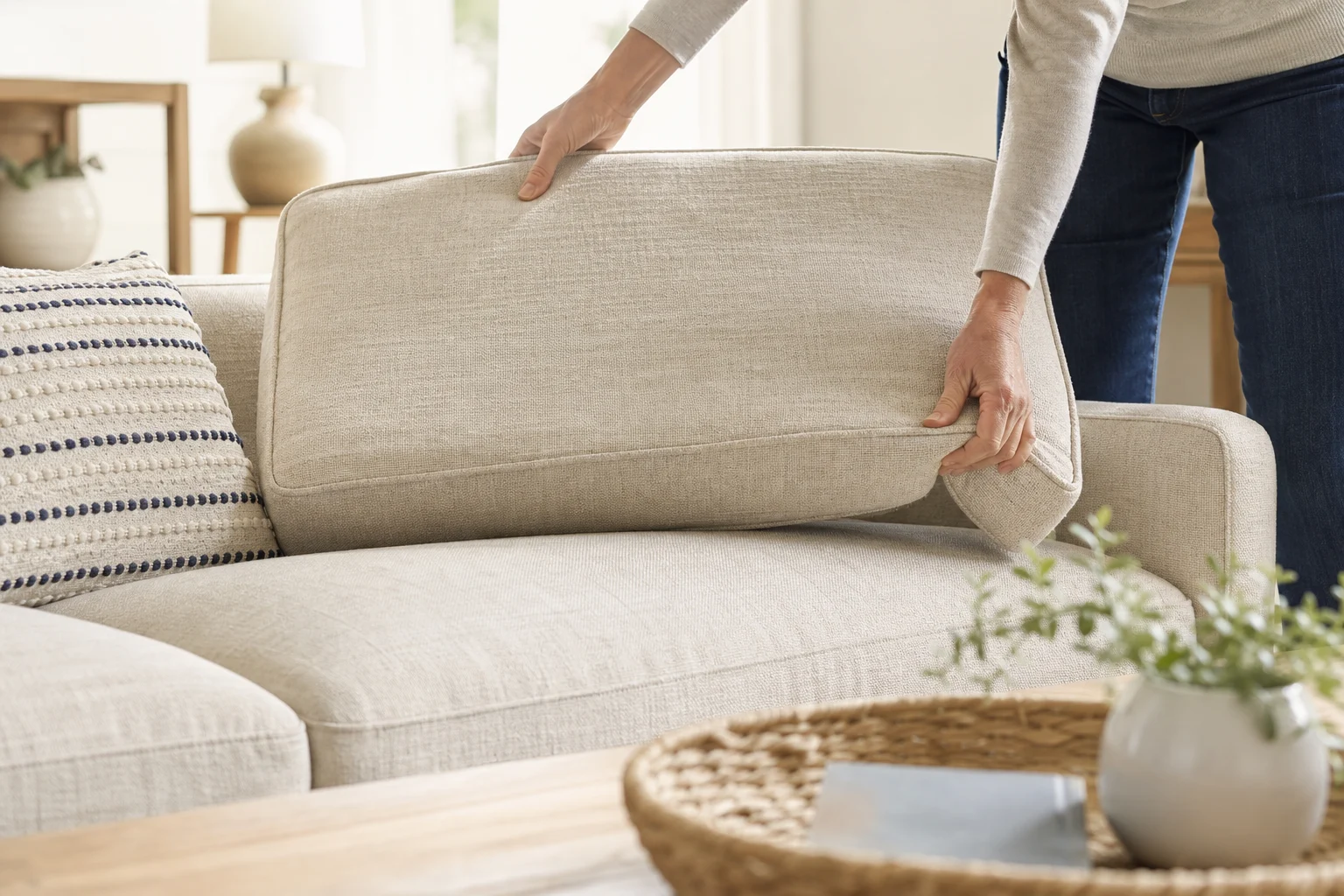
- – Seat cushions: front-to-back weekly (the front edge takes the sit-down abrasion and the load; rotating evens it), top-to-bottom monthly where the cushion is reversible.
- – Position swaps: swap the favorite-seat cushion with the least-used one monthly — spreading load-hours across the set is the only way to keep four cushions aging at the same rate.
- – Back cushions: flip monthly; plump them (a firm pat-down to redistribute fiber fill) weekly — loose-fiber backs settle into slumps that look permanent but are usually just migrated fill. The fill behaviors are compared in cushion filling types.
Rotation takes two minutes and delays re-foaming by years. If you adopt exactly one thing from this guide, it’s this.
Cleaning by Cadence
Weekly: vacuum with the upholstery brush — tops, seams, crevices. Grit is an abrasive; removing it weekly is what “fabric wearing out” mostly prevents. Add pet-hair removal (rubber brush or damp glove) as needed.
Monthly: pull cushions and vacuum underneath — the deck under a cushion accumulates crumbs and grit that transfer into the fabric’s underside and grind from both sides.
Quarterly: wash or clean covers per fabric family — the family table is in how to wash cushion covers. Two indoor-specific notes: wash full sets together (partial washing produces mismatched fading), and air dry without exception — indoor covers shrink in dryers exactly like outdoor ones. Fixed covers get the in-place method: dry-brush, small zones with soapy water, rinse-pass, towel-press, full dry.
As-spills-happen: the five-minute protocol — blot (never rub), cold water for most spills, dish soap for oily ones, towel-press dry. The method is in how to clean couch cushions‘s spill section, and speed is the active ingredient.
Sun and Room Management
- – Rotate furniture or cushions on sun-path exposure. A cushion face that faces a west window fades in two years; rotating the cushions (or the room arrangement) seasonally spreads it. Light-colored interiors show it least, dark and saturated fabrics most.
- – Kitchen-adjacent seating needs the stricter cleaning cadence — cooking grease is airborne and lands on everything within ten feet. Monthly cover washing, quarterly foam airing.
- – Humidity check: if a room regularly condenses on windows, cushions there are living in mildew’s waiting room — ventilate, and air the cushions monthly. In winter-heated dry rooms, a humidifier serves the furniture as much as the occupants.
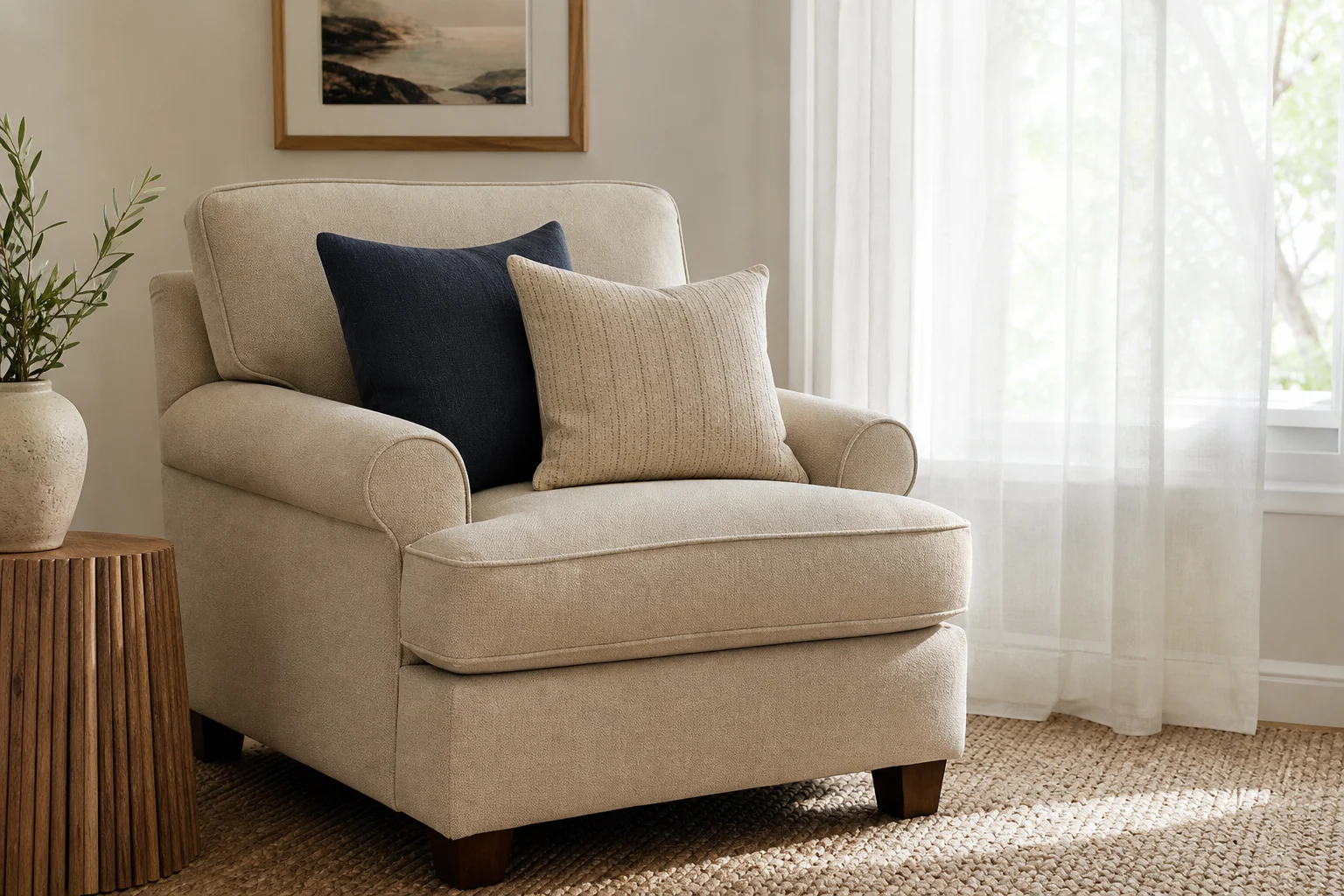
The Foam Layer: What to Do Between Deep Cleans
While covers are off (or monthly for fixed-cover pieces):
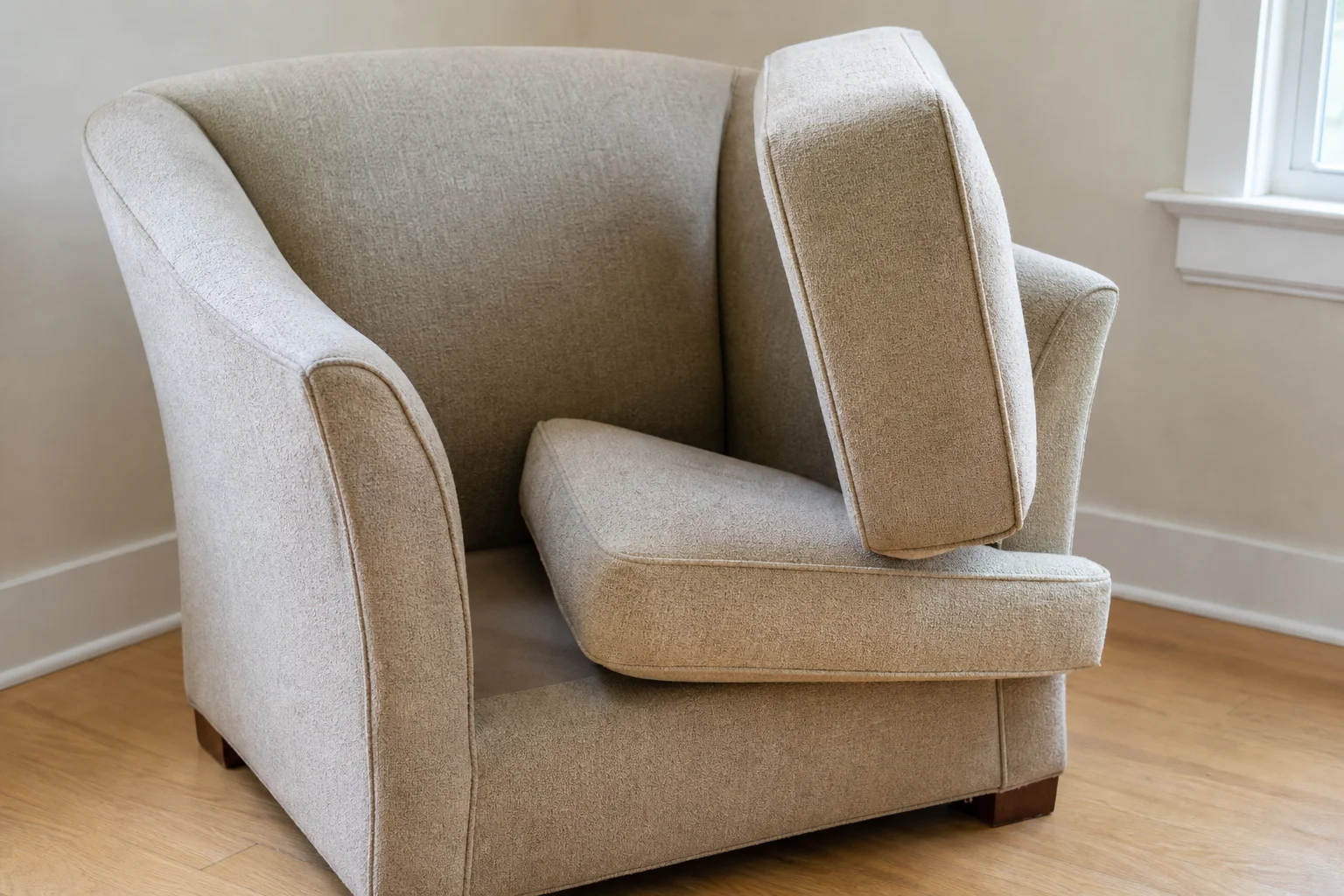
- Sun the cores for an afternoon, twice a year — UV kills the odor organisms living in foam and costs nothing. Hours, not days; long UV exposure embrittles foam polymers eventually.
- Baking soda treatment for anything smelling lived-in: sprinkle, wait hours, vacuum. The method and the smell-diagnostics (which smell means which layer) are in how to clean couch cushions.
- The spring-back test at every cleaning: press hard, release — foam that returns slowly or not at all, or shows a lasting hollow, has crossed from cleaning territory into replacement territory. The grade-to-duty matching for the replacement is how to choose foam density; the swap itself is how to replace sofa cushion foam.
The Honest Replacement Math
Indoor cushions reach end-of-life layer by layer, and the care calendar’s real job is to make those transitions visible:
- – Fabric dead, foam alive: re-cover — the decision logic in replacement cushion covers.
- – Foam dead, fabric alive: re-foam — keep the covers you like, restore the sit (the re-foaming route).
- – Both dead: full replacement — at which point the care system starts over on the new set, with every year it adds being money the calendar saved you. The full cost-vs-condition framework is in reupholster vs replace cushions, and how often to replace sofa cushions has the lifespans by grade.
A well-cared-for set — rotation, quarterly washing, twice-yearly foam airing — on a 50D+ core should run 7–10 years before the first major intervention. The same set neglected intervenes at 4–5. The difference is a few hours a year.
Room-by-Room Priorities
Indoor cushion care isn’t uniform — rooms impose different loads, and the calendar should reflect it. The family room couch (the load-hours champion): full rotation discipline, quarterly washing, twice-yearly foam airing — the complete program. The formal living room (Sunday-and-guests duty): rotation can relax to monthly, washing to semi-annual, and the foam airing becomes an annual event; light-use furniture mostly needs protection from sun paths and the occasional spill. Kitchen and dining seating: the grease-and-spill zone — monthly washing regardless of use frequency, immediate spot response, and the strictest about-cleanliness culture you can enforce. Kids’ and pet furniture: monthly washing plus a washable fabric strategy from day one — this is the one category where fabric choice at purchase (wipe-clean family, patterns over solids) outweighs every care habit afterward; the tier logic transfers directly from the outdoor fabric guide. Bedroom window seats and reading nooks: sun-path management is the main event (they’re often in the brightest spot in the room by design) plus the rotation habit. The point of the breakdown: care effort allocated by actual load is barely noticeable — fifteen minutes a week across a whole house — while blanket effort burns out and abandons the high-load pieces that needed it.
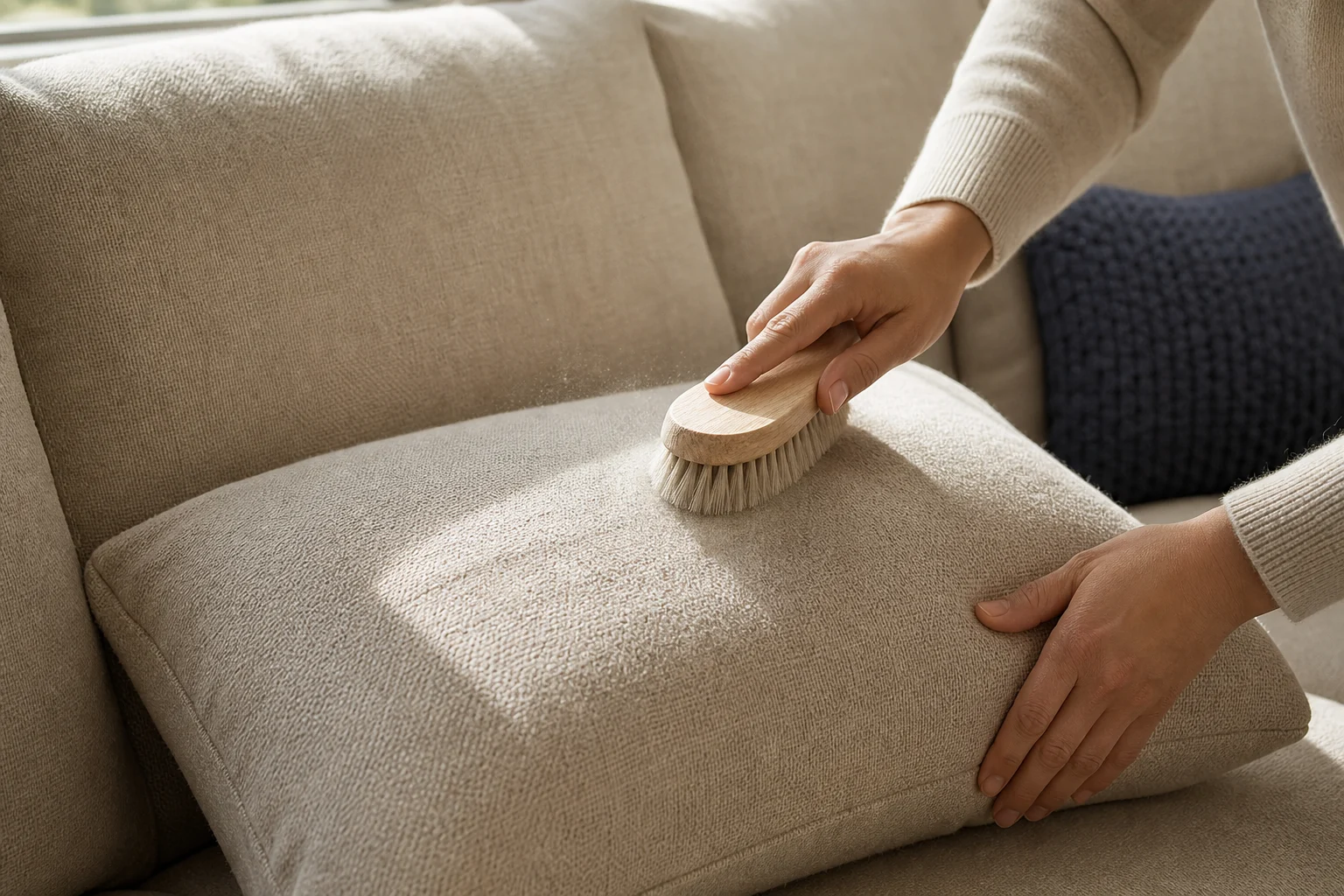
The one-sentence version of this entire guide: vacuum weekly, rotate monthly, wash quarterly, air the foam twice a year, and match replacement density to real duty — five habits, fifteen minutes a week on average, and years of extra life on the most-used objects you own.
FAQs
How often should indoor cushion covers be washed?
Quarterly for everyday seating; monthly for kitchen-adjacent and pet furniture; immediately after spills. The cadence table and fabric-family rules are in how to wash cushion covers.
How do I keep my couch cushions from flattening?
Rotate weekly (front-to-back), swap favorite-seat position monthly, and match foam density to actual duty when the time comes — compression is load-hours, and spreading load-hours is the only prevention. When flattening wins anyway, re-foaming with the right grade (the density guide) resets the clock.
Do indoor cushions fade from sunlight through windows?
Yes — window glass filters part but not all of UV, and a cushion in a direct sun path fades visibly within a couple of years. Rotate cushions and furniture seasonally to spread the exposure; the fade mechanism is the same one explained in solution-dyed acrylic explained.
What’s the single highest-value indoor cushion care habit?
Rotation — two minutes weekly buys years. Everything else in this guide multiplies its value; nothing substitutes for it.
When is cleaning no longer enough?
When the failure is structural: foam that stays compressed after the spring-back test, fabric thinned or split at edges, or odors that survive the baking-soda-and-sun treatment. Then it’s a layer-by-layer replacement decision — the frameworks are linked above, and whole-set replacement starts at custom sofa cushions.
Next Steps
- Start the rotation habit this week — flip front-to-back, swap the favorite seat’s cushion with the least-used one, and repeat on schedule.
- Put quarterly cover washing on the calendar, and give the exposed cores their twice-yearly sun afternoon at the next wash.
- Run the spring-back test at your next cleaning: foam that fails it routes to the re-foaming guide; a full reset starts at custom sofa cushions.
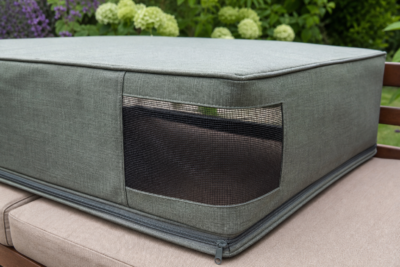
Insect-Proofing Patio Cushions: What Works on Bugs, Without Ruining Fabric
Why insects target outdoor cushions (nesting sites, food residue, moisture), the prevention stack — cleaning, storage, covers, placement — what sprays and repellents are fabric-safe, and the honest limits of keeping a patio bug-free.
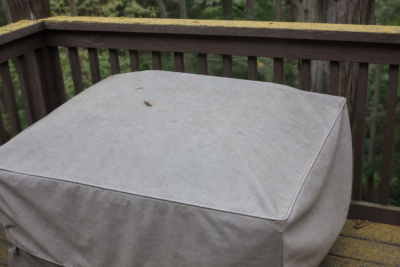
Pollen Season on the Patio: Protecting Cushions and Furniture
What pollen actually does to outdoor cushions (it’s not the color — it’s the chemistry), the spring protection playbook from covers to placement, cleaning pollen off fabric without grinding it in, and fabric choices for the perpetually dusty patio.
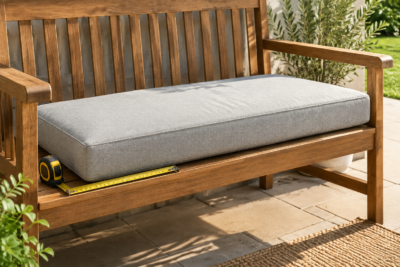
How to Clean Mold Off Outdoor Cushions (and When It’s Too Late)
How to tell salvageable mold from a dead cushion, the vinegar-and-oxygen-bleach method that works, and what to buy so it never comes back.
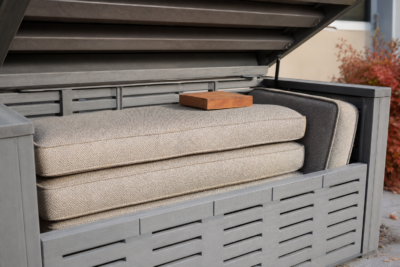
How to Store Outdoor Cushions for Winter: The Complete Method
The right way to winterize outdoor cushions — deep clean, bone-dry, ventilated storage, what never to do — and which climates need indoor storage at all.
How to Drain Waterlogged Cushions (and When Foam Is Done)
How to rescue a waterlogged outdoor cushion fast — free drain, pressing, air-drying and verifying the core — plus the honest signs that the foam is past saving.
How to Make Outdoor Cushions Last Longer: 12 Habits That Add Years
The maintenance system that extends cushion life — rotation, edge-drying, cleaning cadence, protectant renewal, storage discipline and the specs that matter most.