
Teak occupies a strange position in outdoor furniture: it’s the premium wood precisely because it barely needs you. Its natural oils and dense grain make it the most weather-resistant wood in common furniture use — and yet it attracts more well-intentioned damage than any other material, because owners treat it like fine indoor wood: oiling it, varnishing it, sealing it against the very weather it was built for. This guide sorts teak care into what teak actually needs (little), what it tolerates (more), and what damages it (the products marketed to “protect” it).
This is the furniture-side companion to the cushion system — because on teak furniture, the two care routines intersect: cushions trap moisture against teak, and teak’s condition determines what happens under them. The general outdoor furniture-and-cushion routine is outdoor cushion maintenance tips.
Understand What Teak Does Naturally
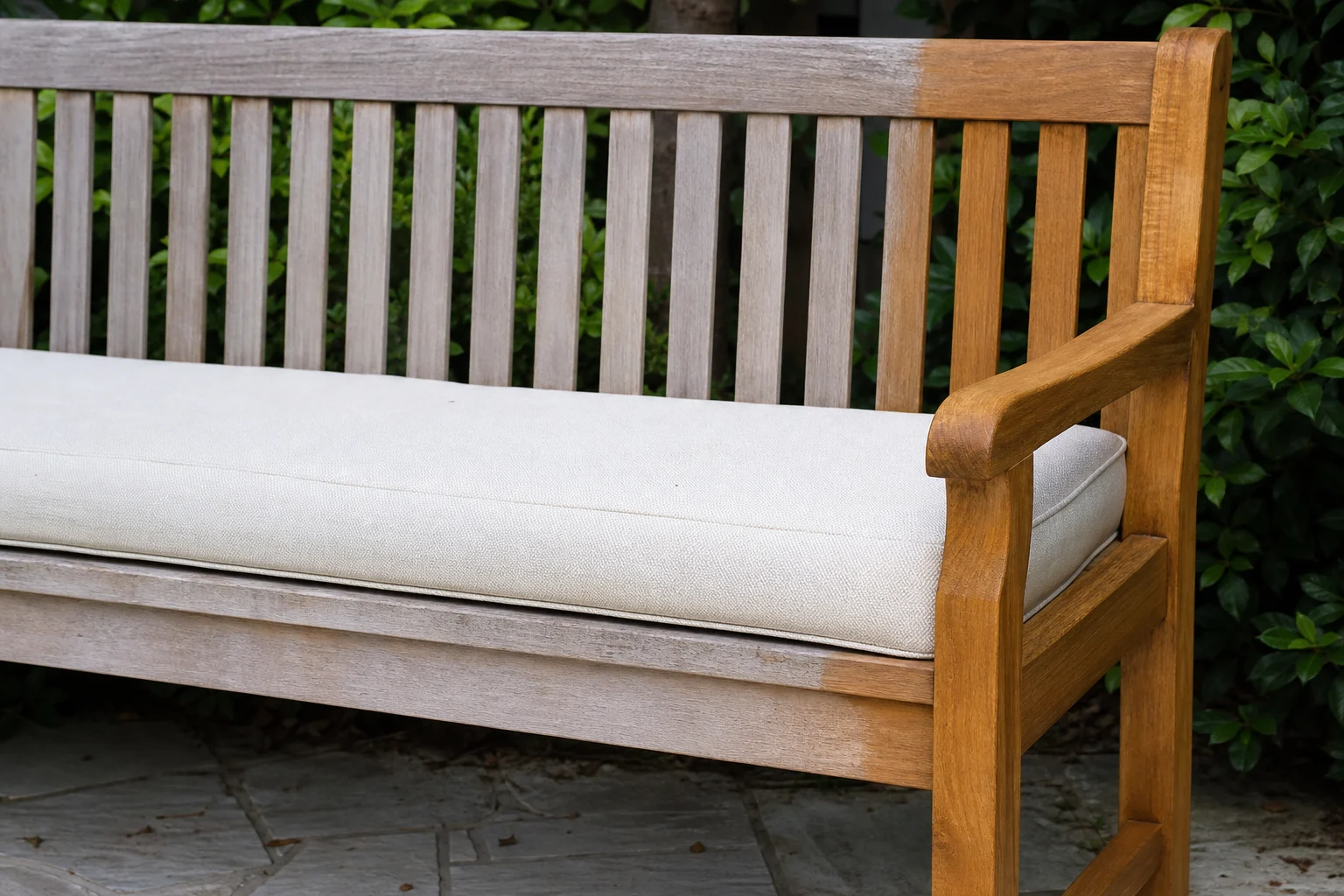
Fresh teak is honey-gold, from its natural oil and silica content. Left outdoors, bare, it does two things:
- The surface oxidizes to silver-grey. UV and rain pull the surface oils and lignin from the outermost wood fibers. This is cosmetic, not structural — the silver layer is a fraction of a millimeter deep, and beneath it the wood is unchanged. Left alone, teak silvers evenly and stays structurally sound for decades: it’s the default state of dock decking and garden benches that have outlived their owners.
- The grain opens slightly and checks appear. Small surface cracks along the grain come from wet-dry cycling. They look alarming and are not — they’re surface tension relief, not structural failure. Teak’s density keeps checks shallow.
Everything in teak care follows from one decision: do you want honey or silver? Both are legitimate. Silver is zero-maintenance. Honey is a maintenance subscription.
The Default Routine: Wash and Let It Be
For silvered (or silvering) teak — the zero-maintenance path:
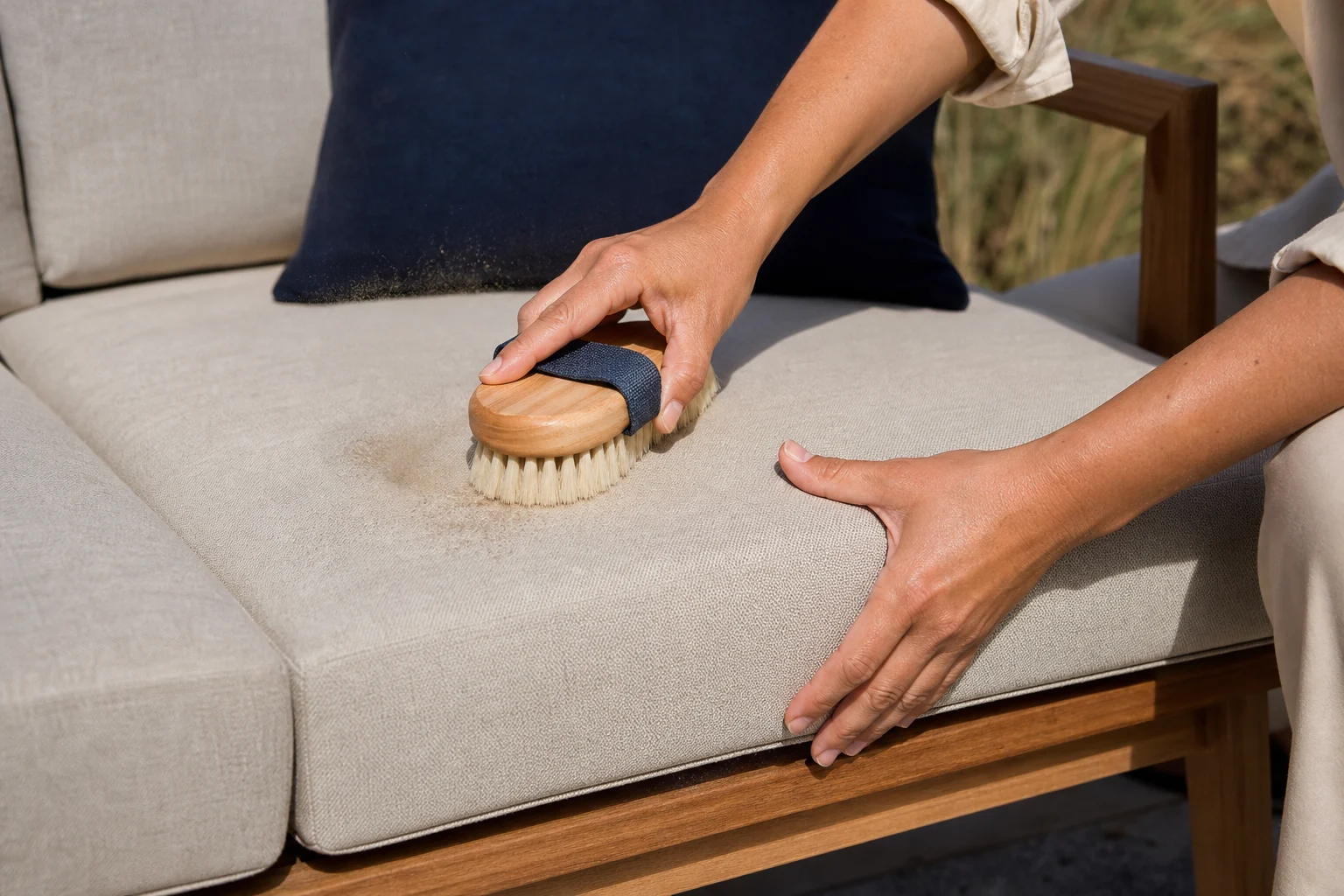
- Twice a year (spring and fall), wash with soapy water: mild detergent, warm water, a soft-bristle brush along the grain (never steel wool, never a pressure washer at close range — both cut fibers and leave permanent scarring). Rinse thoroughly.
- Deal with spots: black spots are usually mildew or tannin bleed — a teak-specific cleaner or a mild oxalic-acid solution lifts them; rinse well. Environmental grime (pollen film, tree debris) responds to the plain wash — the seasonal logic is the same as patio pollen protection.
- Let it dry and do nothing else. No oil, no sealer, no varnish. That’s the whole routine, forever.
Silvered teak that’s washed twice a year will look consistent, clean, and architectural, and last as long as any teak on earth.
If You Want It Golden: The Oil Question, Honestly
Teak oil (and the “teak sealers” adjacent to it) keeps the honey color by replenishing surface oils. What the label doesn’t dwell on:
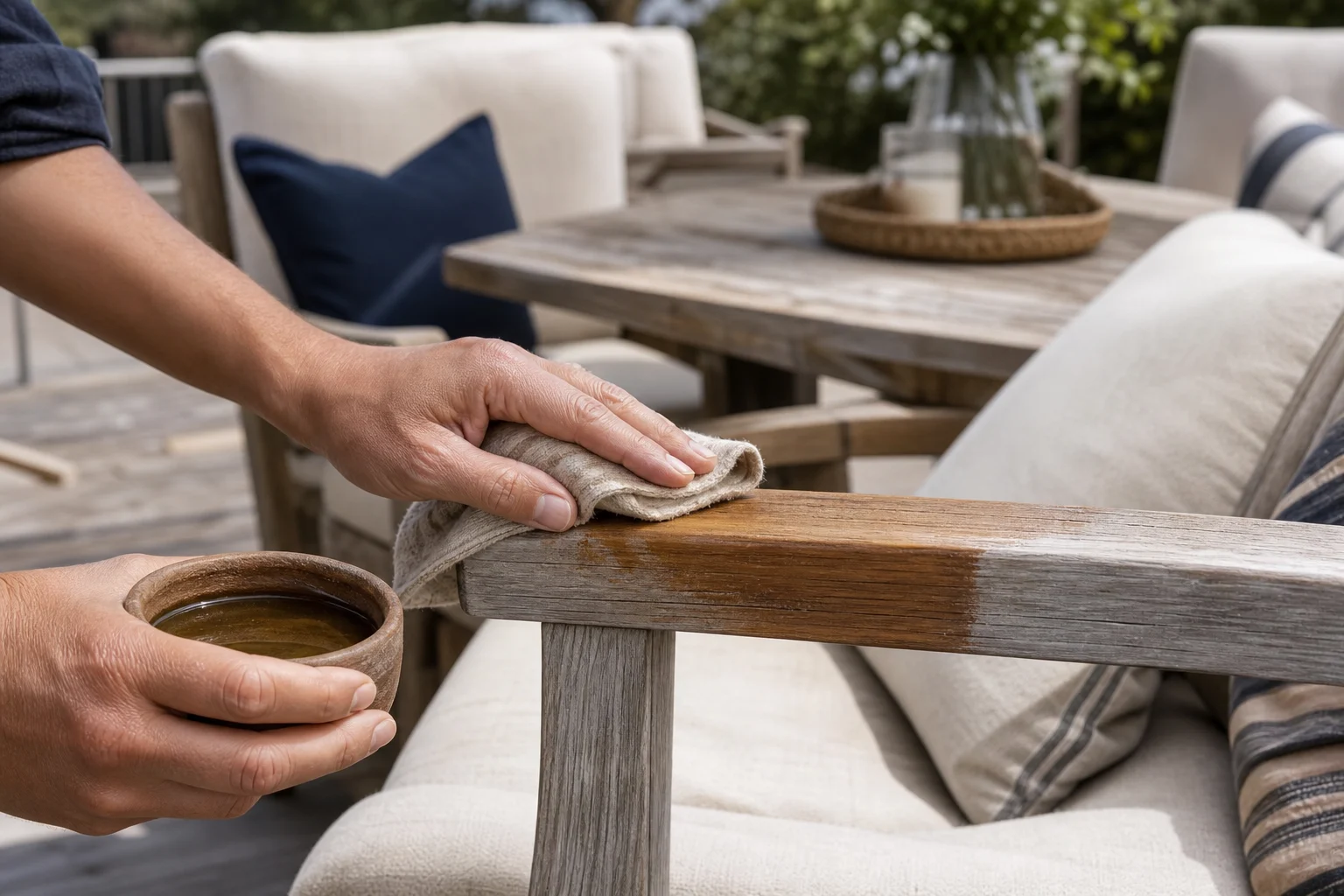
- – It’s a subscription, not a treatment. Oil wears off in months and must be reapplied — 2–4 times a season on full-sun furniture. Miss a cycle and you get patchy, uneven color that looks worse than honest silver.
- – Oiled teak collects grime. The oil film is slightly tacky; dust, pollen and organic debris bond to it. Oiled teak needs cleaning before every re-oiling.
- – Oiled teak under cushions is a mildew incubator. This is the cushion-relevant truth: the oil plus trapped moisture plus organic debris under a cushion is exactly the mildew formula from prevent mold on outdoor cushions. Dark staining under cushions on oiled teak is the classic, predictable result.
- – Apply it right when you do: wash and fully dry first, apply thin coats with a cloth along the grain, wipe all residue off (standing oil turns dark and gummy), and cure days before cushions return.
The professional consensus for most owners is to skip oil entirely: sealers (which sit on the surface rather than feeding the wood) are the lower-commitment middle path if golden color matters to you, but silver remains the zero-regret default. There’s no durability penalty either way — the choice is purely cosmetic.
What Actually Damages Teak
A short list, mostly of good intentions:
- – Varnish and polyurethane — they don’t adhere to teak’s oil content and peel in sheets within a season or two, taking surface fibers with them. Never film-coat teak.
- – Pressure washing at close range — cuts the soft spring wood between growth rings, leaving a ridged, fuzzy surface that never fully recovers. A wide, gentle fan from distance for heavy soil; never a jet.
- – Steel wool and aggressive scrubbers — iron fragments embed, rust, and leave black speckles; the abrasion scores the grain. Soft bristle only.
- – Letting grime and mildew sit for years — the one genuine “neglect” damage: permanent dark staining. The twice-yearly wash prevents it.
- – Trapped moisture — the cushion interface, next.
The Cushion Interface: Where Teak and Fabric Care Merge
Cushions and teak interact through one mechanism: moisture trapped between cushion underside and wood surface. Rain-wet teak under a cushion that never gets lifted dries slowly; the damp interface grows mildew on both sides — staining the teak and the cushion — and can accelerate surface degradation of the wood. The management:
- Air-gap the interface after rain: stand cushions on edge (the universal post-rain rule from outdoor cushion maintenance) and let the deck dry before they go back down.
- Wash the teak deck under the cushions at your twice-yearly cleaning — the trapped-grime zone is exactly where teak stains.
- Slatted teak self-manages — airflow through the slats dries both sides. Solid teak decks and tabletops under cushions need the lift-and-dry discipline more.
- Choose cushion fill that doesn’t hold water against the wood: quick-draining constructions (quick-dry foam for outdoor use) or high-density foam cores in breathable covers beat water-holding loose fiber. The fill landscape is cushion filling types.
- Cushion ties and straps through teak slats: check that fasteners aren’t abrading the wood — fabric ties are harmless; metal hardware against teak should have a fabric interface.
Seasonal Calendar
- – Spring: wash (soapy water, soft brush, rinse); inspect joints and hardware (teak outlasts its screws — replace corroded fasteners before they stain the wood with rust bleed); cushions return after the deck cures.
- – In season: post-rain cushion lifting; spot-cleaning of any black spots before they set; (oilers: your re-application schedule, with cleaning first).
- – Fall: final wash; cushions cleaned and stored per how to store outdoor cushions for winter; teak itself stays out — teak winters outdoors fine, silvering a season deeper.
- – Optional: fitted furniture covers for the winter reduce grime accumulation. Ensure the furniture is dry when covered and the cover breathes; sealing damp teak under plastic for months is the worst-case storage.
About Indoor Teak and Vintage Teak
Indoor teak (mid-century pieces, teak dining sets) needs only dusting and an occasional wipe with a barely-damp cloth; the wood’s own oils keep it fed. Dry indoor environments can eventually benefit from a furniture wax or oil formulated for indoor use — but indoor teak largely maintains itself. Vintage outdoor teak with decades of silver can be brought back toward golden with two-part teak cleaners (the cleaner/brightener sequence), then maintained on whichever path you choose — but know that heavily weathered teak that’s been cleaned and oiled will never match new-teak color, and the honest options are “cleaned silver” or “cleaned and enriched honey-brown.”
Teak Furniture Types: The Care Differences
“Teak furniture” covers several constructions, and the differences matter to the care routine. Solid teak (grade A, machine-made) — the premium article: tight grain, even color, dense with oil. Everything in this guide applies at full strength, and it’s the construction that genuinely winters outdoors for decades. Teak with visible knots and variation (lower grades, B/C) — more porous regions around knots weather and check faster; the twice-yearly wash matters more, and checking will be more visible — cosmetic, still structural. Teak-look alternatives (shorea, eucalyptus, other oiled hardwoods) — sold in the same aisles, often honestly labeled, sometimes not: these woods share teak’s look but not its oil content, and they need actual protection — a penetrating outdoor wood oil or sealer on a real schedule, plus covered or sheltered wintering in hard climates. If your furniture stains water-rings readily and weathered fast in its first season, it’s probably not grade-A teak, and the care program should shift from “wash and let be” to “maintain like ordinary hardwood.” Teak and metal hybrids (teak slats on aluminum or steel frames) — the wood follows this guide, the metal follows its own corrosion routine, and the junction is the spot to inspect: fastener corrosion bleeds rust-streaks into teak that are stubborn to remove. Check and replace hardware before the streaks start — the spring hardware inspection in the calendar above exists for exactly this hybrid class. The identification habit transfers from cushions: read the label, verify against behavior (how the wood takes water and sun in its first season tells you what you actually own), and care for the material you have, not the one the receipt claimed.
A Quick Word on Teak Tabletops and Arms
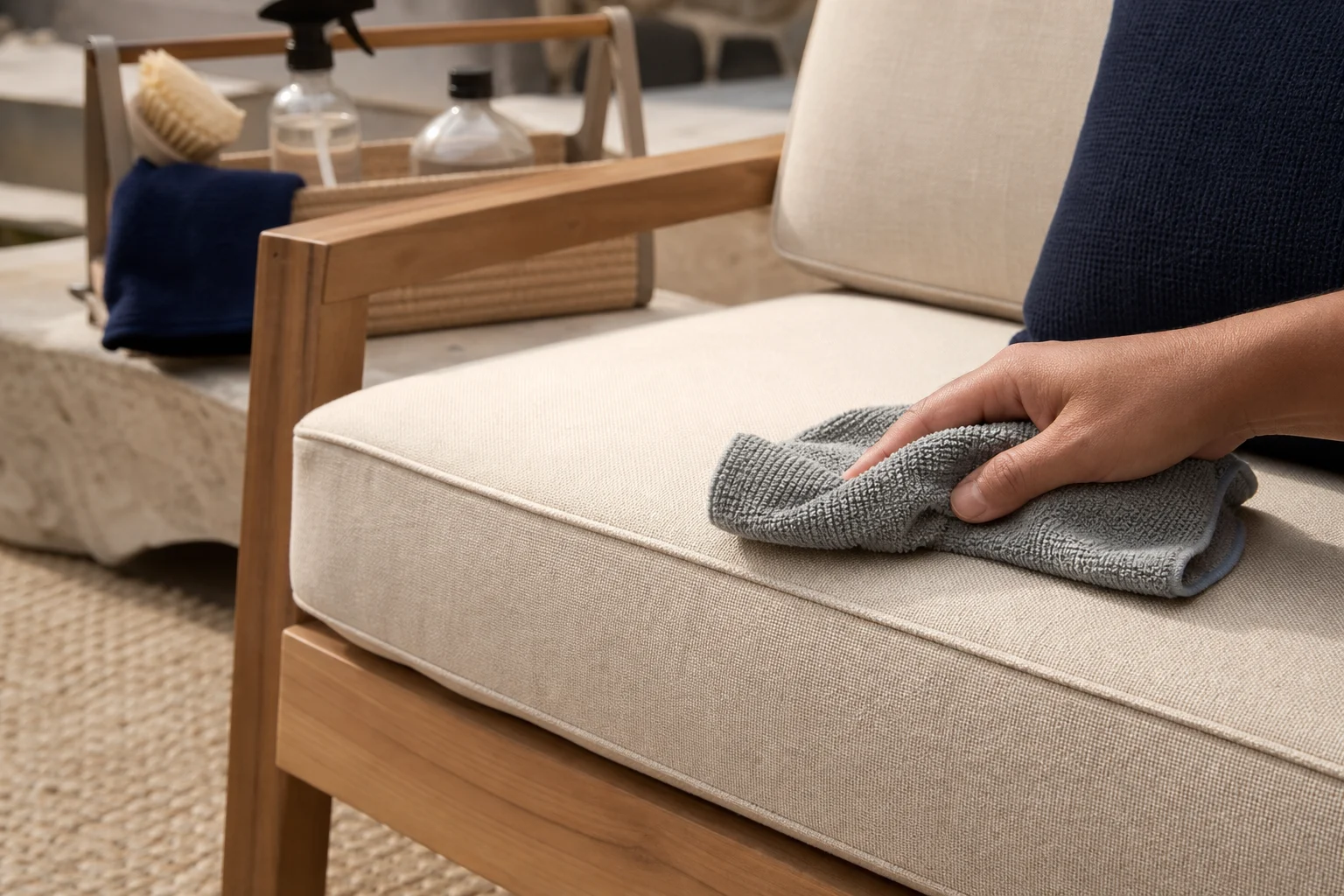
The horizontal surfaces of teak furniture — tabletops and wide armrests — collect everything gravity sends: pollen film, food spills, standing water rings. They silver unevenly (cup rings leave pale ghosts on weathered teak) and they deserve two extra habits beyond the chair routine: wipe spills same-day (the wipe is for the wood’s benefit as much as the user’s — standing liquid is the one moisture teak’s own oils handle least well on flat surfaces), and give tabletops the full twice-yearly wash even when the seating looks fine, because the horizontal catch-all surface soils a season ahead of everything vertical. A teak table used for meals benefits from a monthly quick-wipe with a barely-damp cloth between the seasonal washes — thirty seconds that keeps the patina even and the rings from ever setting.
FAQs
Should teak furniture be oiled?
Only if you want the honey color and accept a re-application schedule 2–4 times a season — it’s a cosmetic subscription, not protection. Teak’s durability comes from its own oil and density, not from applied oil. Silver, un-oiled, zero-maintenance teak lasts exactly as long.
What’s the white/grey film on my teak?
Surface oxidation — the silvering process, doing exactly what teak does outdoors. It’s cosmetic and self-limiting; a twice-yearly soapy wash keeps it even. It is not dry rot, and it is not a defect.
How do I clean teak without damaging it?
Mild detergent, warm water, soft-bristle brush along the grain, thorough rinse — twice a year. No pressure-jetting, no steel wool, no film-forming finishes ever. The full method is above.
Why are there black spots under my teak cushions?
Trapped moisture grew mildew at the cushion-wood interface — clean both (the teak with a teak cleaner, the cushion per how to clean outdoor cushions), and adopt the post-rain lift-and-dry habit. On oiled teak, expect it unless the oil regime goes.
Can teak stay outside all winter?
Yes — teak winters outdoors without cover; it will just silver a little faster. If you cover it, cover it dry with breathable furniture covers. Cushions are the part that comes in: how to store outdoor cushions for winter.
Do teak and cushions need to be cared for together?
They share one interface and one rule: don’t trap moisture. Post-rain cushion lifting, twice-yearly deck washing under the cushions, and quick-draining cushion fills keep both sides of the interface healthy — the fill choices run through the best outdoor cushion fabrics and cushion filling types.
Next Steps
- Pick your path — silver (wash twice a year, done) or honey (clean-and-oil subscription) — and put the two washes on the spring/fall calendar.
- Add the post-rain habit that protects both teak and cushions: stand cushions on edge until the deck is dry.
- When cushions on teak furniture reach replacement age, spec quick-draining fill and breathable covers at custom outdoor cushions — the wood you’re protecting will outlive them all, and the right cushions are how it does it in company.
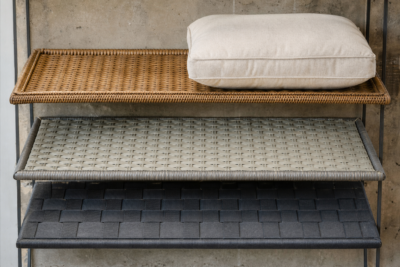
Types of Wicker Materials: Natural, Resin and HDPE Compared
Every wicker material family ranked — rattan core, paper fiber, bamboo, willow and reed on the natural side; PVC-resin and woven HDPE on the synthetic side — with outdoor ratings, lifespans and what each means for cushions.
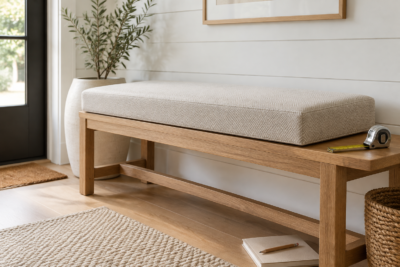
Bench Cushions: The Complete Guide to Sizes, Types and Custom Fit
A bench cushion is only as good as three numbers: the length and depth of the seat deck it sits

How to Buy Patio Furniture Online Without Regret: The Complete Method
The online patio-furniture method that prevents the classic regrets — dimension-verification discipline, photo-evidence buying, material questions to ask, shipping and return reality, and why custom cushions solve online’s worst problem: fit.
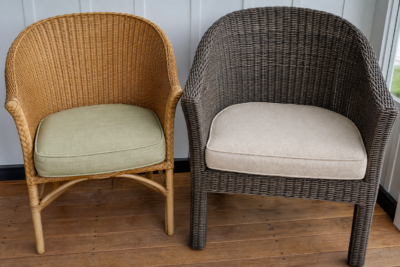
How to Tell Indoor from Outdoor Wicker: The Identification Guide
Five practical tests to classify any wicker piece — strand snap-test, frame magnet check, weave and weight inspection, tag and price decoding — and why getting this wrong is the most expensive wicker mistake there is.

Patio Furniture Sets: How to Choose Seating Sets, Dining Sets and Modules
The patio-set decoder — set types by use pattern (dining, conversation, sectional, bistro), what set pricing bundles and hides, the OEM cushion problem, and the set-versus-separate decision made honestly.
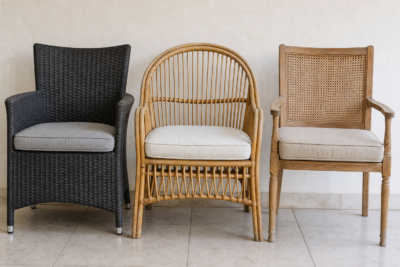
Wicker vs Rattan vs Cane: What Each Word Actually Means
The three most-confused words in woven furniture, sorted properly — rattan is a material, wicker is a weaving method, cane is a specific weave and fiber — and what each distinction means for cushions, care and outdoor use.