
A small patio is a different engineering problem than a small room, because a patio has no walls to forgive mistakes — every over-scaled chair, every thick cushion, every foot of dead walkway is visible from every position. The failure mode is universal: buying furniture for the patio you wish you had, then living with a space you can’t walk through. The fix is arithmetic before aesthetics: footprint math, circulation minimums, and cushion choices that buy comfort without stealing floor.
This is the small-space playbook. For the building blocks it leans on: outdoor cushions buying guide for the general spec logic, and patio set vs buying separately for the set-scale decision.
The Footprint Math First
Two numbers govern everything:
Circulation minimum: 18–24 inches of clear walkway. Measure the space, subtract the circulation path (or two crossing paths on a square patio), and what remains is furniture territory. A 10 × 8 patio with one 24″ path leaves an L of roughly 10 × 5.5 — a bistro set or a bench-plus-one-chair arrangement, not a five-piece dining set.
Sitting capacity honesty. Two comfortable seats beat four cramped ones — the cramped version gets used less, not more. Scale to the household: a couple gets a two-seat arrangement done beautifully; the occasional guest gets a folding chair from storage, not permanent gridlock.
Then apply the standard footprints: bistro two-seaters run about 30 × 30 per chair plus table; a 4-foot bench is 48 × 16–18; deep seating (per deep seat cushions) demands 30–36″ of depth per position and earns it only where the space genuinely has it.
Cushion Choices That Protect the Footprint
Cushions are the cheapest lever on small-space livability, and the choices run opposite to big-patio instinct:

Thickness discipline. Thick cushions read plush in a showroom and eat walkway at home. On small patios, 2–3″ seat cushions on dining-scale chairs preserve legroom under tables and keep circulation generous; 4″+ belongs to the one lounge piece that earns it, not to every chair.
Dual-purpose cushion sizes. A bench cushion sized to the wall-side bench does weekend dining duty as backrest padding for floor-sitting kids; floor cushions (floor cushions guide) store under the bench and deploy as overflow seating — the most space-efficient guest seating that exists.
Low backs over high. High-back cushions (the category in high back chair cushions) create visual walls that shrink small spaces; low-back or backless benches with a movable back cushion keep sightlines open and the space reading bigger than its tape measure.
Ties and grip as space-savers. Tight-quarters furniture gets bumped constantly — ties or gripper underlays keep cushions from ending up on the ground every time a knee brushes past, per how to stop cushions from sliding.
Furniture Strategies That Work at Small Scale
- – The bench wall. One long bench along the property edge is the small-patio MVP: seats three at dining, lounges one at reading, stores cushions beneath, and leaves the entire remaining space open. The sizing logic is in bench cushion measurements and outdoor bench cushions; the made-to-order equivalent is custom patio cushions.
- – Bistro pairs over dining sets. A 24–30″ round bistro table with two chairs delivers the patio’s core product — coffee outside — at minimal footprint, and moves indoors for winter.
- – Folding and stackable as permanence. Quality folding furniture (folding chair cushions covers the cushion side) folds in place against the wall when not in use — the footprint is rented, not owned.
- – Vertical everything. Wall-mounted tables, planters up not out, hooks for cushion storage bags — a small patio has a third dimension, and using it is the difference between cramped and complete (how to store outdoor cushions for winter covers the vertical-storage discipline).
- – The single hero piece. Small spaces reward one excellent thing over three adequate things: one deep-seat lounge chair, one hanging egg chair (egg chair cushion guide), one porch-swing bed (porch swing bed cushions) — occupying the same footprint as a loveseat with far more presence.
Color and Pattern Logic for Tight Quarters
Cushion color does real spatial work at small scale — the framework is choosing cushion colors; the small-space specifics:
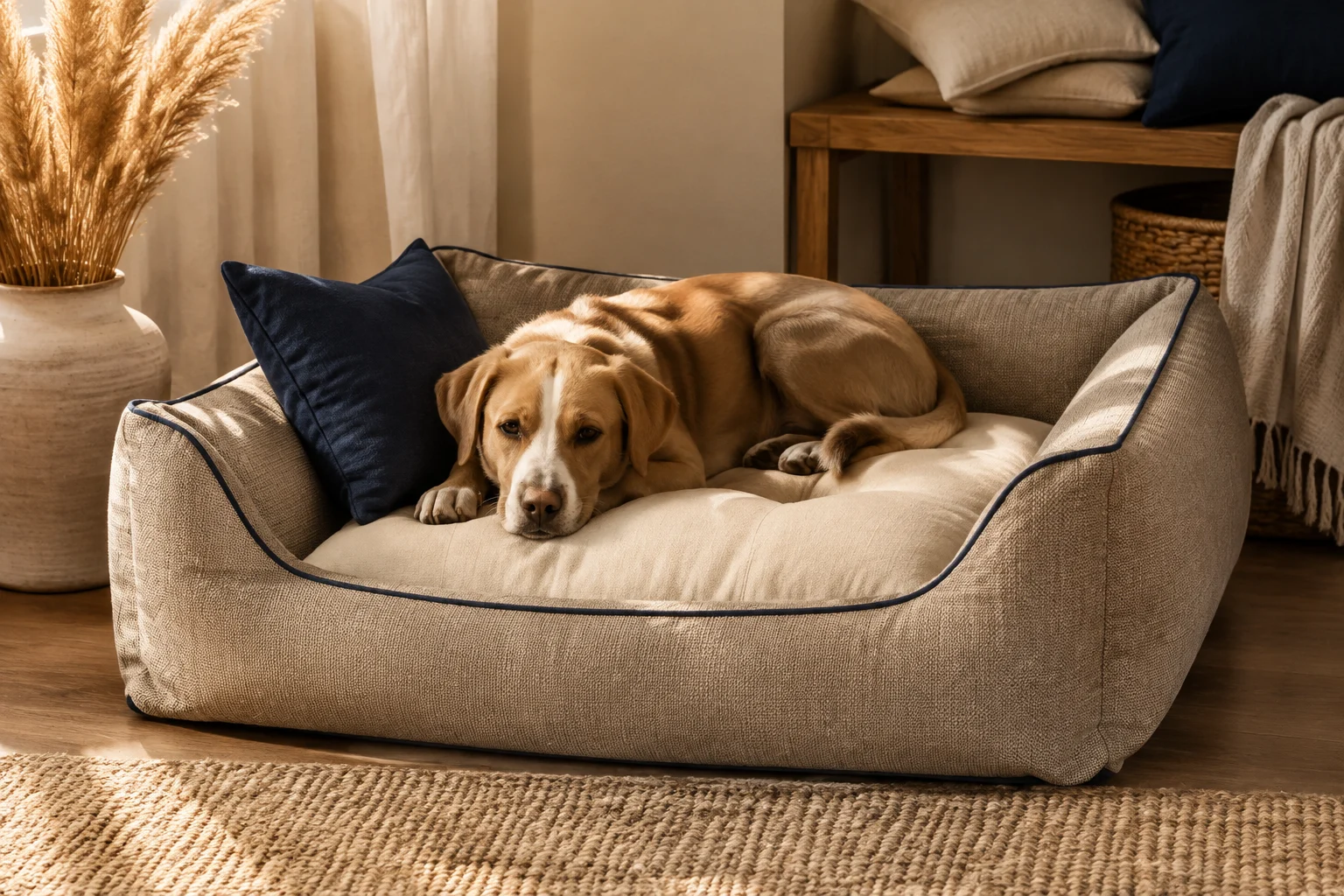
- – One dominant light or neutral family across the cushions, one accent. Too many competing colors fragment the space visually; continuity makes it read whole and larger.
- – Stripes run along the long axis visually lengthen; large-scale patterns on small cushions just look busy.
- – Match cushion color to seat frames closely and the furniture visually recedes; contrast color makes every piece announce its footprint. Small patios usually want the recede version.
The Wind and Exposure Wrinkles
Small patios are often balcony-adjacent or corridor-funnel sites, and both concentrate wind: cushions that survive a ground-floor garden fly off a rooftop. If the site funnels, the attachment hierarchy in how to keep cushions from blowing away is a small-space must-read — and the vertical storage habit doubles as wind management. Balcony sites specifically have their own rules in balcony cushions.
And small patios are frequently used patios — daily coffee, not occasional parties — which pushes the fabric and foam spec toward daily-duty: 50D foam and performance fabric, with waterproof fabric over the core if the site is open to rain (we do not carry a reticulated/quick-dry core; weather resistant cushions decodes the ratings). At custom pricing ($45 base per cushion plus area × fabric rate at Cushion Mill), small-space sets are where custom is cheapest — fewer, better pieces, spec’d exactly to the measured footprint.
Three Layouts That Work, Worked
Concrete patterns beat abstract rules, so here are three proven small-patio arrangements with their arithmetic:
The Lounge Split (for 10 × 8 and similar): one wall-side bench (48 × 16) with 3″ cushions running the long wall, one lounge chair at the open corner angled 45° toward the bench’s far end, and a 20″ round side table between. Seats three, walks clean down the middle (a 30″+ lane remains), reads as a designed conversation set rather than a shrunken dining set. The bench doubles as the table for coffee cups.
The Café Two-Seater (for balconies and 8 × 6 slots): a 24″ bistro table with two chairs that push fully under it when not in use — the footprint “closes” to nearly zero between uses, which is the small-space trick most people never exploit. Cushions stay on; the set reads as furniture, not clutter.
The Dinner Bench (for the narrow rectangle, 12 × 5): a 4-foot bench on the long wall (2–3″ cushions, back cushion leaning on the wall) plus two fold-flat chairs opposite, and a 36–42″ narrow table between. Seats four at a squeeze, three comfortably, and the folding chairs vanish against the wall after dinner. This is the layout that puts real dining in a space most people write off as a walkway.
Each pattern works because it assigns every piece a role and a resting position — the furniture earns its footprint twice, in use and folded away.
The Multi-Season Small Patio Calendar
Small patios get used harder per square foot than large ones — everything is close to the door, so the space works all season — and a light seasonal rhythm keeps a small set alive for years:
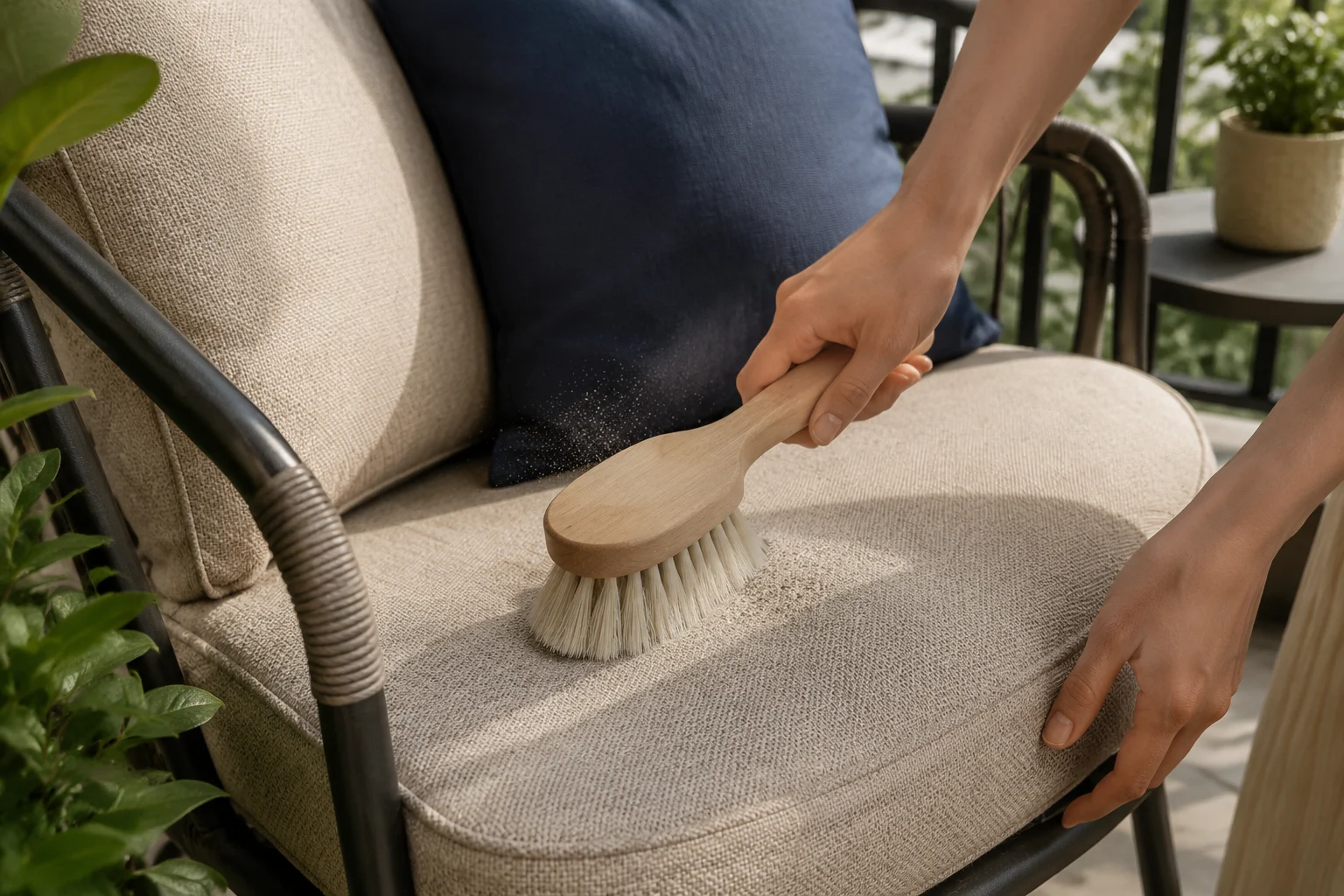
- – Spring opening: full clean and inspection while the set is still small enough to handle in an afternoon — frames checked, cushions assessed against the replacement checklist in when to replace outdoor cushions, the walkway re-taped if furniture migrated over winter.
- – In season: the weekly habits that matter most in tight quarters — brush and rinse cushions, confirm ties and gripper bases still doing their jobs (outdoor cushion maintenance tips). Small patios show grime faster because everything is in one sightline; the ten-minute weekly pass keeps the whole room reading fresh.
- – Fall close-down: the sequence in how to store outdoor cushions for winter — and the small-patio advantage is storage simplicity: a small set fits one ventilated bin or a single storage bench, which is exactly why the bench-first layout pays twice.
FAQs
How much walkway does a small patio need?
18–24 inches minimum, measured clear of furniture — subtract the path first, and whatever remains is furniture territory. Circulation failure is the number-one small-patio mistake.
How thick should small-patio seat cushions be?
2–3 inches for dining-scale chairs; save 4-inch-plus loft for the one lounge piece that earns it. Thick cushions everywhere eat the walkway you measured for.
What furniture works best in a small patio?
A wall-side bench, a bistro pair, or one hero lounge piece — not a five-piece dining set. Floor cushions stored under the bench handle guest overflow without permanent footprint.
Do cushion colors affect how big a patio looks?
Yes — one light-neutral family with one accent reads larger than competing colors; cushions matched to seat frames visually recede. The color framework is in the colors guide.
How do I keep cushions in place on a tight patio?
Ties matched to frame anchors or gripper bases — cushions in circulation paths get bumped constantly, and grounded cushions shrink usable space further.
Is custom pricing worth it on a small set?
Small sets are custom’s best case — fewer pieces, each spec’d exactly: 50D daily foam, waterproof fabric if exposed, at $45 base plus fabric area per cushion.
Next Steps
- Measure the space, draw the circulation path, and compute the honest furniture territory before browsing anything.
- Choose the arrangement pattern — bench wall, bistro pair, or hero piece — and the cushion thicknesses that protect the walkway.
- Spec the pieces at custom outdoor cushions — measured to your footprint, daily-duty foam and fabric — where the site funnels wind, plan tie retrofits rather than sewn options.
Couch Cushion Foam Replacement: Density, Cost and Buying Guide
Replace couch cushion foam in one right order: 50D vs 60D density, measuring the old core, four ways to buy, and real worked prices for one seat and a full set.
Where to Buy Replacement Patio Cushions: 5 Ways, Compared
Five ways to replace patio cushions — the set maker’s parts program, seasonal aisles, universal-fit listings, specialists and measured custom — plus the Home Depot house-line route with 31 measured collections.
Why Is Patio Furniture So Expensive? The Cost Anatomy, Explained
What actually drives patio furniture prices — weatherproof materials, UV-stable finishes, marine-grade hardware, freight on bulky goods, and seasonal retail economics — why the good stuff costs 3-5x the box-store set, and where the value concentrates.
Patio Set vs Buying Separately: The Real Trade-offs
Buying a complete patio set versus assembling pieces: price coherence and one-click convenience versus fit-to-space precision, mixable quality and replacement flexibility — how to decide, and the hybrid strategy that captures both sides.

How Much Do Custom Cushions Cost? Price Ranges by Shape (2026)
Custom cushions cost USD 50-400 depending on shape, size, density and fabric. Live factory-direct price ranges for bench, window seat, outdoor, sofa and boat cushions — and how to price your own.
Outdoor Cushion Foam: Density and Thickness Guide With Real Numbers
Short answer: for a daily-use outdoor seat, order 3 inches of foam at 50D–60D; move to 4 inches and 60D