
A knee bolster is a firm foam support that fills the gap your knees create in bed — between the knees for side sleepers, under both knees for back sleepers. The most stable form is the D-shaped half-round: a flat base that cannot roll and a five-inch domed top that meets the bend of the knee on a curve. Firm 50D foam suits most sleepers; extra-firm 65D for heavier frames.
This guide covers what a knee bolster actually does in each sleep position, the three forms the market sells (D-shape, cylinder, butterfly) and how they differ, how to choose height, firmness and length, and how a mill-direct half-round is priced against the sleep-product and supplier catalogs. One boundary first, stated plainly: this is positioning and comfort support, not a medical device. Nothing here claims anything about swelling, pain, recovery or circulation — if you are choosing support for a medical or post-operative need, follow your clinician’s guidance before ordering anything from anyone.
What a Knee Bolster Does in Each Sleep Position
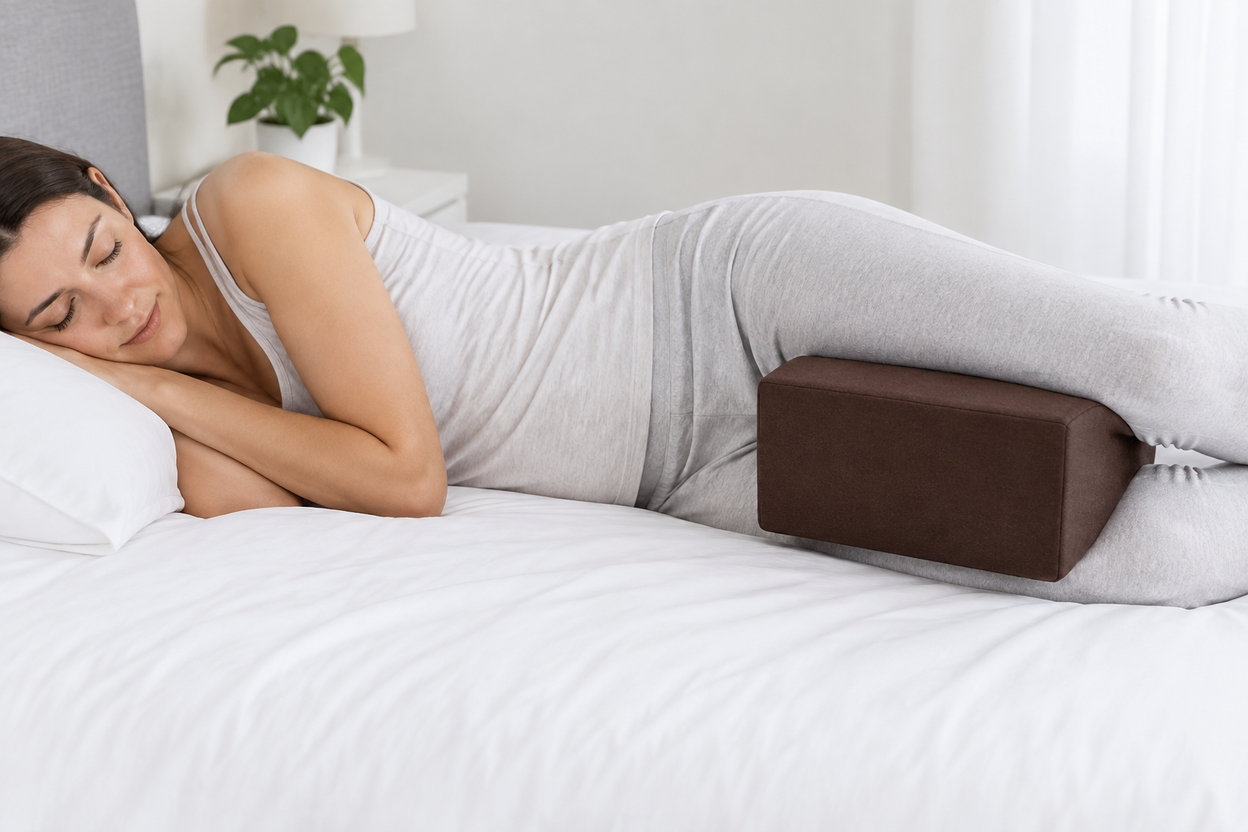
Side sleeping creates a gap the mattress does not fill. The top knee, left to its own devices, drops toward the bed and the whole leg follows it down — the hip rotates with it, and the pelvis spends the night tipped instead of level. A bolster laid in the gap gives the top knee a shelf at mattress height: the leg rests level, the pelvis stays square, and small overnight movements meet foam instead of empty air. Side sleepers who try one usually report the same thing — they stop rearranging pillows at 3 a.m. (forum-reported across sleep and mattress communities).
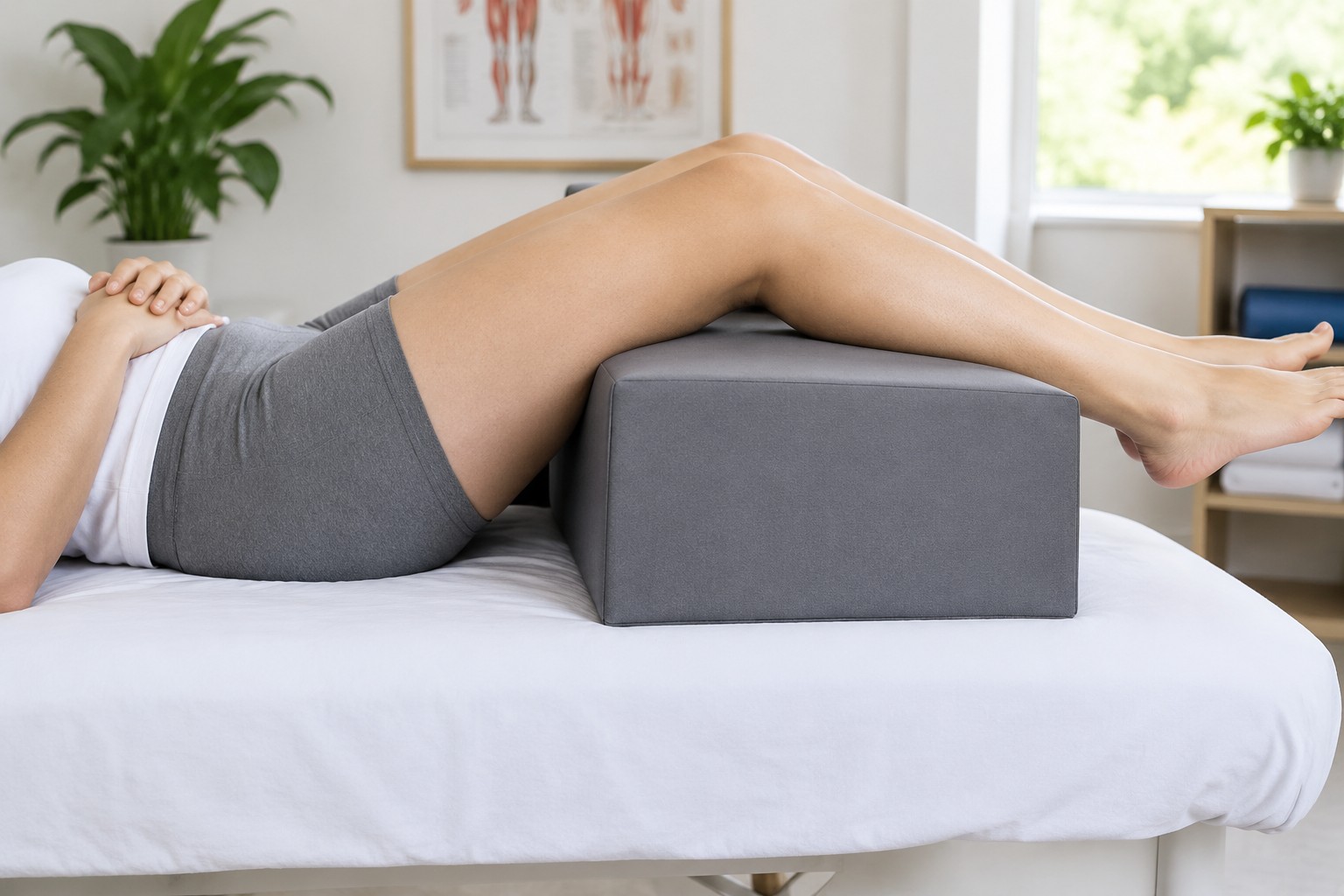
Back sleeping asks the opposite question. Lying flat with knees straight, the legs run one unbroken line from hip to heel, and the small forward gap behind the knee gets no support at all. A bolster under both knees introduces a gentle break at the joint instead — legs supported, lower back settled against the mattress on its own terms. The 20-inch length takes both knees side by side; the flat base sits on the mattress and the domed crest meets the popliteal bend on a curve instead of a straight edge digging into it.
Three Forms: D-Shape, Cylinder and Butterfly
The market sells three shapes of knee support, and they are not interchangeable. The comparison that matters is stability — what the support does when you move in your sleep — and what the material does after a year of nightly load.
| Form | What it is | Stays put? | Material logic |
| D-shape half-round | Flat base, domed top — a cylinder cut in half lengthwise | Yes — the flat bottom is the anti-roll system, nothing added | High-density foam: holds height for 5–8 years of daily use |
| Full cylinder | Round roll, the studio classic | Rolls — needs a cradle or straps to stay in place | Firm foam, but the rolling follows you around the bed |
| Butterfly / contour | Hourglass-shaped pillow with a dip for the knees | Mostly — shaped foam wants to sit its own way | Usually memory foam: soft and contouring, compresses sooner |
The half-round is not a new idea — professional massage suppliers have sold them for decades, from around $32 for small soft-foam sizes up to $55–58 for heavy-duty grades (observed across supplier catalogs, September 2026). What the bedding market added later was the soft version: memory-foam contours that trade structure for squish. The D-shape keeps the structure. A flat bottom means it goes where you put it and stays there through a night of small movements, and the five-inch crest means the knee joint rests against a curve sized to the bend.
Why not memory foam for the core, since it is what the sleep aisle uses? Because memory foam is a contour layer, not a core — it is the material premium cushions put on top of a firm base, the same way our layered builds do, and on its own it slowly takes the shape of whatever load it holds. A knee support wants the opposite behavior: hold its cut height year after year. High-resilience polyurethane at 50D is the material that does that, which is a furniture-foam decision rather than a bedding-marketing one.
Height: How Tall a Knee Bolster Should Be
Under the knees of a back sleeper, five to six inches is the useful band — high enough to break the straight leg line, low enough that the knees are lifted rather than tented. The standard D cross-section (6 inches wide, 5 inches tall at the crest) sits inside that band, which is why it is the one profile on our knee bolster pillow page across all three lengths.
Between the knees of a side sleeper, less is more — the gap itself is only a few inches, and an oversized support pushes the top knee too high, which defeats the purpose. Sleepers who want a lower profile under four inches of height can do the same job with the firm wedge profile in our massage table bolster guide — same foam grades, same covers, a shorter ramp.
Your mattress is half the height equation. A firm or medium mattress takes the bolster near its full cut height — what you order is what you get. A thick pillow-top eats a slice of it before your knees ever arrive, so soft-bed sleepers should lean toward the taller end of the band rather than the shorter. The honest way to size it: lie in your usual position and measure the gap the mattress leaves — knee to mattress for side sleeping, heel to hip line for back sleeping — and compare that number to the five-inch crest before ordering.
Firm or Extra Firm: Picking the Density
Firm is 50D high-resilience foam all the way through — the grade that matches the standard indoor cushion grades this mill ships every day. It holds a knee pair with a small, steady give, and it is the build most homes pick. Extra Firm is 65D: meaningfully more load before it compresses, for heavier frames, for supports that live under a working limb all day, and for anyone who has watched a soft support flatten by mid-afternoon. Denser foam is why the heavy-duty option costs a dollar or two more and not ten.
Density is the lifespan spec as much as the firmness spec. A 50D piece holds its cut edges for roughly 5–8 years of daily use, 65D longer still, where a low-density block dishes in months — the difference between buying a support once and buying it every year. The full density logic is laid out in our cushion filling types guide.
Length: 20, 24 or 30 Inches
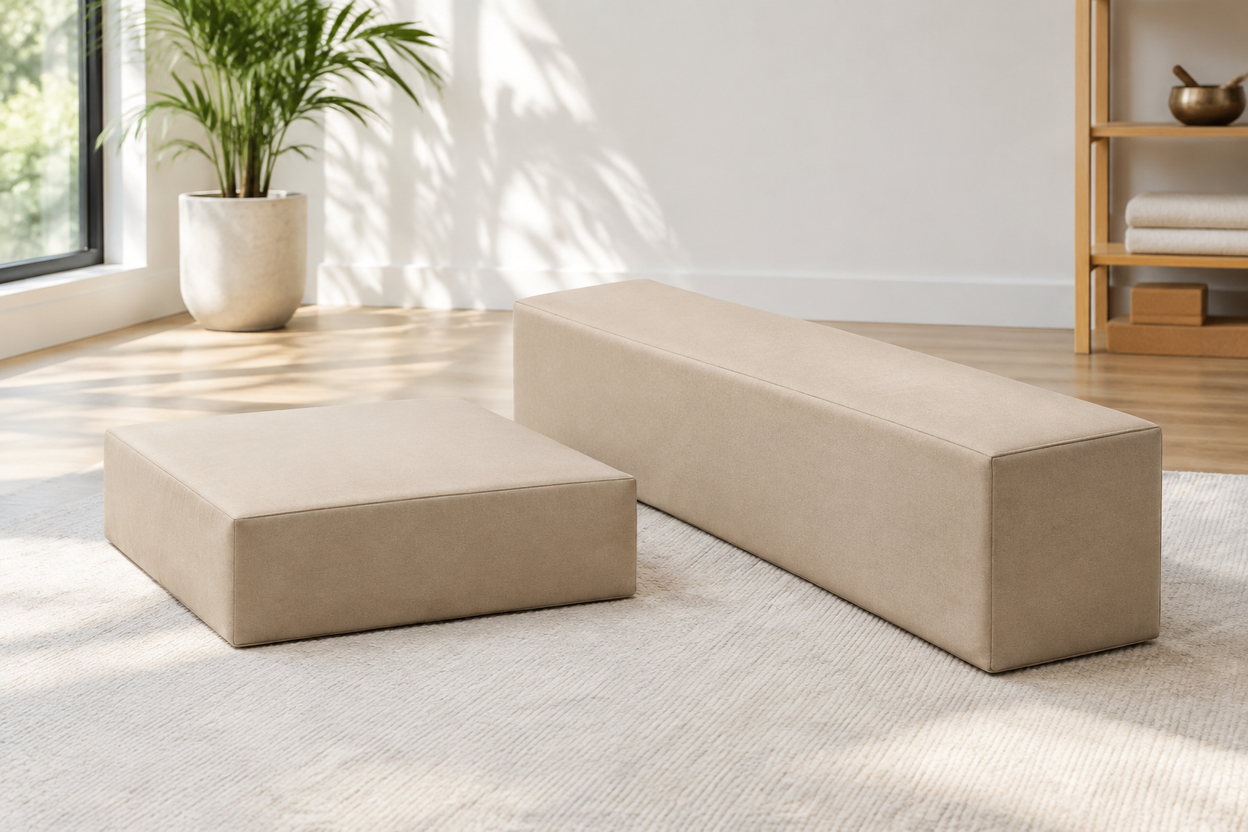
Twenty inches takes both knees side by side — the standard bedroom pick. The 24 adds turning room for combination sleepers who rotate through the night; the 30 runs knees to mid-calf for taller frames, and doubles as full lower-leg support for stretching and reclining. The profile never changes between lengths, only the run of foam — and the price steps with it: $56–57 at 20 inches, $59–61 at 24, $66–67 at 30, fitted woven cover included at every length.
Outside the bedroom, the half-round earns its keep as a studio prop: stable low support for a resting stretch or a supported recline, the 30-inch length carrying the full calf line. It is the firm-foam version of a stretching prop, priced as furniture foam rather than equipment.
Covers, Ordering and Lead Time
The cover comes from the same library as the custom cushion line — all 119 fabrics at one price, so color is an order note at checkout rather than a separate SKU. Linen-family weaves are what most bedrooms end up choosing. Every bolster is made to order in 4–7 business days, cut from the same 50D and 65D grades on the same tables as our replacement couch foam, and verified against an 11-point checklist before it ships. A bolster needing other dimensions or a different profile is a conversation for the order desk — the set lengths are fixed, and that is why they carry the lower price.
FAQs
What is a knee bolster?
A firm foam support shaped to fill the gap your knees create in bed — between the knees when side sleeping, under both knees when back sleeping. The standard form is a D-shaped half-round: flat base, domed top, cut from high-density foam.
Is a knee bolster the same as a knee pillow?
The words overlap, but the build differs. “Knee pillow” usually means a soft memory-foam contour shaped like a butterfly; a knee bolster is firm high-density foam in a half-round profile — structure and longevity over squish, the furniture-foam approach to the same job.
What height should a knee bolster be?
Five to six inches under the knees of a back sleeper — enough to break the straight leg line without tenting the knees. Between the knees of a side sleeper, go lower: under four inches, where a firm wedge profile does the job with less height.
Firm or extra firm — which density do I need?
Firm 50D for most sleepers: a small, steady give that holds all night. Extra Firm 65D for heavier frames and for supports under load all day — it compresses less and keeps its shape longer.
Will a half-round bolster roll away during the night?
No — the flat base is the design answer to rolling, with no straps, grippers or cradle added. A full cylinder rolls; that is why studios buy cradles for theirs. The half-round goes where you put it and stays.
Can a knee bolster help with a medical condition?
We make no claims about that, in either direction. This is a positioning and comfort pillow, not a medical device — for any medical, post-surgical or rehabilitative need, follow your clinician’s guidance before ordering support products from anyone, including us.
Sofa Foam Cut to Size: How to Order Exact-Fit Foam
How to order sofa foam cut to size — measuring the core, adding the compression allowance, specifying density, thickness and shape, and the checklist to run before any foam is cut.
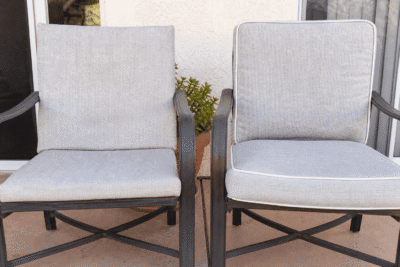
Cheap vs Quality Outdoor Cushions: Where the Money Actually Goes
What separates a $15 cushion from a $60 one and a $150 one — fabric construction, fill, stitching and covers — which upgrades matter, which are markup, and how to buy the quality your furniture actually needs without overpaying.
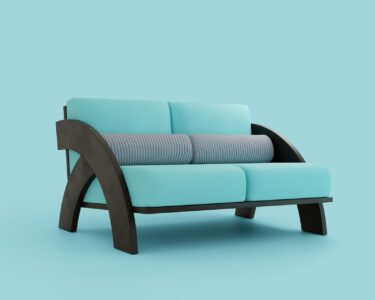
Couch Cushion Foam Inserts: Measure and Order New Cores
A foam insert replaces the flattened core inside the covers you already own. Measure seam to seam, pick 60D seats and 50D backs, and price the set in one order.
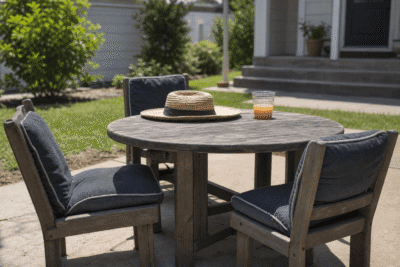
Kid-Friendly Patio Cushions: The Family-Proof Spec
Cushions that survive children — fabric families that shrug off juice and markers, construction that wipes fast, foam that handles jumping duty, attachment systems that stay put and stay safe, and the two-layer strategy that saves the good cushions.
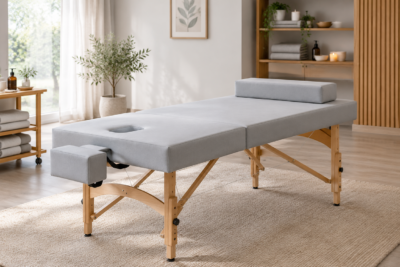
Massage Table Bolsters: Firmness, Sizing and Placement
A firm foam wedge is the positioning tool a massage table lacks. Four set sizes for ankles, knees, wrists and side-lying, solid 50D or layered builds, fabric choice included — priced 20% below custom.
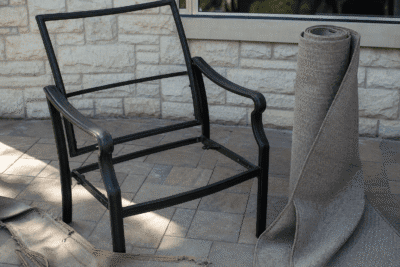
Re-Slinging Patio Chairs vs Replacing: When It’s Worth It
Sling furniture repair economics: what re-slinging is and what it costs relative to replacement, which frames deserve it, the fabric choice for slings, cushioned-conversion as the third option, and the DIY-versus-service decision.