
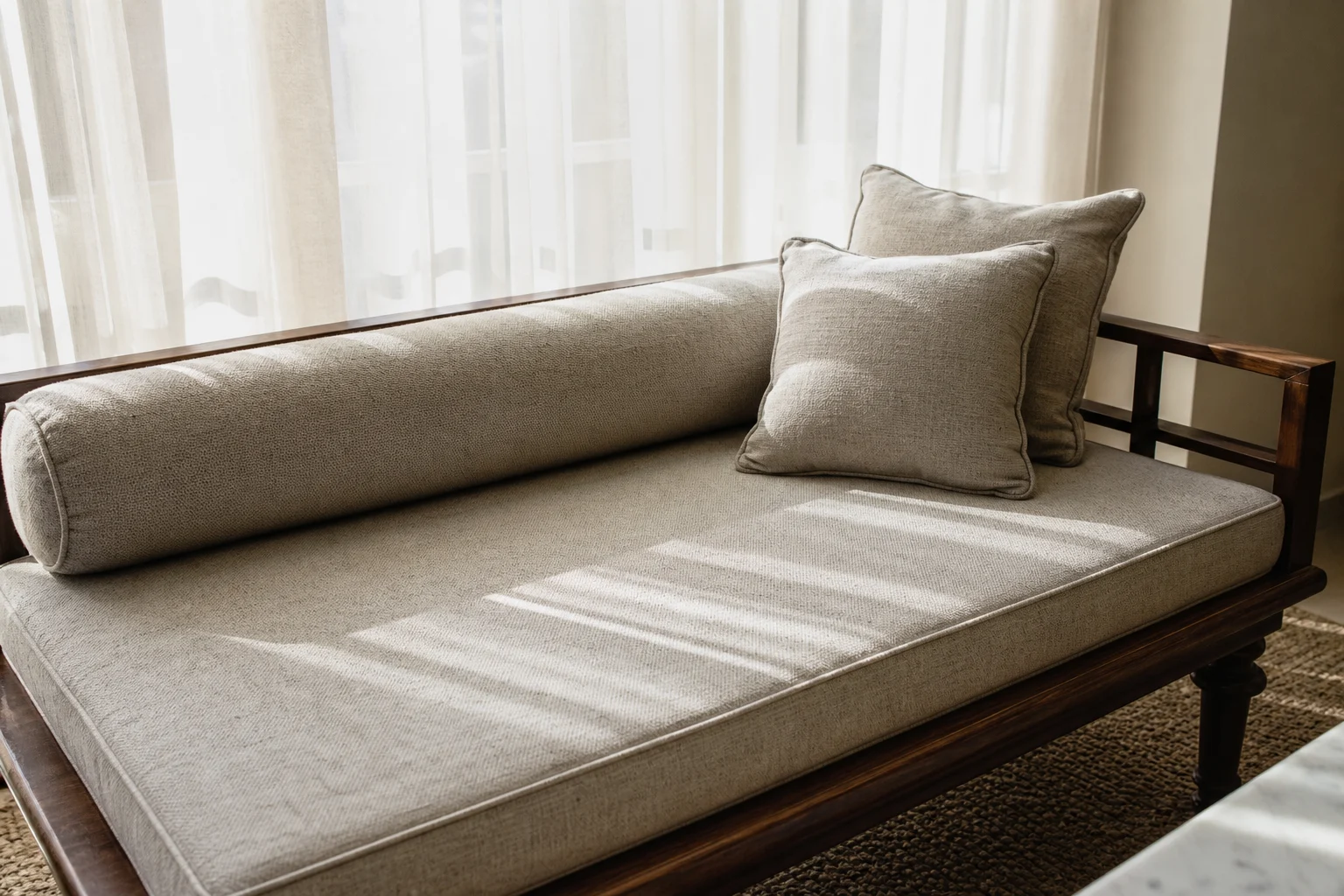
A daybed is a sofa by day and a bed by night, and its cushion inherits both sets of problems: it must look tailored like upholstery and survive mattress duty — full body weight, hours at a stretch, every night or every guest weekend. Most daybed cushion failures come from treating the second problem like the first: a cushion spec that would be fine on a bench dishes within a year of sleeping duty. This guide covers the size families (which are mattress sizes), the foam grades that survive bed use, the one-piece-versus-sections decision, indoor and outdoor exposure, and how a mattress-sized cushion is actually measured and ordered. The general method lives in how-to-measure; the neighboring long-cushion worlds are bench cushions and porch swing beds.
What Counts as a Daybed, Cushion-Wise?
Three furniture types arrive at the same cutting-table problem:
- The indoor daybed — a twin-scale frame with back and arms, usually wood or metal, dressed with a mattress or a firm cushion plus bolster pillows. Guest rooms, home offices, sunrooms.
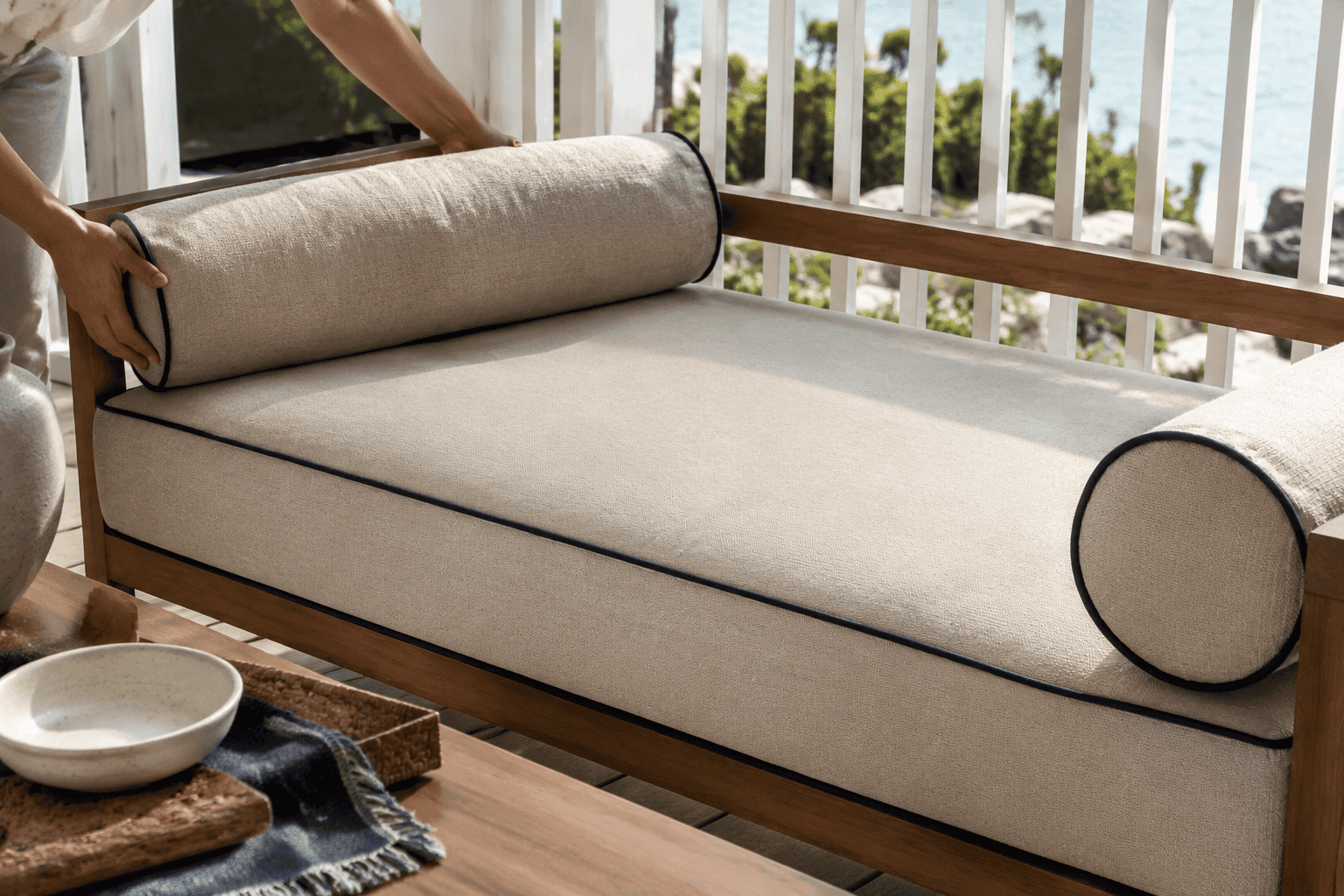
- The patio daybed and cabana — outdoor deep-seating built for lying flat: rounded canopied beds, rectangular lounge daybeds, sectionaled cabanas. Full weather exposure.
- The porch swing bed — mattress-scaled porch swings, already covered in outdoor swing cushions.
All three need a cushion bigger and tougher than seating logic suggests, and all three are badly served by stock sizes — because “daybed” is not a standardized furniture word, and no aisle stocks a 36 x 75 anything.
Daybed Cushion Sizes: The Mattress Scale
Daybeds borrowed their sizing from mattresses, with patio frames wandering a little. Before the table, the summary: indoor daybeds are twin-mattress scale, patio daybeds run a few inches narrower and vary by maker, and depth (front to back) is the dimension that defines comfort for daytime sitting.
| Type | Typical footprint | Thickness | Notes |
| Indoor daybed (twin) | 39 x 75 | 4-6 | The standard; uses twin bedding |
| Indoor daybed (narrow) | 36 x 75 | 4-6 | European and vintage frames |
| Patio daybed / lounge | 32-39 x 72-76 | 5-8 | Weather duty; measure, never assume |
| Cabana section pieces | ~30 x 30 to 39 x 75 each | 5-6 | Modular; order as a set |
| Full-scale outdoor daybed | 52-54 x 75 | 6-8 | The big one; sectional logic applies |
Thickness deserves a note: daybed cushions run thicker than seats (5-7 inches typical) not for looks but because lying-down comfort over slats needs more foam depth than sitting does — a body distributed flat loads foam more gently than a seated body, but feels every irregularity underneath (deep seat logic).
Foam: A Seat Spec Will Not Survive Bed Duty
This is where most daybed cushions are underbuilt. Sitting concentrates maybe 60% of body weight on two sit bones over a few square inches; lying flat spreads the same weight gently — but for eight hours, on the same spots, every night. The two loads are different injuries to foam:
- – 35D seating grade: fine for the daytime-sofa half of a daybed’s life — reading, sitting, legs-up afternoons. As a nightly sleeping surface for an adult, it compresses and dishes within a year or two, exactly the way a cheap guest mattress does.
- – 45-60D heavy-duty grade: the honest spec for real bed duty. The density-is-lifespan logic (high density foam explained) applies double at mattress scale, and the price difference amortizes over years of nights.
- – Layered builds: the mattress industry’s answer, and it works at cushion scale too — a firm high-density core with a softer comfort layer on top. A memory-foam topper over a dense core is the classic configuration for daybeds used as real beds (memory foam layering; hybrid builds).
- – Loose fiber alone: wrong tool. Fiber-only daybed cushions feel plush for a season, then compact into sleep positions. If you love the soft surface, put it over foam, not instead of it (filling types).
One Piece or Sections?
A 75-inch cushion runs into two physical facts: fabric bolts are 54 inches wide, and a one-piece 40 x 75 x 6 cushion is genuinely unwieldy to rotate, wash and store. The options:
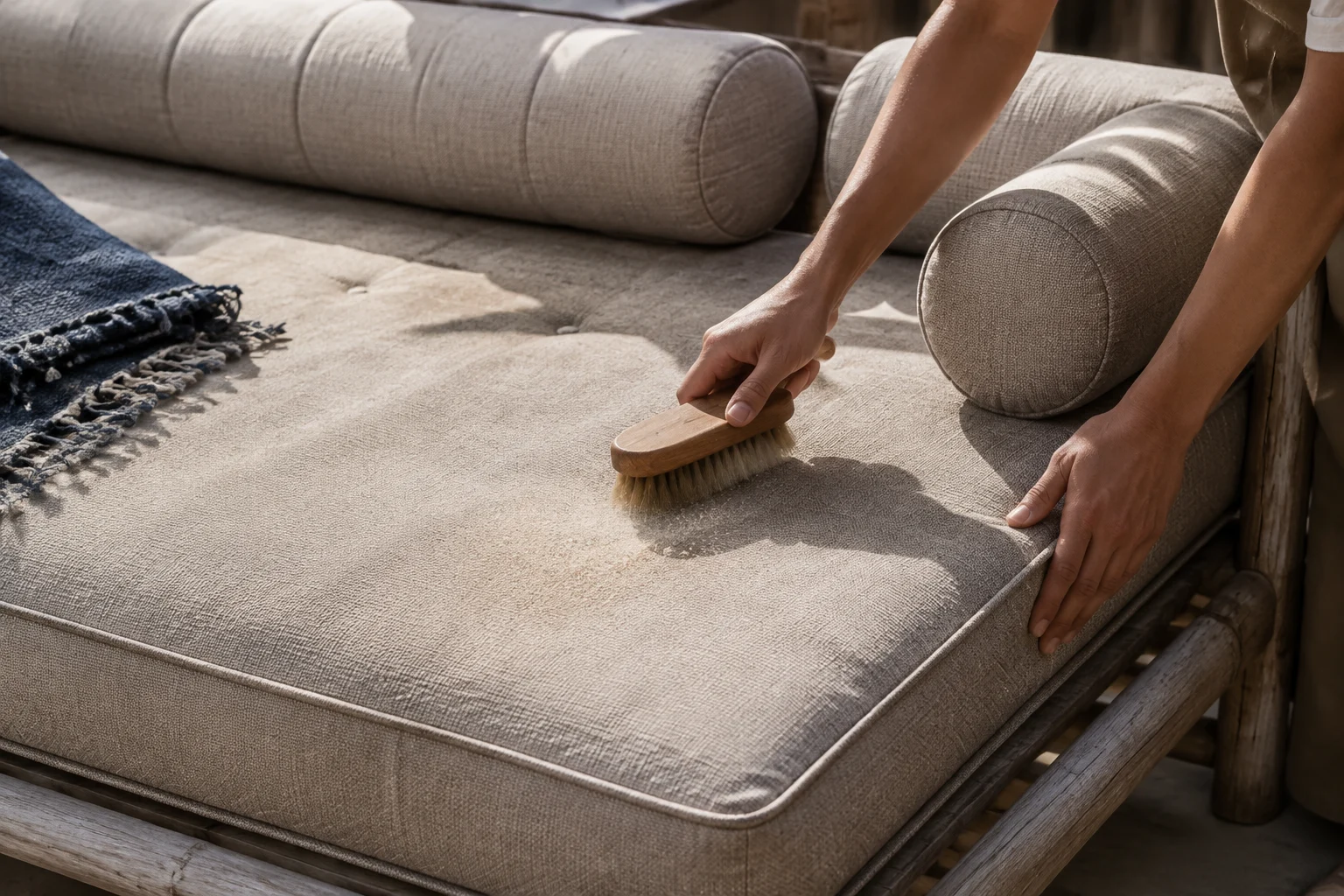
- – One piece with seams. The upholsterer’s standard: surfaces wider than the bolt get a planned seam, and reputable shops state it upfront rather than implying one continuous piece exists. Seam placement is a design decision — a center seam across the width is conventional and strong.
- – Two-piece lengthwise split. Two ~37.5-inch halves, each manageable, abutting invisibly under a cover. Easier rotation and washing; a slight feelable ridge for sleepers who notice everything.
- – Modular sections. The cabana approach: the daybed is really three seat-scale cushions in a row. Best for sectionaled frames and mixed sit-lie use; worst for sleep continuity.
For sleep-primary daybeds, one-piece-with-seam wins (no ridge through the middle of the bed); for sit-primary with occasional guest nights, sections are more practical. And whatever the build — cleanability at mattress scale lives in the fabric, because a daybed cushion cover is bedding: it will take spills (cover logic). Our covers unzip and remove for washing, and between washes the family does the defending — a waterproof, wipe-clean weave turns the bedding problem into a cloth and a minute.
Indoor Daybeds: Fabric and Framing
Indoor daybed cushions follow upholstery logic, not weather logic — choose for hand-feel, washability and the room, with three frame-specific notes:
- Measure the deck inside the frame rails. Daybed frames have back and often side rails; the cushion sits inside them, and the usable deck is what the rails enclose. A 39 x 75 “twin” daybed often has a 38.5 x 74 deck once the rails are accounted for — order the deck size, not the label.
- The back-and-arms dressing is separate. Bolsters, back cushions and corner pillows make the sofa look; they can be re-cut in the same fabric run as the seat for consistency, and ordering them together is the only way to guarantee one dye lot (the same set rule).
- Natural weaves earn their place indoors. Cotton linens and similar breathable weaves that would fail outdoors are the right choice here — our own indoor-oriented fabric families are built around exactly this (custom cushions).
Sunroom daybeds sit between worlds: mostly indoor fabric logic, but check how many hours of direct sun lands on the cushion before choosing a fade-sensitive color (UV logic).
Outdoor Daybeds and Cabanas: The Deep-Exposure Case
A patio daybed is the most exposed cushion in the yard after a boat cushion: horizontal surface (rain pools instead of running off), full sun all day, and lying-duty loads. The specs stack accordingly:
- – Fabric: solution-dyed acrylic (Sunbrella-class) as the default, for fade life and bleach-cleanability (is it worth it); Olefin as the value alternative (fabric guide).
- – Fill: wrapped foam cores over loose fiber, for drainage and shape; the outdoor trade’s quick-dry (reticulated) foam exists for soakings and is explained honestly in quick-dry foam explained — our own line is cut in high-density 35-65D grades, and density remains the spec that decides year five.
- – Aftercare: stand sections on edge after rain, store indoors over winter (the winter method), and expect the fabric to outlast two fills or the fill to outlive a tired cover — mattress-scale outdoor cushions get cover-only second lives when the foam is still sound.
The market has priced this category at the top of the cushion world: 2026 listings from custom-configurator specialists quote daybed and cabana cushion builds from the high hundreds to roughly $900-plus at the top of the range — which is what a 54 x 75 weatherproof, sleep-grade, seamed-and-covered surface costs when it is configured rather than formula-priced. Formula-priced custom runs the same job as $45 make-base plus per-sqft foam and fabric rates, every shape at the same rate (pricing explained; run your own numbers).
How to Measure a Daybed for a Cushion
The daybed-specific notes on top of how-to-measure:
- Deck inside the rails, width and length, at two points each — daybed frames are hand-assembled more often than machined, and out-of-square by a quarter inch is common. Record to the nearest quarter inch; cutting forms take 1/8-inch increments.
- Depth is front-to-back: for indoor daybeds this is the sleeping width (the 39 of twin 39 x 75); for patio lounges check whether the back cushions stack on the deck (subtract their thickness) or hang behind it.
- Thickness against the frame: side arms and canopy edges set a ceiling — a cushion thicker than the arm makes the daybed look upholstered-shut and can lift canopies off their mounts.
- Note tie-down points on patio daybeds (rattan weave gaps, frame loops) if wind is a factor; a mattress-scale cushion is also a mattress-scale sail.
Where Daybed Cushions Come From: Three Routes
- – Mattress routes (indoor only). A real twin mattress on an indoor daybed is a legitimate answer — it is the furniture doing what it was designed to do. The trade-offs are aesthetic (a mattress looks like a mattress) and fit (frames wander from nominal twin by an inch either way, and a too-small mattress slides in the rails).
- – Furniture-brand accessories. Patio-daybed makers sometimes sell replacement sets for their own frames — worth one check if you know the maker, gone the season after the line retires (the discontinued pattern).
- – Custom, measured once. For every frame that is not a nominal twin, every outdoor daybed, every modular cabana and every sleep-duty cushion that needs 45-60D foam under a washable cover — custom cushions cuts deck-sized one-piece or sectional cushions from your measurements, in one fabric run with the bolsters to match (bench-class pricing scales the same way). The custom daybed cushions page is the indoor/outdoor entry point for this exact job, with the fabric tiers split by where the daybed lives.
FAQ
What size cushion does a daybed take?
Indoor daybeds take twin-scale cushions — 39 x 75 standard, 36 x 75 on narrower frames — at 4-6 inches thick; patio daybeds run 32-39 x 72-76 and vary by maker, so measure the deck inside the rails rather than trusting the size word (how to measure).
Can I use a twin mattress instead of a daybed cushion?
For an indoor daybed, yes — that is the design intent; expect a mattress look and an imperfect fit if the frame wanders from nominal. Outdoor daybeds cannot use indoor mattresses: the foam and cover are not built for rain and sun (outdoor fill logic).
What foam density does a daybed cushion need?
50D–60D for nightly sleeping; 35D seating grade survives only occasional guest use before dishing — density is lifespan, doubled at mattress scale (density explained).
Should a daybed cushion be one piece or two?
One piece with a planned seam for sleep-primary use (no ridge through the middle); two halves or modular sections for sit-primary daybeds, which are easier to rotate, wash and store.
How much does a custom daybed cushion cost?
Formula-priced custom runs $45 make-base plus per-sqft foam and fabric rates — a 39 x 75 x 5 heavy-duty build lands in the low-to-mid hundreds; custom-configurator listings run the same category to roughly $900-plus at the top (pricing explained; quote yours).
Can I order just a new cover for my daybed cushion?
Yes, when the foam still rebounds — squeeze the center of the dished area; if it springs back, the core lives and a cover-only re-cut is the cheap second half-life (cover-or-core test). Ask for a cover-only quote.
Next Steps
- Measure the deck inside the rails — width, length and depth at two points each, nearest quarter inch — with the how-to-measure method.
- Decide the duty honestly: nightly bed (45-60D, one-piece, wipe-clean cover) or daytime sofa with guest nights (sections acceptable, seating grade defensible).
- Quote it at custom cushions — mattress-scale sizes are standard work, published per-sqft pricing, and nothing is cut until your numbers are confirmed.
Breakfast Nook Cushions: The Corner-Seating Build Guide
Breakfast nook cushion guide: L-shaped and U-shaped runs, corner geometry and seam placement, seat-plus-back builds at dining height, morning-sun fabric logic, and ordering the whole run from one fabric lot.
Outdoor Dining Sets: Buying the Set Right So the Cushions Work
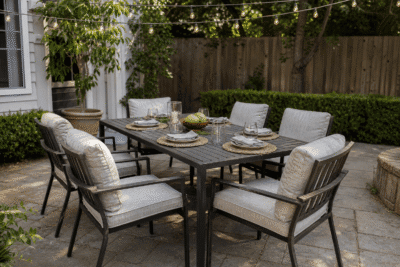
Outdoor dining set buying guide: how the set choice locks in your cushion future — seat sizes, arm heights, frame materials, cushion quality in boxed sets versus custom pads, and set versus separate buying.
At Home Outdoor Cushions: The Decor Superstore’s Seasonal Wall
At Home runs a full-scale seasonal cushion department at decor-store prices — what the wall stocks, the fit grid, and when the superstore route ends at custom.
Target Outdoor Cushions: Threshold, Sizing and Replacement (2026)
Target’s Threshold cushions look designer but run generic sizes. What fits, what the seasonal rotation kills, and when custom replacements beat another Threshold refresh.
Hampton Bay Cushion Covers: Replacement Covers vs Full Cushion Replacement
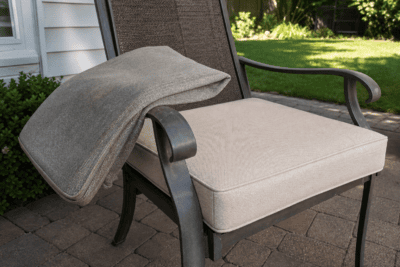
The Hampton Bay covers question answered — why OEM cover-only replacements are rarely available for most series, the exact-fit route (full cushions by your series dimensions), re-covering services and DIY, and how to identify your series first.
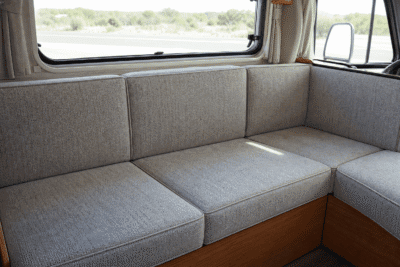
RV & Camper Cushion Replacement: The Complete Guide
RV dinette and berth cushion replacement — sizes, 45–60D foam for daily use, spill-proof fabrics, and the paper-template method for odd cabin shapes.