
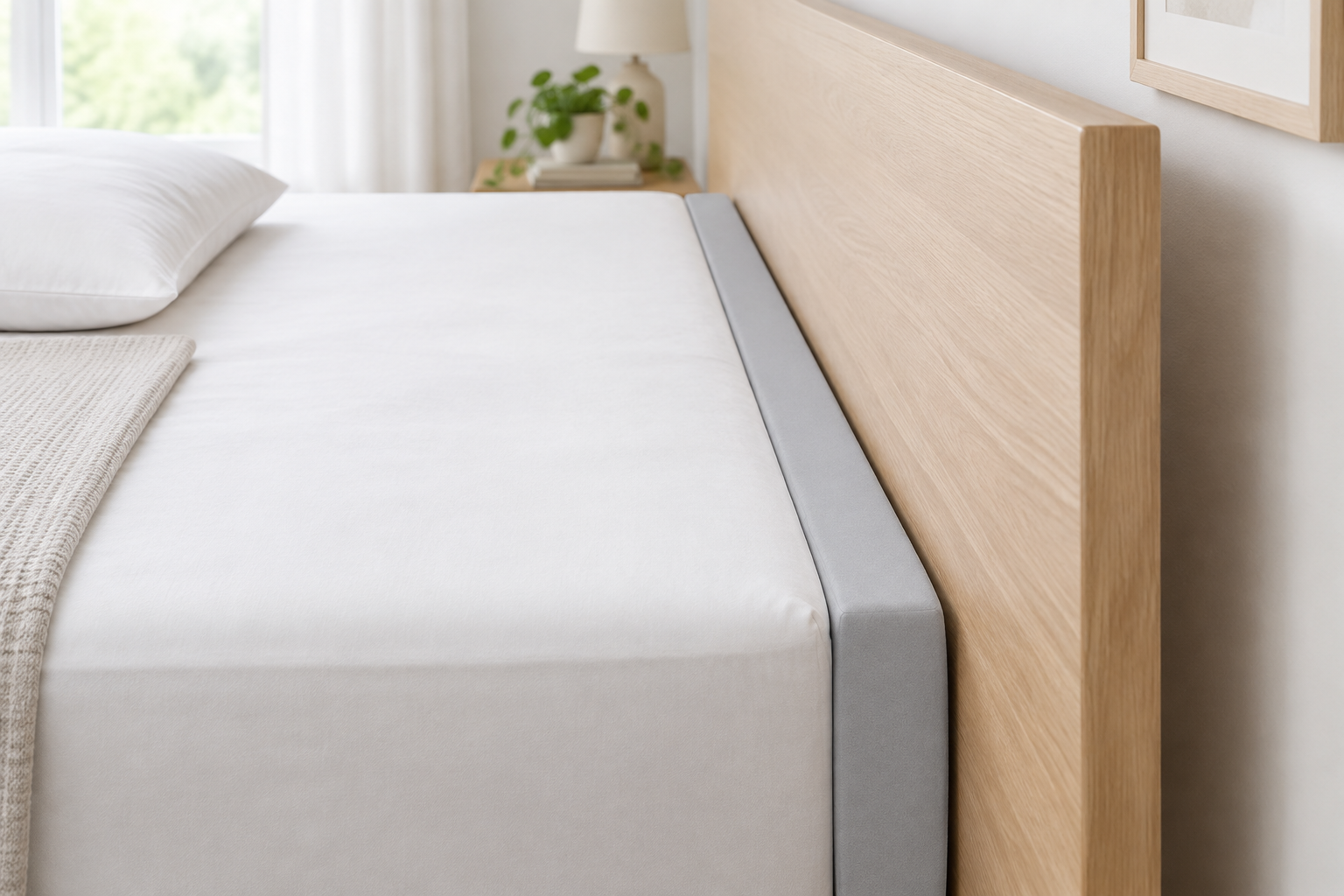
Fill the gap in one measured piece
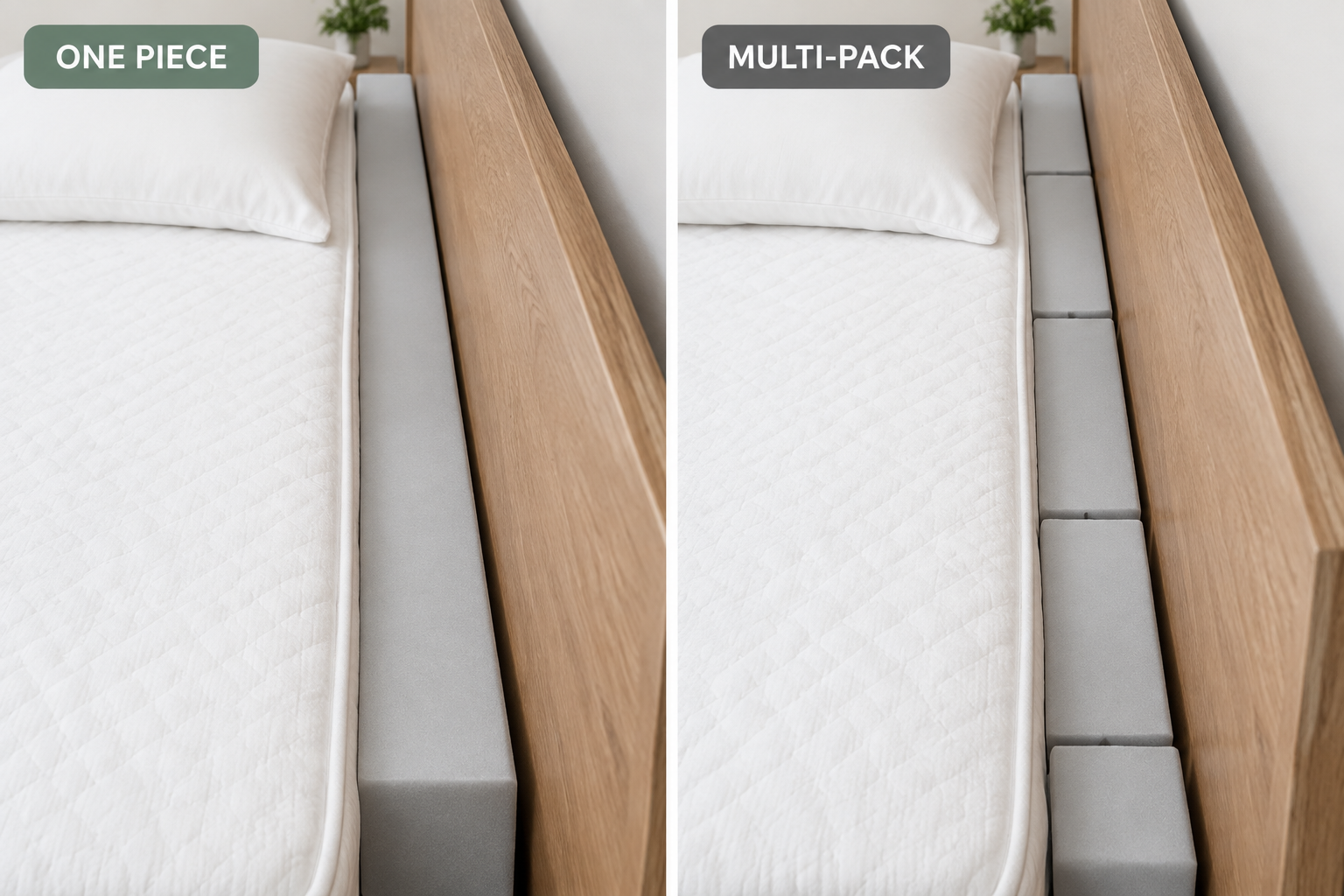
Yes — the whole gap, in one piece. A custom bed gap filler here means one solid foam strip cut to the three numbers your gap actually measures — its length, its width, its depth — with nothing else in the box. Most of what the search results sell is the opposite: multi-packs of short sticks you butt end to end until the crack looks covered. Every butt joint is a hinge; the sticks rotate, walk apart, and the gap reopens within weeks. One strip that runs the full length of the gap has no joints to fail — that is the entire argument for cutting it instead of stuffing it.
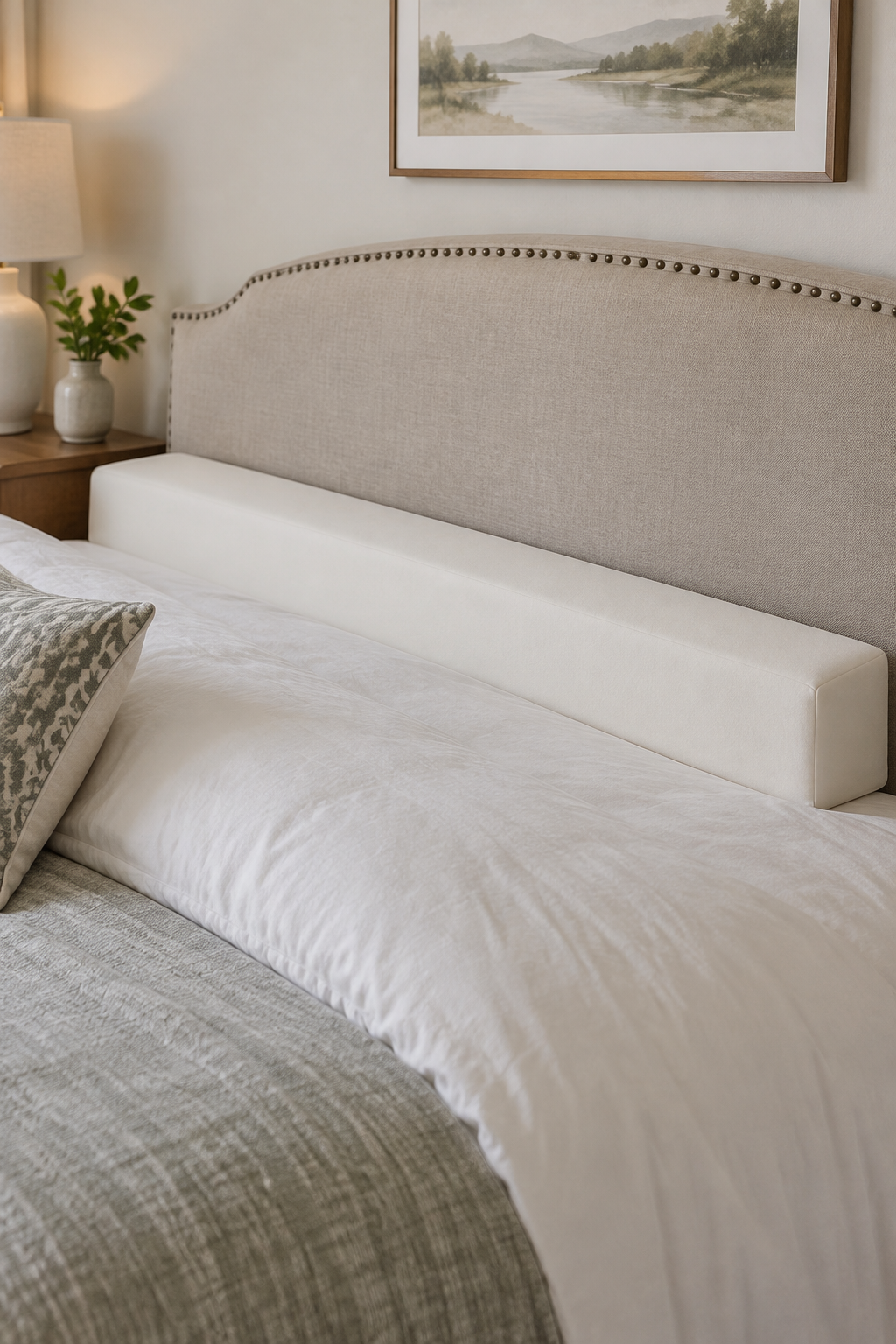
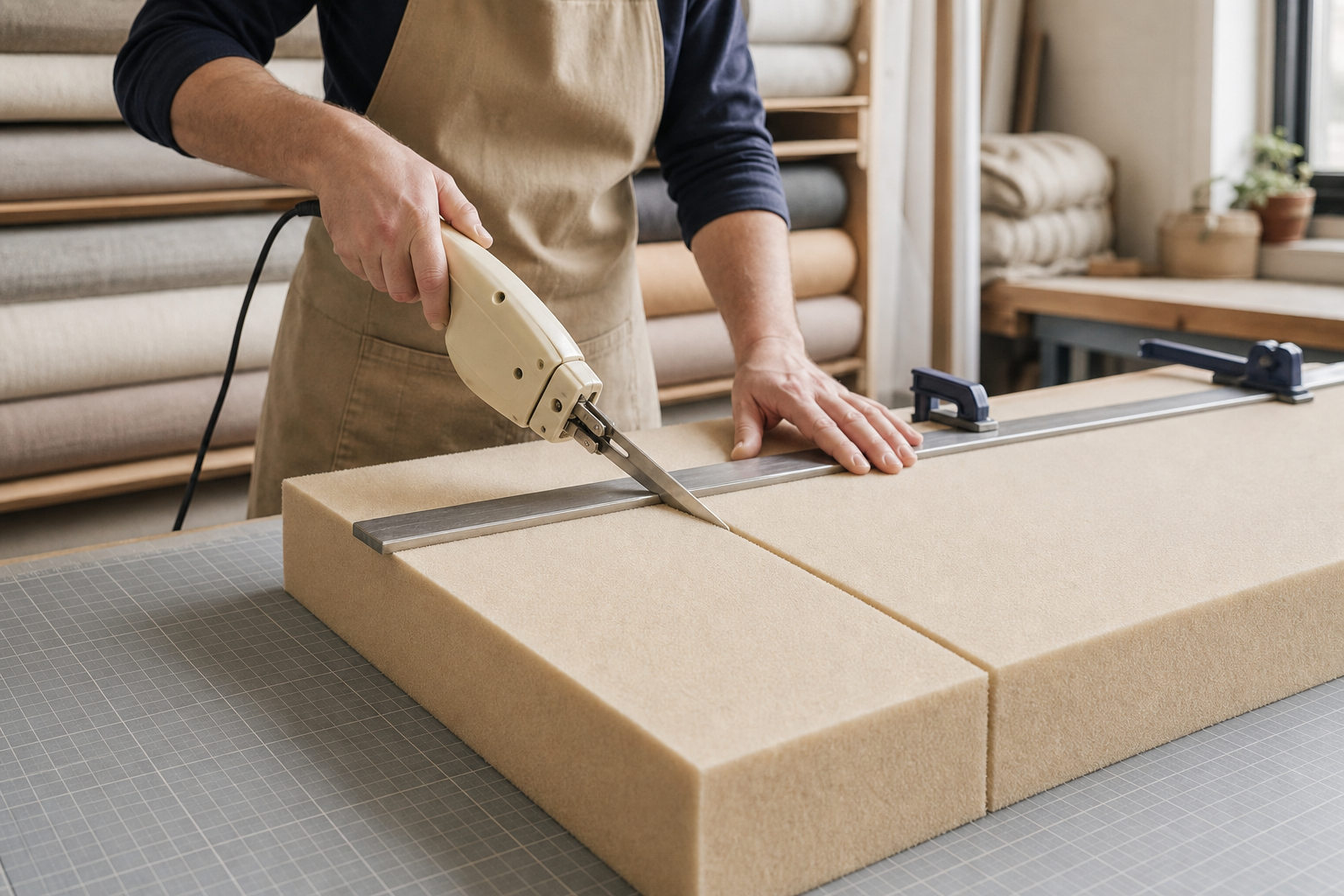
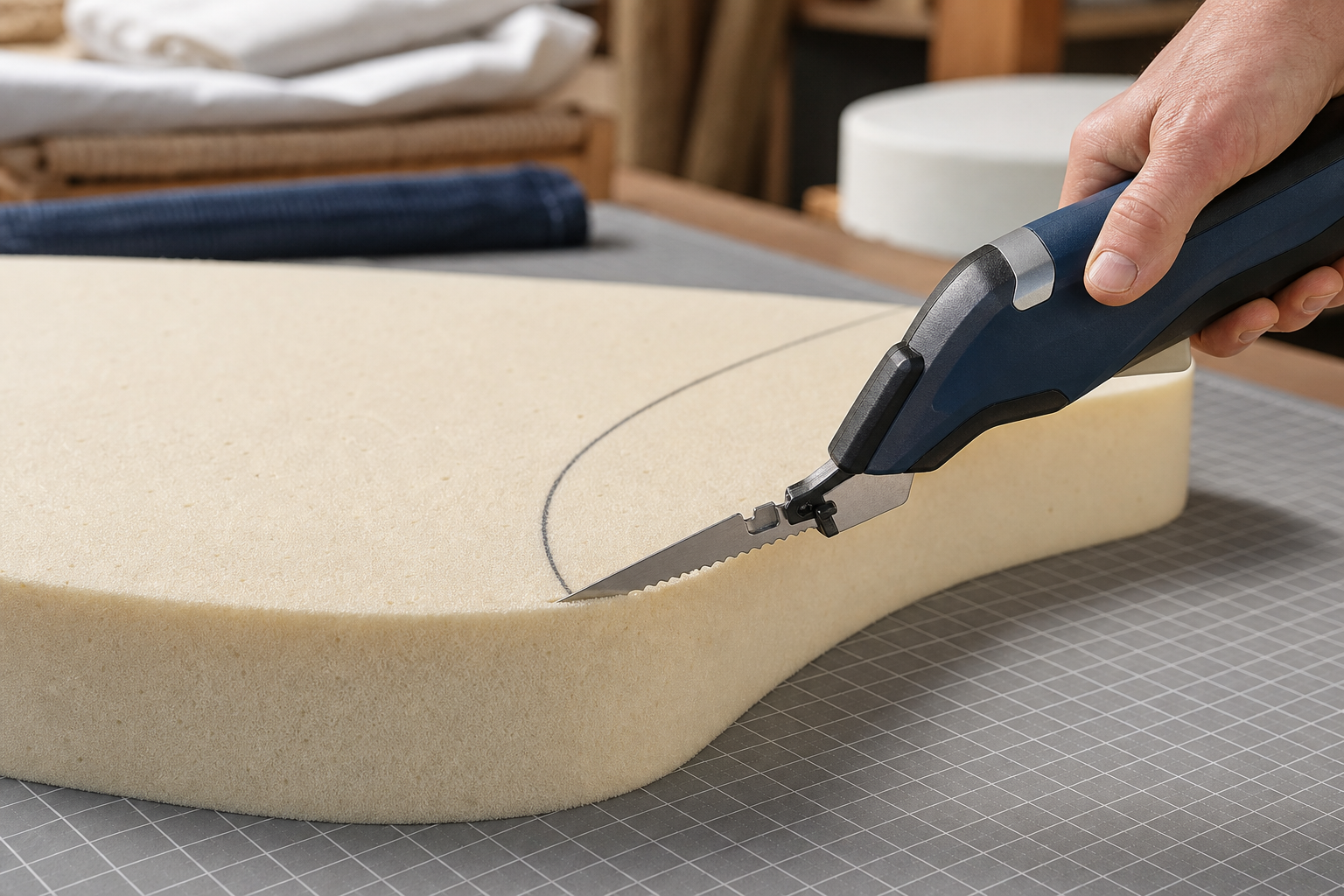
Gap fillers come off the same production line as our replacement couch foam — the same four densities, the same 2″ to 8″ height range, the same cutting tables — applied to the crack beside your mattress instead of the couch seat that sagged. The same logic that refills a couch refills a gap: measure what is actually there, cut one piece to those numbers, press it in. Three numbers go in: open the customizer — rectangle preselected →, enter the strip’s length, width and height, pick a density, and mark the order foam-only if the bare strip is all you need.
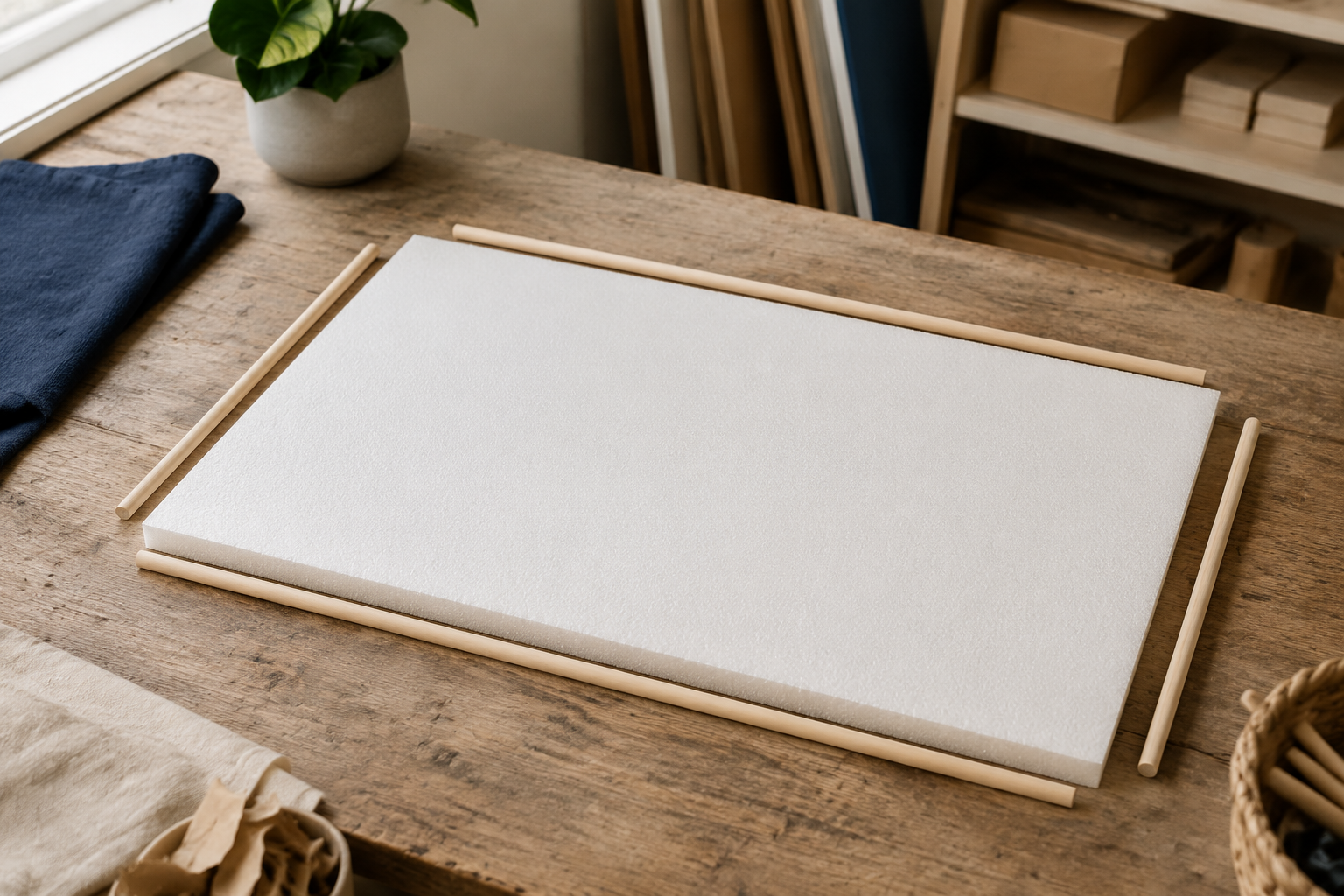
Cut to your numbers in four densities (35D, 50D, 60D, 65D), heights from 2″ to 8″, any length up to a 120″ run in one piece — nothing is cut until your measurements are confirmed.
Pricing — foam rates by density, published up front
A gap filler starts at $52 for a 30 × 2 × 2″ wall strip; a Queen-length 60″ strip runs $82 in 50D. The formula is the one that prices every foam piece we cut: $45 make-base plus the strip’s top area at a rate fixed by density and height — the same arithmetic for every strip, published here so you can check the math before you order.
*$45 make-base + 1.7 sq ft of top area (60 × 4″) × the density rate. Rates are published snapshots — the customizer quotes your exact dimensions live. A King-length 76 × 6 × 5″ headboard strip runs $119 in 50D; a 39″ local section for one end of the bed runs $61.
For comparison: marketplace packs of short sticks list in the $15–40 range (observed across Amazon, eBay and AliExpress listings, September 2026). A one-piece custom strip costs more because it is cut for your gap, at a density the packs do not offer, in a length that has no joints — you buy it once instead of re-stuffing it twice a year. The full pricing logic — base fee, area rates, why foam is priced by density — is unpacked in our foam pricing walkthrough.
How to measure your gap: three numbers
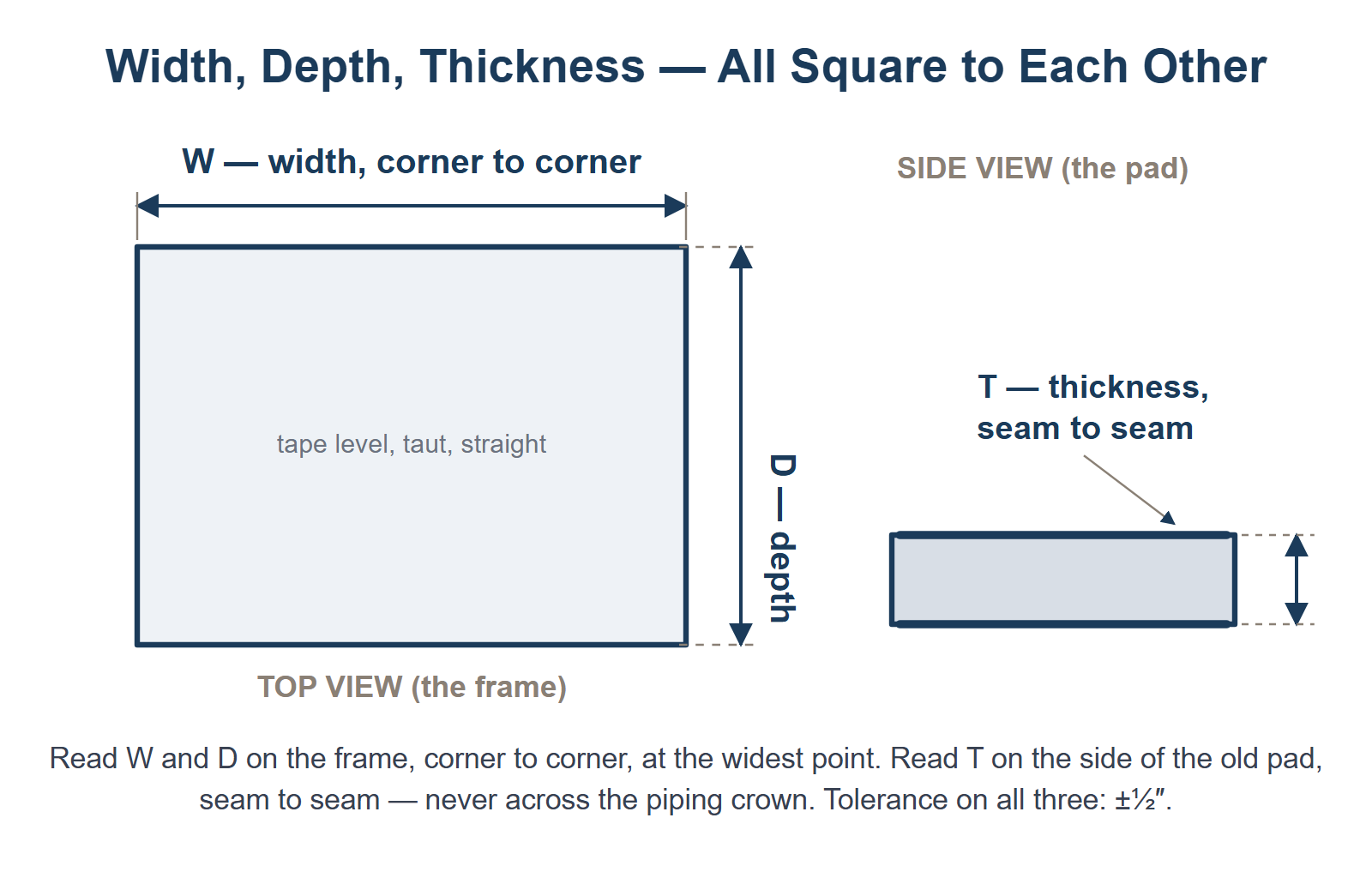
Three numbers: the length of the gap, the width at its narrowest, and the depth from top to bottom. A tape measure, two minutes, nothing to buy. Measure where the gap is, not where you wish it were — a gap that pinches in the middle is measured at the pinch, because that is where the strip has to fit.
- Length — the full run, corner to corner. Follow the gap along the bed frame from one end to the other. A bed with gaps on two sides gets two strips, each measured separately; the two sides of the same bed are rarely identical. Record to the nearest quarter inch — our cutting forms accept 1/8″ increments, so precision is free.
- Width — at the narrowest point, ruler flat on the mattress edge. Slip the ruler into the gap and read where it binds. If the gap runs wider at one end than the other, measure all three stations — both ends and the middle — and send all three; we cut to the shape the gap actually is, and a strip cut to the average swims at both ends.
- Depth — top of the gap to the bottom. This becomes the strip’s height, cut anywhere from 2″ to 8″. A gap deeper than 8″ takes two stacked layers instead of one tall strip — see the honest limits below for how that order works.
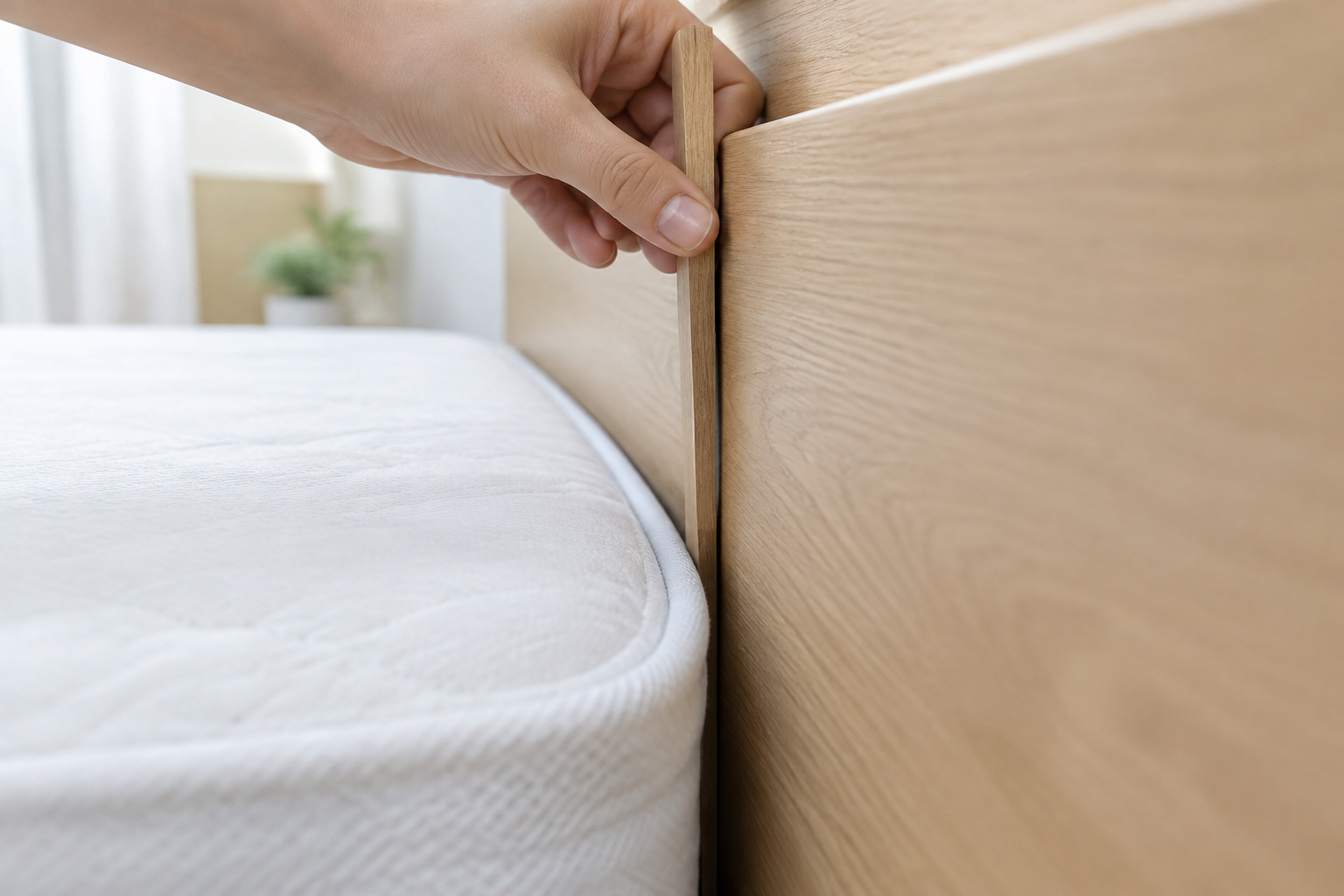
Then add the press-fit: order the strip ½–1″ wider than the gap. A strip cut exactly to the gap’s width sits loose and works its way out with every sheet change; a strip half an inch over presses in and stays by friction alone. That interference is the whole mounting system — there is nothing else to install, and nothing to break. One boundary: a gap under 1″ wide gets no interference added — a full inch of squeeze on a narrow strip curls it instead of seating it, and the order desk will talk you down to a flush cut.
Nothing is cut until your numbers are confirmed: dimensions are re-verified against the order, and odd numbers get a phone call, not a guess. The full measure-once method — the three stations, the press-fit, what to do with L-shaped corners — is walked through in our gap-filler sizing guide, and the wider measurement discipline behind it in our measuring guides.
Thickness & density: press-fit, not just stuffed
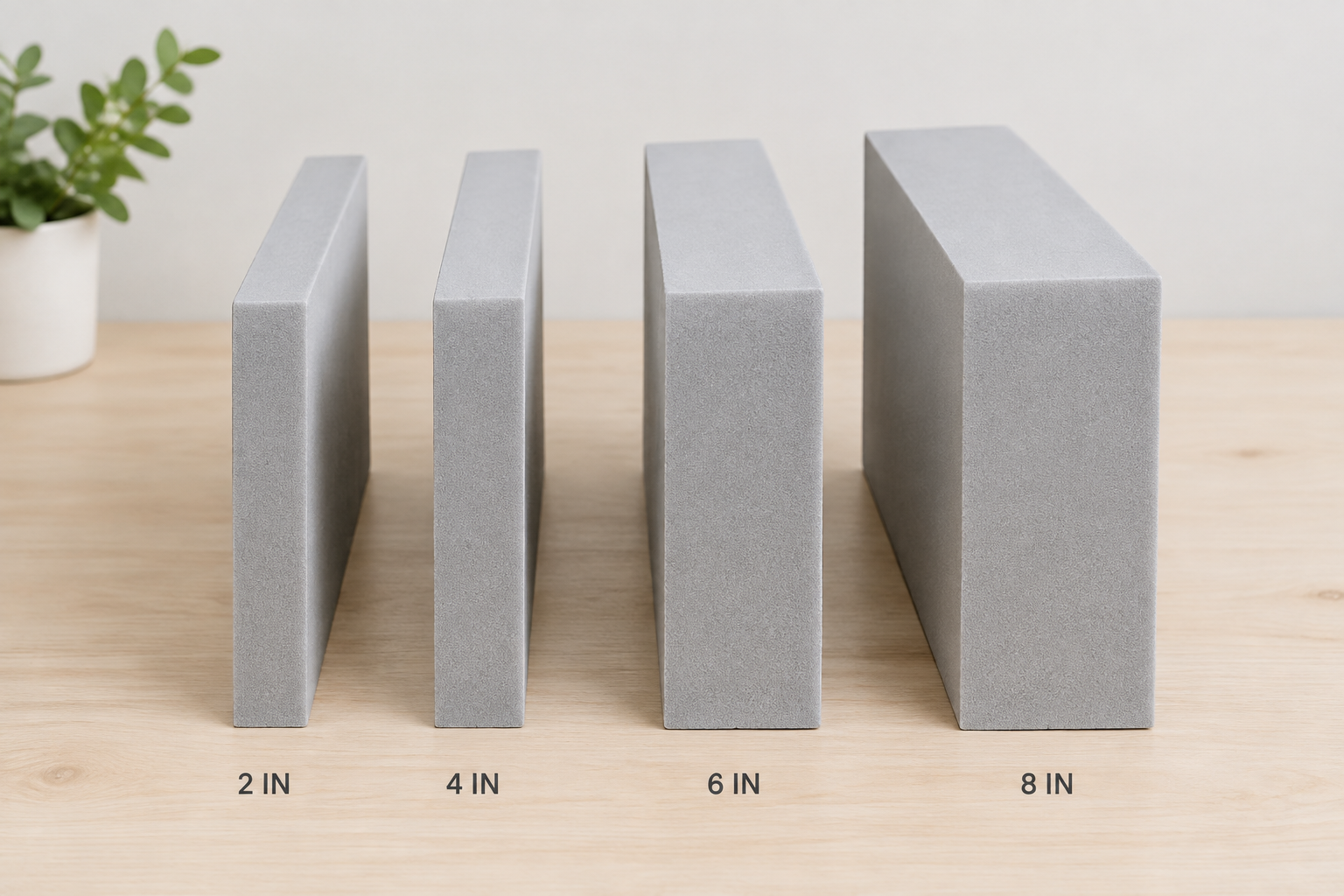
Density decides whether the strip holds or squashes. A low-density strip fills the gap on day one and dishes under the first phone, remote or pillow that lands on it — which is how most people end up re-stuffing a gap they already filled. Density is not firmness; it is the lifespan spec, the amount of polymer per cubic foot, and it is what keeps a strip’s edges square after a year of elbows. A higher number means more years before the strip compresses.
*Service lives are industry rules of thumb, not laboratory promises — hours, body weight, humidity and sun all move them. The density ladder is the same one that prices our couch foam cores; the two-dial logic (density is lifespan, firmness is a separate spec) is unpacked in foam density explained: D ratings vs lbs.
Two shortcuts from the cutting floor: when the answers split between two grades, take the higher one — the whole ladder adds about $5 to a Queen-length strip, and a re-stuff costs the patience. And width plays the same role as load: a 6″-wide strip spans twice what a 3″ strip does, so wide gaps step up a density for the same reason heavy sitters do.
Fabric cover, optional
The bare strip is the product; a cover is a checkbox, not the pitch. Bare foam is what the gap actually needs — it presses in, it stays, it can be wiped down — and most orders leave it at that. If the gap is visible (an open headboard seam in a made bed, a daybed side that shows), the same strip can ship inside a plain flat cover sewn to its dimensions: one fabric, one seam, no piping, no quilting, no trim. Covers add $7.43 per sq ft of the strip’s top area — about $12 on the Queen 60 × 4″ strip, $24 on a King 76 × 6″ run — the same flat rate across all five weaves.
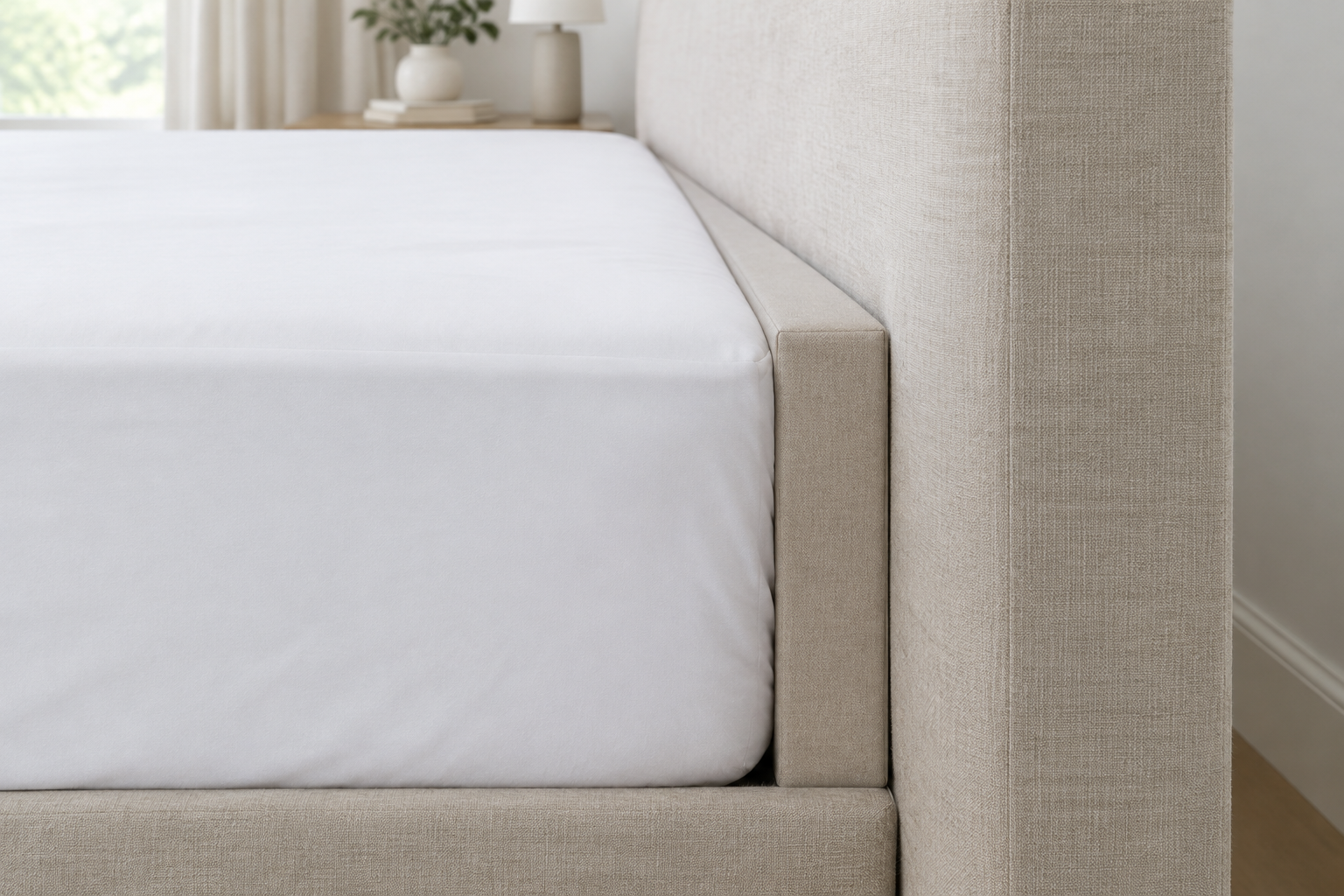
The cover is zippered and removes for washing — spot-clean between washes. The weaves:
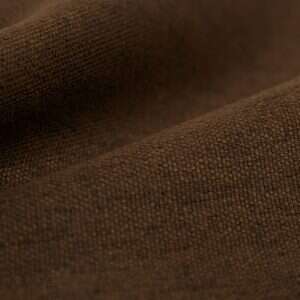
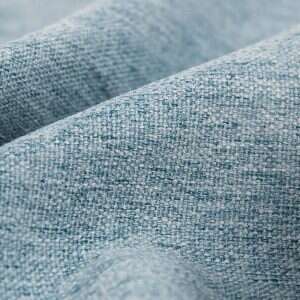
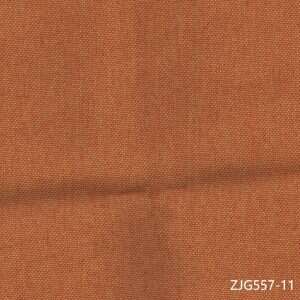
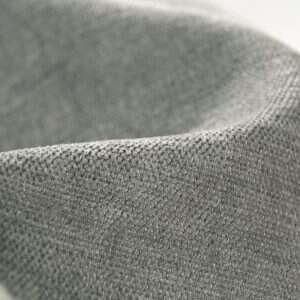
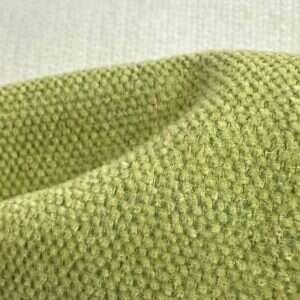
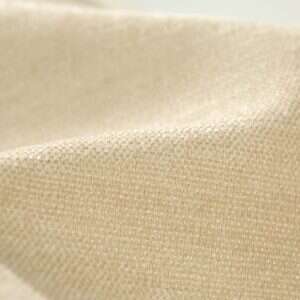
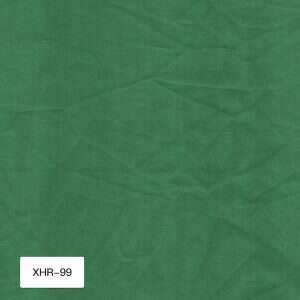
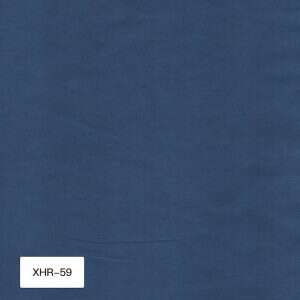
Five weaves at one rate: linen-touch, tech fabric (wipe-clean face), pet velvet, velvet and chenille. Foam-only orders never touch this library — the bare strip is the default order and the one we quote first.
Gaps we fill
If it is a slot that swallows a phone, a remote, or half a pillow, it is a gap we fill. The bed-side cracks get the custom treatment because they come in every width and no two beds measure alike; the same strip answers all of them.
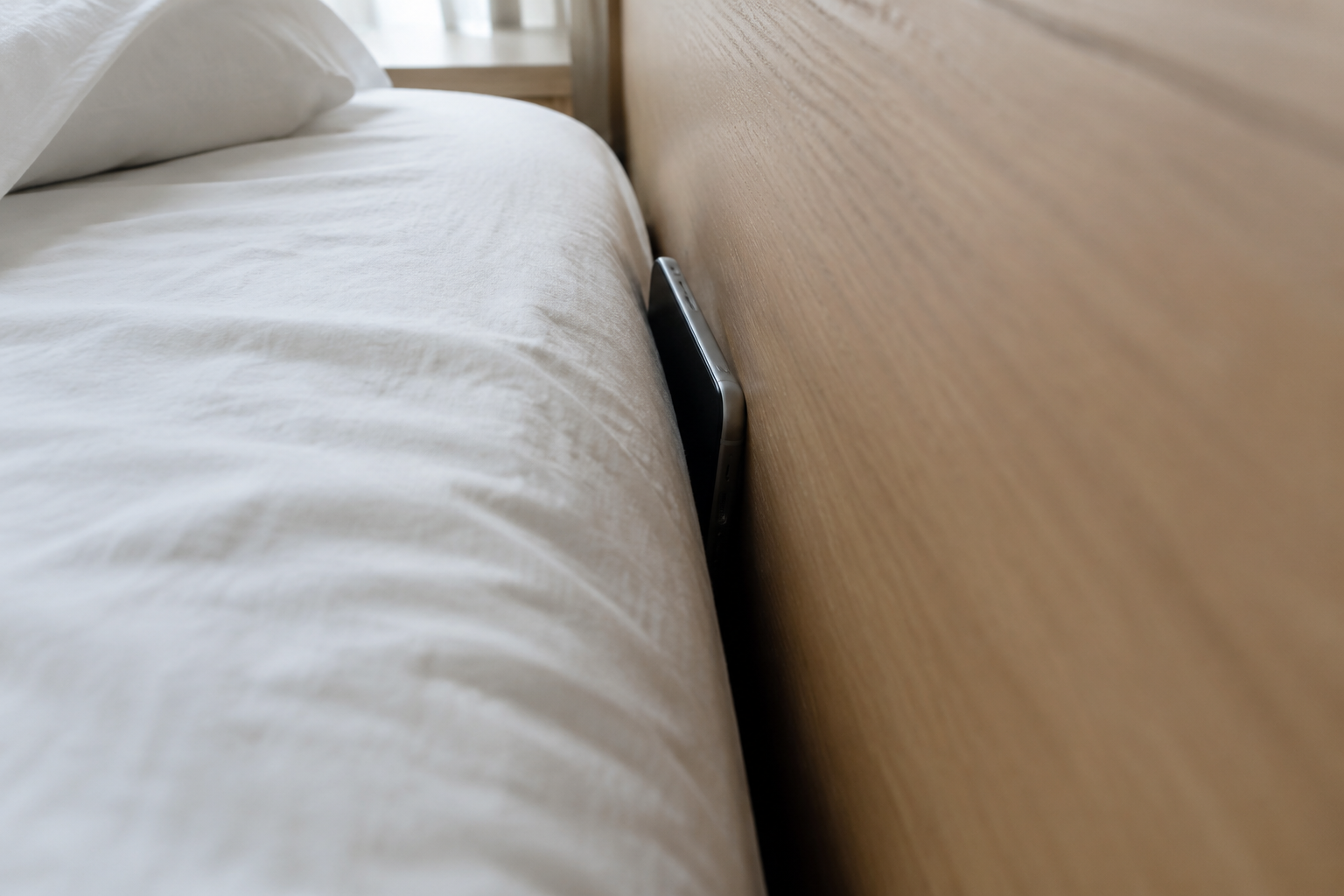
- Mattress to headboard — the classic: the mattress sits 2–6″ short of the headboard and everything slid behind the bed is gone until spring cleaning. One strip the width of the bed closes it.
- Mattress to wall — the bed pushed hard against the wall still leaves a slot that eats chargers and paperbacks. Measured and cut the same way, pressed in from the wall side.
- Split kings and twin beds pushed together — the seam where two mattresses meet (the gap some catalogs call a bed bridge): one long strip laid flat in the seam bridges the two halves, cut to the seam’s length and depth so nothing dips at the join.
- Bed rails and bunk beds — the slot between rail and mattress where a child’s arm, a book or a stuffed animal disappears. Strips cut short to fit rail sections, 2–3″ heights, any density.
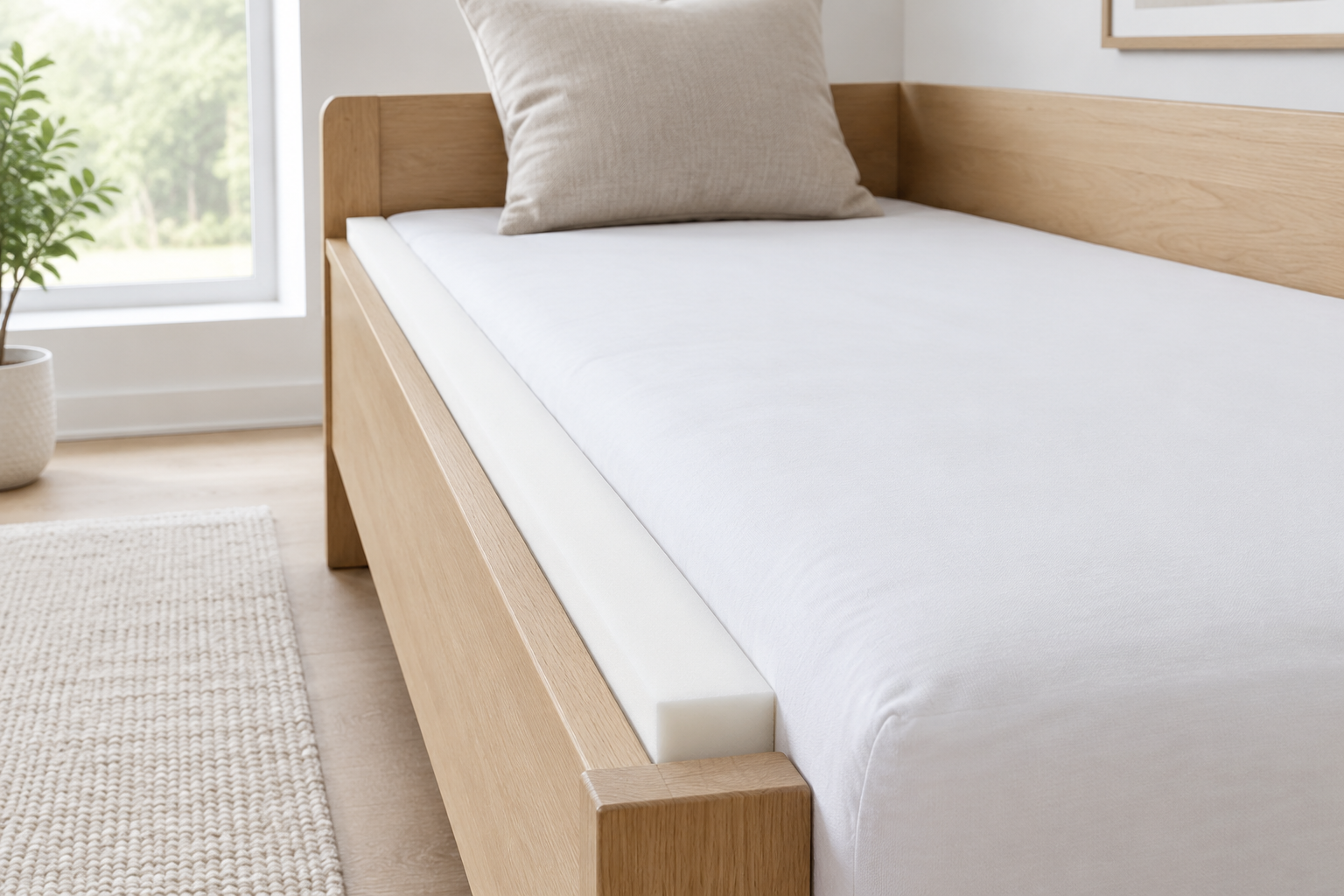
- Daybeds and trundles — the side seam between daybed frame and mattress, and the gap a trundle leaves when it is pulled half out. The daybed measurements are walked through in our daybed measuring guide; the side strip follows the same three numbers.
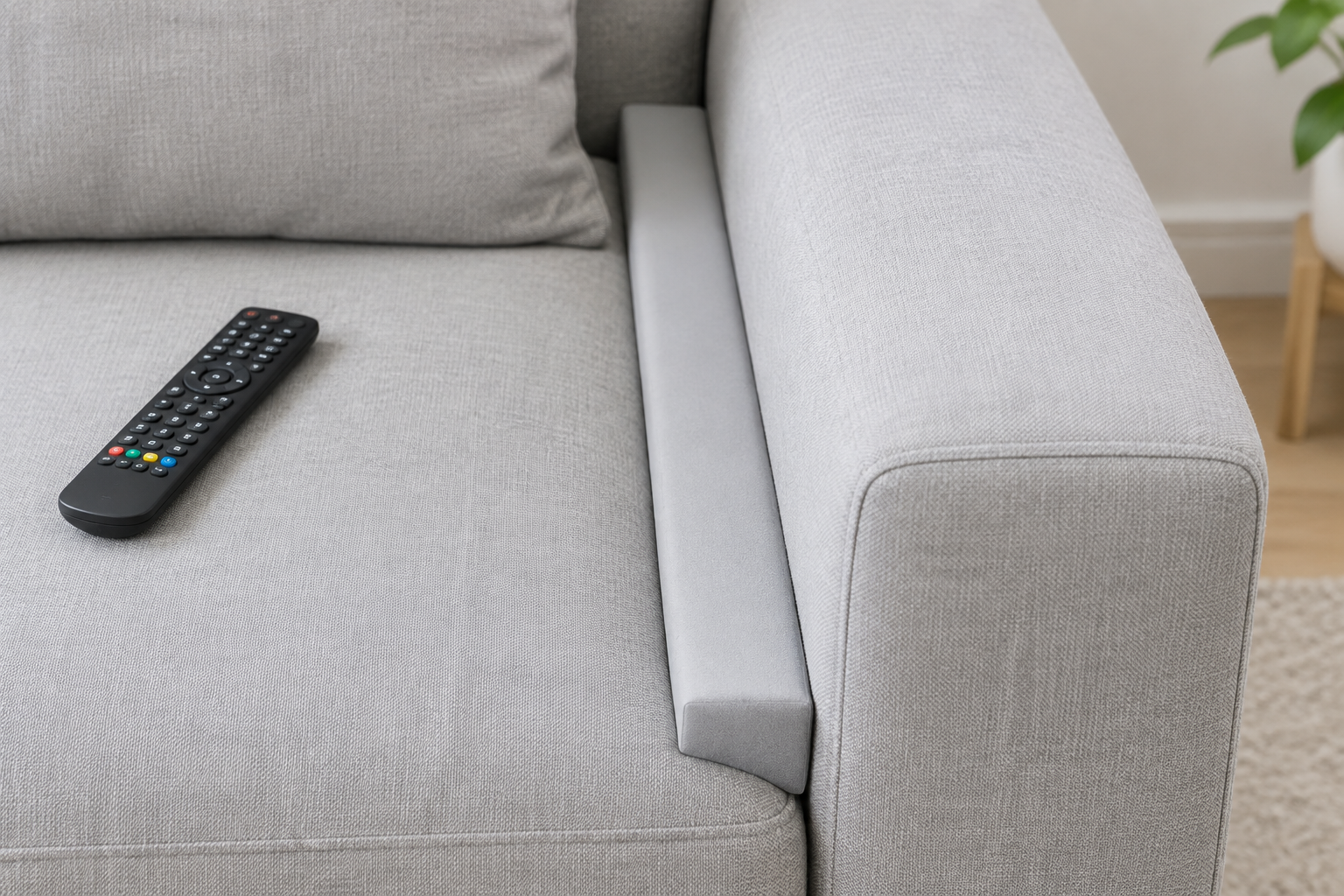
- Couch and sofa gaps — the slot between seat and arm where the remote lives. The same foam in couch-foam dimensions answers it; measure the slot the same three ways.
When the job is not filling a slot but propping a limb — a knee raised in bed, ankles lifted on the table — that is bolster work: our knee bolster pillow and wedge massage bolsters are cut from the same 50D grades for firm support.

Frequently asked questions
What size gap filler do I need?
Your gap’s own three numbers: length corner to corner, width at the narrowest point plus ½–1″ of press-fit, and depth from top to bottom. There is no standard size because there is no standard gap — stock fillers come in one King 76 × 6 × 10″ block and hope your gap matches. The full sizing method is in our gap-filler sizing guide.
How do I fill the gap between my mattress and headboard?
Measure the gap, order the strip half an inch to an inch over in width, stand it on edge in the gap, and press it in with a flat hand. The press-fit is the mounting: the strip’s own squeeze holds it, and it comes back out with two fingers when you want it out. The step-by-step, including what to do when the gap varies in width, is in our mattress-to-headboard gap guide.
What density foam should a bed gap filler be?
50D for the typical mattress gap; 60D for wide gaps and anywhere the strip takes body weight; 35D only for shallow rail gaps nothing rests on. Density is the lifespan spec, not the firmness spec — a 50D strip holds its edges about 5–8 years where a low-density stick dishes in months. The D-rating system translated against the lb/ft³ numbers U.S. foam suppliers quote is unpacked in foam density explained: D ratings vs lbs.
Can I get one long strip instead of a pack of small pieces?
Yes — one piece, any length up to 120″, is the entire point of this page. The marketplace alternative is packs of short sticks (typically 16–20 pieces) that leave a butt joint every few inches; every joint is a place the fill rotates, walks apart, and reopens. One strip has no joints — in any density, not just whatever the packs contain; near-standard dimensions are listed in the size library, but your gap’s own three numbers are better.
Will the foam squash flat over time and reopen the gap?
Not on the density clock: roughly 5–8 years at 50D and 8–10 at 60D before a strip loses measurable loft — industry rules of thumb, moved by hours and load. The gap that reopens is usually a low-density stick that was flat a month in; the fix is the density, not another bag of the same sticks.
Can you cut an L-shape for a corner gap?
Yes — L-shaped, notched and angled outlines are routine cuts on the same tables. Trace the gap’s outline on paper with every dimension labeled (the corner is the dimension people miss), photograph it against a ruler, and send it with the order; the desk confirms the numbers before cutting.
Does it come with a cover?
Optionally: a plain flat cover in one of five weaves, zippered and washable — and the bare strip is the default order. The cover closes with a low-profile zipper, which is how it survives the gap; a visible seam in a made bed is the case for ordering one, not protection the foam needs.
How long does a custom gap filler take?
Made to order in 4–7 business days, then shipped direct from the mill; rush production cuts it to 3–5. Typical US custom shops quote 3 to 6 weeks for made-to-order pieces — the mill ships direct, with no distributor queue between the cutting table and your door.
The honest limits of a custom gap filler
Four things this product does not do, stated before you order rather than after.
- Gaps deeper than 8″ take two layers, not one tall strip. Foam taller than 8″ in a narrow gap rocks instead of seating. The order becomes two stacked strips — a base layer and a top layer, each cut to its own height — and the desk splits the measurements with you on the confirmation call before anything is cut.
- L-shaped and angled corners need a sketch, not just numbers. We cut the outline fine; what we cannot do is guess it. A photographed paper template with the corner labeled is the difference between a corner that closes and a strip that gapes at the bend.
- The cover unzips. Zipper in, machine wash when due, spot clean between — that is the sewing this line does. If a removable, washable slip is the requirement, that is a different product from a different shop, and saying so now saves both of us the return email.
- Nothing anti-slip is added, and nothing needs it. Strips hold by the ½–1″ press-fit and nothing else — no gripper pads, no hook-and-loop, no adhesive. A strip that needs sticky help was cut too narrow; the fix is re-measuring, not tape.
- Stock beats us if you are in a hurry. A standard King-width gap needed this week is served faster by a marketplace block that arrives in two days — it just will not be your gap’s width, density or length. Custom means 4–7 business days and a strip you order once.
Made by the mill that ships them
- Ten years of cutting foam and sewing covers on our mill floor — the gap filler is the same blade, one width over.
- Every dimension you send is re-checked before a single cut is made; odd numbers get a phone call, not a guess.
- Made to order means any density, any height from 2″ to 8″, no minimum — one wall strip or a whole bunk room in one order.
- If we cut it wrong — outside the ±½″ tolerance (±¾″ over 36″) — the strip is re-cut free, any time.

Shipping & Delivery
- 4–7 business days to cut and sew, then shipped direct — typical US custom shops quote 3 to 6 weeks; rush production (3–5 business days) is available on request.
- Shipping is a single flat rate per order with tracking; every order can be cancelled free within 24 hours of placement.
- Strips ship vacuum-compressed — flat is normal, and the foam lofts back to its cut dimensions after unwrapping (24-hour recovery standard).
- A real person from the workshop answers within one business day.
Custom bed gap fillers from $52 per strip — three numbers, one piece, no joints.
Shipping & Delivery
- Orders over $158 ship free — add a second cushion or an upgrade and shipping’s on us.
- Smaller orders ship anywhere in the contiguous US for one simple flat fee — always shown before you pay.
- Made in 7–14 business days. Each cushion is cut and sewn to your measurements after you order, never pulled from a shelf.
- ±½″ tolerance on all custom cuts — and if we cut it wrong, we remake it free. No forms, no fine print.
Have a deadline? Contact us before ordering and we will tell you honestly whether we can meet it.
Related products
Custom Back Cushions
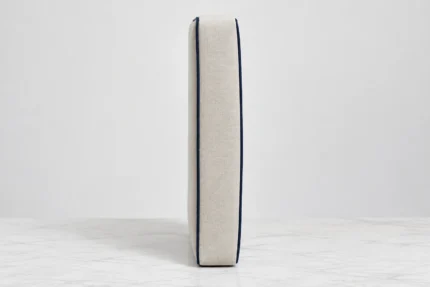
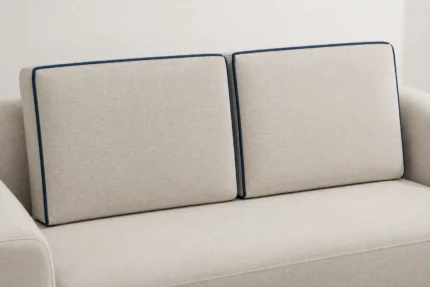
- Cut to your exact measurements — sofa backs, chair backs, any height, any loft.
- 119 fabrics at one price — indoor and outdoor lines in one order.
- One order, one dye lot — every piece in the run ships color-matched.
- Factory-direct from $104 — instant quote in the customizer below.
- ±½″ tolerance, re-checked before cutting — remade free if we cut it wrong.
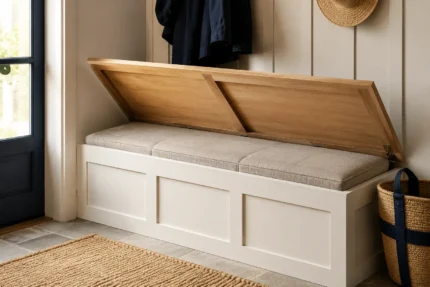

Custom Bench Cushions
- Cut to your exact measurements — hallway, storage, window and garden benches.
- 119 fabrics at one price — indoor and outdoor lines in one order.
- Hinged-lid storage bench builds keep 2–3″ thickness so the lid still latches.
- Factory-direct from $122 — instant quote in the customizer below.
- ±½″ tolerance, re-checked before cutting — remade free if we cut it wrong.
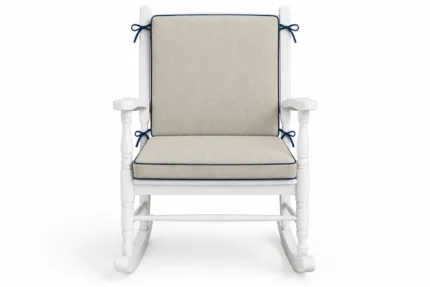
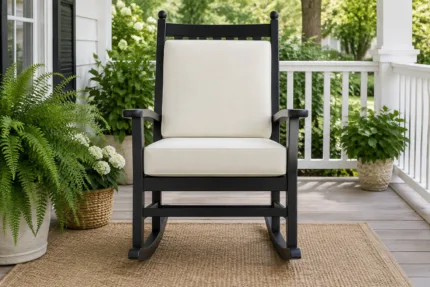
Custom Rocking Chair Cushions
- Cut to your exact measurements — rockers, porch rockers, gliders.
- 119 fabrics at one price — indoor and outdoor lines in one order.
- One order, one dye lot — every piece in the run ships color-matched.
- Factory-direct from $89 — instant quote in the customizer below.
- ±½″ tolerance, re-checked before cutting — remade free if we cut it wrong.
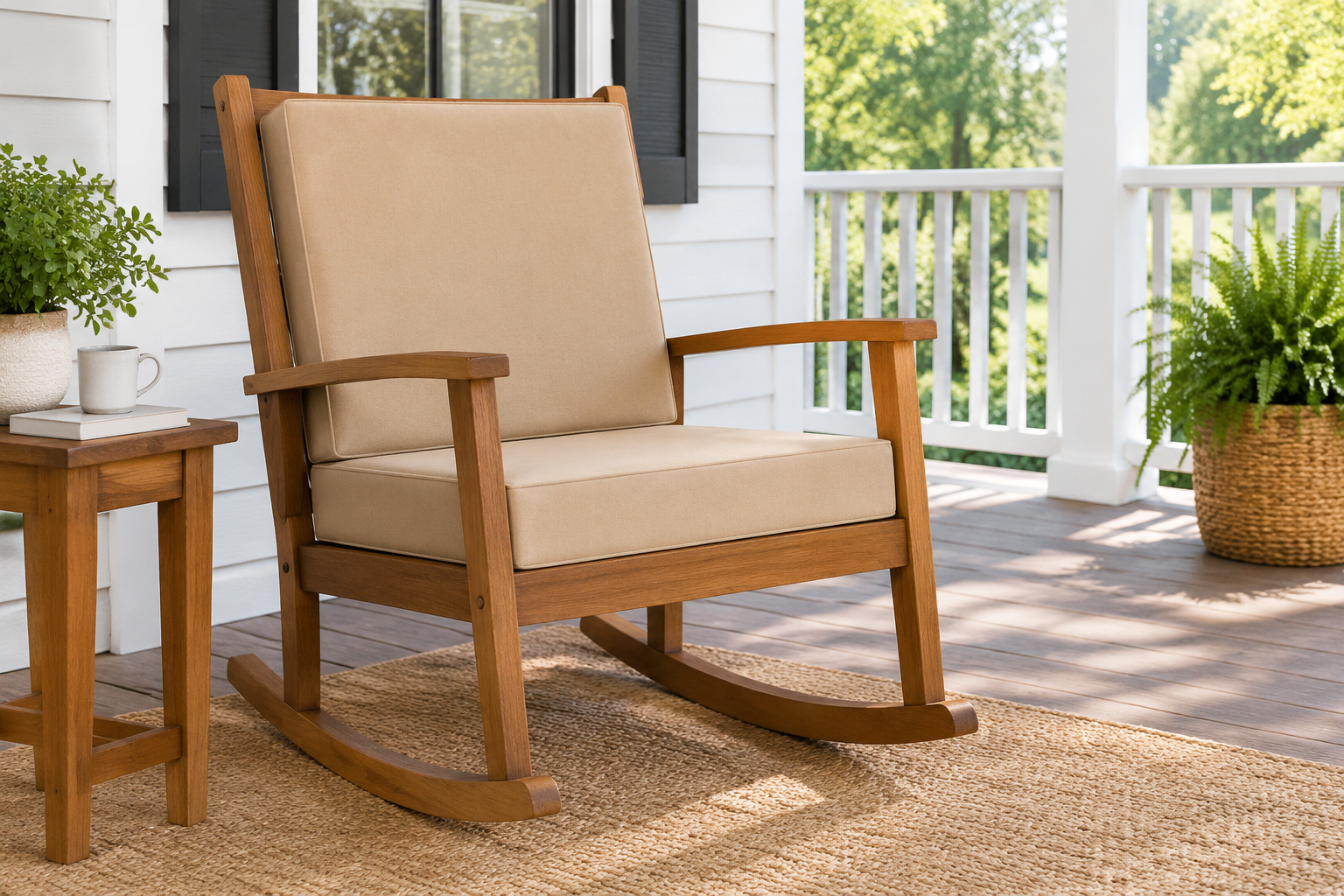
Replacement Rocking Chair Cushions
- Replacement rocking chair cushions cut to your measurements — antique sprung seats, bowed backs and gliders, no size list required.
- Bowed backs cut from a paper template trace — four numbers and the outline, no guessed radius.
- Glider three-piece sets (seat, back, armrests) with every piece measured and priced on its own area.
- From $94 a seat; a standard 18 × 16 × 3 in. seat (3" 50D) is $100 and a full seat + back set lands near $200 — all fabrics one price.
- Made in 4–7 business days, shipped direct from the mill.